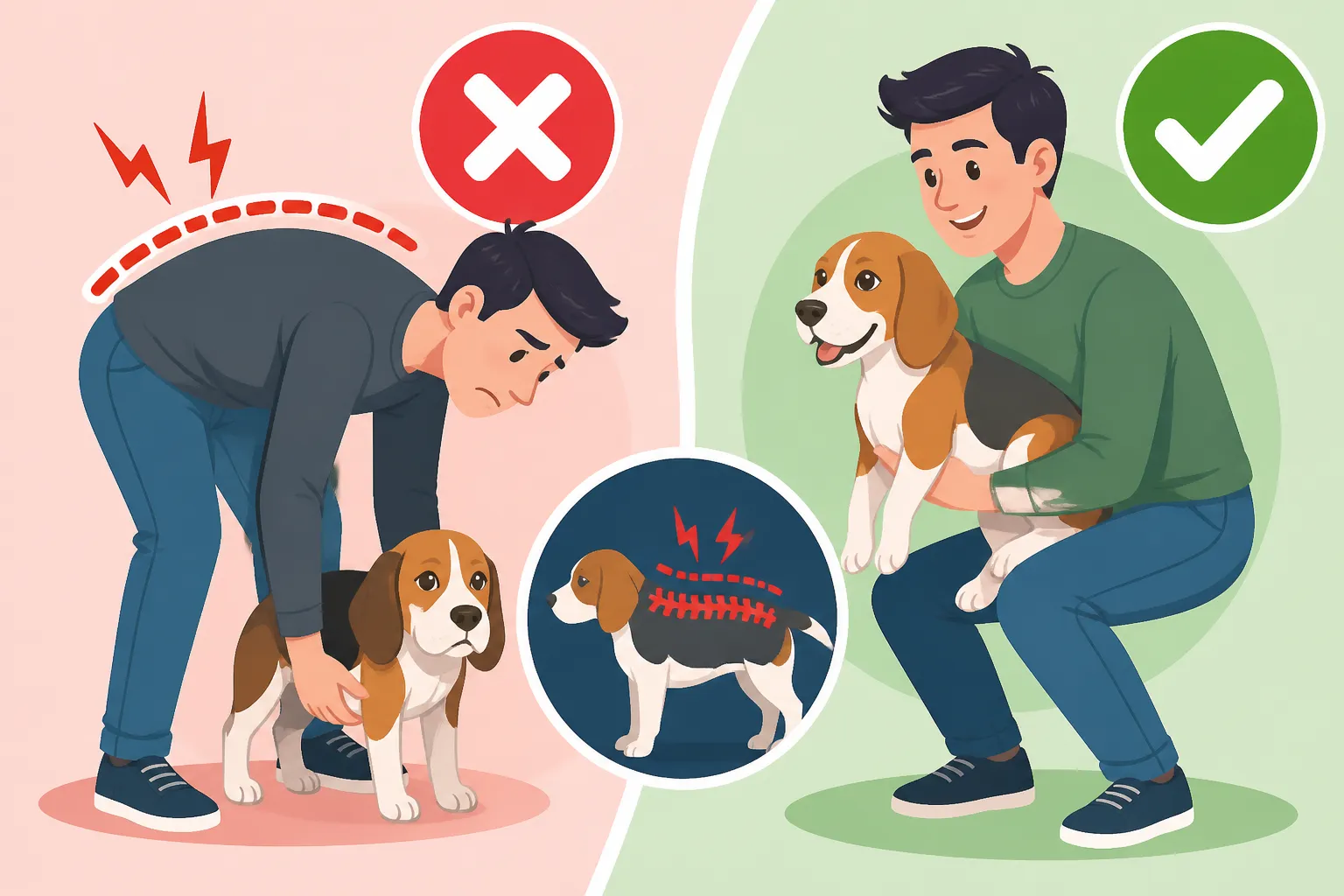
Lifting a Beagle Without Twisting Its Back
It’s a scenario many Beagle owners know well: your sweet, eager companion needs a little boost, whether it's into the car, onto the couch for cuddles, or just up a tricky step. But trying to scoop up a squirming, wiggly Beagle can feel like a wrestling match, and there's always that nagging fear of hurting their back. This guide will walk you through the safest, most effective ways to lift your Beagle, protecting their precious spine and your own.
Why Your Beagle's Back Needs Special Care When Lifting
Beagles are wonderfully compact dogs, full of sturdy muscle and boundless energy. However, like many breeds, they have a particular spinal structure that makes them susceptible to certain issues if not handled with care. Their backs are slightly longer in proportion to their legs than some other breeds, and this can put them at a higher risk for spinal injuries, especially when subjected to twisting motions or unsupported lifting.
Think about the way a heavy box feels when you lift it improperly – all the strain goes to your lower back. It’s no different for our Beagles. When you lift them by their front legs, or allow their hindquarters to dangle unsupported, it places immense pressure on their intervertebral discs. These discs are the cushions between the vertebrae, and improper lifting can lead to a slipped disc, also known as intervertebral disc disease (IVDD). This condition can range from mild pain to severe neurological issues, even paralysis, requiring extensive veterinary care. You can learn more about this in Beagle Back Problems and Intervertebral Disc Disease.
Moreover, as Beagles age, their joints and spines naturally become less resilient. An older Beagle might already be grappling with Beagle Arthritis Arriving in Middle Age or other age-related discomforts. A sudden, jerky, or unsupported lift could easily exacerbate existing conditions or cause a new injury that significantly impacts their quality of life. Even young, healthy Beagles aren't immune, as their growth plates are still developing and sudden impacts or twists can cause damage.
Recognizing the potential for injury is the first step in prevention. Our Beagles are often too focused on a scent trail or the promise of a treat to think about spinal alignment, so it's up to us, their devoted humans, to ensure their safety with every interaction. This awareness empowers you to lift them in a way that truly supports their robust yet vulnerable frame, making every lift a safe and comfortable experience for both of you.
The Safest Ways to Lift Your Beagle
When it comes to lifting your Beagle, the golden rule is always to support their entire body, especially their spine and hindquarters. Avoid lifting them solely by their front legs or allowing their back half to flop around. Here's how to do it right, whether you have a tiny pup or a robust adult.
The Two-Handed Scoop Method for Smaller Beagles
For most Beagles, especially the smaller 13-inch variety or puppies, a careful two-handed scoop is usually sufficient. Approach your Beagle calmly, speak in a reassuring voice, and make sure they know you're about to pick them up. Slide one hand under their chest, between their front legs, ensuring your palm supports their rib cage. Simultaneously, place your other hand firmly under their rump, supporting their hind legs and pelvis.
Once both hands are in position, gently lift, keeping their body level and close to yours. This technique distributes their weight evenly and prevents any undue stress on their spine. Think of it like cradling a baby; you want their entire body to feel secure and supported. Avoid sudden jerks or quick movements, especially if they are squirming. If your Beagle is particularly excited or anxious, take a moment to calm them first before attempting the lift.
The "Hug" Technique for Larger or Unsteady Beagles
For a larger 15-inch Beagle, or one that is particularly heavy, unsteady due to age, or recovering from an injury, a more encompassing "hug" technique might be better. This is especially true if you find your smaller lifting efforts put too much strain on your own back. With this method, you'll still approach calmly. Instead of just your palms, you'll use your forearms more to provide support.
Wrap one arm around their chest, just behind their front legs, and the other arm around their hindquarters, making sure you support their belly and back end. Pull them close to your body before you lift, engaging your core and lifting with your legs, not your back. This brings their weight closer to your center of gravity, making the lift easier for you and much more stable for your Beagle. Again, the goal is to keep their spine as straight and supported as possible, minimizing any twisting. If your Beagle is prone to wiggling, having them snug against your body can help keep them secure.
Enlisting a Helping Hand
Sometimes, even with the best technique, a Beagle is just too big, too wiggly, or your own physical limitations make a solo lift risky. Don't hesitate to ask for help! A two-person lift is often the safest and most comfortable option for everyone involved. One person can support the front half, with hands under the chest, and the other can support the hindquarters, hands under the rump.
When lifting with another person, clear communication is key. Decide beforehand when you'll lift and lower, and count it out together: "Ready? One, two, three, lift!" This ensures you both move in sync, keeping the Beagle perfectly level and supported throughout the process. This method is particularly useful for getting an older or injured Beagle into or out of a car, or even for something as simple as moving them from one room to another if they're struggling to walk. It reduces the strain on both people and significantly minimizes any risk to your Beagle’s delicate spine.
Situations Where You'll Need to Lift Your Beagle Safely
Beagles are adventurous and curious, which often means they end up in situations where a careful lift is necessary for their safety and well-being. Knowing when and where to apply your safe lifting techniques can make a big difference in preventing injuries and ensuring smooth transitions for your furry friend.
One of the most common scenarios is getting into and out of vehicles. Many cars and SUVs have a relatively high threshold, and repeatedly jumping in and out can put immense strain on a Beagle's hips, knees, and most importantly, their spine. Even for a young, agile Beagle, years of jumping can contribute to joint wear and tear and disc issues down the line. For an older Beagle, a jump might lead to immediate pain or a slip. This is where a careful two-handed lift or a two-person lift becomes invaluable. You'll want to support their body as you guide them gently up or down, protecting their back from jarring impacts. Ramps are also an excellent option here, which we’ll discuss shortly, to prevent any need for jumping at all. Consider a dedicated car ramp to spare their joints, as discussed in Car Ramps for a Beagle That Should Not Jump.
Another frequent lift situation involves stairs and furniture. While Beagles love to snuggle on the couch or sleep on your bed, allowing them to jump on and off repeatedly can be detrimental to their spinal health over time. A quick, uncontrolled jump can lead to a misstep, a twist, or a hard landing that jolts their spine. This is especially true if they are playing or rushing. For little puppies, falling off furniture is a real danger, and for older Beagles, the impact can be painful. Gently lifting them onto or off the couch or bed, supporting their full body, ensures they don't experience these stresses. Similarly, for homes with multiple flights of stairs, carrying a small or older Beagle, at least for some of the trips, can significantly reduce daily strain on their joints and back. For more on this, check out Stairs and the Load They Put on a Beagle Spine and Ramps for a Beagle's Bed and Car.
Vet visits are another prime example. Getting your Beagle onto and off the examination table often requires a lift. These tables can be cold, slippery, and intimidating, making your Beagle anxious. A calm, secure lift not only protects their back but also helps them feel more comfortable and less stressed during a potentially daunting experience. During bath time, lifting them into and out of the tub safely ensures they don't slip or struggle, making the process much more pleasant for everyone. And, of course, in emergency situations where your Beagle might be injured or unable to move on their own, a correct, stable lift is absolutely critical to avoid further damage. If you ever encounter an emergency, knowing how to handle them without exacerbating an injury can be vital, especially if you need to transport them quickly to the vet, as outlined in Beagle Emergency Signs That Cannot Wait Until Morning.
Useful Aids for Lifting and Supporting Your Beagle
Sometimes, our hands just aren't quite enough, or we need a little extra help to safely maneuver our Beagles, especially as they age or if they're recovering from an injury. Thankfully, there's a range of products designed to make lifting and supporting your Beagle much easier and safer for both of you. These aids can be a godsend for avoiding strain on your back and ensuring your Beagle's comfort.
One of the most versatile tools is a harness with a handle. Unlike a standard harness, these are specifically designed with a sturdy handle integrated into the top, often over the dog's back or near the shoulders. This handle provides a secure grip point, allowing you to give your Beagle a quick, controlled boost when needed. For instance, if your Beagle struggles with a single step, you can gently lift the handle to help them clear it, without having to bend fully or awkwardly scoop them up. This is fantastic for older Beagles who might have Beagle Hip Dysplasia and Everyday Joint Wear or Beagle Arthritis Arriving in Middle Age. You can find a wide array of these harnesses from reputable pet supply retailers like Chewy or Amazon, often with different designs to suit various body shapes and sizes, providing options that take the load off their neck, as discussed in Why a Harness Protects a Beagle's Neck.
For Beagles with more significant mobility challenges, such as those recovering from Beagle Disc Surgery and the Odds of Recovery or experiencing severe arthritis, lifting slings or support harnesses are incredibly helpful. These are typically full-body slings or harnesses that encompass the dog's midsection or hindquarters, allowing you to support their weight from underneath. They often have sturdy straps that come up over your shoulders or can be held in your hands, distributing the weight more evenly and reducing the strain on your own back. These slings are particularly useful for assisting a Beagle up stairs, into a car, or even just for helping them stand up and move around the house after an injury. They ensure that their entire body is supported, preventing any twisting or unnatural movements that could cause further harm.
| Aid Type | Best Use Case | Benefits | Considerations |
|---|---|---|---|
| Harness with Handle | Quick boosts over obstacles, short lifts | Easy to grab, good for minor assistance, minimal setup | Not for full body lifting, might not support spine completely for heavier dogs |
| Lifting Sling | Post-surgery, severe mobility issues, full support | Distributes weight evenly, protects owner's back, full body support | Can be cumbersome for quick, casual use, requires proper fitting |
| Ramps/Steps | Car entry/exit, furniture access | Eliminates need for lifting, reduces joint impact, long-term solution | Requires space for storage, Beagle needs to be trained to use it, fixed locations |
| Carriers/Crates | Smaller Beagles, short distance transport | Secure, contained, good for vet trips or public spaces | Only suitable for smaller Beagles, can be heavy to carry with dog inside |
Beyond direct lifting aids, ramps and steps are invaluable preventative tools. Instead of lifting your Beagle into the car or onto the bed, a ramp allows them to walk up and down independently, safely, and without any spinal impact. This is crucial for long-term joint and back health. There are portable ramps for vehicles and sturdy steps designed for indoor use that can match your furniture height. Investing in these items, easily found at pet stores or online retailers like Chewy and Amazon, can significantly reduce the frequency of manual lifts and therefore the risk of injury for both you and your Beagle. Many owners find these a game-changer for maintaining their senior Beagle's independence and comfort, particularly if they are already showing signs of Hind Leg Weakness in a Middle-Aged Beagle.
Finally, for smaller Beagles or puppies, a comfortable, secure carrier or crate can serve as a safe lifting device for short distances, especially to and from the vet or during travel. While not a "lifting aid" in the traditional sense, it provides a stable, contained environment for transport that prevents squirming and twisting while being carried. Always choose a carrier that is appropriately sized, allowing your Beagle to stand and turn around comfortably. By utilizing a combination of these tools, you can ensure that every time your Beagle needs to be moved or given a leg up, it's done with their safety and comfort as the top priority.
Disclaimer
This article is for general informational purposes only and does not constitute professional advice. Laws, prices and regulations vary by location and change over time. Consult a qualified professional for guidance on your specific situation.