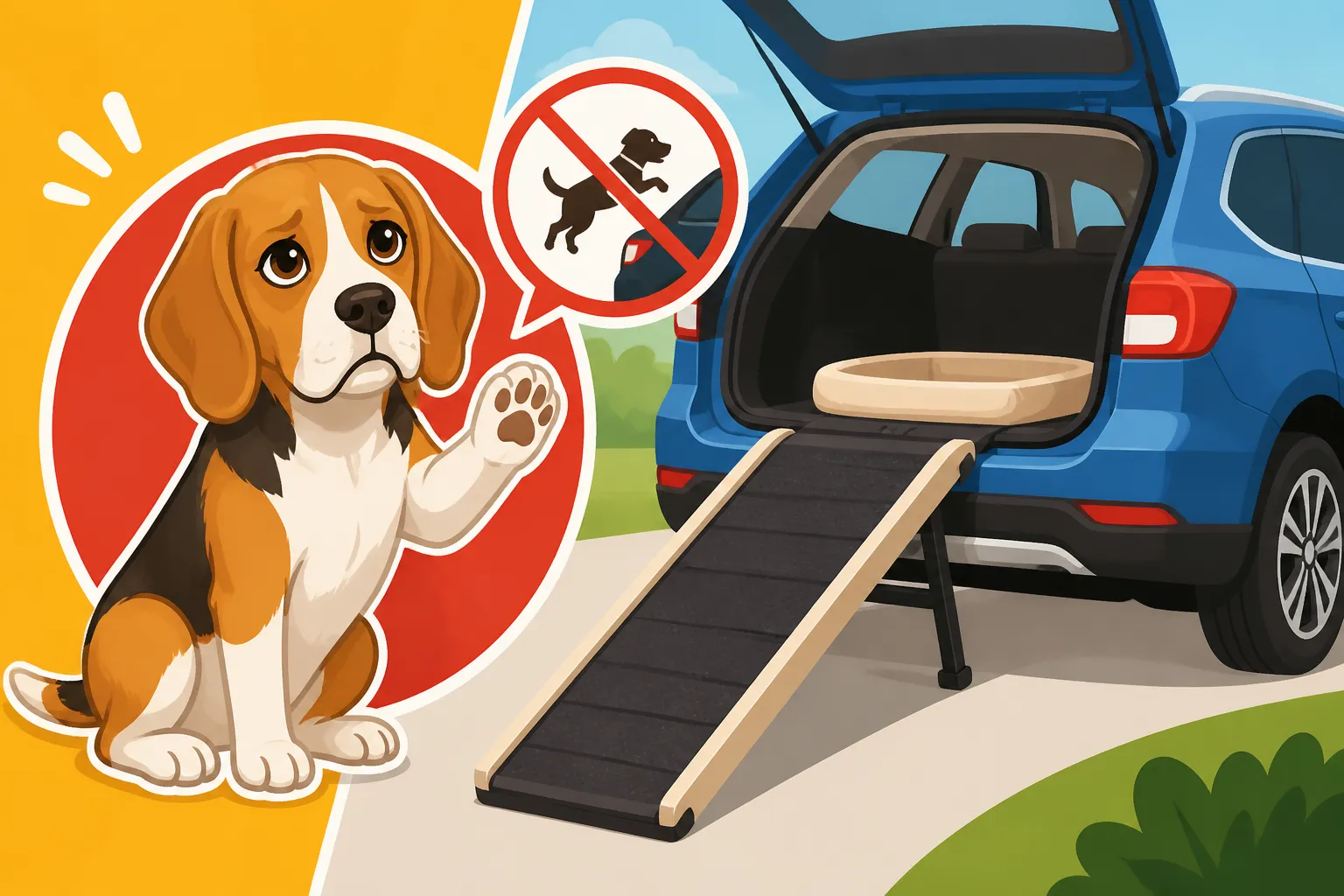
Car Ramps for a Beagle That Should Not Jump
It's heartbreaking to watch your beloved Beagle struggle with what used to be a simple leap into the car. Whether it's the eager jump for an adventure or the weary hop after a long walk, that action can put immense strain on their delicate back and joints. This guide is here to walk you through why car ramps are such a game-changer for your Beagle's long-term health and how to seamlessly introduce this helpful tool into your daily routine, saving them unnecessary pain and you a whole lot of worry.
Why Jumping is a Problem for Your Beagle's Back
As a Beagle parent, you know they're built for endurance and scent work, often with a slightly longer back than some other breeds their size. While they might seem robust, those eager jumps into and out of vehicles, or even onto furniture, can really take a toll over time. It’s not always obvious at first, but the cumulative impact can lead to significant health issues down the line.
The Stress on Joints and Spine
Think about the physics of a jump: your Beagle launches their entire body weight upwards, then absorbs that same weight, plus the force of gravity, upon landing. This isn't a gentle motion. It creates a sudden, jarring compression on their spinal discs, hips, knees, and elbows. For a breed like the Beagle, with their inherent build, this action can be particularly problematic. Their slightly elongated spine, while perfect for following a scent trail with their nose to the ground, isn't designed for repeated, high-impact vertical movements.
Every single jump and landing stresses the intervertebral discs that cushion the vertebrae in their spine. These discs are like jelly-filled donuts, providing shock absorption. Over time, or with one wrong landing, these discs can bulge, herniate, or even rupture, leading to a condition called Intervertebral Disc Disease (IVDD). This is a serious condition that can cause immense pain, nerve damage, and even paralysis. Even if a full-blown disc rupture doesn't happen, the constant wear and tear from jumping contributes to arthritis and general joint degeneration. It’s a silent, slow process that often goes unnoticed until your Beagle starts showing more overt signs of discomfort or pain. Protecting their back and joints now is an investment in their comfort and mobility for years to come. For more detailed information, you can read about Beagle Back Problems and Intervertebral Disc Disease.
Recognizing Signs of Pain or Discomfort
Your Beagle might be a master of stoicism, or perhaps their desire to be with you is so strong they'll push past discomfort. This makes it challenging for us, as owners, to catch early signs of back or joint pain related to jumping. You might notice subtle changes first. Perhaps they hesitate for a second longer before attempting to jump into the car, or they might seem a little stiff immediately after getting out. Maybe they shake a paw more vigorously or stand with a slightly hunched posture after a car ride.
Look for a general reluctance to engage in activities they once loved, especially those involving jumping. They might be slower to get up from a nap, or they might not greet you with their usual full-body wiggle. Sometimes, the pain manifests as irritability, or a sensitivity to touch around their back or hips. A low growl when you try to lift them, or a yelp when they land awkwardly, are clear red flags that something is amiss. Even a change in their gait, such as a slight limp or a wobbly walk, could be an indication. It's easy to dismiss these as "just getting older," but often, they're calls for help that warrant a conversation with your vet. Catching these early signs can make a huge difference in managing their comfort and preventing further injury. Keeping an eye on Beagle Back Pain Warning Signs can provide you with more insight into what to look for.
Different Types of Car Ramps for Beagles
Once you've decided to protect your Beagle's precious joints and spine, the next step is choosing the right ramp. It's not a one-size-fits-all solution, as different vehicles, Beagles, and owner needs can dictate the best choice. Luckily, there's a wide variety out there to consider.
Foldable and Telescopic Ramps
These are by far the most popular types of pet ramps, and for good reason: they offer a great balance of functionality and portability.
Foldable Ramps:
These typically fold in half or even into three sections, making them more compact for storage. They often have a hinge mechanism that locks them into place when extended and folded.
- Pros: Generally quite sturdy due to their design, and the fold can sometimes create a handle for easier carrying. Many reputable brands offer durable options you can find on sites like Chewy.
- Cons: Can still be a bit bulky even when folded, and the hinge points need to be kept clean to avoid sticking. Some models can be heavier if made of robust materials.
Telescopic Ramps:
These ramps slide in and out, much like a telescope, to extend or retract to their desired length.
- Pros: Extremely compact when fully retracted, making them ideal for smaller car trunks or tight spaces. They can also be adjusted to different lengths, which is handy if you use them with various vehicles or for different needs (e.g., car vs. bed). Look for lightweight aluminum models available on Amazon for easy handling.
- Cons: The sliding mechanism can sometimes get grit or dirt in it, making it harder to operate. Some less sturdy models might have a slight "flex" when fully extended, which can make a nervous Beagle hesitant.
When choosing between foldable and telescopic, consider your vehicle's cargo space, your physical ability to lift and maneuver the ramp, and how often you'll be using it. Both types are generally made with non-slip surfaces, which is crucial for your Beagle's confidence.
Here's a quick comparison of common ramp and step options:
| Feature | Foldable Ramps | Telescopic Ramps | Pet Steps |
|---|---|---|---|
| Portability | Good, folds in half/thirds | Excellent, retracts to a compact size | Varies, some fold flat, some are bulky |
| Storage | Moderate space required | Minimal space required | Moderate to minimal, depending on design |
| Incline | Gentle to moderate | Gentle to moderate (adjustable length) | Steeper, like human stairs |
| Best For | Heavier Beagles, frequent car use | Any Beagle, varied car heights, smaller storage spaces | Smaller, more confident Beagles, lower vehicles |
| Joint Impact | Low | Low | Moderate (still some impact from stepping up) |
| Ease of Use | Quick to unfold/set up | Quick to extend/retract | Very quick to set up |
| Stability | Generally very stable | Good, if well-built and not over-extended | Good, if wide and sturdy |
Car Steps vs. Ramps
While ramps offer a smooth incline, sometimes actual steps can be a viable alternative, particularly for certain situations or Beagles.
Car Steps:
These are essentially portable staircases designed for pets. They come in various configurations, from two to four or five steps, and often fold flat or collapse for storage.
- When Steps Might Be Better: If your Beagle has a strong preference for stairs (some dogs find a gradual ramp intimidating) or if your vehicle has a lower entry point, steps might work well. For smaller Beagles, or those that are generally more agile but still need a safer way to enter, steps can be quicker and more straightforward to use than a long ramp. They can also be a good option if you have limited space and a ramp's length would be awkward.
- When Ramps Are Superior: For senior Beagles, those with confirmed arthritis, hip dysplasia, or existing back problems, a ramp provides a much gentler, impact-free ascent and descent. With a ramp, there's no need for your Beagle to lift their legs high or absorb any shock. This is crucial for protecting the spine, especially for breeds prone to Beagle Hip Dysplasia and Everyday Joint Wear or Beagle Back Problems and Intervertebral Disc Disease. A ramp minimizes any twisting or jarring motions that can aggravate these conditions. Additionally, if your vehicle is particularly tall, a ramp will offer a more manageable incline than a set of steps.
Ultimately, the choice between steps and a ramp comes down to your Beagle's comfort level, their physical condition, and the height of your vehicle. Observe how your Beagle moves and consider their specific needs before making a decision.
Features to Look for in a Quality Ramp
Beyond the basic type, several features contribute to a ramp's effectiveness, safety, and durability. Don't skimp on these details, as they can make a huge difference in your Beagle's willingness to use the ramp and its overall longevity.
- Non-Slip Surface: This is paramount. Look for a surface with high traction, like sandpaper-like grip tape, textured rubber, or even carpet. A slick surface will make your Beagle feel insecure and could lead to slips and falls, defeating the purpose of the ramp entirely. Make sure the texture is comfortable on their paws, not abrasive.
- Sturdy Construction and Weight Capacity: Beagles, even the smaller 13-inch variety, can be dense and solid. Ensure the ramp you choose can comfortably support your Beagle's full weight, plus a little extra for safety. A flimsy ramp that flexes or wobbles will immediately scare your dog off. Materials like aluminum or high-grade plastic are generally good options.
- Proper Length and Incline: The longer the ramp, the shallower the incline. For optimal spinal health, aim for the gentlest slope possible, especially if your Beagle is a senior or has existing joint issues. A general rule of thumb is that for every foot of height you need to clear (e.g., from the ground to your car's cargo area), you ideally want at least two feet of ramp length. So, if your car entrance is 2 feet high, a 4-foot ramp is a good starting point. Too steep, and your Beagle might still struggle or refuse to use it.
- Lightweight and Easy to Handle: You'll be setting this up and taking it down frequently. A heavy, cumbersome ramp will quickly become a chore. Look for models that are easy for you to manage. Many brands focus on lightweight yet strong materials precisely for this reason.
- Raised Edges or Side Rails: A slight lip or raised edge along the sides of the ramp can provide a subtle visual cue and a physical barrier, helping to guide your Beagle and prevent them from stepping off the side. This adds an extra layer of security, especially for an anxious or inexperienced ramp user.
- Easy to Clean: Beagles love to explore, and their paws often come back dirty. The ramp surface should be easy to wipe down, especially after muddy walks or rainy days. This helps maintain the non-slip surface and keeps your car cleaner.
- Vehicle Attachment System: Some ramps have rubber grippers or a lip at the end that rests securely on your car's bumper or cargo area, preventing it from slipping. This is a vital safety feature.
Choosing a ramp with these features will ensure it's not only safe and comfortable for your Beagle but also practical and durable for you.
Introducing Your Beagle to a Car Ramp
Bringing a shiny new ramp home is just the first step. Getting your Beagle to actually use it confidently and happily is the next, and sometimes trickier, part. Remember, Beagles are smart and can be a little cautious with new, wobbly-looking contraptions. Patience and positive reinforcement are key here.
Making it a Positive Experience
The goal is to make the ramp a fun, rewarding experience, not something scary or forced. Start small and build up.
- Start Indoors, on Flat Ground: Don't introduce the ramp at the car right away. Lay the ramp flat on the living room floor or in the backyard. Let your Beagle sniff it, walk around it, and explore it without any pressure. You can even place some high-value treats, perhaps some salmon pate or pieces of a fresh food delivery like Ollie, on and around it.
- Create a "Walkway": Once they're comfortable with it flat, prop one end up just a few inches – maybe on a low book or a sturdy cushion. The incline should be barely noticeable. Guide your Beagle over it with a lure (a treat held to their nose) or toss treats just past the end of the ramp. Praise them profusely and give them a jackpot of treats when they cross. Repeat this many times.
- Gradually Increase the Incline: Over several sessions, slowly raise the height of the propped-up end. You can use a stable chair, a small stool, or even a few stacked books. Always keep the incline as gentle as possible. Continue to use treats and praise. The idea is to make each step so easy and rewarding that they hardly notice the incline increasing.
- Introduce the Car (or Couch!): Once your Beagle is confidently walking the ramp at a moderate incline indoors, it's time to bring it to the car. Park on a level surface. Set up the ramp securely against your vehicle. Again, start with treats and lures. Have someone hold the ramp steady if you're worried about movement. If your Beagle is still hesitant, you might go back to the lowest incline for the first few attempts with the car.
- Practice Entering and Exiting: It's important for your Beagle to be comfortable going both up and down the ramp. Many dogs are fine going up but get nervous descending. Practice both directions, always with treats and praise. Ensure they understand they can take their time.
Never, ever force your Beagle onto the ramp by pushing, pulling, or scolding them. This will only create a negative association. Keep sessions short, fun, and end on a positive note. Remember, for a Beagle, treats are often the ultimate motivator! For ideas on what really gets their attention, check out The Treats a Beagle Will Work Hardest For.
Common Challenges and Troubleshooting
Even with the best intentions, your Beagle might not become a ramp-master overnight. Here are some common hurdles and how to address them:
- Skepticism and Hesitation: Your Beagle might approach the ramp, sniff it, and then just stare at you, as if to say, "You want me to walk on that?"
- Troubleshooting: Go back to basics. Ensure the ramp is absolutely stable and not wobbly. Use higher-value treats than you thought possible. Sometimes, starting with a family member or another confident dog demonstrating the ramp can help. Try scattering treats along the ramp surface rather than just at the end, so they have to take multiple steps to get them.
- Fear of the Texture or Noise: Some ramps can be noisy when walked on, or the non-slip texture might feel strange under paw.
- Troubleshooting: If noise is an issue, try a different ramp material or add a thin, non-slip mat to the ramp surface (ensure it's securely attached!). If it's the texture, try covering a small section with a towel for initial practice, then gradually remove it.
- Trying to Jump Off Mid-Ramp: This is dangerous and shows your Beagle isn't fully confident.
- Troubleshooting: This often happens if the ramp is too steep, too wobbly, or if the Beagle feels rushed. Slow everything down. Ensure the incline is as gentle as possible. Use a leash (but don't pull) to guide them, keeping it loose so they don't feel dragged. If you have a ramp with side rails, this can help provide a sense of security. Practice impulse control exercises regularly to help them focus. Impulse Control Exercises That Suit a Beagle can offer some good strategies.
- Refusal to Descend: Many dogs are more fearful going down a ramp than up.
- Troubleshooting: This requires extra patience. Sit at the bottom of the ramp and lure them down one step at a time with a treat. Make descending even more rewarding than ascending. If possible, have someone stand at the top of the ramp to gently encourage, while you're at the bottom. Start practicing descents with the lowest possible incline.
- Distractions at the Car: The excitement of going for a ride, or the smells outside, can make focusing on the ramp difficult.
- Troubleshooting: Practice at times when your Beagle is calm, not over-excited for a walk. Use a dedicated "ramp cue" word that signals it's time to use the ramp. If necessary, practice at home until they are absolutely proficient before tackling the distractions of the outside world.
Remember that every Beagle is an individual. What works for one might not work for another. Be patient, be consistent, and keep it positive. It might take several days, or even a few weeks, for your Beagle to fully embrace the ramp, but their long-term health is well worth the effort.
Integrating Ramps into Daily Beagle Life
The car is often the first place we think of for a ramp, but if your Beagle is prone to back or joint issues, or is simply getting older, a ramp can be beneficial in many other aspects of their daily life. Making ramp use a consistent habit helps protect their body from unnecessary strain, extending their comfort and mobility.
When and Where to Use Car Ramps
Beyond just car rides, think about all the other places your Beagle might jump up or down. Every single jump has the potential to cause micro-trauma or aggravate existing conditions.
- The Couch or Bed: How often does your Beagle launch themselves onto the sofa for a snuggle or onto your bed at night? These seemingly harmless jumps can be just as damaging as a car jump, especially if your Beagle is small and the furniture is high. Installing a dedicated small ramp or a set of pet stairs for these spots can save a lot of wear and tear on their joints over the years. This is especially vital for Ramps for a Beagle's Bed and Couch.
- Vet Visits and Grooming: If your vet's clinic has a high examination table or your groomer uses a high tub, suggest or bring a portable ramp. Lifting a large or squirming Beagle can be tricky and painful for them, especially if they are already anxious or experiencing discomfort. A ramp provides a safe, independent way for them to get where they need to go.
- Boats or Docks: If your adventures take you near water, a ramp can be incredibly useful for getting your Beagle in and out of a boat safely, especially if they enjoy swimming. This prevents precarious jumps onto slippery surfaces.
- Stairs (if unavoidable): While ramps are primarily for horizontal movement up/down, if your home has stairs that your Beagle must use, and they struggle, a well-placed, sturdy ramp could be an option for a short flight, though this is often more complex to implement than simple steps. It is always better to limit stair use for a Beagle if possible. For more insights on caring for your older Beagle, consider reading Senior Beagle Care After the Age of Ten.
The key is consistency. If you decide to use a ramp, use it every single time. Beagles are creatures of habit, and if the ramp is always available and always used, it will become their natural way to access these elevated spots. This consistent prevention is far more effective than trying to manage an injury after it occurs.
Maintaining Your Ramp for Safety and Longevity
A pet ramp is an investment in your Beagle's health, and like any tool, it needs a little care to ensure it remains safe and effective for years to come. Neglecting maintenance can compromise its stability and even its non-slip surface, putting your Beagle at risk.
- Regular Cleaning: Beagles, with their nose-to-the-ground lifestyle, often track in dirt, mud, and sometimes even less pleasant things. The non-slip surface of the ramp can accumulate grime, which reduces its traction. Wipe down the ramp regularly with a damp cloth and mild soap. For heavily textured surfaces, a brush might be needed to get into the grooves. Ensure it's thoroughly dry before folding or storing to prevent mold or mildew.
- Inspect for Wear and Tear: Before each use, quickly scan the ramp for any signs of damage.
- Non-Slip Surface: Is it still intact? Are there any peeling areas or worn-smooth spots? If so, some ramps allow for replacement non-slip strips.
- Hinges/Telescoping Mechanisms: For foldable ramps, check that hinges move smoothly and lock securely. For telescopic ramps, ensure the sections slide easily without catching and lock firmly when extended. Lubricate if recommended by the manufacturer.
- Cracks or Bends: Inspect the main body of the ramp for any cracks, especially if it's plastic, or any bends if it's aluminum. Even small stress fractures can compromise the ramp's integrity.
- Rubber Grippers: Check the rubber feet or grippers at the end of the ramp (where it rests on your car) to ensure they are still in place and providing good traction.
- Proper Storage: When not in use, store your ramp in a clean, dry place, ideally out of direct sunlight and extreme temperatures. Leaving it exposed to the elements can degrade materials, especially plastics and adhesives on the non-slip surface. Folding or retracting it properly protects moving parts and keeps it compact.
- Check Weight Limits Annually: If your Beagle's weight fluctuates (and especially if they gain a few pounds, which can happen easily for a food-driven breed), double-check that the ramp's weight capacity still comfortably accommodates them. How Extra Weight Raises Beagle Disc Pressure is a real concern and makes a sturdy ramp even more important. While a little extra weight is often manageable, a significant increase might warrant a more robust ramp or closer monitoring of its condition.
By taking a few minutes each week or month to clean and inspect your Beagle's ramp, you're ensuring its continued safety and maximizing its lifespan. This small effort provides peace of mind that your beloved hound can continue their adventures without risking their precious back and joints.
Disclaimer
This article is for general informational purposes only and does not constitute professional advice. Laws, prices and regulations vary by location and change over time. Consult a qualified professional for guidance on your specific situation.