A Beagle Puppy Growth Chart by Week
Bringing home a Beagle puppy is an exciting time, but it can also come with a lot of questions, especially when you're trying to figure out if your little bundle of energy is growing just right. Many new owners find themselves endlessly comparing their pup to photos online or worrying if they're feeding too much or too little. This guide is here to walk you through the typical growth journey of a Beagle puppy, week by week, so you can have a better understanding of what to expect and how to ensure your furry friend is thriving.
Understanding Beagle Growth Factors
A Beagle puppy's growth isn't just a straight line on a chart; it's a dynamic process influenced by several key factors. While there are general guidelines, remember that every puppy is an individual, and variations are completely normal. It’s important to understand these underlying influences so you can appreciate the unique trajectory of your own pup.
Genetics from the Parents
Just like with humans, a Beagle puppy's genetic makeup plays a massive role in their ultimate size and growth rate. Think about it: a puppy from two smaller 13-inch Beagle parents is highly unlikely to grow into a large 15-inch Beagle, regardless of how much you feed them. Reputable breeders can often give you a good idea of the size range to expect, as they know the lineage and adult weights of their breeding dogs. They select for specific traits, including size, which tends to be quite consistent within well-planned litters. The size of the parents, grandparents, and even great-grandparents gives a strong indication of your puppy's genetic potential.
Nutrition and Diet Quality
What you put into your Beagle puppy's bowl directly impacts their growth. A high-quality puppy food specifically formulated for medium-sized breeds will provide the essential nutrients, proteins, fats, vitamins, and minerals needed for healthy development. Overfeeding a puppy in an attempt to make them bigger faster can actually be detrimental, leading to rapid growth that puts undue stress on developing joints and bones. On the flip side, underfeeding can stunt growth and lead to nutritional deficiencies, impacting overall health. Consistency is key, and sticking to recommended portion sizes for their age and weight, as advised by your vet and the food manufacturer, is crucial. Brands available on sites like Chewy often provide detailed feeding guides right on their product pages, which can be a helpful starting point.
Health and Activity Levels
A healthy puppy is a growing puppy. Any chronic illness, parasitic infection, or significant stress during their crucial growth phases can divert energy away from development, potentially impacting their growth. Regular vet check-ups are essential to catch and address any health concerns early. Similarly, appropriate exercise is vital for healthy bone and muscle development. Over-exercising a young puppy, especially high-impact activities, can be harmful to their soft growth plates. Instead, focus on moderate, controlled play and short, frequent walks. Allowing your puppy to explore and play at their own pace in a safe environment is usually the best approach, rather than pushing them to keep up with intense adult dog activities. How Far a Beagle Puppy Should Walk by Month can give you more guidance on appropriate exercise levels.
A Week-by-Week Breakdown of Beagle Puppy Development
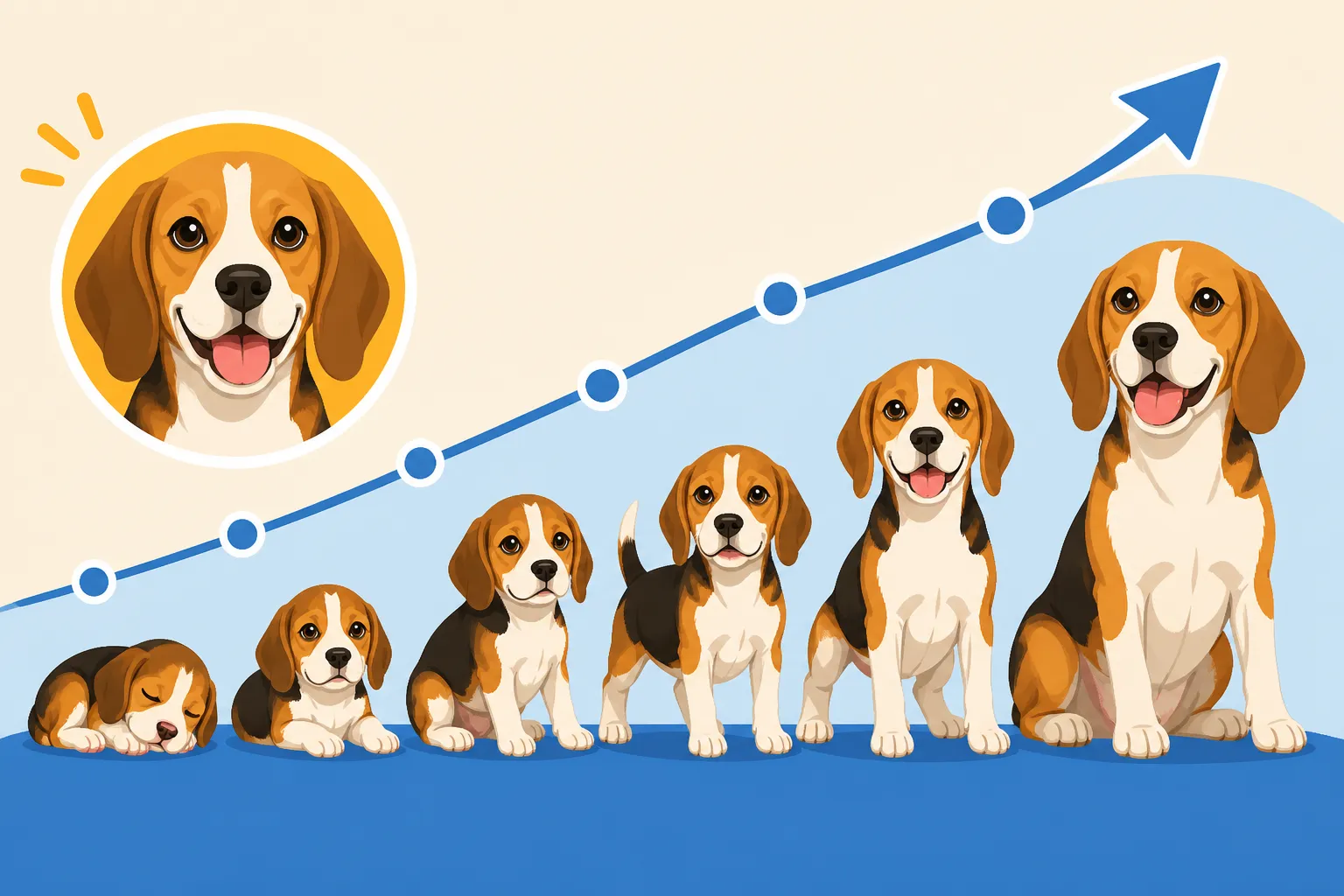
Watching a Beagle puppy grow is truly a marvel. They change so rapidly in those first few months! While exact weights can vary significantly between individuals and the two recognized Beagle varieties (13-inch and 15-inch), this chart provides a general roadmap for what you might observe. Remember, these are averages, and your vet is the best resource for personalized advice.
| Age (Weeks) | 13-inch Beagle (Approx. Weight) | 15-inch Beagle (Approx. Weight) | Key Developmental Milestones |
|---|---|---|---|
| Birth | 5-10 oz (140-280g) | 6-12 oz (170-340g) | Blind, deaf, completely dependent on mother. Mostly sleep and nurse. |
| 1 Week | 10-18 oz (280-510g) | 12-24 oz (340-680g) | Still blind and deaf, starting to crawl more. Double birth weight. |
| 2 Weeks | 1.5-2.5 lbs (0.7-1.1 kg) | 2-3.5 lbs (0.9-1.6 kg) | Eyes begin to open, ears start to respond. Wobbly attempts at walking. |
| 3 Weeks | 2.5-4 lbs (1.1-1.8 kg) | 3.5-5.5 lbs (1.6-2.5 kg) | Sight and hearing improving. First puppy barks and growls. Wobbly walking. |
| 4 Weeks | 3.5-5.5 lbs (1.6-2.5 kg) | 5-7.5 lbs (2.3-3.4 kg) | Starting to interact with littermates, explore surroundings. First solid food introduced. |
| 5 Weeks | 4.5-7 lbs (2.0-3.2 kg) | 6.5-9.5 lbs (2.9-4.3 kg) | More playful, coordinated. Fully weaned from mother. |
| 6 Weeks | 5.5-8.5 lbs (2.5-3.9 kg) | 8-11.5 lbs (3.6-5.2 kg) | Socialization period critical. More independent. |
| 7 Weeks | 6.5-10 lbs (2.9-4.5 kg) | 9.5-13 lbs (4.3-5.9 kg) | Learning bite inhibition from littermates. Ready for new home around 8 weeks. |
| 8 Weeks | 7-11 lbs (3.2-5.0 kg) | 10.5-14.5 lbs (4.8-6.6 kg) | Often the age they go to new homes. Full puppy energy! What a Beagle Puppy Weighs at Eight Weeks is a great resource. |
| 3 Months | 9-13 lbs (4.1-5.9 kg) | 12-17 lbs (5.4-7.7 kg) | Growing rapidly. Continuing socialization. A Beagle Puppy Growth Chart by Week will cover this period in detail. |
| 4 Months | 11-15 lbs (5.0-6.8 kg) | 14-20 lbs (6.4-9.1 kg) | Losing puppy teeth, starting to chew everything. Height is becoming more apparent. |
| 5 Months | 12.5-17 lbs (5.7-7.7 kg) | 16-23 lbs (7.3-10.4 kg) | Adolescence begins for some. Energy levels high. |
| 6 Months | 14-19 lbs (6.4-8.6 kg) | 18-25 lbs (8.2-11.3 kg) | Nearing adult height. Still filling out. The Month a Beagle Stops Growing Upward is a good read. |
| 9 Months | 16-22 lbs (7.3-10 kg) | 20-28 lbs (9.1-12.7 kg) | Reaching adult weight for many. May still be filling out musculature. |
| 12 Months | 18-25 lbs (8.2-11.3 kg) | 22-30 lbs (10-13.6 kg) | Considered adult size, though some may continue to mature slightly. |
Early Weeks: Birth to Four Weeks
In these earliest days, Beagle puppies are tiny, vulnerable little beings. They are born blind and deaf, relying entirely on their mother for warmth, food, and stimulation. Their main activities are nursing and sleeping. You'll notice rapid weight gain, often doubling their birth weight by the end of the first week. Around the two-week mark, their eyes will start to open, though vision is blurry, and their ear canals will begin to open, allowing them to perceive sounds. By three to four weeks, they're typically making wobbly attempts to walk, their senses are developing rapidly, and they'll start exploring their immediate surroundings. This is also when breeders typically begin introducing soft solid foods, marking the start of the weaning process.
Middle Weeks: Five to Eight Weeks
This is a crucial period for development. From five to eight weeks, Beagle puppies become much more coordinated and playful. They interact extensively with their littermates, learning important social cues and bite inhibition. This is also often when they are fully weaned from their mother and are eating solid puppy food. By eight weeks, many Beagle puppies are ready to go to their new forever homes. At this age, they are little sponges, eager to learn and explore, making it a prime time to start basic training and socialization. Introducing a Beagle Puppy to the Cat or other pets can happen at this stage with careful supervision.
Adolescence: Three Months to Twelve Months
Once your Beagle puppy is home, they enter a period of rapid growth and significant behavioral changes. From three to six months, they'll gain height quickly, often looking a bit lanky as their bones grow faster than their muscle mass. They'll lose their sharp puppy teeth and grow in their adult teeth, meaning plenty of chewing! Energy levels are usually sky-high. By six to nine months, most Beagles are close to their full adult height, but they'll continue to "fill out," gaining muscle and mass over the next few months. This adolescent phase can also bring a bit of "selective hearing," as their minds are often more interested in novel scents and surroundings than your commands. Patience and consistent positive reinforcement are key here.
Monitoring Your Beagle Puppy's Weight and Health
Keeping an eye on your Beagle puppy's growth is important, but it's not just about hitting numbers on a scale. It’s about assessing their overall health and body condition. Worrying too much about exact ounces can be counterproductive, but understanding how to properly gauge their development will give you peace of mind.
Regular Weigh-Ins and Body Condition Scoring
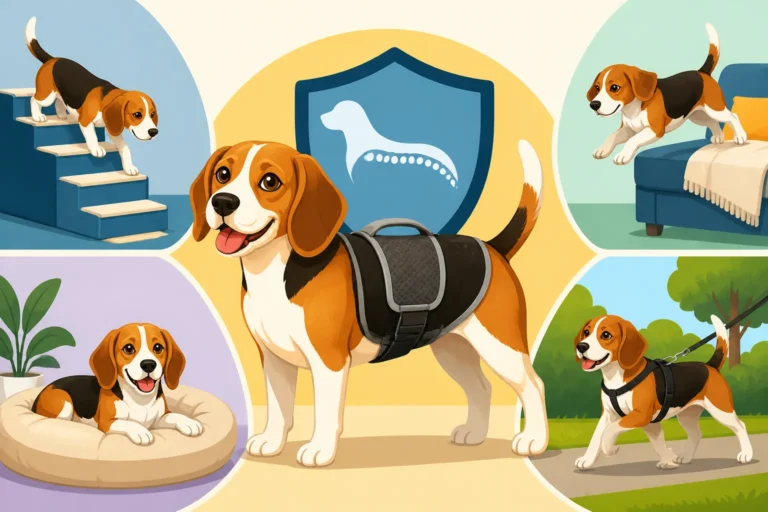
While your vet will conduct thorough weigh-ins, it's a good idea to weigh your puppy at home periodically, especially in the first few months. A simple kitchen scale works for very young pups, and a bathroom scale (weigh yourself, then yourself holding the puppy, and subtract) is fine for older, larger ones. What's more important than the precise number is their body condition. You want to see your Beagle puppy as lean and athletic, not chunky. You should be able to easily feel their ribs when you gently run your hands along their side, but not see them protruding. There should be a visible waist tuck when viewed from above, and their belly should tuck up slightly when viewed from the side. This is often referred to as Body Condition Scoring. If your puppy starts looking round or you can't feel their ribs, it might be time to adjust their food intake, as How Extra Weight Raises Beagle Disc Pressure and other health risks.
The Role of Your Veterinarian
Your veterinarian is your primary partner in monitoring your Beagle puppy's growth and health. They will perform regular wellness checks, tracking your puppy's weight and height against growth charts during each visit. These visits also involve ensuring vaccinations are up to date, discussing parasite prevention, and checking for any early signs of health issues. Your vet can confirm if your puppy is within a healthy growth range for their expected adult size and breed variety. If there are any concerns about your puppy's growth – perhaps they are growing too fast, too slow, or experiencing other symptoms – your vet can offer tailored advice, recommend dietary adjustments, or investigate underlying health conditions. Don't hesitate to reach out to them if you have questions or concerns; they're there to help!
When a Beagle Puppy Stops Growing
The journey of growth isn't indefinite, and it's common for owners to wonder when their energetic little Beagle will finally reach its full adult size and settle into its permanent frame. While the rapid growth phases slow down, the maturation process continues for a bit longer.
Reaching Full Height
Most Beagles reach their full height, whether they are destined to be a 13-inch or 15-inch variety, by around 6 to 8 months of age. You might notice them looking a bit gangly and all legs during this period as their long bones are still extending. While they might not grow much taller after eight months, it’s not uncommon for some to have a final little spurt up to about 10 or 11 months, especially if they are on the larger side of the 15-inch variety. This is the stage where you'll start to clearly see which height class your Beagle will fall into. This is often the point when their skeletal development is mostly complete, making them less susceptible to growth plate injuries from excessive exercise.
Filling Out and Maturation
Even after a Beagle puppy reaches its full height, the growth journey isn't quite over. They typically continue to "fill out" and gain muscle mass, reaching their full adult weight and solid body condition by around 12 to 18 months of age. This is when their chest deepens, their musculature becomes more defined, and they transition from a lanky adolescent to a more mature, sturdy Beagle. Some larger or later-maturing Beagles might even continue to develop slightly up to two years old, though these changes are usually subtle. During this filling-out phase, it's still crucial to maintain a healthy diet and appropriate exercise to prevent obesity, which can sneak up on Beagles due to their incredible food drive. You can find many tailored food options on platforms like Amazon or from specialized pet food companies like Ollie, ensuring they get the right nutrients during this final maturation stage. Remember, even after they've stopped growing physically, mental maturation continues well into their second year.
Disclaimer
This article is for general informational purposes only and does not constitute professional advice. Laws, prices and regulations vary by location and change over time. Consult a qualified professional for guidance on your specific situation.