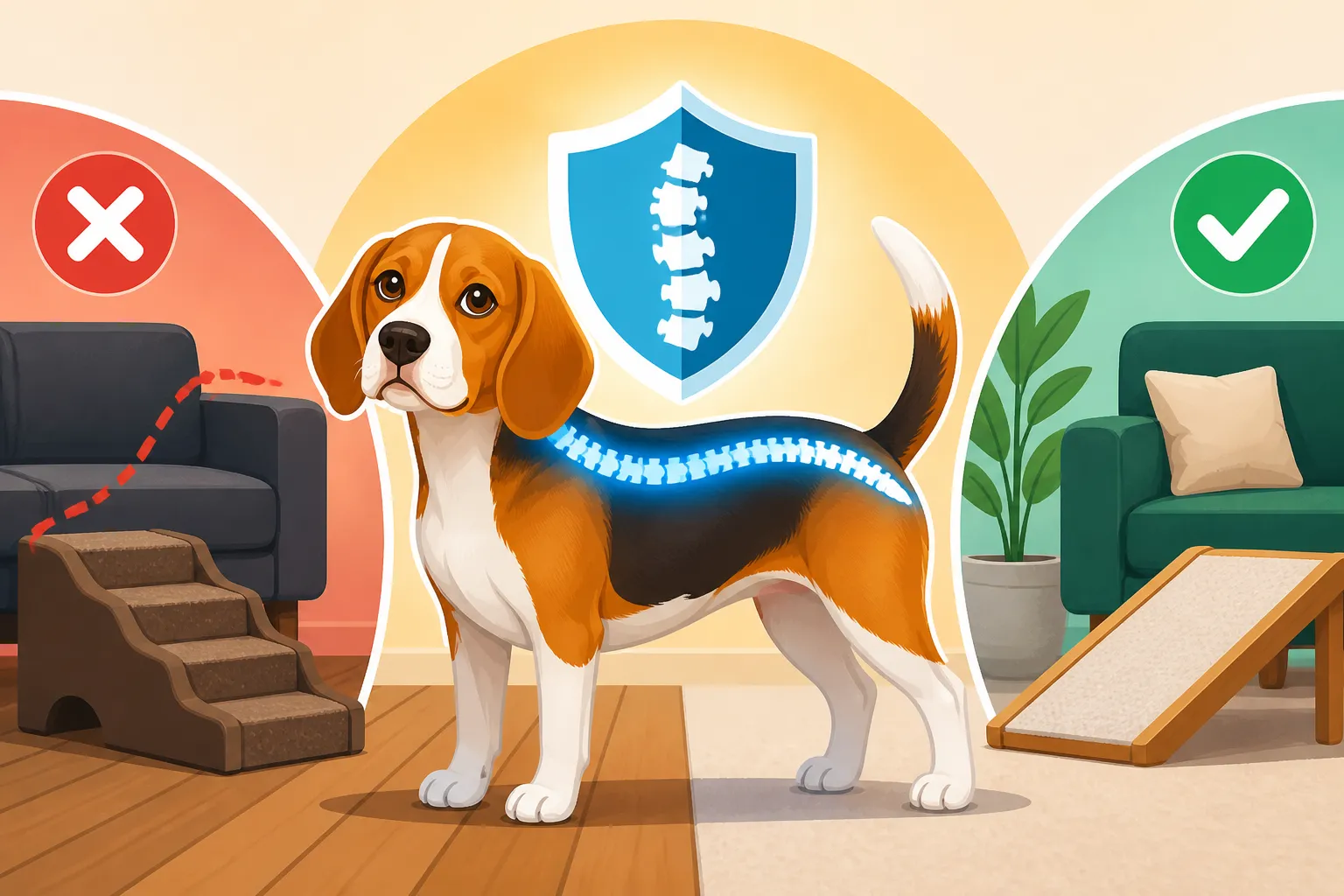
Furniture Rules That Protect a Beagle Spine
It's a common sight for Beagle owners: your beloved hound, with its boundless energy and determination, launching itself on and off the couch, bed, or even a low chair with absolute abandon. It looks like fun, harmless play, but the truth is, every single one of those joyful leaps puts stress on your Beagle's spine, potentially leading to painful and debilitating problems down the line. This guide is here to walk you through exactly why those furniture jumps are a big deal for your Beagle, and what practical, compassionate "furniture rules" you can put in place to protect their precious back for years to come.
Why Your Beagle's Spine Needs Special Protection
You might look at your Beagle and think they're built like a little tank – robust, sturdy, and ready for anything. And in many ways, they are! Their compact size and strong legs make them excellent scent hounds. However, underneath that merry exterior lies a spinal structure that, like many breeds, has certain vulnerabilities. Understanding these susceptibilities is the first step toward safeguarding your companion.
The Beagle's Unique Spinal Structure and Risks
Beagles, while not typically categorized with breeds like Dachshunds or Basset Hounds known for extreme spinal issues, still possess a body type that can predispose them to certain problems. Their slightly elongated back, combined with their active nature, means their vertebral discs can undergo significant stress. These discs act as cushions between the vertebrae, absorbing shock and allowing for flexible movement. Over time, or with sudden, forceful impacts, these discs can degenerate, bulge, or even rupture, leading to conditions like Intervertebral Disc Disease (IVDD). This isn't just a concern for older Beagles; the groundwork for disc problems can be laid much earlier in life through repeated trauma. Even a young, seemingly invincible Beagle puppy is putting micro-trauma on its spine with every leap.
The Cumulative Stress of Everyday Jumping
Think about it: how many times a day does your Beagle jump off the bed or spring onto the sofa to greet you? Multiply that by days, weeks, and years, and you start to see the immense cumulative stress these actions place on their spine. Each jump creates a jarring impact, particularly on the landing, which compresses those delicate discs. It's not usually one catastrophic leap that causes a problem, but rather the endless repetition of small impacts. This constant wear and tear can weaken the discs, making them more susceptible to injury. It’s a silent, slow process that most owners don't notice until a serious problem, like Beagle Back Pain Warning Signs, suddenly appears. You wouldn't repeatedly jump off a kitchen counter onto your bare feet all day long and expect no issues, would you? The same principle applies to your Beagle's spine.
The Hidden Dangers of Furniture for Beagles
It’s easy to think of a comfy couch or a soft bed as a safe haven for your Beagle, and indeed, they should be! But access to these elevated spots, when unregulated, presents significant risks that many owners overlook.
Impact Trauma from Jumping Down
The biggest culprit when it comes to furniture-related spinal issues is the act of jumping down. When your Beagle launches itself from the sofa or bed, gravity accelerates its body downwards. The force of this landing is then absorbed primarily by its front legs and, critically, by its spine. Imagine the shockwave that travels up their legs and through their back as they hit the floor. This impact can cause the discs between the vertebrae to compress suddenly, pushing against the spinal cord. It's like dropping a heavy book onto a stack of sponges – the sponges get squashed. Over time, this constant compression can lead to disc herniation, where the disc material pushes out and presses on the nerves or spinal cord, causing immense pain, weakness, or even paralysis. This is a primary factor in Beagle Disc Disease and That Slightly Long Back.
Awkward Movements When Jumping Up
While jumping down is often cited as the most dangerous, jumping up isn't entirely without risk either. When a Beagle leaps onto a bed or sofa, especially if they’re doing it quickly or enthusiastically, they can twist their body in awkward ways, particularly through their mid-back. If they misjudge the jump, slip, or land poorly, this sudden twisting motion can also strain ligaments and muscles, or worse, put abnormal pressure on the intervertebral discs. This is especially true if the furniture is particularly high, or if your Beagle is already a bit stiff from age or early-onset Beagle Arthritis Arriving in Middle Age. An excited "zoomie" jump onto the couch can be just as risky as a casual hop, especially if they're landing off-balance.
The Link Between Obesity and Spinal Strain
Let's be brutally honest: Beagles love to eat, and it's incredibly easy for them to put on extra pounds. That adorable "just one more treat" plea often translates into a heavier dog. And unfortunately, How Extra Weight Raises Beagle Disc Pressure significantly. Every extra pound your Beagle carries adds more stress to their joints and, crucially, their spine, especially during high-impact activities like jumping. An overweight Beagle jumping off the couch experiences far greater impact forces than a lean, healthy one. The discs have to work harder to cushion the heavier load, making them even more vulnerable to injury. Addressing Beagle Obesity Treated as a Health Problem is not just about general well-being; it's a direct intervention in protecting their spinal health. This is where thoughtful choices, even something like a controlled portion of food from a brand like Ollie, can make a real difference, but always check their specific nutritional needs with your vet.
Establishing Smart Furniture Rules for a Safer Home
It might feel a little strict at first, especially if your Beagle has always had free rein, but setting clear boundaries around furniture access is one of the kindest things you can do for their long-term health. It’s about prevention, not punishment.
Teaching "Wait" and "Off" Commands
The first step is empowering your Beagle with communication. Teaching a solid "wait" command before they hop on or off furniture can give you control and allow you to assist them or direct them to a ramp. Similarly, a clear "off" command means they can exit the furniture safely on cue. Start by practicing these commands on low, stable surfaces, using high-value treats to motivate them. Make it a positive experience! If your Beagle is particularly driven by scent, a delicious morsel will often override their instinct to leap. You want them to associate waiting for your help or using a designated ramp with a rewarding outcome. This isn't about forbidding them from comfort; it's about teaching them safer ways to enjoy it.
Consistency from Every Family Member
This is where many well-intentioned plans fall apart. It's absolutely crucial that everyone in the household is on the same page regarding these new furniture rules. If one person diligently uses a ramp, but another allows the Beagle to jump freely, the inconsistency will confuse your dog and undermine the training. Hold a family meeting, explain the "why" behind the rules (showing them articles about Beagle Back Problems and Intervertebral Disc Disease can help!), and agree on a consistent approach. This includes guests too! A friendly sign by the door, or a quick chat with visitors, can ensure everyone understands that Fido needs a little help with the sofa. Consistency creates clarity for your Beagle and prevents them from playing one family member off another.
Creating Comfortable, Low-Access Zones
While limiting uncontrolled furniture access is important, you don't want your Beagle to feel excluded from family life. This is where creating comfortable, designated "safe zones" on the floor comes in. Think about placing an orthopedic dog bed (many excellent options are available from retailers like Chewy or Amazon) right next to the couch or bed, making it an inviting place for them to settle. If they can still see and be near you, they often feel just as content. Use their favorite blanket, a special toy, and make it a cozy retreat. This gives them an approved, spine-friendly alternative to jumping on the furniture and reinforces the idea that their comfort is a priority, just in a different spot. This approach aligns with their pack mentality; they want to be with you, not necessarily on the same piece of furniture.
Beagle-Proofing Your Furniture and Living Space
Once the rules are understood, it's time to make physical adjustments to your home that support your Beagle's spinal health. These proactive steps can dramatically reduce the risk of injury.
Choosing and Installing Ramps and Steps
Ramps and steps are your Beagle's best friend when it comes to safe furniture access. They eliminate the high-impact jump altogether, allowing your dog to ascend and descend gracefully and without spinal strain. When choosing between ramps and steps, consider your Beagle's size, age, and any existing mobility issues. Ramps offer a gentler incline and are often better for Beagles with arthritis or Hind Leg Weakness in a Middle-Aged Beagle, as they distribute weight more evenly. Steps can work well for younger, more agile Beagles, but ensure the risers aren't too high for their shorter legs.
Look for models with non-slip surfaces and sturdy construction. Measure the height of your furniture to ensure the ramp or steps provide an appropriate incline or step height. Place them strategically at your Beagle's favorite couch and bed spots. You can find a wide variety of quality ramps and steps on platforms like Amazon and Chewy, designed specifically for pets. Getting your Beagle accustomed to them might take a few treat-lured repetitions, but it's an investment in their health. You can find more specific advice on Ramps for a Beagle's Bed and Car for various situations.
Here's a quick comparison to help you decide:
| Feature | Pet Ramps | Pet Steps |
|---|---|---|
| Ease of Use | Gentle incline, ideal for all ages/mobility | Requires more coordinated lifting of legs |
| Spinal Impact | Minimal, smooth weight transfer | Slightly more joint flexion and extension |
| Space Required | Longer footprint, needs more room | More compact, suitable for smaller spaces |
| Training | Usually easier to train to use | May require more convincing to use consistently |
| Best For | Senior Beagles, those with arthritis/disc issues | Younger, agile Beagles, smaller furniture |
Supportive Bedding for Spinal Health
Beyond furniture access, the quality of your Beagle's primary sleeping areas matters immensely for their spinal health. Hard floors offer no cushioning, meaning their joints and spine are constantly bearing their full body weight. Investing in orthopedic dog beds, especially as your Beagle approaches Senior Beagle Care After the Age of Ten, is a game-changer. These beds are designed with supportive foam that conforms to their body, alleviating pressure points and providing excellent spinal alignment.
Look for beds with dense, high-quality memory foam that won't flatten out quickly. Brands carried by Chewy often have excellent reviews for durability and support. Place these beds in multiple locations where your Beagle likes to rest – by your desk, in the living room, and certainly in their crate. A well-supported resting dog is a happier dog, and it directly contributes to reducing the strain on their back throughout the night and during naps.
Considerations for Senior Beagles and Existing Conditions
If you have a senior Beagle, or one already diagnosed with back problems or Beagle Arthritis That Starts in Middle Age, these furniture rules become even more critical. Their bodies are less resilient, and even minor impacts can exacerbate existing conditions. For these Beagles, ramps and steps aren't just a recommendation; they're a necessity. You might also consider restricting access to certain pieces of furniture entirely if a safe ramp solution isn't feasible.
It’s also important to be extra vigilant about their weight and activity levels. How Extra Weight Raises Beagle Disc Pressure is magnified in a senior dog. Consult your vet about appropriate exercise and potential supplements, like those for joint health. Every effort you make to reduce spinal stress will directly contribute to their comfort and quality of life as they age, helping them enjoy their Beagle Lifespan and the Twelve to Fifteen Year Range as pain-free as possible.
Protecting your Beagle's spine from furniture-related injuries is a continuous act of love and prevention. By understanding their vulnerabilities, implementing consistent rules, and providing safe alternatives, you're ensuring your merry hound can bounce through life with less pain and more joy for many years to come.
Disclaimer
This article is for general informational purposes only and does not constitute professional advice. Laws, prices and regulations vary by location and change over time. Consult a qualified professional for guidance on your specific situation.