Beagle Howling, Baying and Barking Explained
Few things are as instantly recognizable as the distinctive vocalizations of a Beagle, and for many owners, it's also one of their biggest frustrations. That deep, resonant bay, the piercing howl, or the insistent bark can be charming one moment and utterly exasperating the next, especially when you have neighbors or live in an apartment. This comprehensive guide is here to help you truly understand why your Beagle makes all those wonderful (and sometimes bewildering) noises, what each sound means, and most importantly, how to manage and live harmoniously with their natural propensity for being a very vocal hound.
Understanding the Beagle's Vocal Repertoire: More Than Just a Bark
When you live with a Beagle, you quickly learn that their "bark" isn't just one type of sound. They have a whole range of vocalizations, each with its own nuances, purpose, and intensity. It's almost like they have their own language, and once you start to decipher it, you can better understand what they're trying to tell you – or the world. Dismissing it all as just "noise" misses the rich tapestry of communication that comes so naturally to this scent hound.
Telling a Beagle Bark From a Bay From a Howl
Let's break down the three primary vocalizations you'll hear from your Beagle, because understanding the difference is the first step to figuring out how to respond.
The Bark: This is probably the most common sound you'll hear from many dogs, and Beagles are no exception. A Beagle's bark is typically sharper, shorter, and often used for alerting or seeking attention. Think of it as their "hello," "I see something," or "pay attention to me!" sound. It might be directed at the mail carrier walking past the window, a squirrel darting across the lawn, or even you, when you're taking too long to fill their food bowl. It's often a direct, immediate response to a specific stimulus, and it usually serves to get a reaction from someone or something. While it can certainly be annoying when persistent, it's generally a more conversational sound than their other, more ancient, vocalizations.
The Bay: Ah, the bay! This is the Beagle's signature sound, the deep, drawn-out, melodious cry that is so intrinsically linked to their heritage as a hunting hound. It's a sound that resonates from their very core, a guttural, almost mournful, but often thrilling, cry. The bay is typically used when a Beagle is on a scent trail, particularly when they've "found" something interesting or are actively tracking it. Imagine them nose-down, tail up, following an invisible line through the grass, and then suddenly, "AROOOO!" – that's the bay. It's an instinctive sound, a means of communicating their progress to their packmates (or human hunting companions) that they've found the trail and are following it. This isn't usually an attention-seeking sound directed at you in the same way a bark might be; it's often directed at the prey or the trail itself, a declaration of intent. You'll also hear it when they're very excited, sometimes during play, or when they're truly fired up about something.
The Howl: While often confused with the bay, the howl is usually a more prolonged, sustained vocalization, often carrying a sense of loneliness or even a response to certain auditory triggers. Beagles are pack animals, and howling is a deeply ingrained instinct for communicating over long distances, either to call the pack together or to express isolation. You might hear your Beagle howl when you leave the house (a classic sign of separation anxiety), or in response to sirens, music, or even another dog howling in the distance. The howl has a somewhat plaintive, almost operatic quality, distinct from the more assertive bay. It’s their ancient wolf ancestry coming through, a way of singing to the moon or letting everyone know they’re home and feeling a certain way. This is the sound that can really tug at your heartstrings when it comes from a place of loneliness, or drive you absolutely batty when it's a nightly occurrence.
How Loud a Beagle Bay Actually Measures
Let's not sugarcoat it: a Beagle's bay can be loud. And when we say loud, we mean it can really carry. While specific decibel levels can vary greatly depending on the individual dog and the intensity of their vocalization, a Beagle's bay can easily reach 90-100 decibels or more. To put that in perspective, a lawnmower is usually around 90 dB, and a jackhammer is about 100-110 dB. This isn't just a little yap; it's a full-throated, deeply resonant sound that was bred to be heard over hills and through forests.
This volume is precisely why Beagle vocalizations are often a point of contention for owners, especially those living in closer quarters like apartment buildings, townhouses, or neighborhoods with small yards. What sounds like a charming, characteristic hound sound to a devoted Beagle owner can quickly become a significant nuisance to a neighbor. The sustained nature of a bay or a howl, as opposed to a quick bark, also means it penetrates walls and carries further, making it harder to ignore. Understanding this inherent loudness isn't about shaming the Beagle; it's about acknowledging a fundamental aspect of the breed that requires proactive management and realistic expectations from potential owners. You can't just wish it away, and trying to ignore it will only lead to greater frustration for everyone involved.
Why Hunting Beagles Were Bred to Bay at All
To truly grasp why your Beagle is so vocal, we need to take a quick trip back in time to their origins. Beagles weren't originally bred to be quiet, demure lapdogs; they were working hounds, specifically developed in England for hunting rabbits and hare. And in that context, their vocalizations weren't a bug; they were a feature – an absolutely essential part of their job description.
Imagine a pack of Beagles, nose to the ground, trailing a rabbit through dense underbrush. The hunters, often on foot, couldn't always see the dogs, especially if the chase led them through thickets or over rolling terrain. How would they know where their dogs were, if they'd found a scent, if they were still on the trail, or if they'd cornered their prey? This is where the bay comes in. Why Hunting Beagles Were Bred to Bay at All details how this loud, persistent cry served as a sonic beacon. Each bay told the hunters, "I'm on the scent! Follow me! The chase is on!" It kept the pack together and allowed the hunters to keep pace and anticipate the rabbit's movements, even when out of sight. Without this vocal communication, the hunt would have been far less efficient, if not impossible.
So, when your modern pet Beagle bays at a squirrel in the backyard, they're not being "bad" or "stubborn"; they're simply expressing an instinctual behavior that has been hardwired into their DNA for centuries. It's the sound of their heritage, a direct link to their ancestors who worked tirelessly in the fields and forests. This deep-seated instinct means that while you can manage and redirect their vocalizations, you can never truly "train out" the bay from a Beagle. It's a fundamental part of who they are.
Common Triggers for Beagle Vocalizations
Understanding the types of sounds a Beagle makes is one thing, but pinpointing why they make them is another crucial layer of insight. Beagles are not vocalizing just for the fun of it (though sometimes it might seem that way!). Their sounds are almost always a response to an internal state, an external stimulus, or a learned behavior. Unpacking these triggers is key to developing effective management strategies.
The Scent Trail: Why the Nose Leads to Noise
For a Beagle, the world is primarily experienced through their nose. They possess an astounding 220 million scent receptors, compared to our mere 5 million, and their olfactory bulb is significantly larger. This means that a simple walk around the block for us is a complex symphony of smells for them – a full-color, surround-sound movie that we can barely comprehend. The 220 Million Receptors Behind a Beagle's Nose highlights just how powerful this sense truly is.
When a Beagle catches a particularly interesting or strong scent – say, a rabbit that crossed the yard hours ago, or a deer that recently wandered through the park – their entire being becomes focused on that trail. The instinct to hunt, to follow, to track, takes over. This intense absorption in the scent world is a primary trigger for their characteristic baying. They are communicating, "I've got it! I'm on the trail!" The sound is often involuntary, a natural outpouring of their instinctual drive. You might notice your Beagle's nose to the ground, tail flagging furiously, and then the deep, resonant bay erupts. It’s not an aggressive sound; it’s a declaration of discovery and pursuit. This also happens when they smell something exciting, like a barbecue down the street or a discarded sandwich wrapper on the pavement. The sheer thrill of the scent can prompt a happy, excited bay.
Separation Anxiety and the Howling Chorus
Beagles are inherently social, pack animals. They were bred to live and work in close quarters with other dogs and humans. This deep-seated need for companionship means that being left alone can be a source of significant distress for many Beagles. This distress often manifests as separation anxiety, and one of its most common and unmistakable symptoms is howling. The Howling That Means Beagle Separation Anxiety delves deeper into this particular challenge.
When a Beagle with separation anxiety is left alone, they're not simply bored; they're experiencing genuine panic and loneliness. The howling is their desperate attempt to call their "pack" (you!) back to them. It's a primal cry for help, an expression of their profound discomfort at being isolated. This isn't a mischievous act; it's a genuine emotional response. Beyond howling, a Beagle suffering from separation anxiety might also exhibit destructive chewing, inappropriate urination or defecation, pacing, or frantic attempts to escape their confinement. For owners, this can be incredibly frustrating, leading to complaints from neighbors, damage to the home, and immense guilt. It’s a heartbreaking situation for both dog and human, and it stems directly from their deep-seated need for connection and companionship.
Alert Barking and Attention Seeking
While the bay is often about scent and the howl about separation or response to distant sounds, barking typically falls into two main categories for Beagles: alert and attention-seeking.
Alert Barking: Beagles, despite their friendly disposition, can be surprisingly good alert systems. They're quick to notice anything new or unusual in their environment. A delivery person approaching the door, a squirrel on the fence, a cat strolling through the yard, or even a leaf blowing unexpectedly can trigger a flurry of barks. They are, in essence, sounding the alarm, letting you know that something is "out of place" or warrants investigation. While they might not be the most intimidating guard dogs, their alert barking certainly lets everyone know someone is home! This type of barking is often sharp, repetitive, and accompanied by a stiff posture and focused gaze. They're not just making noise; they're genuinely reacting to a perceived change or intrusion in their territory.
Attention-Seeking Barking: Beagles are smart and quickly learn what behaviors get them what they want. If barking has, even inadvertently, led to you giving them attention, food, or playtime, they will absolutely use it as a tool. A bark might mean, "I need to go outside!" or "I want my dinner now!" or "Throw the ball!" or "Scratch my ears!" They've learned that vocalizing gets a reaction from you, whether that reaction is positive (you give them what they want) or even negative (you yell at them, but still acknowledge them). For a Beagle, any attention can be good attention if it breaks boredom or helps them achieve a goal. This type of barking often has a demanding tone and might involve pacing, pawing, or nudging along with the vocalization.
Managing Excessive Beagle Vocalizations
So, you've got a vocal Beagle. Now what? The good news is that while you can't erase their natural inclinations, you absolutely can manage and reduce excessive vocalizations to create a more peaceful home for everyone. The key lies in understanding the root cause and applying consistent, humane strategies that work with your Beagle's nature, not against it.
Why You Cannot Train the Bay Out of a Beagle
This is perhaps the most important realization for any Beagle owner struggling with barking or baying: you cannot, and should not try to, completely train the bay out of a Beagle. To do so would be to fundamentally deny a core part of their being, something that is deeply ingrained in their genetic makeup and historical purpose. Beagles were designed to be vocal when on a scent trail. It's not a misbehavior; it's an instinctual, hardwired response.
Trying to eradicate this natural tendency entirely will likely lead to frustration for both you and your dog. You might find yourself constantly correcting, punishing, or getting angry, which can damage your bond and create anxiety in your Beagle. Instead of seeing it as a flaw, view it as a characteristic of the breed, much like their incredible nose or their floppy ears. Our goal isn't to silence them completely, but to manage the excessive or inappropriate vocalizations. We want to teach them when it's okay to vocalize (maybe during a fun scent game in the yard) and when it's not (at 3 AM or incessantly at the mailman). This shift in perspective from "how do I stop this completely?" to "how do I manage this intelligently?" is transformative for Beagle owners.
Quieting a Beagle Without Punishing the Bay
Since eliminating the bay isn't feasible or fair, our focus shifts to teaching a "quiet" cue and rewarding moments of silence. Punishment, especially for an instinctual behavior like baying, is generally ineffective and can create fear or anxiety. Instead, positive reinforcement is your best friend.
One effective strategy is to teach a "quiet" command. Start by waiting for a moment when your Beagle is vocalizing (perhaps at the doorbell). As soon as they take a breath or pause, even for a split second, say "Quiet!" and immediately reward them with a high-value treat. If they continue to bark, wait again for the briefest moment of silence. The goal is to mark and reward the absence of noise. With repetition, your Beagle will associate the "Quiet!" cue with stopping their vocalization and receiving a reward. You can then gradually increase the duration of silence required before the reward. Another method is simply to reward calm, quiet behavior throughout the day. When your Beagle is resting quietly, approach them calmly, say "Good quiet!" and offer a treat. This helps them understand that being silent also brings positive outcomes. Over time, this helps to build a dog who offers quiet behavior more readily. Teaching a Beagle a Quiet Cue That Holds is a valuable resource for this specific type of training. Remember, consistency is key; everyone in the household needs to use the same cue and reward system.
Managing the Triggers That Set a Beagle Off
Beyond teaching "quiet," a highly effective strategy is to proactively manage or minimize the triggers that cause your Beagle to vocalize excessively. This requires a bit of detective work on your part to identify what specifically sets your individual Beagle off.
Visual Triggers: If your Beagle barks incessantly at things outside the window (people, other dogs, squirrels), try blocking their view. Window film, blinds, or even strategically placed furniture can help. For dogs that bark at outdoor activity in the yard, consider a privacy screen or planting hedges along the fence line. Reducing the visual stimulation can significantly decrease alert barking.
Auditory Triggers: Some Beagles are sensitive to sounds like sirens, distant dogs, or even household noises. A white noise machine or a fan can help to mask these sounds, creating a more peaceful auditory environment. Playing classical music or calming dog-specific audio tracks can also sometimes help to soothe a sound-sensitive Beagle.
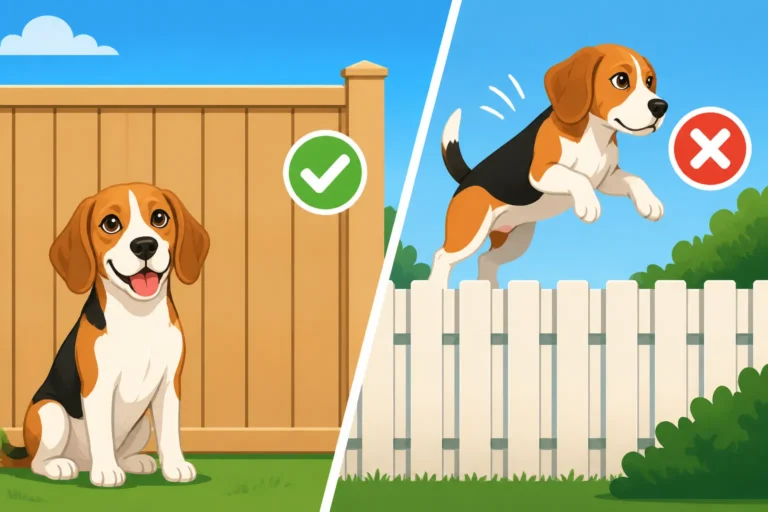
Olfactory Triggers: This is a tricky one with a Beagle! You can't block every smell, but you can manage access to highly stimulating scent environments. If your Beagle goes ballistic every time they smell a rabbit in a certain part of the yard, try to limit their unsupervised access to that area. Ensure your yard is secure to prevent them from digging under the fence to follow a scent, as described in Beagle Digging Under the Fence Line.
Boredom and Lack of Stimulation: Often, excessive vocalization is a cry for mental or physical enrichment. If your Beagle is bored, they will find ways to entertain themselves, and vocalizing is a high-reward behavior for them. Incorporating more mentally stimulating activities, like puzzle toys, sniff walks, and training sessions, can dramatically reduce boredom-related barking and howling. Brands like Amazon offer a wide array of interactive puzzle toys that can keep a Beagle engaged and their minds busy, redirecting their energy away from incessant vocalizations. Providing appropriate outlets for their natural drives is far more effective than simply trying to suppress the behavior.
Training and Enrichment to Reduce Unwanted Noise
When it comes to Beagles, simply telling them "no" or trying to suppress their natural inclinations often leads to more frustration than success. The trick is to give them appropriate outlets for their energy and intelligence, especially their incredible nose. By channeling their instincts into constructive activities, you can dramatically reduce unwanted vocalizations that often stem from boredom or unmet needs.
Scent Work as the Ultimate Energy Burner
Let's face it, a Beagle with a nose that powerful needs to use it. If they don't have a "job" for that nose, they'll create one, and often that job involves baying at every phantom scent in the wind or howling out of sheer under-stimulation. This is where scent work comes in as a game-changer. Scent Work as the Job a Beagle Was Built For really emphasizes this point.
Scent work, often called "nose work" or "K9 Nose Work," is an activity where dogs learn to detect specific odors (like essential oils) and alert their handler to them. It taps directly into their most powerful sense and provides an incredible mental workout. Just 15-20 minutes of dedicated scent work can tire a Beagle out more effectively than an hour of physical running, because it engages their brain so intensely. Imagine the focus required to discriminate one specific scent from a dozen others in a complex environment! You can start simply at home by hiding treats around a room or in puzzle toys. As your Beagle gets better, you can move to more challenging "searches" in different environments. This isn't just a fun game; it's a profound way to fulfill their innate drive and provide meaningful enrichment, which in turn reduces the likelihood of boredom-induced vocalizations. It gives them a purpose, and a Beagle with a purpose is often a much quieter, more contented Beagle.
Building Focus and Impulse Control
Beagles are known for their independent, scent-driven nature. Once that nose locks onto a trail, their ears often seem to go deaf, and their focus on you can vanish. This "selective hearing" is a common source of frustration and often contributes to their vocalizations when they’re not listening to your cues. Building solid focus and impulse control training is therefore critical.
Teaching cues like "look at me" or "watch me" helps your Beagle learn to disengage from distractions (like that tempting smell or the passing squirrel) and redirect their attention to you. Start in a quiet environment, holding a treat near your nose, and when your Beagle looks at you, mark it with a verbal cue like "yes!" or a clicker, then reward. Gradually introduce distractions as they improve. Equally important is teaching "leave it." This command is invaluable for preventing them from investigating every exciting scent or barking at every passerby. Practice by placing a low-value treat on the floor, covering it with your hand, and when your Beagle looks away or disengages, mark and reward. Gradually remove your hand, always rewarding for ignoring the tempting item. Impulse Control Exercises That Suit a Beagle offers great techniques for this. A well-trained "leave it" can mean the difference between a silent walk past a barking dog and a full-blown baying match. A company like BAXTER & Bella offers online dog training programs that can guide owners through these essential obedience and impulse control exercises, often with detailed video tutorials and support. These structured programs can be a lifesaver for owners trying to implement consistent training from home.
Providing Ample Physical Exercise
While mental stimulation is crucial, we can't forget that Beagles are energetic hounds that need plenty of physical exercise to be truly content. A tired Beagle is, almost without exception, a quieter Beagle. If a Beagle isn't getting enough opportunities to run, sniff, and explore, that pent-up energy and boredom can easily morph into excessive barking, baying, or howling.
Aim for at least one to two hours of active exercise daily, ideally broken into multiple outings. This isn't just a quick potter around the block; it means purposeful walks where they get to sniff extensively (their "scent walks"), opportunities to run in a securely fenced area, or even hiking on a long line. Long lines are particularly useful for Beagles, allowing them to explore and follow scents more freely in open spaces while still remaining safely connected to you. How Much Daily Exercise a Beagle Really Needs emphasizes the importance of consistent physical activity. Consider activities like structured walks where you vary the route, allowing them plenty of time for sniffing (which is mentally stimulating too!). Off-leash dog parks can be risky for Beagles due to their powerful prey drive and tendency to follow a scent for miles, so secure, private fenced areas are often preferred. Remember, simply letting them out into the backyard isn't usually enough, especially if it's a small yard they've already fully investigated. They need novelty, movement, and the chance to stretch those strong legs and explore with their nose.
Living Harmoniously: Beagles in Apartments and With Neighbors
The reality for many Beagle owners is that they live in communities where their dog's natural vocal tendencies can become a point of contention. Whether you're in an apartment building, a townhouse with shared walls, or a detached home in a close-knit neighborhood, being mindful of your Beagle's noise output is an important part of responsible pet ownership. It’s about proactive measures and good communication, rather than waiting for complaints to roll in.
Beagle Noise and the Neighbors Next Door
The deep, carrying quality of a Beagle's bay or howl means that even if you think your dog isn't that loud, your neighbors might be experiencing something different. Sound travels, especially through walls and across properties, and what might be a minor inconvenience to you can be a major disruption to someone else's peace and quiet. This can quickly lead to strained relationships with neighbors, or even official complaints if noise ordinances are involved. Noise Complaints From a Beagle's Neighbors highlights the challenges this can create.
The best approach is to be proactive and empathetic. If you know your Beagle is prone to vocalizing, consider having an honest conversation with your immediate neighbors before they feel the need to complain. Explain that Beagles are a vocal breed, and you're actively working on managing their sounds. Ask them to let you know if the noise becomes problematic, rather than stewing in silence. This open communication can go a long way in building goodwill. You might also ask them to describe when they hear the noise most often, as this can give you valuable clues about triggers you might not be aware of. Sometimes, simply knowing you're trying can make a huge difference in how your neighbors perceive the noise.
Soundproofing One Room for a Vocal Beagle
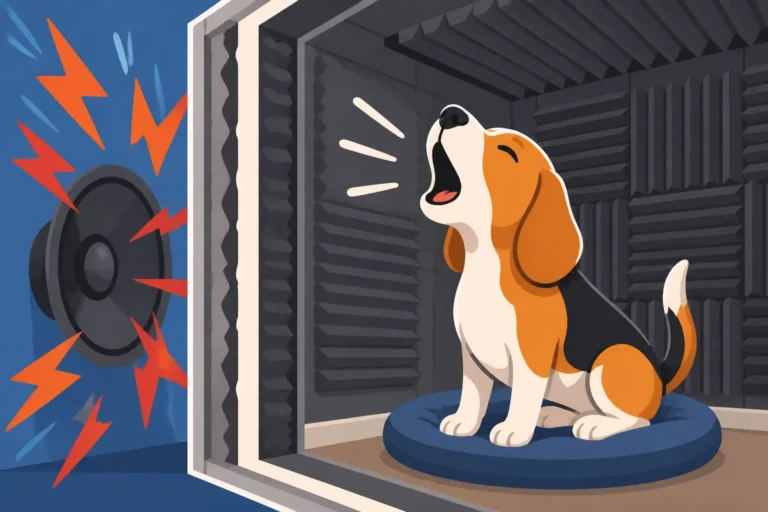
If your Beagle is particularly vocal, especially when left alone, creating a "sound-managed" space for them can be incredibly helpful. This is especially true for apartment dwellers or those with sensitive neighbors. While you can't perfectly soundproof a room without professional construction, you can significantly reduce sound transmission. Soundproofing One Room for a Vocal Beagle offers some practical steps.
Start by sealing any gaps around windows and doors with weather stripping. Heavy curtains or blackout blinds can absorb some sound, and a thick rug or carpet on the floor (especially if you have hard floors) will do wonders. Consider adding acoustic panels to the walls, which are designed to absorb sound waves and reduce echo. You can find these relatively affordably on platforms like Amazon, and they come in various styles that can even look decorative. A white noise machine or a fan running in the room can also help to mask your Beagle's own sounds, making them less distinct to neighbors, and can also help to muffle outside noises that might trigger vocalization. Finally, ensure your Beagle's crate or bed is in this quieter, cozier space, making it a comfortable den where they feel safe and less inclined to feel the need to alert or cry out.
Managing Howling During Boarding or Daycare
It's a common fear for Beagle owners: dropping off your beloved hound at a boarding facility or daycare, only to get a call later that they've been howling incessantly, disturbing all the other dogs (and staff!). Beagles are pack animals, but new environments and the absence of their primary family pack can be incredibly stressful, triggering their deep-seated instinct to howl. Beagle Howling Through a Night at Boarding addresses this specific concern.
Preparation is key here. If you know your Beagle will be boarding, start with short "practice" stays at the facility. A few hours of daycare, then an overnight, can help them acclimate to the new sounds, smells, and routines. Make sure the facility understands your Beagle's vocal tendencies and their specific triggers. Discuss what strategies they use for vocal dogs and how they manage anxiety. Providing familiar items, like their own bed, a favorite blanket, or a t-shirt with your scent, can offer comfort. You might also consider leaving them with a long-lasting chew or a puzzle toy stuffed with treats to keep them occupied. Some facilities might even recommend specific calming aids or supplements, though always discuss these with your vet first. The goal is to make their temporary home as comfortable and reassuring as possible, minimizing the stress that leads to separation-induced howling.
Specialized Solutions and When to Seek Professional Help
Sometimes, despite your best efforts with management and training, a Beagle's vocalizations persist at an unmanageable level. This is when it's important to consider specialized tools, seek professional guidance, or even rule out underlying medical issues. There's no shame in needing extra help; some Beagles simply have stronger instincts or deeper-seated anxieties that require more targeted intervention.
Beagle Bark Collars and What They Do Not Fix
It's tempting, when faced with relentless barking or baying, to reach for a quick fix like a bark collar. These collars typically work by emitting a static correction, a spray of citronella, or a vibration when activated by your dog's vocalization. However, it's crucial to understand their limitations and potential pitfalls, as outlined in Beagle Bark Collars and What They Do Not Fix.
While a bark collar might temporarily suppress vocalizations, they rarely address the underlying reason for the barking. If your Beagle is baying out of instinct on a scent trail, howling from separation anxiety, or barking out of fear, a bark collar can simply add stress or confusion. They might learn to associate the correction with the stimulus (e.g., the mailman, a new sound, being left alone) rather than their own barking, leading to increased anxiety or even fear-aggression. For a Beagle, whose vocalizations are so deeply rooted in their breed purpose and emotional state, aversive methods are often counterproductive. They might suppress the symptom, but they don't solve the problem, and can even create new behavioral issues. The focus should always be on identifying the trigger and providing a constructive outlet or teaching an alternative behavior, rather than simply punishing a natural (albeit inconvenient) expression.
Consulting a Certified Professional Dog Trainer
If you've tried various management and training techniques consistently and are still struggling with your Beagle's vocalizations, it's a clear sign that you could benefit from professional guidance. A certified professional dog trainer or a veterinary behaviorist can provide invaluable support.
These professionals have the expertise to accurately assess the root cause of your Beagle's vocalizations, which might be more complex than you realize. Is it true separation anxiety, or just boredom? Is it alert barking or attention-seeking? Is there a subtle fear component? They can then help you develop a customized training plan that uses humane, positive reinforcement methods tailored to your specific Beagle's temperament and your household's dynamics. They can teach you advanced techniques for impulse control, focus, and desensitization to triggers. They can also help you identify environmental changes you might not have considered. Look for trainers who are certified by reputable organizations and who emphasize positive, force-free methods. A good trainer will work with you and your Beagle, empowering you with the knowledge and skills to manage the situation effectively and build a stronger, more harmonious relationship.
Medical Reasons for Excessive Vocalization
While most excessive vocalization in Beagles stems from behavioral or instinctual reasons, it's always wise to consider whether there might be an underlying medical cause, especially if the behavior is new, sudden, or accompanied by other changes.
Pain or Discomfort: A dog in pain might vocalize more, either as a direct response to the pain or due to increased anxiety or irritability. Arthritis, dental pain, ear infections (a common Beagle ailment, as mentioned in Beagle Ear Infections Under Those Long Ears), or an injury could all lead to increased barking or howling.
Cognitive Decline: Older Beagles, particularly past the age of ten, can sometimes develop Canine Cognitive Dysfunction (CCD), similar to Alzheimer's in humans. Symptoms can include increased vocalization (especially at night), confusion, pacing, altered sleep-wake cycles, and house-soiling. Cognitive Decline in a Senior Beagle details these challenges.
Hearing or Vision Loss: A senior Beagle experiencing vision or hearing loss might become more anxious or disoriented, leading to increased vocalization as they struggle to understand their environment or find their way around. Senior Beagle Vision and Hearing Loss explores these sensory changes.
Other Illnesses: Conditions like hypothyroidism (which can lead to lethargy and behavioral changes, as discussed in Beagle Hypothyroidism Symptoms Owners Notice First), or even urinary tract infections, can sometimes manifest with subtle behavioral shifts that include increased vocalization.
If your Beagle's vocalizations have changed suddenly, or if you notice any other concerning symptoms, a visit to your veterinarian is absolutely in order. A thorough check-up can rule out medical issues, ensuring that you're not trying to train away a problem that actually needs medical intervention. Addressing any underlying health problems first is a critical step in managing behavioral concerns.
| Vocalization Type | Primary Characteristics | Common Triggers | General Management Approach |
|---|---|---|---|
| Bark | Short, sharp, repetitive, attention-seeking | Alerts (doorbell, mail, squirrel), boredom, demanding attention | Manage visual/auditory triggers, teach "quiet," reward calm, increase enrichment. |
| Bay | Deep, resonant, drawn-out, melodious, guttural | Strong scent trails (rabbits, deer), high excitement, play excitement | Accept instinct, channel into scent work, managed sniff walks, strong "leave it" cue. |
| Howl | Long, sustained, plaintive, mournful | Loneliness, separation anxiety, sirens, music, other distant howls | Address separation anxiety, white noise, soundproofing, companionship, professional help. |
Disclaimer
This article is for general informational purposes only and does not constitute professional advice. Laws, prices and regulations vary by location and change over time. Consult a qualified professional for guidance on your specific situation.