Training a Beagle Around 220 Million Scent Receptors
Oh, the sheer joy and utter bewilderment of owning a Beagle! Many new Beagle parents quickly discover that their charming, cuddly puppy transforms into a furry, four-legged vacuum cleaner with an agenda all its own once that incredible nose hits the ground. It’s frustrating when your carefully taught commands seem to vanish into thin air the moment a tantalizing scent drifts by. This guide is here to walk you through the unique challenges and incredible opportunities of training a Beagle, helping you understand how to work with that extraordinary nose, not against it.
Understanding the Beagle's Superpower: Its Nose
Let’s be honest, trying to train a Beagle without understanding its nose is like trying to teach a fish to fly – you’re missing the fundamental truth of its being. Beagles were quite literally bred for their olfactory prowess, for tracking game over long distances, and that drive is deeply, deeply ingrained. It’s not stubbornness; it’s instinct.
The Anatomy of a Scent-Driven Machine
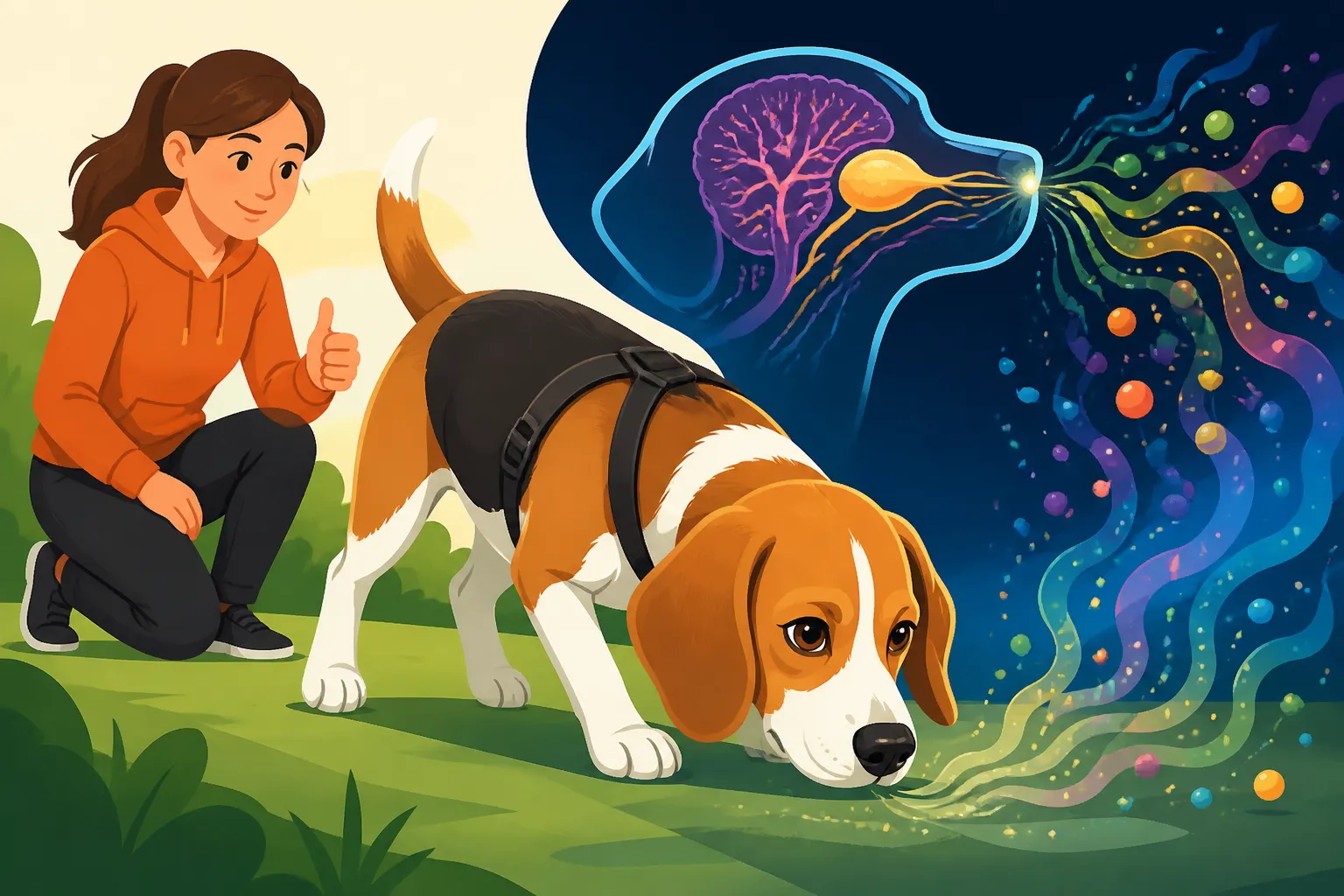
When we talk about a Beagle's nose, we're not just talking about a cute wet button at the end of its muzzle. We're talking about a biological marvel, a complex sensory organ that puts our own pathetic sniffers to shame. Humans have a mere 5 million olfactory receptors, which is barely enough to tell if the milk is off. A Beagle, however, boasts an astonishing 220 million scent receptors. Think about that for a second. It's like comparing a child's crayon drawing to a hyper-realistic IMAX movie – they’re experiencing a completely different dimension of reality. This is why you often see a Beagle with its nose glued to the ground, moving with purpose, as if following an invisible thread only it can perceive. It’s immersed in a world we can only faintly imagine.
Beyond the sheer number of receptors, their nasal structure allows them to both sniff and breathe simultaneously, creating a continuous intake of scent particles. Their long, pendulous ears also play a role, sweeping scent towards their nose, creating a localized scent field that further intensifies their ability to pick up and differentiate even the faintest trails. This incredible sensitivity means that what seems like a plain patch of sidewalk to us is a vibrant, intricate tapestry of smells to them – a novel, a daily newspaper, a complex drama unfolding in real-time. It’s no wonder they’re often lost in their own world.
How a Beagle Processes the World Through Scent
For a Beagle, scent isn't just a part of their world; it is their world. Their brain is wired to prioritize olfactory input above almost all else. Imagine trying to concentrate on a math problem when a five-alarm fire is raging outside your window – that's often what it's like for a Beagle trying to listen to "sit" when a squirrel's faint trail crosses their path. They interpret their environment, track changes, and communicate largely through scent. A fire hydrant isn't just a piece of metal; it’s a detailed social media feed of every dog that’s passed by, offering updates on their gender, mood, health, and recent activities.
When a Beagle catches an interesting scent, their entire being shifts. Their body language changes, their tail often goes up like a flag, and their focus narrows intensely. They don't just smell the rabbit that was there five minutes ago; they process when it was there, which way it went, and how fast it was moving. It's an information overload that can completely override any auditory or visual cues you might be trying to give them. This deep dive into the world of scent explains why What a Beagle Experiences on a Scent Trail is so utterly compelling to them. They're not being disobedient; they're simply responding to a primal, powerful call that their brains are exquisitely designed to follow.
The Innate Drive to Follow a Trail
This isn't just about smelling; it's about following. Beagles were meticulously bred for centuries to pursue a scent trail, often for hours on end, without human intervention other than the initial release. That means that "coming when called" was never really part of their job description in the traditional sense. Their job was to find the trail and stick to it, often baying to alert hunters to their progress. This explains why What Happens in a Beagle's Head on a Scent often translates to everything else fading into the background.
This innate drive makes training challenging but not impossible. It means you're not just teaching a command; you're teaching your Beagle to choose you over the most compelling, ancient instinct they possess. This isn't a small ask! Understanding that this drive is a fundamental part of their genetic makeup, rather than a personal affront, is the first step towards a more empathetic and effective training approach. It’s also why simply yelling louder when they’re lost in scent rarely works; their ears are simply not registering your voice in the same way.
The Reality of Recall When Scent Takes Over
If you've ever watched your Beagle's ears become decorative floppy ornaments the moment a rogue scent crosses their path, you're not alone. Recall is often the Everest for Beagle owners, a summit that many feel is impossible to reach.
Why "Come!" Becomes Optional on a Scent Trail
Let's face it, "Come!" might as well be "Blah blah blah!" to a Beagle whose nose is hot on a compelling trail. This isn't because they don't love you or don't know the command; it's because their brain has been hijacked by a far more powerful stimulus. The world of scent is immediate, rewarding, and deeply satisfying to their primal instincts. Your voice, while important to them in other contexts, simply doesn't compete. Think about it: if you heard the faint strains of your favorite song from a concert happening down the street, would you immediately drop everything for a mundane chore? Probably not. For a Beagle, that scent trail is the greatest concert on earth, and they have front-row seats.
This phenomenon is why Beagle Recall and Why Your Voice Stops Registering is such a common complaint among Beagle owners. It's not a personal slight. It's the inherent conflict between domestication and centuries of selective breeding for a very specific hunting task. When a Beagle is "on a line" – meaning they are actively tracking a scent – their focus is so intense that external stimuli are literally filtered out. It's a mental state, almost a trance, where the world beyond the scent trail ceases to exist. Knowing this helps us shift from frustration to a more strategic approach in our training.
Building a Foundation for Reliable Recall
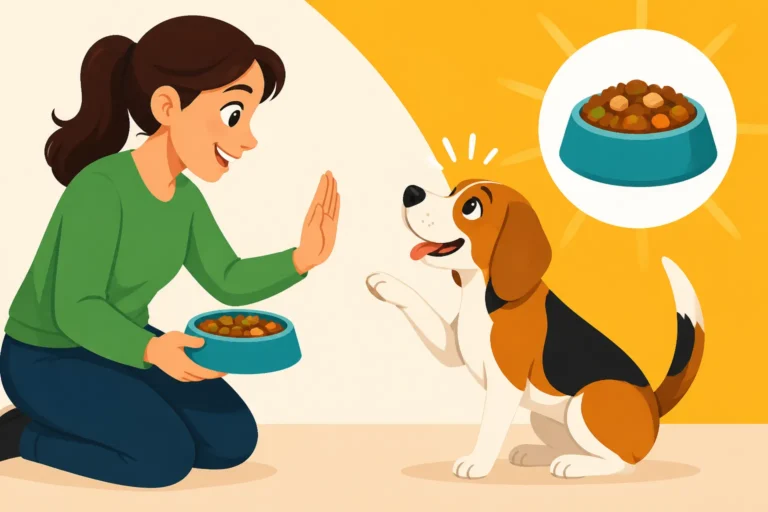
So, if their nose is such a powerful force, how do we get them to come back? The key is to make you more rewarding than any scent trail, or at least, almost as rewarding. This starts with building a rock-solid foundation before you introduce distractions. Begin in a distraction-free environment, like your living room or a securely fenced yard, using the highest value treats you can find – think tiny pieces of cooked chicken, cheese, or hot dogs. Practice frequently, making recall a fun, positive game. Say your recall cue ("Come!" or "Here!"), take a step back, squat down, open your arms, and enthusiastically reward them the moment they reach you. Never use recall as a command for something unpleasant, like bath time or nail trims, as this can poison the cue.
Gradually introduce minor distractions, always ensuring success before moving to harder scenarios. Short, frequent training sessions are far more effective than long, infrequent ones. Teach them that coming to you always means something amazing is about to happen. Consider an emergency recall word, something entirely different, that you only use in truly critical situations and always pair with an immediate, irresistible reward. This can be your "break glass in case of emergency" recall that hopefully, you'll rarely need. BAXTER & Bella offers excellent online puppy training programs that emphasize building positive associations and a strong recall foundation, which can be invaluable for new Beagle owners learning to navigate this.
When to Use a Long Line (Always!)
Here's the golden rule for Beagle owners, one that cannot be overstated: if your Beagle is not in a securely fenced area, they should be on a leash or a long line. Period. This is not about trusting your dog; it's about understanding their breed. Even the most well-trained Beagle can be overwhelmed by a compelling scent, and a split second is all it takes for them to be out of sight and potentially in danger. Why a Beagle Should Never Be Off Leash Unfenced is a mantra that every Beagle owner should embrace for their dog's safety.
A long line (15 to 30 feet) is an invaluable tool for safely practicing recall and allowing your Beagle some freedom to explore scents without risk. It lets them engage their nose, which is crucial for their mental well-being, while still giving you control. You can find excellent quality long lines on Amazon, ranging in material from nylon to biothane, which is fantastic for wet or muddy conditions. Always attach it to a well-fitting harness, not a collar, to protect their neck if they hit the end of the line while chasing a scent. Use the long line to call them back, reel them in gently, and reward them when they reach you, reinforcing the idea that coming back is always a good thing, even if it wasn't their first choice. It's a bridge to freedom, but a very important safety bridge.
Harnessing the Scent Drive for Positive Training
Instead of fighting that incredible nose, why not put it to good use? Beagles are happiest and most well-behaved when their natural instincts are engaged. Their scent drive isn't a flaw; it's a feature!
Integrating Scent Work into Daily Life
Scent work is a natural outlet for a Beagle's talents and can be incredibly enriching. It taps into their innate desire to hunt and follow a trail, providing mental stimulation that often tires them out more effectively than physical exercise alone. Think about it: an hour of vigorous running might wear out their legs, but an hour of intense sniffing wears out their brain, which is often what leads to a calm, satisfied Beagle. Sniffing Walks and Why They Tire a Beagle Out highlights this perfectly. Allow your Beagle ample time on walks to sniff and explore. Don't rush them along; let them read the "pee-mail" and follow interesting trails. These aren't just walks; they're mental workouts.
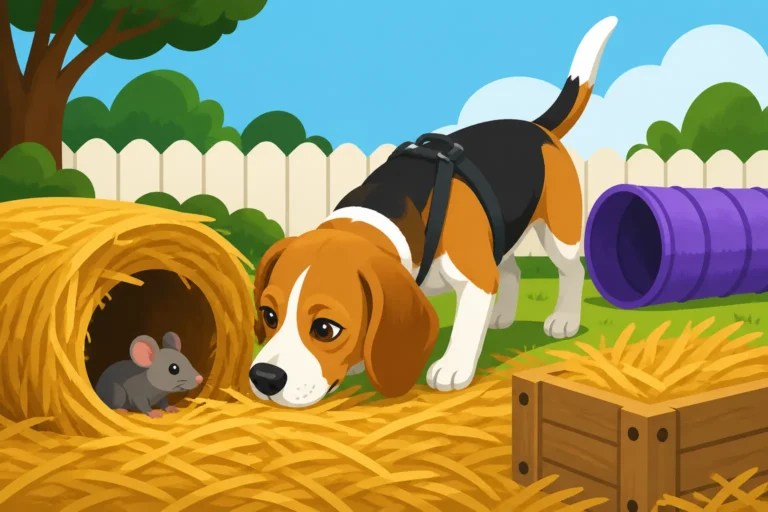
Beyond walks, structured scent games can be a fantastic way to bond and provide enrichment. Start simple: hide a favorite treat or toy under a cup and let them "find" it. Gradually increase the difficulty by hiding items in different rooms, under blankets, or in puzzle toys. "Find It" games, where they search for hidden treats, are incredibly rewarding for them. There are many commercially available snuffle mats and puzzle feeders on Amazon that are excellent for this, turning mealtime into a fun brain game. You can even join formal scent work classes, which allow Beagles to earn titles in Nose Work or Tracking, providing a structured way to celebrate their unique abilities.
Turning "Distractions" into Training Opportunities
What we often label as "distractions" are just irresistible invitations for a Beagle. Instead of getting frustrated, let's reframe them as opportunities to train. If your Beagle is constantly pulling towards a particular bush where a squirrel often hangs out, use it! Instead of yanking them away, stop a few feet short. Ask for a "sit" or "watch me," reward heavily, and then let them approach the bush for a controlled sniff. This teaches them that engaging with you first leads to getting what they want.
Similarly, if they're obsessed with a certain smell on a walk, use it to practice "leave it" or "come." Ask them to disengage from the scent for a moment, reward them lavishly for their attention to you, and then release them to sniff. This helps them build impulse control around their strongest drives. It's not about eradicating their scent drive (which is impossible), but about teaching them that listening to you can actually enhance their world, not detract from it. This is particularly true when you realize The 220 Million Receptors Behind a Beagle's Nose are always active, always processing.
Using High-Value Rewards That Compete with Scent
For a Beagle, a boring kibble treat just isn't going to cut it when a rabbit trail is calling their name. To truly capture their attention and motivate them to choose you, you need rewards that are genuinely high-value. This means soft, smelly, irresistible treats. Cooked chicken, tiny bits of cheese, hot dogs, or even commercial high-value training treats are often effective. The goal is to make the reward for engaging with you more exciting than the thrill of the scent.
Vary your rewards! Sometimes it's a treat, sometimes it's a favorite squeaky toy for a quick game of tug, sometimes it's enthusiastic praise and belly rubs. The key is unpredictability and making interaction with you the most exciting thing happening. This is vital when learning High-Value Food and How Fast a Beagle Learns. Remember, the higher the distraction, the higher the value of the reward needs to be. Keep a stash of these special treats in a training pouch that's always with you, so you're ready to seize any training opportunity.
Managing a Beagle's Vocal Nature: Baying, Howling, and Barking
The Beagle's voice is as iconic as its nose. That characteristic bay, a deep, melodious sound, is what makes a Beagle a Beagle to many. But for others, it can be a source of frustration, especially when living in close quarters.
Deciphering the Different Beagle Sounds
Beagles are hounds, and hounds were bred to use their voices. They don't just bark; they bay, they howl, they yodel, they whine. Each sound often has a specific meaning. The classic Beagle bay, a deep, resonant "a-woo-ooo," is usually an excited declaration, often triggered by catching a hot scent or seeing another dog. It's a communication tool used to announce "I'm on the trail!" or "Look what I found!" Then there's the more urgent, sharper bark, which might indicate a doorbell, a perceived threat, or an invitation to play. A mournful howl can signify loneliness or separation anxiety. A series of short, sharp barks often means excitement.
Understanding these nuances is key to addressing the vocalizations effectively. Beagle Howling, Baying and Barking Explained gives you a deeper dive into these unique sounds. Your Beagle isn't trying to annoy you; they're simply expressing themselves in the language they know best. Trying to train out the baying is largely futile; it's like trying to train a cat not to purr. It’s part of who they are. However, managing when and how much they vocalize is absolutely achievable.
Addressing Excessive Vocalizations
While you can't silence a Beagle entirely, you can definitely manage excessive vocalizations. The first step is to identify the triggers. Are they baying at every passing squirrel? Barking incessantly at the mail carrier? Howling when left alone? Once you know the trigger, you can start to work on solutions. For example, if they bark at the window, manage access to that window with frosted film or by moving furniture. Teach them a "quiet" command by rewarding silence immediately after a bark. When they bark, wait for a momentary pause, then mark that silence with a "Yes!" and a treat. Gradually increase the duration of silence required before the reward.
For the baying, which is often scent-driven, sometimes the best approach is management and redirection. If they bay when catching a scent on a walk, use a treat to regain their attention and redirect their focus to you. Engage them in a quick obedience exercise or a game. For howling due to loneliness, consider if Beagle Separation Anxiety in a Pack Breed is at play. Providing enrichment, puzzle toys, and sufficient exercise before you leave can help. A white noise machine or calming music can also sometimes lessen anxiety-driven vocalizations. Never punish vocalizations, as this can create fear or even exacerbate the behavior. Your goal is to teach them alternative, more appropriate behaviors.
Living Harmoniously with a Talkative Hound
Embracing your Beagle's vocal nature, rather than constantly fighting it, can lead to a more harmonious household. Sometimes, a Beagle's bay is simply an expression of joy or excitement. Acknowledge it, share a happy moment with your dog, and then redirect. Consider talking to your neighbors if their vocalizations are a concern. Explain that Beagles are naturally vocal hounds and that you are actively working on training. Often, understanding goes a long way.
For those living in apartments or close-knit communities, soundproofing a particular room or investing in thick curtains can help muffle sound. Providing ample mental and physical exercise is paramount, as a tired Beagle is often a quieter Beagle. Daily sniffing walks, puzzle toys, and consistent training can make a huge difference in managing their energy and reducing boredom-induced noise. While you can't train the bay out of them, you can teach them to moderate it and give them appropriate outlets for their voices. This is why Why You Cannot Train the Bay Out of a Beagle is a crucial piece of knowledge for any owner.
Outsmarting the Escape Artist: Fencing and Containment
If a Beagle has a superpower, it's their nose. If they have a secondary superpower, it's their ability to escape. They are Houdinis with a purpose, and that purpose is usually chasing a scent.
Why a Standard Fence Isn't Enough
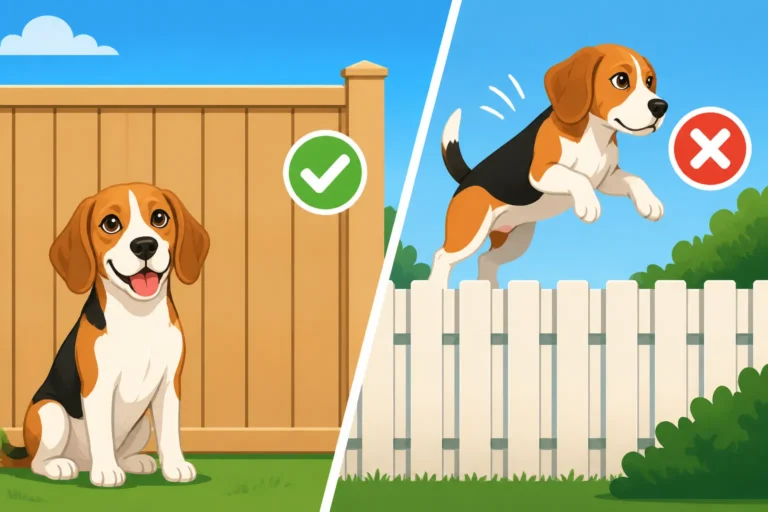
Many first-time Beagle owners quickly learn that a standard, four-foot privacy fence is less a barrier and more a suggestion to a determined Beagle. They are incredibly agile, can jump surprisingly high for their size, and, most importantly, possess an unwavering focus when a captivating scent is on the other side. A fleeting glimpse of a rabbit or the faint aroma of a deer trail can send them into an escape frenzy, and they will exploit any weakness in your perimeter. They will test every latch, every gap, and every loose board with a dedication that would make a prison break movie director proud.
Invisible fences, while tempting for their convenience, are almost universally ineffective and often dangerous for Beagles. The initial jolt might deter them for a moment, but if a high-value scent hits their nose, they will bolt right through the correction, often too afraid to come back through it to return home. For a breed driven by instinct like the Beagle, the allure of the chase often far outweighs the unpleasantness of a static shock. This is another reason Why a Beagle Should Never Be Off Leash Unfenced is so important.
Reinforcing Your Yard Against Diggers and Climbers
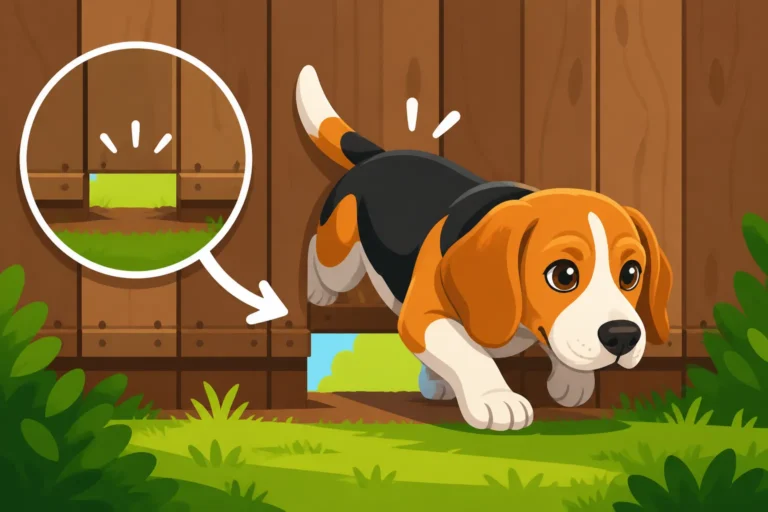
To truly contain a Beagle, you need to think like a Beagle. This means a solid, physical fence, ideally at least five to six feet high. But height isn't the only factor. Beagles are expert diggers, and they will systematically test the fence line for weak spots. To counter this, consider burying chicken wire or concrete footing along the base of your fence, extending it inward at least 12-18 inches to create a digging barrier. Alternatively, laying large rocks or pavers along the inside perimeter can deter them. How a Beagle Gets Underneath a Fence is a common problem that requires these proactive measures.
Another often overlooked escape route is climbing. While not natural climbers like some breeds, Beagles can stand on things – dog houses, firewood piles, even snowdrifts – to gain height and then jump or scramble over. Ensure there are no convenient "launch pads" near the fence line. Regularly inspect your fence for any loose boards, weak gates, or holes that might develop. Remember, they only need one small opening. A daily perimeter check should become part of your routine.
Door Dashing and Gate Security
It’s not just the yard perimeter you need to secure; it’s every entryway into your home and yard. Beagles are notoriously quick door dashers. The moment a crack appears, their nose is already processing the exciting new smells outside, and they're gone. Training a solid "wait" or "stay" at doorways is crucial, practiced repeatedly with high-value treats. Make it a routine: they must sit, wait, and only proceed through the door on your release cue.
Gate security is equally important. Ensure all gates have secure, difficult-to-open latches – sometimes a simple thumb latch isn't enough, and a carabiner clip or a padlocked gate is necessary. Never assume a gate is closed without physically checking it, and educate everyone in your household about the importance of gate and door safety. If you have guests, clearly communicate the "Beagle rules" about opening doors. A brief moment of inattention is all it takes for your Beagle to launch its next great adventure. A GPS collar can be a fantastic backup safety measure, allowing you to track your Beagle if they do manage to escape, though it's never a substitute for physical containment.
Training a Beagle Puppy: Setting the Stage Early
Bringing a Beagle puppy home is an exciting time, full of adorable floppy ears and tiny bays. But it's also a critical period for setting good habits before that powerful nose truly takes over.
Socialization Beyond the Nose
Socialization for a Beagle puppy is about more than just meeting other dogs; it's about introducing them to a wide variety of sights, sounds, textures, and experiences in a positive way, before their scent drive becomes their sole focus. From 8 to 16 weeks is the prime socialization window. Expose your puppy to different people (of all ages and appearances), friendly vaccinated dogs, various sounds (traffic, vacuums, thunder), different surfaces (grass, pavement, gravel), and new environments.
Always ensure these experiences are positive and not overwhelming. Short, happy encounters are better than long, stressful ones. The goal is to build a confident, well-adjusted adult Beagle who isn't fearful or reactive, but also one who can still pay attention to you even when there are novel smells around. Puppy classes are excellent for this, providing controlled environments for socialization and early training. BAXTER & Bella's online training resources often include comprehensive socialization checklists and guidance for puppies, which can be a lifeline for new Beagle owners.
Crate and Potty Training with Scent Distractions
Crate training is invaluable for Beagles, a breed that traditionally slept together in packs. A crate becomes their safe, den-like space, aiding in potty training and preventing destructive chewing. Introduce the crate positively with treats and toys, making it a happy place. Never use it for punishment. For potty training, the Beagle's nose can actually be a hindrance outdoors. They might get so engrossed in sniffing a fascinating patch of grass that they forget why they're outside.
Establish a consistent schedule, taking your puppy out frequently, especially after waking, eating, and playing. Take them to the same designated potty spot each time to build strong scent associations there. Praise and reward them immediately when they eliminate in the right place. Be patient; accidents will happen, but consistency is key. Clean up accidents with enzymatic cleaners to eliminate lingering scents that might attract them back to the same indoor spot. Remember, puppies simply can't hold it for very long, so frequent trips outside are essential.
Managing Puppy Mouthing and Chewing
Beagle puppies, like all puppies, explore the world with their mouths. Teething can make this even more intense. This means a lot of mouthing, nipping, and chewing. It's important to teach appropriate bite inhibition and redirect chewing onto approved items. Provide a wide variety of safe, durable chew toys. When your puppy mouths you too hard, yelp loudly, withdraw attention immediately, and walk away. Return only when they are calm. This teaches them that hard bites end the fun.
Consistency from all family members is crucial. If one person allows hard mouthing, it undoes the training. Keep valuable items out of reach, and if you can't supervise directly, a crate or puppy-proofed pen is your best friend. This stage is also when you can start Leash Training a Beagle From Eight Weeks as well as Beagle Puppy Recall Before Adolescence Hits, using positive reinforcement and keeping sessions short and fun. By addressing these behaviors early, you can help shape your Beagle into a well-mannered adult who understands boundaries, even with that powerful urge to sniff everything.
Common Beagle Behavior Challenges and Solutions
Even with the best intentions, Beagles present unique behavioral quirks that can be perplexing if you're not prepared.
Counter Surfing and Food Guarding
If you own a Beagle, you know they are perpetually hungry. And I mean perpetually. This intense food drive, combined with their cleverness and surprising agility, makes them expert counter surfers. Nothing is safe, whether it's cooling cookies, an unattended sandwich, or even a bag of groceries. They'll scale counters, open cabinets, and generally devise ingenious ways to acquire forbidden snacks. Beagle Counter Surfing and Trash Raiding are classic Beagle moves.
The best defense is a good offense: prevention. Keep your counters clear. Put away food immediately after use. Use child locks on cabinets containing food or trash. Never leave food unattended, even for a moment. Teach a solid "leave it" command with temptations on the floor, gradually increasing the difficulty to items on low tables, and eventually working towards items on the counter. Reward heavily for ignoring the forbidden food. If they do manage to snag something, try to trade them for an even higher-value treat, rather than chasing or scolding, which can lead to resource guarding.
Resource guarding, where a dog becomes defensive over food, toys, or even sleeping spots, can also be an issue due to their high food drive and competitive nature in a pack. To prevent this, ensure your Beagle eats meals undisturbed, and occasionally drop extra high-value treats into their bowl while they're eating to build positive associations with you approaching their food. Practice "give" or "drop it" with toys, making it a positive exchange.
Separation Anxiety in a Pack Animal
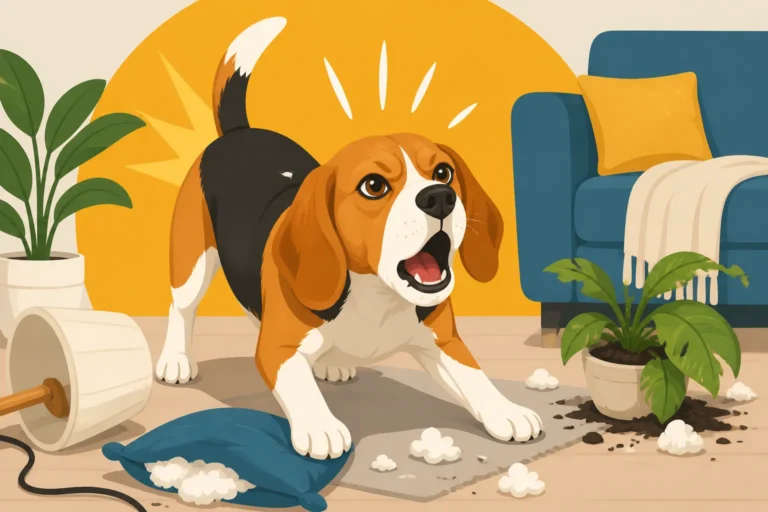
Beagles were bred to live and work in packs. They are inherently social creatures, and being left alone, especially for long periods, can be incredibly stressful for them. This often manifests as The Howling That Means Beagle Separation Anxiety, destructive chewing, inappropriate urination or defecation, or excessive barking and howling. They're not being naughty; they're genuinely distressed and lonely.
If you suspect separation anxiety, start with very short absences. Leave for a minute, return before they get anxious, and reward calm behavior. Gradually increase the time. Provide high-value, long-lasting chew toys or puzzle feeders stuffed with peanut butter or frozen yogurt to distract them during your absence. A white noise machine or calming music can sometimes help. Some Beagles genuinely benefit from the companionship of another dog, but this isn't a guaranteed fix and shouldn't be the first solution. In severe cases, consult a certified professional dog trainer or a veterinary behaviorist, as they may recommend specific training protocols or even medication to help manage anxiety.
Scavenging on Walks and the "Leave It" Command
With that powerful nose, a Beagle on a walk is constantly finding fascinating (and often disgusting or dangerous) things to investigate and potentially ingest. Roadkill, discarded food, garbage, unknown plants, and even toxic substances can all be irresistible temptations. Beagle Scavenging on Every Walk is not just annoying; it can be a serious health hazard.
A bulletproof "leave it" command is absolutely essential for Beagle owners. Start teaching "leave it" indoors with low-value items, gradually moving to higher-value items and then to outdoor distractions. Practice often, rewarding your Beagle lavishly for disengaging from the tempting item and looking at you. Another crucial command is "drop it," for when they inevitably pick something up. This should also be taught as a positive exchange, where dropping an item means they get an even better treat. Always carry high-value treats on walks for these moments. If your Beagle is a particularly aggressive scavenger, consider a basket muzzle for walks to prevent accidental ingestion, especially in areas where trash or dangerous items are common. It's a safety tool, not a punishment, and many dogs adapt to them very well.
| Challenge | Beagle Tendency | Training Strategy | Key Tool/Resource |
|---|---|---|---|
| Recall | Nose overrules ears; follows scent for miles. | High-value rewards, positive association, consistent practice in low-distraction areas, emergency cue. | Long Line, High-Value Treats, secure yard |
| Vocalization | Bays, howls, barks due to scent, excitement, loneliness. | Identify triggers, teach "quiet," redirect, manage environment. | Puzzle toys, white noise, neighbor communication |
| Escaping | Digs, jumps, door dashes for scent; invisible fences ineffective. | Secure physical fence (5-6ft+ with dig guard), secure gate latches, "wait" at doors. | Fence extensions, buried wire, child locks, GPS collar (backup) |
| Counter Surfing | Intense food drive, cleverness, agility to reach food. | Prevention (clear counters), "leave it" command, secure food storage. | Child locks, secure trash cans, durable chew toys |
| Separation Anxiety | Pack animal needs company; distress when alone. | Gradual absence training, enrichment, calming aids, professional help for severe cases. | Kongs, puzzle feeders, white noise, pet camera, BAXTER & Bella resources |
| Scavenging | Finds and ingests appealing (often dangerous) items on walks. | Bulletproof "leave it" and "drop it" commands, high-value trade, basket muzzle (if needed). | High-Value Treats, long leash, basket muzzle (for safety) |
Disclaimer
This article is for general informational purposes only and does not constitute professional advice. Laws, prices and regulations vary by location and change over time. Consult a qualified professional for guidance on your specific situation.