Why a Beagle Should Never Wear a Choke Collar
It’s a common scenario: you’ve got a Beagle, and they are pulling you down the street like a freight train, nose glued to the ground, utterly oblivious to your existence. You're probably tired, maybe a little embarrassed, and you’ve heard about tools that promise instant control. This guide is going to walk you through exactly why a choke collar, despite its tempting promise of immediate restraint, is never the right or safe choice for your beloved Beagle, and what truly effective, kind alternatives you have.
Understanding Choke Collars and Their Design
When you’re at your wit’s end with a pulling Beagle, any tool that claims to offer instant control can seem like a godsend. But it's crucial to understand what a choke collar actually is and how it functions before ever considering one for your companion. The very design of these collars carries inherent risks, especially for a breed as unique in its physical makeup and drives as the Beagle.
What is a Choke Collar, Really?
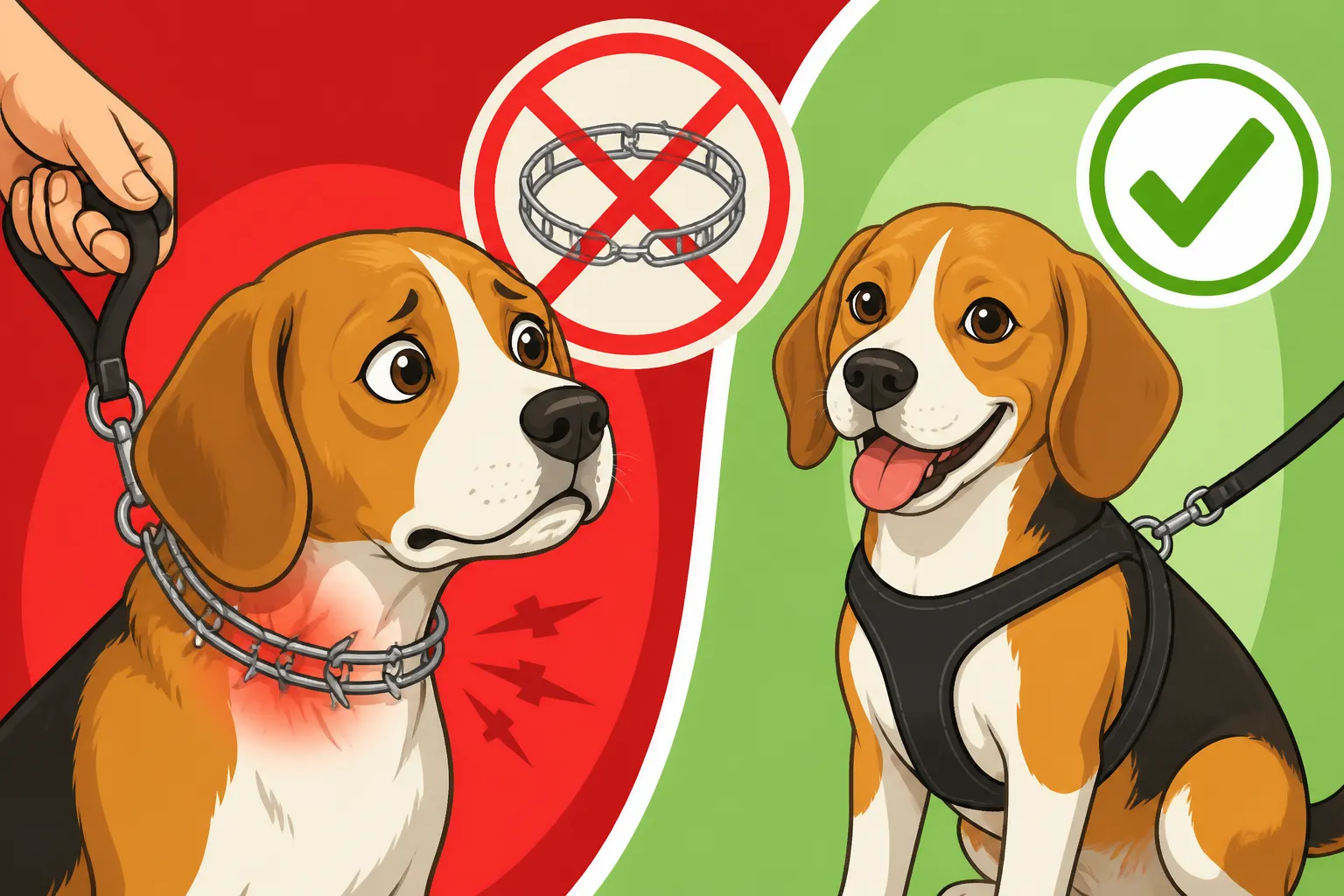
A choke collar, often made of metal chain links or heavy nylon, is essentially a loop that tightens around your dog's neck when tension is applied to the leash. There's no quick release, no stopping point; the more your dog pulls, or the more you pull, the tighter it gets. The idea, in theory, is that the discomfort or pain discourages pulling. For frustrated owners dealing with a strong-willed, scent-driven Beagle, the allure of such a tool is understandable. You just want to enjoy a walk, right? You want to feel like you're in control and your arm isn't being dislocated. However, this immediate 'control' comes at a steep price, both physically and emotionally for your dog. It's a method of force and suppression, rather than teaching or guiding.
The Immediate Physical Risks to a Beagle's Neck
Beagles, despite their sturdy appearance, have delicate necks that are not designed to withstand the sudden, immense pressure a choke collar can exert. Below their adorable, soft fur and loose skin lies a vital network of structures: the trachea (windpipe), larynx (voice box), thyroid gland, esophagus, and numerous blood vessels and nerves. Even a mild "correction" or a sudden lunge from your Beagle when they catch an irresistible scent can cause significant damage.
Imagine the force of a chain rapidly constricting around your own throat – it's alarming, to say the least. For a Beagle, this can lead to a crushed trachea, which is incredibly painful and can cause breathing difficulties. Repeated stress on the larynx can result in laryngeal paralysis, where the airway doesn't open properly, leading to chronic respiratory issues. Damage to the thyroid gland, located in the neck, could also lead to long-term health problems like hypothyroidism, which can impact weight, coat health, and energy levels. Furthermore, the increased pressure on the eyes during strangulation can exacerbate or even cause glaucoma or other serious eye conditions. Beagles are already prone to certain eye issues, so adding this kind of risk is simply not worth it. Beagle Eye Conditions and the Board-Certified Exam is a topic many owners research, and a choke collar can directly contribute to worsening or creating these problems.
The Behavioral Fallout: Why Choke Collars Don't Actually Teach
While a choke collar might appear to "work" by stopping your Beagle from pulling in the moment, it doesn't actually teach them how to walk nicely on a leash. Instead, it creates a host of negative associations and can lead to deeper behavioral problems that are far more challenging to resolve than simple leash pulling. We want our Beagles to learn, not just to comply out of fear.
Pain, Fear, and Aversion: The Real Lessons Taught
When a choke collar tightens around your Beagle's neck, the lesson it teaches isn't "walk nicely beside me." It's "walking on a leash hurts," or "my owner makes me feel pain." This creates a negative association with the leash, with walks, and potentially even with you, their handler. This isn't just about feeling a little discomfort; it's about associating pain with an otherwise joyful and natural activity for a dog.
Through classical conditioning, your Beagle might start to dread the sight of their leash or even your approach for a walk. They might become fearful or anxious, which can manifest as cowering, reluctance to go outside, or even aggression as a defensive mechanism. Instead of building a positive relationship based on trust and mutual understanding, you inadvertently foster fear and resentment. Your Beagle's primary drive is their nose, and when that intense desire to follow a scent trail is met with sudden pain, it doesn't teach them to ignore the scent; it just teaches them that going on walks is a scary experience. This can actually make future training much harder, as a fearful dog is less likely to learn effectively.
Suppressing Behavior vs. Teaching Alternatives
The core issue with choke collars is that they suppress an unwanted behavior (pulling) rather than teaching a desired one (loose-leash walking). Pulling is a natural behavior for a hound dog like a Beagle, whose entire existence revolves around following a scent. Their powerful nose, with The 220 Million Receptors Behind a Beagle's Nose, means they are constantly processing an overwhelming world of smells. Expecting them to ignore every tantalizing aroma and walk perfectly by your side without proper guidance is unrealistic.
When you use a choke collar, the pulling might stop, but the underlying drive and the lack of understanding of what to do instead persist. It's like telling a child "don't run!" without ever showing them how to walk politely. They stop running, but they still don't know the proper behavior. For a Beagle, this means they're not learning to keep slack in the leash, to check in with you, or to manage their excitement when a fascinating scent presents itself. They're just learning that pulling causes pain. True training involves breaking down the desired behavior into small, achievable steps and rewarding your Beagle for every correct choice. This builds a foundation of understanding and trust, ensuring the behavior is learned, not just avoided through force.
Better Tools for a Beagle on Leash
Thankfully, the world of dog training has evolved, and there are many humane, effective tools available that can help you teach your Beagle to walk politely on a leash without causing pain or fear. These alternatives work with your Beagle's anatomy and natural instincts, rather than against them, fostering a better walking experience for both of you.
Front-Clip Harnesses for Effective Leash Training
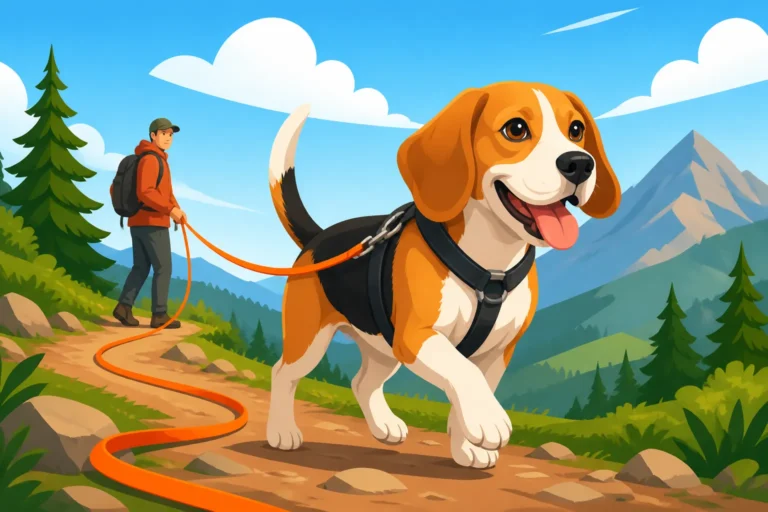
One of the most highly recommended tools for a pulling Beagle is a front-clip harness. Unlike a choke collar, which tightens around the neck, a front-clip harness has a leash attachment ring located on your dog's chest, rather than on their back. When your Beagle pulls forward, the leash applies pressure to their chest and gently redirects their momentum to the side, effectively turning them back towards you. This makes it very difficult for them to continue pulling with full force, giving you much more control without any strain on their delicate neck.
Brands like Blue-9 Balance, Easy Walk, and Ruffwear offer excellent front-clip harnesses that you can often find at your local pet store or through online retailers like Chewy and Amazon. They come in various sizes and designs, so you can find one that fits your Beagle comfortably and securely. The key benefit is that they eliminate pressure on the trachea and throat, making walks safer and more comfortable. This is why Why a Harness Protects a Beagle's Neck is such a crucial topic for Beagle owners. Not only do these harnesses offer better control, but they also allow your Beagle to breathe freely, sniff comfortably, and enjoy their walk without the threat of pain.
Head Halters: When Extra Control is Needed
For Beagles that are exceptionally strong pullers, or those with reactivity issues that require more immediate directional control, a head halter can be an invaluable tool. Often mistaken for muzzles, head halters (like the Gentle Leader or Halti brand) are designed to fit around your dog's muzzle and behind their ears, similar to a horse's halter. The leash attaches under the chin, giving you control over the direction of your dog's head. Where the head goes, the body follows.
Introducing a head halter requires patience and positive reinforcement. Most dogs don't immediately love something on their face, so you'll need to slowly condition your Beagle to accept it with lots of treats and praise. Start with short periods, gradually increasing the duration, and always pair it with positive experiences. Once accustomed, a head halter can provide surprisingly gentle yet effective control, especially for a Beagle with an intense focus on scent that might otherwise drag you around. It doesn't cause pain, but rather leverages natural canine communication by guiding their head.
Flat Collars for ID, and the Role of Long Lines
While a choke collar is unsuitable for walking, a flat buckle collar still has an important role: holding your Beagle's identification tags. Every Beagle, even one that is microchipped, should wear a collar with up-to-date ID tags at all times. This is their quickest ticket home if they ever manage to slip out or get lost. Beagle ID Tags and Which Collar to Use is a good resource for ensuring your Beagle is properly identified. When it comes to walks, however, especially for a breed as driven by scent as the Beagle, a flat collar offers very little actual control if your dog is a puller and can still put dangerous pressure on their neck if they lunge.
For training recall or allowing your Beagle safe exploration in an open, unfenced area, a long line (a leash that's 15-30 feet or more) is an excellent choice. It gives your Beagle the feeling of freedom to sniff and roam, while still keeping them safely connected to you. This allows them to indulge their natural instincts without the risk of running off or getting into trouble. A long line paired with a comfortable harness allows your Beagle to engage their incredible nose and get much-needed mental and physical exercise. For more on this, check out The Long Line Length a Beagle Actually Needs.
Training Methods That Build Connection, Not Coercion
Moving beyond restrictive tools means embracing training methods that strengthen your bond with your Beagle, rather than relying on punishment. Positive reinforcement and understanding your Beagle's natural drives are the keys to a happy, well-behaved companion who walks politely by your side because they want to, not because they fear the consequences.
Positive Reinforcement and High-Value Rewards
The cornerstone of effective and humane Beagle training is positive reinforcement. This means rewarding your Beagle for performing the behaviors you want to see. When they walk with a loose leash, stop to check in with you, or respond to a cue, they get something wonderful! For a Beagle, "wonderful" usually means high-value food rewards. Bits of cooked chicken, cheese, hot dogs, or specially made soft training treats are far more motivating than a dry biscuit. Look for high-quality, palatable treats from brands you trust, whether it's specific training treats you find on Chewy or even fresh food options like Ollie that can be portioned into tiny, irresistible bites for training.
The secret is timing and consistency. The reward needs to be delivered within 1-2 seconds of the desired behavior so your Beagle clearly understands what they're being rewarded for. Keep training sessions short and fun, especially with a breed that can get easily distracted by scents. You’ll find that when your Beagle associates walking politely with delicious rewards, they'll be much more eager to offer that behavior. For more ideas on what truly motivates your scent-driven friend, read The Treats a Beagle Will Work Hardest For.
Loose-Leash Walking Techniques for a Scent Hound
Teaching loose-leash walking to a Beagle requires understanding their incredible drive to sniff. They aren't being disobedient when they pull towards a scent; they are simply being a Beagle! Instead of fighting this instinct, you can work with it. Start training in a quiet, low-distraction environment, like your backyard, before moving to more stimulating areas. The moment your Beagle puts slack in the leash, even for a step, mark it with a verbal cue like "Yes!" or a clicker, and immediately reward them.
Practice changing direction frequently. If your Beagle pulls ahead, simply stop walking. Wait until the leash slackens, then reward and continue. You can also pivot and walk in the opposite direction. This teaches your Beagle that pulling gets them nowhere, but a loose leash gets them to move forward. Incorporate sniff breaks into your walks as a reward. When your Beagle walks nicely for a stretch, say "Go sniff!" and let them explore an interesting patch of grass for a few moments. This acknowledges their natural drive and makes good leash manners even more rewarding. It’s important to remember that Letting a Beagle Sniff on Every Single Walk is not just a nice thing to do, it's essential mental enrichment for your hound.
Patience and Consistency: The Beagle Training Mantra
Let's be real: training a Beagle isn't always a walk in the park. Their independent nature and formidable nose mean they require a good deal of patience and consistency from their human companions. You might have days where you feel like you're making no progress, but don't give up! Every consistent, positive interaction is building a stronger foundation for your relationship.
Short, frequent training sessions (5-10 minutes) are often more effective than one long, overwhelming session. Work on building focus games indoors before heading out into the exciting world. This helps them learn to pay attention to you even when there are distractions. Building Beagle Focus in a Distracting Place can offer some great strategies. Remember, Beagles are highly intelligent and eager to please when they understand what you want and when it's worth their while. By committing to positive, consistent training, you're not just teaching loose-leash walking; you're building a deeper bond and ensuring your Beagle thrives as a well-adjusted, confident member of your family. If you're a first-time owner, understanding What a First-Time Owner Gets Wrong With a Beagle can help set realistic expectations and avoid common pitfalls.
Here's a quick comparison of various leash tools:
| Collar/Harness Type | Description | Pros | Cons | Suitability for Beagles (and why) |
|---|---|---|---|---|
| Choke Collar | Metal chain or nylon loop that tightens around the neck with tension. | Appears to stop pulling quickly. | Physical injury risk (trachea, larynx), creates fear/aversion, no real learning. | NEVER SUITABLE. High risk of injury to neck, throat, and thyroid; creates negative associations with walks and handler. |
| Flat Collar | Standard buckle collar, does not tighten. | Good for ID tags, comfortable. | No real control for strong pullers, can still cause neck strain if Beagle lunges. | ID ONLY for walks. Acceptable for holding ID tags; not recommended as the primary walking tool for Beagles prone to pulling. |
| Front-Clip Harness | Leash attachment at the chest; redirects forward motion. | Safe, humane, effective for pulling, no neck pressure, good control. | Some dogs may need adjustment time; can get tangled if not sized correctly. | HIGHLY RECOMMENDED. Redirects pulling safely without pain, preserving your Beagle's neck and promoting loose-leash walking. |
| Head Halter | Fits over muzzle and behind ears; leash attaches under chin for head control. | Excellent control for strong pullers/reactive dogs, no neck pressure. | Requires positive introduction/conditioning, some dogs dislike feeling on their face. | GOOD OPTION for persistent pullers. Provides strong directional control without pain, but proper introduction is key for acceptance. |
Disclaimer
This article is for general informational purposes only and does not constitute professional advice. Laws, prices and regulations vary by location and change over time. Consult a qualified professional for guidance on your specific situation.