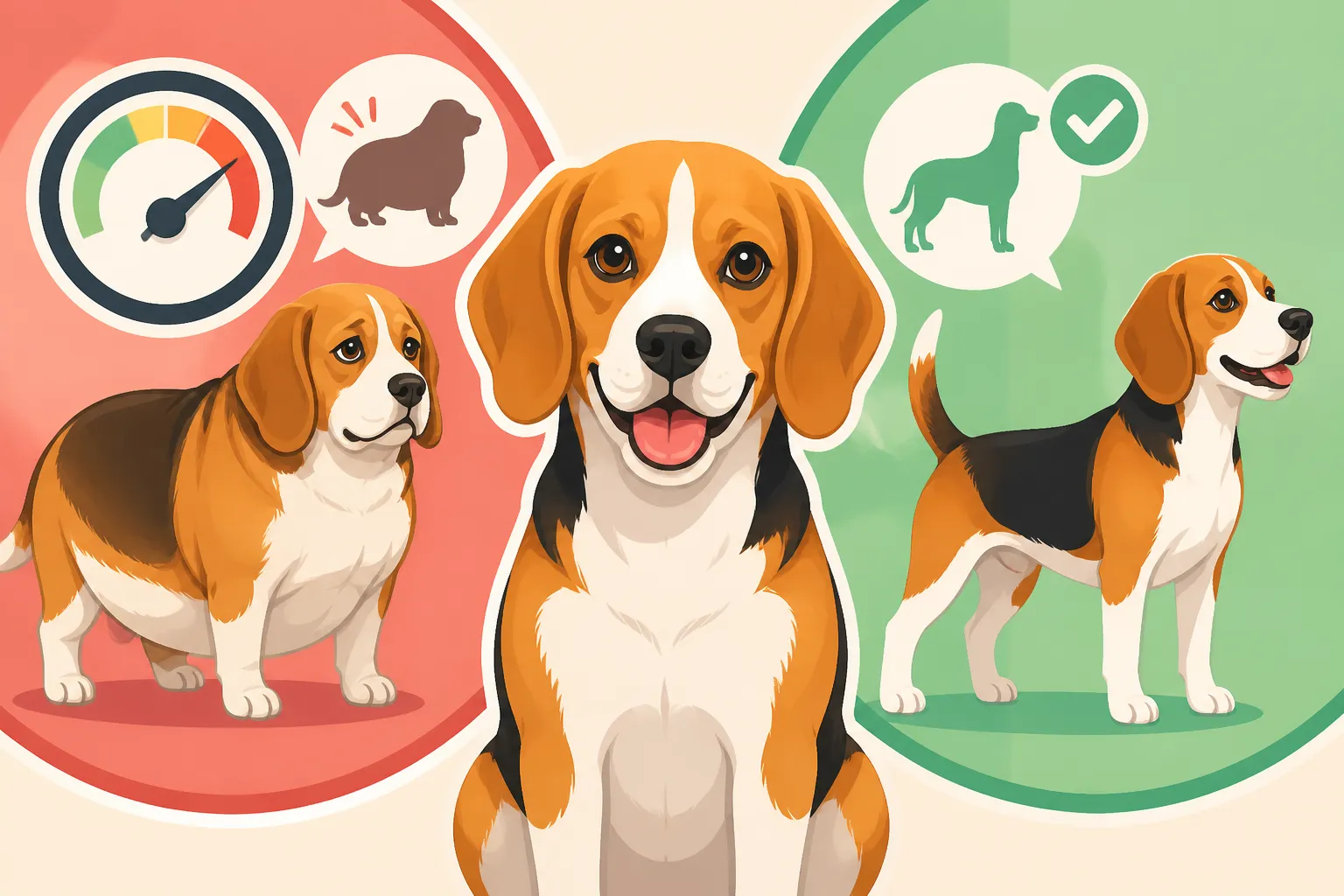
Catching Beagle Weight Gain Before the Vet Does
It’s a scenario many Beagle parents know all too well: you look at your sweet, perpetually hungry hound, you think they look perfectly fine, and then your vet gently mentions they’ve put on a few too many pounds. It can feel like it came out of nowhere, and the truth is, Beagles are master illusionists when it comes to hiding a creeping weight gain. This guide will walk you through how to become a detective in your own home, helping you spot those subtle shifts before they become a bigger problem that only the vet catches.
Why Beagles Are Prone to Weight Gain
Let's be honest, living with a Beagle means living with a dog that believes every meal is their last and every crumb is a treasure. This isn't just a charming quirk; it's deeply ingrained in their history and biology, making them uniquely susceptible to packing on the pounds. Understanding why they're so food-motivated is the first step in managing their weight.
The Hunter's Instinct and Food Drive
Beagles were literally bred for their noses and their relentless pursuit of scent, often working in packs where competition for food scraps could be fierce. This means their genetic programming tells them: if food is present, eat it now, and eat as much as possible, because who knows when the next meal will come? This isn't gluttony in a malicious sense; it's pure, unadulterated instinct. When you offer them food, their brain screams "YES!" and the concept of moderation often goes right out the window. This powerful drive can make training a breeze with high-value treats, but it also means every dropped morsel, every forgotten plate, and every open pantry door is an irresistible temptation. Many owners find themselves grappling with Beagle Counter Surfing and Trash Raiding because that nose leads them to culinary adventures.
This instinct isn't just about survival; it's also about reward. For a Beagle, finding food is the ultimate prize, a self-reinforcing behavior that makes them incredibly persistent. They're not just eating because they're hungry; they're eating because their ancient brain tells them it's what they do. This deep-seated drive means you have to be one step ahead, making conscious choices about their diet and environment, because leaving food unattended is like setting a trap for your furry friend.
A Deceptive Build That Hides Extra Weight
Beagles have a compact, muscular build, often described as sturdy. They aren't dainty, and their loose skin and thick double coat can effectively camouflage a gradual increase in weight. Unlike a lean sighthound where every rib is visible, a Beagle can put on a significant amount of extra padding before it becomes overtly obvious. You might notice their collar getting a little snug, or a harness needing adjustment, but often, the visual cues are missed until the weight gain is substantial.
This deceptive physique is a major reason why many owners are surprised by a vet's weight assessment. You might look at your Beagle and think, "They're just big-boned!" or "It's all fur!" when in reality, beneath that adorable, scenthound exterior, lies an expanding waistline. It's not just about looking "chubby"; it's about the internal strain this extra weight puts on their joints, heart, and other organs. Regular, hands-on checks are crucial because the mirror, or just a casual glance, simply won't tell you the whole story.
The Calorie Conundrum: Too Many Treats, Not Enough Exercise
Let's face it, those big, pleading Beagle eyes are incredibly effective at getting extra treats. A tiny piece of cheese here, a bite of kibble there for good behavior, and suddenly, those "tiny" additions quickly add up. A Beagle's caloric needs are relatively modest for their size, especially if they aren't actively hunting or working all day. A mere handful of extra kibble or a few too many training treats can easily tip the scale into surplus calories. For a typical 25-pound Beagle, even a small biscuit can represent a significant percentage of their daily caloric intake. If you're using treats for training, consider breaking them into pea-sized pieces or using part of their regular meal portion.
Beyond treats, many Beagles, especially those living a suburban or urban life, simply aren't getting the intense, consistent exercise their breed was designed for. A couple of leash walks around the block are good, but they don't replicate the miles of scent work their ancestors performed. This mismatch between caloric intake (often too high, thanks to their food drive and our generosity) and energy expenditure (often too low) creates the perfect storm for weight gain. It's a tough balance to strike, especially when every walk is a sniff-a-thon where they prefer to zig-zag and investigate every blade of grass rather than maintaining a brisk pace. Finding Exercise That Actually Burns Beagle Calories often means getting creative with their activity.
Subtle Signs Your Beagle Is Gaining Weight
Because Beagles can hide weight gain so well, you need to learn to look beyond the obvious. It’s not just about seeing a potbelly; it’s about feeling, observing behavior, and understanding the subtle shifts that signal a problem before it escalates.
The Hands-On Body Condition Score
The most important tool in your arsenal is your own hands. You need to get tactile with your Beagle regularly to assess their body condition. This isn't about the number on a scale as much as it is about what you can feel. Your vet uses a body condition score (BCS) system, usually on a scale of 1 to 9, where 4-5 is ideal. You can do a simplified version at home.
Start by feeling along their rib cage. With ideal weight, you should be able to easily feel your Beagle's ribs with minimal fat covering them, similar to feeling the back of your hand. You shouldn't see them, but they should be distinct under your fingertips without having to press hard. If you have to really dig to find those ribs, or if they feel covered by a thick cushion, that's a red flag. Next, run your hands along their spine. The bony prominences of the vertebrae should be palpable, but not sharply visible. Finally, check for a waistline. When viewed from above, a healthy Beagle should have a noticeable tuck behind their ribs. From the side, their belly should tuck up slightly rather than hanging low. Many Beagles have a naturally deep chest, but a sagging belly or a straight line from chest to hind legs is a sign of too much weight. This hands-on method is crucial because as we discussed, their fur can hide a lot. Learning Feeling for a Beagle's Ribs and Waistline is a game-changer.
Behavioral Changes That Hint at Extra Pounds
Weight gain isn't just a physical change; it can manifest in subtle shifts in your Beagle's behavior, often before you even realize they're heavier. You might notice they're a little less enthusiastic about their usual playtime, opting to lie down sooner during a game of fetch. Perhaps they're slower on walks, or they struggle to jump onto the couch or into the car, something they used to do with ease. A Beagle with extra weight might also become more winded during exercise or pant more heavily after minimal exertion.
Another tell-tale sign can be increased lethargy or a general decrease in their typical "merry" Beagle energy. While some slowing down is natural with age, a sudden or marked decrease in activity levels can be a sign that carrying extra weight is making them uncomfortable or tired. They might sleep more, or simply seem less inclined to engage in their usual antics. These changes can be easy to dismiss as "just getting older" or "a lazy day," but paying close attention to their energy levels and willingness to move is important.
Visible Physical Changes (If You Know Where to Look)
While Beagles are good at hiding weight, there are still physical cues if you know to look for them. Beyond the hands-on check, observe how their body shape is changing. Their neck might appear thicker, or you might notice a wider, more square appearance from above, rather than a distinct waist. Their face might look fuller, or you might even see fat deposits over their tail base.
Check for skin folds, particularly around their neck or where their legs meet their body. Extra weight often leads to more pronounced rolls of skin. Pay attention to how their skin feels when you run your hands over them – is it taut and firm, or does it feel soft and squishy from underlying fat? Even their gait can change; a heavier Beagle might have a less springy step, or their legs might seem to bow out slightly under the extra load. These are the kinds of visual changes that, when caught early, can prevent a conversation about Beagle Obesity and the Diseases It Brings On with your vet.
Tools and Habits for Regular Weight Monitoring
Being proactive about your Beagle's weight means more than just occasional glances. It requires integrating regular monitoring tools and habits into your routine, making it as normal as feeding them.
Weekly Weigh-Ins and Tracking Progress
One of the simplest yet most effective ways to monitor your Beagle's weight is with regular weigh-ins. This doesn't mean you need to buy a fancy digital dog scale (though those are certainly an option, available on sites like Amazon). You can easily do this at home with your regular bathroom scale. Simply weigh yourself, then pick up your Beagle and weigh yourself again. Subtract your weight from the combined weight, and there's your Beagle's weight!
Do this once a week, ideally at the same time of day (e.g., before their first meal) to ensure consistency. Keep a log—a simple notebook, a note on your phone, or a spreadsheet will do. This helps you visualize trends over time. A slow, steady increase of a quarter-pound here, a half-pound there, might not seem like much week-to-week, but over months, it can add up to a significant weight gain. Tracking helps you identify those creeping changes that are easy to miss otherwise. Knowing your Beagle's ideal weight range (ask your vet if you're unsure) gives you a target to aim for.
Precise Portion Control and Measuring Food
This is perhaps the most critical habit you can adopt. Your Beagle's food drive is powerful, and they will always act like they're starving, even if they've just eaten. Free-feeding (leaving food out all day) is almost always a recipe for an overweight Beagle. Instead, measure out their meals precisely. Don't just eyeball it or use a random scoop; use a proper measuring cup or, even better, a kitchen scale to weigh their kibble. Measuring Beagle Food by Weight Rather Than Cups provides far more accuracy, as kibble density varies greatly.
The amount of food listed on the bag is a guideline, not a strict rule. Factors like your Beagle's age, activity level, and metabolism mean their individual needs can vary. Start with the recommended amount for their ideal weight, and then adjust based on their body condition and weight trends. If you're using fresh food services like Ollie, they often provide pre-portioned meals based on your dog's specific profile, which can take the guesswork out of it. Remember to factor in any treats you give throughout the day. If you're doing a lot of training, consider reducing their meal portion slightly to account for the treat calories.
Leveraging Puzzle Toys and Slow Feeders
For a Beagle, the act of eating is a joy, and they tend to inhale their food in mere seconds. This can lead to digestive upset, but it also means they don't feel satisfied. Puzzle toys and slow feeders are fantastic tools to make mealtime last longer and engage their minds, turning eating into a rewarding activity rather than a race.
A slow feeder bowl, available from retailers like Chewy or Amazon, has ridges and obstacles that force your Beagle to eat around them, significantly slowing down their intake. This allows their brain time to register fullness signals. Puzzle toys, where your Beagle has to manipulate the toy to dispense kibble, offer mental enrichment and make them "work" for their food. This satisfies their natural foraging instincts and burns a little extra energy. Instead of devouring a meal in 30 seconds, they might spend 10-15 minutes on a puzzle, which is much more satisfying for them and better for their waistline.
When to Act and What to Discuss with Your Vet
Catching weight gain early is about prevention, but once you identify a problem, it's time to take decisive action. Your veterinarian is your most valuable partner in this journey.
Starting a Gentle Weight Loss Plan at Home
If your home monitoring indicates your Beagle is gaining weight, don't wait for the next annual check-up to act. Start by reviewing their diet critically. Are you feeding them the right amount for their ideal weight? Are treats becoming too generous? Cut back on high-calorie treats and opt for healthier, low-calorie alternatives like small pieces of carrot, green beans, or plain cooked chicken. Even better, use part of their daily kibble allowance as training treats.
Increase their activity levels gradually. If they're currently getting two 20-minute walks, try extending one to 30 minutes, or add in an extra play session. Focus on activities that engage their mind and body, like longer Sniffing Walks and Why They Tire a Beagle Out or scent games in the backyard. Remember, a Beagle's back can be sensitive, so avoid overly strenuous or high-impact activities initially, especially if they're carrying extra weight. Consider adding joint supplements, particularly if your Beagle is older or already showing signs of discomfort, as extra weight puts more strain on their joints, potentially leading to Beagle Arthritis That Starts in Middle Age.
Discussing Calorie Needs and Underlying Conditions
When you bring your Beagle to the vet, be open and honest about your observations and tracking. Don't be embarrassed; weight management is a common challenge for many breeds, especially Beagles. Your vet can provide an accurate body condition score and help you calculate The Daily Calorie Target for a Twenty Pound Beagle or whatever their ideal weight dictates. They can also recommend specific prescription weight-loss diets if needed, which are formulated to be lower in calories but still provide essential nutrients.
Crucially, your vet can rule out any underlying medical conditions that might be contributing to weight gain. For instance, Beagle Hypothyroidism and Sudden Weight Gain is a common endocrine disorder that can cause lethargy and unexplained weight gain, even when a dog isn't overeating. Other issues like Cushing's disease or certain medications can also affect metabolism. A blood panel can often check for these conditions, ensuring that you're treating the root cause, not just the symptom. Regular check-ups are also an opportune time to discuss Beagle Dental Cleaning Under Anesthesia, which is often necessary to prevent weight loss due to painful teeth making it difficult to eat.
Navigating Family and Lifestyle Challenges
Weight management is a family affair, and everyone in the household needs to be on the same page. If various family members are slipping your Beagle extra food, the weight loss plan will fail. This is a common struggle, often leading to Family Members Who Keep Slipping the Beagle Food. Hold a family meeting to discuss the importance of consistent feeding and treat limits. Explain the health risks associated with obesity and emphasize that denying extra human food is an act of love, not cruelty.
Consider putting treats in a designated, measured container so everyone knows the daily limit. If your Beagle is particularly adept at getting food from unexpected sources, Beagle-Proofing a Kitchen Counter and securing trash cans become vital. If you travel or use pet sitters, ensure they are fully briefed on your Beagle's specific dietary needs and restrictions. Consistency across all caregivers is key to success. Remember, even though a Beagle will always act hungry, a healthy weight is a gift of a longer, happier life.
Disclaimer
This article is for general informational purposes only and does not constitute professional advice. Laws, prices and regulations vary by location and change over time. Consult a qualified professional for guidance on your specific situation.