Treats Small Enough for a Hundred Beagle Repetitions
One of the most common frustrations Beagle owners face in training is finding that sweet spot for treats: something compelling enough to grab their highly focused nose, but small enough that you can give a hundred of them without your dog ending up looking like a furry sausage. This guide is all about finding and utilizing those perfect, tiny rewards that keep your Beagle engaged, motivated, and still at a healthy weight through countless training repetitions.
Why Treat Size is Absolutely Critical for Beagle Training Success
Let's be real: Beagles are driven by their noses and their stomachs. This is both a blessing and a curse when it comes to training. Their incredible food motivation means they are often eager to work, but if the rewards aren't just right, your training sessions can quickly go off the rails. The size of the treat might seem like a minor detail, but it profoundly impacts your dog's engagement, health, and the overall effectiveness of your training.
The Fast-Paced Nature of Beagle Training
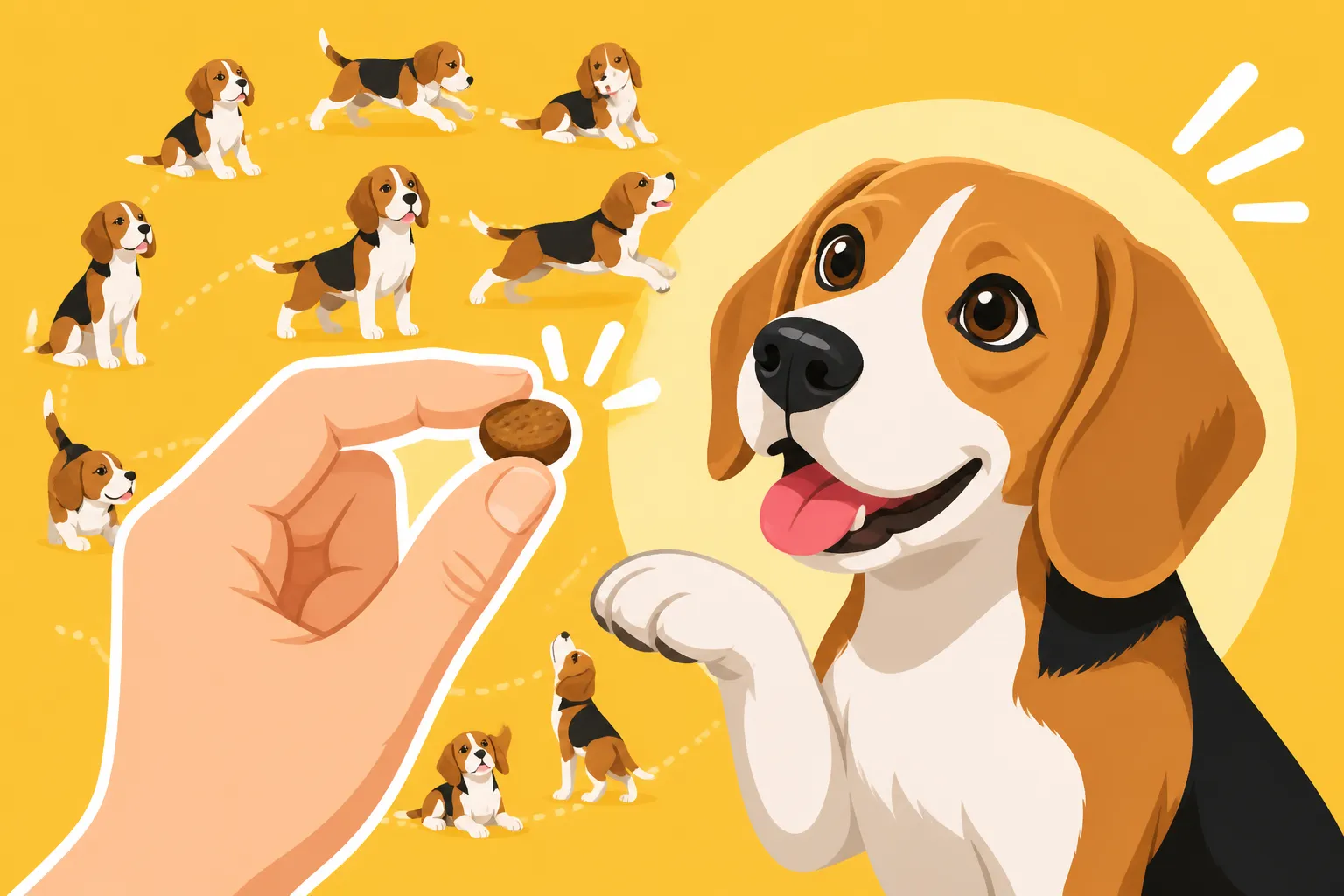
Imagine you're trying to teach your Beagle a new trick, like "touch" or a solid "sit-stay" with distractions. You need to mark the correct behavior the instant it happens with a reward. If that reward is a big, chewy biscuit, your Beagle has to stop, chew, swallow, and then look back at you for the next cue. That chewing time breaks the flow of your training. It creates a pause where your Beagle's mind might wander, perhaps to that interesting smell wafting in from next door, or the squirrel chattering in the oak tree. With a tiny, pea-sized treat, your Beagle barely registers swallowing before their eyes are back on you, eager for the next morsel and the next command. This rapid-fire rewarding keeps their attention glued to you and the task at hand, which is vital when you're up against their powerful natural instincts to explore the world through scent. Their brains are wired to follow a trail, so keeping their focus on you, especially when you're competing with their Training a Beagle Around 220 Million Scent Receptors, requires quick, consistent positive reinforcement.
Preventing Calorie Overload with Frequent Rewards
Beagles are notorious for their love of food – and their propensity to become overweight. It's not just a cosmetic issue; Beagle Obesity Treated as a Health Problem can lead to a host of health problems, from joint issues to diabetes. When you're doing a serious training session, especially for something like recall or loose-leash walking, you might be giving dozens, even hundreds, of repetitions. If each repetition is rewarded with even a small piece of a standard dog biscuit, those calories add up alarmingly fast. Before you know it, your diligent training could be contributing to your Beagle's waistline expanding. This is where tiny treats become an absolute game-changer. By using treats so small they're barely a crumb, you can provide ample reinforcement without piling on the pounds. It allows you to be generous with your rewards, celebrating every tiny success, while still staying within a reasonable daily calorie budget. Remember, the goal is to reinforce good behavior, not to fatten them up. Finding ways to manage their food intake is crucial, and that includes being mindful of Fitting Beagle Treats Inside a Daily Calorie Budget.
Maintaining Engagement Without Getting Full
There's a fine line between a motivated Beagle and one that's just… full. If your training treats are too substantial, your Beagle will reach satiety much faster. Once they're no longer hungry, their primary motivation to work with you diminishes significantly. A Beagle with a full tummy might decide that sniffing out that leaf on the ground is far more interesting than practicing "stay" again. Think about it from their perspective: if they just got a big, satisfying chunk of cheese, why work for another? Small treats ensure that their hunger drive remains active, keeping them keen and engaged throughout the entire session. They get just enough of that delicious taste and immediate gratification to stay excited for the next opportunity to earn a reward. This way, you can extend your training sessions, tackle more complex behaviors, and keep their little minds working without them checking out because their belly is full. This also ties into Keeping a Beagle Lean While Training With Treats, as a lean, hungry dog is often a more motivated learner.
Characteristics of the Ideal Training Treat for Your Beagle
When it comes to choosing the perfect training treat, it’s not just about what tastes good. It’s about practicality, health, and maximizing that intense Beagle food drive for productive learning. We're looking for something that hits all the marks for frequent, effective reinforcement.
Tiny, Soft, and Easily Consumed
The cardinal rule for high-repetition training treats is size. We're talking pea-sized, or even smaller, like a crumb. Your Beagle should be able to inhale the treat rather than chew it. This is why soft treats are often superior to crunchy ones. A soft treat disappears in an instant, allowing your Beagle to immediately re-focus on you and the next cue. Crunchy treats, while sometimes high-value, create crumbs and require chewing, which slows down the training process and can lead to distractions. Imagine you're trying to capture a split-second behavior, like a quick glance at your face during a loose-leash walk. If you throw a crunchy treat, the act of chewing delays the reward for the next good behavior. Soft, tiny treats keep the energy and pace of your session high, ensuring that your dog understands the direct link between their action and the immediate reward.
High Value and Enticing Scent
Beagles don't just eat; they experience food with their incredible noses. Given that their sense of smell is vastly superior to ours—How Far a Beagle Can Actually Smell is truly astounding—the scent of a treat is often more important than its visual appeal. The ideal training treat should be high-value, meaning it's something your Beagle absolutely goes bonkers for, and it needs to have a strong, appealing scent. This isn't the time for bland, dry biscuits. Think meaty, cheesy, or something with a potent aroma that cuts through environmental distractions. High-value treats capture their attention instantly and maintain their motivation, especially in challenging environments or for difficult behaviors. What counts as high-value can vary from dog to dog, but generally, real meat products tend to top the list for Beagles. Experiment to find out The Treats a Beagle Will Work Hardest For.
Low in Calories and Healthy Ingredients
As we've discussed, calorie control is paramount for Beagles. The perfect training treat will be something that your dog loves but won't pack on the pounds if given liberally. Look for treats that are relatively low in fat and calories. Beyond just calories, consider the ingredients. Opt for treats with wholesome, easily digestible ingredients. Single-ingredient options like freeze-dried liver or plain cooked meat are fantastic because you know exactly what your dog is getting. Avoid treats with a long list of artificial colors, flavors, or unnecessary fillers, as these can not only contribute to unwanted calories but might also upset your Beagle's sensitive stomach or exacerbate potential allergies. Healthy ingredients support overall well-being, ensuring your training efforts don't come at the cost of your Beagle's health.
Practical Options for Small Training Treats
Now that we know what makes an ideal training treat, let's dive into some practical options you can use right away. There’s a wide world of tiny, tasty rewards out there, whether you prefer to buy them pre-made or whip them up yourself.
Commercial Training Treats
Many dog food companies understand the need for tiny, high-value training treats. These are often specifically marketed as "training treats" and come in small, soft formats. Look for brands that offer pea-sized or even smaller options. Companies often make soft, chewy treats that can be easily broken into even smaller pieces if needed, without crumbling excessively.
For instance, many popular pet supply retailers like Chewy and Amazon carry a huge variety. You can find brands offering small, meaty morsels in flavors like chicken, salmon, or beef. Always check the ingredient list to ensure they're mostly protein and don't contain too many fillers or artificial additives. Some brands even offer grain-free options, which can be helpful if your Beagle has sensitivities. These commercial options are fantastic for convenience – just grab a bag and go! They're shelf-stable and easy to carry in a treat pouch.
DIY and Human-Grade Options
Sometimes, the highest-value treats are things you already have in your kitchen. Creating your own tiny training treats from human-grade ingredients allows you complete control over what your Beagle consumes and can often be more cost-effective.
- Cooked Chicken or Turkey: This is a classic for a reason. Boil or bake plain chicken or turkey breast, then cool it completely. Dice it into tiny, crumb-sized pieces. It’s high-protein, low-fat, and dogs absolutely adore it.
- Hot Dogs: While not an everyday staple, a good quality, low-sodium hot dog can be a fantastic high-value treat. Slice it lengthwise into quarters, then chop those into tiny cylinders. They're soft, easy to eat, and Beagles usually go wild for them.
- Cheese Sticks: For Beagles without dairy sensitivities, a low-fat cheese stick can be sliced into thin rounds and then quartered. It's soft, easy to portion, and very appealing.
- Brand-Specific Fresh Food: Some fresh dog food delivery services, like Ollie, provide high-quality, human-grade meals that can be sliced, diced, and frozen into small, high-value training cubes. If your Beagle is on such a diet, this can be an excellent way to use their regular food as an ultra-high-value reward. Just make sure to factor these portions into their daily meal allowance.
- Plain Scrambled Egg: Cooked without oil or butter, a plain scrambled egg can be crumbled into tiny, delicious pieces.
When using DIY treats, remember to store them properly in the refrigerator and use them within a few days, or freeze them for longer storage. Keep them in a sealed container to maintain freshness and prevent their tempting aroma from becoming overwhelming outside of training sessions.
Utilizing Kibble or Freeze-Dried Options
For everyday practice, especially when you're doing many repetitions or just reinforcing basic obedience, your Beagle's regular kibble can be a perfectly acceptable training treat. This is an excellent way to control calories, as you're literally training with their meal. For Beagles who are super food-motivated, their regular kibble is often enough to keep them working. This can be especially effective if you follow the philosophy of Training a Beagle With Its Own Meal Instead of Treats, making every piece of food a potential reward for good behavior.
- Kibble: Measure out a portion of their daily kibble allowance and use that for training. It's the ultimate low-calorie option and ensures they're not overfed.
- Freeze-Dried Liver or Meat: These are often very high-value due to their intense flavor and aroma, but they're incredibly lightweight and can be easily broken into smaller, crumb-like pieces. They tend to be low in fat and don't create a mess. Many brands are available on Amazon or Chewy. Be careful, though; while low in calories per piece, they can add up if not broken small enough.
Using kibble or freeze-dried options for training can also help your Beagle stay at a healthy weight, which is always a concern for this breed. This strategy is particularly useful for Five-Minute Beagle Sessions Between Sniff Breaks throughout the day, where you might want to give many small rewards without impacting their overall diet.
| Treat Type | Pros | Cons | Best Use Case |
|---|---|---|---|
| Commercial Training Treats | Convenient, specifically sized, varied flavors | Can be higher calorie, may contain fillers | Everyday training, on-the-go, beginners |
| Cooked Chicken/Turkey | Extremely high value, healthy, easy to digest | Requires prep, short shelf life, can be messy | High-distraction environments, new behaviors, picky eaters |
| Hot Dogs/Cheese Sticks | High value, very soft, easy to portion | Higher fat/sodium, moderate prep, short shelf life | Challenging situations, building enthusiasm, quick rewards |
| Regular Kibble | Very low calorie, cost-effective, easy to use | Lower value, less exciting | Basic obedience, maintenance, casual practice, weight management |
| Freeze-Dried Meats | High value, very light, non-messy, healthy | Can be more expensive, some brands are crumbly | Intense focus, scent work, sensitive stomachs, travel |
Strategies for Maximizing Treat Effectiveness in Your Training
Having the right treats is just the first step. How you use them makes all the difference in shaping your Beagle's behavior. Effective treat delivery and smart treat management can elevate your training from simply giving rewards to truly building strong, lasting habits.
Proper Treat Delivery Techniques
The way you deliver a treat is almost as important as the treat itself. Timing is everything in dog training. The moment your Beagle performs the desired action, the treat should appear. This clear, immediate connection helps your dog understand exactly what they did to earn that reward. This is why Beagle Clicker Training From the First Day is so effective; the click marks the exact moment, and the treat follows.
When delivering, make sure the treat goes directly to your Beagle's mouth or is dropped right where they can easily get it, especially for active behaviors. Don't make them search for it. This keeps their focus on you and the task. Avoid throwing treats unless it's part of a specific game, as it can encourage chasing or sniffing the ground rather than attending to you. Keep your hands clean and try not to let your treat hand become a "target" in itself; the focus should be on the behavior that earns the treat. If you're using a treat pouch, practice smoothly extracting the treat so there are no awkward fumbles that delay the reward.
Varying Treat Value and Reducing Reliance
While high-value treats are essential for new or challenging behaviors, you don't need to use them for every single repetition, especially once your Beagle understands a command. Varying the value of your treats can actually make your Beagle more resilient and eager to work, because they never know when the "jackpot" treat might appear!
- Start High, Go Lower: When teaching a new behavior or working in a highly distracting environment, use your highest-value treats. As your Beagle becomes more proficient and the environment less distracting, you can gradually introduce lower-value treats, like kibble, for some repetitions.
- Intermittent Reinforcement: Once a behavior is solid, you can start rewarding intermittently rather than every single time. This teaches your Beagle to keep trying, even if a reward isn't immediate. Just make sure to keep some high-value treats on hand to reward those truly excellent responses or when you need to re-engage their focus.
- Life Rewards: Don't forget that treats aren't the only form of reward! A favorite toy, a quick game of fetch, verbal praise, or even the opportunity to go sniff something interesting can all be powerful motivators. For a Beagle, being allowed to sniff a particularly enticing patch of grass for a minute can be a huge reward after a good "heel."
Storing and Preparing Treats for Convenience
Training works best when it's spontaneous and easy to implement. Having your treats prepared and accessible is key.
- Batch Prep: If you're using DIY treats like cooked chicken or hot dogs, spend a little time once a week to chop them into tiny pieces. Portion them into small, daily bags or containers and store them in the fridge or freezer. This way, you always have a supply ready.
- Treat Pouch Power: Invest in a good quality treat pouch that clips to your waist or belt. This allows you to have treats readily available during walks, at the park, or even just around the house. It's much more convenient than fumbling in your pockets. Look for pouches that are easy to open and close with one hand.
- Strategic Placement: Keep small containers of treats in various locations around your home – near the front door for practicing "wait" before going outside, in the living room for impulse control games, or even in the car for travel manners. This makes it easy to reward good behavior whenever it happens, reinforcing the lessons throughout the day.
- Beagle-Proofing: Beagles are masters of finding food. Make sure any bulk treat storage is completely Beagle-Proofing a Kitchen Counter and pantry. Their keen noses will lead them to any unsecured snack, which can derail your training and potentially cause health issues if they get into something they shouldn't.
By being mindful of treat size, value, and delivery, you'll be well on your way to a well-behaved, happy, and healthy Beagle, ready for any training challenge you throw their way!
Disclaimer
This article is for general informational purposes only and does not constitute professional advice. Laws, prices and regulations vary by location and change over time. Consult a qualified professional for guidance on your specific situation.