The Beagle Brigade’s First Dog at Los Angeles Airport
For anyone who’s traveled through a major airport, the sight of a friendly, tail-wagging Beagle, nose to the ground and working diligently, is a familiar and comforting one. These incredible dogs are part of the Beagle Brigade, tirelessly protecting our borders from agricultural threats. But have you ever wondered how it all started? This guide delves into the fascinating history of the Beagle Brigade, spotlighting the very first Beagle to be deployed at Los Angeles International Airport and how these remarkable hounds carved out their indispensable role.
The Dawn of the Beagle Brigade: Pioneering Detection at LAX
Long before the iconic image of Beagles sniffing suitcases became commonplace, there was a growing concern among agricultural officials about the unchecked flow of prohibited items into the United States. Fresh fruits, vegetables, meats, and plants carried by international travelers posed a severe risk of introducing devastating pests and diseases that could cripple American agriculture. Traditional inspection methods, largely reliant on X-ray machines and manual bag checks, were proving inefficient, slow, and often ineffective at catching everything. The sheer volume of passengers and luggage made it a logistical nightmare, and many things simply slipped through the cracks. It was a frustrating and precarious situation for those tasked with protecting our farms and ecosystems.
Identifying a Need for a Different Kind of Detector Dog
The existing canine units at the time were predominantly made up of larger, more imposing breeds like German Shepherds. These dogs were excellent for drug and bomb detection, their powerful presence often a deterrent in itself. However, they weren't always the right fit for the bustling, often crowded, and sometimes tense environment of an airport passenger terminal, particularly when dealing with the general public. Imagine a busy family, perhaps with young children, encountering a large, barking dog during an inspection – it could easily cause alarm, discomfort, and even fear. The need was clear: a detection dog that was highly effective, yet approachable and non-intimidating, capable of working discreetly without causing undue stress or disruption to travelers.
Officials began to consider breeds that could blend in more seamlessly, dogs that people would instinctively trust and even enjoy seeing. This led to a search for a canine whose natural instincts could be harnessed for detection, but whose public image was one of friendliness and harmlessness. They needed a dog that was small enough to navigate luggage carousels and crowded hallways, but with a nose sharp enough to pinpoint hidden contraband. It was a tall order, but the right breed was out there, just waiting for its moment to shine. The solution, as it turned out, came in a small, floppy-eared package.
The Initial Experiment and Its Unlikely Stars
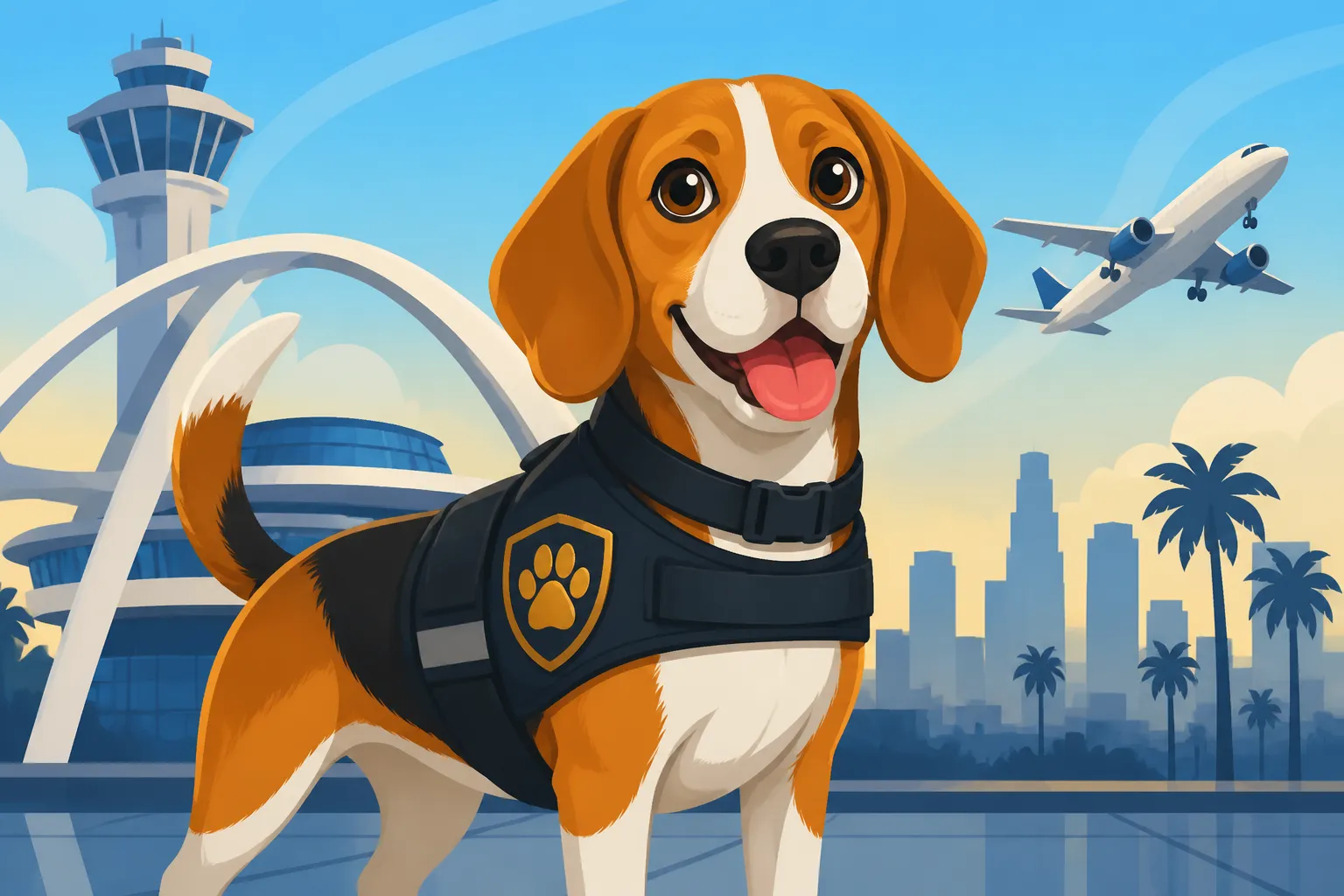
The conceptual spark that ignited the Beagle Brigade came from a realization about the breed's extraordinary olfactory capabilities coupled with their famously cheerful disposition. In the late 1970s, the USDA began exploring the idea of using Beagles for agricultural inspection. The official pilot program for what would become the Beagle Brigade actually launched in 1980, and its very first major deployment was at none other than Los Angeles International Airport (LAX). This was a crucial test, a moment of truth for the entire concept.
The initial team involved just a handful of Beagles, and their handlers weren't just looking for success in detection, but also how well these dogs integrated into the chaotic environment of a busy international airport. These pioneers were tasked with proving that a small, friendly hound could do a job that larger, more traditional working dogs were deemed unsuitable for in this specific context. They needed to demonstrate that Beagles could consistently identify prohibited items like fruit, meat, or plants, hidden within luggage, all while remaining calm and approachable to thousands of weary travelers. It was a big gamble, but one that paid off handsomely, laying the groundwork for a program that would eventually expand nationwide and even internationally. You can imagine the handlers carefully selecting high-value treats from a company like Chewy to ensure these early recruits stayed motivated and focused during their groundbreaking shifts.
Early Challenges and Public Perception
Launching any new program, especially one involving animals in a public-facing role, comes with its share of hurdles. One of the initial challenges for the Beagle Brigade at LAX was simply proving its efficacy and gaining public acceptance. Many people were accustomed to the sight of large police dogs, and the idea of a Beagle as a serious detector dog might have seemed almost comical to some. There was an element of skepticism, even amusement, that had to be overcome.
However, the Beagles quickly won hearts and minds. Their friendly demeanor and wagging tails often charmed travelers, making the inspection process less intimidating. Instead of fear, passengers often reacted with curiosity and delight. Yet, the handlers had to ensure that this positive public perception didn't overshadow the serious work the dogs were doing. They weren't just cute mascots; they were highly trained, vital components of national security. Furthermore, perfecting the training methods for these particular items required new approaches. It wasn't about detecting illicit drugs or explosives, but rather the subtle scents of an apple or a piece of sausage, often wrapped and hidden deep inside a suitcase. This nuanced work required specialized training and a deep understanding of What a Beagle Brigade Dog Actually Sniffs For. The early success at LAX, however, quickly silenced the doubters and paved the way for widespread adoption.
Why the Beagle Became the Unsung Hero of Agricultural Inspections
The choice of the Beagle for this specialized detection work was far from arbitrary. It was a calculated decision based on a unique combination of breed characteristics that made them ideally suited for the job. While other dogs might excel in certain areas, the Beagle truly shone in the specific niche of agricultural contraband detection in a public setting. It’s no wonder they’re still such a prevalent and effective part of the force today.
Leveraging the Beagle's Peerless Sense of Smell
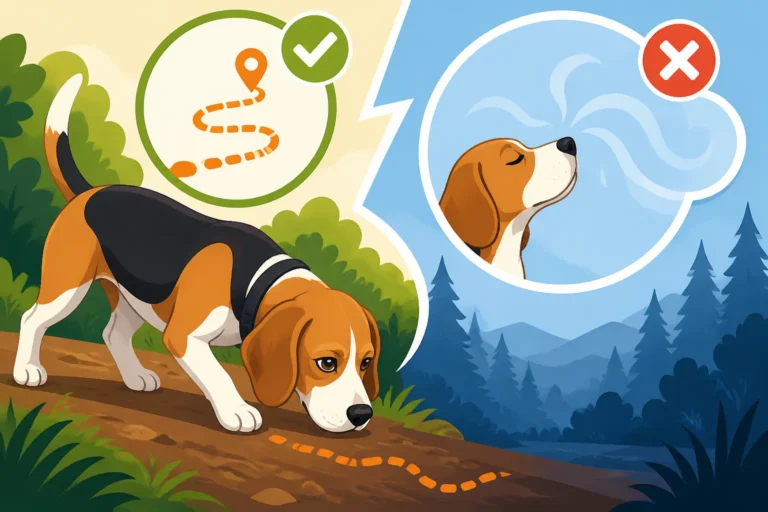
At the core of the Beagle's success is its extraordinary nose. Beagles are scent hounds, bred for centuries to track game, primarily rabbits and hare, by following a scent trail with unwavering focus. Their olfactory system is incredibly sophisticated, boasting an estimated 220 million scent receptors, dwarfing the mere 5 million found in humans. This allows them to How Far a Beagle Can Actually Smell and distinguish between an incredible array of odors, even when those scents are faint or heavily masked. This remarkable ability means they can easily pick out the subtle aroma of an orange or a salami, even if it's double-bagged and tucked away in a suitcase amidst clothes and toiletries. This keen sense of smell is truly what makes them superstars in their field, allowing them to pinpoint threats that would be completely invisible to the human eye or even X-ray technology. It's a testament to Why a Beagle Nose Beats Ours Ten Thousand Times Over.
| Characteristic | Why It's Beneficial for Beagle Brigade Work |
|---|---|
| Exceptional Nose | Detects even faint traces of prohibited agricultural items. |
| Food Drive | Highly motivated by treats, making training efficient and effective. |
| Non-Intimidating | Friendly appearance puts travelers at ease, reducing stress. |
| Compact Size | Can navigate crowded areas and tight spaces (e.g., luggage carousels). |
| Stamina | Possesses the endurance for long shifts and repetitive sniffing. |
| Merry Temperament | Generally happy and adaptable, less prone to stress in busy environments. |
The Advantage of a Friendly Demeanor
Beyond their incredible noses, another critical factor in the Beagle's selection was their universally appealing and non-threatening appearance. Unlike larger breeds that can sometimes appear intimidating, Beagles are small to medium-sized, with soft, soulful eyes and perpetually wagging tails. Their "merry" temperament, as described in the breed standard, makes them naturally friendly and approachable. This trait is invaluable in a busy airport, where the goal is to conduct inspections efficiently without causing panic or discomfort among travelers. A Beagle's presence often elicits smiles and positive interactions, rather than apprehension, making the overall experience less stressful for everyone involved.
This friendly nature is a huge part of Why the USDA Picked Beagles for Airport Work. Imagine the psychological impact of seeing a happy, inquisitive Beagle compared to a stern, large dog in a high-stress environment. The Beagle diffuses tension, allowing handlers to work more effectively and quickly identify potential threats. Their charming nature actually aids in their serious mission, creating a more cooperative atmosphere where travelers are less likely to feel targeted or annoyed by the process. It's a clever strategic choice that leverages the breed's inherent Beagle Temperament and Why the Breed Suits Families.
The Crucial Role of Food Motivation in Training
Beagles are renowned for their incredible food drive – they would quite literally eat all day if given the chance! While this can be a challenge for pet owners trying to manage a Beagle's weight, it's an absolute godsend for trainers. This strong motivation makes Beagles exceptionally eager to work for rewards, which is paramount in scent detection training. Every successful "find" is met with a high-value treat, reinforcing their desire to sniff out contraband. This constant positive reinforcement builds a strong work ethic and keeps them engaged and focused, even during long shifts.
This insatiable appetite is precisely why the methods outlined in Using a Beagle's Food Drive as the Training Lever are so effective. Trainers can use tiny, potent treats to reward even the slightest indication of scent, gradually shaping the Beagle's behavior into precise detection. This contrasts sharply with some other working dogs that might be motivated by toys or praise alone. For a Beagle, food is often the ultimate currency, making them highly trainable and reliable in repetitive tasks. Even everyday pet owners often stock up on a variety of treats from places like Chewy to keep their Beagles engaged in basic obedience or puzzle toys, so it's a natural extension for professional training. This robust food drive ensures the Beagle Brigade dogs remain enthusiastic and diligent workers throughout their careers.
Beyond the First Sniff: Expanding the Beagle Brigade's Reach
The successful pilot program at LAX quickly demonstrated the immense potential of Beagles in agricultural detection. Their efficiency, combined with their non-threatening presence, made them an ideal solution to a persistent problem. This initial triumph set the stage for a significant expansion of the program, transforming a local experiment into a nationally recognized and highly effective force.
Establishing a National Training Program
Following the undeniable success witnessed at Los Angeles International Airport, the USDA decided to formalize and expand the Beagle Brigade program. This meant establishing a dedicated training center to ensure a consistent standard of excellence for all future Beagle Brigade recruits and their handlers. This center became the hub for identifying, evaluating, and training Beagles, often sourced from shelters or private donations, who possessed the right temperament and, most importantly, the necessary scent drive. Here, Beagles undergo rigorous training, learning to discriminate between hundreds of scents, pinpointing prohibited agricultural products with accuracy. This systemic approach was crucial for scaling the program beyond a few initial pilot locations.
The establishment of a national program also meant developing standardized protocols for deployment, ongoing training, and handler certification. It created a cohesive unit, ensuring that a Beagle Brigade team at, say, Chicago O'Hare or New York JFK, operated with the same level of professionalism and effectiveness as the pioneering team at LAX. This commitment to centralized training and consistent standards transformed the Beagle Brigade from a promising idea into a highly reliable and indispensable component of national security. You can find more about the training process and where these dedicated dogs come from in Where Beagle Brigade Dogs Are Recruited From and The Detector Dog Training Center Outside Atlanta.
The Evolving Landscape of Airport Security
Over the years, the role of the Beagle Brigade has continued to adapt and expand alongside the ever-changing landscape of international travel and security threats. While their core mission remains the prevention of agricultural pests and diseases, the methods and challenges they face have evolved. Increased global travel means a higher volume of passengers and cargo, demanding even greater efficiency from these canine teams. They now work in various environments, from bustling passenger terminals to vast cargo facilities and even seaports, demonstrating their versatility.
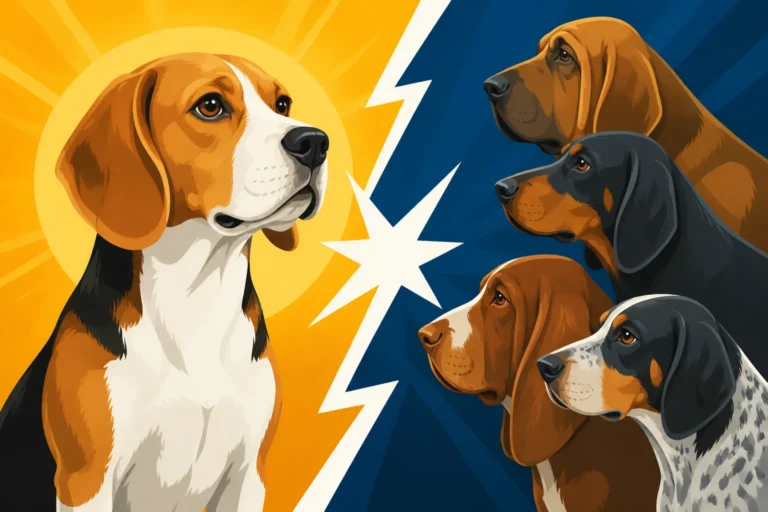
The program has also seen changes in how it integrates with other security measures. Initially a novel idea, the Beagle Brigade is now a fully accepted and expected part of the inspection process, working seamlessly alongside X-ray technicians and human inspectors. They’ve proven so effective that the concept has been emulated by other countries looking to enhance their own biosecurity measures. This adaptability and consistent success highlight not only the innate capabilities of the Beagle but also the dedication of the handlers and program administrators to refine and improve the program over time. Interestingly, as other detection dog programs evolved, some, like the Border Patrol, even started to incorporate breeds like Labradors, as detailed in How Labradors Joined the Border Brigade in 2000, showcasing a broader recognition of scent hounds' value.
Life After Retirement for These Working Hounds
After years of dedicated service, sniffing countless suitcases and protecting our agricultural interests, Beagle Brigade dogs eventually reach retirement age. These dogs, having spent their lives in service, deserve a peaceful and loving retirement. Thankfully, the program ensures that these heroes are adopted into forever homes, often by their handlers or other loving families. It's a crucial aspect of responsible working dog programs, recognizing the immense contribution these animals make.
For many of these retired Beagles, the transition to civilian life is smooth. They've been accustomed to human interaction, routine, and a stimulating "job," so they generally thrive in a home environment. While they might no longer be searching for rogue apples at the airport, their love for food and sniffing continues. Owners often find themselves still managing that strong food drive, perhaps through engaging puzzle toys or specially formulated senior diets from a reputable supplier like Chewy. Providing a comfortable home, continued mental stimulation, and plenty of affection is the least we can do for these dogs who have given so much. It's a happy ending for many, turning their working life into a well-deserved life of leisure, much like any beloved family pet. The legacy of these hard-working hounds, from that first pioneering Beagle at LAX to the many who followed, is one of unwavering dedication and national service.
Disclaimer
This article is for general informational purposes only and does not constitute professional advice. Laws, prices and regulations vary by location and change over time. Consult a qualified professional for guidance on your specific situation.