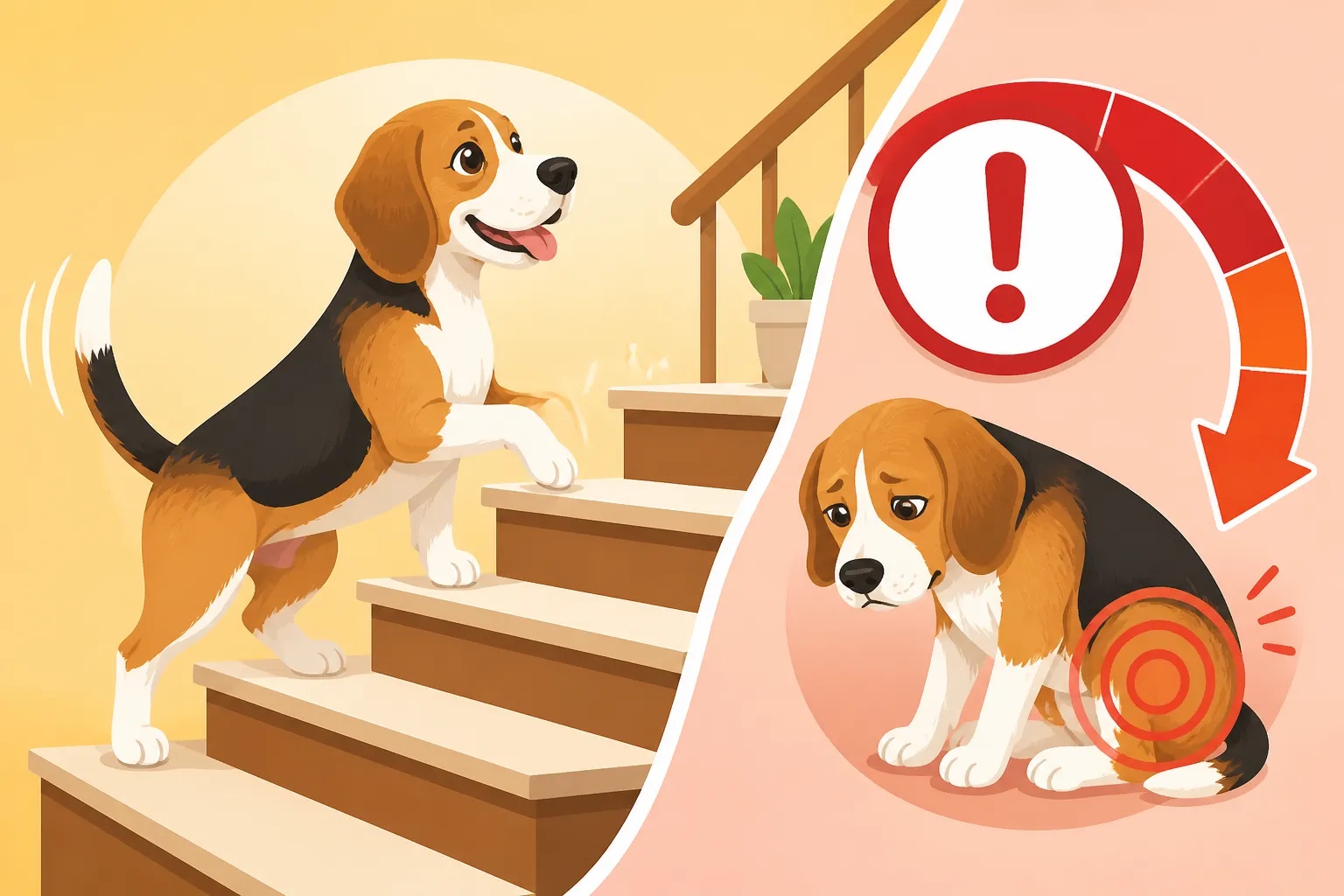
Beagle Stairs and How Often Is Too Often
It’s a scenario many Beagle owners know all too well: you’re watching your little hound bound up or down a flight of stairs, perhaps with a cheerful "aroo," and a tiny knot of worry forms in your stomach. Is this really okay for them? Given their unique physical build, particularly that slightly longer back, the question of how often a Beagle should use stairs, or if they should at all, is a very real and valid concern. This guide will help you understand the risks and provide practical strategies to protect your Beagle's precious spine and joints, ensuring they live a long, happy, and pain-free life.
The Unique Vulnerabilities of a Beagle's Spine
Beagles are sturdy little dogs, packed with muscle and energy, but their anatomy does present some specific vulnerabilities, especially when it comes to their spine. Unlike some other breeds, their build, while strong, can predispose them to certain conditions that are exacerbated by activities like repetitive stair climbing.
Understanding Intervertebral Disc Disease IVDD in Beagles
Intervertebral Disc Disease, or IVDD, is a condition where the cushioning discs between the vertebrae of the spine either bulge or burst (herniate) into the spinal cord space. This can cause immense pain, nerve damage, and in severe cases, even paralysis. Think of it like a jelly donut: the outer layer is the fibrous casing of the disc, and the jelly is the soft, gel-like nucleus inside. With IVDD, that "jelly" either pushes out or ruptures entirely.
Beagles are considered a chondrodystrophic breed, meaning they have abnormal cartilage development which affects their long bones and spinal discs. This makes them more prone to IVDD compared to many other breeds. The discs in their backs can degenerate over time, losing their elasticity and becoming more susceptible to injury. A sudden impact, a twisting motion, or even repetitive stress from activities like jumping on and off furniture or, yes, frequently navigating stairs, can trigger an episode. The pain can be excruciating, manifesting as a reluctance to move, a hunched posture, or even yelping when touched. Catching Early Beagle Disc Signs Long Before Paralysis is crucial for effective management.
How Stairs Contribute to Back Strain
Now, let's break down how stairs specifically put stress on a Beagle’s back. When a dog climbs stairs, they extend their hind legs and flex their spine to propel themselves upwards. Coming down stairs often involves a jarring motion, where their weight is absorbed by their front legs and shoulders, and their back acts as a bridge, absorbing impact.
Imagine your Beagle, all enthusiasm, charging up or down the stairs. Each step is a micro-impact. Going up, there's a significant push from the hindquarters, which can torque the lower spine. Coming down, the impact often lands heavily on the front end, forcing the back to brace itself. This isn't a natural movement for their bodies, which are designed more for horizontal movement across varied terrain, not vertical ascents and descents at sharp angles. Over time, these repeated stresses can contribute to the wear and tear on those already susceptible intervertebral discs. It’s not one single jump that usually causes an issue; it’s the cumulative effect of hundreds, even thousands, of such movements throughout their life. Many owners report A Beagle That Suddenly Will Not Jump on the Couch as a first sign of discomfort.
How Often is Too Often? Assessing Stair Use
Defining "too often" isn't a hard and fast rule, as every Beagle is an individual, and factors like age, weight, and overall health play a role. However, we can certainly establish some guidelines and warning signs.
The "Occasional" Versus "Daily" Stair Scenario
Think of stair use on a spectrum. An occasional trip up or down a few steps, perhaps to get to a different room once or twice a day, might be manageable for a young, healthy Beagle. Their bodies are more resilient, their discs less prone to degeneration. However, even then, mindful practice is best.
The real concern arises with daily, repeated, high-impact stair use. This includes:
- Homes with multiple flights: If your Beagle needs to navigate two or three flights of stairs many times a day to get to the yard, the food bowl, or your bedroom, that's significant cumulative stress.
- Accessing furniture: If stairs are the primary way your Beagle gets onto a couch or bed, and they do this frequently throughout the day, that adds up.
- Puppies and seniors: Young puppies have developing bones and soft tissues, making them vulnerable. Senior Beagles, on the other hand, often have pre-existing arthritis or disc degeneration, making stairs an even greater risk. Senior Beagle Care After the Age of Ten often involves careful consideration of mobility.
Consider a Beagle living in an apartment on the third floor with no elevator, needing to go up and down multiple times for potty breaks and walks. This is a very different scenario from a Beagle in a single-story home with just one step out to the patio. The more frequent and unavoidable the stair use, the higher the risk.
Reading Your Beagle's Body Language for Strain
Your Beagle can't tell you in words if their back hurts, but they certainly can communicate through their actions. Learning to read these subtle cues is paramount. Here’s what to look for:
- Hesitation: Do they pause at the bottom or top of the stairs? Do they seem reluctant to go up or down, where they once bounced with joy?
- Slowed movement: Are they taking the stairs one step at a time, rather than their usual energetic trot?
- Stiffness or limping: Do they seem stiff after navigating stairs, or perhaps favor a leg? This could indicate general joint pain, not just spinal.
- Crying or yelping: If they vocalize pain during or after using stairs, this is a huge red flag and requires immediate veterinary attention.
- Changes in posture: A hunched back, a lowered head, or an unusual way of carrying their tail could all signal discomfort. Beagle Neck Pain and a Head Held Low is another important indicator.
- Reduced activity: Are they less interested in playing, or do they struggle to get up from lying down?
- Reluctance to jump: If they suddenly stop jumping on their favorite chair or bed, it could be because the impact causes pain.
If you notice any of these signs, even if subtle, it's time to speak with your veterinarian. They can help identify if a spinal issue or other joint problem is developing and guide you on reducing stair exposure.
Practical Strategies for Managing Stair Access
The good news is that you don't have to overhaul your entire house or forbid your Beagle from ever seeing a step. There are many practical ways to manage stair access and protect their spine.
Implementing Ramps and Steps
This is often the most effective and least invasive solution for protecting your Beagle's back. Pet ramps and dog steps allow your Beagle to ascend and descend gradually, reducing the jarring impact and spinal flexion associated with stairs.
- For Beds and Couches: If your Beagle loves to snuggle on furniture, investing in a good set of pet steps or a ramp is a game-changer. Look for options with a gentle incline and a non-slip surface. You can find a wide variety on platforms like Amazon or Chewy, ranging from carpeted wooden ramps to sturdy plastic steps. Make sure they are stable and don't wobble, as this can deter your dog from using them. Consider the height of your furniture to ensure the ramp or steps are appropriate.
- For Vehicle Access: Getting in and out of a car, especially taller SUVs or trucks, can put immense strain on a Beagle's back and joints. A portable ramp for your car is an excellent investment. This is particularly important for older Beagles or those with known back issues. Car Ramps for a Beagle That Should Not Jump are especially beneficial.
- For Household Stairs: If you have just a few steps, say to a sunken living room or out to a deck, a shorter ramp might work. For full flights of stairs, it's more challenging. Some owners install longer, custom ramps, but often the best solution for full flights is restricting access or carrying your dog.
| Stair Alternative | Pros | Cons | Best Use Cases |
|---|---|---|---|
| Pet Steps | Compact, easy to store, generally more affordable, good for lower furniture. | Can still involve some impact on joints, might be too steep for very old/infirm dogs, not suitable for high places. | Couch, low bed, single step access. |
| Pet Ramps | Gentle incline, minimal joint stress, suitable for dogs of all ages/abilities, good for higher surfaces. | Can be bulky, more expensive, might take up more space, requires training for some dogs. | High bed, car/SUV access, a few household steps. |
Carrying Your Beagle Up and Down Stairs
For Beagles, especially smaller ones, carrying them up and down stairs is a viable and often necessary option. This completely eliminates the stress on their spine and joints.
- When to Carry:
- Puppies: Until their growth plates close and their muscles are fully developed, carrying them prevents undue stress.
- Seniors: Beagles in their golden years, especially those showing signs of Beagle Arthritis Arriving in Middle Age or general stiffness, will greatly benefit from being carried.
- Post-injury/Surgery: If your Beagle is recovering from a back injury, disc surgery, or any orthopedic issue, carrying them is essential for Crate Rest for a Beagle With a Disc Injury and recovery.
- High-Traffic Stairs: If you have particularly steep, slippery, or long flights of stairs that your Beagle would use frequently, carrying them can prevent long-term damage.
- How to Carry Safely:
- Support the back: The most important thing is to keep their spine straight and well-supported. Avoid letting their body dangle.
- Use two hands: One hand should support their chest and front legs, and the other should support their hindquarters and abdomen.
- Lift from the legs, not the back: Bend your knees and lift with your legs, keeping your back straight.
- Be gentle and confident: A hesitant lift can make your dog squirm. Be firm but gentle.
- Train for it: Get your Beagle used to being picked up from a young age so it’s not a scary experience.
While carrying is effective, it's not always practical for very large Beagles or for owners with their own mobility issues.
Training for Safe Stair Navigation
If your Beagle absolutely must use stairs, perhaps for a very short, occasional flight, you can train them to do so as safely as possible. This isn't about eliminating risk entirely, but mitigating it.
- Slow and Controlled: Encourage them to go slowly, one step at a time, rather than bounding. Use high-value treats (perhaps something from Ollie or a favorite from Chewy) to guide them.
- Leash Guidance: For particularly difficult areas, using a leash can help you control their pace and prevent them from rushing.
- Avoid Jumping Off: The biggest risk is often jumping off the last few steps. Train them to walk all the way down, or pick them up for the final descent.
- "Wait" Cue: Teaching a solid "wait" at the top and bottom of the stairs can help manage their enthusiasm. This allows them to pause and process, rather than rushing headlong.
- Non-Slip Surfaces: If your stairs are hardwood or tile, consider adding carpet runners or non-slip treads to give your Beagle better traction and prevent slips and falls, which can cause acute injuries.
Remember, even with training, consistent, repeated stair use still puts stress on their system. These training methods are for situations where stair use is unavoidable and infrequent.
Long-Term Spinal Health Beyond Just Stairs
Protecting your Beagle's back involves more than just managing stair access. It’s about a holistic approach to their overall health and lifestyle.
Maintaining a Healthy Weight
This is perhaps one of the most critical factors in preventing and managing back problems in Beagles. Every extra pound your Beagle carries puts additional strain on their joints, ligaments, and especially their spine. It's like asking someone to carry a backpack full of bricks all day, every day – eventually, their back will suffer.
- Impact on Discs: Excess weight means more pressure on those intervertebral discs. This accelerates their degeneration and makes them far more likely to bulge or rupture. How Extra Weight Raises Beagle Disc Pressure is a well-documented concern.
- Reduced Mobility: Overweight Beagles tend to be less active, which can lead to weaker core muscles that are essential for spinal support.
- Body Condition Scoring: Learn how to assess your Beagle's body condition score. You should be able to easily feel their ribs with slight pressure, and they should have a visible waist when viewed from above. If your Beagle is more apple-shaped, it's time to talk to your vet about a weight management plan.
- Diet and Exercise: Work with your vet to determine the right calorie intake and exercise regimen for your Beagle. Brands like Ollie offer fresh, portion-controlled meals that can be great for weight management, and you can also find specialized weight-loss foods on Chewy.
Supporting Joint Health with Supplements
While supplements aren't a magic bullet, certain ingredients can help support joint health, especially as your Beagle ages or if they are prone to joint issues.
- Glucosamine and Chondroitin: These are natural components of cartilage and are commonly used in supplements to help maintain cartilage integrity and elasticity. They can't rebuild damaged cartilage, but they may slow further degeneration and reduce inflammation.
- Omega-3 Fatty Acids (Fish Oil): Omega-3s, particularly EPA and DHA, are powerful anti-inflammatories. They can help reduce joint pain and stiffness, improving overall comfort and mobility. Look for high-quality fish oil supplements.
- MSM (Methylsulfonylmethane): Another ingredient often found in joint supplements, MSM is believed to help reduce inflammation and pain.
- Green-Lipped Mussel: This ingredient, sourced from New Zealand, is known for its anti-inflammatory properties and its rich content of omega-3s, glucosamine, and chondroitin.
Always consult your veterinarian before starting any new supplement regimen. They can recommend specific products and dosages appropriate for your Beagle's age, weight, and health status. Many excellent supplements are available on Amazon or Chewy, but professional guidance is key. Joint Supplements That Help an Aging Beagle can make a real difference.
Regular Vet Check-ups and Early Intervention
Proactive veterinary care is your best defense against serious back and joint problems. Don't wait until your Beagle is showing obvious signs of pain.
- Annual Exams: Regular check-ups allow your vet to monitor your Beagle's weight, gait, and overall physical condition. They can catch subtle changes before they become major issues.
- Open Communication: Talk to your vet about your Beagle's activity levels, any hesitation they show, or concerns you have about their mobility.
- Diagnostic Tools: If your vet suspects a spinal issue, they might recommend X-rays or even advanced imaging like an MRI to get a clear picture of what's happening with the discs.
- Physical Therapy: For Beagles recovering from injury or managing chronic conditions, Beagle Physical Therapy After a Back Injury can be incredibly beneficial. This might include specific exercises, massage, hydrotherapy, or laser therapy to strengthen supporting muscles and improve flexibility.
By being vigilant, providing proper care, and making conscious choices about their environment, you can significantly reduce the risk of spinal issues and help your beloved Beagle lead a comfortable, active life, regardless of the stairs in their world.
Disclaimer
This article is for general informational purposes only and does not constitute professional advice. Laws, prices and regulations vary by location and change over time. Consult a qualified professional for guidance on your specific situation.