How Many Weeks Beagle Potty Training Usually Takes
One of the most common headaches new Beagle owners face is the seemingly endless journey of potty training. You bring home this adorable little hound, full of energy and charm, only to find that despite your best efforts, accidents keep happening. It can feel incredibly frustrating and make you wonder if your Beagle will ever get it. This guide is here to help you navigate the realistic timeline for house-training your Beagle, understand the unique challenges this scent-driven breed presents, and offer practical, empathetic strategies to finally achieve a reliably potty-trained companion.
The Realistic Timeline for Potty Training Your Beagle
When you search for general puppy potty training advice, you often see figures thrown around like "two to four months" or "by six months old." While these might be true for some breeds, a Beagle often marches to the beat of its own drum – or, more accurately, the scent of its own nose. It's easy to get disheartened when your Beagle seems to take longer, but understanding why can help you adjust your expectations and approach.
The "Average" Versus the Beagle Reality
Let's be real: Beagles can take a little longer to fully grasp the concept of consistent indoor cleanliness than some other breeds. It’s not because they’re unintelligent or trying to spite you (though it might feel that way sometimes!). It’s largely due to a combination of their incredible scent drive and their naturally curious, sometimes easily distracted, personalities. Many owners report that while they see significant progress within a few months, true, unshakeable reliability might take anywhere from four to six months, or even closer to a year for some individuals.
Think of it this way: a young puppy’s bladder control is still developing, much like a toddler’s. They simply can’t hold it for long periods. Couple that with a Beagle’s innate desire to explore every single sniffable speck on the ground, and a potty break can quickly become an archaeological expedition instead of a quick business trip. If your Beagle came from a breeder who let puppies relieve themselves wherever they pleased in their living area, you might also have an uphill battle trying to undo those ingrained habits. It takes time, immense patience, and a consistent routine to help your Beagle understand that there's a specific, preferred place to do their business. Don't compare your progress to that perfectly potty-trained poodle down the street; focus on your Beagle's individual journey.
Factors Influencing Your Beagle's Potty Training Pace
Several key factors can significantly impact how quickly your Beagle becomes reliably house-trained. Recognizing these can help you tailor your approach and avoid unnecessary frustration.
- Age and Developmental Stage: A younger Beagle puppy, say 8 to 12 weeks old, has very little bladder control. They might need to pee every hour or two. As they mature, their bladder muscles strengthen, and they can hold it for longer. An older rescue Beagle, on the other hand, might come with existing habits – good or bad – that need to be addressed. A dog that spent its early life in a kennel run might view "pottying in its living space" as normal, requiring more dedicated training to shift that mindset. Consistency in your routine is paramount, especially when they're very young. Establishing a clear feeding schedule, for instance, naturally leads to a more predictable potty schedule. Beagle Puppy Meal Frequency Month by Month is a good resource to help you plan.
- Consistency of the Owner: This is perhaps the single biggest factor. If you’re not consistent with taking your Beagle out, rewarding them, supervising them indoors, and cleaning accidents properly, the process will undoubtedly take longer. Every missed opportunity for a successful outdoor potty reinforces an indoor accident. It means being vigilant, setting alarms, and making sure everyone in the household is on the same page with the rules and routine.
- Environment and Setup: Does your Beagle have a designated potty spot outside? Is it clean and easily accessible? If your backyard is vast and full of exciting smells, it might be harder for them to focus. A small, clear area, at least initially, can help. The setup inside your home also matters. Is your Beagle allowed to roam freely before they're reliable, or are they confined to a smaller, easily supervised area? Limiting their access to large spaces prevents them from sneaking off to have an accident in a hidden corner.
- Distractions (The Mighty Beagle Nose): Oh, the Beagle nose! It's a superpower, but it can be a significant hurdle in potty training. You take your Beagle outside, patiently wait, and they spend five minutes sniffing every blade of grass, tracking a phantom squirrel, or investigating the ghost of a mailman. Then, as soon as you come back inside, plop! Right on your rug. Their focus on scent can override their need to relieve themselves until they're back in a "safe," less stimulating indoor environment. We'll dive into strategies for this specific frustration shortly, but it’s a huge part of the "Beagle reality." For more on just how powerful that nose is, read Why a Beagle Nose Beats Ours Ten Thousand Times Over.
Setting Your Beagle Up for Potty Training Success
Potty training isn't just about taking your Beagle outside; it's about building habits and communication. By being proactive and consistent, you can significantly shorten the learning curve.
Establishing a Routine Your Beagle Can Understand
Dogs, especially Beagles, thrive on routine. A predictable schedule helps them understand what’s expected and when. When it comes to potty training, this means regular feeding times, which in turn leads to regular elimination times.
- Feed on a Schedule: Ditch the free-feeding. Instead, feed your Beagle at set times each day. Puppies might need three meals, while older Beagles typically do well with two. Within 15-30 minutes after eating, dogs often need to relieve themselves. This becomes a prime opportunity for a successful potty break outside.
- Frequent Potty Breaks: This is non-negotiable, especially for puppies. Take your Beagle out:
- First thing in the morning, immediately after waking up.
- After every meal or drink.
- After every play session or training session.
- After waking up from a nap.
- Right before you go to bed.
- Every hour or two in between, depending on their age and bladder control.
- When you do take them out, don't just open the door and let them wander. Go with them on a leash to their designated spot. This is crucial for supervision and immediate reward.
- Use a Specific Cue Word: While outside at their potty spot, use a consistent cue like "Go potty" or "Do your business." Say it as they are actively eliminating. This helps them associate the phrase with the act, which can be incredibly useful later when you need them to go on command in unfamiliar places or inclement weather.
Crate Training as a Potty Training Power Tool
Crate training is one of the most effective tools for house-training a Beagle. It leverages a dog's natural instinct not to soil their sleeping area. When used correctly, a crate becomes a safe, comfortable den for your Beagle, not a punishment chamber.
The key is to choose the right size crate. It should be just big enough for your Beagle to stand up, turn around, and lie down comfortably. If it’s too large, they might use one end as a bed and the other as a bathroom. You can use dividers to adjust the size as your puppy grows. By keeping them in a appropriately-sized crate when you can't actively supervise them, you dramatically reduce the chances of an indoor accident. They'll learn to hold it for a short period and then be eager to go outside when released. Make sure to immediately take them out of the crate and to their potty spot the moment they are released. For more in-depth advice on crate sizing and helping your Beagle feel secure, check out Beagle Crate Size and Crying Through the Night. Remember, the crate should always be a positive place, associated with good things like chew toys and safe naps, never a place of punishment. Some Beagles, especially those with past trauma, might struggle with the crate initially, and it’s important to introduce it slowly and positively. If you’re noticing signs of distress, it might be Beagle Crate Anxiety Against Crate Comfort you’re dealing with.
High-Value Rewards for Potty Success
Beagles are famously food-motivated. This trait is your superpower when it comes to training! Every time your Beagle successfully potties outside, make it a party.
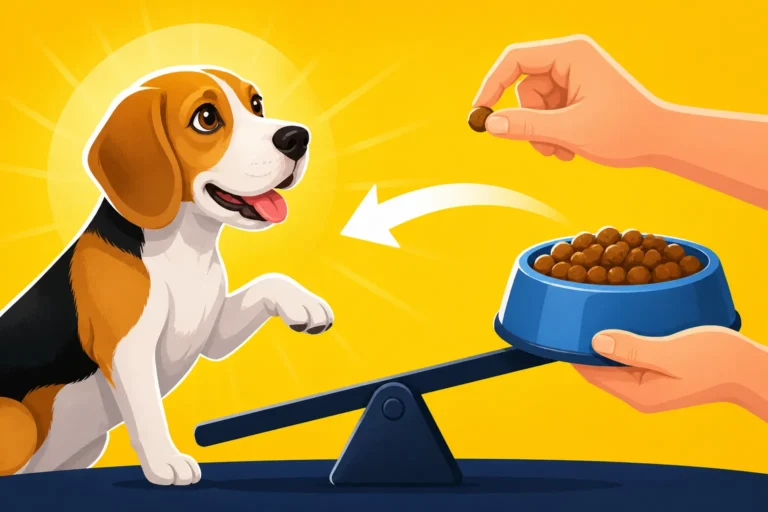
- Immediate and Enthusiastic Rewards: The moment your Beagle finishes their business outside, immediately praise them lavishly and give them a high-value treat. High-value means something they absolutely adore – small pieces of cooked chicken, cheese, or specific soft training treats. The timing is critical; the reward needs to happen within seconds of them finishing the act so they can clearly associate "potty outside = amazing reward."
- What is "High-Value"? For a Beagle, kibble is usually not high-value enough to compete with all the enticing smells outside. You need something truly irresistible. Think soft, smelly, pea-sized treats. Many owners find a variety pack from a brand found on Amazon helps them discover what their individual Beagle considers top-tier. Keep these special treats only for successful outdoor potty breaks, making the reward extra special and unique to that desired behavior. For more ideas on motivating your Beagle, take a look at The Treats a Beagle Will Work Hardest For.
Troubleshooting Common Beagle Potty Training Hurdles
Potty training is rarely a smooth, linear process. There will be setbacks, frustrations, and moments when you feel like you're losing your mind. Understanding common Beagle-specific challenges can help you push through.
The Distracted Potty Break: When the Nose Takes Over
This is a classic Beagle conundrum. You patiently wait outside, leash in hand, enduring the elements, while your Beagle conducts a thorough investigation of every leaf, blade of grass, and pebble. They sniff, they pull, they mark territory (sometimes without actually peeing), and then they come back inside, look you dead in the eye, and relieve themselves on the kitchen floor. It's enough to make you tear your hair out! The culprit? Their incredible nose and insatiable curiosity.
Strategy for Success: The trick here is to separate the "potty time" from the "sniff and explore time."
- Leash Up and Go Directly: When it's potty time, put your Beagle on a leash and lead them directly to their designated potty spot. Don't let them meander.
- Stand Still and Be Boring: Stand still and be utterly boring. Don't talk to them, don't play, don't engage in conversation. Just wait. Let them sniff around a small area, but the goal is business first.
- The Moment They Go, Party! The instant they start to relieve themselves, quietly praise them ("Good potty!"). The second they finish, go wild with enthusiastic praise and that high-value treat.
- Then, Sniff Time: After they've pottied and been rewarded, then you can allow them a few minutes of "sniffing privileges" or a short walk as a bonus reward. This teaches them: "First, business. Then, fun!" If they don't go after 5-10 minutes, bring them back inside, put them directly in their crate (if crate-trained), and try again in 15-20 minutes. This helps prevent indoor accidents. This approach is absolutely vital when House Training a Beagle That Gets Distracted Outside.
Dealing with Accidents Indoors
Accidents will happen. It's an inevitable part of the process, but how you react makes all the difference.
- Never Punish After the Fact: If you find an accident, it’s already too late to correct your Beagle. They won't connect your anger to something they did minutes or hours ago. They'll just learn to fear you or become sneaky about eliminating.
- Interrupt and Redirect: If you catch your Beagle in the act of having an accident indoors, make a sudden noise (a clap, a sharp "Ah-ah!") to interrupt them. Scoop them up (or leash them quickly) and rush them outside to their potty spot. If they finish outside, reward them like crazy.
- Enzyme Cleaners are Essential: Dogs are drawn back to areas where they can smell their previous waste. Your human nose might not detect residual odor, but your Beagle’s certainly will! Use an enzymatic cleaner (like Nature's Miracle or Rocco & Roxie, widely available on Amazon) specifically designed to break down pet odors. Regular household cleaners will only mask the smell, leaving behind a beacon for future accidents.
- Supervision is Key: The best way to prevent accidents is vigilant supervision. When your Beagle is out of their crate, they should be tethered to you, in a puppy-proofed room with a baby gate, or constantly watched. This "umbilical cord" method is fantastic because it means you're always aware of what they're doing, making it easier to spot pre-potty signals (sniffing around, circling, sudden quietness) and rush them outside.
Regression and What It Might Mean
Just when you think you've turned a corner, your Beagle might start having accidents again. This "regression" can be incredibly disheartening, but it's often a sign of something specific.
- Rule Out Medical Issues: First and foremost, if a reliably house-trained Beagle suddenly starts having accidents, a vet visit is in order. Urinary tract infections (UTIs), kidney problems, or even certain medications can cause changes in bladder control. Don't assume it's behavioral without ruling out health concerns.
- Changes in Routine or Stress: Has anything in your household changed? A new pet, a new person, a new work schedule, or even loud construction outside can cause stress and lead to accidents. Beagles are sensitive to their environment.
- Adolescence: Just like human teenagers, adolescent Beagles (roughly 6-18 months) can experience behavioral shifts. They might test boundaries, become more distracted, and "forget" some of their training. This is a common phase. Revisit the basics: increase potty breaks, tighten supervision, and reinforce rewards. Many owners find their Beagle's behavior changes quite a bit during Beagle Adolescence and Sudden Selective Hearing.
- Lack of Consistency: Sometimes, as Beagles get older and more reliable, owners become less vigilant. Fewer scheduled potty breaks, less supervision, or inconsistent rewarding can lead to a slip in standards. Just a few accidents can undo weeks of progress, especially if the scent isn't properly removed. Remember that even a perfectly trained puppy might still need a middle-of-the-night potty break sometimes, especially if they’re very young. Consider insights from Beagle Puppy Sleep and Waking at Three for younger pups.
Beyond the Basics: Advanced Potty Training Tips
Once your Beagle is making good progress, you can refine their skills and make house-training even more reliable.
Teaching a "Go Potty" Cue
Having a "go potty" cue can be a game-changer. It means you can ask your Beagle to eliminate on command, which is invaluable when you're in a hurry, traveling, or in a new environment where they might be easily distracted.
To teach this, take your Beagle to their designated potty spot. As soon as they start to squat or lift a leg, say your cue word ("Go Potty," "Hurry Up," "Do Your Business"). Immediately after they finish, praise and reward enthusiastically with that high-value treat. Practice this consistently every single time they go outside. Over time, your Beagle will associate the phrase with the action, and you'll be able to use it to prompt them. It's a fantastic tool to have in your arsenal, especially when you need them to focus on the task at hand before you unleash them for some proper sniffing time.
The Importance of Cleaning Products
We touched on this briefly, but it bears repeating: proper cleaning is paramount. If you don't fully neutralize the odor of an indoor accident, your Beagle's incredibly powerful nose will detect it, marking that spot as a "bathroom." This creates a vicious cycle where they repeatedly have accidents in the same location, making your job much harder.
Invest in a high-quality enzymatic cleaner. These cleaners don't just mask the smell; they contain enzymes that break down the urine's organic matter, eliminating the odor at its source. Follow the product instructions carefully, ensuring you saturate the area thoroughly and allow it to air dry. Don't just dab it up with a paper towel. For hard floors, ensure the cleaner penetrates any grout or porous surfaces. For carpets, you might need to use a wet vac or rent an extractor to ensure deep cleaning, especially if the accident has soaked through to the padding. This might seem like a small detail, but it's a critical step in preventing repeat offenses and truly completing the potty training process.
Patience and Perspective: You'll Get There
Potty training a Beagle can truly test your patience. There will be days when you feel like you've made no progress, and you might even wonder if you made the right decision getting a Beagle. I've been there! It’s easy to get caught up in the daily struggles and forget the bigger picture.
Remember that your Beagle is learning a complex new behavior and navigating a human world. They want to please you, but their instincts (like that powerful nose for Beagle Scavenging on Every Walk) can sometimes override their desire to follow your rules. Celebrate every small victory – every successful outdoor potty, every time they offer a signal that they need to go out. Don't dwell on the accidents, but learn from them. Was it a lapse in supervision? Did you wait too long?
If you feel overwhelmed, consider enrolling in an online training program like BAXTER & Bella, which offers comprehensive resources and support that can guide you through these challenging early months. Building an emergency fund for unexpected costs, even in puppyhood, is always a good idea; something to consider from The First Month Cost of a Beagle Puppy. With consistency, positive reinforcement, and a realistic understanding of your Beagle's unique traits, you will eventually reach that glorious day when you can trust your little hound to be completely house-trained.
Beagle Potty Training Timeline Overview
Here's a general idea of what you might expect during your Beagle's potty training journey. Keep in mind, every dog is an individual!
| Age/Stage | Expected Bladder Control | Common Challenges | Key Owner Actions |
|---|---|---|---|
| 8-12 Weeks (Puppy) | Very little, needs to go every 1-2 hours. | Frequent accidents, distraction outside. | Supervise constantly, 10-12 potty breaks/day, crate training, high-value rewards. |
| 3-4 Months | Improving, can hold it 2-3 hours. | Still distracted, may have learned indoor spots. | Stick to routine, interrupt accidents, strict cleaning, increase holding time gradually. |
| 5-6 Months | Good control, can hold 3-4 hours, potentially longer overnight. | Adolescence might start, testing boundaries. | Maintain vigilance, use "go potty" cue, reinforce rewards, rule out medical issues for regression. |
| 7-12 Months | Mostly reliable, can hold 4-6+ hours. | Adolescent regression, increased exploring/marking. | Continue routine, expand boundaries slowly, proofing in new environments, sustained supervision. |
| 12+ Months (Adult) | Should be fully reliable for 6+ hours during the day. | Only accidents due to stress, illness, or major routine changes. | Trust, but verify. Address any new accidents immediately with vet check & routine review. |
Disclaimer
This article is for general informational purposes only and does not constitute professional advice. Laws, prices and regulations vary by location and change over time. Consult a qualified professional for guidance on your specific situation.