A Beagle Barking at the Window All Day
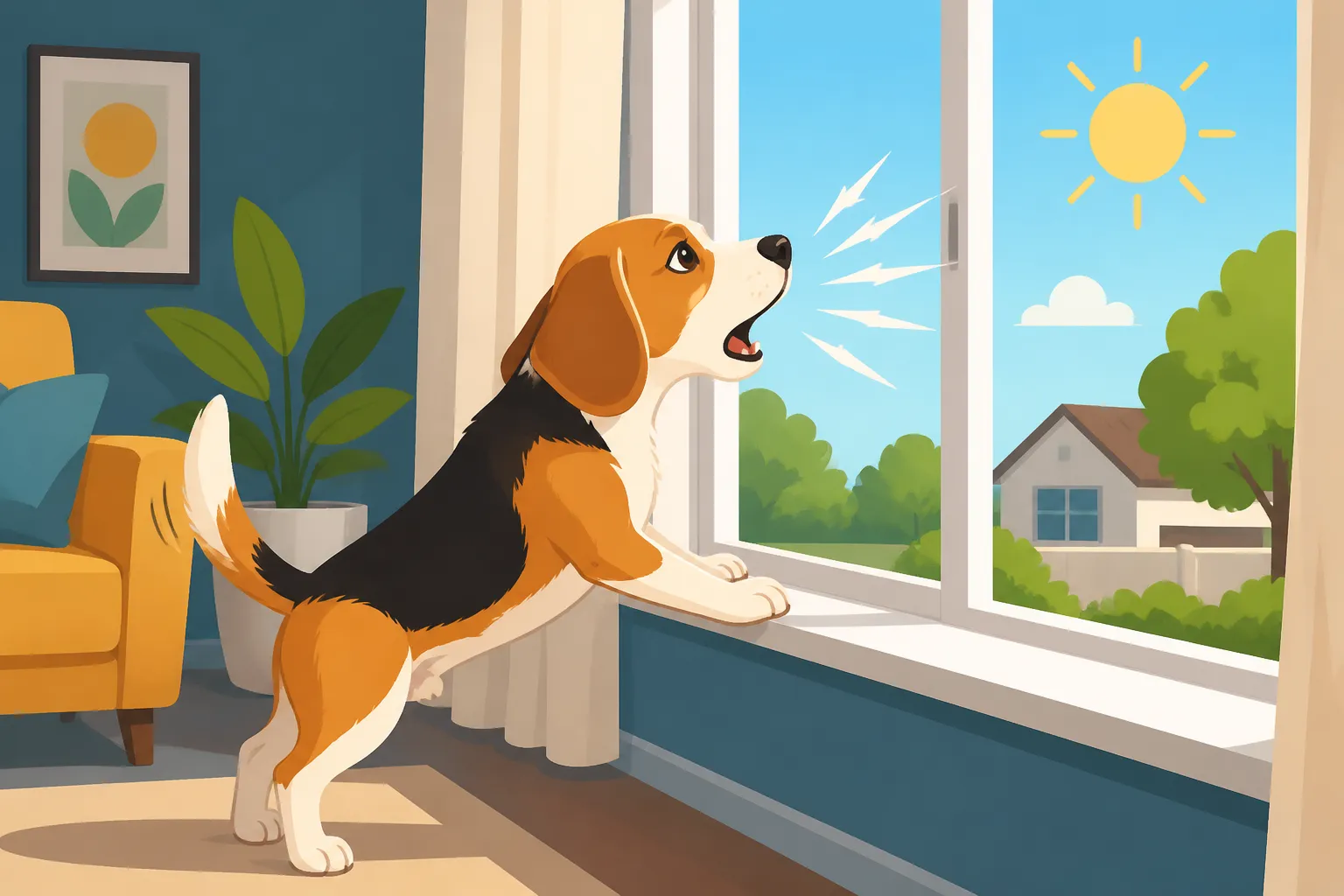
Oh, the relentless window barking! If you're a Beagle owner, you know this sound intimately. It's not just a bark; it's often a full-throated bay, a triumphant declaration that a leaf just fell, a squirrel dared to exist, or the mail carrier had the audacity to approach your house. This constant commotion can fray nerves, test neighborly patience, and leave you feeling utterly defeated. You love your Beagle, but the window barking can feel like an endless battle. This guide is here to help you understand why your merry hound turns into a vigilant, noisy sentinel at the window and, more importantly, what you can actually do about it to bring some peace back to your home.
Understanding Why Your Beagle Becomes a Window Watchdog
Before we can tackle the barking, we really need to get into the head of our Beagles. It’s easy to feel frustrated and think they’re just being naughty, but their behavior is deeply rooted in who they are as a breed. They aren't doing it to annoy you; they're simply being Beagles. And once you understand the "why," the solutions start to make a lot more sense.
The Beagle's Instinct to Alert
Let's face it, Beagles were bred for one thing: hunting. Specifically, they were bred to follow scent trails and, crucially, to announce their findings to the human hunters following on foot. That distinctive bay isn't just a random noise; it's a communication tool. Imagine a Beagle in its historical role, deep in the woods, hot on the trail of a rabbit or hare. When they catch a whiff or spot their quarry, they need to alert the pack and the hunters. Their very purpose was to track, find, and then loudly signal.
Now, fast forward to your living room window. What does your Beagle see? A person walking by, another dog on a leash, a squirrel darting across the lawn, or even just a particularly interesting gust of wind rustling the leaves. To their highly developed senses – remember, a Beagle’s nose beats ours Why a Beagle Nose Beats Ours Ten Thousand Times Over – every one of these is a "discovery." It's something noteworthy, something that needs to be announced to their pack (which is you!). They are hardwired to be vocal about their observations. It's not rudeness; it's simply instinct kicking in, a primal urge to alert you to every perceived movement or change in their environment, much like they would have alerted a hunter to game centuries ago. They are doing their job, just perhaps not the one you intended for them inside your house.
Boredom and Lack of Mental Stimulation
One of the biggest culprits behind incessant window barking is often sheer boredom. Beagles are intelligent, energetic dogs with an incredible drive to use their noses and minds. If they're not getting enough appropriate outlets for that energy and intelligence, they will absolutely find their own entertainment. And what's more entertaining than the constantly changing, outdoor "television show" playing right outside the window?
Think about it from your Beagle's perspective. If they haven't had a good, long Sniffing Walks and Why They Tire a Beagle Out, or if they don't have engaging puzzle toys or a job to do, that window becomes the most exciting thing in their world. Every passing car, every rustling bush, every person walking their dog offers a novel sight, sound, or even a distant scent that needs to be investigated (and barked at!). It's stimulating, it breaks the monotony of the day, and it gives them a purpose. They're trying to communicate, trying to engage with the world, but without proper channels for that energy, the window becomes their primary outlet. This isn't just about physical exercise; it's about mental engagement. A tired Beagle is often a quiet Beagle, but a mentally stimulated Beagle is even better.
Territoriality and Perceived Threats
While Beagles aren't typically known as fierce guard dogs, their constant presence at the window can foster a sense of territoriality. When your Beagle spends hours patrolling the perimeter of the house from their perch, watching everything that passes, they begin to develop a strong sense of ownership over that space. Every person, dog, or vehicle that comes within sight becomes a perceived "intruder" on their territory.
This isn't necessarily aggressive, but it certainly triggers their alert system. They bark to warn off these perceived threats, convinced that their loud vocalizations are effectively "scaring away" the mailman or the neighbor walking their poodle. From their point of view, their barking works – the "threat" eventually moves on! This reinforcement makes the behavior incredibly hard to break. The more they practice it, the stronger the habit becomes. If your Beagle is particularly sensitive or prone to anxiety, these external stimuli can be genuinely upsetting, leading to stress barking rather than just alert barking. It's a complex blend of instinct, habit, and sometimes, a little bit of genuine worry about the world outside their glass portal.
Strategies to Reduce Window Barking
Okay, so we understand why they do it. Now, what do we actually do about it? It’s going to take patience, consistency, and a multi-faceted approach, but I promise, there are ways to manage this behavior. It’s all about setting your Beagle up for success and redirecting that powerful Beagle drive.
Managing Your Beagle's View
The simplest and often most effective first step is to manage what your Beagle can actually see. If they can’t see it, they can’t bark at it, right? This might sound basic, but it’s foundational.
-
Physical Barriers: This is your first line of defense. Close curtains or blinds on windows where barking is a major issue, especially when you're not home or can't actively supervise. If you still want natural light but need to block the view, consider frosted or decorative window film. You can find many options on Amazon that are easy to apply and remove, transforming a clear pane into a private screen. For lower windows, you might even consider putting up a baby gate or an indoor pen to physically block access, keeping your Beagle a few feet away from the window itself. This not only obstructs the view but also creates a physical boundary that reinforces the idea that the window area isn't their personal guard post.
-
Elevated Perches: Sometimes, our Beagles are barking because they can't quite see what's happening and that frustration builds. Conversely, if they're perched high on a couch or chair with a perfect panoramic view, you're just giving them a better "monitoring station." Evaluate their favorite barking spots. Can you move furniture away from windows? Can you cover the bottom half of a window while leaving the top open for light? The goal is to either eliminate the view entirely or make it less interesting and accessible. Remember, even a partial obstruction can make a big difference in reducing the allure of the outdoor "show."
Increasing Mental and Physical Enrichment
A bored Beagle is a barking Beagle. Period. Their ancestral job was highly active and mentally demanding. We need to replace that with modern-day equivalents that satisfy their instincts.
-
Scent Work is Key: This cannot be stressed enough for a Beagle. Their nose is their superpower, and using it is incredibly tiring and fulfilling. Instead of just letting them sniff during a walk, actively engage them in scent games. Hide treats around the house and let them use their nose to find them. Invest in a snuffle mat or puzzle feeders that make them work for their food. Even scattering their kibble in the grass outside for them to "hunt" can be hugely stimulating. Think about starting a formal Scent Work as the Job a Beagle Was Built For class – many local dog clubs offer them, and it gives your Beagle a true "job." A Beagle who has spent 30 minutes intensely focusing on a scent trail is often too tired and satisfied to bother with the squirrel outside.
-
Physical Exercise, the Right Kind: Yes, Beagles need physical exercise, but it’s not just about letting them run around the yard. They need purposeful activity. Long walks where they are allowed to sniff freely are gold. These are not just walks; they are "sniffari's" for your Beagle, providing immense mental stimulation. Consider hiking with them on a long line in safe, open areas. Running with your Beagle can also be an option, but always consider their short legs and robust build – focus on endurance, not speed. For rainy days or when outdoor activity isn't possible, focus on Indoor Enrichment for a Rainy Beagle Week. Tug games, fetch in a hallway, or even learning new tricks can burn energy and engage their minds. A physically and mentally tired Beagle is less likely to feel the need to stand guard at the window all day.
-
Structured Play and Training: Beyond just sniffing, structured play, and regular short training sessions can make a huge difference. Even five to ten minutes a few times a day practicing commands, learning new tricks, or playing interactive games like "find it" with a favorite toy, can help drain that mental energy. Brands like BAXTER & Bella offer online training programs that can guide you through these types of enrichment activities, teaching you how to build a stronger bond and channel your Beagle's energy constructively.
Training for Calmness and Alternative Behaviors
We also need to teach our Beagles what to do instead of barking, and how to stay calm when stimuli appear.
-
"Look at Me" and "Quiet" Cues: Start by teaching a solid "look at me" command in a low-distraction environment. This means they make eye contact with you on command. Once mastered, gradually introduce distractions. When your Beagle notices something outside but before they start barking, say "look at me," reward them heavily for turning their attention to you. You can also teach a "quiet" cue. When they start barking, acknowledge it ("Thank you for telling me"), then give your "quiet" command. When they stop (even for a second), reward immediately with a high-value treat. The timing here is critical. You want to reward the quiet, not the barking.
-
Place/Mat Training: Teaching your Beagle to go to a designated "place" (like a dog bed or mat) and stay there calmly, even with distractions, is incredibly powerful. Start with short durations in a quiet area, building up time and adding distractions. The "place" should be a comfortable, calming spot away from the window. When they start barking at the window, redirect them to their "place" and reward them for settling there. This teaches them an appropriate, alternative behavior.
-
Counter-Conditioning: This involves changing your Beagle's emotional response to the triggers that make them bark. Every time a trigger appears (a person walks by, a car drives past), give your Beagle a super high-value treat before they start barking. The idea is to make them associate the sight of the trigger with something wonderful happening (treats!) rather than feeling the need to bark. If you're consistently rewarding them for seeing something and staying quiet, they'll learn that being quiet when triggers appear means good things happen. This also ties into Impulse Control Exercises That Suit a Beagle, where they learn to manage their reactions.
When to Seek Professional Help and Specialized Tools
Sometimes, even with consistent effort, the barking persists, or it feels like it's getting worse. That's not a sign of failure; it's a sign that you might need a bit of outside help, and there are wonderful resources available.
Consulting a Certified Professional Dog Trainer
If you've tried all the above strategies diligently and are still struggling, don't hesitate to reach out to a certified professional dog trainer or a veterinary behaviorist. These experts can observe your Beagle in their environment, identify specific triggers and nuances in their behavior that you might be missing, and develop a personalized training plan. They can also help you refine your timing, technique, and consistency.
A professional can offer insights into whether the barking is purely excitement, territoriality, or perhaps something more complex like Beagle Separation Anxiety in a Pack Breed or generalized anxiety. They can provide guidance on Managing the Triggers That Set a Beagle Off more effectively and help you implement advanced counter-conditioning techniques. Look for trainers who use positive reinforcement methods, as force-based or punishment-based techniques often suppress the behavior without addressing the underlying emotional state, and can even worsen anxiety in the long run. Many trainers offer virtual consultations now, which can be incredibly convenient.
Tools and Aids for Barking Management
While tools aren't a substitute for training, some can be helpful as management aids, especially in the short term, or as part of a larger plan.
-
Management Tools, Not Magic Wands: Things like ultrasonic bark deterrents or citronella collars are often marketed as quick fixes. While they might interrupt barking in the moment, they rarely address the root cause. If your Beagle is barking due to boredom or anxiety, these tools can simply add confusion or fear without teaching them an alternative. They can also lose effectiveness over time as your Beagle habituates to them. For example, a citronella collar might spray, stopping the bark, but it doesn't teach your Beagle what to do instead. It's important to understand their limitations; I often tell clients that Beagle Bark Collars and What They Do Not Fix.
-
Enrichment Tools as Solutions: Instead of punitive tools, think about truly helpful aids:
- Secure Crates: A comfortable, appropriately sized crate can be a safe haven, particularly when you're not home, ensuring your Beagle can't access windows.
- High-Quality Puzzle Toys: Brands like Kong or other interactive feeders found on Amazon are excellent investments. They make mealtime a mental exercise, keeping your Beagle busy for extended periods.
- Long Lines: For exercise, a long line (15-30 feet) allows your Beagle more freedom to explore scents on walks without risking them running off.
- Sound Machines/White Noise: Sometimes, blocking out external sounds with a white noise machine or even classical music can help reduce the perceived triggers that set off window barking. This is especially useful if your Beagle is easily aroused by auditory cues.
Addressing Underlying Anxiety
Sometimes, what looks like "just barking" is actually a manifestation of deeper anxiety. If your Beagle's barking is accompanied by other signs of stress, such as pacing, panting, drooling, destructive chewing, or inappropriate urination when you're away, it could be a sign of significant anxiety, like Beagle Howling the Moment You Leave.
In these cases, a visit to your veterinarian is crucial. Your vet can rule out any medical issues that might be contributing to the behavior (pain, vision changes, etc.). If the vet suspects anxiety, they might refer you to a veterinary behaviorist who can prescribe medication to help manage the anxiety in conjunction with a behavior modification plan. Medication isn't a "cure-all" but can be a valuable tool to help your Beagle be calm enough to learn new, more appropriate behaviors. It lowers their overall stress levels, making them more receptive to training. Always consult with a professional when considering anxiety as a factor, as it's a complex issue that requires a comprehensive approach.
Ultimately, tackling window barking in a Beagle is a journey. It requires understanding their instincts, providing appropriate outlets for their energy, consistent training, and sometimes, the guidance of professionals. But with patience and dedication, you can absolutely help your Beagle find more constructive ways to express themselves, leading to a much quieter and more harmonious home for everyone.
Disclaimer
This article is for general informational purposes only and does not constitute professional advice. Laws, prices and regulations vary by location and change over time. Consult a qualified professional for guidance on your specific situation.