Scent Work as the Job a Beagle Was Built For
Every Beagle owner knows the struggle: that powerful nose, perpetually glued to the ground, leading your beloved hound on a grand adventure you didn't sign up for. It’s not stubbornness; it's an undeniable, instinctual drive. If you've ever felt like you're constantly fighting against that magnificent scenting ability, this guide is here to tell you that you don't have to – in fact, you should embrace it! We're going to dive deep into why scent work isn't just a fun activity, but truly the job your Beagle was born to do, offering an incredible outlet for their natural talents and boundless energy.
Understanding the Beagle's Incredible Nose
Let's be honest, we humans simply cannot fathom the world a Beagle experiences through their nose. It's not just a cute twitch; it's a sensory powerhouse that defines their very existence. This isn't just a breed that likes to sniff; it's a breed built for it, with an anatomical and neurological setup that puts our own humble sniffers to shame. Trying to train a Beagle to ignore scent is like trying to teach a bird not to fly – it goes against their fundamental design.
The Anatomy of a Scenting Superstar
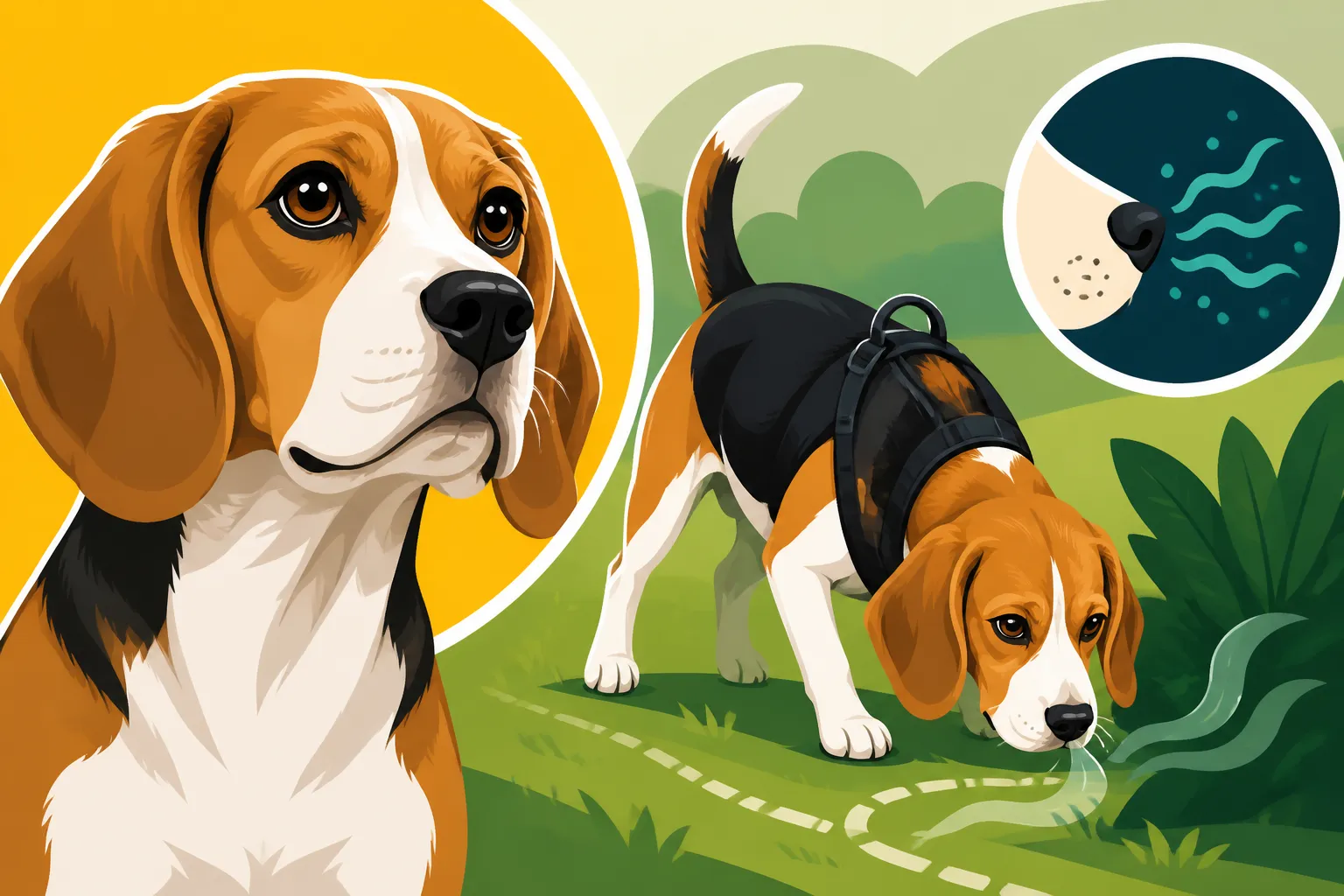
The reason your Beagle is such an incredible scent hound lies deep within their biology. They possess an olfactory system that is truly a marvel of natural engineering. While humans have around five to six million olfactory receptors in our noses, a Beagle boasts an astonishing The 220 Million Receptors Behind a Beagle's Nose. This sheer volume of specialized cells allows them to detect and process an incredible range of odors at concentrations we couldn't even imagine.
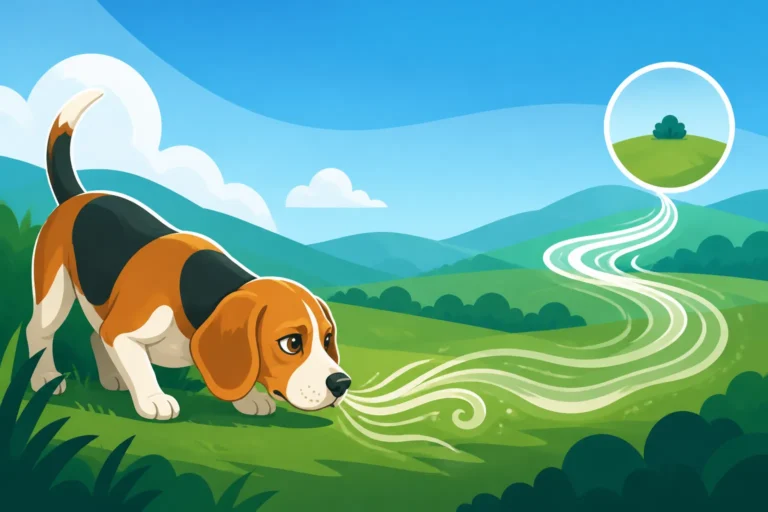
Beyond just the number of receptors, consider the structure of their nose itself. The long, soft ears that frame their face aren't just for show; they actually help to cup and sweep scent particles towards their nose, enhancing their ability to pick up even the faintest trails. Their moist nose leather, often covered in little grooves, also plays a crucial role by capturing scent molecules from the air, allowing for continuous analysis. It’s like having a built-in, highly sophisticated air filter designed to capture every possible aroma. When you see your Beagle walking with its nose pressed firmly to the ground, what you’re witnessing is this incredible system in action, meticulously analyzing every tiny detail. Why a Beagle Walks With Its Nose to the Ground delves deeper into this fascinating behavior.
How Beagles Process Scent
It’s not just about what they can smell, but how they interpret it. A Beagle’s brain dedicates a much larger proportion of its capacity to processing olfactory information compared to a human brain. Their olfactory bulb, the part of the brain that receives signals from the nose, is disproportionately large and complex. This means they don't just register "smell"; they decipher intricate layers of information, creating a detailed mental map of their environment based on odors.
Imagine stepping into a room and instantly knowing not just that a dog was there, but which dog, when they were there, what they ate, and which direction they walked – all from a lingering scent. That's a glimpse into your Beagle's world. They can differentiate between scents that are hours, even days, old, and follow a specific trail through a myriad of other distracting odors. This ability to isolate and track a single scent thread, even amidst a chaotic sensory environment, is why they excel in roles like tracking and detection. They are truly living, breathing scent discriminators, and every walk is an opportunity for them to engage this incredible skill.
Why Scent Work is the Ultimate Job for a Beagle
Given their unparalleled olfactory capabilities, it becomes clear that Beagles aren't just suited for scent work; they were practically designed for it. For centuries, their purpose was to follow a scent trail, and while most pet Beagles aren't out hunting rabbits professionally anymore, that innate drive hasn't vanished. Providing them with constructive outlets for this natural talent isn't just about entertainment; it's about fulfilling their breed-specific needs in a profound way.
Fulfilling Natural Instincts
The urge to sniff, trail, and discover is hardwired into every Beagle. When these instincts aren't given a proper channel, they often manifest in ways that can be challenging for owners. We often hear about Beagles that pull relentlessly on the leash, bolt out the door, or become destructive indoors. Many of these behaviors stem from an unmet need for mental and physical stimulation, particularly related to their nose.
Scent work offers a safe, controlled, and deeply satisfying way for your Beagle to engage these primal instincts. Instead of trying to suppress their nose, you're giving it a purposeful job. This allows them to "hunt" and "trail" in a way that is mutually enjoyable and doesn't involve disappearing into the next county. It taps into their intrinsic motivation, turning what might seem like a nuisance into a joyful pursuit. Think of it as intellectual enrichment for their incredible noses, allowing them to do what they're naturally programmed for.
Mental Stimulation and Physical Exercise
While we often focus on physical exercise for our dogs, mental stimulation is equally, if not more, important, especially for intelligent, driven breeds like Beagles. A tired mind often leads to a calmer body. Scent work provides an intense mental workout that can leave a Beagle more satisfied and relaxed than a long, mindless walk. The concentration required to follow a scent, differentiate odors, and problem-solve to find a hidden item is incredibly taxing in the best way possible.
Imagine the focus required to sift through a hundred different smells in the park to pinpoint the faint trace of a specific squirrel that passed by an hour ago. That's the kind of mental gymnastics scent work demands. Even a short 15-20 minute scent session can be as tiring as a much longer physical walk, sometimes even more so. Sniffing Walks and Why They Tire a Beagle Out highlights how effective this type of activity can be. Combine this mental exertion with the physical movement involved in searching and navigating an area, and you have a holistic exercise program. It's not always about running miles; sometimes, it's about engaging their most powerful sense in a meaningful task.
Building Confidence and Strengthening Your Bond
For many Beagles, especially those who might be a bit shy, anxious, or newly adopted, scent work can be a huge confidence booster. When a dog successfully solves a scent puzzle, finds a hidden treat, or locates a specific odor, they experience a genuine sense of accomplishment. This builds self-esteem and encourages them to be more engaged and persistent in other areas of their lives. It's a low-pressure activity where they are the experts, and you are their cheering section.
Furthermore, engaging in scent work together is a fantastic way to strengthen the bond between you and your Beagle. You become a team, working towards a common goal. Your Beagle learns to trust your cues and enjoys the shared experience of discovery. You, in turn, learn to appreciate their incredible abilities and observe them in their element, truly showcasing their unique talents. This shared activity fosters communication and mutual understanding, transforming your relationship into something even richer. When you're working together to find a hidden scent, you're speaking their language.
Getting Started with Scent Work at Home
You don't need fancy equipment or a professional trainer to start introducing your Beagle to the joys of scent work. The beauty of this activity is that it can begin right in your living room with items you already have. The key is to make it fun, easy, and rewarding, building your Beagle's confidence and enthusiasm with every successful "find."
Simple 'Find It' Games
The easiest way to introduce scent work is through simple "find it" games. Start with high-value treats that your Beagle absolutely loves. Remember, The Treats a Beagle Will Work Hardest For will make all the difference in their motivation. Begin by showing your Beagle the treat, letting them sniff it. Then, ask them to "stay" (or have a helper hold them) while you "hide" the treat in plain sight – literally just a few inches away. Say "find it!" and let them go. When they eat it, praise them enthusiastically!
Repeat this several times, gradually increasing the difficulty. Next, try hiding the treat under a cup, then under two cups, then behind a piece of furniture they can easily see. The goal is success, success, success. As they get the hang of it, you can start hiding treats in different rooms, using slightly more challenging spots but always ensuring they can find it without too much frustration. This builds their understanding of the game and their trust in your cue. It's all about positive reinforcement and making the experience incredibly rewarding.
Using Puzzle Feeders and Snuffle Mats
Once your Beagle understands the basic "find it" concept, you can introduce more structured at-home scent challenges using puzzle feeders and snuffle mats. These tools are fantastic for slowing down fast eaters and providing mental enrichment. Puzzle feeders come in many forms, from those where your dog has to push levers or slide compartments, to those that dispense kibble as they roll. Puzzle Feeders That Genuinely Slow a Beagle can be a lifesaver for dogs who inhale their meals.
Snuffle mats are another brilliant, low-tech option. These are fabric mats with many strips of fleece sewn on, creating countless hiding spots for kibble or small treats. Simply sprinkle their meal or a handful of treats into the mat and let them use their nose to root them out. This engages their natural foraging behavior and provides a wonderful outlet for sniffing. You can find a wide variety of these on platforms like Amazon, offering different levels of difficulty. Both puzzle feeders and snuffle mats are great ways to turn mealtime into a mental game, making eating a more enriching experience rather than just a quick gulp.
Hide and Seek with Toys
Beyond treats, you can also play hide and seek with their favorite toys. This can be especially good for Beagles who are highly toy-motivated. Start the same way as with treats: show them the toy, let them sniff it, hide it in plain sight, and then say "find it!" Gradually increase the difficulty.
You can also play hide and seek with yourself! Have someone hold your Beagle, then go hide in another room and call their name excitedly. When they find you, reward them with praise and maybe a game of tug. This teaches them to use their nose and ears to locate you, and it's a fantastic way to build their recall indoors. These games leverage their natural drive to locate things (and people!) they value, turning everyday interactions into engaging scent challenges. Remember, the key is to keep it fun and positive, making every "find" a celebration.
Formal Scent Work Training and Classes
Once you and your Beagle have mastered the basics at home, you might find yourselves eager to explore more structured scent work activities. Formal classes or organized groups can provide excellent guidance, new challenges, and a supportive community for both you and your dog. These environments introduce new odors and techniques, taking your Beagle's natural abilities to the next level.
Introduction to Nose Work
Nose Work, also known as K9 Nose Work or Scent Work, is a dog sport inspired by professional detection dogs. It’s designed to be accessible to all dogs, regardless of breed, age, or physical ability, making it perfect for Beagles. In Nose Work, dogs learn to find specific target odors (usually essential oils like birch, anise, and clove) hidden in various environments. The beauty of Nose Work is that it’s entirely dog-driven; the handler learns to read their dog’s signals as they work the scent puzzle.
Typically, an introductory class will start with teaching your Beagle to associate a specific odor with a reward. This might involve placing the target odor (e.g., a cotton swab with birch oil) in a box with treats, so your Beagle learns that the smell of birch means good things are near. Gradually, the game progresses to finding the hidden odor in different containers, then in rooms, and eventually outdoors or even on vehicles. It’s an amazing journey to watch your Beagle transform into a focused, deliberate scent detector. If you're looking to dive into organized scent work, Getting a Beagle Started in Nose Work Classes is a great resource.
Tracking and Trailing
Tracking and trailing are distinct but related scent work disciplines that closely mimic a Beagle's historical role. Tracking involves teaching your dog to follow a specific human scent trail on the ground, step by step. The dog is usually on a long line, with their nose literally to the ground, meticulously working out the path of the track layer. This is a very precise and often slow process, requiring intense focus from the dog.
Trailing, on the other hand, is a bit more flexible. It involves following a human scent, but the dog is given more leeway to air-scent (picking up scent particles floating in the air) as well as ground-scent. Trailing dogs are often searching for a specific missing person and may cover larger areas more quickly. Both tracking and trailing are incredibly rewarding activities that tap directly into your Beagle's natural gifts. They require patience and dedication from both dog and handler but offer an unparalleled opportunity to see your Beagle truly "work" as they were intended. These activities are phenomenal for building confidence and channeling that intense drive to follow a line of scent.
Online Resources and Home Study
If formal classes aren't readily available or don't fit your schedule, there are numerous excellent online resources and home study programs that can guide you through scent work. Many reputable dog trainers offer online courses, video tutorials, and even virtual coaching sessions. These can be particularly helpful for learning the nuances of handling, reading your dog's body language, and setting up appropriate searches.
Platforms like BAXTER & Bella offer comprehensive online puppy and dog training programs, which often include modules or specific exercises for nose work and mental enrichment. While they might not be specifically Beagle-focused, the foundational principles of scent work apply universally. You can also find books and DVDs dedicated to Nose Work or tracking, providing step-by-step instructions. The key with home study is to be consistent, follow the instructions carefully, and always prioritize making it a fun and positive experience for your Beagle. Self-paced learning allows you to progress at your own Beagle's speed, ensuring they build a strong foundation without feeling rushed.
Types of Scent Work Activities for Beagles
Scent work is a broad umbrella, encompassing a variety of activities that cater to different skill levels, environments, and even your Beagle's personal preferences. The beauty is that there's usually something for every Beagle and every owner, from simple at-home games to competitive dog sports.
Container Searches
Container searches are often the starting point in formal Nose Work classes. The concept is straightforward: a specific target odor (like birch oil) is hidden in one of several identical containers, such as cardboard boxes or plastic tubs. Your Beagle's job is to identify the container holding the target odor and indicate it to you, usually by freezing, pawing, or sitting near it.
This activity teaches your Beagle to discriminate between scents and to communicate their findings. As they progress, the number of containers increases, they might be placed further apart, or the environment might change (e.g., searching containers in a noisy room or outdoors). It’s a fantastic way to build their focus and precision, honing their ability to pinpoint a specific scent source among many distractions. For a Beagle that's easily distracted by visual cues, container searches force them to rely solely on their nose.
Interior and Exterior Searches
Once Beagles are proficient with containers, they move on to searching larger areas: interiors and exteriors. Interior searches involve finding hidden target odors within rooms, buildings, or even vehicles. The hides can be anywhere – under furniture, behind a curtain, on a bookshelf, or tucked into a small crevice. This mimics real-world detection scenarios and requires the dog to systematically search an entire space.
Exterior searches take the challenge outdoors, introducing environmental factors like wind, temperature, and a vast array of natural odors (think rabbits, squirrels, other dogs, and plants). The scent cone (how an odor disperses in the air) behaves very differently outdoors, requiring the Beagle to work more dynamically, often air-scenting as much as ground-scenting. Both interior and exterior searches push your Beagle to apply their scenting skills in complex, varied environments, making them incredibly satisfying and mentally stimulating. It's truly a test of their endurance and concentration, and it's amazing to watch them work a large area, following the invisible trail of scent.
Buried Hides and Advanced Challenges
For Beagles who truly excel and enjoy the challenge, advanced scent work introduces new levels of complexity. Buried hides involve placing the target odor partially or fully underground, requiring the dog to pinpoint the exact location and sometimes even dig or scratch to indicate. This taps into their natural digging instincts and adds another layer of problem-solving.
Other advanced challenges might include water searches (where the odor is hidden near or in water), elevated hides (requiring the dog to jump or climb to reach the scent source), or blind searches (where neither the handler nor the dog knows the exact location of the hide, only that it exists in the search area). These activities keep the work fresh and engaging, ensuring that your Beagle’s incredible nose is always being challenged and refined. They’re a testament to how adaptable and capable these dogs truly are when given the right motivation and guidance.
Here's a quick overview of some popular scent work activities:
| Activity | Description | Benefits for Beagles | Equipment Needed |
|---|---|---|---|
| "Find It" Games | Hiding treats or toys around the house for your Beagle to locate. | Excellent beginner activity, builds confidence, easy to start, great mental exercise. | Treats/toys, your home. |
| Snuffle Mats | Fabric mats with hidden pockets/folds where kibble or treats are scattered for the dog to forage. | Engages natural foraging, slows eating, easy mental stimulation, great for rainy days. | Snuffle mat (easily found on Amazon), kibble/treats. |
| Puzzle Feeders | Devices requiring a dog to manipulate parts (levers, slides) to access food rewards. | Problem-solving, mental challenge, slows eating, prevents boredom. | Puzzle feeder, kibble/treats. |
| Nose Work (Containers) | Dog identifies a target odor (e.g., essential oil) hidden within one of several containers. | Teaches scent discrimination, focus, indication, builds foundational skills for formal scent work. | Target odors (essential oils), cotton swabs, containers (boxes, tins). |
| Nose Work (Interiors/Exteriors) | Dog searches larger indoor or outdoor areas for hidden target odors. | Applies skills to real-world environments, adapts to varying scent conditions, intense mental workout. | Target odors, various hiding spots. |
| Tracking/Trailing | Dog follows a specific human scent trail on the ground (tracking) or in the air/ground (trailing) over distances. | Fulfills primal hunting instincts, builds stamina and endurance, deep mental engagement, strong bond-building. | Long line/harness, track layer, specific articles (for tracking). |
| Barn Hunt | Dog uses its nose to locate a rat (safely enclosed in a aerated tube) hidden within a maze of straw bales. | Highly instinctual, fast-paced, great for prey-driven Beagles, fun and active. | Barn hunt facilities, usually done in organized events. |
Benefits Beyond Burning Energy
While burning off that boundless Beagle energy is certainly a major perk of scent work, the advantages extend far beyond just physical and mental fatigue. Engaging your Beagle's nose can unlock a host of other positive outcomes, impacting their overall well-being and strengthening your relationship in unexpected ways.
Reducing Anxiety and Destructive Behavior
A bored Beagle is often a mischievous Beagle. When their keen minds and powerful noses aren't given a job, they tend to find their own "work," which might include excessive barking, digging, chewing furniture, or counter surfing. These behaviors are often born out of frustration, boredom, and an abundance of unchanneled energy.
Scent work provides a constructive and calming outlet for these drives. The intense focus required to work a scent trail or locate a hidden odor can be deeply grounding and even meditative for a Beagle. It channels their energy into a productive task, reducing the likelihood of destructive behaviors. For Beagles prone to separation anxiety, short, engaging scent games before you leave can help tire them mentally and make them more likely to settle down. Beagle Separation Anxiety in a Pack Breed is a common concern, and mental enrichment like scent work can be a vital part of a comprehensive management plan. A Beagle that has had a satisfying "hunt" for scents is often a much calmer and happier companion.
Boosting Focus and Problem-Solving Skills
Beagles are incredibly intelligent, but their focus can often be fragmented by the myriad of scents around them. Scent work, particularly more structured forms like Nose Work, directly trains their ability to concentrate on a specific task despite distractions. They learn to ignore extraneous smells and home in on the target odor. This improved focus can often translate to other areas of their training, making them more attentive to your cues and more engaged during obedience exercises.
The very nature of scent work is problem-solving. A Beagle isn't just sniffing aimlessly; they are actively working out where a scent is coming from, how it's moving, and how to get to its source. This involves critical thinking, spatial reasoning, and persistence. Over time, you'll notice your Beagle becoming more methodical, strategic, and resilient when faced with new challenges, both in scent work and in daily life. It fosters a thinking dog, rather than one just reacting to every impulse.
Deepening the Human-Canine Bond
There's something truly magical about watching your Beagle in their element, completely absorbed in a scent. As a handler, you learn to trust their nose, to read their subtle body language, and to celebrate their successes. This shared activity builds a unique partnership where you rely on your Beagle's innate abilities, and they rely on you for guidance and reward.
The mutual understanding that develops during scent work is invaluable. You become attuned to their slight head turns, tail wags, or changes in breathing that signal they are "on" a scent. This silent communication fosters a deep sense of connection and respect. It's an opportunity to truly appreciate your Beagle for the incredible animal they are, acknowledging and nurturing the very traits that make them unique. It moves beyond basic care and obedience, evolving into a true partnership built on trust and shared purpose.
Common Challenges and How to Overcome Them
While scent work is incredibly rewarding, it's not without its small hurdles. As with any new activity, there might be moments of frustration or confusion, for both you and your Beagle. However, understanding these common challenges and having strategies to overcome them can ensure your scent work journey remains positive and productive.
Over-Arousal and Frustration
Some Beagles, especially those with a very high drive, can become overly excited or frustrated if they can't immediately find the scent. This might manifest as frantic digging, barking, or even ignoring the scent and just looking to you for help. It's a sign that the challenge might be too high, or they're not quite understanding the game.
The key here is to simplify and reinforce success. Go back to easier hides where success is guaranteed. Make sure your rewards are immediate and highly motivating. If your Beagle is barking or digging frantically, gently interrupt, reset, and present an easier scenario. You might need to use a Long Line Length a Beagle Actually Needs to guide them to the scent without giving it away, helping them understand they need to use their nose, not brute force. Break down the steps into smaller, achievable chunks. The goal is to build confidence and enjoyment, not frustration. Remember, consistent, small successes build enthusiasm.
Distractions and Environmental Factors
Beagles are masters of sniffing, which also means they are acutely aware of all the smells. This can make distractions a significant challenge, especially in outdoor environments or when introducing new target odors. That tempting rabbit trail, the lingering scent of another dog, or even a sudden gust of wind can pull your Beagle away from the task at hand.
When starting out, choose quiet, low-distraction environments. Gradually introduce distractions as your Beagle becomes more proficient with the target odor. For example, if you're working on Nose Work, practice in a quiet room, then a slightly busier one, then in your fenced backyard, and finally in a public park during off-peak hours. When working outdoors, factors like wind can disperse scent quickly, making it harder to pinpoint. Learn to observe wind direction and understand how it might affect the scent cone. Patience is crucial here; it’s about building their ability to focus through increasing levels of environmental noise and olfactory interference.
Reading Your Beagle's Signals
One of the most important aspects of scent work for the handler is learning to read your Beagle's body language. They can't tell you in words where the scent is, but they will communicate it through subtle (and sometimes not-so-subtle) cues. This is often the hardest part for human handlers, as we're used to giving commands, not interpreting minute signals.
Pay close attention to changes in their breathing, tail movement (a faster, tighter wag often means they're "hot"), ear position, head carriage, and overall demeanor. Does their sniffing become more intense? Do they freeze or point their nose at a specific spot? Do they look back at you with an expectant gaze? These are all indications. It takes time and practice to truly understand your individual Beagle's "tell." Keeping a Seizure Diary for Your Beagle might be for medical purposes, but the principle of careful observation applies; perhaps you could start a "Scent Work Journal" to note what your Beagle does when they're truly on a find. Many trainers emphasize that in scent work, the handler's job is to trust the dog and just observe, not to interfere. This develops into a beautiful, non-verbal dialogue between you and your hound.
Integrating Scent Work into Daily Life
Scent work doesn't have to be a specialized activity reserved for classes or dedicated training sessions. It can easily be woven into the fabric of your Beagle's everyday life, transforming mundane moments into enriching experiences. The more opportunities your Beagle has to use their nose in a constructive way, the happier and more fulfilled they will be.
Transforming Walks into Scent Adventures
Forget the brisk, heel-focused walks where you're constantly pulling your Beagle away from every interesting sniff. Embrace the "sniffari"! Allow your Beagle to take their time exploring the rich tapestry of scents on their walks. Let them investigate that lamppost, that patch of grass, that intriguing leaf. These aren't just idle moments; they are opportunities for intense mental stimulation. Letting a Beagle Sniff on Every Single Walk is not just good for them; it's essential.
You can even add structure to these sniffaris. Hide a few high-value treats along a familiar path before your walk, then lead your Beagle to the general area and tell them "find it!" You'll be amazed at their focus. Or, practice a "search" command in your own backyard, hiding treats in different spots for them to discover. These simple additions turn a routine walk into a stimulating scent adventure, catering directly to your Beagle’s deepest drives and ensuring they come home truly tired in both mind and body.
Making Mealtime a Mental Game
As we touched on earlier, mealtime is a prime opportunity for scent work. Instead of simply placing a bowl of food down for your Beagle to inhale in thirty seconds flat, make them work for it. This not only engages their nose and brain but also slows down their eating, which can be beneficial for digestion.
Use puzzle feeders, slow feeder bowls, or snuffle mats for their daily meals. You can also scatter their kibble across the lawn or hide small portions of it in various places around the house for them to find. Snuffle Mats and Scatter Feeding for a Beagle are excellent for this purpose, turning the act of eating into a delightful game of detection. Even something as simple as putting a portion of their food in a rolled-up towel or a cardboard box they have to tear open can provide valuable enrichment. It transforms a quick gulp into a rewarding "hunt" for their dinner, satisfying their natural foraging instincts.
Utilizing Indoor Enrichment on Rainy Days
We all have those days when the weather just isn't cooperating for a long outdoor adventure. For a high-energy, nose-driven Beagle, rainy days can quickly lead to boredom and pent-up energy, resulting in unwanted behaviors. This is where indoor scent games become your best friend.
Beyond snuffle mats and puzzle feeders, create an indoor scent trail for your Beagle. Drag a high-value treat across the floor, making a winding path, and then place the treat at the end. Let your Beagle follow the trail. Play hide and seek with yourself or their favorite toys in different rooms. You can also create simple "box puzzles" by putting treats inside a series of nested boxes or wrapped in paper. There are countless Indoor Games for a Beagle on a Rainy Day that harness their scenting ability. These activities are perfect for keeping their minds active and their noses busy, ensuring they remain calm and happy even when stuck inside.
Disclaimer
This article is for general informational purposes only and does not constitute professional advice. Laws, prices and regulations vary by location and change over time. Consult a qualified professional for guidance on your specific situation.