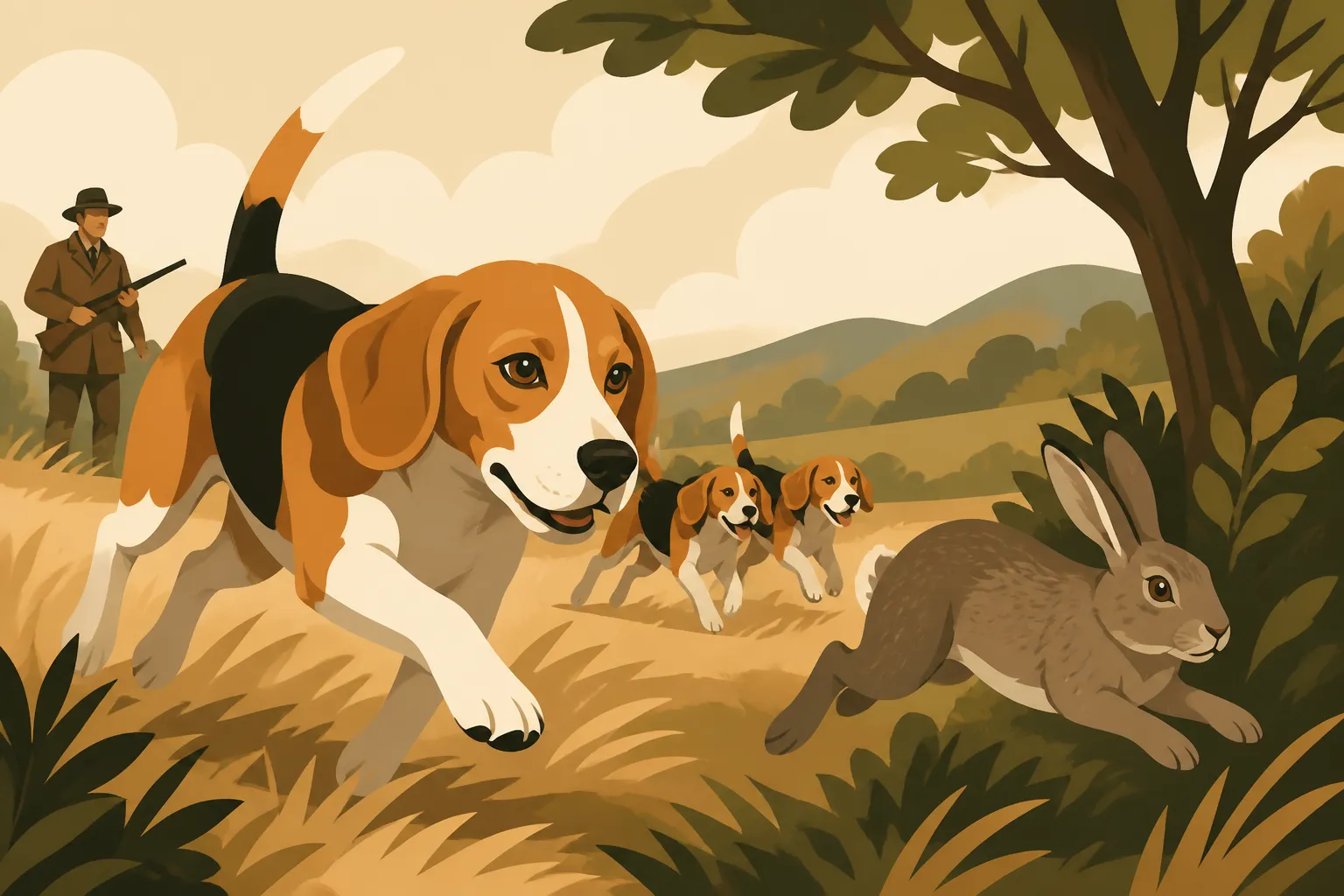
Beagles and the Rise of the American Rabbit Hunt
For many Beagle owners today, the idea of their cheerful, often mischievous companion being a serious hunting dog might seem a little quaint, even a bit far-fetched. Yet, the truth is that Beagles were meticulously bred for centuries to pursue game, particularly rabbits and hare, and their incredible scenting ability and unwavering drive shaped much of their personality we cherish today. This guide will take you on a journey through the Beagle's rich history, exploring how this diminutive hound became synonymous with the American rabbit hunt and how those deep-seated instincts continue to influence our beloved pets.
The Beagle's Inherent Hunting Instincts
When you watch a Beagle with its nose to the ground, completely oblivious to your calls, you're witnessing generations of selective breeding at play. These dogs weren't just casually good at hunting; they were engineered for it. Every characteristic, from their floppy ears to their tireless stamina, served a purpose in the field. Understanding these fundamental instincts is key to truly appreciating why they excel at what they do.
A Nose for the Trail
The Beagle's olfactory system is nothing short of a marvel. Their nose, boasting an estimated 220 million scent receptors, is their primary tool, a highly sophisticated biological instrument. Unlike many other breeds that might hunt by sight or by air-scenting, the Beagle is a ground-scenter, meticulously following a trail left by game. This means their head is almost perpetually down, tracing every subtle nuance of scent on the terrain. When a Beagle is on a scent, the world around them fades. Your voice, the sight of a squirrel, even the promise of a treat – all become secondary to the invisible narrative unfolding beneath their keen nose. This incredible focus, while sometimes frustrating on a walk, is precisely what made them invaluable to hunters. They wouldn't give up on a trail until the job was done, making them exceptionally reliable in pursuit.
Think of it this way: where we see a patch of grass, a Beagle reads a detailed history book. They can discern individual rabbit tracks, tell how recently the rabbit passed by, and even determine its direction. This granular level of detail allows them to unravel complex scent puzzles, navigating through brush, over streams, and across varied terrain, all while holding steadfast to the original scent. This inherent trait, passed down through countless generations, is what made them the ultimate rabbit-hunting specialist. Why a Beagle Walks With Its Nose to the Ground provides more insight into this fascinating behavior.
The Merry Chase and That Unmistakable Voice
Beyond their phenomenal nose, Beagles possess a unique combination of stamina and vocalization that cemented their place in the hunting world. They are built for endurance, capable of trotting for hours without tiring, maintaining a steady pace that allows hunters, traditionally on foot or horseback, to keep up. Their short, dense double coat provides protection against brambles and weather, while their compact, muscular build allows them to navigate dense undergrowth with ease.
But perhaps their most defining characteristic in the field is their voice – the iconic "Beagle bay." This isn't just a bark; it's a deep, melodious, often mournful sound that serves multiple purposes. First and foremost, it signals to the hunter that game has been found and the chase is on. Each change in the bay's tone or frequency can communicate different stages of the hunt: the initial "strike" when a fresh trail is found, the excited "chop" during a hot pursuit, and the longer, drawn-out "howl" if the scent is momentarily lost. What a Beagle Bay Actually Sounds Like delves deeper into these unique vocalizations. This bay is not just communication; it's a deeply ingrained part of their hunting joy, a release of pure, unadulterated instinct. While it can be a source of frustration for modern urban owners, in the field, it was music to a hunter's ears, guiding them to the action and ensuring they never lost track of their hard-working hounds, even when out of sight. Why Hunting Beagles Were Bred to Bay at All explains the historical importance of this trait.
From English Packs to American Fields
The journey of the Beagle from its origins in the English countryside to its prominent role in American rabbit hunting is a tale of adaptation, practicality, and enduring canine capability. Their history is long and fascinating, stretching back centuries before they truly became the American icon we know today.
Early Beagle-Type Hounds and European Hunting Traditions
The lineage of the Beagle can be traced back to ancient hound types in England and Europe, dogs that were generally smaller, agile, and specialized in hunting small game. Before the specific "Beagle" breed emerged as we recognize it, there were various "Beagle-type" hounds. These early predecessors were often lumped together under general descriptions of small scent hounds used for hunting hare and rabbit. It's said that even before the Norman Conquest in 1066, there were small hounds in Britain used for hunting on foot.
These early hounds were bred for practical purposes, often for "foot-hunting," meaning hunters followed on foot rather than on horseback, making a smaller, slower, yet incredibly persistent hound ideal. Royalty and nobility sometimes kept larger packs of hounds for deer or fox, but these smaller scent hounds were perfect for the common person, or for those who preferred a more intimate chase with smaller game. The term "Beagle" itself is thought to derive from the Old French word "beigle" or "beegueule," meaning "gaped throat," referring to their baying voice. How Long Beagle-Type Hounds Have Existed and The Talbot Hound in a Beagle's Ancestry explore these historical roots further. Figures like Reverend Phillip Honeywood, who maintained a pack of ten-inch Beagles in the 1830s, played a pivotal role in refining the breed in England, focusing on specific traits for hunting.
The Beagle's Arrival and Adaptation in America
While small hounds resembling Beagles existed in America from the colonial era, the formal establishment and popularization of the breed for rabbit hunting truly gained momentum in the 19th century. English Beagles were imported to the United States primarily after the Civil War, with a significant influx in the 1870s and 1880s. American hunters and breeders quickly recognized their inherent talent for rabbit hunting, a sport that was readily accessible and popular across the growing nation.
America's vast agricultural lands, growing suburbs, and abundance of cottontail rabbits created the perfect environment for the Beagle to thrive. Unlike the more formal hare hunting traditions in England, American rabbit hunting was often a more democratic pursuit, engaged in by farmers, working-class families, and outdoorsmen alike. The Beagle's compact size, amiable nature, and exceptional hunting prowess made them an instant hit. They were less expensive to keep than larger hounds, could work in diverse terrains, and their distinctive bay provided both entertainment and practical guidance in the field. When the First Beagles Reached America outlines their early journey to the continent, and The National Beagle Club and Its 1887 Founding highlights the institutional efforts to standardize and promote the breed.
The Evolution of American Rabbit Hunting with Beagles
The Beagle's story in America isn't just about their arrival; it's about how they integrated into the fabric of rural life and how the sport of rabbit hunting evolved around their unique capabilities. They weren't just a tool; they became a cherished part of the American sporting tradition.
Popularity on the Farm: How Beagles Became a Working Dog for Everyday People
For many American farmers and rural families, a Beagle wasn't just a pet; it was a valuable working member of the household. Rabbits could be a nuisance to crops, and hunting provided both pest control and a source of food. A small pack of Beagles, often just two or three, could be easily maintained and provided hours of entertainment during a hunt. The relatively low cost of ownership compared to larger hunting breeds, combined with their ability to hunt without horses, made them accessible to a broad demographic.
These were the dogs that would sleep by the fire, chase rabbits during the day, and then return home to be a loyal companion. Their adaptable nature and robust health ensured they could handle the rigors of farm life and the demands of hunting. This widespread adoption meant that the "rabbit Beagle" became a familiar sight across the American landscape, often seen trotting through fields or baying in pursuit through the woods. The Southern farmers, in particular, played a crucial role in preserving and developing these working lines, ensuring the traits essential for hunting remained strong. The Southern Farmers Who Kept Rabbit Beagles Going details this important period. Old sporting prints from the era often depict Beagles proudly at the heels of hunters, illustrating their embedded status in the culture of the time. What Old Sporting Prints Show About Early Beagles offers a visual glimpse into this history.
Organized Field Trials and the Preservation of Instinct
As the popularity of Beagles for rabbit hunting grew, so too did the desire to measure and celebrate their prowess in a structured environment. This led to the development of Beagle field trials, which became a cornerstone of the breed's development and the sport itself. These trials were designed to simulate actual hunting conditions, allowing Beagles to demonstrate their natural abilities in tracking, trailing, and working game.
Participants would enter their Beagles, often in braces (pairs) or small packs, into competitions where judges would evaluate their performance based on criteria such as how well they picked up a scent, their persistence on the trail, the quality of their baying, and their overall teamwork. This emphasis on preserving and testing hunting instincts was vital. It ensured that breeders continued to select for the traits that made Beagles exceptional hunters, rather than solely focusing on appearance. Organizations like the National Beagle Club, founded in 1887, were instrumental in establishing these rules and promoting ethical hunting practices. These trials not only served as a competition but also as a means of educating owners, sharing breeding lines, and fostering a community around the breed. The titles and achievements earned in field trials were highly coveted, signifying a Beagle's true capabilities in its ancestral role. Beagle Field Trials in the Nineteenth Century provides historical context for these competitions, and Beagle Field Trials and Running With a Pack gives an overview of how they operate.
Modern Day Rabbit Hunting and the Pet Beagle
Today, while many Beagles are beloved family pets, the tradition of rabbit hunting with Beagles continues, albeit often with a modern twist. For pet Beagle owners, understanding these deep-seated instincts is crucial for their dog's well-being and managing their natural drives in a domestic setting.
Ethical Considerations and Responsible Hunting
For those who continue the tradition of rabbit hunting with Beagles, ethical and responsible practices are paramount. This includes adhering to local hunting regulations, obtaining proper licenses, and respecting wildlife populations. Conservation efforts play a significant role in ensuring sustainable hunting opportunities. Hunters often focus on flushing rabbits for sport and training, rather than purely for harvest, or practice "take-and-release" methods to maintain healthy populations.
The focus is often less on the kill and more on the thrill of the chase, the teamwork with the hounds, and the connection to a historical pastime. Beagles excel at this, running the rabbit in a circle or back towards the hunter, demonstrating their intelligence and skill without necessarily catching the animal. It's a sport that values the dog's natural abilities and the camaraderie among hunters. Training a Beagle for hunting involves honing these natural instincts, reinforcing recall in high-distraction environments, and ensuring the dogs are physically fit and well-cared for. Even for hunting Beagles, a robust diet, like those found on Chewy, and regular veterinary check-ups are essential for their health and longevity.
Channeling the Instinct: Scent Work and Other Outlets for Pet Beagles
For the vast majority of Beagles living as companion animals, actual rabbit hunting isn't part of their life. However, their strong genetic drive to sniff, trail, and "work" is still very much alive. Suppressing these instincts can lead to boredom, frustration, and behavioral issues like destructive chewing or excessive howling. The good news is that there are many fantastic ways to channel a pet Beagle's natural talents in a positive and enriching way.
Scent work, often called "nose work" or "tracking," is perhaps the most natural outlet. This involves teaching your Beagle to search for specific scents (like essential oils) in various environments. It's mentally stimulating, builds confidence, and tires them out far more effectively than a simple walk. Imagine the satisfaction your Beagle gets when they successfully find a hidden treat or toy, their inherent drive fully engaged. Getting a Beagle Started in Nose Work Classes and Beagle Tracking Titles and How to Earn Them offer excellent starting points. Puzzle toys and snuffle mats are also wonderful for engaging their nose and making meal times a stimulating activity. Long-line walks in safe, open areas allow them to explore scents at their own pace without the risk of bolting. Even allowing them ample time to "sniff around" on their regular walks, rather than rushing them along, provides crucial mental enrichment. By understanding and embracing their heritage as a dedicated scent hound, we can provide our Beagles with fulfilling lives that honor their incredible natural abilities.
Table: Beagle Hunting Characteristics
To summarize the key traits that made Beagles ideal for American rabbit hunting, here's a quick overview:
| Characteristic | Description | Advantage in Rabbit Hunting |
|---|---|---|
| Exceptional Nose | 220 million scent receptors, highly adept at ground-scenting. | Unwavering ability to follow a cold or hot rabbit trail, rarely giving up. |
| "Beagle Bay" Voice | Distinctive, melodious vocalization with various tones and meanings. | Communicates to hunters the status of the chase, even when out of sight. |
| Stamina & Endurance | Bred for long hours of steady trotting, rarely tiring. | Keeps the rabbit moving, allows hunters to keep pace on foot. |
| Compact Size | Small yet muscular build, perfect for navigating dense brush. | Easily maneuvers through undergrowth where rabbits hide, less taxing to keep. |
| Social Nature | Historically worked in packs; generally amiable and trainable. | Works well with other dogs and hunters, forms strong bonds. |
| Tenacity & Drive | Highly focused and persistent once on a scent. | Ensures the hunt continues until the rabbit is flushed or treed. |
Disclaimer
This article is for general informational purposes only and does not constitute professional advice. Laws, prices and regulations vary by location and change over time. Consult a qualified professional for guidance on your specific situation.