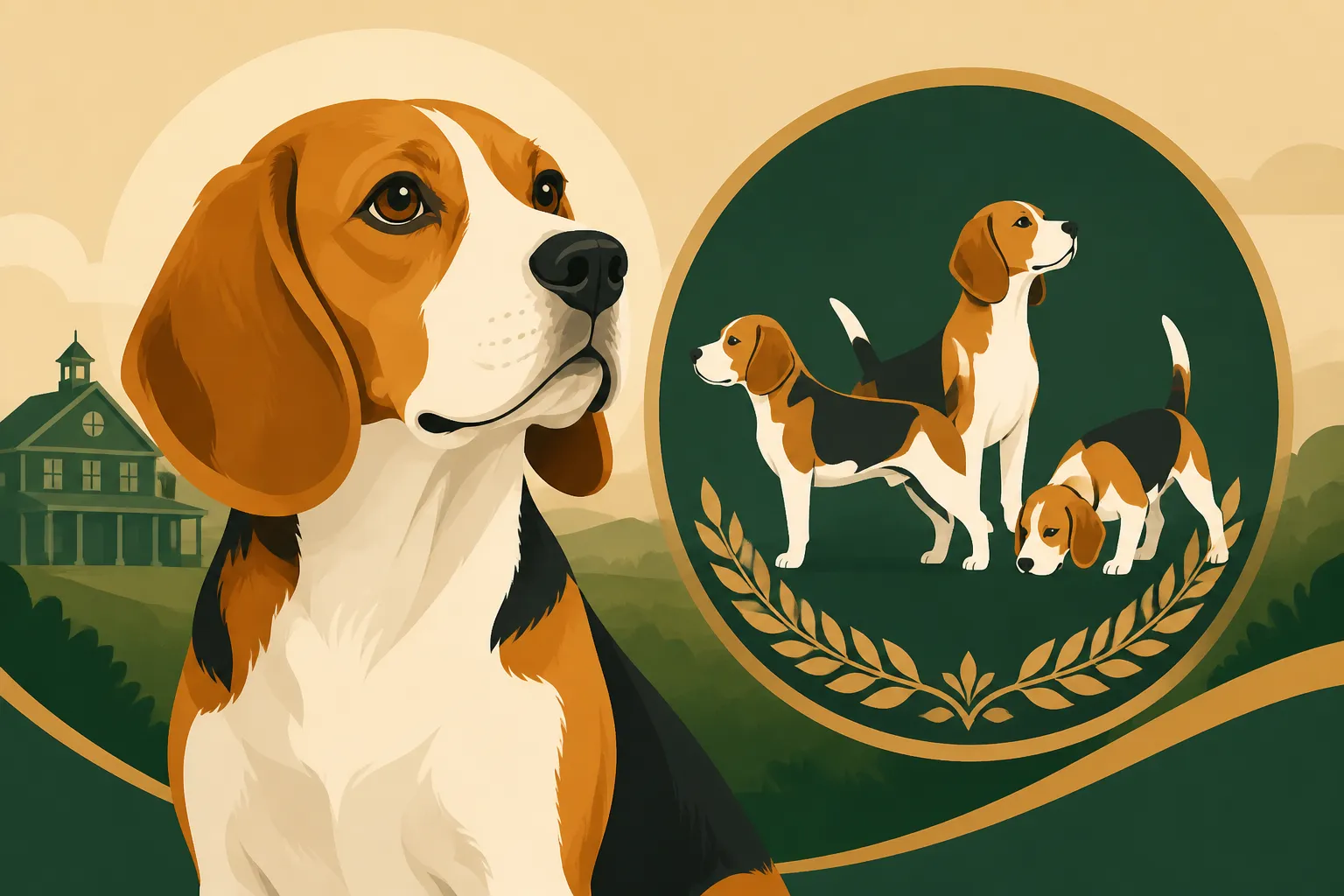
The National Beagle Club and Its 1887 Founding
For anyone who’s ever fallen head over heels for the merry, determined spirit of a Beagle, it can sometimes feel like this delightful hound has always existed, perfectly formed. But the truth is, the Beagle, like many beloved breeds, has a fascinating history of evolution, and a pivotal moment in that journey was the establishment of the National Beagle Club. This guide delves into the foundational year of 1887 and explains why this club’s inception was so crucial in shaping the breed we cherish today.
The Shifting Sands of Early Beagle Type
Before the late 19th century, the term "Beagle" didn't necessarily conjure up the consistent image it does now. It was a descriptor for a type of small hunting hound, rather than a rigidly defined breed with a universally accepted standard. Imagine a patchwork quilt, where each patch was a slightly different version of a "Beagle," all serving a similar purpose but looking quite distinct.
Before a Standard: Diverse Hunting Hounds
Back in the day, if you talked about a "Beagle" in different villages or different parts of England, you might be picturing entirely different dogs. These were primarily working dogs, bred for one crucial job: to hunt rabbits and hares. Their success was measured by their nose, their drive, and their ability to follow a scent trail, not by how perfectly their ears flopped or the precise angle of their tail.
Because of this utilitarian focus, breeders weren't striving for uniformity in appearance. Some packs might have favored slightly longer legs for speed, while others preferred a more compact, sturdy build to push through dense undergrowth. Colors varied wildly, as did ear length and muzzle shape. It was a diverse array of hounds, all united by their incredible scenting ability and their vocal enthusiasm on the trail. If you're curious about how far back these types of hounds go, you might find Beagle-Type Hounds Across Twenty-Five Centuries an interesting read, showcasing just how ancient the concept of a small scent hound truly is. The core purpose, however, always remained the same: What a Beagle Was Originally Bred to Hunt. Without a unified club or standard, this genetic diversity, while useful for specific hunting styles, made it challenging to establish a distinct "Beagle" identity.
The Influence of English Hunting Traditions
The earliest attempts at standardizing Beagle-type hounds largely stemmed from the English hunting traditions. Packs owned by gentry, like those kept by Reverend Phillip Honeywood of the renowned Essex Pack, began to select for certain traits. These were often "foot packs," meaning the hunters followed on foot rather than on horseback. This naturally led to a preference for smaller, slower hounds that could be easily kept up with, hounds that would patiently work a cold trail rather than bolting ahead.
You'd hear tales of "pocket Beagles," tiny hounds small enough to be carried in a saddlebag or even a coat pocket, though their existence as a true, stable variety is a subject of historical debate. Regardless, the idea of a very small, manageable hound for specific types of hunting certainly influenced early breeding. These early packs, while contributing to the eventual refinement, still operated under their own local preferences, meaning there was no single, agreed-upon definition of what made a Beagle perfect. It was a fascinating but somewhat chaotic period, driven by individual passion rather than collective agreement. For more on these influential figures, check out Reverend Phillip Honeywood and His Essex Pack and even Pocket Beagles and Whether They Ever Existed.
The Need for Unification: Why 1887?
By the late 19th century, especially in America, there was a growing recognition that if the Beagle was to thrive beyond its working roots and gain broader appeal, some form of organization was desperately needed. The age of informal, local breeding was giving way to a desire for formal recognition and consistent development.
Bringing Order to a Disparate Breed
Imagine trying to show a "Beagle" in a dog show when every judge had a different idea of what a Beagle should look like! This was the reality facing early Beagle enthusiasts. Without a unified breed standard, there was no benchmark for breeders to aim for, and no clear guidance for judges to evaluate dogs consistently. This lack of uniformity wasn't just an aesthetic issue; it also made it harder to track lineage, share best practices, and ultimately, improve the breed in a systematic way.
The desire was to move the Beagle from a generic "hunting dog" category to a distinct, recognizable breed. People wanted to preserve its incredible scenting ability and merry disposition but also sought a consistent physical form. This period was about passion meeting practicality – ensuring the Beagle's future by giving it a solid foundation. The challenge was immense, requiring consensus among breeders with long-held, differing views on the "ideal" Beagle.
The American Context: Farmers and Show Rings
While the Beagle's roots were firmly in England, it was in America that the breed truly began to solidify its modern form and gain widespread popularity. American farmers and sportsmen, valuing the Beagle's exceptional rabbit-hunting skills, championed the breed. They understood the practical utility of a sound, hardy hound. However, the burgeoning popularity of dog shows also added another layer of complexity and opportunity.
On one hand, there were breeders focused purely on field performance, wanting dogs that excelled in the hunt. On the other, there were those who also wanted their Beagles to do well in the conformation ring, judged on their appearance against an evolving ideal. The formation of a national club was essential to bridge these two worlds. It provided a platform for discussions, debates, and ultimately, the creation of a standard that honored both the Beagle's working heritage and its emerging show potential. This balancing act was critical, and it’s fascinating to learn How American Farmers Saved the Rabbit Beagle, ensuring the breed’s survival and future development. The club became the glue, uniting these different factions under a common banner for the breed's benefit.
The National Beagle Club's Founding and Its Impact
The year 1887 marked a turning point. The formal establishment of The National Beagle Club of America wasn't just a bureaucratic step; it was a commitment to the breed's future, a declaration that the Beagle deserved to be recognized, protected, and promoted with consistency and purpose.
Establishing the First Official Standard
The single most significant achievement of the National Beagle Club's founding was the creation and adoption of the first official breed standard. Think of this standard as the definitive blueprint for what a Beagle should be – from the tip of its nose to the end of its tail, and everything in between. It outlined physical characteristics like size (the two distinct varieties, 13-inch and 15-inch, were crucial here), head shape, eye color, ear set, coat type, and the famous white-tipped tail. But it also encompassed temperament, emphasizing the "merry" and even-tempered nature that makes Beagles such wonderful companions.
This standard provided an invaluable guide for breeders. Instead of each person pursuing their own idea of perfection, they now had a common goal. It allowed for consistent judging in conformation shows, ensuring that the breed developed along a predictable and desirable path. This wasn't about stifling diversity entirely, but about channeling it into a recognizable and healthy form. The influence of this early work is still seen today in how Beagles are bred and judged. It set the stage for how future generations would understand and interact with the breed, dictating exactly What the Beagle Standard Asked For a Century Ago.
| Feature | Before NBC (Approx. 18th/19th Century) | After NBC (Post-1887 Standard) |
|---|---|---|
| Appearance | Highly varied, utility-focused | Defined physical traits (size, head, coat, tail) |
| Size | Ranging from "Pocket" to small foxhound | Established 13-inch and 15-inch varieties |
| Temperament | Primarily working drive, some pack traits | Emphasized "merry," gentle, even-tempered |
| Breeding | Local, informal, based on individual needs | Guided by official standard, systematic |
| Purpose | Hunting only | Hunting and conformation/companionship |
| Recognition | Generic "hound type" | Recognized breed with distinct identity |
Promoting Field Trials and Responsible Breeding
Beyond the show ring, the National Beagle Club also took on the vital role of preserving the Beagle's working heritage. They actively promoted and organized field trials, which are competitions designed to test a Beagle's natural hunting abilities. These trials were, and still are, crucial for ensuring that the breed's incredible nose and instinct for tracking remain strong, preventing it from becoming solely a "pretty face" without its historic purpose. You can delve more into this with Beagle Field Trials in the Nineteenth Century.
Moreover, the club's establishment brought a new emphasis on responsible breeding. This meant encouraging breeders to consider not just physical traits, but also health and temperament. They advocated for ethical practices, shared knowledge, and helped educate the public on what to look for in a well-bred Beagle. This holistic approach was paramount to the long-term health and vitality of the breed. Imagine trying to get all the gear you need for a new puppy, from proper nutrition to training tools, without reliable resources; services like Chewy became invaluable much later, but the club laid the groundwork for informed ownership. They understood that a breed's success wasn't just about winning ribbons, but about producing healthy, well-adjusted dogs that could fulfill their purpose, whether in the field or in the home.
The Lasting Legacy of the 1887 Founding
The decisions made in 1887 didn't just affect the Beagles of that era; they cast a long shadow, positively impacting every Beagle owner and enthusiast since. The National Beagle Club's founding was a beacon, guiding the breed through the complexities of modern dog ownership and ensuring its cherished qualities endured.
Shaping the Modern Beagle
It's truly incredible to think that the Beagle you see today—the one with those soulful eyes, that distinctive tricolor coat, and that undeniable bay—is a direct descendant of the vision laid out by the founders of the National Beagle Club in 1887. Their careful work in defining the breed standard gave us the Beagle's characteristic appearance and solidified its reputation as a cheerful, friendly, and endlessly curious companion.
Without that foundational standard, the breed could have fragmented, leading to a myriad of types that might not even be recognizable as "Beagles" today. The club ensured a consistent genetic line, emphasizing the traits that make a Beagle a Beagle. They created the framework for its gentle nature, its robust build, and its unwavering scenting prowess. This continuity is a testament to their foresight and dedication. From the humble beginnings to a beloved household member, the story of The Beagle From English Rabbit Packs to American Homes is truly a fascinating one, deeply intertwined with the club's efforts.
A Beacon for Breed Preservation
The National Beagle Club of America didn't just create a standard; it created a model for breed preservation. Its success inspired other breed clubs to form, each dedicated to protecting and promoting their chosen breed. This network of dedicated enthusiasts and formal organizations has been crucial in maintaining the health, integrity, and historical traits of countless purebred dogs. They serve as guardians of the breed, ensuring that future generations can enjoy these wonderful animals.
For prospective Beagle owners, the club remains an invaluable resource. It provides guidance on everything from finding a reputable breeder who adheres to ethical practices, to understanding the breed's specific health concerns, and even managing its unique behavioral traits. They advocate for important health testing and provide recommendations for responsible ownership, such as the National Beagle Club Health Recommendations. Knowing that an organization like this exists, dedicated to the well-being of the breed, provides a layer of confidence for families looking to welcome a Beagle into their lives. For those just starting out, acquiring the necessary supplies for a new pup, from food bowls to bedding and toys, is easier with online retailers like Chewy, which makes the essentials accessible, but the knowledge behind those choices often comes from resources rooted in these early breed preservation efforts. This enduring legacy ensures that the merry Beagle will continue to enrich lives for many years to come.
Disclaimer
This article is for general informational purposes only and does not constitute professional advice. Laws, prices and regulations vary by location and change over time. Consult a qualified professional for guidance on your specific situation.