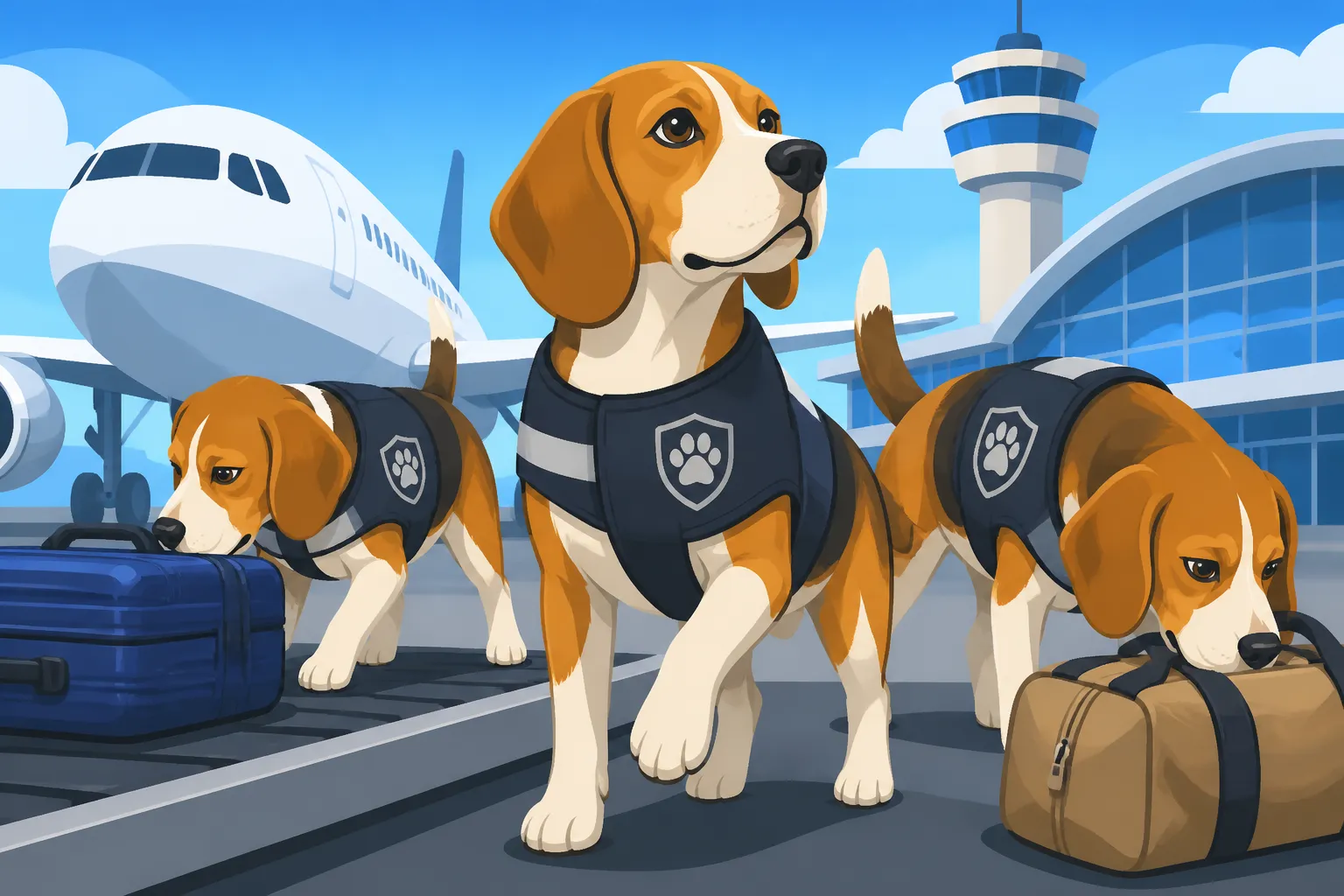
The USDA Beagle Brigade at the Airport
It's quite a common sight these days: you're bustling through a busy airport, perhaps feeling a bit stressed about getting through customs, when suddenly you spot a small, friendly Beagle, nose to the ground, diligently working. These adorable dogs are more than just a cute distraction; they are the highly trained, invaluable members of the USDA's Animal and Plant Health Inspection Service (APHIS) Beagle Brigade, playing a critical role in protecting our country's agriculture and ecosystem from potentially devastating threats carried in passengers' luggage. This guide will dive deep into their vital work, why Beagles are uniquely suited for the job, and what goes into making these sniffing superstars.
Their Mission to Protect Agriculture
The primary mission of the USDA Beagle Brigade is to prevent the introduction of foreign agricultural pests and diseases into the United States. While it might sound like a niche concern, the reality is that a single piece of contaminated fruit, a plant cutting, or even a pest hidden within packaging could unleash economic and ecological havoc. These dedicated dogs are on the front lines, sniffing out prohibited items that could bypass even the most thorough human inspection.
Think about the sheer volume of international travelers and cargo entering the country every single day. Manual inspection of every bag is simply not feasible. That's where the Beagles come in, acting as living, breathing, highly efficient detection machines. Their incredible sense of smell allows them to quickly identify items that could carry harmful bacteria, viruses, insects, or plant diseases, safeguarding everything from our commercial crops and livestock to our backyard gardens. It's a huge responsibility for such small, unassuming dogs, but they take to it with unwavering focus, often driven by their intense food drive.
A Brief History of the Program
The USDA Beagle Brigade program, officially known as the National Detector Dog Training Center (NDDTC), was actually established in 1984. Before this, other breeds, often larger and more imposing, were used for detection work. However, there was a growing recognition that a different approach might be more effective for agricultural inspections, especially in crowded, public environments like airports. The idea was to utilize a dog that was less intimidating to the general public, but still possessed an unparalleled scenting ability.
The initial trials with Beagles proved highly successful. Their gentle demeanor meant passengers were less likely to be alarmed by their presence, making the inspection process smoother and less stressful for everyone involved. What began as a small pilot program quickly expanded, demonstrating the Beagles' effectiveness in a role that had previously been difficult to fill. They quickly became the face of agricultural protection at ports of entry, proving that sometimes the smallest heroes make the biggest difference. You might recall that Why the USDA Picked Beagles for Airport Work highlights many of these early considerations and successes.
Where You'll See Them Working
While you most commonly see the Beagle Brigade at major international airports, their work extends beyond just baggage claim. These highly trained dogs are deployed across various ports of entry, including seaports and cargo facilities, wherever international goods and travelers arrive. Any point where agricultural products could potentially enter the country illegally is a potential workstation for a Beagle Brigade dog.
At airports, they're usually working alongside their human handlers in baggage claim areas, circling around carousels, or greeting passengers in customs lines. They're looking for specific target odors that indicate the presence of fruits, vegetables, meats, and plant materials that are not declared or are prohibited from entering the country. In seaports and cargo facilities, their focus shifts to large shipments, container inspections, and parcel post, where they sniff out similar contraband that could be hidden within commercial goods. The versatility of their training means they can adapt to various environments, maintaining their focus and effectiveness whether it's a bustling terminal or a quieter freight warehouse.
Why Beagles?
It might seem counterintuitive to use a small, notoriously stubborn hound for such an important federal job, especially when larger, more "serious" breeds like German Shepherds are often associated with law enforcement. However, the Beagle's unique combination of physical traits and temperament makes them exceptionally well-suited for the specific demands of agricultural detection at public ports of entry. Their strengths align perfectly with the challenges of the role, making them the ideal canine customs agent.
The Superiority of the Beagle Nose
This is, without a doubt, the Beagle's superpower. Beagles possess an extraordinary sense of smell, far surpassing most other breeds. Their large, damp noses are packed with around 220 million scent receptors, compared to humans' paltry 5 million. More than just the number of receptors, their olfactory bulb, the part of the brain that processes scents, is disproportionately large, giving them unparalleled scent discrimination abilities.
When a Beagle puts its nose to the ground, it's not just smelling a smell; it's dissecting a complex aromatic tapestry, identifying individual components even when masked by other odors. This is critical for their job, as prohibited items are often wrapped, hidden, or carried alongside other, legal items. Their long, floppy ears also play a role, sweeping scents from the ground towards their nose, enhancing their ability to pick up even faint traces. This intense Training a Beagle Around 220 Million Scent Receptors is what makes them indispensable. They can sort one specific prohibited fruit scent out of a suitcase filled with clothing, toiletries, and other personal items, an amazing feat that a human inspector could never achieve.
Temperament That Suits Public Interaction
Imagine a large, barking German Shepherd searching luggage around families with children, or elderly travelers. While incredibly effective for certain types of law enforcement, such a dog might cause unnecessary stress or fear in a public airport setting. This is precisely where the Beagle shines. Their naturally friendly, non-threatening, and often goofy demeanor is a huge asset.
Beagles are known for being merry, outgoing, and generally unperturbed by crowds, noise, or strange environments. They are curious and people-oriented, which means they can perform their duties without causing alarm. When a Beagle alerts to a suspicious bag, it does so by sitting down, not by barking, growling, or becoming aggressive. This subtle, non-confrontational alert helps de-escalate potential tension and makes the overall experience much smoother for passengers. Their calm and approachable nature allows them to blend in, doing their vital work without disrupting the flow of weary travelers. The program definitely understands Beagle Temperament and Why the Breed Suits Families.
Size and Portability for Travel Hubs
Their compact size is another significant advantage. Beagles, typically weighing between 18 and 30 pounds and standing 13 to 15 inches at the shoulder, are small enough to navigate crowded spaces easily. They can weave through legs, under chairs, and around luggage carousels without being intrusive or getting in the way. This portability is crucial for efficient operations in bustling airports and cramped cargo areas.
Furthermore, their size means they are less likely to cause accidental damage to luggage or personnel. A larger dog might inadvertently knock over items or bump into people, whereas a Beagle can maneuver with precision. Their low center of gravity and sturdy build also make them quite agile. This combination of size, agility, and a non-threatening appearance makes them the perfect choice for detection work in environments where public interaction and discreet efficiency are paramount. This is a far cry from the reasons Why German Shepherds Were Retired From That Job for airport duty.
Here's a quick comparison of why Beagles fit the bill so well compared to some other working breeds:
| Characteristic | Beagle | German Shepherd / Malinois | Labrador Retriever |
|---|---|---|---|
| Scenting Focus | Primarily ground/air, food-driven | Air/ground, prey-driven, protection | Air/ground, toy/food-driven |
| Public Demeanor | Friendly, non-intimidating, merry | Can be imposing, intense, alert | Friendly, outgoing, sometimes exuberant |
| Size/Portability | Small, agile, easily maneuverable | Large, powerful, needs more space | Medium-large, energetic, can be clumsy |
| Alert Style | Passive (sit or freeze) | Active (bark, scratch, bite) | Active (paw, bark) or passive (sit) |
| Primary Motivation | Food, praise | Prey drive, bite work, protection | Retrieve, play, food |
| Intimidation Factor | Very Low | High | Medium |
Training and Selection
Becoming a part of the Beagle Brigade is no easy feat. These dogs undergo rigorous selection and intensive training to ensure they are perfectly equipped for their demanding roles. The process is designed to harness their natural abilities and mold them into focused, effective agricultural detector dogs. It’s a testament to the Beagle’s intelligence and inherent drives that they excel in this specialized field.
Recruitment and Early Assessment
Where do these talented Beagles come from? Many are rescued or adopted from shelters and humane societies, or even donated by individuals. Breeders might also contribute dogs that, while perfectly healthy and intelligent, may not meet strict show-ring standards or have an exceptionally high drive that makes them less suitable as typical house pets but ideal for a working role. The USDA is always looking for dogs with a strong food drive, high energy, and a keen interest in scent.
The initial assessment focuses on a few key traits. Trainers observe their prey drive (often redirected to a ball or toy), their confidence in new environments, and crucially, their food motivation. A Beagle that lives to eat is a perfect candidate, as food rewards are the primary motivator in their detection training. They also look for a dog that is unfazed by distractions, sounds, and unfamiliar people, ensuring they will remain focused in a busy airport. Beagles with a history of separation anxiety or excessive vocalization are generally not selected, as these traits would interfere with their work. Potential recruits must also be in excellent health.
The Detector Dog Training Center Outside Atlanta
Once a Beagle is identified as a strong candidate, they are sent to the National Detector Dog Training Center (NDDTC) in Newnan, Georgia, just outside Atlanta. This specialized facility is where the magic happens. Here, experienced trainers work with the Beagles and their future handlers in an intensive 10- to 13-week program. The NDDTC is world-renowned for its innovative and highly effective training methodologies, focusing entirely on positive reinforcement.
The training center simulates various environments the dogs will encounter, from airport baggage claims to cargo warehouses, complete with distractions like loud announcements, moving luggage, and diverse human scents. The training is highly structured and consistent, ensuring that each dog develops the precise skills needed. Handlers are also trained extensively, learning how to read their dog's subtle cues, manage their behavior, and maintain their high level of performance. It’s a partnership where both dog and handler become a cohesive, effective team. The Detector Dog Training Center Outside Atlanta really is the heart of the Beagle Brigade.
Specialized Food and Scent Association Training
The core of the Beagle Brigade's training revolves around scent association, using their natural, insatiable food drive as the primary motivator. They are trained to associate the odors of prohibited agricultural items with a reward, usually a highly desirable treat. This isn't about teaching them to avoid certain smells; it's about teaching them that finding these specific smells leads to a tasty reward.
Initially, dogs are introduced to single target odors, like an apple, hidden in a simple setup. As they consistently find the scent, the complexity increases. Trainers begin to hide the target odors in increasingly challenging locations, among distracting smells, and within various types of luggage. The Beagles learn to ignore all other odors—shoes, perfumes, snacks that are allowed—and focus solely on the handful of prohibited scents they are trained to detect. This intensive process, often fueled by specialized training treats, ensures that they can reliably perform their duties in real-world scenarios. Many handlers might even source these specific high-value treats from places like Chewy, ensuring consistency in their reward system.
Life of a Working Beagle
Being a Beagle Brigade dog is a full-time job, but it's also a life filled with purpose, dedicated care, and a strong bond with their human partner. These aren't just tools; they are highly valued members of a team, and their welfare is paramount throughout their careers.
Daily Duties and Handler Relationships
A working Beagle's day typically involves several shifts at the airport or other ports of entry, usually broken up with rest periods to keep them fresh and focused. When on duty, they are always accompanied by their handler, who is a trained and certified APHIS officer. The handler observes the dog's behavior closely, looking for subtle changes in sniffing patterns, head movements, or a definitive sit-and-stare, which indicates an "alert" to a prohibited item.
The relationship between a Beagle Brigade dog and its handler is incredibly close. They are partners in every sense of the word, often living together when off duty. This constant companionship fosters a deep bond of trust and understanding, which is essential for effective teamwork. The handler knows their dog's quirks, its energy levels, and its preferred rewards, allowing them to optimize performance and ensure the dog's well-being. This close working relationship is what makes the team so effective at detecting What a Beagle Brigade Dog Actually Sniffs For.
Care and Welfare for These Canine Heroes
The USDA takes the health and well-being of its detector dogs very seriously. These animals receive top-notch veterinary care, regular check-ups, and a carefully controlled diet. Given their highly active jobs, maintaining optimal physical condition is crucial. They are fed high-quality dog food, and their calorie intake is often precisely managed, especially since food rewards are such a significant part of their training and daily motivation. It's a careful balance to ensure they stay lean and fit while still being driven by treats.
Beyond physical health, their mental stimulation is also prioritized. While their work is intellectually demanding, they also need time to simply be dogs. Handlers ensure they get adequate exercise, playtime, and enrichment activities when not on duty. Even their routine supplies, from durable beds to specific food brands, are often carefully selected, and sometimes purchased from trusted retailers like Chewy, to meet their unique needs. This comprehensive care ensures these dogs can perform their duties effectively and live long, healthy lives. Balancing Beagle Food Budgets for a Dog That Never Stops Eating with their working weight is a constant consideration.
The Path to Retirement for a Beagle Brigade Dog
Beagles typically serve in the Brigade for 6 to 10 years, depending on their health, energy levels, and continued ability to perform their duties. When a Beagle reaches retirement age or shows signs that the rigorous work is no longer suitable, a well-defined retirement process is put into place. Most often, these dogs are adopted by their handlers, continuing the deep bond they've already established. This allows the dog to transition seamlessly from a working life to a relaxed retirement with a familiar and loving family.
If a handler cannot adopt their dog, arrangements are made for the Beagle to be adopted by a suitable, pre-vetted family. These retired heroes are given every opportunity to enjoy a well-deserved life of leisure, filled with walks, naps, and plenty of affection. The program ensures that every Beagle Brigade dog finds a loving "forever home" where they can be cherished for their service and simply enjoy being a pet. Their retirement is as important as their service, honoring their dedication.
Impact and Success
The Beagle Brigade's presence at our borders represents a highly successful and critically important layer of defense against invasive species and diseases. Their work often goes unnoticed by the casual traveler, but the impact of their diligent sniffing is profound, safeguarding our economy and environment in ways few other methods can.
Preventing the Spread of Pests and Diseases
The success rate of the Beagle Brigade is impressive. These dogs intercept thousands of prohibited agricultural items every year, preventing countless potential threats from entering the country. These intercepted items range from fresh fruits and vegetables that could harbor fruit flies or plant viruses, to meats that could carry diseases like African swine fever or avian influenza, to seeds and plants that might introduce invasive weeds.
The economic implications of a single invasive pest or disease outbreak can be catastrophic for agriculture. For example, an unchecked fruit fly infestation can devastate citrus crops, leading to millions of dollars in losses and widespread quarantines. By detecting these threats at the border, the Beagle Brigade acts as a crucial barrier, saving billions of dollars in potential damage and control efforts annually. Their work directly protects farmers, consumers, and the natural biodiversity of our ecosystems.
Public Perception and Their Friendly Demeanor
One of the most powerful aspects of the Beagle Brigade's success is how well they are received by the public. Unlike some more traditional law enforcement dogs, the sight of a friendly Beagle usually elicits smiles and positive reactions from travelers. This non-threatening presence is a strategic advantage; it allows the dogs to work efficiently without creating an atmosphere of tension or fear.
Travelers are generally more cooperative when approached by a handler with a charming Beagle than they might be with a larger, more imposing dog. This positive public perception helps to foster a better understanding of the USDA's mission and the importance of agricultural inspections. The Beagles act as ambassadors, subtly educating the public about the need to declare all agricultural items, even if it's just a banana from the flight. They make a serious job feel approachable, which is a key part of their effectiveness.
The Future of Detector Dogs at the Border
The success of the Beagle Brigade has paved the way for the expanded use of detector dogs in various capacities. While Beagles remain the stars of agricultural detection, other breeds, including Labradors, are now utilized for different types of contraband, or in different environments, where their specific traits are more advantageous. The underlying principles of positive reinforcement, scent association, and strong handler bonds remain consistent across all detector dog programs.
As global travel and trade continue to increase, the role of detector dogs will only become more vital. Advancements in training techniques, improved understanding of canine cognition, and ongoing research into scent detection will continue to enhance the capabilities of these working animals. The Beagle Brigade stands as a shining example of how combining an animal's natural abilities with expert training can create an incredibly effective and endearing line of defense, continuing to protect our nation for generations to come. Beagle Health Testing Under CHIC ensures healthy dogs are chosen, contributing to a longer, more effective service life.
Disclaimer
This article is for general informational purposes only and does not constitute professional advice. Laws, prices and regulations vary by location and change over time. Consult a qualified professional for guidance on your specific situation.