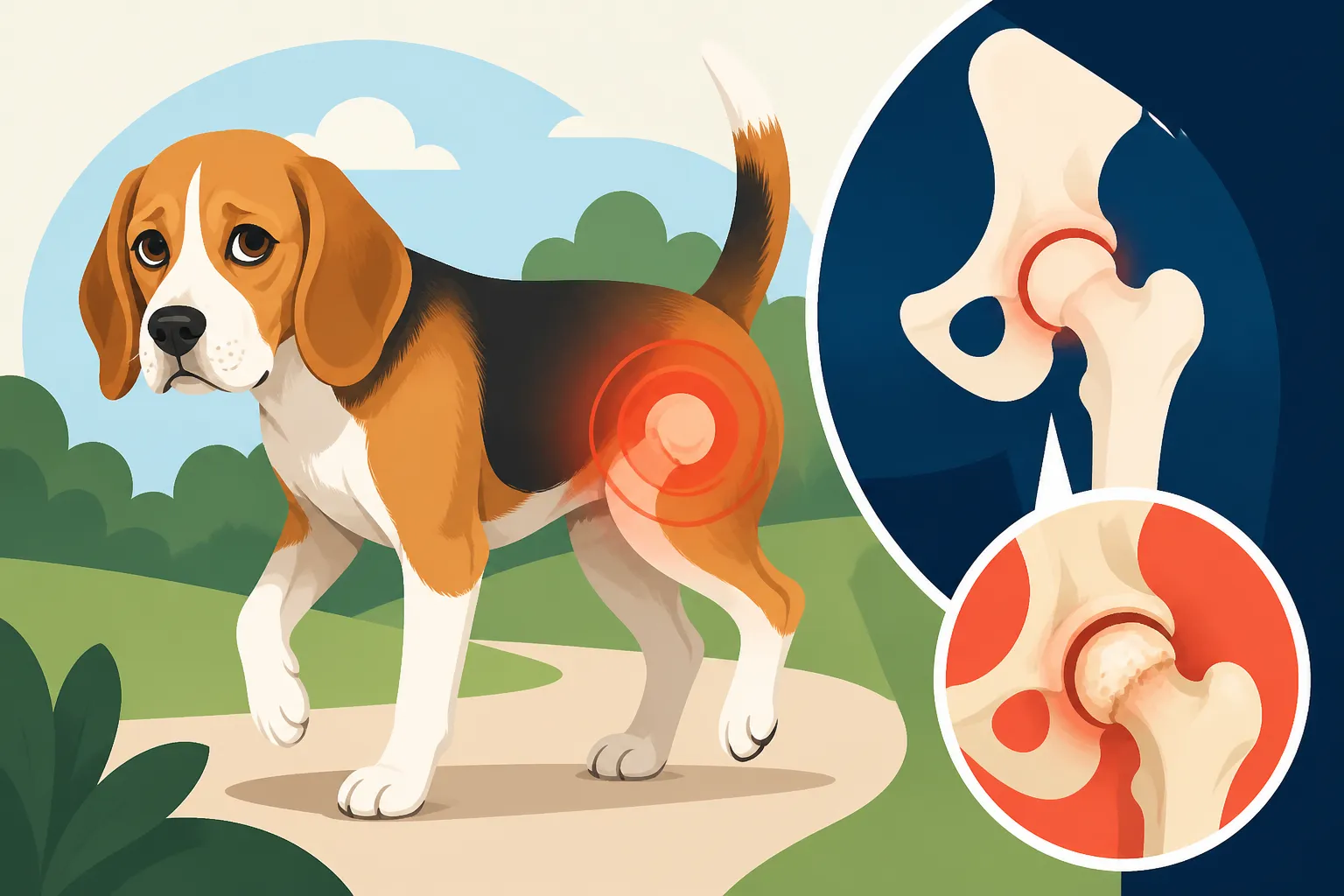
Beagle Hip Dysplasia and Everyday Joint Wear
It’s truly heartbreaking to watch your lively, inquisitive Beagle, once a whirlwind of energy, start to slow down. That playful 'Beagle bounce' can diminish, replaced by a cautious stiffness, a reluctance to jump, or even a visible limp after a long walk. When those little legs that once chased scents with boundless enthusiasm start to ache, it’s a huge worry for any owner. This comprehensive guide is here to help you understand the realities of hip dysplasia and general joint wear in Beagles, offering practical advice on recognizing the signs, getting a diagnosis, and managing these conditions to keep your furry friend as comfortable and happy as possible.
Understanding Beagle Hip Dysplasia: More Than Just a "Big Dog" Problem
When most people think of hip dysplasia, their minds often jump to much larger breeds like German Shepherds or Labradors. It's easy to assume that because Beagles are smaller, they're somehow immune to this debilitating condition. However, that's simply not the case. Beagles, despite their medium size, can absolutely be affected by hip dysplasia, and it's a condition every Beagle owner should be aware of. The impact can be just as significant, if not more so, given their active, scent-driven nature that relies heavily on healthy mobility.
What Exactly is Hip Dysplasia?
At its core, hip dysplasia is a malformation of the hip joint. In a healthy hip, the ball (femoral head) at the top of the thigh bone fits snugly and smoothly into the socket (acetabulum) of the pelvis. This perfect fit allows for effortless, pain-free movement. With hip dysplasia, however, this isn't what happens. The ball and socket don't develop correctly, often resulting in a shallow socket, a misshapen femoral head, or both. Instead of gliding smoothly, the joint components grind and rub against each other. This constant friction causes significant wear and tear, leading to inflammation, pain, and eventually, degenerative joint disease or osteoarthritis. It’s a progressive condition, meaning it often worsens over time if not managed.
The frustrating part is that a Beagle might seem completely fine as a puppy, only for the signs to emerge as they grow. That initial "looseness" in the joint, where the ball doesn't fit tightly in the socket, might not be overtly painful at first. But with every step, every jump, every time your Beagle wags its tail, that abnormal movement is damaging the joint capsule and the cartilage lining. Over months and years, this damage accumulates, transforming into the painful stiffness and lameness we associate with arthritis. It's a silent process that begins early, making awareness and early intervention so crucial for our Beagles.
How Hip Dysplasia Develops in Beagles
Hip dysplasia isn't usually something a Beagle is born with in its fully formed state, but rather a developmental condition. It starts during the puppy growth phase, typically between a few months of age and about a year and a half. While genetics lay the groundwork, environmental factors can greatly influence its severity. For instance, rapid growth spurts in puppies, often exacerbated by diets that are too high in calories or protein, can put undue stress on developing joints. Over-exercising a young Beagle puppy, especially with high-impact activities like excessive jumping or long runs on hard surfaces, can also contribute to the problem.
Imagine a construction project where the foundation isn't quite right. The building might stand for a while, but eventually, cracks will appear and the structure will weaken. Similarly, in a dysplastic hip, the foundational structure is compromised. The body tries to compensate, sometimes laying down extra bone to stabilize the loose joint, which only makes the problem worse. This abnormal bone growth and joint laxity lead to further inflammation and pain. It's a vicious cycle where the body's attempts to fix the instability often lead to more damage. This is why careful management of a Beagle puppy’s diet and exercise is vital, especially during those critical first 12 to 18 months of growth, even if you don't suspect a genetic predisposition.
The Genetic Component and Breeding Responsibilities
It’s impossible to talk about hip dysplasia without addressing its strong genetic link. While environmental factors can play a role, the primary driver for hip dysplasia is hereditary. If a Beagle's parents or grandparents had hip dysplasia, the puppy has a significantly higher chance of developing it. This is why responsible breeders go to great lengths to screen their breeding stock, attempting to reduce the incidence of this painful condition in future generations. They understand that by breeding two dogs with excellent hip scores, they significantly lower the probability of their puppies inheriting the genes that lead to dysplasia.
Reputable Beagle breeders will conduct specific health tests on their breeding dogs, particularly for conditions like hip dysplasia. The results of these tests, often certified by organizations like the Orthopedic Foundation for Animals (OFA) or through PennHIP evaluations, should be transparently shared with prospective puppy buyers. If a breeder cannot provide proof of hip screening for both parent dogs, it's a significant red flag. Choosing a puppy from screened parents isn't a guarantee against hip dysplasia, as genetics are complex, but it dramatically stacks the odds in your favor. This commitment to genetic health is a cornerstone of responsible breeding and a key step in ensuring a long, comfortable life for your Beagle. For more on what breeders should be doing, check out our guide on Beagle Health Testing Under CHIC.
Recognizing the Early Signs of Hip and Joint Issues in Your Beagle
Beagles are often incredibly stoic dogs, and they can be masters at hiding pain, especially in the early stages of a condition. Their strong prey drive and desire to be with their "pack" (you!) can often mask subtle signs of discomfort. This means that as their owner, you need to be a keen observer of their normal behavior and movement patterns. Catching these issues early can make a world of difference in managing the condition and preserving your Beagle's quality of life. Don't dismiss a slight hesitation or a change in their usual antics as just "getting old" too soon.
Subtle Changes in Gait and Activity
One of the first things you might notice, if you're paying close attention, are subtle changes in your Beagle's gait. They might not be overtly limping, but their stride might seem a little off. Perhaps they start to "bunny hop" when they run, using both back legs together, almost like a rabbit, instead of the fluid, independent movement of a healthy dog. You might also observe a new reluctance to engage in activities they once loved. Maybe they hesitate before jumping onto the couch for cuddles, or they take a longer, more circuitous route down the stairs rather than bounding.
Look closely when they first get up after a nap. Is there a stiffness that works itself out after a few steps? Do they stand with their hind legs closer together, trying to shift weight off their hips? They might also show less enthusiasm for longer walks or seem to tire more quickly than usual. Perhaps they start lagging behind on a scent trail, which for a Beagle, is a major deviation from their norm! These are not just quirks; they are often quiet cries for help from a dog experiencing discomfort. Pay particular attention to how they move after periods of rest or in colder, damp weather, as these conditions often exacerbate joint pain.
Behavioral Clues to Discomfort
Beyond physical movement, your Beagle might communicate their discomfort through behavioral changes. A previously friendly dog might become irritable or even snap if touched in a sensitive area, particularly around their hips or lower back. They might start guarding their rear end, flinching away when you try to pet them there. You might notice them licking or chewing excessively at one of their hind legs or paws, an attempt to self-soothe the pain, even if the pain isn't directly in the paw itself.
Another common behavioral change is a decrease in their overall energy levels. While a slower pace might be attributed to age, a significant drop in their usual zest for life could signal chronic pain. They might choose to lie down more often, preferring quiet solitude over boisterous play. Sometimes, they might have trouble settling into a comfortable position, shifting around repeatedly before finding a spot that doesn’t aggravate their hips. If your normally outgoing Beagle seems withdrawn or less interested in family activities, it's a strong indicator that something is amiss.
Physical Examination at Home
While a vet's examination is crucial, you can also perform a gentle, preliminary check at home. Start by observing your Beagle standing still from behind. Do their hind legs appear symmetrical? Is one leg carrying more weight than the other? Gently run your hands down their back and over their hips. Is there any muscle loss on one side? The muscles over the hips can atrophy if the dog is favoring a leg, making one hip look less muscular than the other. Feel along their thigh muscles; they should feel firm and developed.
Next, try to gently manipulate each hind leg. Support their weight and slowly extend and flex their hip joint. Do they flinch, whine, or pull away? Is there a noticeable clicking or grinding sound? Compare the range of motion in both hips. A dog with hip dysplasia might have a reduced range of motion, making it difficult to fully extend their leg backward without pain. Remember to be extremely gentle; if your Beagle shows any signs of pain, stop immediately. This at-home check is not a diagnostic tool, but it can help you gather information to share with your veterinarian and strengthen your case for a thorough examination.
Everyday Joint Wear and Tear: Beyond Dysplasia
Even Beagles blessed with perfect hips can experience joint discomfort as they age. Just like in humans, the daily grind of life, activity, and simply the passage of time can lead to general wear and tear on the joints. This isn't necessarily a "disease" in the same way hip dysplasia is, but it can be just as impactful on your Beagle's comfort and mobility. Understanding these processes can help you implement strategies to mitigate their effects and keep your Beagle moving freely for longer.
The Natural Progression of Arthritis
Arthritis, or osteoarthritis, is a progressive and degenerative joint disease that commonly affects Beagles, especially as they enter their middle to senior years. It's essentially the long-term consequence of the cartilage within the joints breaking down. Cartilage acts like a cushion, allowing bones to glide smoothly against each other. Over time, due to age, injury, or underlying conditions like hip dysplasia, this cartilage can wear thin, soften, or even disappear. When this happens, bone rubs against bone, leading to inflammation, pain, stiffness, and a reduced range of motion.
The cruel irony of arthritis is that it often worsens in a cycle. Pain leads to reduced movement, which in turn leads to muscle weakness around the joint. This weakness further destabilizes the joint, causing more wear and tear, and thus more pain. You might notice your Beagle struggles more on cold, damp mornings or after vigorous exercise. While we can't completely prevent arthritis in an aging Beagle, we can certainly slow its progression and manage its symptoms effectively. Catching the signs of Beagle Arthritis Arriving in Middle Age can make a real difference in their comfort.
Impact of Weight on Beagle Joints
One of the most significant, yet often overlooked, factors contributing to joint wear and tear in Beagles is excess weight. Beagles are notoriously food-motivated, and it's easy for them to pack on the pounds if their diet isn't strictly controlled. Even an extra few pounds on a Beagle can exert tremendous pressure on their joints, particularly the hips, knees, and elbows. Think of it this way: for every extra pound your Beagle carries, it’s like adding several more pounds of stress onto their weight-bearing joints with every step.
This increased load accelerates the breakdown of cartilage and exacerbates any existing joint issues. An overweight Beagle with mild hip dysplasia, for instance, will likely experience pain and mobility problems much sooner and more severely than a lean Beagle with the same condition. Furthermore, fat tissue isn't just inert baggage; it's metabolically active and produces inflammatory substances that can worsen joint pain and inflammation throughout the body. Therefore, maintaining a healthy body weight is perhaps the single most impactful preventative measure you can take for your Beagle's joint health. It's truly a game-changer. Our guide on Beagle Obesity Treated as a Health Problem delves deeper into this critical topic.
Activities That Strain Beagle Hips and Back
While Beagles are active dogs, certain activities can place undue strain on their hips and back, especially if they are predisposed to joint issues or are already showing signs of wear. High-impact movements like jumping off furniture, leaping out of cars, or repeatedly running up and down stairs can create jarring forces that accelerate cartilage damage and stress ligaments. The repetitive nature of these actions over many years can take a significant toll, turning minor discomfort into chronic pain.
Even seemingly innocent play, such as sudden stops and starts, tight turns during fetch, or wrestling with larger, more boisterous dogs, can put torque and stress on their joints. While it's essential for Beagles to get regular exercise, it's equally important to ensure that their activity is appropriate for their age, condition, and physical build. For example, a leisurely sniff-walk on soft ground is far kinder to their joints than a strenuous game of fetch on pavement. Using things like Ramps and Steps That Protect a Beagle Spine can also be incredibly helpful in everyday life. We want them to be active, but smart about how they're active, to safeguard those precious joints.
Diagnosis and Veterinary Consultation
If you've noticed any of the subtle signs of joint discomfort in your Beagle, the next crucial step is to schedule a visit with your veterinarian. Self-diagnosis can be misleading, and professional medical evaluation is essential to accurately identify the problem and formulate an effective treatment plan. Your vet has the expertise and diagnostic tools to get to the bottom of what's causing your Beagle's pain, ensuring they receive the appropriate care. Don't delay; early diagnosis often leads to better outcomes and can prevent further deterioration.
When to See Your Vet About Joint Pain
It's tempting to think a little stiffness or a slight limp might just be a passing phase, or that your Beagle "slept funny." However, if you observe any persistent symptoms, or a noticeable change in your Beagle's mobility, activity level, or demeanor, it's time to call the vet. Don't wait until the pain is severe or the lameness is obvious. Early intervention is key. Signs like consistent limping, a reluctance to move, difficulty rising, whining when touched, changes in appetite, or unexpected aggression when handled around their hindquarters all warrant a veterinary visit.
Even if you're unsure, it's always better to be safe than sorry. A quick call to your vet's office can help determine if an appointment is needed immediately or if you can monitor for a few more days. Remember, your Beagle can't tell you in words where it hurts, so it relies entirely on you to notice the non-verbal cues. If your gut feeling tells you something is off, trust it. Getting a professional opinion early can save your Beagle from prolonged pain and potentially costly treatments down the line.
Diagnostic Tools: X-rays, OFA, and PennHIP
Once at the vet, a thorough physical examination will be performed. Your vet will palpate your Beagle's joints, assess their range of motion, and look for signs of pain or instability. If joint issues are suspected, the next step almost always involves diagnostic imaging, primarily X-rays. For suspected hip dysplasia, specialized X-ray techniques are used to evaluate the conformity and laxity of the hip joints. These X-rays often require the Beagle to be sedated or anesthetized to ensure proper positioning and minimize stress.
Two common methods for evaluating hip quality are the Orthopedic Foundation for Animals (OFA) certification and PennHIP evaluations.
- OFA Evaluation: This method involves taking specific X-ray views of the hips and submitting them to a panel of veterinary radiologists who grade the hips based on several criteria (Excellent, Good, Fair, Borderline, Mild, Moderate, Severe). Dogs are typically evaluated after 24 months of age for final certification. OFA also provides preliminary evaluations for younger dogs.
- PennHIP Evaluation: This method measures hip laxity (looseness) more accurately than OFA, by taking three specific X-ray views. It can be performed on Beagles as young as 16 weeks, allowing for earlier assessment of risk. PennHIP provides a distraction index (DI) score, which indicates the degree of hip laxity. A lower DI score means tighter hips and less risk of developing osteoarthritis.
Both OFA and PennHIP are invaluable tools, especially for breeders looking to reduce hip dysplasia in their lines, but also for owners seeking a definitive diagnosis for their pet. Understanding the differences is important, and your vet can advise which method is most appropriate for your Beagle's situation. For more detailed information, our article on Beagle Hip Screening by OFA or PennHIP is a great resource.
| Diagnostic Method | Age for Evaluation | Key Measurement | Benefit | Primary Use |
|---|---|---|---|---|
| OFA (Orthopedic Foundation for Animals) | 24 months for final certification (prelims available younger) | Visual assessment of hip conformation and laxity; graded from Excellent to Severe. | Widely recognized, straightforward grading. | Breeder screening, general diagnosis. |
| PennHIP (University of Pennsylvania Hip Improvement Program) | As early as 16 weeks | Quantifies hip joint laxity using a distraction index (DI) score. | More sensitive to laxity, can be done earlier. | Breeder screening, early risk assessment. |
Differentiating Hip Dysplasia from Other Conditions
It's important to remember that not all hind limb lameness or back pain in a Beagle is due to hip dysplasia. Several other conditions can mimic similar symptoms, and an accurate diagnosis is critical for effective treatment. For instance, luxating patella, where the kneecap slips out of place, is another common orthopedic issue in Beagles that can cause a skip in their gait or lameness. This often presents differently from hip pain but can sometimes be confused.
Furthermore, Beagles are also prone to back problems, especially intervertebral disc disease (IVDD), given their slightly longer backs and active nature. A disc injury can cause pain, weakness, and lameness that can sometimes be mistaken for hip issues. Conditions like Beagle Disc Disease and That Slightly Long Back can present with hind leg weakness or reluctance to jump, making a careful differential diagnosis essential. Less common issues might include soft tissue injuries (sprains or strains), nerve problems, or even certain types of cancer affecting the bones or joints. This is why the comprehensive approach of a veterinarian, including a physical exam and imaging, is so important to pinpoint the exact cause of your Beagle's discomfort.
Management Strategies for Beagle Hip and Joint Health
Once a diagnosis of hip dysplasia or general joint wear has been made, the good news is that there are many effective management strategies available to help your Beagle live a comfortable and active life. The approach will often be multi-faceted, combining medical treatments, nutritional support, and physical therapies. The goal is always to reduce pain, slow the progression of joint degeneration, and improve mobility and quality of life.
Medical Management: Pain Relief and Anti-Inflammatories
For Beagles experiencing pain and inflammation due to joint issues, veterinarians often prescribe medications to help manage these symptoms. Non-steroidal anti-inflammatory drugs (NSAIDs) are commonly used to reduce pain and inflammation. Brands like Rimadyl, Metacam, or Galliprant are frequent choices, and they can make a dramatic difference in a dog's comfort and mobility. However, NSAIDs require careful monitoring as they can have side effects, particularly affecting the liver or kidneys with long-term use. Regular blood work is often recommended to ensure your Beagle is tolerating the medication well.
In some cases, especially for more severe pain or during acute flare-ups, other medications might be considered. These could include gabapentin, a nerve pain modulator, or even short courses of corticosteroids, although the latter are usually reserved for specific situations due to their more significant side effects. Newer injectable treatments, such as Librela (bedinvetmab), are also becoming available, offering monthly pain relief by targeting nerve growth factor, a key mediator of pain. It’s a discussion you’ll have with your vet, weighing the benefits against potential risks for your individual Beagle. Sometimes, having pet insurance like Healthy Paws can significantly ease the financial burden of these ongoing medication costs and diagnostic tests.
Supplements for Joint Support
Beyond prescription medications, a variety of nutritional supplements can play a supportive role in managing Beagle joint health. These supplements aren't pain relievers, but rather aim to support cartilage health, reduce inflammation, and improve joint lubrication. They often work best when given consistently over the long term.
Common joint supplements for Beagles include:
- Glucosamine and Chondroitin: These are natural components of cartilage. Supplementation aims to help the body repair and maintain cartilage, as well as provide anti-inflammatory effects. Many veterinary-grade supplements combine these two ingredients.
- Omega-3 Fatty Acids (EPA and DHA): Found in fish oil, these essential fatty acids are powerful natural anti-inflammatories. They can help reduce joint pain and improve overall joint health, and also benefit skin and coat.
- MSM (Methylsulfonylmethane): An organic sulfur compound with anti-inflammatory and pain-relieving properties, often included in comprehensive joint supplements.
- Green-Lipped Mussel: A natural source of glucosamine, chondroitin, and Omega-3s, as well as other beneficial nutrients for joint health.
When choosing a supplement, look for reputable brands that adhere to high manufacturing standards and have scientific backing. Discuss options with your vet, as they can recommend specific products or dosages appropriate for your Beagle's condition. While not a cure, these supplements can often improve comfort and reduce the need for higher doses of prescription pain medication. Our article on Joint Supplements That Help an Aging Beagle offers a deeper dive into specific ingredients and their benefits.
Physical Therapy and Rehabilitation
Physical therapy and rehabilitation can be incredibly beneficial for Beagles with hip dysplasia or other joint problems. Just like in humans, targeted exercises and therapies can strengthen muscles around the affected joints, improve range of motion, reduce pain, and enhance overall mobility. A certified canine rehabilitation therapist will create a tailored program for your Beagle.
Common physical therapy modalities include:
- Therapeutic Exercises: Specific exercises to strengthen core muscles, hind leg muscles, and improve balance and coordination without putting excessive strain on joints. These might include controlled leash walks, walking over cavaletti poles, or sitting-to-standing exercises.
- Hydrotherapy: Exercising in water (like an underwater treadmill or swimming) provides buoyancy, which reduces the load on painful joints while still allowing for muscle strengthening and improved range of motion. It's often very well tolerated by dogs in pain.
- Massage and Stretching: Can help reduce muscle tension, improve circulation, and increase flexibility around the joints.
- Laser Therapy (Low-Level Laser Therapy): Uses specific wavelengths of light to reduce pain and inflammation and promote tissue healing at a cellular level.
These therapies can significantly improve your Beagle's comfort and function, often allowing them to regain some of their lost mobility and enjoy a better quality of life. They're a fantastic complement to medical management and can be a lifeline for a Beagle struggling with chronic joint pain. For more on this, consider reading Beagle Physical Therapy After a Back Injury, as many principles apply to hip health too.
Surgical Options for Severe Cases
For Beagles with severe hip dysplasia that doesn't respond adequately to conservative medical and rehabilitative management, surgical intervention may be considered. These procedures are typically reserved for cases where the pain is debilitating and significantly impacting the dog's quality of life. Surgical options are more invasive and come with their own set of risks, recovery times, and significant costs, which is where having comprehensive pet insurance like Healthy Paws can be invaluable.
The primary surgical options include:
- Femoral Head Ostectomy (FHO): In this procedure, the "ball" portion of the hip joint (the femoral head) is removed. The body then forms a "false joint" of scar tissue, which is less painful than bone grinding on bone. FHO is typically recommended for smaller, lighter dogs where the muscles of the leg can adequately support the joint after surgery. Beagles often fall into this size category, making FHO a viable option for many.
- Total Hip Replacement (THR): This is the most effective surgical treatment for hip dysplasia, involving the replacement of both the ball and socket with artificial implants. THR offers the best chance for a full return to pain-free function and is highly successful. However, it is a complex and expensive procedure, usually performed by specialist orthopedic surgeons.
The decision for surgery is a significant one and should be made in close consultation with your veterinarian and potentially a veterinary orthopedic specialist. They will assess your Beagle's overall health, the severity of the dysplasia, and your family's ability to commit to the post-operative care and rehabilitation required.
Preventative Measures and Lifestyle Adjustments
While some factors like genetics are beyond our control, there's a great deal we can do as Beagle owners to support their joint health throughout their lives. Proactive care and making smart lifestyle choices can significantly reduce the risk of developing joint problems or slow the progression of existing ones, ensuring your Beagle enjoys maximum comfort and mobility for as long as possible.
Maintaining a Healthy Weight
This cannot be stressed enough: maintaining a lean, healthy body weight is perhaps the most crucial preventative measure for Beagle joint health. Extra pounds put immense stress on the hips, knees, and spine, accelerating cartilage breakdown and exacerbating any underlying conditions. Beagles are notoriously food-driven, which makes weight management a constant battle, but it's a battle worth fighting for their long-term well-being.
Focus on precise portion control, measuring your Beagle's food rather than free-feeding. Use high-quality, balanced dog food appropriate for their life stage and activity level. If your Beagle needs to lose weight, consult your vet for a tailored diet plan. They can help you determine the ideal daily calorie target and recommend specific low-calorie foods or supplements. Remember, treats count! Choose low-calorie options or use their regular kibble for training rewards. Regular weighing at home between vet visits can help you stay on track. This foundational step is often more impactful than any supplement or medication. For precise guidance, check out our article on Daily Calories for a 13-Inch Against a 15-Inch Beagle.
Exercise Routines That Protect Joints
Appropriate exercise is vital for muscle strength and joint health, but "appropriate" is the key word. For Beagles prone to joint issues, the focus should be on low-impact activities that build muscle without excessive jarring or twisting. Daily, moderate-length walks on soft surfaces like grass or trails are excellent. Allowing them plenty of time for Sniffing Walks and Why They Tire a Beagle Out is also highly beneficial, as it engages their mind and body without high-impact strain.
Avoid high-impact activities like repeated jumping, intense fetch games with sudden stops, or long runs on hard pavement. Instead, consider controlled leash walks, swimming (if your Beagle enjoys it and is supervised), or engaging in scent work or other mental enrichment activities that don't tax their joints. Consistency is more important than intensity. Short, frequent sessions are often better than one long, strenuous outing. For puppies, follow the "five-minute rule" – no more than five minutes of structured exercise per month of age, to protect their developing joints. Even an aging Beagle benefits from gentle movement, so our guide on Exercising a Beagle Enough to Settle It has great tips.
Creating a Joint-Friendly Home Environment
Making small adjustments around your home can dramatically improve your Beagle's comfort and reduce strain on their joints, especially if they are already experiencing pain.
- Ramps and Steps: Provide ramps or pet steps to help your Beagle get onto furniture (like the couch or bed) and into the car, eliminating the need for them to jump. This is particularly important for protecting their back and hips.
- Non-Slip Surfaces: Slippery floors (hardwood, tile) can be treacherous for dogs with weak or painful joints. Use non-slip mats, runners, or carpet sections in high-traffic areas. Consider applying paw grips or booties to their paws for extra traction.
- Orthopedic Beds: Invest in a supportive, orthopedic dog bed that provides good cushioning and support for their joints. These beds often use memory foam or a similar material that conforms to their body, relieving pressure points.
- Elevated Food Bowls: For some Beagles, especially those with neck or back issues that can sometimes accompany hip problems, elevated food and water bowls can make eating and drinking more comfortable by reducing the need to stoop.
- Temperature Control: Keep your Beagle warm and dry, especially during colder months. A warm bed and a cozy sweater or coat during outdoor walks can help ease joint stiffness.
These simple environmental modifications can go a long way in making your Beagle's daily life more comfortable and safe, minimizing the risk of slips, falls, and unnecessary joint stress.
Living Day-to-Day with a Beagle with Joint Problems
Discovering your Beagle has hip dysplasia or chronic joint pain can feel overwhelming, but it's important to remember that many Beagles live long, happy lives with proper management. Your role as their advocate becomes even more important, adjusting routines and offering support to ensure their comfort. It's a journey that requires patience, observation, and a strong partnership with your veterinary team.
Adjusting Expectations and Routines
One of the biggest shifts for owners is adjusting expectations. Your Beagle might not be able to bound through the woods for hours like they once did, and that's okay. Focus on what they can do comfortably and enthusiastically. Maybe those long, vigorous hikes become shorter, more frequent sniff-walks on softer ground. Maybe fetch is replaced by a slower game of hide-and-seek with treats indoors, or dedicated Beagle Scent Work Classes that engage their incredible nose without stressing their joints.
Establishing a consistent daily routine is also beneficial. Predictable meal times, medication schedules, and gentle exercise at the same time each day can reduce stress and help your Beagle feel more secure. Be mindful of their limitations. If they hesitate to jump, don't force it; offer a ramp or lift them gently. The goal is to maximize their comfort and enjoyment, adapting their world to meet their current physical capabilities, rather than expecting them to push through pain. Our guide on Senior Beagle Care After the Age of Ten offers many insights that apply to any Beagle facing mobility challenges.
Monitoring for Changes and Flare-Ups
Living with a Beagle with joint issues means becoming an expert observer. You’ll learn to recognize subtle cues that indicate a good day versus a bad day. Keep a "joint diary" to track their activity levels, pain signs (like limping or struggling to rise), medication dosages, and response to treatments. This information is incredibly valuable for your vet in adjusting their care plan.
Watch for signs of flare-ups, which can be triggered by overexertion, weather changes, or simply the progressive nature of the condition. Increased lameness, more pronounced stiffness, lethargy, or a refusal to eat could all indicate a flare-up or a worsening of their condition. Knowing when to call the vet is crucial. It might be for a medication adjustment, a re-evaluation, or to discuss new treatment options. Don't hesitate to reach out if you notice significant changes; prompt attention can prevent unnecessary suffering.
The Emotional Toll on Owners
It's completely normal to feel a range of emotions when your beloved Beagle is diagnosed with a chronic condition like hip dysplasia or arthritis. Frustration, sadness, guilt, and even a sense of helplessness are common. You might grieve for the active dog they once were or worry constantly about their comfort and future. It's a heavy burden, and it's important to acknowledge your own feelings.
Remember, you are doing everything you can to provide the best possible care. Celebrate the good days, cherish the moments of joy, and find solace in the fact that you are actively working to improve their quality of life. Connect with other Beagle owners or support groups who understand what you're going through. Lean on your veterinary team for advice and emotional support. While it's tough, the bond you share with your Beagle will only strengthen as you navigate these challenges together, focusing on comfort, love, and living each day to the fullest.
Disclaimer
The information provided in this guide is intended for educational purposes only and should not be considered a substitute for professional veterinary advice. Always consult with your veterinarian for any health concerns or before making any decisions related to your Beagle's health and treatment.