Bowl Height and Beagle Ears Dipping Into Dinner
If you've ever watched your sweet Beagle eat, you've probably noticed a common, albeit slightly gross, phenomenon: those magnificent, long, velvety ears dipping right into their dinner bowl. It’s an endearing quirk, sure, but it also means a sticky, food-encrusted mess and potential hygiene issues. This guide is all about tackling that exact problem, exploring how thoughtful bowl choices and feeding habits can keep your Beagle’s ears clean and healthy, making mealtime a much tidier affair for everyone involved.
Why Beagle Ears Are Such a Mess Magnet
It's not just a coincidence that Beagle ears seem to be drawn to their food bowls like magnets. There's a combination of unique anatomy and instinct-driven behavior that makes them particularly prone to getting messy during mealtimes. Understanding these factors is the first step toward finding practical solutions.
The Anatomy of a Beagle's Long, Droopy Ears
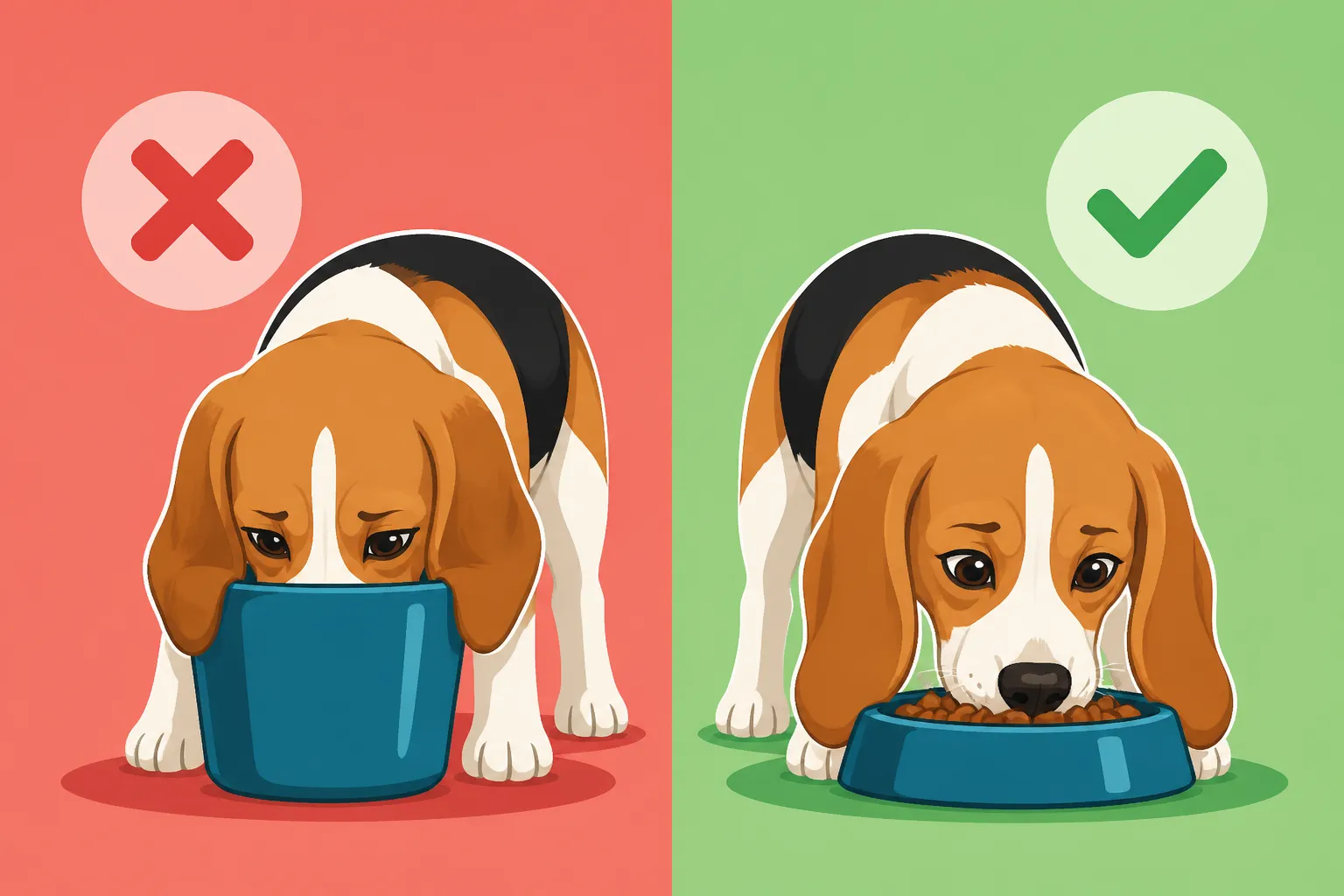
Let's face it, a Beagle's ears are one of their most distinguishing and adorable features. They're long, often reaching past their chin, and they hang down in a way that perfectly frames their expressive face. This design, while charming, is not exactly conducive to tidy eating. When your Beagle lowers its head to eat or drink, those long ear flaps naturally fall forward and inward, creating the perfect scoop to drag through their kibble, wet food, or even their water. They act almost like little shovels, inadvertently collecting every crumb and morsel. This isn't just an aesthetic issue; constantly wet or food-caked ears can create a breeding ground for bacteria and yeast, potentially leading to discomfort or even serious ear infections. We've all seen a Beagle shake its head, sending bits of soggy kibble flying across the kitchen, right? It's a testament to just how much those ears can pick up. This constant moisture and trapped debris under the ear flap can contribute to conditions discussed in Beagle Ear Infections Under Those Long Ears.
The Role of the Beagle's Nose in Eating Habits
Beyond the physical mechanics of their ears, a Beagle's intense drive to sniff and forage also plays a significant role in their messy eating habits. Beagles were bred for scent work, and their entire world often revolves around their powerful noses. When they approach their food, they aren't just eating; they're investigating. They'll root around, push their nose deep into the bowl, and often try to "hoover" up every last morsel. This deep dive into the bowl, combined with their naturally low stance, puts their ears directly in the line of fire. Their focus is so intensely on the scent and the acquisition of food that they're often completely oblivious to their ears getting covered. This innate drive, where their nose is almost always to the ground, is a key part of their behavior, as explored further in Why a Beagle Walks With Its Nose to the Ground. This incredible sensory focus means they aren't stopping to tuck their ears back before they eat; they're just going for it, full steam ahead.
The Benefits of a Raised or Specialized Feeding Bowl
Given the challenges posed by those lovely long ears and powerful noses, it makes sense to consider how a different kind of food bowl might help. Elevated feeders and specialized bowl designs are more than just fancy accessories; they can be incredibly practical tools for improving your Beagle's mealtime hygiene and even their comfort.
Keeping Those Ears Clean and Dry
The most immediate and obvious benefit of an elevated or specialized bowl is the direct impact on ear cleanliness. By raising the food and water to a more accessible height, you prevent those long ear flaps from dangling into the bowl. Imagine your Beagle no longer having to lower its entire head to ground level to eat. Instead, their head remains more upright, allowing their ears to fall naturally backward or to the sides, clear of the food and water. This simple change can drastically reduce the amount of kibble dust, wet food residue, and water that clings to their ears. Less mess on the ears means less time spent wiping them down after every meal, and, more importantly, it means a healthier ear canal. Consistently dry and clean ears are far less likely to develop the moisture-related issues that can lead to irritation and infection. It's a small change that makes a big difference in your Cleaning a Beagle Ear Before Infection Starts routine.
Potential Health Considerations for Beagles
While often associated with preventing bloat in larger, deep-chested breeds, elevated bowls can offer other subtle health benefits for Beagles. For a breed known for its slightly longer back and propensity for conditions like Beagle Back Problems and Intervertebral Disc Disease, maintaining a more natural head and neck posture during eating can be a gentle preventative measure. Constantly bending down to floor level puts strain on the neck and spine, especially over many years and thousands of meals. An elevated bowl allows them to eat with their head and neck in a more aligned position, potentially reducing stress on these areas.
However, it's also worth noting that the direct link between elevated bowls and bloat prevention is complex and not universally agreed upon by all veterinary professionals for all breeds. For Beagles, the primary benefit often revolves more around comfort and ergonomics than acute bloat risk. If your Beagle is a fast eater, however, a raised bowl combined with a slow feeder insert can help manage Beagle Gulping Food and the Choking Risk by preventing them from inhaling their food too quickly, reducing air intake, and encouraging slower digestion. While bloat (Gastric Dilatation-Volvulus) is more common in large, deep-chested dogs, slowing down eating is generally good for any dog's digestion.
Choosing the Right Bowl Height and Design for Your Beagle
So, you're convinced that a specialized bowl is the way to go for your messy-eared companion. But with so many options out there, how do you pick the right one? It’s not just about aesthetics; it’s about finding something that truly works for your Beagle’s unique needs.
Measuring for the Perfect Fit
Getting the right height is crucial. A bowl that's too low defeats the purpose, and one that's too high can still be uncomfortable. Here’s a simple way to measure:
- Stand Your Beagle Up: Have your Beagle stand naturally on all four paws, as if they were just waiting for dinner. Try not to let them slouch or stretch.
- Measure to the Top of Their Shoulder: Using a tape measure, find the top of their shoulder blade (the point just above their front leg). This is a good starting point for a comfortable eating height.
- Adjust for Comfort: Many experts suggest the bowl rim should be roughly at your dog's chest height or slightly lower than their shoulder. You want them to be able to eat without craning their neck downward excessively, but also without having to reach up to the bowl. Their head should be relatively level or slightly dipped, not aggressively bent or stretched.
Remember, a little experimentation might be needed. What feels right might depend on your individual Beagle's stance and comfort.
Types of Elevated Feeders and Their Features
There's a wide world of elevated feeders available, each with its own pros and cons. When shopping on sites like Chewy or Amazon, you'll find plenty of options.
- Fixed Height Feeders: These are typically a stand with two bowls (one for food, one for water) at a set height. They are sturdy and often made from wood, metal, or durable plastic. The main drawback is if the height isn't quite right for your Beagle, you're stuck.
- Adjustable Height Feeders: These are a fantastic choice, especially for puppies that are still growing, or if you're unsure of the exact ideal height. They allow you to change the height of the bowls, usually through telescopic legs or multiple shelf levels. This versatility means you can fine-tune it for perfect comfort.
- Single Bowl Stands: If your Beagle tends to make more of a mess with water than food (or vice versa), a single elevated bowl might be all you need, often made of stainless steel or ceramic.
- Slow Feeder Inserts/Bowls: Many elevated feeders can accommodate slow feeder bowls. These bowls have ridges or obstacles inside them that force your Beagle to eat around them, drastically slowing down their eating pace. This is particularly useful if your Beagle "inhales" their food, reducing the risk of indigestion and keeping those ears out of the bowl for longer. Look for options from brands you trust for durability.
- Material Matters: Stainless steel bowls are generally recommended as they are durable, easy to clean, and less likely to harbor bacteria than plastic. Ceramic bowls are also good but can be heavier and more prone to breaking.
Here’s a quick comparison of bowl types for Beagles:
| Feature | Floor-Level Bowl | Elevated Bowl (Fixed) | Elevated Bowl (Adjustable) | Slow Feeder Bowl (Can be elevated) |
|---|---|---|---|---|
| Ear Cleanliness | Poor (Ears frequently dip) | Good (Ears often clear) | Excellent (Custom height ensures clearance) | Good (Ears often clear, eating takes longer) |
| Neck/Spine Strain | Higher (Constant downward bending) | Lower (More natural posture) | Lowest (Optimal ergonomic alignment) | Lower (More natural posture, extended eating) |
| Speed of Eating | Varies (Can be very fast) | Varies (Can still be fast) | Varies (Can still be fast) | Significantly reduced (Obstacles slow intake) |
| Cleaning Effort | High (Ears and floor often messy) | Moderate (Less ear mess, floor can still get messy) | Moderate (Less ear mess, floor can still get messy) | High (More nooks and crannies to clean in bowl) |
| Adaptability | Low (One size fits all, no height adjustment) | Moderate (Fixed height may not be perfect) | High (Grows with puppy, suits individual dog) | High (Can be used at floor level or elevated) |
| Cost | Low | Moderate | Higher | Moderate |
Practical Tips for Maintaining Cleanliness
Even with the perfect elevated bowl, a Beagle's enthusiasm can still lead to some messes. Here are a few extra tips:
- Snoods are Your Friend: For especially enthusiastic eaters, or during specific meals like those with wet food, consider a "snood." This is essentially a fabric tube that you slip over your Beagle's head to hold their ears back and out of the bowl. You can find these on sites like Chewy or Etsy, and they’re surprisingly effective!
- Placemats Underneath: A good waterproof feeding mat placed under the elevated feeder can catch any drips or stray kibble, making cleanup easier. Many pet supply stores and even Amazon offer a variety of styles.
- Regular Ear Checks: Even with a clean feeding setup, it’s vital to continue with your regular Beagle Ear Infections and the Drooping Ear Flap checks. Give those ears a sniff and a quick visual inspection regularly to catch any signs of trouble early.
- Consistent Cleaning: Make cleaning the bowls part of your daily routine. Even stainless steel bowls can develop a slimy biofilm if not washed regularly, especially water bowls.
- Consider Fresh Food: Some fresh food diets, like those offered by Ollie, come in packaging that might be designed for specific bowl types, or the nature of the food might adhere less to ears than sticky wet kibble. However, the ear-dipping issue is universal to all food types.
Alternative Solutions and When to Consider Them
While elevated bowls are often a fantastic solution, they aren't the only solution, and they might not be the best fit for every Beagle or every household. Sometimes, a combination of approaches works best, or you might find a simpler trick does the job just as well. It's all about finding what makes mealtime cleaner and more comfortable for your particular hound.
Ear Protection for Mealtimes
As mentioned earlier, snoods are an unsung hero for many long-eared dog owners. These simple fabric tubes are slipped over your Beagle's head, gently pulling their ears up and back, completely out of the way of their food or water. It might look a little silly, but the effectiveness is undeniable. Imagine no more soggy ear tips or food-crusted fur!
- Types of Snoods: You can find snoods made from various materials, from breathable cotton to waterproof fabrics. Some are simple tubes, while others have elastic at the ends for a snugger fit.
- When to Use Them: Snoods are particularly useful for wet food meals, particularly messy treats, or for Beagles who are prone to getting persistent ear infections where keeping the ears dry is paramount. They can be a bit much for every single water break, but for main meals, they're brilliant.
- Where to Find Them: Online retailers like Amazon and Chewy often carry a range of snoods, and many small craft businesses on platforms like Etsy specialize in handmade options for specific breeds.
For some Beagles, a snood might even replace the need for an elevated bowl entirely, or serve as an excellent complement, offering an extra layer of protection, especially for those highly food-motivated Beagles who still manage to make a glorious mess no matter the bowl.
Non-Elevated Solutions for Specific Issues
If an elevated feeder isn't quite right for your setup, perhaps due to space constraints or simply personal preference, there are still ways to minimize ear mess and encourage tidier eating.
- Wider, Shallower Bowls: Sometimes, the problem isn't just the height, but the bowl's narrowness. A wider, more shallow bowl might spread the food out more, making it harder for the ears to scoop into one concentrated pile. This still keeps the bowl on the floor, but offers a wider "target" for the nose, potentially keeping the ears more to the side. Stainless steel is again recommended for hygiene.
- Specialized Slow Feeders: Even without elevation, a good slow feeder bowl can help. By extending mealtime, it reduces the frantic head-first plunge into the food. The more spread-out food and the obstacles often force a Beagle to be more deliberate and less messy. Many innovative designs are available on Chewy, designed to engage your Beagle's mind as well as their appetite.
- Feeding in a Specific Location: Sometimes, simply choosing a non-carpeted area or a corner where the Beagle is less likely to spin around while eating can help. A mat underneath is still a good idea.
- Portion Control and Meal Timing: While not directly related to bowl height, ensuring you're feeding the appropriate amount of food at regular times can help manage enthusiasm. An overly hungry Beagle might be more prone to dive head-first into their meal, increasing the chances of messy ears. Understanding The Daily Calorie Target for a Twenty Pound Beagle can help you properly portion their meals and manage their intense food drive, which can lead to issues like Beagle Obesity and the Diseases It Brings On if not controlled.
- Supervised Mealtimes and Quick Wipes: For those truly determined Beagles, simply supervising mealtime and having a damp cloth ready for a quick ear wipe immediately after they finish can be a consistent solution. This prevents food from drying onto the fur and becomes a routine part of their care. This immediate attention can prevent minor messes from becoming larger, more ingrained hygiene challenges.
Ultimately, preventing your Beagle's ears from dipping into their dinner bowl is about proactive care and observation. Whether it's through the strategic use of an elevated feeder, a funny but functional snood, or simply smarter bowl design and attentive cleanup, you can keep those beautiful ears clean, healthy, and ready for their next adventure – without a side of kibble!
Disclaimer
This article is for general informational purposes only and does not constitute professional advice. Laws, prices and regulations vary by location and change over time. Consult a qualified professional for guidance on your specific situation.