A Beagle That Swallows Its Food Whole
It's a scene many Beagle parents know all too well: you put down the food bowl, and before you can even take a step back, it's empty. Your beloved Beagle has inhaled their meal in a matter of seconds, leaving you wondering if they even tasted it. This lightning-fast eating isn't just a quirky habit; it can lead to some serious health concerns, from choking to digestive upset. This guide is here to help you understand why your Beagle acts like a vacuum cleaner at mealtime and, more importantly, what practical steps you can take to slow them down and keep them healthy.
Why Beagles Bolt Their Food So Fast
If you've ever owned a Beagle, you've probably noticed their unparalleled enthusiasm for food. It's almost as if every meal is their last, a frantic race against an invisible clock. This isn't just about being "food motivated"; there's a deep-seated history and biological wiring that drives this behavior, making it a perfectly normal, albeit concerning, Beagle trait. Understanding these roots is the first step toward managing it effectively.
The Beagle's Instinctual Food Drive
Beagles were originally bred for hunting in packs, primarily for hares. In a pack environment, competition for resources, especially food, was fierce. A slower eater might miss out entirely, or get less, meaning that a quick-eating tendency was actually an evolutionary advantage. This ingrained instinct means that even your pampered pet Beagle, who has never missed a meal in their life, feels that ancient pressure to eat as much as they can, as fast as they can, before it's gone. It's not defiance; it's instinct.
Think about it: in a natural setting, a large group of dogs would descend upon a kill, and the ones who hesitated would get the scraps. This survival mechanism is hardwired into their DNA. Your Beagle's keen nose, The 220 Million Receptors Behind a Beagle's Nose, constantly tells them there's food, and their brain tells them to secure it immediately. This powerful drive is why they often seem to "forget" their training when a delicious scent is nearby, and it certainly kicks into overdrive at mealtime.
Beyond the pack mentality, Beagles simply possess an incredibly strong food drive. For many Beagles, food isn't just sustenance; it's the greatest motivator in their world. This drive is often used effectively in training, with high-value treats making them eager learners, but it also translates directly to their eating habits. If you've ever struggled with The Beagle Food Drive That Empties Your Counters, you know exactly what I mean. This powerful internal compass points them straight to food, and when it's in their bowl, it's full speed ahead.
The Physical Mechanics of Fast Eating
It's not just their mental drive; Beagles are physically built in a way that allows them to consume food at remarkable speeds. Their muzzle shape, jaw structure, and even their broad throats are all contributing factors. Unlike some breeds with more intricate chewing mechanisms, a Beagle's mouth is designed for efficient, rapid intake, gulping down pieces rather than meticulously grinding them.
Their dental structure, while perfectly capable of chewing, often isn't utilized fully when they're in full "vacuum" mode. They'll often swallow kibble whole or with minimal crushing, which adds another layer to the digestive issues that can arise from fast eating. This isn't necessarily a flaw in their design, but a consequence of their strong food drive meeting a body designed for quick consumption.
When your Beagle gulps down air along with their food, this can lead to uncomfortable and potentially dangerous issues. The rapid ingestion often means they're taking in more air than necessary, which contributes to Gas in a Beagle That Eats Far Too Fast and can exacerbate more serious conditions like bloat. It's a chain reaction: instinctual drive leads to fast eating, which is facilitated by their physical build, and then compounded by air intake.
The Real Risks of a Beagle Eating Too Quickly
While your Beagle's mealtime acrobatics might be amusing at first glance, the habit of swallowing food whole comes with a range of health risks that no Beagle parent should ignore. These aren't just minor inconveniences; some can be life-threatening and require immediate veterinary intervention. Taking steps to mitigate these risks is a crucial part of responsible Beagle ownership.
Choking Hazards and Digestive Distress
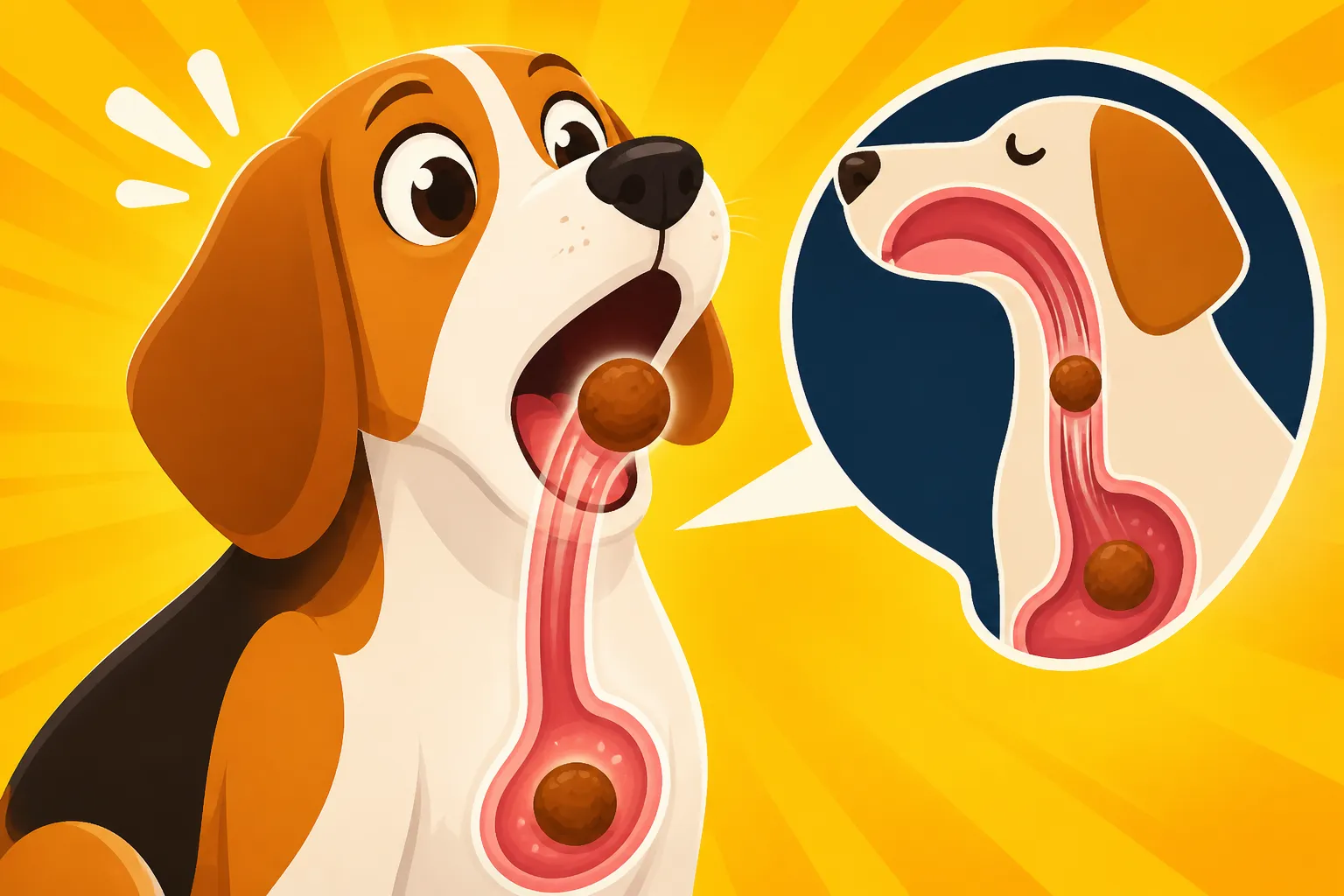
One of the most immediate and frightening dangers of a Beagle eating too quickly is the risk of choking. When large pieces of kibble or food are swallowed without proper chewing, they can easily become lodged in the throat. This is a terrifying scenario that can happen in seconds and requires quick action. It's not just dry kibble either; even soft foods can pose a risk if inhaled too rapidly.
Beyond the immediate choking danger, rapid eating places significant stress on a Beagle's digestive system. Food that isn't adequately chewed is harder to break down, leading to inefficient nutrient absorption. This can result in your Beagle feeling hungry sooner, even if they've eaten a full meal, or experiencing uncomfortable digestive issues like indigestion, vomiting, or diarrhea. A Beagle Vomiting After Eating Something Outside is often concerning, but vomiting right after a meal might indicate eating too fast.
The digestive distress isn't just about discomfort; it can also affect their overall health and well-being. If their body isn't absorbing nutrients efficiently, it can impact their energy levels, coat quality, and even immune system over time. Imagine eating a meal yourself without chewing properly – you'd feel bloated, gassy, and probably not very satisfied, even if you ate a lot. Your Beagle experiences something similar, only potentially much worse due to their unique physiology and speed.
The Link Between Fast Eating and Gastric Dilatation-Volvulus (Bloat)
Perhaps the most severe and life-threatening risk associated with fast eating, particularly in deep-chested breeds (though Beagles can be susceptible), is Gastric Dilatation-Volvulus, commonly known as bloat. This condition occurs when the stomach fills with gas and twists on itself, trapping the gas and blocking blood flow. It's an emergency that requires immediate veterinary attention and often surgery, with survival rates depending heavily on how quickly treatment is received.
While the exact cause of bloat isn't fully understood and can involve multiple factors, rapid eating, especially when combined with gulping air, is considered a significant risk factor. The intake of excessive air during frantic eating can distend the stomach, making it more prone to twisting. Excitement, stress, and exercise before or after meals can also contribute, so a Beagle that bolts its food and then runs around or gets stressed could be at higher risk.
Recognizing the signs of bloat is absolutely critical. Symptoms can include a distended abdomen (which might be hard or painful to the touch), unproductive retching or gagging, restlessness, excessive drooling, and signs of pain or discomfort. If you suspect bloat, time is of the essence. Do not wait to see if it improves; get your Beagle to an emergency vet immediately. This is one of those Beagle Emergency Signs That Cannot Wait Until Morning.
Practical Solutions for Slowing Down Your Beagle's Mealtime
Now that we understand why Beagles eat so fast and the serious risks involved, let's talk about what you can actually do to help. There are many effective strategies and tools available, ranging from simple behavioral changes to specialized feeding equipment. The key is finding what works best for your individual Beagle and committing to consistency.
Slow Feeder Bowls and Puzzle Feeders
One of the most effective and widely used solutions is a slow feeder bowl. These bowls have various ridges, mazes, or obstacles built into them, forcing your Beagle to eat around them, thus physically slowing down their intake. Instead of a wide-open surface, they have to work a bit to get each mouthful, which can significantly extend mealtime from seconds to several minutes. You can find a huge variety of these bowls on platforms like Chewy or Amazon, catering to different sizes and levels of difficulty.
There are many designs available, from simple elevated ridges to more intricate labyrinth patterns. Some Beagles take to them immediately, while others might need a day or two to figure out the new challenge. It's worth trying a few different styles if your first choice doesn't seem to make enough of a difference. The goal is to make it just challenging enough to slow them down without causing excessive frustration. For more specific options, check out guides on Slow Feeders for a Beagle That Inhales Food.
Beyond traditional slow feeder bowls, puzzle feeders offer an even greater mental challenge, often requiring your Beagle to manipulate parts to release food. These can be fantastic for engaging their keen Beagle intelligence and scent drive, turning mealtime into a stimulating activity rather than a frantic gulp-fest. Puzzle Feeders That Genuinely Slow a Beagle come in many forms, from treat-dispensing balls to sliding panel puzzles. These not only slow down eating but also provide valuable mental enrichment, helping to tire out their active minds, which can contribute to a calmer overall demeanor.
Mealtime Strategies Beyond the Bowl
While specialized bowls are incredibly helpful, there are also behavioral strategies you can implement that don't require any special equipment. These approaches focus on changing the way you present food and the environment in which your Beagle eats, working with their natural instincts rather than against them.
One simple yet effective method is scatter feeding. Instead of putting all the food in a bowl, scatter a portion of your Beagle's kibble across a clean floor, a snuffle mat, or even outside in the grass (if safe and weather-appropriate). This forces them to use their nose and search for each piece, mimicking their natural foraging behavior. It not only slows them down but also provides mental stimulation and engages their powerful sense of smell. Snuffle Mats and Scatter Feeding for a Beagle are excellent for this purpose, turning mealtime into a treasure hunt.
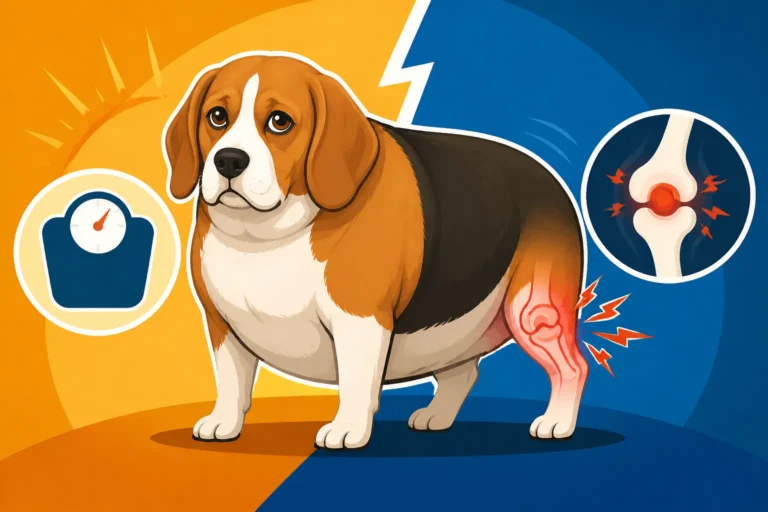
Another strategy is portion control, but not just in terms of how much food they get, but how often. Instead of two large meals, you might consider breaking their daily allotment into three or even four smaller meals. This reduces the sheer volume they're trying to consume at once, lessening the urgency. This is especially helpful if your Beagle is also on a weight management plan, as it can help them feel more satisfied throughout the day. Remember to always stick to their total daily calorie allowance to prevent Beagle Obesity and the Diseases It Brings On.
| Strategy / Tool | Description | Benefits | Considerations |
|---|---|---|---|
| Slow Feeder Bowl | Bowl with ridges, mazes, or obstacles | Physically slows eating, less gulping | Some Beagles might flip it, need to choose appropriate difficulty |
| Puzzle Feeder | Interactive toy requiring manipulation to dispense food | Slows eating, provides mental stimulation, reduces boredom | Can be frustrating for some dogs initially, requires supervision |
| Scatter Feeding | Spreading kibble on a clean surface or snuffle mat | Engages natural foraging instinct, excellent mental exercise | Requires a clean space, not suitable for all environments |
| Portioning | Dividing daily food into 3-4 smaller meals | Reduces volume per meal, less urgency, better digestion | More frequent feeding required, ensures total daily calories are met |
| Hand Feeding | Feeding kibble piece by piece from your hand | Builds bond, allows for training, extreme slowing | Very time-consuming, not sustainable for every meal |
| Food Dispensing Toy | Ball or toy that releases kibble as the dog plays with it | Combines eating with play, engaging | Can be noisy, not all kibble sizes work, some dogs give up quickly |
Considering Specialized Diets or Food Textures
Sometimes, the type of food itself can contribute to fast eating. Dry kibble, especially small pieces, can be easily swallowed whole. While you can't always change the core diet your vet recommends, adjusting the texture or presentation of the food can make a difference.
For instance, adding a bit of warm water or low-sodium broth to your Beagle's kibble can soften it, making it harder to gulp down. This also increases hydration and can make the food more appealing, encouraging them to take a moment and savor it. Just be sure to monitor the mixture to ensure it doesn't spoil if left out too long. This simple tweak can encourage a bit more chewing and slower consumption.
If your Beagle is on a dry kibble diet, consider experimenting with slightly larger kibble sizes, if appropriate for their mouth and breed size, as these are harder to swallow whole. Alternatively, some owners find success with fresh food diets, like those offered by brands such as Ollie. While these foods aren't inherently "slow," their softer, less uniform texture can sometimes encourage more deliberate eating compared to crunchy, easily inhaled kibble. Always consult your veterinarian before making significant changes to your Beagle's diet, especially if they have underlying health conditions or if you're exploring Home Cooked Beagle Meals and Getting Calcium Right.
Monitoring and Long-Term Management
Changing a deeply ingrained behavior like fast eating isn't an overnight fix. It requires patience, consistency, and ongoing vigilance. Once you implement new strategies, it's important to monitor your Beagle's progress and make adjustments as needed. This long-term commitment is key to ensuring their continued health and well-being.
Observing Your Beagle's Digestion and Weight
As you introduce new feeding methods, pay close attention to your Beagle's overall digestive health. Are they still experiencing gas? Has the frequency of vomiting after meals decreased? Are their stools healthy and consistent? These are all indicators that your new approach is having a positive impact. If you notice persistent issues, it might be time to try a different slow-feeding device or revisit your strategy.
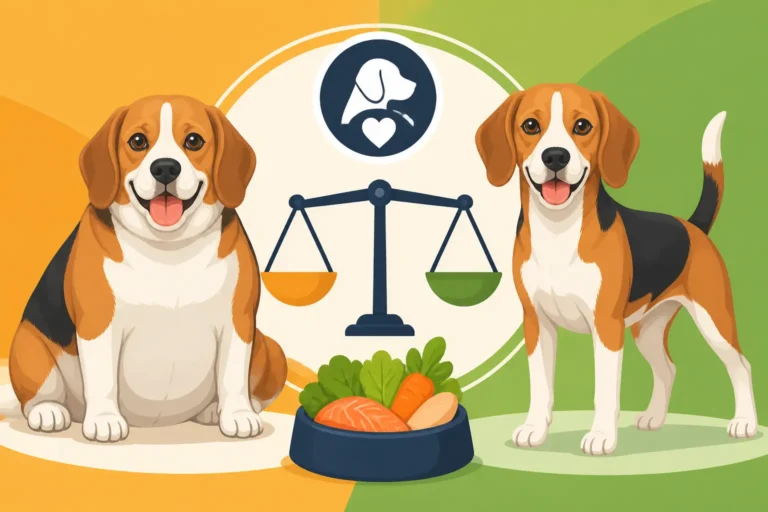
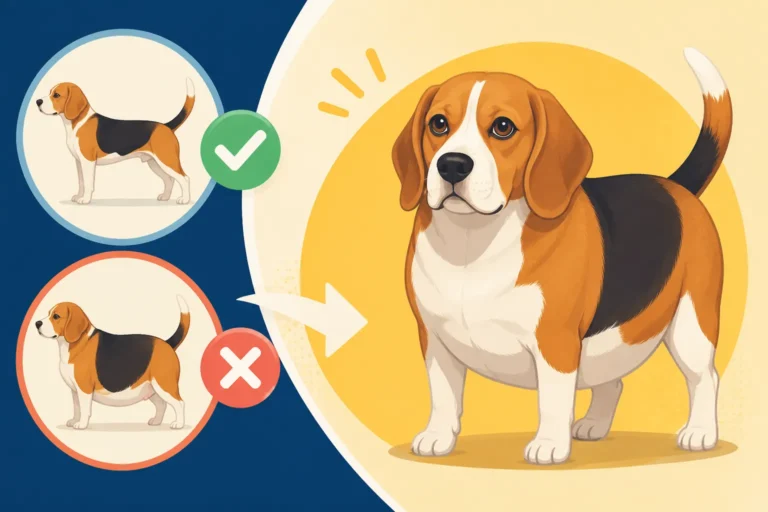
Beyond digestion, keep a close eye on your Beagle's weight and body condition. While the goal is to slow down eating, you also want to ensure they're getting adequate nutrition. Because Beagles are so prone to weight gain, it's easy for them to become overweight if they're still eating too fast and you're not carefully measuring portions. For tips on managing their weight, refer to Beagle Weight Management Across the Two Size Varieties and learn how to feel for their ribs and waistline. Maintaining a healthy weight is paramount for their overall health and lifespan.
Regular veterinary check-ups are also crucial. Your vet can provide an objective assessment of your Beagle's weight and digestive health, and offer tailored advice based on their breed, age, and any individual health concerns. Don't hesitate to discuss your Beagle's fast-eating habit with them, especially if you're concerned about bloat or other serious conditions. They can help you determine The Daily Calorie Target for a Twenty Pound Beagle and ensure any dietary changes are safe.
The Importance of Consistency and Patience
Just like with any training or behavioral modification, consistency is paramount when trying to slow down a Beagle's eating. If you use a slow feeder one day and a regular bowl the next, your Beagle won't understand the expectation. Make a commitment to using your chosen method for every single meal, every single day. This unwavering routine will help your Beagle adjust and begin to associate mealtime with the slower pace.
Patience is also key. Your Beagle has likely been eating this way their entire life, and breaking that habit will take time. Don't get discouraged if you don't see immediate, dramatic results. Some Beagles adapt quickly, while others might take weeks or even months to fully embrace the slower mealtime. Celebrate the small victories – perhaps a meal that takes two minutes instead of twenty seconds. Every little bit of progress helps.
Remember, your Beagle isn't trying to be difficult by eating fast; they're simply acting on instinct. Your role is to guide them toward healthier habits in a positive and consistent manner. By understanding their motivations, recognizing the risks, and implementing thoughtful solutions, you can transform mealtime from a frantic race into a calm, enjoyable, and much safer experience for your beloved hound.
Disclaimer
This article is for general informational purposes only and does not constitute professional advice. Laws, prices and regulations vary by location and change over time. Consult a qualified professional for guidance on your specific situation.