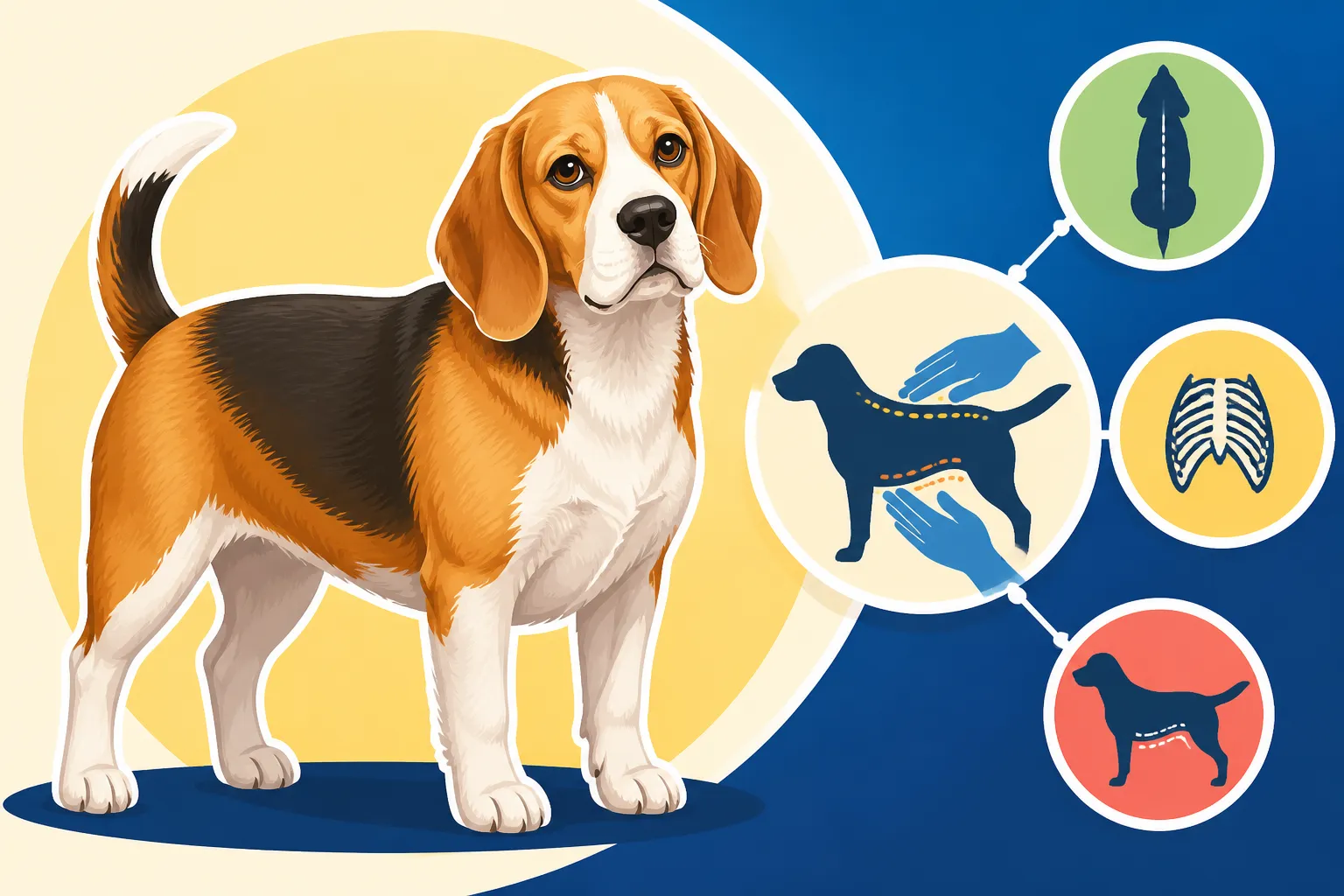
Body Condition Scoring a Beagle Under a Thick Coat
It's incredibly common to look at your beloved Beagle, with their soulful eyes and perpetually wagging tail, and think they look perfectly fine. But that thick, dense double coat, so characteristic of the breed, can be a real master of disguise when it comes to their actual body condition. Many Beagle owners struggle to accurately assess if their hound is at a healthy weight, often unknowingly letting a few extra pounds creep on simply because it's hard to see what's truly underneath all that fur. This guide will walk you through the practical, hands-on method of body condition scoring your Beagle, cutting through the fluff (literally!) to help you understand what a healthy Beagle truly looks and feels like.
The Challenge of Assessing a Beagle's Body Condition
Let's be honest: Beagles are built for scent work, and that often means they're built to be robust, sturdy little dogs. Their compact, muscular frames and that beautiful, dense coat make it incredibly difficult to tell just by looking whether they're carrying a healthy amount of weight or if they're starting to get a bit chunky. You might pat their side and feel something soft, assuming it's just their ample fur, when in reality, it could be a layer of extra fat. This is a frustration many Beagle owners share; their dog looks happy, runs around, and still manages to seem slender from certain angles, even when the scale tells a different story.
Why a Beagle's Coat Hides So Much
Beagles have a short, yet very thick, double coat. The outer coat is coarse and water-resistant, while the undercoat is soft and dense, providing insulation. This protective layering is fantastic for keeping them warm and dry when they're out on a scent trail, but it poses a significant challenge for owners trying to gauge their physical form. When you run your hands over many breeds, you can often feel their ribs, spine, and hip bones with relative ease. With a Beagle, that plush coat acts like a natural padding, making it much harder to discern the underlying skeletal structure.
Imagine trying to feel the frame of a well-upholstered armchair – it's there, but you have to press a bit harder to get past the cushioning. The same principle applies to our Beagles. A quick visual inspection, especially when they're standing or sitting with their fur fluffed up, can easily mislead you into thinking they're trim and fit. It's only when you get hands-on, feeling for specific anatomical landmarks, that you can truly understand what's going on beneath that furry exterior. This is why a regular, tactile check is so crucial, far more so than just a glance.
The Difference Between Weight and Body Condition
It's important to distinguish between your Beagle's actual weight on the scale and their body condition score (BCS). Weight is a numerical value, and while useful, it doesn't tell the whole story. A 28-pound Beagle might be perfectly healthy and lean, while another 28-pound Beagle of the exact same height and build could be carrying too much fat if they have a denser bone structure or less muscle mass. Conversely, a heavier, more muscular Beagle might be at a healthy body condition even if they weigh more than the "average" for their size.
Body condition, on the other hand, is a subjective assessment of your dog's fat reserves relative to their frame. It takes into account how much fat is covering their bones, the definition of their waistline, and the tuck of their abdomen. This is a much more accurate indicator of health than a number on the scale alone, especially for a breed like the Beagle where there can be some variation in build even within the same height class. For instance, a field-bred Beagle might be leaner and more athletic than a show-bred Beagle, even if both are considered 13-inch Beagles. Focusing on BCS helps you see past the numbers and assess the actual physical state of your individual dog.
The Risks of Underestimating Weight Gain
Ignoring those subtle signs of weight gain can have serious, long-term consequences for your Beagle's health and lifespan. A few extra pounds might seem harmless, but for a smaller dog like a Beagle, those pounds can quickly add up to a significant percentage of their body weight, placing undue stress on their internal organs and joints. We often see Beagles become prone to Beagle Arthritis Arriving in Middle Age or develop conditions like Beagle Diabetes and Blood Sugar Control due to being overweight.
The primary risks include:
- Joint Problems: Extra weight puts tremendous pressure on joints, exacerbating conditions like hip dysplasia or leading to early onset arthritis. It can also worsen existing back issues; understanding How Extra Weight Raises Beagle Disc Pressure is vital for this breed.
- Heart Disease: Overweight dogs are more susceptible to heart conditions, as their heart has to work harder to pump blood throughout a larger body mass.
- Diabetes: Obesity is a leading risk factor for canine diabetes.
- Reduced Mobility and Quality of Life: A heavier Beagle will have less stamina, struggle with exercise, and might even find simple movements like jumping onto the couch painful. Their joyful, energetic spirit can be dulled by the physical burden of excess weight.
- Shorter Lifespan: Studies consistently show that dogs maintained at a healthy weight live, on average, a longer life. What Shortens a Beagle's Twelve to Fifteen Years often includes preventable conditions linked to obesity.
Because Beagles are so incredibly food-motivated, and their begging can be hard to resist, it's easy to overfeed them, often without realizing the impact until it's become a more significant problem.
Understanding the Body Condition Score (BCS) System
The Body Condition Score (BCS) system is a standardized, subjective method used by veterinarians and informed owners to assess a dog's fat reserves. It's typically presented as a 5-point scale (with half points, making it 9 points) or a 9-point scale, where 1 is emaciated and 9 is morbidly obese, with 4 or 5 being the ideal. This system helps us move beyond just looking at a dog and relying on guesswork, providing a consistent framework for evaluation. It's a hands-on approach that cuts through the fur and helps you feel what your Beagle's body is actually like underneath.
The Nine-Point Scale Explained
Most veterinarians use a 9-point scale because it offers a finer degree of detail, allowing for more precise assessment, particularly for dogs that might be slightly underweight or slightly overweight. Here's a general breakdown:
- 1-3 (Underweight): The dog is too thin. Ribs, spine, and pelvic bones are easily visible or felt with no fat covering. There's a severe abdominal tuck and loss of muscle mass.
- 4-5 (Ideal): This is the sweet spot. Ribs are easily felt but not seen. The waist is visible when viewed from above, and there's a definite abdominal tuck when viewed from the side.
- 6-9 (Overweight/Obese): The dog is carrying too much fat. Ribs are difficult or impossible to feel. There's no distinct waistline, and the abdomen might sag or be flat rather than tucked. Fat deposits may be visible over the lumbar area and at the base of the tail.
The goal is to aim for that ideal 4 or 5 score, where your Beagle has enough fat for health and energy, but not so much that it's impacting their mobility or placing strain on their body. Regular checks using this scale will help you monitor their progress and make necessary adjustments to their diet and exercise routine.
How to Feel for Your Beagle's Ribs, Waist, and Tummy Tuck
This is where the hands-on part comes in. You need to get tactile with your Beagle, gently but firmly feeling for specific areas. Don't be shy; your Beagle will probably just think you're giving them a nice massage!
- Ribs: Place both hands on your Beagle's chest, just behind their front legs. Your thumbs should be running along their spine, and your fingers should spread across their rib cage. Apply gentle pressure, much like you would if you were feeling for the knuckles on your own hand. You should be able to feel each individual rib bone without pressing hard. If you can see the ribs, your Beagle is likely too thin. If you have to press firmly to feel them, or can't feel them at all, they're probably overweight.
- Waist: Stand directly above your Beagle while they're standing squarely. Look down at their body. Do you see an hourglass shape, where the body narrows behind the rib cage and before the hips? If it goes straight back from the ribs to the hips, or even bulges out, your Beagle is likely carrying too much weight. A healthy Beagle should have a noticeable "tuck" in the waist.
- Abdominal Tuck: View your Beagle from the side. Look at their belly line, from the bottom of their chest to their hind legs. An ideal body condition will show a slight upward slope, or "tuck," of the abdomen, rather than a flat or sagging line. If their belly hangs low or is parallel to the ground, they're probably overweight.
Remember, practice makes perfect. The more you do this, the more accustomed you'll become to what a healthy Beagle feels like. If you're unsure, ask your vet to demonstrate at your next check-up.
Ideal Body Condition for a Beagle
An ideal body condition for a Beagle (BCS 4 or 5 on a 9-point scale) means they are lean and athletic, without being bony or gaunt.
Here’s what you should observe and feel:
- Ribs: You can easily feel the individual ribs with light pressure, much like feeling the back of your hand. They should not be visually prominent.
- Waist: When looking down at your Beagle from above, there should be a clearly discernible waistline, an hourglass shape, behind the rib cage.
- Abdominal Tuck: From the side, the abdomen should tuck up neatly from the bottom of the rib cage to the groin, not hanging low or appearing flat.
- Spine: The backbone should be felt with slight pressure, but individual vertebrae should not protrude visually or feel overly prominent.
- Hip Bones: Similar to the spine, the hip bones should be palpable under a thin layer of fat, but not sharply angular or visibly protruding.
- Muscle Mass: Your Beagle should have good muscle definition, especially in their hindquarters, indicating regular exercise and a healthy activity level.
Achieving and maintaining this ideal body condition is one of the best things you can do for your Beagle's long-term health and vitality. It's about ensuring they can chase those elusive scents, enjoy their walks, and live a comfortable, happy life well into their senior years. Regular checks will help prevent Beagle Obesity Treated as a Health Problem from ever taking hold.
Scoring Your Beagle: A Step-by-Step Guide
Now that you understand the principles, let's go through the process of body condition scoring your Beagle at home. This isn't just a one-off assessment; it should be something you do regularly, perhaps once a month, to catch any changes early. It’s also a good idea to perform this when you take them for a quick check-up at the vet, so you can compare notes.
Starting with the Ribs: The Most Important Indicator
The ribs are often considered the most crucial indicator for body condition scoring, as they provide a direct sense of the fat layer over critical bone structure.
- Preparation: Have your Beagle stand comfortably on a non-slip surface. Talk to them gently, making it a positive experience with praise or a small, healthy treat (remembering to account for it in their daily calorie intake!).
- Hand Placement: Place both palms flat on either side of your Beagle’s chest, just behind their front legs. Your fingers should be spread and pointing towards their belly, and your thumbs should rest along their spine.
- Applying Pressure: Gently run your fingers back and forth over the rib cage. You should apply similar pressure to what you'd use to feel the knuckles on your own hand.
- Ideal (BCS 4-5): You can easily feel each individual rib bone without pressing hard. It should feel like feeling your knuckles when your hand is flat.
- Too Thin (BCS 1-3): The ribs are very prominent, perhaps even visible through the coat, and feel sharp with very little fat covering them. It might feel like the back of your hand, where the bones are very apparent.
- Overweight (BCS 6-9): You have to press firmly to feel the ribs, and they feel indistinct or are completely obscured by a layer of fat. It might feel like the palm of your hand, soft and padded.
This rib check is foundational. If you're struggling to feel the ribs at all, it's a strong sign that your Beagle is carrying too much weight, regardless of how "fluffy" they appear.
Checking the Waistline from Above
After the ribs, the waistline offers a great visual and tactile clue about your Beagle's condition.
- Visual Assessment (Above): Stand directly over your Beagle, who should be standing squarely on all fours. Look down at their body, focusing on the area behind their rib cage and in front of their hips.
- Ideal (BCS 4-5): You should see a distinct "hourglass" shape, with a clear narrowing behind the rib cage.
- Too Thin (BCS 1-3): The waist might be extremely pinched, almost hollow-looking, and the hip bones may be visibly protruding.
- Overweight (BCS 6-9): The body will appear straight or even bulge out from the rib cage to the hips, lacking any discernible waistline.
- Tactile Assessment (Sides): Gently run your hands along your Beagle's sides from their ribs down to their hips.
- Ideal (BCS 4-5): You should feel a gentle curve inwards.
- Overweight (BCS 6-9): It will feel straight or outward-curving, with a thick layer of fat.
A noticeable waist is a hallmark of a healthy body condition for most dog breeds, and Beagles are no exception, even with their sturdy build.
Assessing the Abdominal Tuck from the Side
The abdominal tuck completes the visual part of the body condition assessment, offering another angle on fat distribution.
- Visual Assessment (Side): Have your Beagle stand perfectly still, and view them from the side. Look at the line of their belly, from their chest to their hind legs.
- Ideal (BCS 4-5): The abdomen should tuck up slightly from the bottom of the rib cage to the groin, creating a graceful upward curve.
- Too Thin (BCS 1-3): The tuck will be extremely pronounced, almost like a greyhound's, and could indicate a lack of muscle mass as well as fat.
- Overweight (BCS 6-9): The belly line will appear flat, or even sag downwards towards the ground. There will be no visible tuck, and sometimes a distended appearance.
Here's a quick reference table to help visualize the BCS:
| Body Condition Score (BCS) | Visual Cues (Side & Above) | Palpation Cues (Ribs) | Health Implications |
|---|---|---|---|
| 1: Emaciated | Ribs, spine, pelvic bones visible from a distance; severe abdominal tuck. | Ribs, spine, pelvic bones very prominent, no fat covering. | Severe malnutrition, muscle wasting, serious health risk. |
| 2: Very Thin | Ribs, spine, pelvic bones easily visible; obvious waist and abdominal tuck. | Ribs easily felt, minimal fat; bones feel sharp. | Too thin, risk of weakness, poor immune function. |
| 3: Thin | Ribs easily seen; pronounced waist and abdominal tuck. | Ribs easily felt with minimal fat cover. | Borderline underweight, may need increased nutrition. |
| 4: Ideal/Lean | Ribs not visible but easily felt; clear waist and abdominal tuck. | Ribs easily felt with a slight fat cover. | Optimal health, active, good energy. |
| 5: Ideal/Moderate | Ribs not visible, easily felt with slight pressure; visible waist and abdominal tuck. | Ribs easily felt with minimal fat cover. | Optimal health, active, good energy. |
| 6: Overweight | Ribs difficult to feel; waist discernible but not prominent; slight abdominal tuck. | Ribs felt with firm pressure, slight fat covering. | Early signs of excess weight, potential for future issues. |
| 7: Heavy | Ribs difficult to feel under fat; no waist; abdomen rounded. | Ribs felt only with significant pressure, moderate fat. | Overweight, increased risk of joint, heart, diabetes. |
| 8: Obese | Ribs cannot be felt; no waist or tuck; obvious abdominal distention; fat deposits. | Ribs covered by thick fat layer, very hard to feel. | Obese, significant health risks, reduced quality of life. |
| 9: Morbidly Obese | Massive fat deposits on neck, back, limbs; severe abdominal distention. | Cannot feel ribs or bone structure due to heavy fat. | Morbidly obese, severe health problems, shortened lifespan. |
By performing these three simple checks regularly, you'll gain a much clearer picture of your Beagle's actual physical condition, helping you make informed decisions about their diet and exercise.
What Different BCS Scores Mean for Your Beagle's Health
Understanding your Beagle's Body Condition Score isn't just an academic exercise; it's a critical tool for managing their health. Each point on the scale signifies different health implications, ranging from potential nutrient deficiencies to serious chronic diseases. As a Beagle owner, recognizing these signs empowers you to take proactive steps to ensure your furry friend lives their happiest, healthiest life.
Too Thin: Underweight Concerns
While obesity is a more common concern for Beagles due to their robust appetites, being underweight can also pose serious health risks. A Beagle scoring 1, 2, or 3 on the BCS scale is not at their optimal health.
- Signs: Ribs, spine, and hip bones are visibly prominent or easily felt with no fat cover. The waist is severely tucked, almost hollow.
- Potential Causes:
- Inadequate Nutrition: Not enough food, or food that isn't calorie-dense enough for their activity level.
- High Metabolism: Some Beagles, especially very active field-bred lines, might burn calories faster.
- Underlying Medical Conditions: This is a significant concern. Conditions like parasites, dental disease, inflammatory bowel disease, kidney disease, hyperthyroidism, or even certain cancers can lead to unintentional weight loss.
- Stress or Anxiety: Severe anxiety can sometimes suppress appetite or lead to a "nervous energy" that burns too many calories.
- Health Risks: An underweight Beagle may have a weakened immune system, making them more susceptible to illness. They can lack the energy for play and exercise, experience muscle wasting, and in severe cases, their organs may not function optimally. For a Senior Beagle Care After the Age of Ten, unintentional weight loss is often a red flag for age-related health issues.
If your Beagle is consistently underweight, it's crucial to consult your veterinarian. They can help rule out underlying medical conditions and provide guidance on a suitable dietary plan to help your Beagle safely gain weight.
Overweight: The Silent Health Threat
A BCS of 6 or 7 indicates your Beagle is overweight. This is a very common scenario, often creeping up slowly and subtly due to their enthusiastic eating habits and those charming, pleading eyes.
- Signs: Ribs are difficult to feel without firm pressure, and there's no distinct waistline when viewed from above. The abdominal tuck is diminished or absent, appearing flat or slightly rounded from the side. You might notice fat deposits over their lower back and at the base of their tail.
- How it Happens:
- Overfeeding: Too many calories relative to their energy expenditure. This includes treats, table scraps, and overly generous meal portions. Measuring Beagle Food Instead of Free Feeding is key here.
- Lack of Exercise: Not enough physical activity to burn off consumed calories. Even short Beagles need a good amount of exercise.
- Metabolic Slowdown: As Beagles age, their metabolism naturally slows down, requiring fewer calories. Similarly, Why a Neutered Beagle Needs Fewer Calories is an important consideration.
- Hypothyroidism: Beagle Hypothyroidism and Sudden Weight Gain is a known issue for the breed, where an underactive thyroid can lead to weight gain despite normal eating.
- Health Risks: This is where the long-term damage begins. Overweight Beagles face an increased risk of:
- Joint Issues: Exacerbated arthritis, hip dysplasia, and increased pressure on spinal discs.
- Heart Disease and High Blood Pressure: The heart works harder, and circulation can be compromised.
- Diabetes Mellitus: Obesity is a primary risk factor.
- Respiratory Problems: Excess fat can make breathing harder, especially in hot weather or during exercise.
- Reduced Stamina: Less ability to participate in their favorite activities, leading to a duller quality of life.
- Increased Surgical Risks: Anesthesia is riskier, and recovery can be slower.
Catching your Beagle at the overweight stage (BCS 6-7) is your prime opportunity to intervene and prevent the more severe health consequences of full-blown obesity.
The Slippery Slope to Obesity
A BCS of 8 or 9 means your Beagle is considered obese, which is a serious medical condition. At this stage, the risks mentioned above become far more pronounced and can significantly impact their quality of life and shorten their lifespan.
- Signs: It's impossible to feel the ribs or any other bone structure through a thick layer of fat. There is no waist, and the abdomen is obviously distended and sagging. Significant fat deposits are visible on the neck, back, base of the tail, and even on the limbs.
- Impact:
- Severe Mobility Issues: They may struggle to walk, jump, or even groom themselves. They might develop a wobbly gait or appear lethargic.
- Profound Health Problems: The risk of severe arthritis, heart disease, diabetes, certain types of cancer, and liver problems skyrockets.
- Heat Intolerance: Obese Beagles struggle significantly in warm weather due to their extra insulation.
- Psychological Impact: While dogs don't have human self-esteem, chronic discomfort and inability to engage in natural behaviors can impact their overall well-being.
Reversing obesity in a Beagle can be a long and challenging journey, but it is absolutely vital for their health. It requires a dedicated commitment to a comprehensive weight loss plan, often under strict veterinary supervision. Early intervention is always better than trying to reverse advanced obesity.
Adjusting Your Beagle's Diet and Exercise Based on BCS
Once you've accurately assessed your Beagle's body condition score, the next step is to take action. This isn't about shaming or guilt; it's about empowerment. You have the information to make a real difference in your Beagle's health and happiness. Whether your Beagle needs to shed a few pounds, maintain their ideal weight, or even gain a little, adjustments to their diet and exercise are key.
Practical Steps for Weight Loss
If your Beagle is scoring 6 or higher on the BCS scale, it's time for a dedicated weight loss plan. This requires consistency and commitment from the whole family.
- Consult Your Vet First: Always start by consulting your veterinarian. They can rule out any underlying medical conditions like hypothyroidism that might be contributing to weight gain. They can also help you determine an appropriate target weight and calorie intake for your individual Beagle.
- Precise Portion Control: This is non-negotiable for a Beagle. Stop "eyeballing" portions. Invest in a digital kitchen scale (easily found on Amazon, for example) and weigh out your Beagle's food for every meal. Your vet can provide specific calorie recommendations, or you can start with a general guideline, often 10-20% less than their current intake. Remember, Daily Calories for a 13-Inch Against a 15-Inch Beagle will vary, so precise measurement is important.
- Choose the Right Food:
- High-Fiber, Low-Calorie Diet: Many dog food brands offer "weight management" or "light" formulas that are lower in calories and higher in fiber, helping your Beagle feel full without consuming excess energy. Brands like Chewy often carry a wide selection.
- Prescription Weight Loss Diets: For Beagles who are significantly overweight or obese, your vet might recommend Prescription Weight Loss Food for a Beagle. These diets are formulated to be very effective, often with specific nutrient profiles to support weight loss safely.
- Bulking Out a Beagle Bowl With Low-Calorie Food: Adding plain, unsalted green beans, carrots, or pumpkin (not pie filling) to their regular meal can make them feel fuller with minimal added calories.
- Rethink Treats: Treats are a major culprit in Beagle weight gain.
- Eliminate High-Calorie Treats: Say goodbye to cheese, peanut butter (unless used sparingly for specific training), and fatty commercial dog treats.
- Opt for Low-Calorie Alternatives: Use tiny pieces of plain cooked chicken, carrots, or store-bought low-calorie training treats.
- Treat Budget: Factor all treats into their daily calorie allowance.
- Increase Exercise Gradually: Don't go from zero to a marathon.
- Longer Walks: Aim for more frequent or longer walks. A minimum of two 30-minute brisk walks per day is a good starting point.
- Scent Work: Engage their natural instincts with scent games. Scent Walks That Wear a Beagle Out can be incredibly effective for physical and mental stimulation, without requiring high-impact running.
- Playtime: Incorporate active playtime in the yard, but be mindful of their joints if they are already overweight. Fetch or flirt pole games can be good. Exercise That Actually Burns Beagle Calories is about consistent movement.
Weight loss won't happen overnight, but consistent effort will yield results. Celebrate small victories, like being able to feel their ribs a little more easily.
Maintaining an Ideal Weight
Once your Beagle reaches their ideal BCS of 4 or 5, the challenge shifts to maintenance. This is a lifelong commitment, as Beagles are perpetually food-focused.
- Continued Portion Control: Even at an ideal weight, portion control remains crucial. Their metabolism might adapt to the lower calorie intake, so stick to measured meals. Continue to weigh their food if that method works for you.
- Smart Treat Choices: Continue using low-calorie treats or use portions of their daily kibble as rewards. Consider healthy, fresh options like those offered by services like Ollie, which can be portioned precisely.
- Consistent Exercise Routine: Maintain a regular exercise schedule that keeps them active and mentally stimulated. This means daily walks, playtime, and perhaps enrolling in fun activities like nose work classes. Don't let their activity level drop.
- Regular BCS Checks: Continue to perform body condition scoring checks at least once a month. This proactive approach will help you catch any upward creep in weight early, allowing for minor adjustments before it becomes a problem.
- Annual Vet Check-ups: Regular veterinary visits are essential to monitor their overall health, discuss their weight, and catch any potential health issues that could impact their metabolism.
When to Consult Your Vet and a Nutritionist
Your veterinarian is your best partner in managing your Beagle's weight and body condition.
- Initial Assessment: Always start with your vet for an accurate initial assessment and to rule out medical causes for weight gain or loss.
- Creating a Plan: Your vet can help you formulate a safe and effective weight loss or gain plan, including specific calorie targets and exercise recommendations. They can also suggest appropriate dog food options.
- Monitoring Progress: Regular weigh-ins at the vet clinic can help track progress and make adjustments as needed.
- Lack of Progress: If your Beagle isn't losing weight despite your best efforts, or if they're losing too quickly, it's time for another vet consultation. There might be an underlying issue or the plan needs tweaking.
- Special Needs: For Beagles with specific health conditions (like Beagle Diabetes and Blood Sugar Control or joint problems), a vet-prescribed diet and exercise plan is absolutely essential.
- Board-Certified Veterinary Nutritionist: For complex cases, your vet may refer you to a board-certified veterinary nutritionist. These specialists can develop highly customized dietary plans, especially for Beagles with multiple health conditions or unusual dietary needs. This might involve preparing home-cooked meals (with proper balancing) or selecting specific commercial diets.
Remember, your Beagle relies on you to make healthy choices for them. By diligently performing body condition scoring and partnering with your vet, you can help them enjoy a long, active, and fulfilling life.
Disclaimer
This article is for general informational purposes only and does not constitute professional advice. Laws, prices and regulations vary by location and change over time. Consult a qualified professional for guidance on your specific situation.