Raw Feeding Risks for a Beagle That Scavenges
If you've ever lived with a Beagle, you already know their nose is a force of nature, and their stomach seems to have no off switch. This incredible drive to sniff out and consume anything edible—or even vaguely edible—is part of their charm, but it also creates unique challenges, especially when you start considering something like a raw food diet. The very nature of raw feeding, with its fresh ingredients and potential for bacterial growth, can amplify the inherent risks for a dog so prone to scavenging. This guide will walk you through the specific dangers raw feeding poses to a Beagle that scavenges and offer actionable strategies to keep your furry vacuum cleaner safe and healthy.
The Irresistible Pull of the Beagle's Nose: Why Scavenging Is Inevitable
Beagles aren't just good at finding food; they're built for it. Their entire history, from chasing rabbits across fields to their modern-day role in The Beagle From English Rabbit Packs to American Homes and as detector dogs for the USDA Beagle Brigade, revolves around their astounding olfactory capabilities. This isn't just a quirky habit; it's a deeply ingrained instinct that makes scavenging not just likely, but almost inevitable for many Beagles.
The Hunter's Instinct in a Domestic Dog
For centuries, Beagles were bred to hunt and track prey by scent. Their low-slung bodies, long ears that help funnel scent, and an extraordinary number of scent receptors mean they process the world primarily through their nose. When a Beagle is on a scent, the rest of the world fades away. This intense focus isn't just for tracking rabbits; it applies equally to a rogue crumb under the couch, a dropped piece of toast, or even something truly unappetizing they unearth in the backyard. It's a primal drive to find, follow, and consume.
This instinct means that even the most well-fed Beagle will often still be on the hunt for more. They aren't thinking about caloric intake or proper nutrition when their nose hits a tantalizing scent; they're simply following thousands of years of selective breeding telling them, "Find it! Eat it!" This inherent drive can make managing their diet, particularly a raw diet with its specific handling requirements, a constant vigilance exercise. They won't discriminate between their own carefully prepared raw meal and a forgotten piece of raw chicken left on a counter.
Food Motivation and a Beagle's Bottomless Pit
Beyond their incredible noses, Beagles are notoriously food-motivated. While this can be a huge asset in training—they'll often work tirelessly for a tasty treat—it also means they see virtually everything as a potential snack. If a food item is within reach, a Beagle will attempt to consume it, often with alarming speed and without much chewing. You might find your Beagle counter-surfing with surprising agility, raiding the trash can with surgical precision, or becoming a vacuum cleaner under the dinner table. This behavior is often why owners struggle with Beagle Obesity Treated as a Health Problem.
This constant quest for food isn't necessarily a sign that your Beagle is starving; it's more about their breed's inherent drive. Many Beagle owners can attest to the sheer speed with which their dog can make a plate of unattended food vanish, or how quickly they can excavate a prize from the garbage bin. This speed and lack of discernment mean that any accidental access to raw food, whether it's their own unfinished meal or something they shouldn't have, can quickly become a serious health risk.
Understanding the Specific Dangers of Raw Feeding for a Scavenger
Introducing a raw food diet can be a fantastic way to provide fresh, wholesome nutrition for many dogs. However, for a Beagle with a strong scavenging instinct, the very nature of raw ingredients introduces a unique set of hazards that need to be understood and meticulously managed. The risks aren't just about what they shouldn't eat; it's also about how they might interact with the raw food they are supposed to eat, and the potential for wider contamination in your home.
Bacterial Contamination Risks
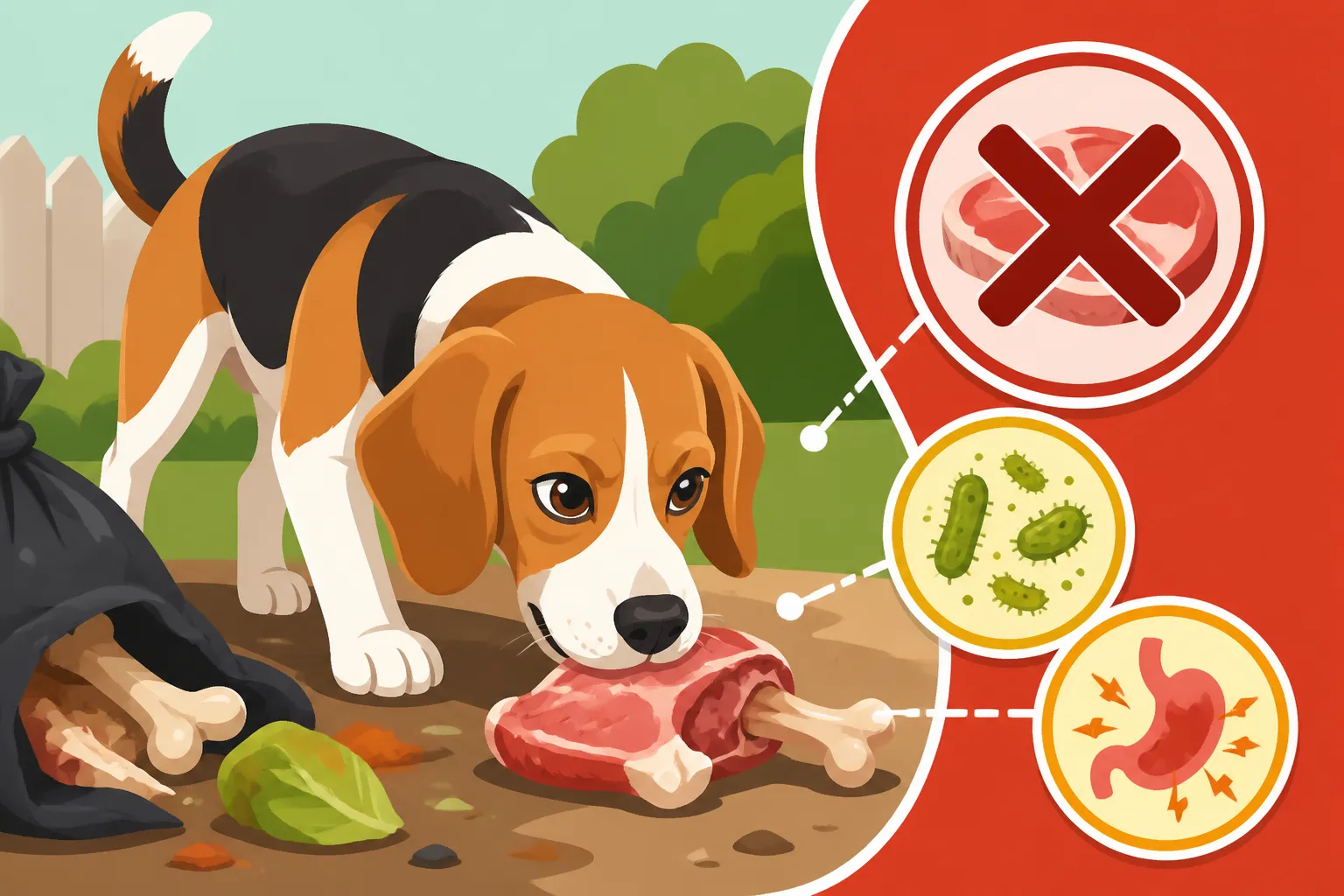
Raw meat, poultry, and eggs, which form the cornerstone of many raw diets, naturally contain bacteria such as Salmonella, E. coli, Listeria, and Campylobacter. While many dogs can process these bacteria without showing symptoms of illness, they can still shed them in their feces, becoming a source of contamination for their environment and the people around them. For a scavenging Beagle, these risks are amplified.
Imagine your Beagle finishes its raw meal, but a tiny piece of raw meat drops onto the floor, or they lick their bowl clean and then nose around the feeding area. A normal dog might not bother with these remnants, but a scavenging Beagle absolutely will. They might lick the floor, the baseboards, or even track bacteria on their paws to other parts of your home, including furniture, carpets, and even your bed. This makes bacterial spread much more likely. The bacteria can cause serious gastrointestinal upset in your Beagle, leading to A Beagle Vomiting After Eating Something Outside or diarrhea, but the bigger concern is often the risk to human family members, especially children, the elderly, or anyone with a compromised immune system. Simply put, a scavenging Beagle increases the chances of these pathogens being introduced and spread throughout your living space.
Bone Ingestion and Choking Hazards
Many raw diets incorporate raw bones, either as a source of calcium and phosphorus or for recreational chewing. While raw bones are generally considered safer than cooked bones (which can splinter), they still carry risks, especially for a Beagle. Beagles are known for being fast eaters who tend to gulp their food, rather than chew meticulously. This characteristic, which you might observe in your Beagle with Beagle Gulping Food and the Choking Risk, can turn a raw bone meant for chewing into a dangerous obstruction.
If a Beagle gets hold of a raw bone that is too small, or if they decide to swallow a larger bone fragment whole rather than chew it down, it can lead to choking. Even if they don't choke immediately, swallowed bone pieces can cause internal blockages, perforations of the digestive tract, or severe constipation. Furthermore, while raw bones are more pliable than cooked ones, they can still break into sharp fragments, particularly if your Beagle tries to crush them quickly with powerful jaw action, leading to potential internal damage. The instinct to "get it all down" quickly, characteristic of a scavenging, food-driven Beagle, means that raw bones, even those deemed safe for other dogs, must be approached with extreme caution, or perhaps avoided altogether.
Cross-Contamination in the Environment
The primary risk with a raw diet, beyond direct bacterial ingestion, is cross-contamination. This refers to the transfer of harmful bacteria from raw food to other surfaces, utensils, hands, or other foods. For a Beagle that scavenges, this risk isn't just limited to the kitchen; it extends to anywhere your dog might be.
Consider a typical raw feeding scenario: you prepare the meal, the Beagle eats, and then, as is their nature, they might sniff around the bowl, lick up invisible traces of food from the floor, or even nudge the bowl around. If their raw food bowl isn't immediately and thoroughly cleaned, any residual bacteria can become a playground for your Beagle's curious nose. They might track remnants across the house, onto carpets, toys, or even directly onto family members who then unwittingly transfer these bacteria to their mouths. Beagle-Proofing the Kitchen and the Pantry extends to preventing access to these contaminated areas. The potential for a scavenging Beagle to turn your home into a mosaic of microscopic bacterial hotspots is a very real concern that requires a stringent hygiene protocol far beyond what might be necessary for a less inquisitive or food-motivated breed.
Mitigating the Risks: Safe Raw Feeding Practices for a Scavenging Beagle
Deciding to feed a raw diet to a Beagle, especially one prone to scavenging, means committing to an extremely high level of diligence. It's not just about what goes into their bowl, but what happens before, during, and after mealtime. If you're determined to make raw feeding work, these practices are non-negotiable for safeguarding both your Beagle and your household.
Strict Hygiene and Storage Protocols
The first line of defense against bacterial contamination is impeccable hygiene. This starts with how you handle and store raw food. All raw meat should be stored separately from human food, preferably in its own sealed container or designated freezer shelf, to prevent any drippage or accidental cross-contamination. Thawing should always occur in the refrigerator, never on the counter where a Beagle's nose might lead them to an unsecured package.
When preparing meals, use dedicated cutting boards, utensils, and bowls for raw food that are distinct from those used for human food. After preparation and feeding, immediately wash all surfaces, utensils, and bowls with hot, soapy water. Consider using a sanitizing spray on countertops and floors in the feeding area. For feeding bowls, stainless steel is often preferred as it's non-porous and easier to sanitize thoroughly. Brands like Chewy offer a wide range of stainless steel bowls designed for durability and easy cleaning. Never leave the raw food bowl on the floor after your Beagle has finished; wash it immediately and put it away. This prevents your scavenging Beagle from going back to lick any lingering residue.
Supervised Feeding and "Leave It" Training
For a scavenging Beagle, every raw meal must be a strictly supervised event. This means no leaving a bowl of raw food unattended, even for a moment. Your Beagle should be fed in a designated, easily cleaned area, like a tiled kitchen floor, and you should be present for the entire duration of the meal. The moment they finish, the bowl needs to be whisked away and cleaned. This prevents them from "mopping up" any invisible bacteria from the feeding area.
Beyond meal times, reinforcing strong obedience cues is paramount. Commands like "Leave It" are crucial for a Beagle who finds everything interesting. Start by practicing Beagle Leave It Training With Real Food Down using high-value treats and gradually increase the challenge. This command needs to be absolute when it comes to dropped food, potential scavenging finds outdoors, or any raw food items in the home. It’s a constant training effort, but it’s essential for safety. Your Beagle needs to understand that not everything their nose finds is theirs for the taking.
Managing Outdoor Scavenging
Even with the most stringent indoor protocols, a Beagle's outdoor scavenging instinct remains powerful. On walks, their nose will inevitably lead them to discarded food, dead animals, or other potentially contaminated items. This is particularly dangerous if they are on a raw diet, as their digestive system might be more accustomed to specific bacteria, but outdoor finds can introduce new, more virulent pathogens.
To manage this, constant vigilance on walks is a must. Keep your Beagle on a leash and actively watch what they're sniffing. A long line can provide more freedom in safe, open spaces while still giving you control to prevent scavenging. For Beagles that are particularly dedicated scavengers, a basket muzzle can be a life-saving tool during walks, preventing them from eating anything off the ground while still allowing them to pant and drink water. While this might seem extreme, it's often the safest option for a Beagle whose nose overrules their obedience training in the face of an irresistible scent. Remember, Stopping a Beagle From Eating Things It Finds is a lifelong commitment.
Considering Alternatives: Safer Options for Food-Driven Beagles
While raw feeding can be managed with extreme care, the inherent risks for a scavenging Beagle lead many owners to consider alternatives that offer similar nutritional benefits without the heightened contamination concerns. Satisfying a Beagle's food drive safely is key, and there are many excellent options available.
High-Quality Commercial Kibble or Cooked Diets
For many Beagle owners, a high-quality commercial kibble provides a balanced, convenient, and safe nutritional foundation. Modern kibbles are formulated to meet all dietary needs, and their processed nature significantly reduces the risk of bacterial contamination compared to raw meat. When choosing a kibble, look for reputable brands with clear ingredient lists and nutritional guarantees. Many excellent options can be found on online retailers like Chewy or Amazon, allowing you to compare Reading the Label on a Bag of Beagle Food easily.
Alternatively, a gently cooked diet can bridge the gap between raw and kibble. This involves cooking ingredients lightly to destroy bacteria while retaining many nutrients. If you opt for a home-cooked diet, it is absolutely vital to work with a veterinary nutritionist to ensure it is complete and balanced. Simply cooking meat and vegetables at home without expert guidance can lead to nutritional deficiencies, so Home Cooked Beagle Meals and Getting Calcium Right requires careful planning.
Gently Cooked or Fresh Food Services
In recent years, a growing number of fresh pet food companies have emerged, offering pre-portioned, gently cooked meals delivered right to your door. These services offer the benefits of fresh, human-grade ingredients without the bacterial risks associated with raw feeding. The food is cooked just enough to eliminate pathogens, making it a much safer option for a scavenging Beagle and a household with children or immunocompromised individuals.
Brands like Ollie, for instance, prepare meals with whole, human-grade ingredients that are gently cooked and then flash-frozen. These meals are typically portioned specifically for your dog's needs, reducing waste and simplifying feeding. This approach minimizes handling of raw meat in your home and ensures the food is pathogen-free, significantly reducing the cross-contamination risk that a scavenging Beagle presents. It offers the "fresh food" appeal that many raw feeders seek, with a much lower safety profile for your highly food-motivated companion.
Enriching Mealtime Safely
Regardless of the diet you choose, incorporating enrichment into mealtime is crucial for a Beagle. Their powerful drive to hunt and forage can be channeled into mentally stimulating activities that make eating more than just gulping down food. This helps satisfy their natural instincts without resorting to risky scavenging.
Puzzle Feeders That Genuinely Slow a Beagle are excellent for this. They force your Beagle to work for their food, slowing down ingestion and providing mental exercise. Snuffle mats, treat-dispensing toys, or even scattering their kibble in a clean, designated area (indoors only!) can turn mealtime into a fun "hunt." This taps into their natural foraging behaviors in a controlled and safe manner. By making their meals engaging and challenging, you can help fulfill their intrinsic need to "work" for food, potentially reducing their drive to scavenge for dangerous items. These tools are readily available on platforms like Amazon and can be a game-changer for a food-obsessed Beagle.
Disclaimer
This article is for general informational purposes only and does not constitute professional advice. Laws, prices and regulations vary by location and change over time. Consult a qualified professional for guidance on your specific situation.