Beagle Mast Cell Tumors and How They Present
Finding a lump or bump on your beloved Beagle is one of those moments that can make your heart leap into your throat, and often, our minds race to the worst-case scenarios. While not all growths are dangerous, a particular concern for Beagle parents is mast cell tumors. This guide will walk you through what these tumors are, how to recognize their signs, and what steps you can take to help your furry family member.
Understanding What Mast Cell Tumors Are in Your Beagle
It’s truly unsettling to hear the word "tumor," especially when it refers to a part of your sweet-natured Beagle. Mast cell tumors are one of the most common types of skin cancer in dogs, and unfortunately, our Beagles are counted among the breeds that have a higher predisposition. Understanding what these tumors are at a fundamental level can help demystify the diagnosis and empower you to make informed decisions for your dog.
The Role of Mast Cells and Why They Turn Naughty
To put it simply, mast cells are a type of white blood cell that plays a crucial role in your dog's immune system. Think of them as tiny alarm bells scattered throughout the body, particularly in the skin, respiratory tract, and digestive system. When your Beagle encounters an allergen or a parasite, these mast cells spring into action, releasing histamine and other chemicals to trigger an inflammatory response. This is their natural job, protecting your dog from invaders and aiding in healing.
However, sometimes these cells decide to go rogue. Instead of responding appropriately, they start to multiply uncontrollably, forming a tumor. This uncontrolled growth can manifest as a visible lump on or under the skin, or in more insidious cases, internally. What makes these tumors particularly tricky is that they can continue to release their inflammatory chemicals, leading to secondary issues like stomach ulcers or localized swelling and redness around the tumor itself. It's like the alarm system gets stuck in the "on" position, even when there's no real threat.
Why Beagles Face a Higher Risk
It’s tough to accept that our Beagles, known for their merry dispositions and boundless energy, are more susceptible to certain health challenges, and mast cell tumors are definitely on that list. While the exact reasons aren't fully understood, genetics play a significant role. Some breeds, including Beagles, Boxers, Boston Terriers, and Bulldogs, simply seem to carry a genetic predisposition that makes them more likely to develop these tumors. This means that if you have a Beagle, you need to be extra vigilant about checking for lumps and bumps as part of their regular grooming routine.
Beyond genetics, other factors can potentially influence risk, though they are less clear-cut. Chronic inflammation or irritation at a specific site might contribute, but this is often harder to pinpoint. Age is also a factor; while mast cell tumors can appear at any age, they are more commonly seen in middle-aged to senior Beagles. For more context on the broader picture, you might want to read up on general Beagle Cancer Risks That Rise With Age. Early detection is key, which is why familiarizing yourself with your Beagle’s normal body is so important.
Decoding the Grades and Types of Mast Cell Tumors
Not all mast cell tumors are created equal, and understanding their classification is vital for prognosis and treatment planning. Vets typically use a grading system to describe how aggressive the tumor is likely to be.
The most common system, known as the Patnaik system, divides tumors into three grades:
- Grade I: These are generally considered low-grade, well-differentiated tumors. They are usually slow-growing and tend not to spread to other parts of the body. With complete surgical removal, the prognosis is often very good.
- Grade II: These are intermediate-grade tumors. They have some characteristics of malignancy and a moderate potential to spread. The prognosis is more guarded than Grade I, and they may require additional therapies beyond surgery.
- Grade III: These are high-grade, poorly differentiated tumors. They are highly aggressive, rapidly growing, and have a significant tendency to metastasize (spread) to lymph nodes and internal organs. The prognosis for Grade III tumors is often poor, even with aggressive treatment.
More recently, a two-tier Kiupel grading system has also been developed, classifying tumors as "low-grade" or "high-grade," which some vets find offers clearer prognostic information. Regardless of the system, a proper biopsy is essential for your veterinarian to determine the tumor's grade accurately. This information directly impacts the recommended treatment plan and your Beagle's outlook. Knowing this can help you prepare for discussions with your vet about the seriousness of any growth.
Spotting the Signs: How Mast Cell Tumors Present in Beagles
One of the trickiest things about mast cell tumors is their ability to mimic almost any other skin lesion. They don't have a single, definitive appearance, which is why every new lump or bump on your Beagle deserves your attention. The sheer variety in how they present can be frustrating and anxiety-inducing for any pet parent.
The Lumps and Bumps You Might See (and Feel!)
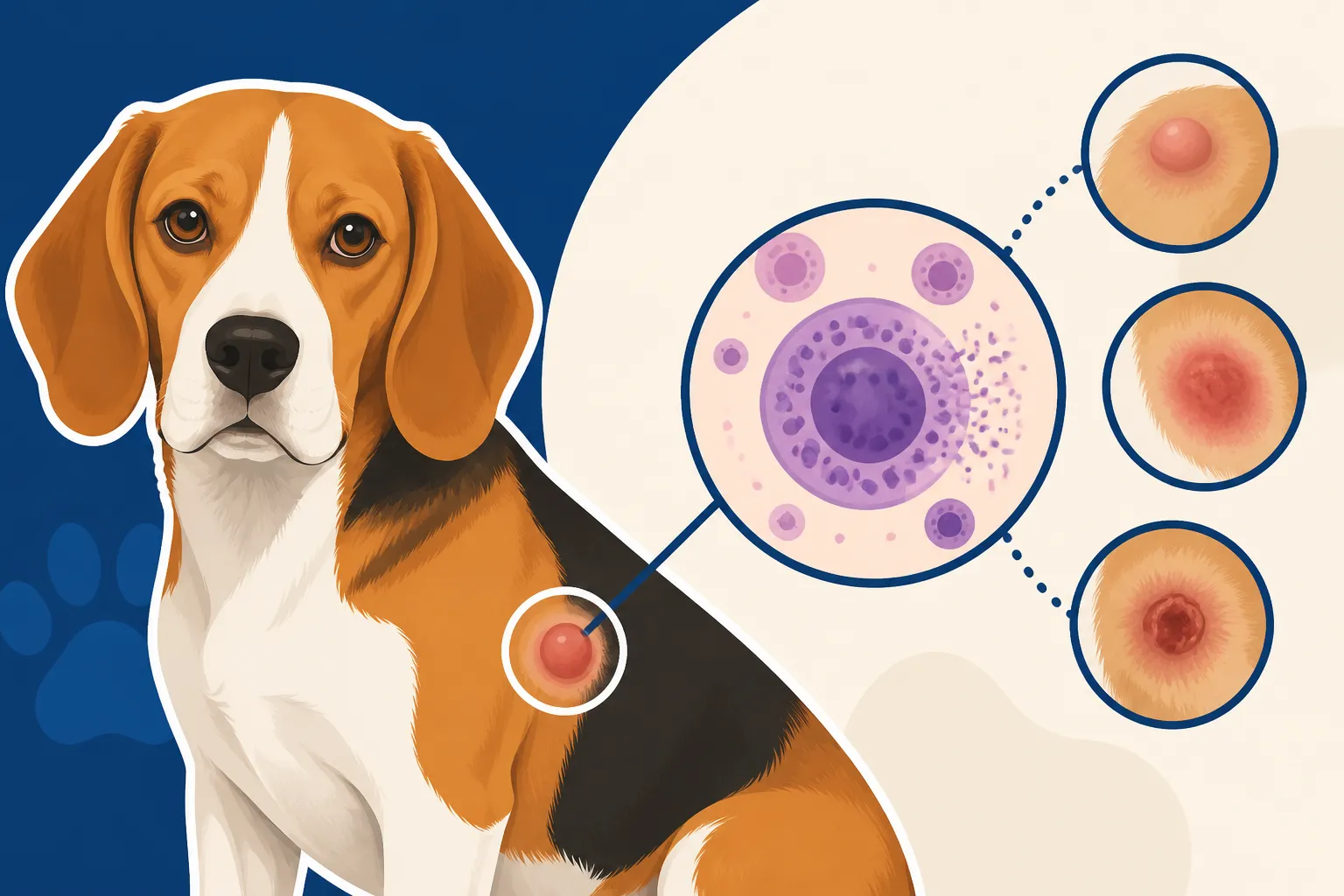
Most often, a mast cell tumor will appear as a single lump on or just under your Beagle's skin. These cutaneous (skin) or subcutaneous (under the skin) masses are what most owners discover during petting or grooming. They can vary wildly in appearance:
- Size and Shape: From a tiny pea-sized bump to a large, golf-ball-sized mass. They can be firm, soft, or even squishy.
- Color: They might be skin-colored, red, pink, or even ulcerated and crusty, especially if your Beagle has been scratching or licking it.
- Texture: They can feel rubbery, firm, or sometimes even greasy.
- Location: While they can appear anywhere, common spots include the trunk, limbs, and head.
What's really characteristic of many mast cell tumors is something called Darier's sign. Because mast cells release histamine, you might notice that the tumor changes in size or appearance, becoming redder, swollen, or itchy, especially after being touched or irritated. It might grow and shrink over days or weeks, making you think it's just an allergic reaction or an insect bite. This fluctuating nature can be incredibly deceptive and lead owners to delay seeking veterinary advice. If you've found any suspicious Beagle Lumps That Need a Vet Appointment, don't hesitate.
Hidden Dangers: Internal Mast Cell Tumors
While many mast cell tumors are visible on the skin, it's the hidden, internal tumors that can be particularly insidious and challenging to detect early. These visceral mast cell tumors can develop in organs like the spleen, liver, intestines, or even in the bone marrow and lymph nodes. Because they are not visible, their symptoms are often vague and can be easily mistaken for other illnesses, making early diagnosis much harder.
Symptoms of internal mast cell tumors might include:
- Gastrointestinal issues: Vomiting (sometimes with blood), diarrhea, loss of appetite, and weight loss. This happens because the histamine released by the tumor can cause stomach ulcers.
- Lethargy and weakness: Your normally energetic Beagle might seem unusually tired or weak.
- Abdominal pain or swelling: If the tumor is in the spleen or liver, you might notice a swollen or tender abdomen.
- Enlarged lymph nodes: If the tumor has spread to the lymph nodes, you might feel them enlarged, particularly under the jaw, in the armpits, or behind the knees.
If your Beagle is exhibiting any of these persistent signs, especially alongside any general decline in health or energy, it's crucial to consult your veterinarian promptly. These could be subtle indicators of a serious internal issue that needs immediate investigation, as described in Beagle Emergency Signs That Cannot Wait Until Morning.
Your Immediate Steps When You Find a Suspicious Lump
Discovering a new lump on your Beagle can be alarming, but panic won't help. What's crucial is to act swiftly and methodically. Your first and most important step is to schedule an appointment with your veterinarian as soon as possible. Don't fall into the trap of waiting to see if it goes away, especially with a breed like the Beagle that is prone to these specific tumors.
Before your appointment, take a moment to observe the lump and gather some information:
- Location: Where exactly is it? On the body, a limb, near a joint?
- Size: Measure it if you can (e.g., in centimeters or inches), and note if it has changed.
- Appearance: What color is it? Is it ulcerated? Does it have hair growing on it?
- Texture: Is it hard, soft, movable, or firmly attached?
- Duration: How long have you noticed it? Has it changed over time (e.g., grown, shrunk, changed color)?
- Behavioral changes: Has your Beagle been licking or scratching it? Are they acting differently?
Bring all this information to your vet. Being prepared helps them quickly assess the situation and decide on the next diagnostic steps. Remember, even a small, seemingly innocent lump could be a mast cell tumor, and prompt evaluation significantly improves the chances of successful treatment.
Diagnosis, Treatment, and Life After a Beagle Mast Cell Tumor
Once you've found a suspicious lump, the journey really begins. Your vet will guide you through the process of diagnosis, treatment, and ongoing care. It can feel like a lot to take in, but remember, you're not alone in this, and there are many effective strategies to help your Beagle.
The Diagnostic Journey: From FNA to Staging
The diagnostic process for a suspected mast cell tumor usually starts with a simple, relatively non-invasive procedure called a Fine Needle Aspirate (FNA). During an FNA, your vet will use a very thin needle to collect a small sample of cells from the lump. These cells are then examined under a microscope by your vet or sent to a veterinary pathologist. This can often provide an initial indication of whether the lump is a mast cell tumor or something else. It's often done right in the exam room, causing minimal discomfort to your Beagle.
However, an FNA isn't always definitive, especially for determining the grade of the tumor. For a confirmed diagnosis and accurate grading, a biopsy is often required. This involves surgically removing a small piece of the tumor (incisional biopsy) or the entire tumor (excisional biopsy) and sending it to a specialized lab. The pathologist's report will confirm the type of tumor and, critically, its grade (Grade I, II, or III, or low/high grade), which will dictate the treatment plan.
If a mast cell tumor is confirmed, your vet will recommend staging tests. This is to determine if the cancer has spread (metastasized) to other parts of your Beagle's body. Staging typically involves:
- Blood work: To assess overall health and organ function.
- Urinalysis: To check kidney function and for any abnormalities.
- Imaging: X-rays of the chest to check for lung metastasis, and an abdominal ultrasound to examine internal organs like the spleen, liver, and lymph nodes for spread.
- Lymph node aspirates: Your vet might aspirate nearby lymph nodes to check for cancer cells, even if they don't feel enlarged.
This comprehensive approach gives your veterinary team the full picture, allowing them to formulate the most effective treatment strategy. While the costs for these diagnostics can add up, pet insurance providers like Healthy Paws can be a real lifeline. Having a plan like Beagle Pet Insurance and What It Runs a Month in place can alleviate some financial stress during an already difficult time.
Navigating Treatment Options: Surgery, Chemo, and More
Treatment for mast cell tumors in Beagles is highly individualized, depending on the tumor's grade, location, and whether it has spread. The primary and most effective treatment for cutaneous mast cell tumors is surgical removal.
The goal of surgery is to remove the entire tumor with "wide and deep margins" – meaning taking a significant amount of healthy tissue around and beneath the visible tumor. This is crucial because mast cell tumors often have microscopic extensions that aren't visible to the naked eye. Achieving clean margins (no cancer cells at the edges of the removed tissue) greatly reduces the chance of recurrence. For certain locations or very large tumors, this might require specialized surgical techniques.
If the tumor is high-grade, in a difficult location, or if clean margins couldn't be achieved, your vet might recommend adjuvant therapies:
- Radiation therapy: This can be used after surgery to kill any remaining cancer cells in the tumor bed or as a primary treatment for tumors that can't be surgically removed.
- Chemotherapy: Often used for high-grade tumors, tumors that have spread, or for internal mast cell tumors. Common chemotherapy drugs include vinblastine, prednisone, and lomustine.
- Targeted therapies: Newer oral medications, such as toceranib phosphate (Palladia) or masitinib (Kinavet), specifically target the receptors involved in mast cell tumor growth and can be very effective for certain types of tumors, sometimes even replacing traditional chemotherapy.
It's a lot to process, and your vet will explain which options are best suited for your Beagle's specific situation. Remember, the goal is not just to eradicate the cancer but also to maintain your Beagle's quality of life throughout the process.
Supporting Your Beagle's Health Long-Term
Getting through diagnosis and treatment is a huge step, but supporting your Beagle's health doesn't end there. Post-treatment care and long-term monitoring are absolutely crucial for managing mast cell tumors, as recurrence is always a possibility.
Your vet will likely recommend a schedule of follow-up appointments, which might include regular physical exams to check for new lumps, palpation of lymph nodes, and potentially repeat imaging or blood work. Sticking to this schedule is essential for catching any recurrence or new tumors early. Understanding Beagle Vet Visit Frequency After the Age of Ten can give you an idea of the commitment required, especially if your Beagle is a senior.
Nutrition also plays a role in supporting a dog with cancer. While there isn't a "cancer-curing" diet, a balanced, high-quality diet that supports their immune system and helps them maintain a healthy weight is vital. Some vets might recommend diets rich in omega-3 fatty acids or antioxidants, or those with a lower carbohydrate content. Always discuss any dietary changes with your vet or a veterinary nutritionist. Managing weight is also generally important for Beagles, as discussed in Beagle Obesity Treated as a Health Problem, as excess weight can put additional strain on their system.
Just as important is your emotional support for your Beagle. Maintaining their routine as much as possible, providing comfort, love, and appropriate exercise (as permitted by their recovery and health) will make a world of difference. Your Beagle relies on you for reassurance, and your calm presence can help them navigate this challenging time.
Living with a Beagle After a Mast Cell Diagnosis
A mast cell tumor diagnosis isn't necessarily a death sentence, especially with early detection and appropriate treatment. Many Beagles go on to live full, happy lives after treatment. However, it does mean a commitment to vigilant care and ongoing monitoring, which becomes a new part of your shared journey.
Regular Monitoring and Follow-Up Care
Even after a successful surgery and any follow-up therapies, the watch doesn't stop. Regular, thorough examinations of your Beagle's skin and body are paramount. You should commit to weekly, or even daily, "lump checks" during petting or grooming. Pay close attention to the area where the original tumor was, as well as new areas. If you spot anything new or suspicious, contact your vet immediately.
Your vet will schedule follow-up appointments at regular intervals – perhaps every 3-6 months initially, then possibly less frequently if things remain stable. These visits aren't just about checking for new tumors; they also allow your vet to monitor your Beagle’s overall health, assess for any side effects from past treatments, and catch other age-related health issues. Keeping a detailed journal of any lumps you find, their size, date, and location can be incredibly helpful for your vet to track changes over time.
This proactive approach is crucial because mast cell tumors can recur in the same location (even with clear margins, though less likely), or new tumors can develop elsewhere on the body. This vigilance is part of being a responsible pet parent, ensuring you catch potential problems when they are small and most treatable.
Nutritional Support and Lifestyle Adjustments
Beyond regular vet checks, thoughtful nutritional support and some lifestyle adjustments can greatly contribute to your Beagle's comfort and well-being after a mast cell tumor diagnosis. A high-quality diet provides the building blocks for healing and maintains a strong immune system. Your vet might suggest certain dietary supplements, such as omega-3 fatty acids (fish oil), which have anti-inflammatory properties and can support skin and coat health. Antioxidants, found in many fruits and vegetables, can also help combat cellular damage.
Consider incorporating puzzle feeders or sniff mats to keep your Beagle mentally engaged, which is especially important if their physical activity needs to be temporarily curtailed during recovery. This mental enrichment can also help reduce stress, which can indirectly support overall health.
Regarding lifestyle, aim for a routine that provides stability and comfort. Avoid known irritants or allergens that might trigger an inflammatory response. Ensure your Beagle has a comfortable, soft bed, especially if they are recovering from surgery or are an older dog. For Senior Beagle Care After the Age of Ten, ensuring easy access to food, water, and outdoor potty breaks without strenuous jumping can make a big difference in their daily comfort.
The Emotional Toll on Owners
Let’s be honest, dealing with a cancer diagnosis for your beloved Beagle is emotionally draining. It’s normal to feel overwhelmed, scared, sad, and even angry. You might question if you missed something, or if you could have done more. Please know that these feelings are valid, and you are not alone. Many pet parents go through this, and it’s okay to seek support for yourself.
Talk openly with your veterinary team about your concerns and fears. They've seen many owners through similar situations and can offer guidance, realistic expectations, and empathy. Consider joining online communities or local support groups for pet owners dealing with cancer. Sharing your experiences and hearing from others can provide immense comfort and practical advice. Resources like Healthy Paws can also help manage the financial burden, allowing you to focus more on your Beagle’s care and less on the cost.
Ultimately, your Beagle needs your love and calm presence more than anything. While you navigate treatments and make difficult decisions, remember to cherish every moment. Focus on providing them with the best quality of life possible, filled with cuddles, gentle walks, and all the snuggles they deserve. The bond you share is incredibly strong, and your dedication will make all the difference in their journey. The decision-making process, especially in advanced cases, often involves asking yourself about Judging Quality of Life in a Beagle's Last Year, which can be profoundly difficult but necessary.
Disclaimer
This article is intended for informational purposes only and is not a substitute for professional veterinary advice. Always consult with your veterinarian for any health concerns or before making any decisions about your Beagle's medical care.