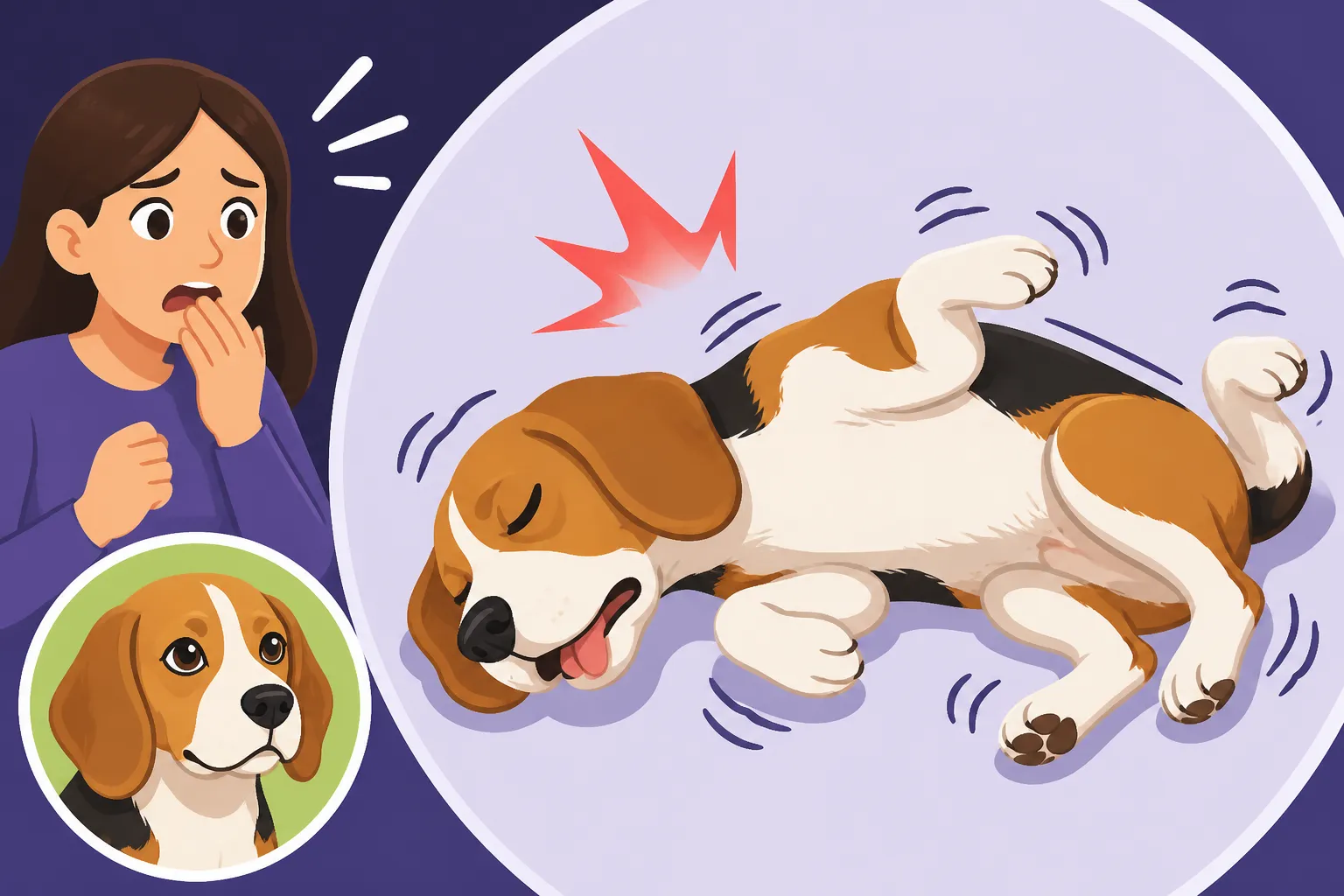
What a Beagle Seizure Actually Looks Like
Witnessing your beloved Beagle have a seizure can be one of the most terrifying experiences for any dog owner. That feeling of helplessness, the sudden change in their eyes, and the uncontrolled movements can leave you shaken and unsure if what you just saw was "normal" for a seizure or something far more serious. This guide is here to walk you through exactly what a Beagle seizure often looks like, from the subtle warning signs to the confusing aftermath, so you can feel more prepared and understand what's happening.
The Subtle Signs Before a Seizure Begins: The Pre-Ictal Phase
Before a seizure fully takes hold, many Beagles exhibit what's known as a pre-ictal phase, or an "aura." This isn't always obvious, and sometimes it's only in hindsight, after the seizure has passed, that you realize these subtle changes were a warning. It’s incredibly frustrating because you wish you could have seen it coming, to be there, ready, for your furry friend. But remember, Beagles are creatures of habit and routine, and even a slight deviation can signal that something is amiss.
Behavioral Changes You Might Miss
In the minutes or even hours leading up to a seizure, your Beagle might start behaving uncharacteristically. They might become unusually clingy, following you from room to room, nudging your hand, or demanding extra attention, as if seeking comfort or reassurance. Conversely, some Beagles might become withdrawn, wanting to be alone, perhaps hiding in a quiet corner of the house or under a bed. You might notice them acting restless, pacing back and forth, unable to settle down, or exhibiting a sudden burst of frantic energy. They might whine or vocalize more than usual, a low, anxious moan that tugs at your heart. Sometimes, they'll just seem "off"—you can't quite put your finger on it, but your gut tells you something isn't right. These are the moments that, with experience, you might begin to recognize as precursors to a more significant event. If your Beagle has been diagnosed with epilepsy, keeping a close eye on these subtle shifts can be invaluable in understanding their unique seizure pattern.
Physical Cues That Signal Trouble
Beyond behavioral shifts, there can be subtle physical cues. Some Beagles might start drooling excessively, even if they aren't anticipating food or treats. Their pupils might dilate, making their eyes look darker and more distant. You might notice repetitive licking of their lips or air, an almost obsessive action. They could also start panting heavily, even if they haven't been exercising or are not hot, indicating a rise in anxiety or stress. Some owners report their Beagle staring blankly into space, unresponsive to their name or familiar commands, as if momentarily disconnecting from their surroundings. If you touch them, you might feel their muscles tense slightly, or they might seem unusually sensitive to touch or sound. These small, fleeting signs are easy to dismiss in the hustle and bustle of daily life, but they are your Beagle's way of telling you that a storm might be brewing. Understanding these early indicators can give you a precious few moments to prepare, to get your Beagle to a safe, quiet spot, and to mentally brace yourself for what's to come. For more information on why these episodes occur, check out our article on Idiopathic Epilepsy in Beagles From Six Months to Six Years
What a Beagle Seizure Looks Like: The Ictal Phase
This is the phase everyone dreads, the active seizure itself. It can range from subtle, almost imperceptible movements to a full-body convulsion that is deeply distressing to witness. The key here is to observe, remain calm, and ensure your Beagle's safety. The duration can vary widely, but most active seizures last from a few seconds to a few minutes. If you're looking for guidance during this distressing time, our article on What to Do While a Beagle Is Seizing provides immediate, actionable steps.
Generalized Grand Mal Seizures
When most people think of a seizure, they picture a generalized, or "grand mal," seizure, and unfortunately, these are common in Beagles with epilepsy. Your Beagle will likely lose consciousness, collapsing to the ground. Their body will become stiff, often followed by rhythmic, uncontrollable jerking or paddling of all four limbs. It looks violent and chaotic, but your Beagle isn't in pain during this phase; they are completely unaware. During this time, you might see them chomp their jaws, foam at the mouth, or even vocalize with a distressed whine or cry. Many Beagles will also lose control of their bladder and bowels, urinating or defecating involuntarily. Their eyes might roll back, dart rapidly, or appear fixed and glassy. Their breathing can become shallow or erratic, and their tongue might turn blue if breathing is severely compromised, which is a scary sight.
It’s crucial not to try to hold them down or put anything in their mouth, as you could get bitten or injure your dog further. The active thrashing usually lasts for a minute or two, though it can feel like an eternity. For breeds like Beagles, who can be prone to conditions such as Beagle Epilepsy and Seizures From Six Months On, understanding the typical presentation of these seizures is vital. While it might seem like they're struggling to breathe, the primary goal is to keep them safe from injuring themselves on furniture or falling. If your Beagle is on a bed or couch, gently guide them to the floor if possible, making sure they won't fall headfirst. Having pet insurance, perhaps from a provider like Healthy Paws, can be incredibly helpful for managing the ongoing vet costs associated with diagnosing and treating chronic conditions like epilepsy, including emergency visits.
Focal Partial Seizures
Not all seizures manifest as dramatic grand mal convulsions. Focal, or partial, seizures affect only a part of the brain and can present in much more subtle ways, making them harder to recognize. These are often described as affecting only one side of the body, or just a specific set of muscles. For instance, you might see twitching in one eye, one ear, or a single leg. Your Beagle might display repetitive, unusual behaviors, like fly-biting (snapping at invisible flies), lip-smacking, excessive licking, or repetitive swallowing. They might also appear dazed or confused, staring blankly, or walking in circles. Sometimes, a focal seizure can progress into a generalized seizure, starting with these subtle signs and escalating rapidly.
One common presentation in Beagles can be a sudden, uncontrollable trembling or shivering that isn't due to cold or fear. They might seem disoriented and "not quite there," even if they remain standing. Their eyes might have a faraway look, or you might notice rapid, involuntary eye movements. The critical thing to remember is that even these subtle focal seizures can indicate underlying neurological activity that needs veterinary attention. If you suspect your Beagle is experiencing a focal seizure, try to film it if it's safe to do so. This footage is incredibly valuable for your vet, as it provides a visual record of exactly what "a Beagle seizure actually looks like" for your dog. Documenting these events in a seizure diary will help your vet determine the best course of action and track patterns.
Navigating the Aftermath: The Post-Ictal Phase
Once the active seizure, or ictal phase, has passed, your Beagle enters the post-ictal phase. This can be just as disorienting and frightening for both you and your dog, though in a different way. Your Beagle is no longer convulsing, but they are far from "back to normal." This recovery period can last from a few minutes to several hours, and in some cases, even days. Patience and quiet reassurance are paramount during this time.
Confusion and Disorientation
After a seizure, your Beagle will likely be extremely confused and disoriented. They might bump into furniture, struggle to recognize you or their surroundings, or wander aimlessly. It's heartbreaking to see them look at you with such an empty, lost expression. They might pace endlessly, unable to settle, or try to hide in strange places. Some Beagles will display increased thirst or hunger, drinking copious amounts of water or attempting to raid the food bowl, even if they've just eaten. Others will appear exhausted, collapsing into a deep sleep that can last for hours.
During this period, avoid overwhelming them with too much attention or loud noises. Speak to them calmly and softly, reassuring them with gentle strokes rather than trying to cuddle or restrain them. Their brain is essentially "resetting" after the electrical storm of the seizure, and they need time and space to recover. It's not uncommon for Beagles to have accidents during this phase due to their confusion, so be prepared with cleaning supplies and avoid scolding them. The priority is their comfort and safety. If you're managing chronic conditions, knowing what to expect during this recovery period is crucial for your peace of mind and your Beagle's well-being. Pet insurance plans, such as those offered by Healthy Paws, can often cover follow-up care and consultations during these recovery phases, helping to ease the financial burden.
Temporary Blindness or Ataxia
One of the more alarming post-ictal symptoms is temporary blindness or severe ataxia (loss of coordination). Your Beagle might bump into walls, struggle to navigate familiar spaces, or seem to be constantly searching for something they can't see. This can be profoundly upsetting, as it appears they've suddenly lost their vision. Rest assured, in most cases, this blindness is temporary and resolves within hours or a day or two as their brain recovers. Similarly, ataxia can manifest as extreme wobbliness, stumbling, or a drunken gait. They might struggle to stand, falling over repeatedly, or have difficulty controlling their movements. This happens because the parts of the brain responsible for vision and motor control are still recovering from the seizure's impact.
During this time, keep their environment safe. Block off stairs, remove any sharp objects, and keep them confined to a small, familiar, carpeted area if possible to prevent falls and injuries. Guide them gently if they are bumping into things, and ensure food and water bowls are easily accessible. While incredibly distressing to witness, remember that these are usually transient effects. Understanding this can help you remain calm and provide the best support. If these symptoms persist, however, it's always a good idea to consult your vet to rule out other issues. For senior Beagles, this phase might be more prolonged, and it’s important to understand overall Senior Beagle Care After the Age of Ten.
When to Call the Emergency Vet Immediately
While seizures are always frightening, some situations warrant immediate emergency veterinary attention. Knowing when to escalate your concerns can literally save your Beagle's life. It's a fine line between observing and reacting, and the panic can make it hard to think clearly. However, certain signs are universally recognized as red flags.
Recognizing a Cluster Seizure
One of the most critical reasons to contact your emergency vet is if your Beagle experiences cluster seizures. This refers to two or more seizures occurring within a 24-hour period, with your Beagle regaining some level of consciousness between episodes. For example, your Beagle might have a seizure, seem to start recovering for an hour, and then have another, and then perhaps a third. These repeated events put immense strain on your Beagle's brain and body. Each subsequent seizure can be more severe, and the cumulative effect can lead to brain damage or other life-threatening complications. If you see your Beagle having Cluster Seizures in a Beagle and What They Mean, it’s time to act fast.
A single, isolated seizure, while scary, is often less immediately life-threatening than a cluster. However, clusters indicate a higher level of neurological instability and require prompt medical intervention to break the cycle. Your vet may need to administer emergency anti-seizure medication to bring the episodes under control. This is where having a good relationship with your vet and understanding your options for financial support, like pet insurance from Healthy Paws, really comes into play. You don't want to be making financial decisions during an emergency.
Seizures Lasting Too Long Status Epilepticus
Another major emergency is status epilepticus, which is defined as a seizure lasting continuously for more than five minutes, or multiple seizures occurring without the Beagle regaining consciousness in between. If your Beagle is still actively seizing after five minutes, that is too long. Prolonged seizure activity can lead to hyperthermia (dangerously high body temperature), brain swelling, and permanent brain damage, and it can quickly become fatal.
If you find yourself in this terrifying situation, call your emergency vet immediately while your Beagle is still seizing. They will likely advise you to bring your Beagle in as quickly and safely as possible. Time is of the essence. While you might feel paralyzed with fear, remember that your rapid action can make all the difference. Knowing When a Beagle Seizure Becomes an Emergency is crucial for preparedness. Your vet will work to stop the seizure with intravenous medications and stabilize your Beagle. It's a truly harrowing experience, but being informed about these critical thresholds for emergency care is vital for any Beagle owner, especially those with an epileptic dog.
Seizure Activity Tracking Table
Keeping a detailed record of your Beagle's seizures can provide invaluable information to your veterinarian, helping them diagnose and manage the condition more effectively. This table offers a simple format you can use.
| Date | Time | Duration (approx.) | Pre-Ictal Signs (if any) | Ictal Phase Description (type, movements, vocalizations) | Post-Ictal Phase Description (confusion, blindness, thirst) | Potential Triggers Noted | Notes/Medication Given |
|---|---|---|---|---|---|---|---|
| MM/DD/YYYY | HH:MM (start) | X minutes | Pacing, clingy | Generalized; paddling, jaw chomping, urinary incontinence | Disoriented for 30 min, very thirsty | Stressful visitor | None |
| MM/DD/YYYY | HH:MM (start) | Y minutes | Lip-smacking, hiding | Focal; left ear twitching, then generalized, foaming | Wobbly for 1 hr, temporary blindness | Thunderstorm | None |
| MM/DD/YYYY | HH:MM (start) | Z minutes | Restlessness, panting | Generalized; severe paddling, vocalizing, fecal incontinence | Exhausted, slept for 4 hours, confused upon waking | Missed medication dose | N/A |
Remember to include specific details, no matter how small they seem. This comprehensive record will be a cornerstone of your Beagle's treatment plan.
Disclaimer
The information provided in this article is intended for general knowledge and informational purposes only, and does not constitute veterinary advice. Always consult with a qualified veterinarian for any health concerns or before making any decisions related to your Beagle's medical care. In case of a suspected emergency, contact your veterinarian or a veterinary emergency clinic immediately.