Beagle ID Tags and Which Collar to Use
For any Beagle parent, few things strike more fear into the heart than the thought of your beloved hound following an irresistible scent trail right out of sight. Their incredible noses are both a blessing and a curse, often leading them on grand adventures that can quickly turn into a terrifying search. This guide will walk you through the essential role of ID tags and collars in keeping your Beagle safe and helping them find their way home, should that day ever come.
Why ID Tags Are Non-Negotiable for Your Beagle
Beagles are unique creatures, famously driven by their noses. This isn't just a cute quirk; it's a deeply ingrained instinct that can override all other commands, including your recall, no matter how well-trained they might be. One moment they're in your yard, the next they've picked up a fascinating scent and are half a mile down the road, completely oblivious to your panicked calls. This inherent wanderlust makes reliable identification an absolute necessity, not just a nice-to-have.
The Beagle's Unstoppable Scent Drive
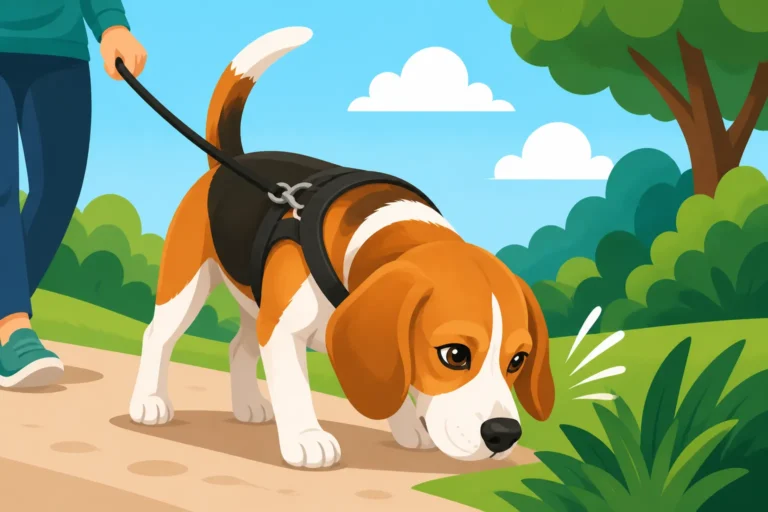
Imagine a world where every single odor tells a vivid story, a complex tapestry of information that demands investigation. That's a Beagle's world. Their 220 million scent receptors mean they're constantly processing data invisible to us. A fresh rabbit trail or a particularly intriguing patch of grass can become an all-consuming mission, causing them to tune out everything else. This isn't disobedience; it's instinct. It’s why so many Beagle owners will tell you that even the most secure fence feels more like a suggestion when a really good scent is on the other side. You might have seen it yourself, how their nose drops to the ground and their ears seem to shut off. They are simply following their calling. For more on this, you can look into Why a Beagle Will Follow a Scent for Miles.
The High Risk of Beagles Going Missing
Because of this intense drive, Beagles are notorious escape artists. They'll dig under fences, slip through gates left ajar, or simply bolt out an open door given half a chance. Once they're out, their focus on the scent can lead them far afield very quickly, making it incredibly difficult for them to find their way back on their own. They aren't looking for landmarks; they're following a trail that's constantly unfolding beneath their paws. An ID tag is often the very first line of defense, the quickest way for a Good Samaritan to contact you before your frantic search even begins. Waiting for a microchip scan takes time and a trip to a vet or shelter, but a legible tag offers instant communication.
Legal Requirements for Pet Identification
Beyond the practical safety concerns, many localities have laws mandating that dogs wear identification. These regulations are in place for good reason: to ensure lost pets can be reunited with their owners and to help control stray animal populations. While the specifics vary from city to city or state to state, a collar with a current ID tag is a common requirement. It might also include a license tag issued by your local animal control. Failing to comply could not only mean a hefty fine but, more importantly, delays in getting your beloved Beagle back home safely if they do get lost. Make sure to check your local ordinances, but generally speaking, it's always better to be over-prepared when it comes to keeping your Beagle identified.
Choosing the Right ID Tag for a Beagle
With your Beagle's adventurous spirit in mind, selecting the right ID tag is crucial. It needs to be durable, legible, and contain the right information to ensure a swift reunion. There's a surprising variety out there, and what works for one dog might not be ideal for another, especially a scent-driven Beagle.
Types of ID Tags and Their Durability
When you start looking, you'll find a few main types of ID tags, each with its own set of pros and cons for a busy Beagle:
- Engraved Metal Tags: These are the classic choice, usually made from stainless steel, brass, or aluminum. They are durable, readily available, and can be deeply engraved for long-lasting legibility. Many pet supply stores offer on-the-spot engraving, and you can find a wide variety online through retailers like Amazon. The downside? They can jingle, which some owners and Beagles find annoying, and they might snag on things if your dog is particularly active in brush or dense areas.
- Silent Tags: If the jingle of metal bothers you or your Beagle, silent tags are a fantastic option. These often feature an engraved plate that sits flush against the collar or is encased in a silicone rim, eliminating noise and reducing snagging. They can be found in various designs and materials, providing a quieter experience while still offering vital identification.
- Embroidered Collars: For those truly worried about tags falling off, an embroidered collar integrates the identification directly into the fabric. Your dog's name and phone number are stitched onto the collar itself. This is a great choice for Beagles who are rough on their gear or who manage to lose traditional tags. The main drawback is that you can fit less information, and if the collar gets too dirty or worn, the text can become harder to read. Plus, if the collar breaks or is removed, your Beagle is left without ID.
- Hanging Tags with Protective Covers: Some tags come with small rubber or silicone covers that fit around them, reducing noise and protecting the engraving from wear and tear. This offers a hybrid solution, combining the flexibility of a traditional tag with some of the benefits of a silent tag.
Here’s a quick overview to help you weigh your options:
| ID Tag Type | Pros | Cons | Best For |
|---|---|---|---|
| Engraved Metal Tag | Durable, clear visibility, widely available | Can be noisy, may snag, can scratch other tags | General use, traditionalists, dogs not prone to snagging |
| Silent Tag | No jingle, less snagging, comfortable | Engraving might wear faster on some materials, limited info | Active dogs, quiet homes, dogs sensitive to noise |
| Embroidered Collar | Always attached, comfortable, won't fall off | Less information space, collar must be worn, harder to update | Dogs prone to losing tags, puppies, permanent ID |
| Hanging Tag with Cover | Reduces noise & wear, easy to switch/update | Still a hanging tag, covers can get dirty/worn | Compromise solution, active dogs |
Essential Information to Include on a Tag
What you put on the tag is just as important as the tag itself. You want enough information to get your Beagle home quickly, but not so much that it becomes a privacy risk.
- Your Dog's Name: This is often the first piece of information people look for. It helps them bond instantly with your lost pet and makes calls of "Here, [Beagle's name]!" more effective.
- Your Primary Phone Number: This is the most critical piece of information. Make sure it's a number you will always answer, even if it's an unknown call. Consider adding a secondary number if space allows, perhaps for another family member.
- "REWARD" or "MICROCHIPPED": Adding "REWARD" can be a strong incentive for someone to go the extra mile to reunite you with your Beagle. Including "MICROCHIPPED" reminds the finder that there's another layer of identification.
- Optional: City and State: If your Beagle wanders far, knowing the general area they're from can be helpful. However, avoid putting your full street address for privacy reasons.
- Optional: Medical Needs: If your Beagle has a critical medical condition or takes daily medication (like for Beagle Epilepsy and Seizures From Six Months On or Beagle Hypothyroidism and the Weight It Puts On), a concise note like "NEEDS MEDS" or "DIABETIC" can prompt a finder to seek veterinary help.
What not to put on the tag: Your full home address, as it's a privacy risk. Avoid putting too many phone numbers that clutter the tag and make it difficult to read quickly.
Selecting the Best Collar to Hold That Tag Securely
The most perfect ID tag is useless if the collar it's attached to isn't secure or comfortable for your Beagle. Beagles have a knack for slipping out of ill-fitting collars, so choosing wisely is paramount.
Flat Buckle Collars: The Everyday Choice
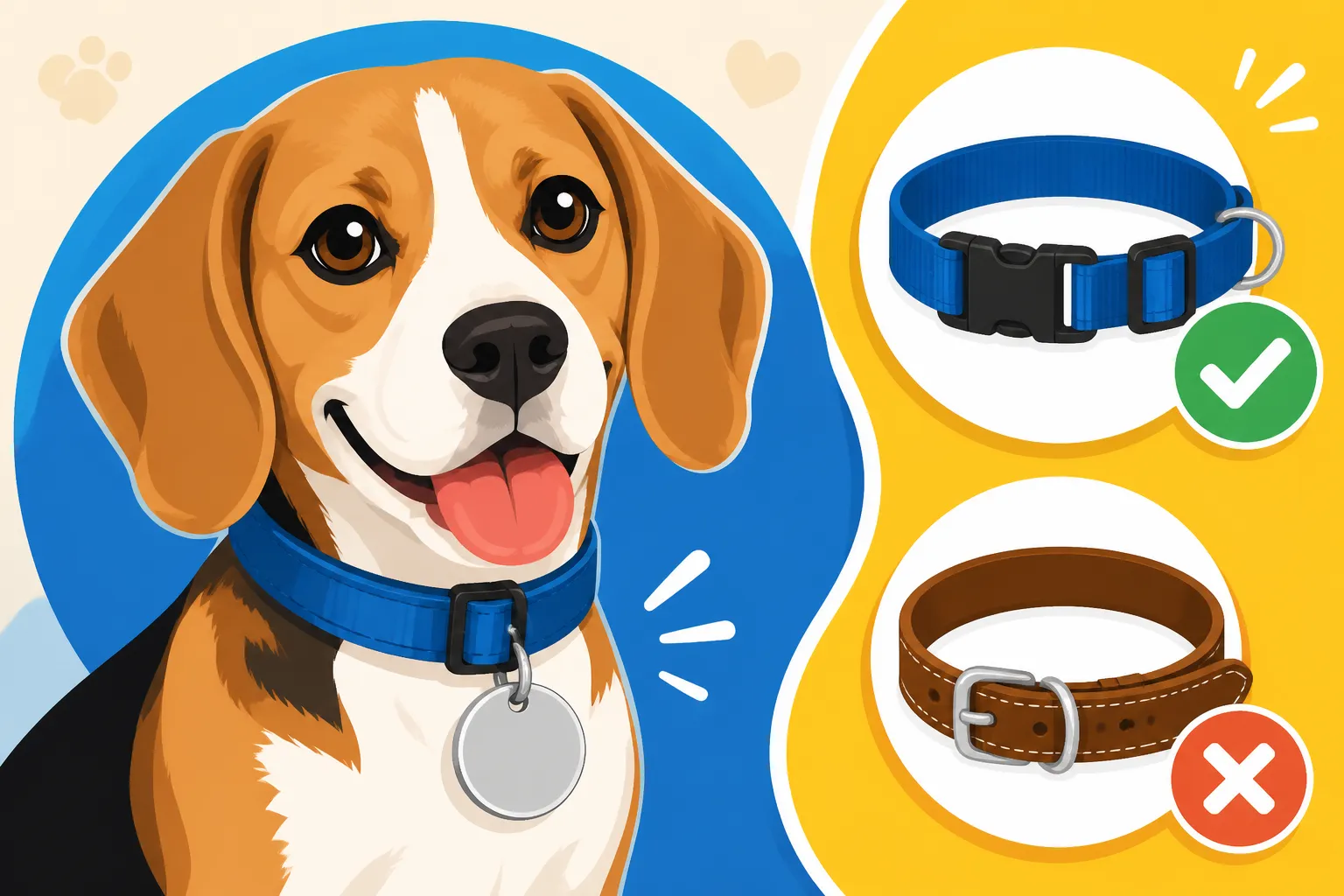
The classic flat buckle collar is the most common type and suitable for most Beagles. They come in a vast array of materials, from nylon and leather to more specialized fabrics, and you can find sturdy options from major online retailers like Amazon. The key is ensuring a proper fit. You should be able to comfortably slide two fingers under the collar when it's around your Beagle's neck. If it's too loose, your Beagle can easily back out of it, especially if startled or pulling against it. If it's too tight, it's uncomfortable and can pose a choking hazard. Always measure your Beagle's neck accurately before purchasing, especially for a growing puppy learning Beagle Leash Training From Eight Weeks.
For a Beagle, it’s worth investing in a good quality, durable collar. They are often rough and tumble, exploring bushes and running through tall grass. A cheap plastic buckle might not stand up to their adventures. Consider collars with metal buckles or reinforced stitching for added security.
Martingale Collars: A Safe Option for Escape Artists
If your Beagle is particularly adept at slipping out of a standard flat collar – and many Beagles are – a martingale collar is an excellent alternative. These collars are designed to tighten slightly when your dog pulls, preventing them from backing out of it, but without choking them. They consist of two loops: a larger loop that goes around the dog's neck, and a smaller loop where the leash attaches. When the dog pulls, the smaller loop tightens the larger loop gently.
Martingale collars are especially useful for Beagles with necks that are wider than their heads, or those who are prone to panicking and backing out of their gear. They provide an added layer of security, making them ideal for walks, especially when you're working on Beagle Recall and Why Your Voice Stops Registering. Always ensure you get the correct size and fit; a martingale that is too loose will still allow your Beagle to escape, while one that's too tight when unpulled can be uncomfortable.
Harnesses: For Control and Reducing Neck Strain
While not a direct replacement for a collar with an ID tag, a harness is a fantastic piece of equipment for walking your Beagle and can often hold a tag itself. Harnesses distribute pressure across your dog's chest and back, rather than solely on their neck. This is particularly beneficial for Beagles, who can be strong pullers when on a scent trail, protecting their delicate throats and making walks more comfortable for both of you. A good harness can also offer better control, reducing the likelihood of your Beagle escaping your grasp and bolting.
Front-clip harnesses, which have the leash attachment point on the dog's chest, are especially effective for Beagles who pull, gently redirecting their momentum without pain or discomfort. Even if your Beagle wears a harness for walks, they should still have a collar with an ID tag on at all times, including inside the house, in case they manage to slip the harness or get loose when not on a walk. Many reputable brands offer harnesses, and for puppies, integrating the harness into early training like those found at BAXTER & Bella can help ensure they are comfortable and happy wearing it.
Beyond the Basic Tag: Extra Layers of Beagle Identification
While a sturdy collar and a legible ID tag are your first line of defense, a truly responsible Beagle owner builds multiple layers of identification into their pet care routine. Think of it like a safety net – if one layer fails, another is there to catch them. This holistic approach significantly increases the chances of a happy reunion.
The Lifelong Protection of Microchipping
A microchip is a tiny, rice-grain-sized transponder implanted just under your Beagle's skin, usually between the shoulder blades. It carries a unique identification number that can be read by a special scanner at vet offices, animal shelters, and even some police stations. When scanned, the number links to your contact information in a national database. Unlike a collar and tag, a microchip can't fall off, get lost, or be removed. It’s a permanent form of identification for the entire Beagle Lifespan and the Twelve to Fifteen Year Range.
The critical step with microchipping is registration. Simply implanting the chip isn't enough; you must register your contact information with the microchip company and keep it updated throughout your Beagle's life. Moving, changing phone numbers, or even just letting your email address lapse means the chip is useless. Always confirm your registration is current and consider adding a secondary contact who can be reached if you're unavailable. Many Beagles are adopted already microchipped, but it's vital to ensure the registration is transferred to your name. You can learn more about this in Beagle Microchips and Getting a Lost Dog Back.
GPS Trackers: Real-Time Location for Peace of Mind
For the ultimate peace of mind, especially with a breed renowned for its scent drive and escape artistry, a GPS tracker is an invaluable tool. These small, lightweight devices attach to your Beagle's collar and use satellite technology to provide real-time location data directly to your smartphone. If your Beagle bolts after a squirrel or finds a gap in the fence, you can often track their movements instantly.
GPS trackers offer features like geofencing, which alerts you if your Beagle leaves a pre-defined "safe zone" (like your yard). Some even have activity monitoring, allowing you to keep tabs on your Beagle's exercise levels. While they require a subscription fee for the cellular service they utilize, many owners find the ability to locate their dog in minutes, rather than hours or days, to be well worth the investment. Think of them as an active search tool, complementing the passive identification of tags and microchips. When you consider GPS Collars as a Backup for Beagle Recall, you see how they fit into the bigger picture of Beagle safety.
Reflective Gear and Visible Identification
Beyond the tags and chips, consider making your Beagle highly visible, especially if you live in an area with traffic or if they might get lost after dark. Reflective collars, harnesses, and even vests can significantly increase their visibility to drivers and searchers. Many standard collars and harnesses come with reflective stitching, or you can purchase reflective strips to add to existing gear.
Visibility is a form of proactive safety. If your Beagle is wandering near a road, reflective gear gives drivers an extra few seconds to react. If you're out searching in the evening, a Beagle wearing reflective material is much easier to spot with a flashlight. While an ID tag helps someone identify your lost Beagle, reflective gear helps prevent them from becoming lost or injured in the first place, particularly for a dog that sometimes seems to walk with its nose in a world of its own.
The Role of Training in Keeping Your Beagle Safe
While physical identification is crucial, don't underestimate the power of training in keeping your Beagle close and safe. A well-trained Beagle, even one with a powerful nose, is less likely to bolt in the first place, and more likely to respond to your commands when distraction levels are low. Early and consistent training is key.
Focus on a strong recall in various environments, even if you still plan to use a long line or keep them fenced. BAXTER & Bella, for instance, offers comprehensive online puppy and dog training programs that emphasize positive reinforcement and building a strong bond. Their approach can help you teach impulse control and attention in the face of distractions. While a Beagle's instincts are strong, a solid foundation of training can make them more attuned to you, improving their overall safety and making that ID tag a backup plan rather than a primary necessity. Ultimately, your goal is to prevent them from needing that ID tag in the first place. For more on this, you can look into Why a Beagle Should Never Be Off Leash Unfenced and Beagle Escape Artistry and How to Contain It.
Disclaimer
This article is for general informational purposes only and does not constitute professional advice. Laws, prices and regulations vary by location and change over time. Consult a qualified professional for guidance on your specific situation.