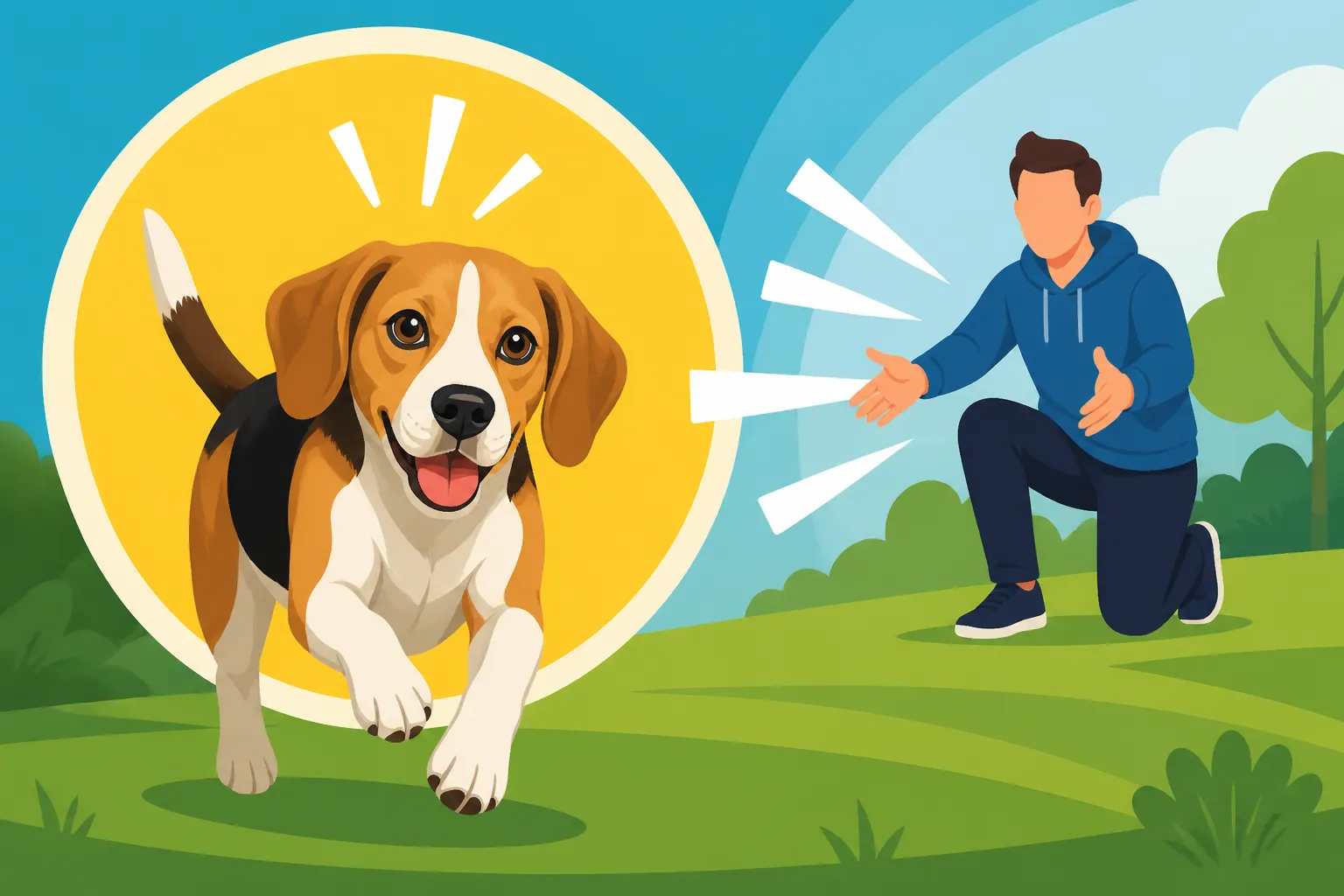
Emergency Recall Cues That Reach a Beagle
The sheer panic of watching your beloved Beagle, nose to the ground and ears flying, disappear over the horizon because they’ve caught a scent is a feeling no dog owner ever wants to experience. Standard recall cues, no matter how diligently practiced, often fade into the background when that powerful Beagle nose takes over. This guide is all about equipping you with truly effective emergency recall cues and strategies that cut through the noise, helping you bring your scent-driven friend back to safety, even when their primal instincts are screaming otherwise.
Understanding the Beagle's Scent-Driven World
Before we can even begin to talk about emergency recall, we absolutely must acknowledge the unique, all-consuming world our Beagles live in. For most dogs, scent is important. For a Beagle, it's their entire universe, their guiding star, and their reason for being. Ignoring this fundamental aspect of their nature is like trying to teach a fish to fly – you’re setting yourself up for frustration.
The Power of the Beagle Nose
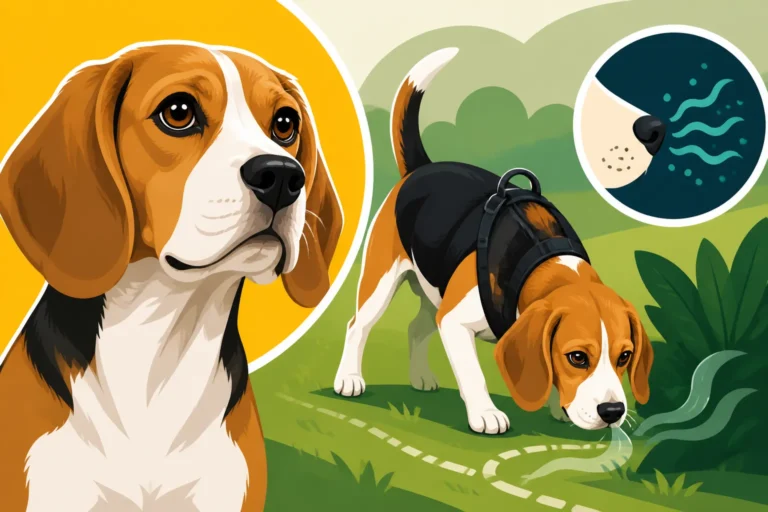
Imagine seeing the world not just in colors and shapes, but in a kaleidoscope of smells. That’s a glimpse into the life of a Beagle. Their noses are magnificent, finely tuned instruments, packed with an astounding number of scent receptors. We're talking about an ability to detect odors that is tens of thousands of times more acute than our own. When a Beagle puts its nose down, it enters a completely different plane of existence, a rich tapestry of information invisible to us. They can deconstruct complex scent molecules, follow trails that are hours or even days old, and discern individual scents even in a highly polluted environment. This isn't just a strong sense of smell; it's a super-power that dictates their entire interaction with the world. For a deeper dive, check out The 220 Million Receptors Behind a Beagle's Nose.
This incredible olfactory ability means that when a Beagle catches a particularly enticing whiff – be it a rabbit, a dropped snack, or another dog's trail – their brain becomes completely absorbed. Every other stimulus, including your voice, can become secondary. It’s not that they’re being disobedient; it’s that they’re literally hard-wired to prioritize following that scent. Their ancestors were bred for centuries to do exactly that, to hunt game by tracking a trail tirelessly, often for miles. It’s an ancient, ingrained instinct that we, as modern pet owners, have to respect and work with, not against.
Why Standard Recall Fails
Many of us start with the best intentions, practicing "come" or "here" in a quiet backyard, perhaps even in a local park on a long leash. Your Beagle might respond beautifully then, trotting back for a treat and a cuddle. But introduce a squirrel, a captivating patch of grass where another dog recently sniffed, or the faint, intoxicating aroma of a discarded chicken bone, and suddenly your perfectly trained "come" vanishes into thin air. It’s like trying to get a teenager’s attention when they're engrossed in a video game – your voice becomes a distant hum.
This isn't a failure on your part, nor is it malice from your Beagle. It's simply the reality of owning a breed whose primary driver is their nose. Their ears effectively "turn off" when the scent receptors "turn on." The environmental distractions are simply too overwhelming for a standard, polite recall cue to compete. This is why we need something more; an emergency cue that carries a different weight, a different level of urgency and reward in their minds, something that truly overrides the siren call of the scent trail. The nuances of this phenomenon are explored further in Beagle Recall and Why Your Voice Stops Registering.
The Instinct to Follow a Trail
Beagles are hounds, through and through. Their entire being is geared towards tracking. When they are on a trail, they are performing the job they were literally bred for hundreds of years ago in England. That low-slung body, those long ears that sweep scent towards their nose, that powerful bay that alerts the pack – it all points to a singular purpose: following a scent trail to its conclusion. This instinct is incredibly powerful, often overriding learned behaviors when the urge is strong enough.
Think of it like an athlete in the zone. Everything else fades away. For a Beagle, that 'zone' is a hot scent trail. They are not just idly sniffing; they are actively working, processing, and pursuing. This deep-seated drive is why relying solely on a gentle, everyday recall is simply not enough for a Beagle in the heat of a scent pursuit. We need to create an emergency recall that is so compelling, so unique, and so profoundly rewarded, that it offers a more powerful immediate gratification than the pursuit of an unseen quarry.
Developing a Bulletproof Emergency Recall
A true emergency recall isn't just a louder version of "come." It's a distinct, high-stakes command that is reserved for critical situations and backed by an utterly irresistible reward. This isn't something you practice casually; it's a foundational safety skill that requires dedication, consistency, and a profound understanding of what motivates your Beagle.
Choosing Your Emergency Cue
The first rule of emergency recall: pick a cue you never use otherwise. It shouldn't be "come," "here," or even a variation like "Beagle, come!" It needs to be something unique, short, sharp, and easy to yell. Many owners opt for a specific, two-syllable word that they can project clearly, like "FRONT!" or "TOUCH!" or "NOW!" Others prefer a sound, such as a whistle or a series of claps. The key is that this cue is untarnished by everyday use, meaning your Beagle doesn't associate it with anything mundane or unimportant.
Once you’ve chosen your cue, commit to it. This cue must never be diluted by being given when you know your Beagle won't respond, or when you don't have an appropriate reward ready. If you use it and your Beagle ignores it, you’ve just taught them that the cue is optional. This is why it’s called an emergency recall – it's for when you truly need it, and it needs to work every single time. As we discussed in The Recall Word You Should Never Repeat to a Beagle, consistency and scarcity are key to maintaining its power.
Building Value for the Cue
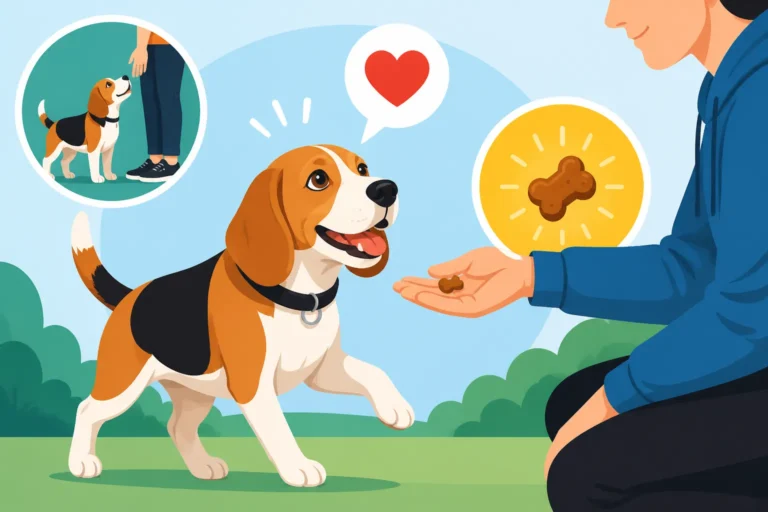
This is where the magic happens, and it’s all about creating an irresistible association. Your emergency cue needs to predict the single most amazing thing that could possibly happen to your Beagle. For a food-driven Beagle (which is, let's be honest, almost all Beagles!), this means a reward that is beyond compare. Forget kibble; think roasted chicken, hot dogs, cheese, or even small pieces of steak. This reward needs to be so high-value that your Beagle would drop everything, even a half-eaten sandwich they found on the ground, to get to it.
Start practicing in a completely distraction-free environment, like your living room. Say your emergency cue once, clearly and enthusiastically, and immediately present the most incredible treat your Beagle has ever tasted. Don’t ask them to come; just deliver the reward the second the cue is out of your mouth. Repeat this 5-10 times, several times a day, for days on end. The goal is to build an instant, Pavlovian response: cue = jackpot! There's an art to choosing the right incentives, which we explore in High-Value Food and How Fast a Beagle Learns.
Proofing the Recall in Distracting Environments
Once your Beagle is reliably rushing to you in the living room for that jackpot reward, it's time to slowly, incrementally, introduce distractions. This is not a race. Start in a slightly more stimulating environment, like your fenced backyard, still with your high-value treats at the ready. Use a long line, perhaps one you found on Amazon, for safety. If your Beagle gets distracted, gently reel them in as you say the cue, and reward the moment they reach you. The goal is always to set them up for success, never to use the cue when failure is likely.
Gradually increase the challenge: a quiet park on a long line, then with a friend's calm dog present, then near mild scent trails. Never practice your emergency recall in a situation where you can’t physically ensure your Beagle returns. This means a long line is your best friend during this proofing stage. A 20 to 30-foot long line allows you to give your Beagle some freedom to explore while still maintaining control and preventing them from practicing ignoring you. This concept is vital for safely training a scent hound, as discussed in Long Lines Instead of Off-Leash for a Beagle.
| Cue Type | Example Cue(s) | Pros | Cons | Best Use Case |
|---|---|---|---|---|
| Verbal | "FRONT!", "NOW!", "TREAT!" | Always available (no equipment), easily varied | Can be lost in background noise, easily overused | Quick, immediate attention for mild to moderate risk |
| Whistle | Specific blast pattern | Cuts through noise, unique sound, consistent | Requires carrying a whistle, dog needs conditioning | Long-distance recall, high-distraction environments |
| Visual | Arm flap, hand wave | Useful if dog is too far to hear, silent communication | Requires dog to be looking at you, less effective at night | Supplement to verbal/whistle, shorter distances |
| Combo | Verbal + Whistle | Maximizes chances of attention, redundancy for different scenarios | Requires multi-modal training, more complex to deliver consistently | Ultimate emergency safety net for highest risk |
Advanced Strategies for High-Stakes Situations
Even with a well-practiced emergency recall, a Beagle's nose can be a powerful adversary. That's why layering your approach with advanced strategies and tools is absolutely essential. These methods provide additional safety nets and increase the likelihood of success when it truly counts.
Combining Auditory and Visual Cues
Sometimes, your Beagle might be far away, or the wind might be carrying your voice away, or they might be so engrossed in a scent that they’ve effectively deafened themselves to a single sound. This is where combining cues can be incredibly effective. Consider using a distinct sound, like a specific whistle, alongside a unique visual signal, like a vigorous arm wave or a specific body posture. The whistle is fantastic for cutting through environmental noise, and a visual cue can catch their eye if they happen to glance up, or if they are just out of earshot.
To implement this, you’d train both elements together from the very beginning. When you say your emergency word, simultaneously blow your whistle or make your visual signal. Your Beagle learns that both – or either – predict the jackpot. If you're using a whistle, make sure it's a dedicated dog whistle that creates a consistent sound, not just any old noisemaker. You can find excellent options for dog training whistles on Amazon. The consistency of the sound is paramount for your Beagle to learn to associate it solely with this critical command.
Using a Long Line as a Safety Net
For a Beagle, truly off-leash freedom in an unfenced area is almost always a pipe dream. Their prey drive, combined with that incredible nose, makes it an incredibly risky proposition. This is why a long line isn't just a training tool; it's a vital safety measure for any Beagle exploring areas outside of a secure, fenced yard. I recommend a Biothane long line because it’s durable, easy to clean, and doesn’t get tangled as easily as nylon. Attach it to a well-fitting harness, never a collar, to protect your Beagle’s neck if you need to quickly stop them.
The beauty of a long line is that it allows your Beagle to experience the joy of extended sniffing and exploring, while still giving you the ability to intervene if they get too focused on a scent or head towards danger. It’s an extension of your arm, providing that physical backup even when your verbal cues might temporarily fail. It ensures that even if your emergency recall is still in progress, you have a fail-safe mechanism to prevent your Beagle from disappearing down a rabbit hole, literally or figuratively. Read more about the benefits in Long Lines Instead of Off-Leash for a Beagle.
The Role of High-Value Rewards
I touched on this already, but it bears repeating: the reward for an emergency recall has to be truly, unequivocally spectacular. This is not the time for dry kibble or a stale biscuit. We're talking about gourmet-level treats – small pieces of cooked meat, cheese, or specialized high-value training treats. It needs to be something that your Beagle rarely, if ever, gets otherwise, so its allure remains incredibly strong.
Keep these special treats reserved exclusively for emergency recall practice. Don’t use them for sit, stay, or heel. Their scarcity makes them more potent. When your Beagle comes screaming back to you, make a huge fuss, celebrate, and deliver a generous handful of these amazing goodies. You want them to feel like they just won the lottery. This positive reinforcement solidifies the idea that abandoning a scent trail for you leads to the ultimate payoff. The speed at which Beagles learn when food is involved is remarkable, and this principle is a cornerstone of training, as covered in High-Value Food and How Fast a Beagle Learns.
Tools and Resources for Reinforcement
In addition to dedicated training, there are various tools and external resources that can greatly enhance your ability to manage your Beagle’s recall, especially in urgent situations. These aren't replacements for training, but powerful supplements.
Whistles and Other Sound Devices
A good dog whistle can be an invaluable tool for an emergency recall. Unlike your voice, a whistle’s sound is consistent in tone and volume, making it less susceptible to emotional fluctuations or the strain of yelling. Its unique, piercing quality can often cut through distractions that your voice cannot. When choosing a whistle, opt for one specifically designed for dog training. These are often ultrasonic, or designed to produce a sound that travels well over distance.
Train the whistle cue exactly as you would a verbal cue: in a low-distraction environment, deliver the whistle blast (a consistent pattern, e.g., two short blasts) immediately followed by your jackpot reward. Over time, your Beagle will associate that distinct sound with the ultimate payoff, creating a powerful emergency cue. You might consider having a backup whistle, or even a different type of sound device if you're worried about losing one.
GPS Trackers and Their Limitations
For many Beagle owners, the thought of their dog getting lost is a constant fear. This is where GPS trackers can offer immense peace of mind. These small devices attach to your dog's collar and, via a smartphone app, allow you to track their location in real-time. Brands like Tractive or Fi are popular choices that offer varying features, from activity monitoring to virtual fences. While not a recall cue in themselves, they are a crucial backup for when all else fails and your Beagle does manage to slip away.
However, it's vital to understand that a GPS tracker is a retrieval tool, not a preventative one. It won't bring your Beagle back to you, nor will it stop them from chasing that scent. It simply tells you where they are, after they've already gotten loose. Battery life, signal strength, and subscription costs are all factors to consider. Always ensure your Beagle has a robust collar or harness to attach the tracker to, as a flimsy one might come off during a vigorous chase through the brush. Knowing that you can locate your dog quickly can reduce the panic in a lost dog scenario, but it doesn't replace solid recall training. More details on these devices can be found in GPS Collars as a Backup for Beagle Recall.
Professional Training Support and Online Programs
Sometimes, despite your best efforts, you might feel like you're hitting a wall with recall training. Or perhaps you're a first-time Beagle owner overwhelmed by their drive. In these situations, seeking professional help is a smart move. A certified professional dog trainer, especially one experienced with scent hounds, can provide personalized guidance, identify specific challenges, and help you fine-tune your techniques. They can offer insights into Hiring a Trainer Just for Beagle Recall and guide you through practical exercises in varied environments.
Many excellent online training programs also exist, which can be a fantastic resource. These platforms often provide structured lessons, video demonstrations, and community support, allowing you to learn at your own pace from home. For example, BAXTER & Bella offers comprehensive online puppy and dog training programs that include guidance on recall, even for highly scent-driven breeds. They can break down complex behaviors into manageable steps, giving you the confidence and tools to build a truly reliable emergency recall. While these resources aren't free, the investment in your Beagle's safety and your peace of mind is immeasurable.
What to Do When an Emergency Recall Fails
Despite all your diligent training and precautions, accidents can happen. A gate might be left open, a leash might slip, or a scent might prove too powerful. Knowing what to do in those terrifying moments when your Beagle goes missing can make all the difference.
Immediate Actions When Your Beagle is Lost
The moment you realize your Beagle is gone, panic is a natural reaction, but you need to act quickly and strategically. First, stay calm and call your emergency recall cue loudly and repeatedly as you search the immediate area. Your Beagle might circle back if they briefly lost the scent or got disoriented. Head back to where they were last seen and spread out, if possible, with others to widen the search. Bring their favorite, highest-value treats and a familiar squeaky toy. Their nose might have led them away, but their ears might still pick up a familiar sound.
Report your lost dog immediately to local animal shelters, humane societies, and rescue groups. Provide a clear description and a photo. Post on local social media groups – Facebook community pages and lost pet groups are incredibly effective. Include your Beagle's name, a description, the last known location, and your contact information. Remember, the first hour is critical, as detailed in The First Hour After a Beagle Goes Missing. The wider you spread the word, the better your chances of a quick reunion.
Preventative Measures and Layered Security
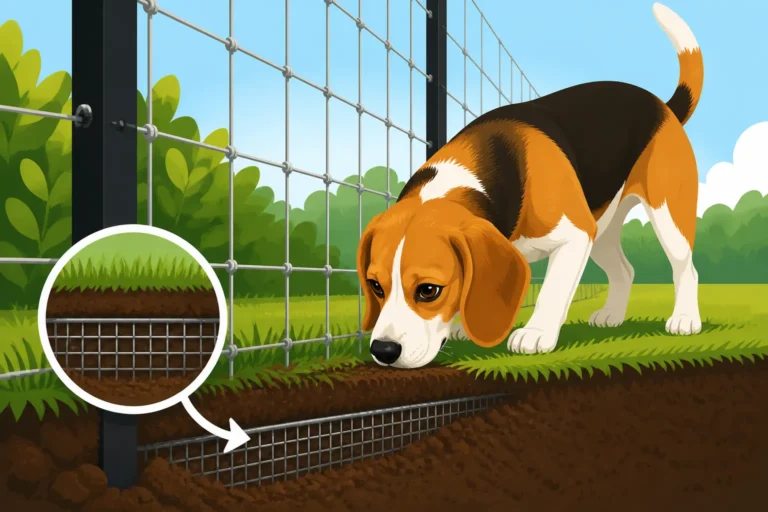
The best emergency plan is one you never have to use. That means putting layers of prevention in place to minimize the chances of your Beagle getting loose in the first place. For starters, your yard absolutely must be Beagle-proof. This means a fence that is tall enough to deter jumpers (they can be surprisingly agile!) and extends deep enough underground to prevent diggers. Inspect your fence line regularly for weak spots, loose boards, or gaps that a determined Beagle might exploit.
Beyond the physical fence, consider your habits. Always keep your Beagle on a leash outside of a secure, inspected area. Double-check gates and doors before letting them out. Use a sturdy harness that they can't slip out of, rather than just a collar, for walks. In areas where you might be opening a car door or house door, keep them secured in another room or on a leash initially. For more on keeping your Beagle contained, read Why a Beagle Should Never Be Off Leash Unfenced.
The Importance of a Microchip and ID Tags
This is non-negotiable for any dog, but especially for a breed like a Beagle with a high wanderlust potential. A microchip is a tiny, rice-sized device implanted under your dog's skin, which contains a unique identification number. This number is registered in a national database with your contact information. If your lost Beagle is found and scanned by a vet or shelter, you can be quickly identified and contacted. Always ensure your registration information is up-to-date, especially if you move or change phone numbers.
In addition to a microchip, your Beagle should always wear a collar with clear, legible ID tags. At a minimum, this tag should have your phone number and your dog's name. Some owners also include their address or a "reward" offer. While not as permanent as a microchip, ID tags offer an immediate way for a kind stranger to contact you without needing a scanner. Together, the microchip and ID tags form a crucial safety net, dramatically increasing the odds of a happy reunion should your Beagle ever go missing, a topic thoroughly covered in Beagle Microchips and Getting a Lost Dog Back. Don't ever underestimate the power of these simple devices; they are often the first line of defense in getting your beloved hound home.
Disclaimer
This article is for general informational purposes only and does not constitute professional advice. Laws, prices and regulations vary by location and change over time. Consult a qualified professional for guidance on your specific situation.