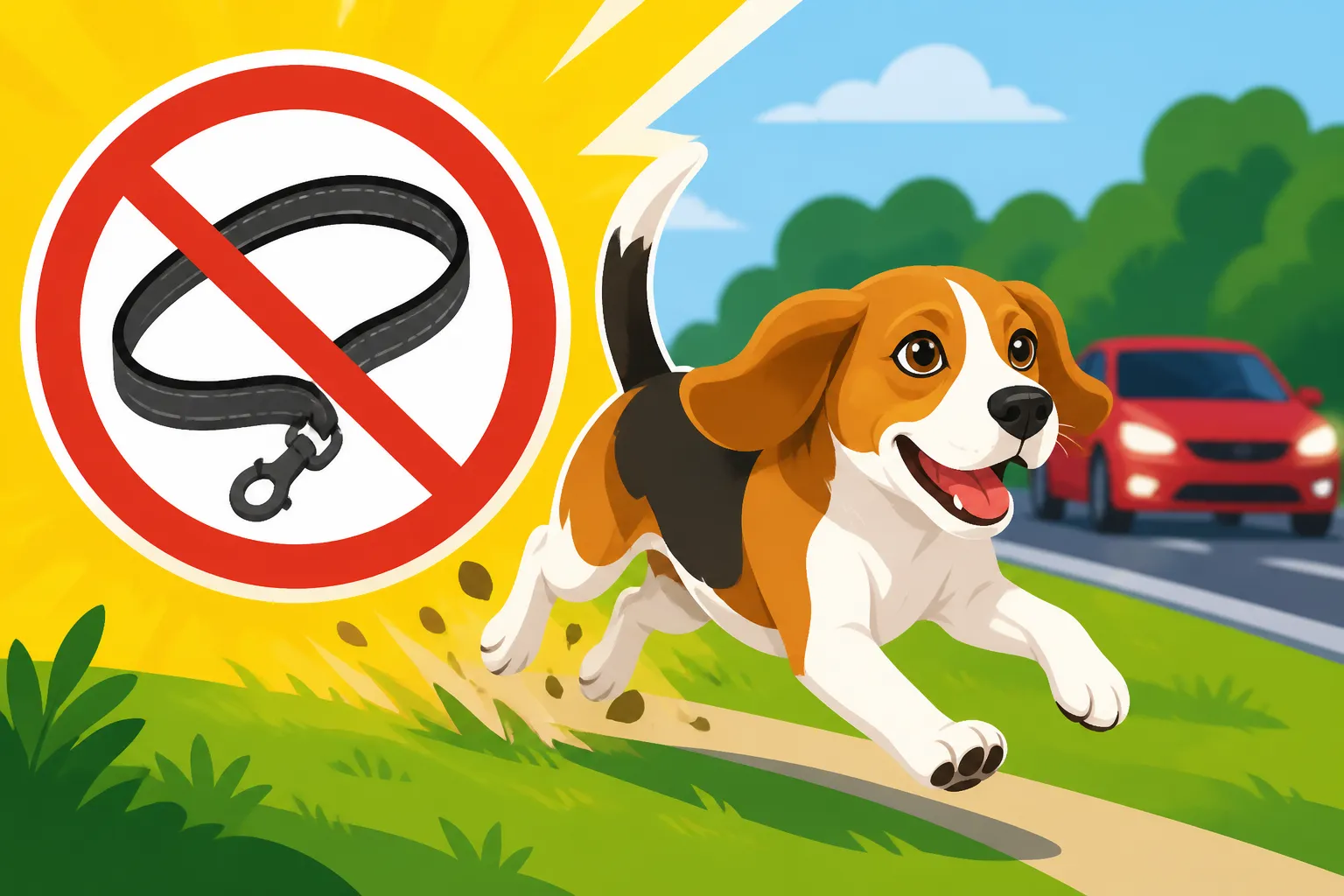
Why a Beagle Should Never Be Off Leash Unfenced
It’s a common dream for so many of us who share our lives with Beagles: a beautiful, open field, our beloved hound romping freely, sniffing to their heart's content, and then, with a joyful bound, returning to our side when called. But oh, how that dream can turn into a nightmare in a heartbeat. The truth is, letting a Beagle off leash in an unfenced area is one of the riskiest decisions an owner can make, often with heartbreaking consequences. This comprehensive guide will explain exactly why their unique breed traits make them so ill-suited for off-leash freedom and offer practical strategies to keep your adventurous companion safe and sound.
Understanding the Beagle's Instinctual Drive
To truly grasp why off-leash freedom is such a gamble for a Beagle, we have to go back to their roots. These aren't just cute, floppy-eared companions; they are finely tuned scent hounds, bred for centuries with a singular purpose: to follow a trail, no matter what. That drive isn't just a quirk; it's hardwired into their very being, a powerful force that often overrides everything else.
The Power of the Nose: A World in Scent
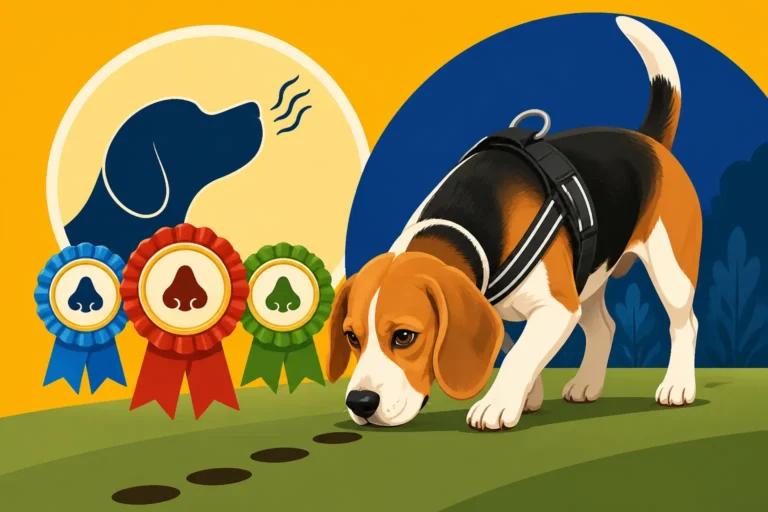
Imagine seeing the world primarily through your nose, where every puff of wind carries a story, every blade of grass is a chapter, and every fresh rabbit track is an irresistible adventure novel. That's a Beagle's reality. They possess an astounding 220 million scent receptors, far outnumbering our paltry five million. When that incredible nose hits a compelling scent, a switch flips. It’s not a matter of being disobedient; it’s a biological imperative. Their brain is literally rewired in that moment to follow the trail.
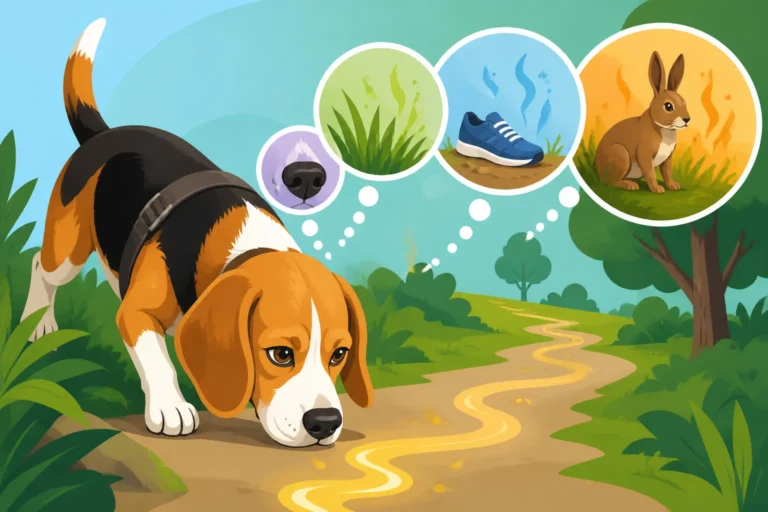
This isn't just a casual sniff; it's a deep dive into an olfactory landscape. They don't just smell a rabbit; they smell the rabbit's fear, its diet, its direction, how long ago it passed, and every subtle detail of its passage. This immersive experience is incredibly rewarding for them, a primal satisfaction that is difficult, if not impossible, for anything else to compete with. For a Beagle, finding and following a scent is their life's work, their joy, their very essence. You can learn more about this incredible ability by reading The 220 Million Receptors Behind a Beagle's Nose. When they lock onto something, the outside world, including your voice, fades into the background.
The Hunting Legacy: Pursuit Over Obedience
Beagles were developed to hunt cooperatively in packs, but critically, they were bred to independently track scent over long distances, driving game towards the hunters. Their job wasn't to return to the human on command in the middle of a hot trail; it was to pursue, baying loudly to signal their location to the human following on foot or horseback. This means that while they love their people, their deep-seated instinct often tells them that following a compelling scent is more important than checking in with you. They were designed to operate with a degree of autonomy in the field, making their own decisions based on the trail.
This historical purpose creates a modern-day challenge. Your Beagle isn't thinking, "Oh, I shouldn't run too far, my human will be worried." They're thinking, "Rabbit! Must follow! This is what I was born to do!" The exhilaration of the chase, even if it's just a phantom scent or the faintest hint of deer, is a powerful motivator. This inherent drive to pursue can carry them miles from where you started, across roads, into unfamiliar territory, and completely out of earshot. Their ancestors literally ran for hours, sometimes days, following a scent. While your pet Beagle might not have that endurance, the instinct to vanish in pursuit is absolutely still there. The Beagle From English Rabbit Packs to American Homes delves deeper into this fascinating history.
The Independent Streak: Pack Mindset, Individual Mission
While Beagles are known for their loving, social nature and thrive in a family "pack," their independence when it comes to scent work is a significant factor. They might be cuddly and attentive at home, but once that nose drops to the ground, they become a different animal – a focused, determined hunter on a mission. They aren't looking for validation or direction from you in that moment; they're fully absorbed in deciphering the invisible map of scents.
This is why many Beagle owners describe their dogs as having "selective hearing." It's not rudeness; it's pure, unadulterated focus. Their world shrinks to the immediate sensory input of the scent trail. This single-minded devotion to scent is incredibly effective for their original purpose but makes them uniquely vulnerable when off-leash and unfenced. Their desire to stick with their human pack is strong, but their drive to follow a scent is often stronger, at least in the short term, leading them further and further away until they become disoriented or lost.
The Inherent Dangers of Off-Leash Freedom
The romantic notion of a Beagle frolicking freely can quickly collide with harsh realities. The dangers of an unfenced, off-leash Beagle are not just hypothetical; they are very real, very frequent, and often devastating.
Traffic Accidents: A Beagle's Greatest Threat
Let's be blunt: a Beagle on a scent trail is oblivious to its surroundings. They do not look both ways. They do not understand the concept of a speeding vehicle. When that nose is down, processing the intricate tapestry of smells, their eyes, and ears are secondary. They will cross roads, highways, and busy streets without hesitation if the scent line takes them there. This isn't a lapse in training; it's a hardwired instinct overriding all other input.
Imagine your Beagle catches a whiff of a rabbit that just darted across a quiet suburban street. In their mind, that street is simply another part of the trail. The consequences can be catastrophic. Far too many Beagles end up as victims of vehicular accidents, not because their owners are neglectful, but because they simply don't understand the depth of their dog's scent-driven tunnel vision. This is the single biggest, most immediate danger of an unfenced, off-leash Beagle. Even in seemingly quiet areas, a sudden car, bicycle, or even another pedestrian can appear without warning, and a scent-focused Beagle might walk right into their path.
Getting Lost: Miles from Home in Minutes
The ability of a Beagle to cover ground when on a scent trail is astonishing. What starts as a quick dart into the woods can quickly turn into a multi-mile trek through unfamiliar territory. They follow their nose, often with a remarkable sense of direction in relation to the scent, but not necessarily in relation to you or home. Suddenly, the scent fades, or they lose the trail, and they look up to find themselves in a strange place, utterly disoriented.
Panic can set in, making them run even further, or they might curl up, terrified and alone. This isn't just about a stressful search; it's about the potential for exposure to the elements, injury, or even being mistaken for a stray and picked up by animal control, or worse. Their small size and friendly demeanor make them vulnerable targets for theft or harm. The sheer distance they can travel, often much further than an owner can track on foot, is a testament to their hunting heritage but a massive liability in a modern environment. Why a Beagle Will Follow a Scent for Miles explains just how far their nose can take them.
Encounters with Wildlife and Other Dogs
An unfenced, off-leash Beagle is a magnet for trouble, not just with traffic, but with other living creatures. On one hand, their hunting instinct can lead them directly into confrontations with wildlife. A startled deer, an aggressive coyote, or even a territorial raccoon can pose a serious threat to a curious Beagle that simply wants to follow a scent. They might chase, but they are not always equipped to defend themselves if the tables turn.
On the other hand, a loose Beagle can inadvertently cause issues with other dogs. Their friendly nature can sometimes be misinterpreted by a more leash-reactive or territorial dog, leading to an unwanted confrontation. Conversely, a Beagle on a strong scent might completely ignore another dog's warning signals, unknowingly instigating a fight. Beyond physical harm, there's the stress and potential injury to other animals or even people that your Beagle might encounter. And, of course, the possibility of contracting diseases or parasites from wildlife or other uncontrolled dogs is also a concern.
Why Traditional Recall Fails a Beagle
Many dog owners pride themselves on their dog's recall, and rightly so. For many breeds, a solid "come" command can be a lifeline. But for a Beagle, especially when unfenced and on a scent, traditional recall often crumbles. It's not a reflection of your training ability or your Beagle's intelligence; it's a fundamental conflict between their instincts and our expectations.
Scent Trumps Sound: When the Nose Takes Over
Imagine being utterly engrossed in a thrilling movie, with surround sound and dazzling visuals. Now, imagine someone gently calling your name from another room. You might register it, but it's secondary to the immersive experience. For a Beagle on a scent trail, that "thrilling movie" is ten thousand times more immersive, and your voice is a distant whisper. Their auditory processing literally becomes less important than their olfactory processing in those moments.
Their ears, those long, soft flaps, are actually designed to help funnel scent molecules up to their nose as they move. They are literally built to optimize their sense of smell, sometimes at the expense of other senses when engaged in a scent chase. When a Beagle is "nose down," they are in a highly focused state. The part of their brain dedicated to processing scent is firing on all cylinders, and the signals from their ears and eyes are simply relegated to background noise. This is why Beagle Recall and Why Your Voice Stops Registering is such a crucial read for Beagle owners. It's a physiological reality, not a behavioral defiance.
Distraction Over Connection: A Different Kind of Focus
When we train recall, we're building a connection: "come back to me for a reward, for safety, for affection." For many dogs, this connection is powerful enough to break their focus from a squirrel or another dog. For a Beagle, the connection to the scent is an ancient, potent bond that can often outweigh the connection to their human. Their focus isn't distracted by the scent; their focus is the scent.
This isn't to say a Beagle can't learn recall. They absolutely can, and it's vital for their safety even on a leash or in a fenced yard. However, expecting that recall to hold when they've hit a "hot" trail in an open field is often wishful thinking. The reward of following that trail is inherently more compelling than any treat or praise you can offer in that moment. It's a deep, intrinsic reward that speaks to their very genetic makeup. We're asking them to ignore their life's purpose for a piece of kibble, and nature often wins that battle.
The "Selective Hearing" Phenomenon
Every Beagle owner has experienced it: your dog, usually so attentive, suddenly seems to go deaf the moment something interesting crosses their path. This isn't them being stubborn or naughty; it's their brain prioritizing. We call it "selective hearing," but it's actually a manifestation of their overwhelming drive. When a scent takes hold, their perception of reality literally shifts.
This "deafness" means that even if they do hear your call, the impetus to turn away from the scent is minimal compared to the pull of the trail. The consequences of this can be dire. You might call, plead, or even shout, but your voice often simply doesn't break through the sensory wall that the scent has created. It's incredibly frustrating for owners who feel like their well-trained dog has suddenly forgotten everything they've learned, but understanding the biological imperative behind it helps us reframe our expectations and, more importantly, our safety protocols.
Creating a Secure Environment for Off-Leash Play
Since letting a Beagle off leash in an unfenced area is inherently dangerous, the focus shifts to creating environments where they can enjoy supervised freedom without risking their safety. This means thinking about barriers and controlled spaces.
Physical Fencing: The Non-Negotiable Barrier
For any Beagle owner, a securely fenced yard is truly the gold standard for providing safe, off-leash time. But not just any fence will do. Beagles are legendary escape artists, intelligent and determined when a scent or a desire to explore takes hold. A fence needs to be high enough that they cannot jump it (many Beagles can clear surprisingly high obstacles if motivated) and, crucially, it needs to be secure at the bottom. Beagles are diggers, and they will tunnel under a fence if there's an interesting smell or perceived escape route on the other side.
This often means burying wire mesh along the base of the fence or using concrete footers to prevent digging. Gates need to be self-latching and regularly checked for gaps or weaknesses. If you have an existing fence, take the time to inspect it from a Beagle's perspective: where could they squeeze through? Where could they dig? Could they climb over that sagging section? Remember How a Beagle Finds the One Gap in a Fence – they are truly masterful at exploiting weaknesses. A double-gated system for entry points can also add an extra layer of security, especially if your Beagle is a door-dasher. Investing in a truly secure physical fence is one of the best investments you can make for your Beagle's long-term safety and your peace of mind.
Leash Alternatives: Long Lines and Secure Parks
What if a fully fenced yard isn't an option, or you want to give your Beagle more space to explore than your yard allows? This is where long lines become an invaluable tool. A long line is essentially an extra-long leash, ranging from 15 to 50 feet (or even longer!), that allows your Beagle to roam and sniff with a sense of freedom, while you still maintain physical control. It lets them explore a wider area, engage their nose, and get that satisfying "walk about" experience without the risk of them bolting into danger.
When using a long line, always attach it to a secure, comfortable harness, not a collar, to prevent neck injury if they hit the end of the line at a run. Always be attentive, keeping the line clear of obstacles and other people. Long Lines Instead of Off-Leash for a Beagle provides excellent guidance on this. For true off-leash freedom, seek out securely fenced dog parks or dedicated dog-friendly areas that you have personally inspected for safety. Even in such places, always supervise your Beagle closely, as scent distractions and interactions with other dogs can still pose challenges.
The Role of Supervised Off-Leash Areas
Even in areas designated for off-leash dogs, supervision is key. These aren't "set it and forget it" zones for Beagles. Because their recall can be so compromised by scent, you need to be constantly aware of your Beagle's proximity and what they might be tracking. Are they heading towards an open gate? Are they showing too much interest in a squirrel near the fence line?
For example, BAXTER & Bella, an online puppy school, emphasizes the importance of supervised training and safe environments. While not specific to off-leash, their principles of building a strong bond and reliable cues are foundational for any activity, especially in areas where your dog has more freedom. Even in a fenced dog park, the presence of other dogs, new smells, and unknown dynamics means you need to be actively engaged, not passively scrolling on your phone. These environments offer a chance for your Beagle to truly stretch their legs and engage their senses, but they require your vigilance to remain safe. Think of it as controlled chaos, where your job is to manage the "control."
Training Strategies to Bolster Safety (Even on Leash)
While we acknowledge the powerful instinctual drive of a Beagle, that doesn't mean training is futile. On the contrary, strategic training can significantly enhance their safety, even if it means accepting that true off-leash reliability in an unfenced area may never be a reality. The goal is to build strong foundational skills that serve them well in all other environments.
Building a Bomb-Proof Recall (Within Limits)
As discussed, a Beagle's recall can be notoriously difficult, especially when a strong scent is involved. However, a "bomb-proof" recall is still an essential goal, even if it only functions reliably in less distracting environments or for momentary checks. Start recall training indoors, in a quiet, distraction-free space. Make it incredibly rewarding with high-value treats and enthusiastic praise. Practice in short, frequent bursts. Gradually introduce mild distractions, always setting your Beagle up for success.
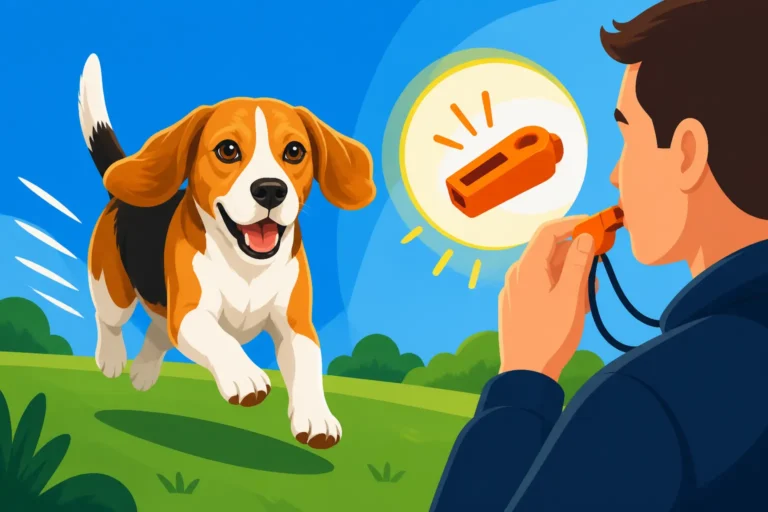
When moving to outdoor spaces, always start with a long line. This allows you to practice recall in a more open environment while still having physical control. Use an emergency recall cue – a distinct word or whistle that you only use for urgent situations and always reward with the highest value treat imaginable. This helps create a powerful association that might just cut through the scent trance in a critical moment. Read Starting Beagle Recall Inside a Fenced Yard and Emergency Recall Cues That Reach a Beagle for more detailed advice. Remember, for a Beagle, consistency and high rewards are key.
Impulse Control and "Leave It" Commands
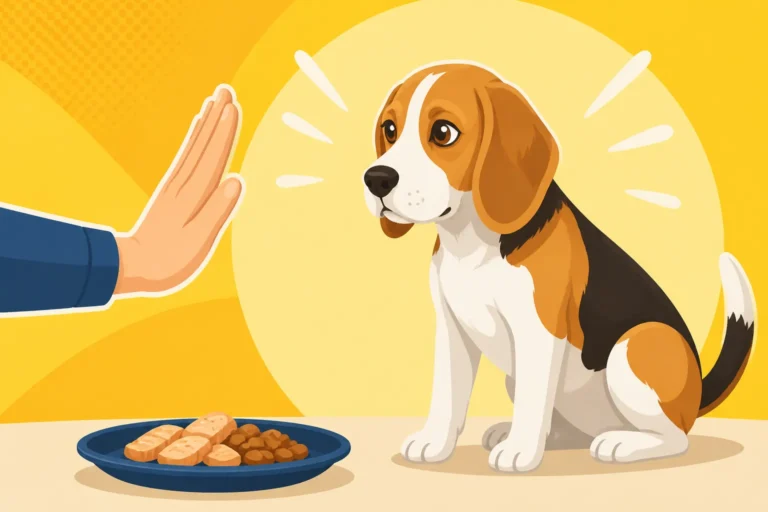
Given their intense curiosity and drive to put everything in their mouth, impulse control is paramount for a Beagle's safety. Training a solid "Leave It" command can prevent them from ingesting harmful substances on a walk, prevent them from chasing a squirrel into the street, or stop them from bothering another dog. Start this command in a low-distraction environment, gradually increasing the challenge. Begin with a treat on the floor, rewarding them for not touching it until released.
Extend this to objects on walks, discarded food, and even other animals. Make "Leave It" a reflex, a command that earns them an even better reward from you than whatever they might have found. This takes patience and repetition but is a lifesaver. You want them to instantly disengage and look to you for direction. This kind of training builds a valuable alternative behavior to their natural instinct to investigate everything with their nose and mouth.
Harnessing the Scent Drive for Positive Engagement
Instead of constantly battling their scent drive, we can channel it into positive, safe activities. Scent work, nose work, or tracking sports are fantastic outlets for a Beagle. These activities allow them to use their incredible noses in a structured, controlled environment, satisfying that deep, primal urge in a way that is mentally stimulating and physically tiring. This can be as simple as hiding treats around the house or yard and having them "find" them, or enrolling in formal classes.
Think about it: if their greatest joy is using their nose, let them! This is why Scent Walks That Wear a Beagle Out are so effective. Instead of a brisk walk where you pull them along, let them dictate the pace, allowing them to thoroughly investigate interesting smells. This isn't just a walk; it's a mental marathon for them. By providing appropriate and safe outlets for their scent drive, you can actually reduce their desperate need to pursue every rogue smell they encounter, making them generally more settled and attentive companions. For ideas on starting this, explore options on platforms like Amazon for scent work kits or local dog training facilities.
Tools and Resources for the Responsible Beagle Owner
Beyond training, there are specific tools and resources that every Beagle owner should consider to enhance their dog's safety and manage their unique traits. These aren't replacements for training or secure environments but valuable additions to your safety toolkit.
GPS Trackers: A Modern Safety Net
Given a Beagle's propensity to follow a scent and get lost, a GPS tracker is arguably one of the most important pieces of equipment you can own. These small, lightweight devices attach to your Beagle's collar or harness and allow you to track their location in real-time via an app on your smartphone. While they won't stop your Beagle from running off, they drastically improve your chances of finding them quickly if they do.
Imagine the relief of seeing a dot on a map showing you exactly where your runaway Beagle is, instead of aimlessly wandering and calling their name. Many trackers offer features like virtual fences, alerting you if your dog leaves a designated safe zone. Brands like Tractive or Fi are popular choices available through retailers like Amazon, offering different subscription models and features. This technology provides an invaluable layer of protection, particularly if you have a known escape artist or live near busy areas. Think of it as a safety net that buys you precious time when every second counts after an escape. GPS Collars as a Backup for Beagle Recall offers further insights into this technology.
Secure Leashes and Harnesses
A basic collar and leash might be sufficient for some dogs, but for a determined Beagle with a powerful nose, you need gear designed for security and control. Always opt for a sturdy harness over a collar for walks. A harness distributes pressure across their chest and shoulders, preventing injury to their neck and throat, especially if they pull hard or suddenly lunge after a scent. Look for harnesses that are anti-escape, with multiple points of adjustment and durable buckles.
Front-clip harnesses can be particularly effective for Beagles who pull, as they redirect the dog's forward momentum back towards you, making pulling less effective. Consider a double-clip leash that attaches to both the front and back of the harness for maximum control. When it comes to leashes, choose a sturdy, comfortable material with a reliable clasp. For those long-line training sessions, ensure the line itself is robust and free of snags. Why a Harness Protects a Beagle's Neck provides a good overview of the benefits of harnesses.
Professional Training Support
Sometimes, despite our best efforts, a Beagle's instincts can feel overwhelming. That's when professional help can make all the difference. A certified professional dog trainer, especially one with experience working with scent hounds or escape artists, can provide invaluable guidance. They can help you understand your Beagle's specific motivations, fine-tune your training techniques, and offer practical solutions tailored to your dog's individual personality and challenges.
Whether it's group obedience classes, private sessions, or specialized nose work training, a good trainer can help you build a stronger bond with your Beagle and teach you how to communicate more effectively. Programs like BAXTER & Bella offer online resources and support, which can be a great starting point for new puppy owners or those looking to refresh their training. Don't view seeking professional help as a failure; view it as an investment in your Beagle's safety and your relationship. They can often spot subtle cues or suggest methods you might not have considered, helping you navigate the unique joys and challenges of Beagle ownership.
The Ethical Responsibility of a Beagle Owner
Owning a Beagle is a joy, but it also comes with a significant responsibility, especially when it comes to managing their strong instincts in a world that isn't always safe for them. Accepting and planning for their breed-specific traits is part of being a good guardian.
Protecting Your Beagle: More Than Just a Pet
Your Beagle isn't just a furry companion; they are a creature of instinct, and their well-being relies on your ability to provide a safe, enriched life that respects their genetic heritage. This means prioritizing their safety above the desire for them to run freely in open spaces. It means understanding that their inability to resist a scent trail isn't a flaw, but a defining characteristic of their breed, and it is your responsibility to mitigate the risks associated with it.
Protecting your Beagle extends beyond just preventing escapes. It includes ensuring they get enough mental stimulation through scent games and walks, providing a secure physical environment, and being proactive about their training and health. It’s about acknowledging that for a Beagle, being safe often means being securely contained, either by a leash, a fence, or a long line. When a Beagle goes missing, the first hour is critical for The First Hour After a Beagle Goes Missing, highlighting the urgency of preventive measures.
Community Impact: Respecting Neighbors and Wildlife
A loose Beagle doesn't just put itself at risk; it can also have a significant impact on the community. A barking or baying Beagle running loose can annoy neighbors, potentially leading to complaints. If your Beagle chases local wildlife, it can disrupt natural ecosystems, stress animals, and even put themselves in harm's way with protective parents. Furthermore, a loose dog, even a friendly one, can be intimidating or frightening to people who are not comfortable around dogs, or to other leashed dogs.
Responsible Beagle ownership means being a good neighbor and a considerate member of the community. This involves controlling your dog, cleaning up after them, and ensuring their behavior doesn't infringe on others' peace or safety. By keeping your Beagle safely leashed or securely fenced, you demonstrate respect for your neighbors, local wildlife, and the general public.
Accepting the Breed's Nature
Ultimately, owning a Beagle means accepting them for who they are: intelligent, merry, loving, and profoundly scent-driven hounds. It means acknowledging that their nose will often lead them astray, and no amount of wishing or even intensive training can fully override that ancient instinct in certain high-distraction scenarios. Instead of fighting their nature, embrace it by providing safe outlets for their sniffing desires.
Accepting their nature means understanding that the image of a Beagle gracefully trotting off-leash through a field, always returning on command, is largely a fantasy. The reality is a dog whose safety often depends on a physical barrier or a strong leash held in your hand. It's about finding joy in their unique traits within a framework of safety and responsibility, ensuring they live a long, happy, and secure life.
| Factor | Off-Leash (Unfenced) | On-Leash / Fenced Area |
|---|---|---|
| Scent Drive | Overrides recall, leads to escape | Channelled safely, controlled |
| Recall Reliability | Highly unpredictable, often fails | Can be strong with training |
| Risk of Traffic Accident | Extremely High | Very Low |
| Risk of Getting Lost | High | Very Low |
| Wildlife Encounters | High, potentially dangerous | Low, controlled |
| Other Dog Interactions | Uncontrolled, potential conflict | Controlled, managed |
| Training Effectiveness | Challenged by instinct | Enhanced by controlled environment |
| Owner Stress | Extremely High | Low |
| Freedom for Beagle | Appears free, but dangerous | Safe exploration, mental engagement |
| Required Equipment | GPS tracker (backup), hope | Harness, secure leash, fence, long line |
Disclaimer
This article is for general informational purposes only and does not constitute professional advice. Laws, prices and regulations vary by location and change over time. Consult a qualified professional for guidance on your specific situation.