Beagle Recall and Why Your Voice Stops Registering
It’s a scenario every Beagle owner knows all too well: you’re at the park, or maybe just across the street, and your beloved hound suddenly locks onto a scent. Their nose hits the ground, tail wags furiously, and a switch flips. Suddenly, your calls, your pleas, your increasingly frantic shouts become nothing more than background noise to them. They're gone, following that invisible trail, and you're left feeling invisible and utterly frustrated. This guide is here to unravel the mystery of why your Beagle's ears seem to stop working the moment a compelling scent enters the picture, and how you can build a recall that stands a fighting chance against their incredible instincts.
Understanding the Beagle's Scent-Driven World
To truly grasp why your Beagle might suddenly develop a severe case of selective hearing, you have to appreciate the world from their perspective. For a Beagle, the world isn't seen or heard first; it's smelled. Every blade of grass, every gust of wind, every passing creature leaves behind a rich tapestry of odors that tells a story far more compelling than anything we can articulate.
The Power of the Beagle's Nose
Imagine having an organ so incredibly sensitive that it could distinguish between a million different shades of a single color. That’s akin to what a Beagle’s nose does with scent. They possess an astounding The 220 Million Receptors Behind a Beagle's Nose, compared to our paltry five or six million. Their olfactory bulb, the part of the brain dedicated to processing smells, is disproportionately large, giving them an unparalleled ability to analyze and interpret even the faintest of odors. When that powerful nose picks up the trail of a rabbit, a squirrel, or even just yesterday's discarded sandwich, it triggers an ancient, hardwired response. It’s not about disobedience; it’s about fulfilling their very purpose, the reason they were bred for centuries. They are literally built for this.
This incredible sensory input means that what we perceive as a simple walk in the park is, for a Beagle, an immersive journey through a landscape of information. They’re piecing together stories, tracking movements, and identifying potential "prey" or interesting discoveries with a precision we can't even fathom. Their world is vibrant with aromatic data, and it demands their full, undivided attention. It's truly a marvel of nature, even when it’s inconvenient for us.
How Scent Overrides Sound
When a Beagle is on a scent, it’s not just that they're choosing to ignore you; it's that the neural pathways dedicated to processing scent information overpower almost all other sensory input. Think of it like a human being utterly engrossed in a thrilling movie with surround sound and booming special effects. Someone calling your name from the next room might register, but it’s unlikely to pull you away from the screen unless it's truly urgent or persistent. For a Beagle, that scent trail is their IMAX experience, demanding every ounce of their focus.
Their brains are literally wired to prioritize that olfactory information. Their ears, while still capable of hearing, become secondary. The urgency and reward associated with following a scent—the historical thrill of the hunt, the potential for a delicious find—far outweigh the abstract command of "Come!" from a human. This isn't stubbornness in the way we usually understand it; it's a profound absorption in their innate drive. This is why when you shout for your Beagle, they don't even turn their head, as if your voice is simply part of the environmental white noise, completely irrelevant to the captivating narrative unfolding beneath their nose.
What Happens in a Beagle's Head on a Scent
It’s easy to feel personally offended when your Beagle seems to blow you off, but understanding What a Beagle Experiences on a Scent Trail can help shift that perspective. When they catch a scent, a complex cascade of events occurs in their brain. It's not just a passive reception of information; it's an active, problem-solving endeavor. They're tracking, discerning direction, determining age of the scent, and formulating a plan of action. Their entire being is engaged.
Their instincts compel them to pursue, and this pursuit is intrinsically rewarding. The dopamine hit they get from successfully following a trail is incredibly powerful, reinforcing the behavior. This means that every time they successfully follow a scent without being interrupted, that behavior becomes even stronger. Your recall command, if it hasn't been extensively proofed and made equally or more rewarding, simply can't compete with this primal drive. It truly highlights Why a Beagle Ignores You Halfway Down a Trail and underscores the challenge we face as owners.
The Frustration of a Beagle's Selective Hearing
Let's be real: having a dog that seems to tune you out when it matters most is incredibly frustrating. It's not just annoying; it can be downright terrifying. The emotional rollercoaster from pride in their natural abilities to sheer panic when they disappear over the horizon is something only a Beagle owner truly understands.
The Moment Your Voice Becomes White Noise
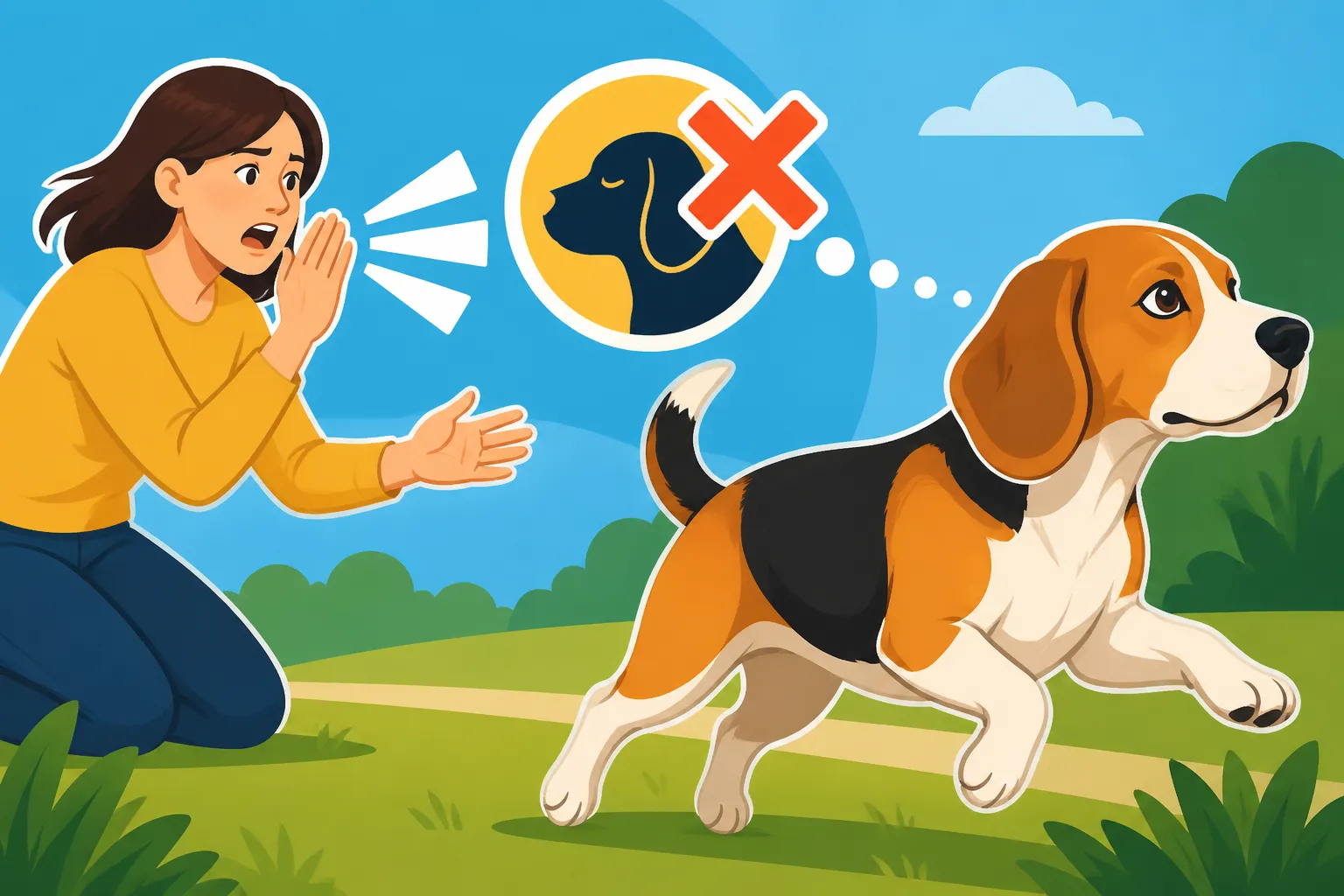
You’re walking along, maybe enjoying a quiet moment, and then it happens. Their head snaps down, tail begins to semaphore, and their entire body language shifts. They're in the zone. You call their name, perhaps a little tentatively at first, then louder, with more urgency. They might twitch an ear, maybe even glance back for a fraction of a second, but then the nose is back down, glued to the ground, pulling them forward. Your voice, which moments ago might have been signaling a treat or a game, now just fades into the background, indistinguishable from the rustling leaves or distant traffic.
It feels like a betrayal, doesn't it? Like all the training, all the love, all the trust has evaporated in an instant. This "white noise" effect isn't personal; it's biological. Their highly specialized olfactory system takes precedence, and their brain filters out anything that isn't directly relevant to processing that intoxicating scent. It's a prime example of how deeply ingrained their hunting heritage is, and how much work we have to do to make our voices equally compelling.
Why They Seem to Ignore You Deliberately
While we know it's not truly deliberate in a malicious sense, it certainly feels that way. The perception that your Beagle is consciously defying you stems from the deep bond you share and the expectation that they should respond to your commands. When they don't, especially when they clearly hear you in other contexts, it can feel like a direct challenge to your authority or, worse, a sign that they don't care.
This feeling is compounded by the fact that Beagles are highly intelligent and often very food-motivated. You know they can respond; they do it perfectly indoors. The disconnect happens when the external reward of the scent trail becomes infinitely more enticing than the potential reward from you. It’s a competition, and in that moment, the scent usually wins. Understanding this helps us reframe our approach from punitive to proactive, focusing on making our recall an irresistible force.
The Danger of a Disappearing Beagle
Beyond the frustration, the real concern is safety. A Beagle with their nose to the ground is a Beagle oblivious to cars, bikes, other dogs, and dangerous situations. They will follow a scent across busy roads, through dense underbrush, and into unknown territories without a second thought for their own well-being. This isn't bravado; it's a deep-seated instinct to pursue.
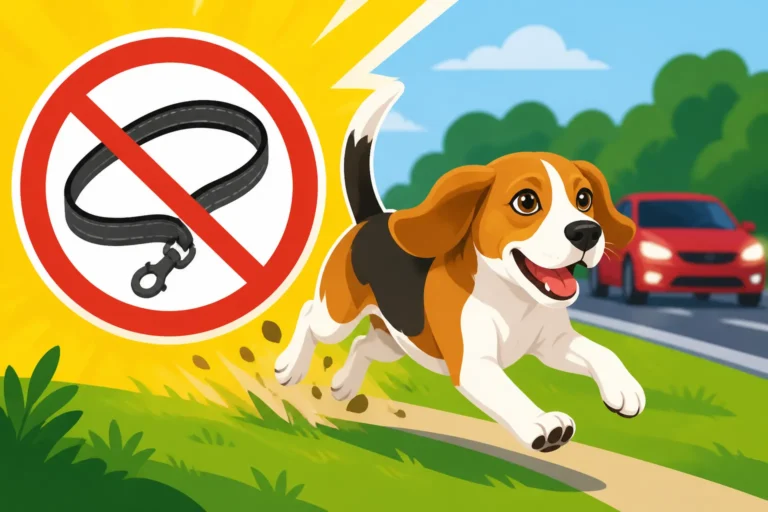
The thought of your Beagle getting lost, injured, or worse, is every owner's nightmare. Because of this profound drive, Why a Beagle Should Never Be Off Leash Unfenced becomes an ironclad rule for most Beagle owners. Even in seemingly safe areas, that one compelling scent can lead them far astray in minutes. Many a story begins with "I just let him off for a second…" and ends with hours of frantic searching. This inherent danger is precisely why reliable recall isn't just a convenience; it's a life-saving skill.
Building a Rock-Solid Recall Foundation
Building a recall that can compete with the allure of a captivating scent is a marathon, not a sprint. It requires patience, consistency, and a deep understanding of what motivates your Beagle. The key is to start simple, build value, and gradually introduce complexity.
Starting Recall Training Indoors
Before you even dream of an off-leash scenario, recall must be absolutely bulletproof indoors, where distractions are minimal. Start in a quiet room, with just you and your Beagle. Use a happy, inviting tone, and choose a unique recall word or phrase that you only use for recall. Avoid using their name as the recall cue, as it gets overused in daily life and loses its special meaning.
The moment your Beagle looks at you or takes a step in your direction when you say your recall word, reward them instantly and extravagantly. High-Value Food and How Fast a Beagle Learns is crucial here. Think small pieces of cooked chicken, cheese, or even liverwurst—something they absolutely adore, far beyond their regular kibble. The goal is to create a strong positive association: "When I hear that word, good things happen RIGHT NOW, and I get something amazing." Practice this many, many times a day, for short, fun sessions. Make it a game, not a chore.
High-Value Rewards and Positive Reinforcement
Let's talk more about those high-value rewards. For a Beagle, food is often the ultimate motivator. This is where you leverage their natural food drive for good! Don't just give them a bland biscuit. Pull out the stops. Think about what makes their eyes light up. Maybe it's a squeaky toy, a quick game of tug, or a piece of hot dog. The reward needs to be immediate and undeniably fantastic, every single time. This is not the place for stinginess.
Positive reinforcement means we are rewarding the desired behavior, not punishing the lack of it. If your Beagle doesn't come, don't scold them. Simply make a mental note to reduce distractions for the next training session and make your reward even more appealing. The goal is for your Beagle to want to come back to you, not to fear the consequences of not coming. This builds trust and eagerness, which are vital components of a reliable recall. You might even consider using a clicker alongside your recall word and reward to mark the exact moment of compliance.
Making Recall a Fun Game
Recall should never feel like a chore for your Beagle. Turn it into a game! Start with "hide-and-seek" indoors. Have someone hold your Beagle, then hide in another room and call your recall word. When they find you, big party, big rewards! This teaches them that finding you is fun and rewarding. You can also play "Beagle Ping-Pong" with a family member. Stand a short distance apart, and each person takes turns calling the Beagle with the recall word, rewarding them when they arrive.
The key is repetition, enthusiasm, and ensuring success. Keep sessions short and sweet, ending on a high note. The more positive experiences your Beagle has with recall, the stronger the association will become. Remember, you're competing with millions of scent receptors, so you need to be the most exciting thing in their environment.
Advanced Recall Training for Real-World Scenarios
Once your Beagle's recall is solid indoors, it’s time to slowly introduce them to the real world, bit by bit. This phase is where many owners get frustrated, but patience is absolutely essential.
Gradually Introducing Distractions
This is where the rubber meets the road. Start taking your recall game to slightly more distracting environments, but always on a leash or a long line. Begin in your fenced backyard, then a quiet park, then a slightly busier park, and so on. The key word here is "gradually." Don't jump from your living room to a dog park.
Practice your recall cue when there are mild distractions present—a bird chirping, a leaf blowing, a distant dog bark. If your Beagle is too distracted to respond, you've moved too fast. Go back to a less distracting environment. Each successful recall in a more challenging setting builds their confidence and strengthens the habit. Always keep your rewards high-value, and make sure to celebrate exuberantly when they respond. This phased approach helps them generalize the recall command, understanding it means "come back to me" regardless of the environment.
Using a Long Line for Safety and Practice
A long line is your best friend when practicing recall outdoors. This is typically a 15, 30, or even 50-foot lead that allows your Beagle the feeling of freedom while you maintain control. Brands like Amazon offer a wide selection of durable long lines in various lengths and materials. It's crucial for their safety and for your peace of mind, allowing them to explore scents without actually getting lost. Long Lines Instead of Off-Leash for a Beagle is a non-negotiable step.
Attach the long line to a well-fitting harness (never a neck collar when using a long line, as it could cause serious injury if they hit the end of the line at speed). Let your Beagle roam, sniff, and enjoy themselves. When they are mildly distracted but not completely engrossed in a scent, give your recall cue. If they hesitate, gently reel them in while continuing to use your happy recall word. As soon as they reach you, reward heavily. This teaches them that even when they are "free," the recall cue means they still need to come back, and it's a positive experience.
Emergency Recall Cues That Reach a Beagle
Beyond your everyday recall, it's wise to establish an "emergency recall" cue. This should be a word or sound you never use otherwise, reserved only for critical situations. It needs to be something that cuts through all distractions. A whistle, a unique word like "Super Come!" or a specific pattern of claps can work. The training for this needs to be even more intense than regular recall.
Practice this cue in various environments, always with the highest possible reward. The idea is to create an almost reflexive response. You want them to associate this specific cue with an immediate, overwhelming reward, making it impossible to ignore. Emergency Recall Cues That Reach a Beagle should be practiced sparingly and with immense reinforcement, so it retains its power for those truly vital moments. It's like having a panic button, but one that triggers joy and treats for your Beagle.
Essential Tools and Strategies for Beagle Recall Success
Success with Beagle recall isn't just about training; it's also about employing the right tools and having a smart strategy to manage their instincts.
Harnesses and Secure Leashes
A well-fitting harness is paramount for a Beagle, especially one prone to pulling on a scent or attempting to bolt. A traditional collar can put pressure on their delicate trachea, and it's easier for them to slip out of if they suddenly lunge or back out of it. Look for a harness that fits securely around their chest and back, distributing pressure evenly. Front-clip harnesses can also be helpful for Beagles who pull strongly, as they redirect the dog’s momentum back towards you.
Beyond the harness, a secure, comfortable leash is essential. Opt for a leash that feels good in your hand and has a sturdy clip. For walking, a standard 6-foot leash is generally appropriate, but as discussed, long lines are crucial for recall practice in open (but safe!) areas. Always double-check clips and leash integrity before heading out, as a quick snap can lead to a lost Beagle in an instant.
GPS Trackers for Peace of Mind
Given a Beagle's propensity to follow their nose for miles, a GPS tracker can be an invaluable tool for peace of mind. While it's not a substitute for training or proper containment, it offers a critical backup. These devices attach to your Beagle's collar and allow you to track their location in real-time via an app on your phone. If, despite all your precautions, your Beagle manages to slip away, a GPS tracker can dramatically increase your chances of finding them quickly.
There are many reliable brands on the market that offer different subscription plans and features. They often include virtual fence capabilities, alerting you if your dog leaves a designated safe zone. While the upfront cost and monthly fee might seem like an expense, the security and relief it offers a Beagle owner is truly priceless. Think of it as an extra layer of protection for your intrepid explorer. For owners who frequently hike or explore larger, unfenced areas with their Beagles on long lines, GPS Collars as a Backup for Beagle Recall become almost a necessity.
The Role of Consistent Training Programs
Successful recall isn't a one-and-done lesson; it's a commitment to consistent, ongoing training. This means practicing recall cues in varied environments, reinforcing them constantly, and making training a regular part of your routine. Sometimes, this consistency can be hard to maintain on your own, and that's where structured training programs can be incredibly helpful.
Online platforms like BAXTER & Bella provide comprehensive puppy and dog training programs that cover everything from basic obedience to advanced recall, often with step-by-step video lessons and support. Such programs can offer the guidance and structure needed to build solid habits, especially for breeds with strong instincts like the Beagle. They can help you understand the nuances of positive reinforcement, distraction management, and how to troubleshoot common issues. Investing in a good program can empower you to become a more effective trainer and strengthen your bond with your Beagle, making recall a more reliable command over time.
| Recall Strategy / Tool | Description | Best Use Case | Benefits | Considerations |
|---|---|---|---|---|
| High-Value Treats | Small, intensely desirable food items (cooked chicken, cheese, hot dogs). | Early training, introducing distractions, emergency recall. | Builds strong positive association with coming back. | Can contribute to weight gain if not portioned correctly. |
| Long Line | A long lead (15-50ft) attached to a harness. | Outdoor practice in safe, open areas; allowing exploration with control. | Gives freedom while ensuring safety and control. | Requires careful handling to avoid tangles or injury. |
| Emergency Recall | A unique, specific word or sound, used only for critical situations. | Immediate return in high-risk scenarios. | Cuts through distractions due to intense reinforcement. | Loses power if overused or not consistently highly rewarded. |
| Harness (Front-Clip) | Distributes pressure across the chest, redirects pulling. | Everyday walks, managing strong pullers. | Safer for trachea, better control. | Requires proper fit to prevent chafing or escapes. |
| GPS Tracker | Device on collar to track location in real-time via app. | Backup for escapes, hiking in large areas. | Peace of mind, quick recovery of lost dogs. | Monthly subscription fees, battery life, not a substitute for training. |
| Consistent Practice | Short, frequent training sessions in varied environments. | Generalizing recall, maintaining proficiency. | Reinforces learning, builds habit, strengthens bond. | Requires owner dedication and patience. |
Troubleshooting Common Recall Challenges
Even with the best intentions and consistent training, Beagle owners inevitably run into challenges with recall. It’s part of owning such a wonderfully instinctive breed.
When Recall Fails in Adolescence
Ah, adolescence. Just when you think you’ve got things figured out, your Beagle hits their "teenage" phase, typically between 6 months and 2 years. Suddenly, that once-reliable recall seems to vanish, and your well-trained pup develops Beagle Adolescence and Sudden Selective Hearing. They're testing boundaries, hormones are surging, and the outside world becomes infinitely more interesting. This is a common phase where many owners become discouraged.
Don't despair! This isn't a permanent regression, but a normal developmental stage. During this time, you might need to "go back to basics" with your recall training, treating your adolescent Beagle almost like a younger puppy again. Increase your use of high-value rewards, reduce distractions during practice sessions, and lean heavily on your long line for safety. Consistency and patience are your best tools here. Remind yourself that this phase will pass, and your diligent training will pay off in the long run.
Dealing with Environmental Triggers
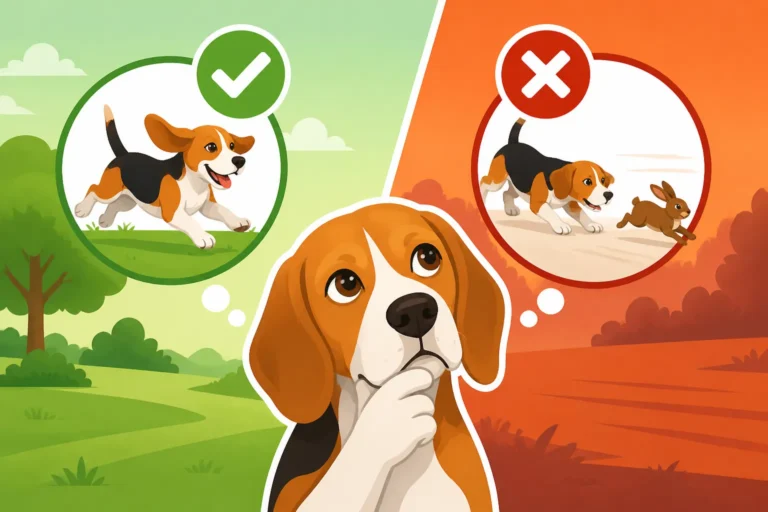
For a Beagle, an environmental trigger isn't just a distraction; it's often an irresistible siren song. Whether it's the distinctive smell of a rabbit that sends them into a frenzy or the distant sound of other dogs playing, these triggers can instantly override their learned behaviors. When your Beagle locks onto one of these, your voice truly does stop registering because their brain is prioritizing that instinctual response.
The strategy here is twofold: management and desensitization. Management means avoiding situations where your Beagle is likely to be overwhelmed by triggers, especially during early training. If you know a certain park is teeming with squirrels, perhaps start with a quieter, less stimulating location. Desensitization involves gradually exposing your Beagle to these triggers from a distance, rewarding them for not reacting and for checking in with you. For example, if distant dogs are a trigger, practice recall when other dogs are far away, then slowly decrease the distance as your Beagle's focus on you improves. This is a slow process, but it's crucial for building a more robust recall.
Overcoming Training Plateaus
It's common to hit training plateaus where progress seems to stall. Your Beagle might do great for a few weeks, then suddenly seem to forget everything, or simply stop making further progress in more distracting environments. This can be incredibly frustrating and demotivating for owners.
When you hit a plateau, it's often a sign that you've asked too much, too soon, or that your rewards aren't compelling enough. Step back and re-evaluate. Are you practicing in environments that are too distracting? Is your chosen high-value reward still high-value, or have they become bored with it? Sometimes simply switching up the treats or the location can re-ignite their enthusiasm. Review your technique: are you being consistent with your cues? Are you rewarding immediately? Occasionally, seeking advice from a professional dog trainer, even for a single consultation, can provide fresh perspectives and new strategies to push past the plateau. Don't be afraid to Ask a Beagle Breeder About Genetics or a professional trainer about their specific recall strategies.
Living Safely with a Beagle's Instincts
Ultimately, living with a Beagle means accepting their incredible, powerful instincts and learning to work with them, rather than against them. Their nose is a gift, and while it poses challenges for recall, it also makes them endlessly fascinating companions.
Why a Beagle Should Never Be Off Leash Unfenced
This is arguably the most critical takeaway for any Beagle owner. Due to their extreme scent drive and selective hearing when on a trail, Whether Any Beagle Can Be Trusted Off Leash in an unfenced area is almost universally answered with a resounding "no." It’s not a reflection of your training ability or your Beagle's intelligence; it's a testament to the power of their genetics. The risk of them disappearing, getting hit by a car, or encountering dangerous wildlife is simply too high.
Even if your Beagle has a near-perfect recall in your securely fenced yard or a very quiet, contained area, one whiff of a rabbit or deer can switch off all learned behavior. It's a risk that is simply not worth taking. Your Beagle loves you, but they are also driven by an ancient hunting instinct that will compel them to follow a scent regardless of your calls. Protect them by always keeping them leashed or securely contained when outside of a truly dog-proof, fenced environment.
Creating a Secure Environment
Since off-leash freedom is a rare luxury for Beagles, creating a secure environment at home becomes paramount. This means a securely fenced yard that is truly Beagle-proof. Beagles are known for their escape artistry; they can dig under fences, climb surprisingly well, and exploit any weak point. A fence needs to be tall enough to prevent jumping, and ideally, have a "skirt" or buried wire along the bottom to deter digging.
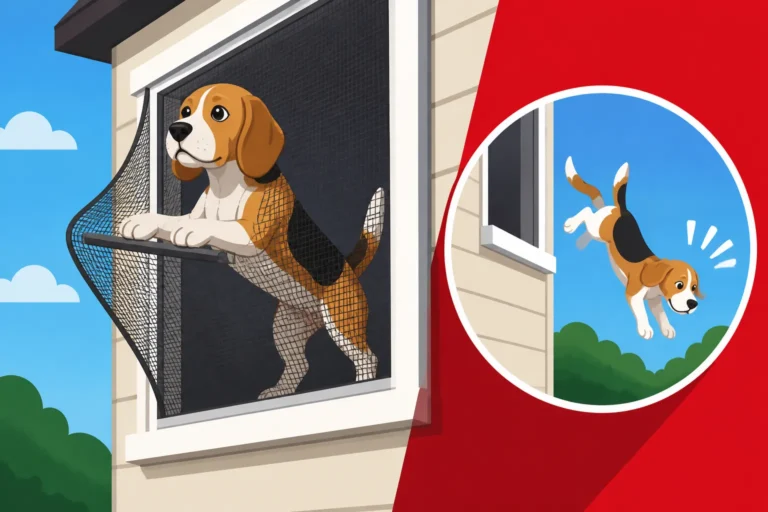
Beyond the yard, ensure your home itself is secure. Keep doors and gates latched, be mindful of open windows with screens that could be pushed out, and teach a "wait" command at doorways to prevent door dashing. The goal is to minimize any opportunity for them to get loose and follow that irresistible scent trail into danger. Being proactive about security is part of responsible Beagle ownership.
Accepting and Working with Their Nature
One of the greatest gifts you can give yourself and your Beagle is to accept their nature. They are scent hounds, through and through. That powerful nose isn't a flaw; it's their defining characteristic and what makes them unique. Instead of fighting it, learn to embrace it. Plan walks where they can sniff to their heart's content on a long line, or engage in scent work games that satisfy their drive in a controlled environment. Scent Work as the Job a Beagle Was Built For can be incredibly enriching for them.
While a perfectly reliable recall against all distractions may remain an elusive dream for some Beagles, a safe and functional recall is absolutely achievable with consistent effort, high-value motivation, and realistic expectations. Understand their world, prioritize their safety, and celebrate the incredible abilities of your remarkable Beagle. They may have selective hearing sometimes, but their hearts are always fully devoted to you, even when their noses are elsewhere.
Disclaimer
This article is for general informational purposes only and does not constitute professional advice. Laws, prices and regulations vary by location and change over time. Consult a qualified professional for guidance on your specific situation.