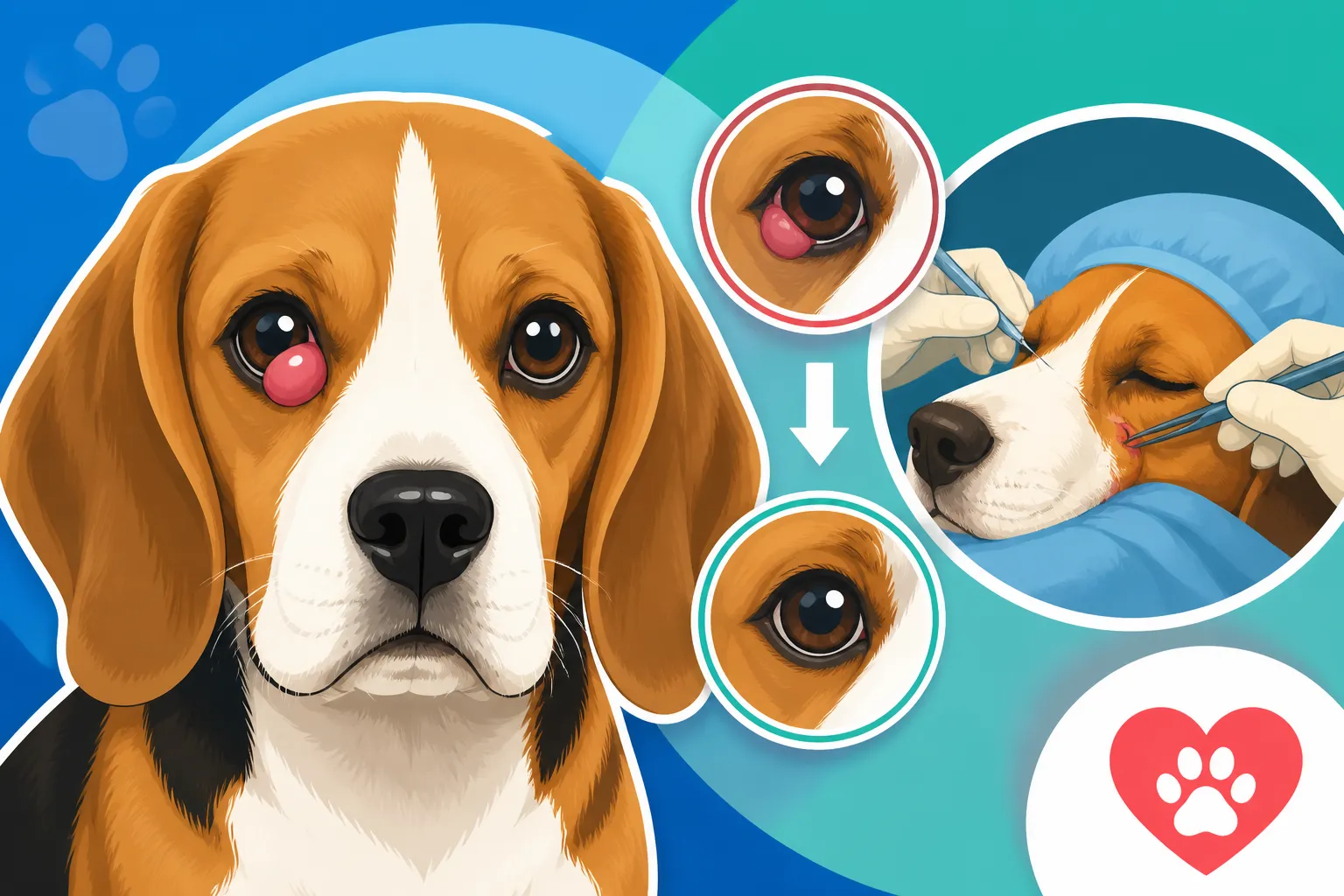
Beagle Cherry Eye and the Surgery That Fixes It
It’s a sight that can send any Beagle parent’s heart into their throat: that sudden, bright red blob peeking out from the inner corner of your beloved hound’s eye. This isn't just a minor irritation; it's a prolapsed nictitans gland, more commonly known as "cherry eye," and it needs attention. If you're seeing this in your Beagle, you're likely worried, wondering what it is, if it hurts, and most importantly, how to make it go away. This comprehensive guide will walk you through understanding cherry eye, its surgical solutions, and what to expect during recovery to get your Beagle's eye back to normal.
What Exactly Is Cherry Eye in Beagles?
Cherry eye, or technically, nictitans gland prolapse, is a fairly common condition in certain breeds, and our Beagles, unfortunately, are on that list. It happens when the tear-producing gland of the "third eyelid" pops out of its normal position and becomes visible as a red, swollen mass. It looks alarming, and while it's usually not acutely painful, it can certainly become a major source of discomfort and lead to more serious issues if left untreated.
Understanding the Nictitating Membrane
To truly grasp cherry eye, we need to talk about the nictitating membrane, often called the "third eyelid." Most people don't even realize their dogs have one because it usually stays tucked away in the inner corner of their eye, doing its job quietly. This isn't just a random flap of tissue; it's a crucial part of your Beagle's ocular health. Its primary role is protective, sweeping across the eyeball to remove debris and distribute tears, much like a windshield wiper for their eye.
But here’s the kicker: this third eyelid also houses a significant tear-producing gland, responsible for about 30-50% of your Beagle’s total tear production. This gland is vital for keeping the eye moist, healthy, and free from irritation. When everything is working as it should, you might occasionally catch a glimpse of the third eyelid if your Beagle is particularly sleepy or stressed, but the gland itself remains hidden. Its tucked-away position is key to its proper function and protection. It’s supposed to be secure, anchored by connective tissue, behind that lower eyelid margin.
Why the Gland Prolapses
So, why does this important tear gland suddenly decide to make a dramatic entrance? In Beagles, it’s largely due to a genetic predisposition involving weakened connective tissue. Think of it like a hammock. The gland is nestled in this "hammock" of tissue, holding it firmly in place. For breeds like Beagles, this connective tissue can be inherently weaker or more lax than it should be.
When this tissue weakens, or if there's some sort of trauma, inflammation, or even just a particularly enthusiastic head shake, the gland can pop out from behind the lower eyelid margin. Once it prolapses, it’s exposed to air and irritants, quickly swelling and turning that characteristic cherry-red color due to inflammation. It’s not a muscle that has snapped, but rather the anchors holding it in place that have stretched or torn. It can happen in one eye, or in some cases, both eyes, either at the same time or sequentially. It’s a sudden event that often catches owners completely off guard, turning a perfectly normal eye into something that looks quite startling overnight.
The Immediate Risks of Untreated Cherry Eye
While a fresh cherry eye might not cause immediate excruciating pain, it certainly isn’t something you can just ignore and hope it goes away. The gland, once prolapsed, is exposed to the elements, making it prone to a cascade of problems. First and foremost, the exposed gland itself becomes inflamed and irritated, leading to chronic discomfort. Your Beagle might start pawing at their eye or rubbing their face, which only exacerbates the problem, potentially introducing bacteria and causing secondary infections.
More critically, the exposed gland cannot function effectively. Its tear-producing ability is compromised, leading to a condition called keratoconjunctivitis sicca (KCS), or "dry eye." Chronic dry eye is not only uncomfortable but can lead to serious long-term complications, including corneal ulcers, vision impairment, and even blindness if left untreated. The cornea, the clear outer layer of the eye, relies on a constant, healthy tear film for lubrication and protection. Without it, the cornea can become damaged, scarred, and lose its transparency. This is why preserving the gland, rather than removing it, is so crucial during surgical correction. It's not just about aesthetics; it's about maintaining essential tear production for lifelong eye health. If you suspect your Beagle has a severe eye issue or cherry eye that appears infected or extremely painful, remember these are often Beagle Emergency Signs That Cannot Wait Until Morning and warrant an immediate vet visit.
Recognizing the Signs and Getting a Diagnosis
Spotting cherry eye is usually quite straightforward, given its distinct appearance. However, knowing the subtle behavioral changes can help you act quickly and get your Beagle the help it needs before complications arise.
Visual Symptoms You Can't Miss
The most obvious sign of cherry eye is, of course, the visual one: a small, round, fleshy, red mass suddenly appearing in the inner corner of your Beagle’s eye. It truly does resemble a tiny cherry, hence the name. This protrusion often appears very rapidly, sometimes overnight, leaving you scratching your head wondering what happened. It might be small at first, like a tiny pink bubble, but it quickly swells and becomes more prominent as it gets irritated.
It's important to differentiate this from other eye issues. Unlike conjunctivitis, where the whites of the eyes might be red and swollen but there's no distinct mass, cherry eye presents with that undeniable, visible gland. It can affect one eye or, in some cases, both eyes. If it appears in one eye, there's always a chance the other eye might prolapse later, so keep a close watch. The color can vary from a pale pink to a vivid, angry red, depending on the level of inflammation and irritation. You might also notice increased tear production initially, as the irritated gland tries to compensate, or later, a dry, dull appearance to the eye if tear production decreases.
Behavioral Clues to Watch For
Beyond the stark visual cue, your Beagle might give you some behavioral clues that indicate discomfort. Because the prolapsed gland is irritating, you might observe your Beagle pawing at its eye frequently, trying to rub it on furniture or carpets, or blinking excessively. These are all signs they’re experiencing irritation. They might also squint, or hold the affected eye partially closed, especially in bright light.
Sometimes, the constant irritation can make them generally a bit subdued or less enthusiastic, as their comfort level is compromised. You might also notice a discharge from the eye, which could be clear and watery from irritation, or thick and yellowish if a secondary bacterial infection has set in due to the repeated rubbing and exposure. While these behaviors aren't exclusive to cherry eye, when combined with the visual symptom, they paint a clear picture that something is amiss.
The Vet's Diagnostic Process
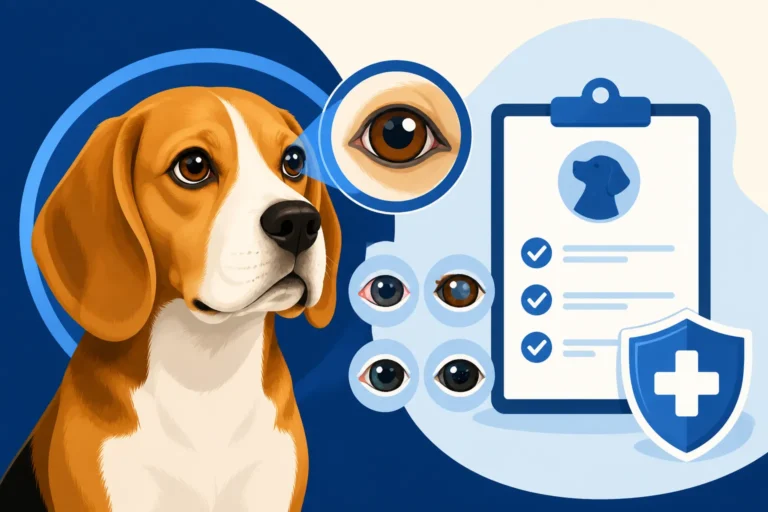
When you bring your Beagle in for suspected cherry eye, your veterinarian will typically perform a thorough ophthalmic examination. This isn't just a quick glance; it's a careful inspection of the entire eye structure. The vet will confirm that the visible mass is indeed the prolapsed nictitans gland. They'll also check for any signs of secondary infection, corneal damage, or other concurrent eye issues.
A crucial part of the diagnostic process is often a Schirmer tear test. This involves placing a small strip of specialized paper under the lower eyelid for a minute to measure tear production. This helps assess if the prolapse has already started to affect the gland's ability to produce tears and rule out pre-existing dry eye. Your vet might also use a fluorescein stain to check for any corneal abrasions or ulcers that could have developed from rubbing or chronic dryness. In some cases, to rule out other, less common but more severe conditions, your vet might recommend a referral to a veterinary ophthalmologist, especially if the case is complex or if there's concern about other underlying issues. A board-certified veterinary ophthalmologist has specialized expertise in diagnosing and treating all types of eye conditions, and for complex cases, their input can be invaluable, as discussed in What a Beagle Eye Exam Needs an Ophthalmologist.
Surgical Approaches to Fix Beagle Cherry Eye
Once cherry eye is diagnosed, surgery is almost always the recommended course of action. While there might be rare cases of spontaneous reduction, or temporary relief with topical anti-inflammatories, these are usually short-lived. The goal of surgery is to return the gland to its natural position and secure it there permanently, while preserving its vital tear-producing function.
The "Pocket" Technique Morgan Pocket Technique
By far the most common and widely recommended surgical method for cherry eye in Beagles (and most breeds) is the "pocket technique," often referred to as the Morgan Pocket Technique. This procedure is designed to preserve the tear gland, which is incredibly important for preventing future dry eye complications. During the surgery, which is performed under general anesthesia, the veterinary surgeon will create a small "pocket" of conjunctival tissue around the prolapsed gland. They then tuck the gland back into this pocket, essentially repositioning it to where it naturally belongs.
Once the gland is re-seated, the edges of the conjunctival tissue are carefully sutured closed over it, creating a new, strong anchor that holds the gland in place. The sutures are usually very fine, dissolvable material, and are placed in a way that minimizes irritation to the eye surface. The beauty of this technique is that it mimics the gland's natural anatomical position and, crucially, allows it to continue producing tears. This significantly reduces the risk of your Beagle developing dry eye later in life, a condition that can be lifelong and require daily medication. The success rate for the pocket technique is quite high, typically around 80-90%, making it the preferred method for most veterinary professionals.
Gland Removal Excision and Why It's Avoided
In the past, before the implications of gland removal were fully understood, some veterinarians opted to simply excise, or remove, the prolapsed gland. This approach would certainly resolve the immediate visual problem of cherry eye. However, we now know that this is a highly discouraged practice for one very significant reason: the tear-producing gland of the third eyelid is essential.
Removing this gland dramatically increases the risk of your Beagle developing severe and chronic dry eye (keratoconjunctivitis sicca or KCS) later in life. As mentioned earlier, this gland is responsible for a substantial portion of the eye's tear production. Without it, the remaining tear glands often cannot compensate adequately, leading to a lifelong battle with dry, irritated eyes that require daily medication. KCS can cause severe discomfort, corneal damage, ulcers, and potentially permanent vision loss. Because the long-term consequences of gland removal are so detrimental to a dog’s quality of life, modern veterinary ophthalmologists and general practitioners strongly advocate for gland-preserving techniques like the pocket method. If your vet suggests gland removal, it's always wise to seek a second opinion or a referral to a specialist.
Pre-Operative and Post-Operative Care
Successfully resolving cherry eye isn't just about the surgery itself; it heavily relies on diligent pre-operative and post-operative care. Before surgery, your vet will likely prescribe topical anti-inflammatory eye drops to reduce swelling and irritation of the prolapsed gland. This helps create a healthier tissue environment for the surgery and makes the procedure easier for your dog. You'll also receive instructions on fasting your Beagle before anesthesia, typically withholding food for 8-12 hours and water for a few hours prior.
The post-operative period is equally critical for a successful outcome. Your Beagle will likely come home with an Elizabethan collar (E-collar or "cone of shame") that they must wear continuously for several weeks. This is non-negotiable, as any rubbing, scratching, or pawing at the surgical site can lead to infection, suture breakdown, or even re-prolapse. You'll also be sent home with a regimen of anti-inflammatory and antibiotic eye drops or ointments to prevent infection and control inflammation. Oral pain medication might also be prescribed for a few days to ensure your Beagle stays comfortable. Activity restrictions are crucial: no vigorous play, running, or jumping for the specified recovery period. Gentle, leashed walks are usually fine. You’ll typically have a follow-up appointment within 1-2 weeks to check on healing and ensure the gland remains in place. This entire process can feel like a lot to manage, but sticking to the plan is essential for your Beagle's recovery. Proper care is key, as is good general Beagle Grooming and Ear Care Supplies to avoid other issues.
Understanding Recovery, Potential Complications, and Costs
Even with a successful surgery, the journey doesn't end there. Understanding the recovery process, potential bumps in the road, and the financial aspect is crucial for every Beagle owner.
The Recovery Timeline
The initial recovery from cherry eye surgery typically involves some swelling and redness around the eye, which is completely normal. In the first few days, the eye might look a bit bruised or puffy, and there might be some discharge. This gradually subsides over the first week or two. The E-collar is your Beagle's best friend (though they might not think so!) during this time, protecting the delicate surgical site. Most Beagles adapt to the cone pretty quickly, even if they bump into everything for a day or two.
You'll continue with the prescribed eye drops and oral medications for the duration your vet recommends, usually for 2-4 weeks. By the time of the first follow-up appointment, typically around 10-14 days post-op, your vet will assess the healing progress and confirm the gland is still well-seated. Full recovery, where all swelling has resolved and the eye looks completely normal, can take up to a month. It’s a process that requires patience and strict adherence to your vet’s instructions.
Possible Complications and Relapse
While the pocket technique has a high success rate, no surgery is without potential complications. One of the most common concerns is a relapse, meaning the cherry eye can pop out again. This is more likely to occur in cases where the connective tissue was extremely lax, or if the dog managed to rub or paw at the eye excessively during recovery, disrupting the sutures. If a relapse occurs, a second surgery might be necessary. Sometimes, a more specialized technique or even a referral to an ophthalmologist may be recommended for these repeat cases.
Other possible complications include infection at the surgical site, although this is rare with proper post-operative antibiotic drops. Suture reactions can also happen, where the body reacts to the dissolvable sutures, causing a bit more inflammation. In very rare instances, the sutures could erode and irritate the cornea. These issues are typically managed with additional medications or, if severe, a brief vet visit to address them. The important thing is to monitor your Beagle closely during recovery and report any excessive redness, discharge, pain, or changes in the eye's appearance to your vet immediately.
The Cost of Cherry Eye Surgery
The cost of cherry eye surgery for a Beagle can vary significantly depending on several factors, including your geographic location, the specific veterinary clinic (general practice versus a specialist ophthalmologist), the complexity of the case, and whether one or both eyes require surgery. Generally, you can expect the cost for a single eye to range anywhere from $500 to $1,500. This estimate typically includes the pre-operative exam, anesthesia, the surgical procedure itself, post-operative medications, and follow-up visits. If both eyes need surgery, or if there are complications requiring more intensive care, the cost will naturally be higher.
Here's a breakdown of potential costs:
| Service | Estimated Cost Range (USD) | Notes |
|---|---|---|
| Initial Vet Exam/Consultation | $50 – $150 | Often includes Schirmer tear test and fluorescein stain |
| Anesthesia | $200 – $500 | Varies by duration, patient weight, and monitoring equipment |
| Surgical Procedure (one eye) | $400 – $1,000 | Morgan Pocket Technique |
| Medications | $50 – $150 | Post-op eye drops (antibiotic, anti-inflammatory), pain meds |
| E-collar | $15 – $40 | Essential for preventing self-trauma |
| Follow-up Visits | $0 – $100 (per visit) | Often included in surgical package, but sometimes a separate fee |
| Total (one eye) | $715 – $1,940 | May be higher for specialist referral or complex cases |
These costs can certainly add up, especially for an unexpected procedure. This is where pet insurance can be a real lifesaver. Providers like Healthy Paws, for example, offer comprehensive accident and illness plans that can cover a significant portion of surgical costs for conditions like cherry eye, provided the condition isn't pre-existing before you enroll. Understanding Beagle Pet Insurance and What It Runs a Month before an emergency strikes is a smart financial move for any pet parent. Having a good policy in place can ease the financial burden and allow you to make decisions based on what’s best for your Beagle’s health, rather than your wallet.
Living with a Beagle Prone to Eye Issues
If your Beagle has experienced cherry eye, it might signal a genetic predisposition not just for that specific condition, but potentially for other eye health challenges as well. Being proactive and vigilant about their eye care can help manage these risks.
Proactive Eye Health
For Beagles, whose genetics often predispose them to eye issues, proactive eye health isn't just a good idea – it's essential. Regular, gentle inspection of your Beagle’s eyes should become a routine. Look for any signs of redness, discharge, cloudiness, or any changes in the shape or position of the eyelids or the third eyelid. If you notice any excessive blinking, squinting, or pawing at the face, it’s always worth a quick call to your vet.
Keeping the area around their eyes clean is also important. Use a soft, damp cloth to gently wipe away any normal discharge or sleep. Avoid using harsh chemicals or human eye drops, unless specifically instructed by your vet. If your Beagle is prone to allergies that manifest around their eyes, working with your vet to manage those can reduce irritation. And of course, making sure they can’t rub their face on rough surfaces or objects will prevent self-inflicted trauma. Early detection of any problem is always the best defense, and your vet can perform a thorough Beagle Eye Conditions and the Board-Certified Exam to keep track of their ocular health.
Other Beagle Eye Conditions to Be Aware Of
While cherry eye is distinct, Beagles can be susceptible to a range of other eye conditions. Being familiar with these can help you spot issues early. For instance, some Beagles can develop Beagle Cherry Eye and Glaucoma. Glaucoma is a serious condition characterized by increased pressure within the eye, leading to pain and potential vision loss. It's often a medical emergency, and symptoms can include a cloudy cornea, dilated pupil, a bulging eye, and obvious pain.
Another common concern is Beagle Dry Eye and Daily Drops (KCS), which, as we discussed, can be a consequence of untreated cherry eye or can occur independently. Symptoms include thick, ropey discharge, red and inflamed eyes, and a dull, dry appearance. Managing dry eye often involves lifelong daily eye drops. Beagles can also be prone to other issues like cataracts, which cloud the lens of the eye and impair vision, or various eyelid abnormalities. Given the genetic predisposition for eye problems in the breed, if you're considering breeding your Beagle, an The Eye Exam Required Before Breeding a Beagle is a critical step to help prevent passing on these conditions. Regular veterinary check-ups are key to catching and addressing any of these concerns promptly, ensuring your Beagle enjoys clear vision and comfort throughout their life.
Disclaimer
The information provided in this article is for general educational purposes only and should not be considered a substitute for professional veterinary advice, diagnosis, or treatment. Always seek the advice of your veterinarian or another qualified animal health provider with any questions you may have regarding a medical condition or treatment plan for your Beagle.