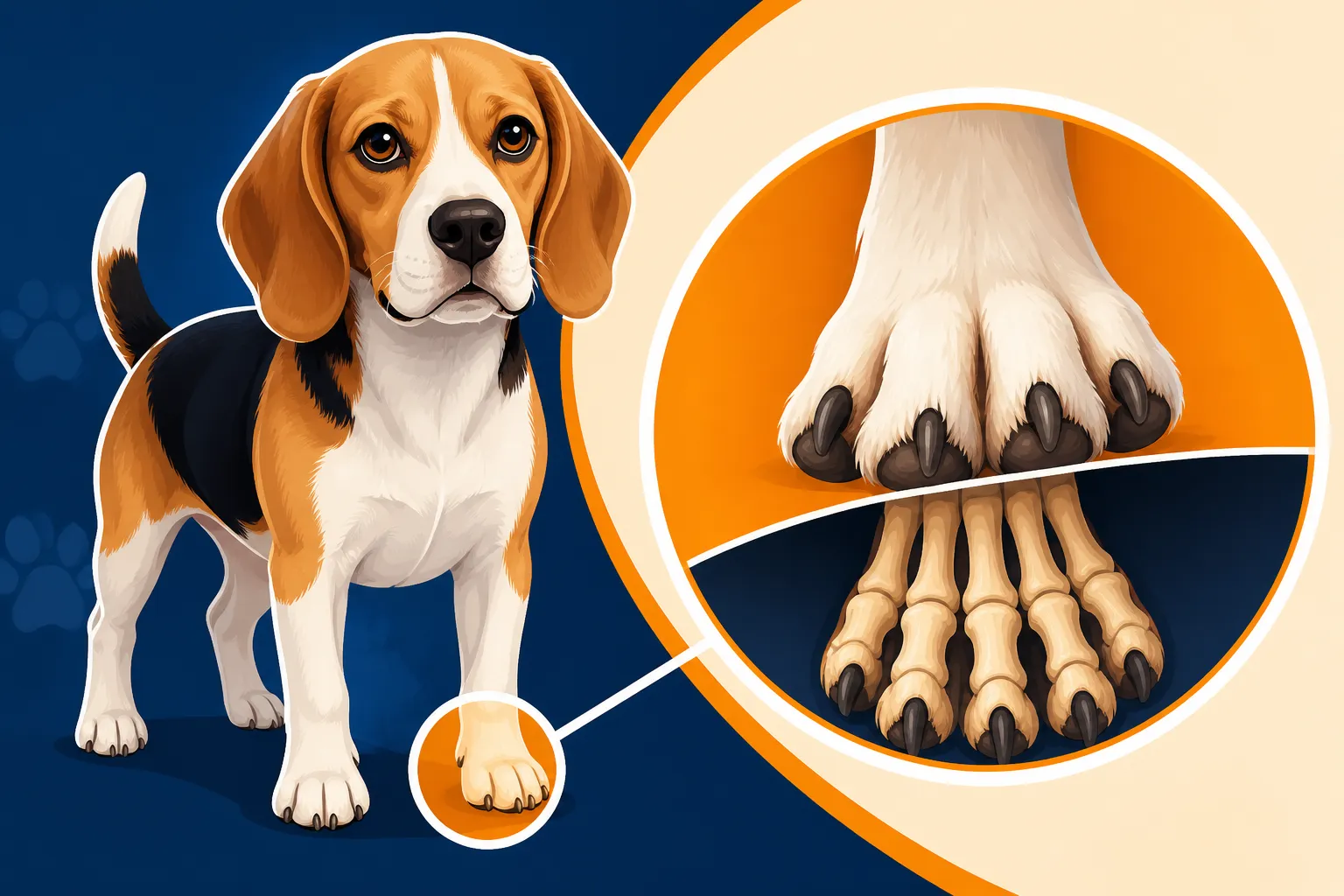
Beagle Feet and Bone Under the Standard
It’s easy to get swept away by a Beagle’s soulful eyes, that wagging tail, or their famously merry disposition. But beneath all that charm and scent-driven enthusiasm lies a crucial framework: their bones and their feet. As a veteran Beagle owner and enthusiast, I’ve seen firsthand how much a solid foundation impacts a dog's entire life. This guide isn’t just about the obscure points a show judge might look for; it’s about understanding how your Beagle’s structure directly affects their comfort, health, and ability to do all the wonderful, sniffy things Beagles love to do. We're going to dig into what "good" bone and feet actually mean for our beloved hounds.
The Foundation of a Working Hound: Why Feet Matter So Much
Think about what a Beagle was bred for: long days spent covering varied terrain, nose to the ground, trailing rabbits through fields, woods, and whatever else nature threw at them. This isn't a couch potato job description. Their feet are their primary tools for this tireless work, the shock absorbers and traction control for a life of boundless energy. A Beagle with subpar feet isn't just less aesthetically pleasing; they're genuinely more prone to discomfort, injury, and an inability to fully enjoy their natural instincts. It’s like trying to run a marathon in flimsy sandals instead of proper running shoes – you just won't last.
The breed standard is very particular about feet, and for good reason. It’s not about being picky; it's about preserving the working integrity of the breed. We want our Beagles to be able to romp, explore, and chase scents well into their senior years, and that all starts with their paws. Overlooking these details in a puppy can lead to significant issues down the road, from chronic lameness to secondary joint problems in other parts of their body as they compensate for weak feet.
Compact and Well-Knuckled: The Ideal Beagle Foot
When the standard talks about "compact" feet, it means the toes are held tightly together, not splayed out like a duck’s foot. Imagine a tight little fist, not an open hand. This compact structure provides strength and support, distributing weight evenly across the paw. It helps prevent foreign objects like thorns, burrs, or sharp stones from getting wedged between the toes, which can cause pain and infection. A dog with splayed feet is constantly battling these minor injuries, and they quickly add up to bigger problems.
"Well-knuckled" refers to the arch of the toes. Each toe should have a distinct, strong arch, lifting the paw slightly off the ground, except for the pads. This arch acts like a spring, absorbing impact as the dog moves, whether they’re running across a field or jumping off the porch. If the toes are flat or splayed, this natural shock absorption is lost, putting undue stress on the paw joints, pasterns (the "wrists" of the dog), and even higher up the leg into the elbows and shoulders. It’s a domino effect that can prematurely age their joints.
Consider a Beagle like Penny, a lively eleven-year-old I know who still zips around like a pup. Her feet are perfectly compact and well-knuckled. Her owner has always been diligent about her paw health, and it's paid off. She rarely has issues with soreness or minor injuries, even after long hikes. In contrast, I once met a sweet rescue Beagle named Gus who had very flat, splayed feet. By the age of six, he was already showing significant Beagle Arthritis Arriving in Middle Age, largely attributed by his vet to the constant strain on his poorly supported paws.
Strong Pads and Short Nails: Built for the Trail
Beyond the overall shape, the quality of the pads and nails is equally vital. A Beagle’s paw pads should be thick, tough, and resilient. These are their natural walking boots, providing cushioning and grip. Think of them as the rugged soles of a hiking boot – they need to withstand miles of wear and tear without tearing or becoming overly sensitive. Thin or cracked pads make every step painful, especially on hard or rough surfaces. Regular walks on varied terrain can help keep pads conditioned, but some Beagles, especially those who spend more time on pavement, might need a little extra paw balm to prevent cracking. You might even find some excellent paw protection balms and creams at retailers like Chewy to keep those pads in top shape.
Nails are another often-overlooked component. The standard calls for short, strong nails. "Short" means they shouldn't extend beyond the pads of the foot and ideally should not touch the ground when the dog is standing naturally. When nails are too long, they push up into the nail bed, distorting the natural angle of the toes and putting pressure on the foot joints. This can lead to splayed feet over time and even lameness. It's a surprisingly common issue that contributes to discomfort and gait problems. Keeping those nails trimmed is a constant battle for many Beagle owners, especially if their dog has dark nails, making the quick hard to see. There are many guides on Trimming Black Beagle Nails You Cannot See Through to help you confidently manage this essential task.
Imagine a Beagle with long nails trying to grip the ground for a quick turn while chasing a scent. Those long nails act like clumsy levers, forcing the toes out of alignment and reducing traction. This increases the risk of slips, falls, and nail injuries – like tearing a nail right off, which is incredibly painful. Short nails allow the foot to function as it was designed, providing optimal grip and stability. It's a small detail that makes a huge difference in their overall comfort and athletic ability.
More Than Just "Sturdy": Understanding Beagle Bone Structure
When we talk about "bone" in the context of a breed standard, we’re referring to the overall substance and density of a dog’s skeletal framework, particularly in their legs. It’s not just about size; it's about appropriate strength and solidity that aligns with the breed’s purpose. A Beagle isn't a delicate lapdog, nor is it a massive mastiff. It needs a bone structure that supports its compact, muscular body and allows for agile, enduring movement across various terrains.
The structure of the bones and joints directly influences a Beagle’s gait, stamina, and resilience to injury. Too light, and they'll be fragile; too heavy, and they'll be cumbersome. It's about finding that "just right" balance that speaks to their heritage as a field dog. This often gets wrapped up in terms of "substance," which essentially means a dog that feels solid and well-built when you run your hands over them, not spindly or overly refined.
Substantial Bone: Neither Fine Nor Coarse
A well-bred Beagle should have "substantial" bone. This means their bones are strong and well-developed, giving them a sturdy, balanced appearance. They shouldn't look delicate or "fine-boned," which might suggest a lack of resilience for a working hound. Conversely, they shouldn't be overly "coarse-boned" or heavy, which could make them clumsy and slow, hindering their natural agility and endurance. The ideal is a happy medium, reflecting their sturdy yet athletic build.
You can often feel a dog’s bone substance by cupping your hand around their lower leg, just above the paw. For a Beagle, you should feel a good amount of bone, not just skin and muscle over a thin stick. This substantial bone provides the strength needed for those long days of hunting, for jumping over small obstacles, and for supporting their body weight effectively as they navigate uneven ground. It's the framework that holds everything together and allows the muscles to work efficiently.
I remember a young Beagle named Buster whose owner was concerned about his tendency to tire quickly on walks, even though he was otherwise healthy. Upon examination, his vet noted that Buster was quite fine-boned for a Beagle, leading to less efficient muscle attachment and greater strain on his joints during prolonged activity. This contrasted sharply with my own Beagle, Daisy, who has beautifully substantial bone. Daisy can go for miles, her solid structure supporting her tireless drive. This difference isn't just about appearance; it's about the fundamental ability to perform the tasks the breed was created for.
Straight Legs and Well-Angulated Joints: Free Movement is Key
Beyond just the amount of bone, its arrangement and the articulation of the joints are paramount. The standard typically calls for straight forelegs and hind legs that are well-angulated. "Straight legs" means the bones of the forelegs, when viewed from the front, should be straight and parallel, not bowed in or out. From the side, the pasterns should be strong and nearly vertical, acting as a spring. This straightness allows for efficient, ground-covering movement without wasted energy or undue strain on the joints.
"Well-angulated joints" refers to the proper angles formed by the bones at the shoulder, elbow, stifle (knee), and hock (ankle). These angles act as critical shock absorbers and levers, allowing the dog to move smoothly, powerfully, and with great endurance. For instance, proper shoulder angulation allows a Beagle to reach far forward with its front legs, covering more ground with each stride. Correct hindquarter angulation provides the powerful drive needed for propulsion, allowing for bursts of speed and efficient climbing. If these angles are too straight or too extreme, the natural spring and power are diminished, leading to a stiff gait, less stamina, and increased wear and tear on the joints.
Think of a Beagle like a finely tuned machine; every part has a role. A Beagle with good angulation moves with purpose and fluidity, covering ground effortlessly. One with poor angulation might appear stiff, choppy, or overly short-strided. This isn’t just about looking elegant in the show ring; it's about functional movement in the field. When their body moves as it should, there’s less stress on the Beagle Hip Dysplasia and Everyday Joint Wear and other crucial areas, leading to a more comfortable and active life. This careful structural balance contributes directly to the overall Beagle Lifespan and the Twelve to Fifteen Year Range.
Common Faults and Their Real-World Impact on Your Beagle
Nobody wants to hear that their beloved Beagle might have structural faults, but understanding these common deviations from the breed standard is vital. It’s not about judging a dog's worth or loveability; it's about being prepared for potential health challenges and ensuring we provide the best possible care. Many of these structural issues can lead to chronic pain, reduced mobility, and a decreased quality of life if not managed proactively.
Often, these faults are subtle in a young puppy but become more pronounced as the dog grows and puts more weight and activity on its frame. This is why a knowledgeable breeder will pay close attention to these details from birth, as they are indicators of a dog's long-term soundness. For owners, recognizing these signs means you can discuss them with your veterinarian and potentially implement preventative measures earlier, such as specific exercises, dietary adjustments, or joint support.
Splayed Feet and Weak Pasterns: A Recipe for Trouble
We touched on splayed feet earlier, and it's worth reiterating their detrimental effect. When a Beagle’s toes spread apart rather than staying tight and compact, they lose critical support. This not only makes them more susceptible to injuries from debris but also puts constant strain on the joints of the foot itself. The ligaments and tendons that are meant to hold the toes tightly together become stretched and weakened, exacerbating the problem over time.
Closely related to splayed feet are weak pasterns. The pastern is the metacarpal area, essentially the equivalent of our wrist. In a well-structured Beagle, the pasterns should be strong, firm, and show a slight angle when viewed from the side, providing a spring to the step. Weak or "down in the pasterns" means this angle is too steep, causing the dog to walk almost on the back of its pasterns, rather than on its firm pads. This posture is inefficient and incredibly stressful on the joints, leading to early onset arthritis and chronic soreness. A Beagle with weak pasterns will tire easily, may develop a choppy gait, and might even try to avoid longer walks.
Imagine a Beagle named Cooper who I knew from the dog park. He had noticeably splayed feet and very weak pasterns. By the time he was five, he was often limping after walks and required regular anti-inflammatory medication. His owner tried everything, from special shoes to physical therapy, but the underlying structural issue always meant an uphill battle. This is a prime example of how seemingly minor structural faults can lead to significant pain and expense down the line, affecting a dog's overall enjoyment of life. Supporting a Beagle with these issues might even involve Ramps and Steps That Protect a Beagle Spine and other joints from unnecessary impacts.
Poor Angulation and Fine Bone: When Movement is Compromised
Just as important as the feet are the angles of the joints and the overall bone substance. Poor angulation, whether too straight or over-angulated, throws the entire biomechanics of the dog out of whack. If a Beagle’s shoulders are too straight, they won't have the reach they need in their front stride, making their movement appear stiff and less powerful. If the hindquarters are too straight, they lose the powerful spring needed for propulsion, leading to a weak rear drive and a bunny-hopping gait.
A common example of poor angulation is straight stifles (knees) and hocks. This often means the dog looks like it has very upright hind legs, lacking the natural bend that provides both power and shock absorption. Such a Beagle might struggle with jumping, climbing stairs, or even just getting up from a lying position. The lack of proper angulation means more impact is transferred directly to the joints and spine, accelerating wear and tear. This can contribute to issues like Beagle Back Problems and Intervertebral Disc Disease because the spine takes on more concussive force.
Similarly, fine bone substance, as discussed, means the bones themselves aren't strong enough for the Beagle’s body. This can lead to increased risk of fractures, especially in active dogs, and greater susceptibility to stress injuries. It also means less efficient muscle attachment, as there's less surface area for the muscles to anchor to, resulting in reduced power and endurance. A Beagle with fine bone might feel delicate to the touch and simply not have the robust build required for its traditional role. These dogs are more likely to be on Joint Supplements That Help an Aging Beagle earlier in life.
| Structural Feature | Ideal Standard Description | Potential Fault | Real-World Impact |
|---|---|---|---|
| Feet | Compact, well-knuckled, strong pads, short nails | Splayed, flat, thin pads, long nails | Pain, injury, infection, reduced mobility, early arthritis |
| Bone | Substantial, neither fine nor coarse | Fine or coarse | Fragility, clumsiness, inefficient movement, increased injury risk |
| Forelegs | Straight, parallel, strong pasterns | Bowed in/out, weak pasterns | Joint strain, poor gait, lameness, early arthritis |
| Hindquarters | Well-angulated stifles and hocks, straight | Overly straight or over-angulated | Reduced propulsion, bunny-hopping, joint stress, hip issues |
| Gait | Free, effortless, ground-covering | Stiff, choppy, short-strided | Reduced stamina, discomfort, uneven muscle development |
What to Look For: Practical Tips for Owners and Future Owners
Understanding the breed standard isn't just for judges or breeders. For an everyday Beagle owner, it provides a roadmap for assessing the health and long-term potential of their dog, whether they're choosing a puppy or simply monitoring an adult. Being aware of ideal structure allows you to ask informed questions, make smart choices, and provide the best possible preventative care to keep your Beagle happy and sound for years.
When you’re looking at a Beagle, think about them in motion. Do they move freely and effortlessly, or do they seem stiff or awkward? Are their feet doing the work of gripping and cushioning, or do they appear flat and cumbersome? These observations are more than just cosmetic; they speak volumes about a dog's comfort and future health. And it’s never too late to start paying attention to these details for your current companion.
Assessing a Puppy's Paws and Legs
When you’re looking at Beagle puppies, it's easy to get distracted by their playful antics and adorable faces. But this is the crucial time to start assessing their structure. Look at their feet first. Are their toes tight together, or do they look like little flippers? Gently pick up a paw and feel the pads—are they soft or already showing some toughness? Check the nails; while puppies have baby nails, you want to see them relatively short and not pushing into the ground. A reputable breeder will have already started nail care, so those nails should be tidy.
Next, observe the puppies as they stand and move. Their legs should appear straight and well-boned for their age. Of course, puppies are clumsy, but you shouldn't see extreme bowing or cow-hocked (hocks too close together, with feet splayed out) hind legs. Watch them walk and run; does their movement seem relatively fluid, or do they struggle more than their littermates? You want to feel good, solid bone when you gently touch their legs. Don't be afraid to ask the breeder about the parents' structure, especially their hip and elbow scores, which can be an indicator of overall skeletal health. This diligence in selecting a puppy can prevent a lifetime of orthopedic woes. For more insights on puppy development, you might want to read about Bringing a Beagle Puppy Home From a Kennel Litter.
It's also a good idea to feel the pasterns. They should feel firm and relatively strong, not weak or spongy. A good breeder will understand these points and be happy to discuss them, often demonstrating how their pups align with the breed standard. They know that a sound structure is key to a Beagle's long-term health and happiness, and they've bred for it.
Maintaining Healthy Feet Through Life
Even if your Beagle started with excellent feet and bone, maintaining that soundness throughout their life is an ongoing commitment. Regular nail trims are paramount. For many Beagles, especially those who walk mostly on softer surfaces like grass, their nails won't naturally wear down enough. You'll want to invest in good quality nail clippers or a grinder, which you can easily find on sites like Chewy. Make it a positive experience from puppyhood, with lots of treats and praise. Long nails are the enemy of healthy feet, pushing toes out of alignment and causing discomfort.
Paw care is also essential. Regularly check your Beagle’s paw pads for cuts, cracks, or foreign objects. If your Beagle is particularly active on rough terrain or in extreme weather, consider paw balms to keep pads supple and prevent cracking. Some owners even use paw protection boots for activities like hiking in rocky areas or walking on hot pavement, which are also readily available from retailers like Chewy. A good paw care routine is a crucial part of Beagle Paw Care After a Field Walk.
Finally, regular veterinary check-ups are key. Your vet can assess your Beagle's gait and identify any developing orthopedic issues early. Maintaining a healthy weight is also incredibly important. Excess weight puts immense strain on joints, exacerbating any underlying structural weaknesses. A proper diet and appropriate exercise, considering your Beagle’s age and activity level, will support strong bones and healthy joints. As your Beagle ages, you might explore joint supplements to provide additional support, many of which can be found at Chewy, tailored to your dog's specific needs. These proactive steps ensure that your Beagle's amazing nose can continue leading them on adventures for as long as possible.
Disclaimer
This article is for general informational purposes only and does not constitute professional advice. Laws, prices and regulations vary by location and change over time. Consult a qualified professional for guidance on your specific situation.