What Beagle Packs Still Varied On in the 1840s
For anyone fascinated by the rich history of the Beagle, it can be a bit perplexing to learn that the breed we know and love today wasn't always so uniform. Imagine a time when you couldn't just pick up a breed standard and know exactly what your future Beagle would look like or how it would hunt; that was the reality in the 1840s as enthusiasts worked to solidify the type. This guide will explore the significant variations that still existed within Beagle packs during that pivotal decade, shedding light on the journey from diverse working hounds to the recognizable companion we cherish today.
Size and Stature: From Pocket Hounds to Sturdier Hunters
One of the most striking areas of variation within Beagle packs in the 1840s was their sheer size and build. While today we generally recognize two main varieties (the 13-inch and 15-inch), the early 19th century saw a much wider spectrum, often depending on regional preferences and the specific type of game being hunted. Breeders weren't necessarily striving for a consistent look across the board yet; instead, they were often breeding for utility in their immediate environment.
The Enduring Mystery of the "Pocket Beagle"
The concept of the "Pocket Beagle" is something that still captures the imagination, and in the 1840s, these miniature hounds were more common, though perhaps not standardized. These were Beagles small enough to be carried in a saddlebag by hunters, a practice particularly useful for following game on foot through dense undergrowth where a larger hound might struggle. Their diminutive size meant they were often slower, but their incredible scenting ability and tenacity made them valuable for flushing out rabbits in specific terrains. Think of them as specialized tools rather than a general-purpose breed. Many believe these tiny Beagles were a direct descendant of the Reverend Phillip Honeywood and His Essex Pack, which reportedly included Beagles as small as ten inches.
However, it's crucial to understand that these "pocket" versions weren't a separate, recognized variety in the way we define breeds today. They were simply the smallest end of a highly variable spectrum. Their existence highlights a time when form was heavily dictated by function, and breeders weren't always focused on conformity, but on producing animals that excelled at a particular job. The genetics for such small hounds were still present, and selective breeding could easily bring them forward, even if their prevalence was starting to wane as larger, faster hounds became more favored for longer hunts. The sheer practicalities of their size also meant they faced different challenges, from navigating rough terrain to simply surviving in a competitive pack environment.
Heavier Builds for More Demanding Chases
On the opposite end of the spectrum were Beagles that were considerably larger and sturdier than what we typically see today, often blurring the lines with their slightly bigger relatives, like the Harrier or smaller Foxhounds. These hounds were bred for more demanding chases, perhaps over more open ground or for longer durations. Their heavier bone structure and greater height allowed them to keep pace with horses for extended periods, an important consideration for hunters who followed the pack on horseback rather than entirely on foot.
These larger Beagles sometimes carried traits reminiscent of their probable ancestors, such as The Talbot Hound and the Southern Hound, which were generally more substantial dogs. Their build reflected a different hunting philosophy, one that prioritized endurance and speed over the meticulous tracking that smaller Beagles excelled at. It wasn't uncommon for packs to be mixed, with larger, faster dogs driving the game and smaller, more agile ones navigating dense cover. This variation in size meant a diverse range of physical capabilities within the same general "Beagle" umbrella, making it hard to pinpoint a single, definitive Beagle look during this era. The selection pressure was squarely on performance, and if a slightly larger dog performed better, it was included in the breeding program, regardless of strict adherence to a visual standard.
Appearance: A Kaleidoscope of Coats and Colors
Beyond size, the visual appearance of Beagles in the 1840s was far from the established norms we associate with the breed's show standard today. While the tricolor pattern (black, white, and tan) is iconic, this period saw a much broader array of colors and markings, reflecting the diverse genetic pool from which these hounds were drawn and the still-evolving nature of breed definition.
Beyond the Tricolor: Lemon, Blue Tick, and More
While tricolor Beagles certainly existed, they weren't necessarily the dominant or only recognized pattern. Many packs would have included lemon-and-white Beagles, with their distinctively pale markings that can sometimes appear almost white in direct sunlight. Blue tick Beagles, with their speckled coats, were also present, a characteristic that hints at interbreeding with other hound types or the retention of older genetic traits. These variations weren't just aesthetic; sometimes, lighter coats were preferred in certain hunting environments for visibility, or darker coats for camouflage.
Imagine a hunt in the 1840s: instead of a uniform pack of perfectly marked tricolors, you might see a motley crew of hounds, each unique in its coloration, all driven by the same incredible nose. These different coats were part of the natural diversity of a working breed that hadn't yet been rigidly defined by conformation standards. Beagle Colors, Markings and the Tricolor Standard would still be years in the making, and what mattered most was their ability to find and follow a scent. The rich tapestry of colors and patterns underscores that utility, not appearance, was the primary driver for breeders at this time. This is a far cry from today, where if you're looking for a specific coat pattern or color, you can easily find breeders online or check out resources on sites like Chewy that cater to breed-specific appearances.
Coat Texture and Ear Set Differences
Even within the short, dense coat characteristic of Beagles, there could be subtle variations in texture in the 1840s. Some might have had slightly coarser hair, better suited for harsher weather, while others might have exhibited a silkier texture. These differences, while minor, would have contributed to the overall lack of a "single look" for the breed. Similarly, while the long, pendulous ear is a hallmark of the Beagle, there could have been slight variations in their length, set, and thickness. Some might have been slightly shorter, others perhaps a touch higher-set, though never truly pricked like a terrier.
These minor physical variations reinforce the idea that breed uniformity was not the paramount goal. Dogs were bred for their working ability, and if a hound with a slightly different coat or ear set excelled in the field, those traits would be perpetuated. The focus was on functionality – a coat that protected against the elements, ears that helped trap scent – rather than strict adherence to an aesthetic ideal. It’s fascinating to consider how much work and selective breeding it took to bring us to the consistent appearance we often take for granted today.
Hunting Styles and Instincts: A Spectrum of Field Abilities
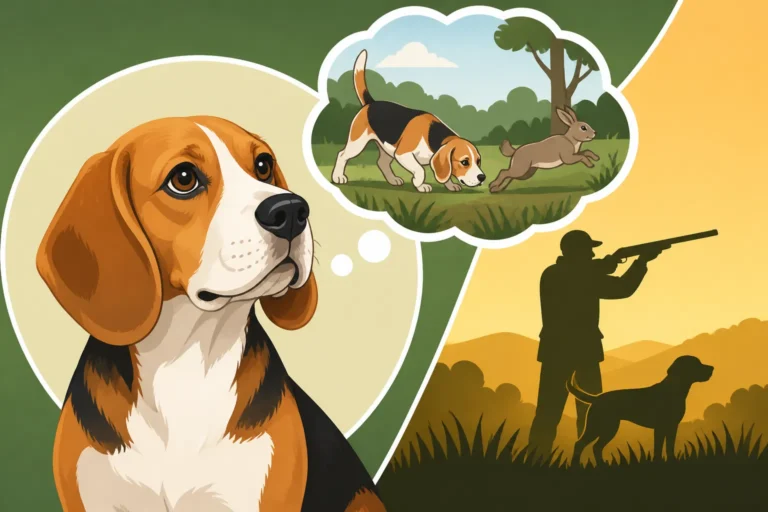
The primary purpose of the Beagle in the 1840s was hunting, primarily rabbit and hare. However, even within this core function, there were variations in hunting styles and the specific instincts that breeders prioritized. Not all Beagles hunted in precisely the same way, nor were all equally suited to every type of hunt or terrain. This adaptability and range of abilities were part of the breed's strength.
The Slow, Meticulous Trailer Versus the Faster Driver
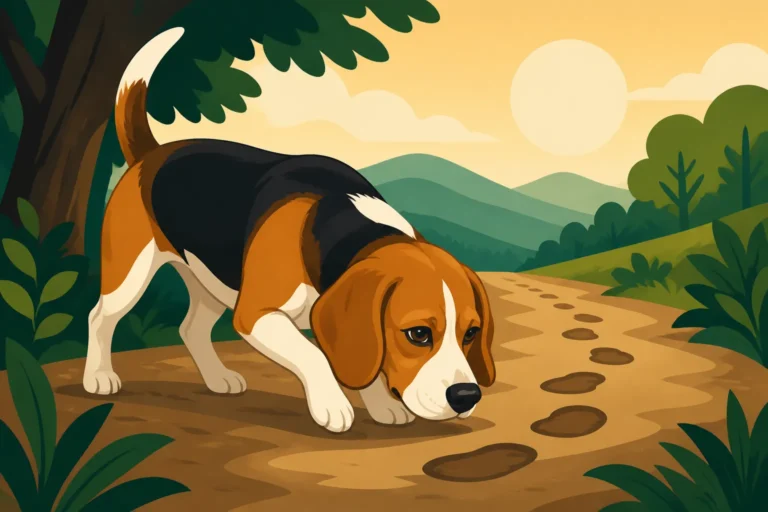
One significant distinction among Beagle packs was the preferred pace and method of trailing. Some Beagles, often smaller and perhaps with a lineage closer to the original "Southern Hound" types, were renowned for their slow, deliberate, and incredibly meticulous trailing. These hounds would pick apart every nuance of a scent trail, rarely losing it, and would methodically work their way through cover. This style was highly valued by hunters who preferred to follow on foot, enjoying the intricate process of the hunt. Their focus was on certainty and persistence.
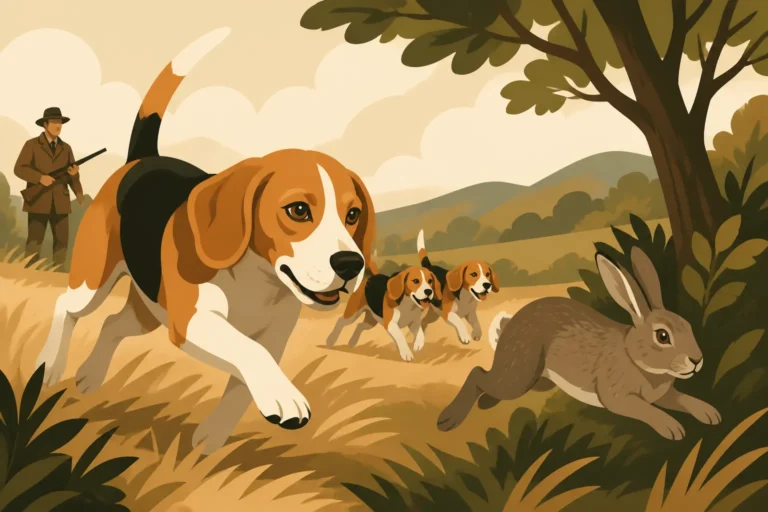
In contrast, other Beagles were bred for a faster, more driving hunt. These hounds, often the larger, more energetic individuals, would push the game harder and faster, sometimes sacrificing a bit of precision for speed. They were excellent for covering more ground quickly and for hunts where the quarry needed to be flushed and brought to bay with more urgency. This difference in pace and drive highlights how various breeders were selecting for distinct working qualities, tailoring their packs to specific hunting preferences or local conditions. It speaks to the incredible versatility of the breed, even before formal standards truly cemented The Beagle From English Rabbit Packs to American Homes. The debates over "fast" versus "slow" Beagles continued for decades, shaping the breed's development.
Solo Workers vs. Pack Specialists
While Beagles are inherently pack animals, some lines or individuals in the 1840s might have shown a stronger propensity for working independently, while others were true pack specialists. A dog that could work a trail efficiently on its own might be prized in situations where only one or two hounds were used. However, the true glory of a Beagle hunt came from the harmonious working of a full pack, where each hound contributed to the collective effort of finding, flushing, and bringing the game to bay.
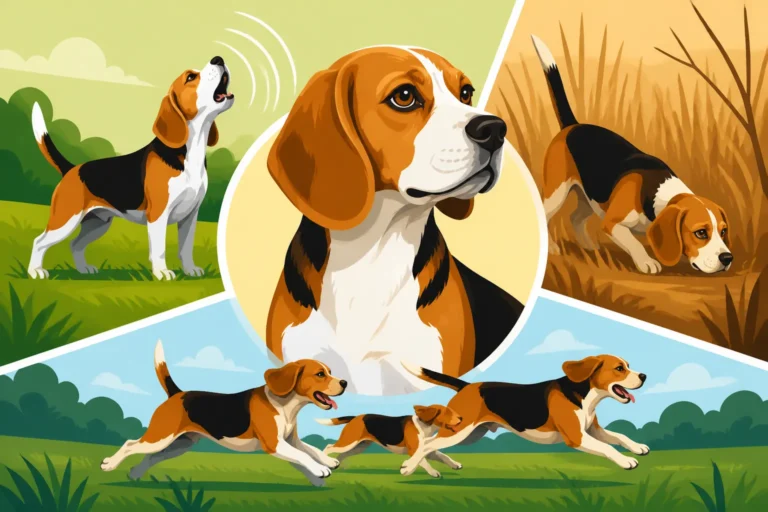
The distinctive "bay" or howl of the Beagle was crucial for pack cohesion and for communicating with the hunters. However, the quality and volume of this bay could also vary, with some hounds having a deeper, more resonant voice, while others might have a higher-pitched cry. Breeders would select for voices that were pleasing to the ear and carried well, guiding the hunters through dense woods. This vocal characteristic, a hallmark of the breed, was a point of pride and also a practical necessity in the field. Beagle Howling, Baying and Barking Explained goes into more detail about these vocalizations.
| Variation Category | Common Traits in the 1840s | Modern Beagle Standard (Post 1880s) | Significance of Variation |
|---|---|---|---|
| Size | Wide range (e.g., "Pocket Beagles" <10 inches to larger hounds >15 inches) | 13-inch and 15-inch varieties; strict height limits | Reflected diverse hunting terrains and methods; utility over uniformity |
| Appearance | Varied colors (lemon, blue tick, pied, solid white), coat textures | Primarily tricolor, lemon & white, red & white; dense, smooth coat | Aesthetic preferences and regional breeding; less focus on conformity |
| Hunting Style | Slow, deliberate trailers vs. faster, driving hounds | Both styles can exist; emphasis on keen scenting and endurance | Tailored to specific game, terrain, and hunter preference |
| Vocalization | Range in bay depth, volume, and carrying ability | Distinctive, melodious bay; often bred for a clear "voice" | Essential for communication in the field; a point of breeder selection |
| Temperament | Varied levels of independence, pack drive, focus | Generally merry, docile, eager to please, strong pack drive | Influenced by working role; foundation for modern companion traits |
The Road to Standardization: Why Consensus Mattered
By the 1840s, while Beagles were still incredibly diverse, the seeds of standardization were beginning to be sown. Enthusiasts were recognizing the need for a more consistent type, both for show purposes and to ensure reliable working qualities. This push would eventually lead to the establishment of breed clubs and formal standards that defined the modern Beagle.
The Influence of Early Breed Enthusiasts
Figures like Thomas Johnson, who was instrumental in consolidating the Beagle type in England, were beginning to exert influence. Johnson, along with others, recognized that for the Beagle to gain wider recognition and maintain its distinct identity, there needed to be some agreement on what constituted an ideal specimen. This meant moving away from purely utilitarian breeding towards an appreciation for both form and function. This period was a fascinating transition, where the rough-and-ready working dog began its journey to becoming a recognized breed with specific characteristics.
The efforts of these early fanciers laid the groundwork for future breed clubs, such as The National Beagle Club Founded in 1887 in America. They compiled observations, discussed ideal traits, and began to selectively breed for specific physical and temperamental attributes. It was a gradual process, not an overnight transformation, but the variations present in the 1840s provided a rich genetic canvas from which to draw. Many of the discussions around what made a "good" Beagle then, continue in some form today among breeders and enthusiasts trying to improve the breed, often consulting vast resources, including those found on platforms like Chewy, to ensure their Beagles receive optimal care based on a deep understanding of their history and needs.
Documenting the Developing Breed
The variations seen in the 1840s were slowly being documented, albeit informally at first. Writers and naturalists like What John Mills Wrote About Beagles in 1845 began to describe the different types of Beagles they encountered, offering glimpses into the diverse packs of the era. These early descriptions, though not formal breed standards, provided valuable insight into the prevailing characteristics and how breeders perceived their hounds. They serve as a historical record, helping us understand the lineage of the breed and how the desired traits evolved over time.
This documentation was crucial for eventually establishing a unified vision for the Beagle. Without these early attempts to describe and categorize, the variations might have persisted indefinitely, or the breed might have fractured into multiple distinct types. The 1840s, therefore, represents a fascinating snapshot in time – a moment when the Beagle was both an incredibly diverse working hound and on the cusp of becoming the more standardized, beloved companion breed we recognize today. The commitment to understanding and preserving the unique qualities of the Beagle, despite its historical variations, is something that still resonates with owners who seek out information on Beagle Health Testing Under CHIC or specific care items from trusted retailers.
Regional Differences and Local Preferences
The specific geographic location within England (and later, America) played a significant role in the variations observed in Beagle packs during the 1840s. Without widespread communication and national breed clubs, local preferences and the specific demands of the regional landscape often dictated breeding choices. This meant that a "Beagle" in one county might look and hunt somewhat differently from a "Beagle" in another.
Pockets of Unique Traits
Imagine isolated pockets of enthusiastic hunters, each with their own ideas about what made the ideal Beagle for their local terrain and game. In one area, dense hedgerows and thick woods might favor a smaller, more compact Beagle with exceptional ground-scenting ability, adept at navigating tight spaces. In another, more open fields and a desire for faster chases might lead to a preference for a leggier, more robust hound that could cover ground quickly. These micro-climates of breeding preferences meant that certain traits could become more concentrated in specific areas, leading to regional "types" that, while all called Beagles, would have exhibited noticeable differences.
These local preferences were powerful drivers in the genetic makeup of the individual packs. Before the advent of widespread dog shows and national breed organizations, breeders were primarily accountable to their hunting companions and local reputation. If a particular line of Beagles consistently performed well in a specific local hunt, those traits were amplified through successive generations, regardless of what other breeders might have been doing miles away. This created a rich tapestry of Beagle variations, each subtly adapted to its immediate environment and the specific demands of its human partners.
The Lack of Centralized Breeding Records
A major factor contributing to these regional variations was the absence of centralized breeding records. Breeders in the 1840s often relied on personal knowledge, local reputations, and word-of-mouth when selecting breeding stock. There wasn't a unified registry or a shared database of pedigrees to consult, meaning that genetic lines could develop in relative isolation. This naturally led to the proliferation of diverse traits, as there was no overarching authority or standard to guide or enforce uniformity.
This is a stark contrast to today, where breed organizations maintain meticulous records, and breeders adhere to detailed standards. The decentralized nature of breeding in the 1840s allowed for a much greater degree of organic variation, driven by localized natural selection and human preference. It's a testament to the Beagle's inherent qualities that, despite this significant internal diversity, the fundamental essence of the breed – its incredible nose, merry temperament, and tireless hunting drive – remained consistent, eventually providing the robust foundation upon which the How the Modern Beagle Was Built in the 1830s would be standardized. Modern Beagle owners often utilize resources, including online guides and product selections from places like Chewy, to understand the current breed standards and care requirements, a luxury unimaginable to Beagle owners of the 1840s.
Disclaimer
This article is for general informational purposes only and does not constitute professional advice. Laws, prices and regulations vary by location and change over time. Consult a qualified professional for guidance on your specific situation.