The Pure White Beagle Pack Honeywood Kept
Have you ever looked at a modern Beagle, perhaps a beautiful tri-color or a lemon and white, and wondered about the very beginnings of the breed? It’s easy to assume dogs have always looked a certain way, but history shows us a fascinating journey of intentional breeding and evolving standards. Today, we're diving deep into a particular corner of Beagle history that often sparks curiosity: the pure white Beagle pack kept by Reverend Phillip Honeywood. We'll explore who he was, why his pack was notable for its striking appearance, and how these early efforts shaped the merry little hound we adore today.
The Dawn of the Modern Beagle and Reverend Honeywood's Influence
When we talk about the history of Beagles, we're not just tracing a timeline; we're delving into the passion of individuals who dedicated their lives to developing specific traits in these hounds. Reverend Phillip Honeywood stands out as one of these pivotal figures, a man whose breeding practices in the early 19th century laid crucial groundwork for the modern Beagle. His work offers a glimpse into a time when the breed was still finding its definitive form, long before formalized breed standards were universally adopted.
Who Was Reverend Phillip Honeywood?
Reverend Phillip Honeywood was an English clergyman, but his true legacy, at least in the world of dogs, lies in his profound influence on the early development of the Beagle breed. Based in Essex, England, during the 1830s, Honeywood wasn't just a casual dog owner; he was a serious and dedicated breeder with a clear vision for the type of hound he wanted to produce. At a time when many 'Beagle-type' hounds varied wildly in size, color, and function, Honeywood's focused efforts began to consolidate some of the characteristics we now associate with the breed. He was one of the key figures who took the diverse array of small hunting dogs and started to refine them into a more consistent type. His commitment to specific traits played a significant role in transitioning Beagles from a loose collection of regional hounds to a more recognized and uniform breed. If you're interested in the very broad historical context, you might like to read about Beagle-Type Hounds Across Twenty-Five Centuries.
The Essex Pack: A Vision for the Beagle
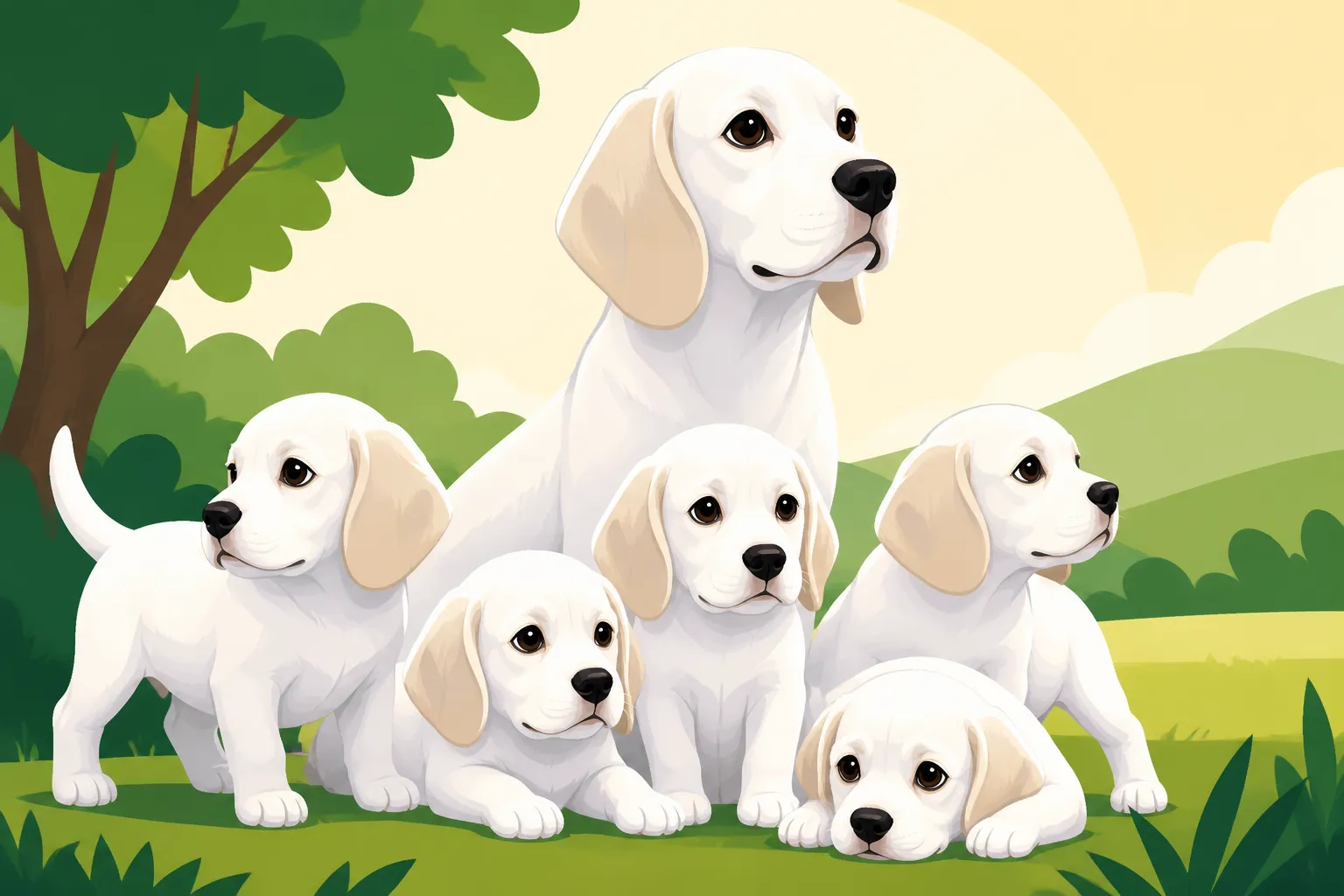
Honeywood's pack, often referred to as his "Essex pack," became renowned for several distinguishing features, but perhaps none so striking as their color. While other breeders focused on performance or specific physical builds, Honeywood cultivated a pack that was remarkably uniform in its white coats, a true rarity for the time. These weren't just mostly white dogs; they were pure white. This specific trait suggests a deliberate breeding program, perhaps valuing the aesthetic appeal or certain practical advantages of such a distinctive appearance. These early Beagles were also noted for their small size, often standing around ten inches at the shoulder, a trait that gave rise to the term "Pocket Beagles" in some historical accounts, though the actual "Pocket Beagle" was a different, earlier type. Honeywood’s dedication to this particular look and size demonstrates an early form of selective breeding that went beyond mere utility, hinting at an appreciation for breed aesthetics that would become more pronounced as dog shows gained popularity. The efforts of early breeders like Honeywood were instrumental in setting the stage for the formal establishment of breed clubs and standards, a process that saw significant activity with the formation of the National Beagle Club Founded in 1887.
Unpacking the "Pure White" Aspect of Honeywood's Beagles
The idea of a pure white Beagle pack from the 1830s is quite fascinating, especially given how diverse Beagle colors are today. This wasn't just a random occurrence; it speaks to a particular set of priorities and environmental factors that would have made such a coat color both practical and, perhaps, desirable in that era. Understanding why Reverend Honeywood pursued this specific characteristic helps us appreciate the careful thought that went into early breed development.
The Practicality and Aesthetics of an All-White Coat
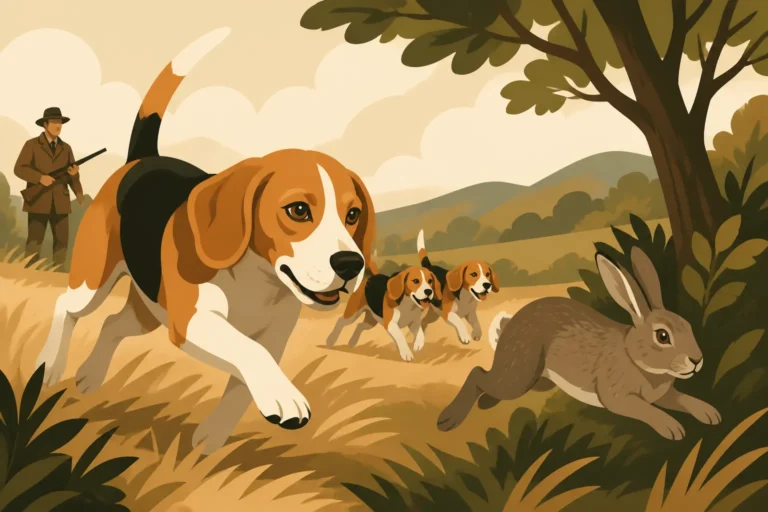
In the days of foot-hunting, where packs of hounds would chase hares and rabbits across fields and through woods, visibility was paramount. A pure white coat would have offered a distinct advantage for hunters keeping track of their hounds, especially in dense undergrowth or at dusk. Imagine trying to follow a pack of brown and black hounds through a thicket as the light fades – a white dog would stand out far more. This practical benefit might have been a strong driver for Honeywood's breeding choices. Additionally, there's always an aesthetic component to breeding. A uniform, strikingly white pack would have been a beautiful sight, an emblem of a well-managed and expertly bred kennel. Such a pack would undoubtedly have been a point of pride for Honeywood, much like how specific markings or conformations are sought after by breeders today. While we usually think of Beagles as famously tri-color, the focus on specific colors has always been a part of breeding; sometimes Lemon Beagles and the Rarer Colors are desired, sometimes specific ticking.
Beyond visibility, there's a certain elegance to a uniform pack. In an era where dog breeding was becoming more sophisticated, moving beyond purely utilitarian purposes, the idea of a visually cohesive pack held sway. The pure white coat could have been seen as a mark of distinction, demonstrating the breeder's skill in achieving such uniformity. This also touches on the concept of 'type' that breeders strived for, even without rigid written standards. Honeywood was essentially creating his own recognized 'type' of Beagle, one that was unmistakably his own.
It's also worth considering that maintaining a pure white coat, even then, would have required significant care. Imagine a pack of hounds running through muddy fields! This suggests a level of dedication to kennel management and grooming that speaks volumes about Honeywood's commitment to his specific vision for the breed. Even today, keeping a light-colored dog pristine after a muddy romp requires a good dog shampoo, perhaps something you'd find on Chewy.
How the White Coat Compares to Today's Standard
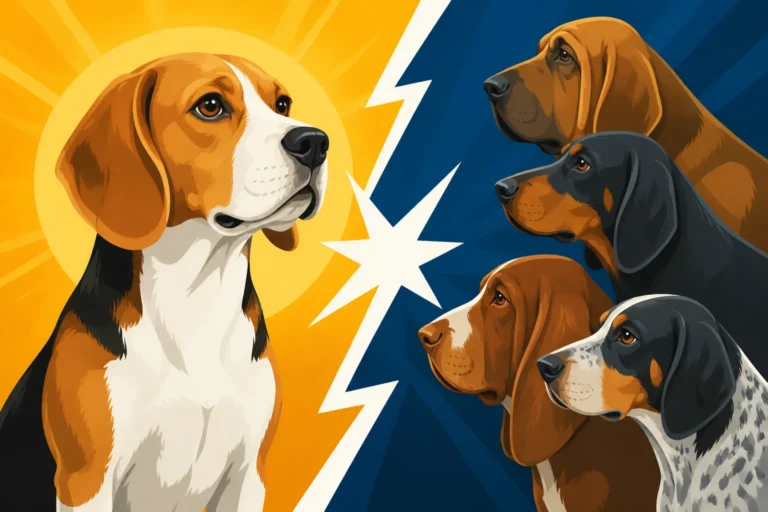
Today, a pure white Beagle is not recognized by major kennel clubs. The American Kennel Club (AKC) standard for Beagles allows for "any true hound color," which primarily includes combinations of black, tan, and white, or lemon and white, red and white, and blue tick, among others. The classic image of a Beagle is often a tri-color, with a distinct black saddle, tan points, and white on the legs, chest, and blaze. While white is a dominant part of most Beagle colorations, an entirely white coat without any other markings is highly unusual and would be considered a deviation from the established breed standard. Even what are sometimes called "Blanche Beagles" usually have some faint lemon or cream markings.
The shift from Honeywood's pure white pack to today's diverse color palette reflects the evolving preferences and breeding goals over nearly two centuries. As Beagles moved from purely hunting dogs to companion animals and show dogs, the emphasis broadened to include a wider range of acceptable colors that were both attractive and consistent with the breed's historical appearance as a trail hound. The presence of the distinctive white tip on a Beagle's tail, often called the "hound's flag," is still a required part of the standard, helping hunters locate their dogs in tall grass, a small echo of the utility of Honeywood's all-white dogs. The Beagle Tail and Its White Tip highlights this enduring feature.
Modern genetics also play a role in understanding coat colors. Producing a consistently pure white line would require careful selective breeding to exclude genes for pigmentation. While possible, it's not the direction modern Beagle breeding has taken. Most modern breeders aim for the varied patterns and colors that are characteristic of the breed's historical hunting heritage, often focusing on temperament, health, and conformation rather than a single, stark color.
Honeywood's Legacy: Shaping the Breed's Future
Reverend Phillip Honeywood's meticulous breeding program, particularly his pure white pack, didn't just exist in a vacuum; it was an important thread in the tapestry of Beagle development. His choices, driven by both practicality and personal vision, directly influenced how other breeders approached the nascent breed, setting precedents and guiding future efforts toward standardization. Understanding his legacy helps us appreciate the journey of the Beagle from a diverse group of hunting dogs to the beloved, recognizable breed we know today.
The Impact on Early Beagle Breeding Practices
Honeywood's efforts brought a level of intentionality to Beagle breeding that was relatively novel for the time. By focusing on specific traits like uniform color and size, he demonstrated a systematic approach that went beyond simply breeding any two hunting dogs. This dedication to a defined 'type' likely inspired other breeders to think more critically about their own breeding programs. His success in creating a visually distinctive pack would have showcased the power of selective breeding. This contributed to a growing understanding that desired characteristics could be reliably reproduced, paving the way for more formalized breeding clubs and written standards. Without these early pioneers like Honeywood, the push for breed purity and consistency would have taken much longer to gain traction.
Moreover, the very existence of his distinctive pack likely served as a benchmark, a point of reference for what a "good" Beagle could be, even if others didn't adopt the all-white aesthetic. It highlighted that specific traits could be achieved and maintained, fostering a more goal-oriented approach among those involved in Beagling. This focus on consistency was a crucial step towards distinguishing the Beagle from other similar scent hounds, and you can learn more about What Beagle Packs Still Varied On in the 1840s to see how much diversity existed.
This era also saw the emergence of a clear split between Beagles bred for field utility and those bred for conformation and appearance. While Honeywood's pack had practical advantages in hunting, their uniform appearance also hinted at the growing importance of aesthetics, anticipating the rise of dog shows. This foundational work in selective breeding, though focused on a now-uncommon color, solidified the idea that intentionality was key to breed development.
From Pure White to the Tricolor We Know
The evolution from Honeywood's pure white Beagles to the predominant tri-color and bi-color patterns we see today is a testament to the dynamic nature of breed standards and popular preferences. While Honeywood's pack was influential, the broader trend in Beagle breeding eventually embraced the more traditional hound colors. The typical tri-color Beagle, with its distinctive black 'saddle,' tan points, and white base, became the enduring image of the breed. This transition wasn't an abandonment of Honeywood's contributions but rather an integration of various desirable traits from different lines. Breeders started to combine robust hunting ability with an appealing range of colors that provided both visibility and traditional hound aesthetics.
The shift also reflects a broader consensus emerging among Beagle fanciers and later, formal kennel clubs, about what constituted the ideal Beagle. The establishment of breed standards in the late 19th and early 20th centuries solidified these preferences, codifying the accepted colors, sizes, and temperaments. While specific variations like a blue tick or lemon Beagle are still admired, the pure white coat of Honeywood's day largely faded as the breed standard became more defined. However, the foundational principle of selective breeding for desired traits, so clearly demonstrated by Honeywood, remains at the heart of responsible Beagle breeding today. Understanding How the Modern Beagle Was Built in the 1830s reveals the complex interplay of early breeders and their visions.
Today, if you're looking for a Beagle, you're most likely to encounter the classic tri-color. While you might not see an all-white Beagle puppy on Chewy, the historical lineage of careful selection, of which Honeywood was a prominent part, is very much alive in every well-bred Beagle. His legacy reminds us that every breed has a rich, often surprising, history, shaped by the dedication and vision of people who loved these animals enough to guide their development.
Here's a comparison of Reverend Honeywood's Beagles and the modern Beagle standard:
| Feature | Reverend Honeywood's Beagles (1830s) | Modern Beagle (AKC Standard) |
|---|---|---|
| Primary Color | Pure White | Any "true hound color," typically tri-color, bi-color, lemon, red. |
| Size (approx.) | Around 10 inches tall | 13 inches or under, and over 13 inches up to 15 inches. |
| Purpose | Hunting (hare/rabbit) | Hunting, companion, show dog. |
| Uniformity | Highly uniform in color (white) | Uniformity in conformation, temperament, and gait. Color variety allowed. |
| Rarity | Uniquely common for his specific pack | Pure white is not a recognized or common color. |
| Legacy | Influential in early breed development | Direct descendant, embodying diverse breeding history. |
Disclaimer
This article is for general informational purposes only and does not constitute professional advice. Laws, prices and regulations vary by location and change over time. Consult a qualified professional for guidance on your specific situation.