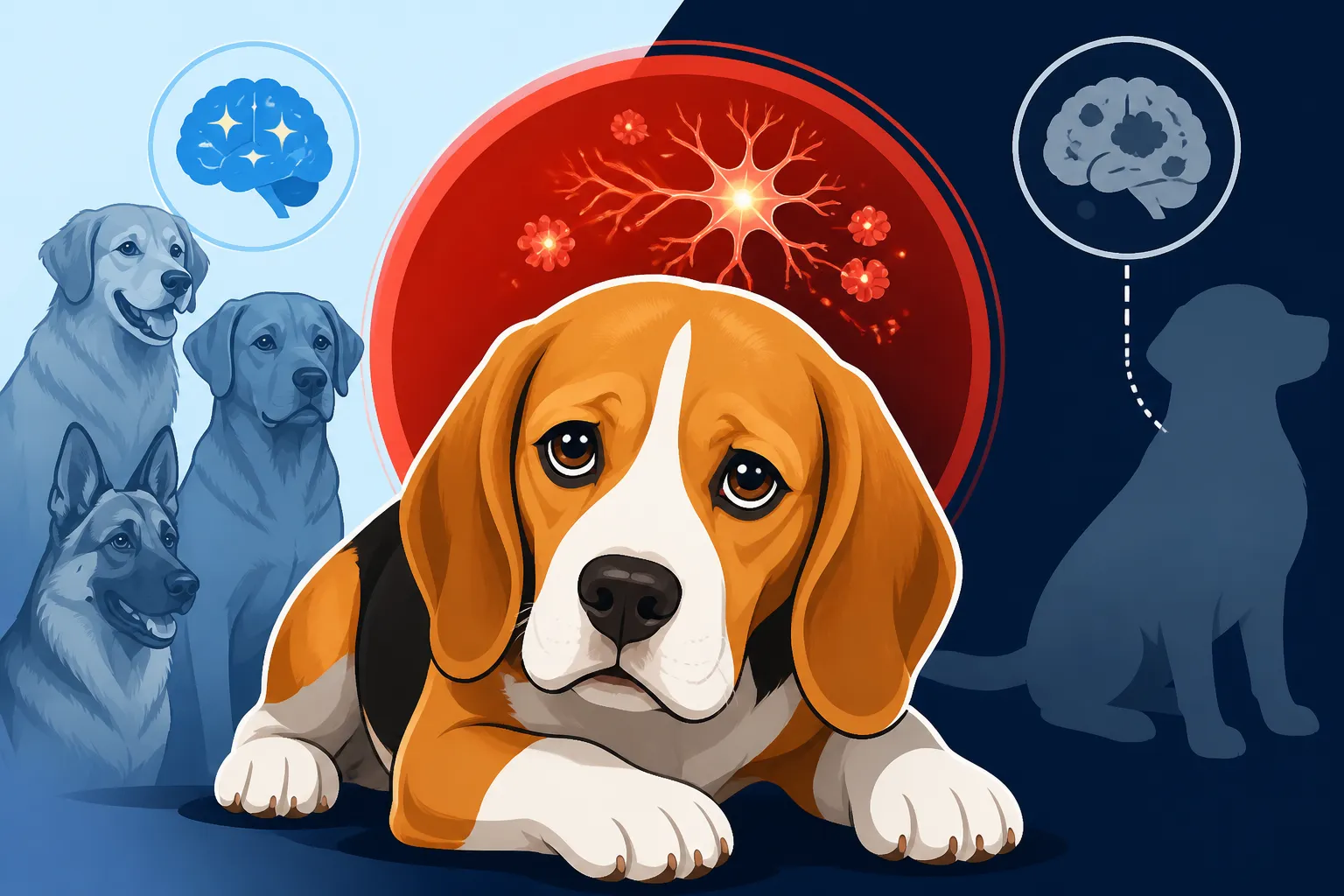
Why Lafora Hits Beagles Harder Than Other Breeds
It's absolutely heartbreaking to watch your beloved Beagle start exhibiting strange muscle jerks, develop vision issues, or even experience seizures later in life, only to learn it might be a devastating genetic condition called Lafora disease. This guide is here to shed light on why Beagles, unfortunately, seem to bear the brunt of this progressive neurological disorder more severely than many other breeds, offering a deeper understanding of its unique impact.
Understanding Lafora Disease in Beagles
Lafora disease isn't just "another type of epilepsy"; it's a specific, inherited neurodegenerative condition that truly impacts a Beagle's quality of life in profound ways. Unlike typical epilepsy, which might be managed with medication for many years, Lafora disease is progressive, meaning it relentlessly worsens over time. This makes it a particularly cruel diagnosis for any family with a Beagle, because you're essentially watching your vibrant companion slowly decline. It's a tough reality to face, and understanding the nuances can help you prepare.
The Science Behind the Struggle
At its core, Lafora disease is a metabolic disorder caused by a mutation in the EPM2B gene. This gene is responsible for producing a protein called laforin, which plays a crucial role in carbohydrate metabolism, particularly in how glycogen is stored and used in the body. When this gene is mutated, the laforin protein doesn't function correctly, leading to the accumulation of abnormal, insoluble glycogen particles known as Lafora bodies. Think of these Lafora bodies like tiny, sticky clumps of sugar that start building up where they don't belong – primarily in the brain, but also in other vital tissues like the liver, muscles, and heart.
As these Lafora bodies accumulate, they disrupt the normal functioning of nerve cells, leading to a cascade of neurological problems. It’s not just a little glitch; it’s a fundamental breakdown in how the brain can communicate and regulate itself. This accumulation is what causes the wide array of symptoms seen in affected Beagles, from subtle twitches to severe seizures and cognitive decline. It's a slow, insidious process, often making it difficult for owners to pinpoint the exact onset in their otherwise healthy-looking middle-aged dog.
Why Beagles Are Uniquely Vulnerable
The reason Lafora disease "hits Beagles harder" and is so strongly associated with them comes down to genetics. Beagles are one of the breeds, alongside Miniature Wirehaired Dachshunds, where a specific mutation in the EPM2B gene is particularly prevalent. This isn't just bad luck; it's a reflection of historical breeding practices. When a breed becomes popular, often a limited number of "founder" dogs or successful sires are used extensively. If one of these dogs carries a hidden recessive gene for a disease like Lafora, that gene can quickly spread through the gene pool.
For a Beagle to develop Lafora disease, it must inherit two copies of the mutated gene – one from each parent. Dogs with only one copy are considered carriers; they don't show symptoms themselves but can pass the gene on to their offspring. Because this recessive gene became so widespread in the Beagle population over time, the chances of two carrier Beagles being bred together increased significantly, leading to affected puppies. This highlights the absolute critical importance of responsible breeding and genetic testing, which we'll discuss further in this guide. This genetic predisposition is a key factor in why Beagle owners face this particular challenge more often than many other dog enthusiasts.
The Distinctive Symptoms and Progression
One of the most frustrating and often misleading aspects of Lafora disease in Beagles is its insidious onset. Unlike some genetic conditions that manifest in puppyhood, Lafora typically begins to show its true colors later, usually between five and seven years of age, though it can vary. This delay often means that by the time symptoms become noticeable, the disease has already been silently progressing, making early diagnosis challenging. Owners often report subtle changes that are easy to dismiss at first, creating a period of agonizing uncertainty.
Early Warning Signs and Behavioral Shifts
The initial signs of Lafora disease in a Beagle are often subtle and can easily be mistaken for other common ailments or simply "getting older." One of the most characteristic early symptoms is myoclonus, which presents as involuntary muscle jerks or twitches. These might be mild at first, perhaps a slight twitch of a limb or a facial muscle, often triggered by light, sudden noises, or even excitement. Imagine your Beagle twitching briefly when the TV flashes a bright scene, or a muscle tremor running through their flank when you clatter a pan in the kitchen. These are the kinds of subtle clues that can be overlooked.
Beyond myoclonus, many Beagles with early Lafora disease will develop various sensory and neurological deficits. You might notice your dog having trouble with vision, bumping into furniture in dim light, or being unusually hesitant to go down stairs. This isn't just age-related vision loss; it's a neurological impairment affecting how they perceive their environment. Owners also often report changes in behavior, like increased anxiety, confusion, or a general dullness of personality. A normally happy-go-lucky Beagle might become withdrawn or seem disoriented. These early signs, though vague, are crucial indicators that something deeper is amiss and warrant immediate veterinary attention. Keeping a detailed Keeping a Seizure Diary for Your Beagle can be immensely helpful in tracking these subtle changes.
Progressive Nature and Neurological Decline
As Lafora disease progresses, the symptoms become more pronounced and debilitating. The myoclonus often intensifies and becomes more frequent, leading to what some describe as "startle disease" or severe jerking episodes. These can sometimes be confused with actual seizures, though true generalized seizures also become a feature of the disease. These seizures can be incredibly frightening to witness, and knowing What a Beagle Seizure Actually Looks Like can help owners differentiate and respond appropriately.
In addition to seizures and severe myoclonus, Beagles with advanced Lafora often develop profound neurological deficits. These can include:
- Ataxia: A loss of full control of bodily movements, leading to a wobbly or uncoordinated gait. You might notice your Beagle walking strangely, dragging their feet, or having difficulty maintaining balance, similar to the signs described in A Beagle Walking Wobbly and What It Means.
- Dementia-like symptoms: Disorientation, loss of house-training, staring blankly, getting stuck in corners, changes in sleep-wake cycles, and a general decline in cognitive function. They might not recognize familiar people or places, leading to immense distress for both the dog and the family.
- Blindness: As the brain damage progresses, Beagles can experience further vision loss, eventually leading to complete blindness.
- Increased anxiety and aggression: Due to confusion and neurological discomfort, some Beagles may become more anxious, irritable, or even show uncharacteristic aggression.
The progressive nature means that these symptoms will steadily worsen, impacting the Beagle's ability to eat, drink, move, and interact normally. This creates an incredibly challenging situation for owners, as they witness their once-vibrant companion fading away. The eventual outcome is often a severe decline in quality of life, leading to difficult decisions for families. The average Beagle Lifespan and the Twelve to Fifteen Year Range is tragically shortened for Beagles afflicted with Lafora.
Here’s a simplified table comparing Lafora symptoms to general Beagle epilepsy:
| Feature | Lafora Disease in Beagles | Idiopathic Epilepsy in Beagles |
|---|---|---|
| Onset Age | Typically 5-7 years (late-onset) | Usually 6 months – 6 years (early-to-middle onset) |
| Primary Symptoms | Myoclonus (muscle jerks), visual impairment, dementia, seizures | Generalized seizures, focal seizures |
| Triggers | Light, sound, movement, excitement | Often no specific trigger, sometimes stress, sleep/wake cycles |
| Progression | Progressive, neurodegenerative (worsens over time) | Generally non-progressive (seizure frequency/severity can change but underlying brain function stable) |
| Cognitive Impact | Significant decline, disorientation, behavioral changes | Usually no cognitive decline between seizures |
| Response to Meds | Often poor, challenging to control seizures and myoclonus | Generally good response to conventional anti-seizure meds |
| Genetic Cause | Specific EPM2B mutation (autosomal recessive) | Often polygenic or unknown |
| Diagnosis | DNA test, biopsy, post-mortem histopathology | Exclusion of other causes, MRI, CSF analysis |
Diagnosis and Management Challenges
Receiving a diagnosis of Lafora disease is often a long, emotionally draining journey for Beagle owners. Because the initial symptoms can be so subtle and overlap with other conditions, vets might first explore more common causes of seizures or neurological decline. This diagnostic odyssey, combined with the often-refractory nature of the disease, underscores why it hits Beagles and their families so hard.
The Diagnostic Journey
When your Beagle first starts showing those subtle twitches or unusual behaviors, your vet might initially consider Beagle Epilepsy and Seizures From Six Months On or other conditions. They might perform routine blood work, urinalysis, and perhaps even advanced imaging like an MRI. However, an MRI in an early-stage Lafora Beagle might not show significant abnormalities, which can be frustrating and delay a definitive answer. It's often when conventional anti-seizure medications aren't working as expected, or when the myoclonic jerks become more pronounced, that Lafora disease moves higher on the list of suspects.
The most definitive diagnostic tool for Lafora disease is a DNA test for the EPM2B gene mutation. This test can be performed with a simple cheek swab or blood sample. If your vet suspects Lafora, insist on this test. It's the only way to confirm the genetic basis of the disease while your dog is alive. Without this specific test, a diagnosis might only be made definitively post-mortem through histopathological examination of brain and other tissue samples to identify the characteristic Lafora bodies. This lengthy and often expensive diagnostic process adds to the burden on owners, but some pet insurance providers, like Healthy Paws, can help cover the costs of these specialized tests, making it a little less daunting.
Managing a Progressive Condition
Once diagnosed, the reality of Lafora disease is that there is currently no cure, and treatment focuses entirely on managing symptoms and maintaining the best possible quality of life for as long as possible. This is where the "hits Beagles harder" aspect truly comes into play because Lafora Beagles often respond poorly to standard anti-seizure medications, making control incredibly difficult.
Many Beagles with Lafora disease will need a combination of medications to try and reduce the frequency and severity of both seizures and myoclonus. Common anti-seizure drugs like phenobarbital, potassium bromide, or levetiracetam might be tried, but as noted in Why Lafora Beagles Resist Seizure Medication, their effectiveness can be limited compared to how they work for other forms of epilepsy. Vets might also explore other drugs to manage anxiety, cognitive decline, or to provide pain relief if the dog is suffering from muscle rigidity. Dietary changes, such as a low-carbohydrate or ketogenic diet, are sometimes recommended as they aim to reduce the glycogen burden on the body, but success varies.
The challenge lies in the progressive nature of the disease. What works today might not work tomorrow, and owners constantly face the heartbreaking task of adjusting medications, dealing with new symptoms, and watching their dog's abilities decline. This demands an incredible amount of patience, vigilance, and financial commitment. Regular vet visits become essential to monitor progression and adjust treatment plans, which can certainly add up. Many families find that having a robust pet insurance plan, such as those offered by Healthy Paws, helps tremendously in managing the continuous veterinary expenses associated with this long-term, complex condition.
Responsible Breeding and Prevention
The devastation of Lafora disease highlights a critical responsibility for Beagle breeders: the need for rigorous genetic health testing. Since Lafora is a preventable disease through careful breeding practices, preventing its spread is entirely within human control. For potential puppy buyers, understanding what to ask about a breeder's health testing protocols is paramount.
The Critical Role of DNA Testing
Because Lafora disease is caused by a single, identifiable gene mutation, it is 100% preventable through DNA testing. Reputable Beagle breeders should be proactively testing all their breeding stock for the EPM2B mutation. The results will categorize dogs as:
- Clear: No copies of the mutated gene. These dogs will not develop Lafora disease and cannot pass the gene to their offspring.
- Carrier: One copy of the mutated gene. These dogs will not develop Lafora disease but can pass the gene to 50% of their offspring.
- Affected: Two copies of the mutated gene. These dogs will develop Lafora disease.
The goal of responsible breeding is to never produce an "affected" puppy. This means that at least one parent in any breeding pair must be "clear" of the mutation. A "clear" dog can be bred to a "carrier" dog, and while some puppies might be carriers, none will be affected. Breeding two "carrier" dogs together, however, has a 25% chance of producing affected puppies, a 50% chance of producing carriers, and a 25% chance of producing clear puppies. Therefore, breeding two carriers is generally considered irresponsible and should be avoided. Breeders who are committed to the health of the breed will proudly show you the DNA test results for their breeding dogs, which should include the results for the EPM2B gene. This transparency is key to Breeding Away From Epilepsy in Beagle Lines and other inherited conditions.
What Prospective Owners Should Ask
As a potential Beagle owner, you have the power to influence responsible breeding by demanding health clearances. When you're speaking with a breeder, don't be shy about asking specific questions regarding Lafora disease:
- "Have the parents of this litter been DNA tested for Lafora disease (EPM2B gene mutation)?" They should be able to provide documentation from a reputable genetic testing lab.
- "Can I see the health clearances for both parents, including their Lafora status?" A good breeder will have these readily available and understand why you're asking.
- "What is your policy regarding genetic health guarantees?" While no breeder can guarantee a dog will never have a health issue, a strong health guarantee for genetic conditions like Lafora demonstrates their commitment.
Breeders who are registered with organizations like the Orthopedic Foundation for Animals (OFA) or participate in the Canine Health Information Center (CHIC) program will often include Lafora testing as part of their comprehensive health panel. You can even look up CHIC numbers to verify test results. For instance, The MLS DNA Test Required for Beagle CHIC often accompanies testing for Lafora and other conditions. If a breeder is unaware of Lafora disease, dismisses its importance, or refuses to provide documentation, it's a significant red flag. Choosing a puppy from a breeder who prioritizes genetic health testing is one of the most powerful steps you can take to avoid the heartbreak of Lafora disease.
Living with Lafora: Support and Outlook
Caring for a Beagle with Lafora disease is an incredibly challenging and emotionally taxing journey. The progressive nature of the condition means that what you manage today might change next week, leading to constant adjustments in care and a profound impact on the family. It's a testament to the love Beagle owners have for their companions that they navigate this difficult path.
Providing Daily Care and Comfort
When living with a Beagle diagnosed with Lafora disease, daily life becomes a careful balance of managing symptoms and maximizing comfort. As the disease progresses, your Beagle will likely require increasing levels of support. This can include:
- Medication management: Adhering strictly to medication schedules, which often involve multiple drugs given several times a day. Keeping a detailed log of doses, times, and any observed effects is crucial.
- Environmental modifications: Because bright lights and loud noises can trigger myoclonus or seizures, creating a calm, quiet, and dimly lit environment can be helpful. This might mean reducing screen time, closing blinds, or using white noise. If your dog experiences visual impairment, maintaining a consistent home layout and using ramps instead of stairs can help prevent accidents, similar to advice for Senior Beagle Vision and Hearing Loss.
- Dietary considerations: Working with your vet on a potentially low-carbohydrate diet might be part of the management plan. Easy-to-eat food and accessible water bowls become important as mobility and coordination decline.
- Assisted mobility: As ataxia and weakness progress, your Beagle may need assistance with walking, standing, or even getting to their food and water bowls. Harnesses with handles can be incredibly helpful for supporting their weight.
- Cognitive support: For Beagles experiencing dementia-like symptoms, maintaining a consistent routine, providing gentle reassurance, and engaging in simple, familiar activities can help reduce confusion and anxiety.
This level of care can feel overwhelming, and it's important to acknowledge the emotional toll it takes on caregivers. Many owners find connecting with support groups, either online or in person, invaluable for sharing experiences and getting advice. It truly is a day-by-day commitment, and you're doing an amazing job just by showing up for your beloved hound.
Understanding the Prognosis and Quality of Life
The prognosis for Beagles with Lafora disease is unfortunately grim. It is a progressive and ultimately fatal condition, with most affected dogs experiencing a significant decline in quality of life within a few years of symptom onset. While some Beagles might have a slower progression, others can decline quite rapidly. This is the hardest part for families – accepting that their dog's condition will only worsen.
The critical discussion becomes about your Beagle's quality of life. As symptoms advance, the frequent seizures, severe myoclonus, profound cognitive decline, and loss of mobility can lead to chronic discomfort, fear, and an inability to experience joy. It’s essential to have honest and empathetic conversations with your veterinarian about when the time might come to make the most difficult decision an owner can face. Regular quality-of-life assessments, as you would do for any Senior Beagle Care After the Age of Ten, are crucial. These evaluations consider factors like pain, appetite, hydration, hygiene, happiness, and mobility.
While the emotional burden is immense, remember that you are providing love and comfort during a difficult time. Resources are available, and your veterinary team can help guide you through each stage. While we can't cure Lafora disease, we can ensure our Beagles are treated with dignity and compassion throughout their journey. The financial strain of managing a long-term, incurable disease like Lafora can also be significant, with ongoing medication costs, specialist visits, and potentially emergency care. Having a comprehensive pet insurance policy, such as those from Healthy Paws, can provide much-needed financial relief, allowing you to focus on your Beagle's care rather than stressing over the vet bills. These plans can be incredibly beneficial for conditions that require extensive and continuous medical attention.
Disclaimer
The information provided in this article is for educational and informational purposes only and does not constitute veterinary advice. Always consult with a qualified veterinarian for any health concerns or before making any decisions related to your Beagle's health and treatment.