The Beagle Tail and Its White Tip
That iconic, perpetually wagging tail on a Beagle isn't just for show – it's a vital communication tool, a historical marker, and a barometer of their mood. Often, new Beagle parents might not realize just how much character and purpose is packed into that little white-tipped flag. This guide is dedicated to unpacking everything there is to know about your Beagle's tail, from its origins and breed standard description to its health, care, and what it’s trying to tell you.
The Iconic "Stern" of the Beagle Standard
When you read the official breed standard for Beagles, you'll often come across unique terminology that harks back to their long history as working hounds. The tail, in particular, has its own special designation, and its description is quite specific, defining not just its appearance but also its very essence within the breed. It's a key feature that makes a Beagle, well, a Beagle.
Why the Tail is Called a "Stern" in Beagle Circles
In the world of hounds and hunting dogs, specific parts of the dog's anatomy are often referred to by traditional terms, and the tail is no exception. For a Beagle, the tail is formally known as a "stern." This isn't just a quirky piece of jargon; it's a nod to centuries of selective breeding for hunting prowess. The term "stern" carries a sense of purpose and robustness, reflecting the tail's role in the field, guiding hunters through dense undergrowth. It sets the Beagle apart, tying its modern-day appearance directly to its ancient working heritage as a rabbit and hare hound.
This use of specialized language, like referring to the tail as a stern, is a thread woven throughout the rich tapestry of dog breeding and showing. It's a way for enthusiasts to connect with the historical context of the breed, understanding that every physical attribute was once refined for a specific function. When you hear a seasoned Beagle owner or breeder talk about a dog's "stern," they're not just being fancy; they're speaking the language of the breed's lineage, emphasizing the importance of this appendage beyond mere aesthetics. It's a subtle but significant way the breed maintains its identity and connection to its roots. You'll hear similar terms for other parts of the dog, all carrying that weight of history and purpose.
The Ideal Beagle Tail According to the Standard
The American Kennel Club (AKC) standard for the Beagle is quite clear about what constitutes an ideal tail, or "stern." It should be "set on moderately high, carried gaily, but not curled over the back." This "gaily carried" description paints a picture of a tail held upright with a cheerful curve, constantly in motion, reflecting the breed's merry and active disposition. It shouldn't flop limply, nor should it be tightly curled over the back like a Pug's or Akita's tail, which would be considered a fault. The ideal carriage demonstrates alertness and exuberance without being exaggerated.
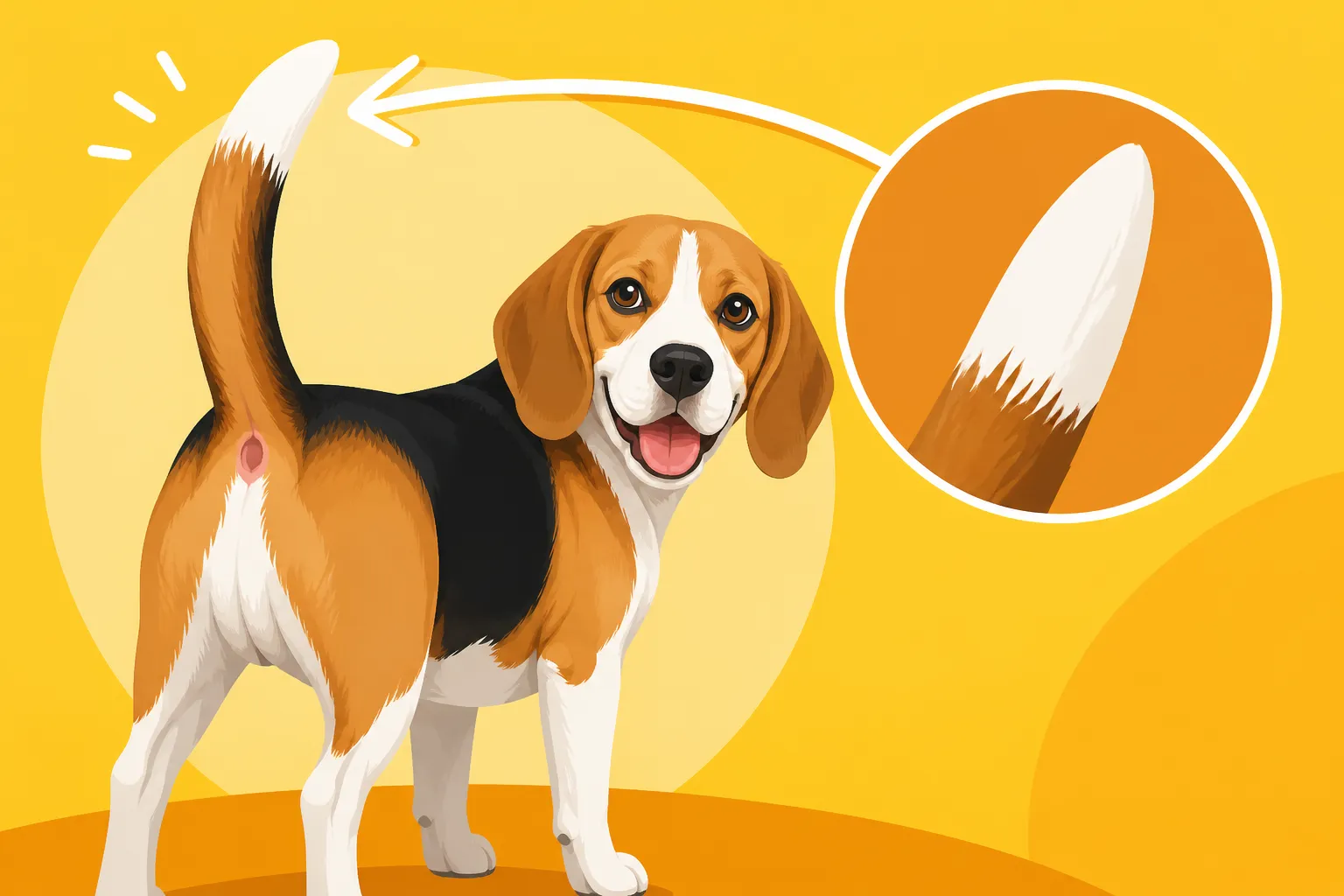
Beyond its cheerful angle, the standard also describes the physical attributes of the tail. It should be "moderately thick," meaning it has substance and strength, tapering to a point. It's also expected to be well-covered with hair, particularly on the underside, and to have a distinct "brush," which refers to the slightly longer hair on the lower side of the tail. This thickness and brush further enhance its visibility, which, as we’ll discuss, was incredibly important in its original purpose. A strong, well-proportioned stern complements the Beagle's overall compact and sturdy build, contributing to the balanced and purposeful look that breeders strive for. The Beagle Temperament Written Into the Standard is often reflected in the way the tail is carried.
The Purpose Behind That White Tip
While the overall carriage and structure of the Beagle's tail are crucial, perhaps its most distinctive feature, and certainly its most talked-about, is that white tip. It's not merely a charming aesthetic; this little splash of white has a profoundly practical origin rooted in the Beagle's history as a hunting companion. It's a design feature, if you will, that proved invaluable to generations of hunters.
A Flag for Hunters in Tall Grass
Imagine a field, dense with tall grass, brambles, and undergrowth. Now imagine a small, low-to-the-ground hound, nose to the ground, meticulously tracking a rabbit or hare. Without a visual cue, it would be incredibly easy for the hunter to lose sight of their dog in such terrain, especially as the Beagle works deep into the cover, focused entirely on the scent. This is where the white tip of the tail, often affectionately called "the flag," comes into play. As the Beagle worked, its tail would often be carried high, flagging above the vegetation.
That flash of white served as a beacon, allowing the hunter to keep track of their dog's progress and location. It meant they could follow the chase, even if the dog itself was obscured. This was not a minor convenience; it was essential for successful hunts and for ensuring the safety of the dogs. A lost dog was a grave concern, and anything that helped maintain visual contact was highly valued. This functional purpose is a prime example of how specific breed traits were developed and emphasized through selective breeding for specific tasks. When you consider What a Beagle Was Originally Bred to Hunt, the utility of this feature becomes immediately clear.
More Than Just a Pretty Mark
Even in today's world, where most Beagles are beloved family pets rather than working hunting dogs, the white-tipped tail retains its practical value, though perhaps in different contexts. Whether your Beagle is romping in a sprawling dog park, exploring a wooded hiking trail, or just darting around your backyard, that white tip still acts as a natural visual marker. In low light, at dusk, or when your Beagle has disappeared into a patch of overgrown bushes, that little white flag can be the first thing you spot, helping you locate your adventurous hound. It's a reminder of their ancestors' critical role in the field, now repurposed for modern-day peace of mind.
Genetically, the prevalence and desirability of the white tip in Beagles speak to its importance over centuries. Breeders carefully selected for this trait, reinforcing it through generations until it became a hallmark of the breed, codified in the official standard. It’s a part of the Beagle's distinct coloring and pattern, which often includes a tricolor or bicolor coat. This specific marking is such an ingrained part of the breed that many people associate it instinctively with the Beagle, recognizing it as part of their identity. It’s also a key component of Beagle Colors, Markings and the Tricolor Standard, demonstrating how much attention is paid to these visual identifiers.
What a Healthy Beagle Tail Looks Like
Understanding what a healthy Beagle tail entails goes beyond just its appearance and historical significance; it’s about recognizing the physical indicators of well-being and knowing what signals your dog is sending you. A Beagle’s tail can tell you a lot about its physical and emotional state, so regular observation is key to keeping your furry friend in top condition.
Signs of a Happy, Healthy Tail
A healthy Beagle tail is usually a vibrant and expressive part of the dog, constantly in motion when they are awake and engaged. When a Beagle is happy, alert, or excited, its tail will often be carried high and wag vigorously, sometimes in wide, sweeping motions that involve the whole hindquarters. This lively wagging is a clear indicator of a content and well-adjusted dog. Physically, the tail should be well-muscled and flexible, allowing for a full range of motion without any stiffness or discomfort. You should be able to gently manipulate it without eliciting pain or resistance from your dog.
Beyond its movement, the tail should also be aesthetically healthy. It should be fully coated with the same dense, smooth fur as the rest of the body, particularly the distinctive "brush" on the underside. There should be no bald patches, excessive flakiness, redness, or sores, which could indicate skin issues or allergies. The skin at the base of the tail should also appear healthy, free from inflammation or irritation. A happy, healthy Beagle’s tail is a robust, well-maintained appendage that acts as a joyful extension of its lively personality, signaling its overall good health and buoyant spirit.
Common Tail-Related Issues to Watch For
Unfortunately, a Beagle's expressive tail can sometimes be prone to a few specific issues that owners should be aware of. One common problem, particularly in dogs that wag their tails with great enthusiasm against hard surfaces, is often called "happy tail syndrome" or "kennel tail." This occurs when repeated forceful impacts against walls, furniture, or crate bars cause trauma to the tip of the tail, leading to open wounds that can be difficult to heal due to the constant wagging. These injuries can bleed profusely and be quite painful, requiring careful management and sometimes even bandages or protective coverings.
Other concerns include general injuries, such as sprains, fractures, or nerve damage, which can result from accidental pulling, getting caught in doors, or other traumatic events. If your Beagle's tail is suddenly limp, held awkwardly, or causes pain when touched, it's crucial to seek veterinary attention. Additionally, the skin around the base of the tail can be a hotspot (pun intended!) for various dermatological problems. Allergies can manifest as itchy, red, or inflamed skin, leading to your Beagle excessively chewing or licking the area, potentially causing hot spots or secondary infections. Fleas often congregate at the base of the tail, so persistent itching in this area could indicate a parasite problem. Any persistent scratching, licking, or changes in the tail's appearance warrant investigation, as they can be early warning signs of underlying health issues. Sometimes, even serious conditions like Beagle Pain Syndrome Fever and Neck Stiffness can manifest with changes in tail carriage due to overall discomfort.
Caring for the Beagle's Tail and Hindquarters
A Beagle's tail, while robust, isn't immune to neglect. Proper care of this distinctive feature, along with the surrounding hindquarters, is crucial for both its health and your dog's overall comfort. Integrating tail care into your regular grooming routine can prevent many common problems and ensure your Beagle's flag remains a happy, healthy beacon.
Grooming for a Healthy Tail and Coat
Maintaining the cleanliness and health of your Beagle's tail and the surrounding hindquarters is a straightforward but essential part of their grooming routine. Because Beagles have a dense double coat, brushing regularly, perhaps two or three times a week, is important to remove loose hair, prevent matting, and distribute natural oils. Pay particular attention to the base of the tail, where hair can sometimes get thicker and more prone to tangles, and the underside of the tail, which might get dirty more easily. Beagle Grooming and That Shedding Double Coat is a good resource for understanding the specifics of their coat care.
When bathing your Beagle, make sure to thoroughly wash the tail, especially if they've been out exploring muddy fields or sniffing every interesting patch of ground. Use a gentle dog-specific shampoo and rinse thoroughly to prevent any residue that could irritate the skin. Afterwards, ensure the tail is completely dry, particularly the dense hair and the skin at its base, to prevent moisture-related skin issues. Many owners find it helpful to have a dedicated grooming brush and a gentle, tearless shampoo on hand. Places like Chewy offer a wide selection of grooming tools, from deshedding brushes to specialized shampoos that can help keep your Beagle's coat, including their stern, in pristine condition without causing skin irritation.
Protecting the Tail from Injury
Given how enthusiastically Beagles can wag their tails, especially when excited, protecting them from injury is a real concern for many owners. "Happy tail" syndrome, as mentioned, is a common issue where the tip of the tail becomes injured from repeated banging against hard surfaces. To help prevent this, try to be mindful of your Beagle's environment, particularly if they are known for their vigorous tail wags. In smaller homes or crated areas, consider padding hard corners or using softer bedding to reduce impact. While you can't stop a Beagle from being a Beagle, you can mitigate risks.
Beyond "happy tail," general vigilance is key. Regularly check your Beagle’s tail for any signs of discomfort, cuts, scrapes, or swelling, especially after active play or walks. If you notice any changes in their tail carriage – perhaps holding it lower than usual, or showing sensitivity when you touch it – it could indicate a hidden injury or pain. Conditions like Beagle Back Problems and Intervertebral Disc Disease or Beagle Arthritis Arriving in Middle Age can manifest as changes in tail movement or carriage, as your dog tries to compensate for discomfort. Prompt veterinary attention for any suspected injury or persistent pain is vital to ensure proper healing and prevent long-term issues.
Tail Carriage and What It Communicates
Your Beagle's tail is a complex communication device, capable of conveying a wide range of emotions and intentions. Learning to "read" your dog's tail signals, in conjunction with their other body language, is an invaluable skill for any Beagle owner, helping you understand their mood and anticipate their reactions.
Reading Your Beagle's Tail Signals
The way a Beagle carries and moves its tail is a key part of its non-verbal communication, often speaking volumes before a single bay or bark escapes their lips. A tail held high and wagging freely, especially with a broad, sweeping motion, almost always indicates happiness, excitement, or a friendly greeting. This is the "gaily carried" tail described in the breed standard, signaling an open and approachable disposition. However, a high, stiff tail with a rapid, shallow wag can sometimes indicate arousal or even a pre-cursor to aggression, especially if accompanied by stiff body posture and direct eye contact. Context is always crucial.
Conversely, a tail held low or tucked between the legs is a clear sign of fear, anxiety, or submission. A slightly lowered tail that wags gently might suggest a cautious or uncertain mood, while a completely tucked tail usually means extreme fear or distress. When your Beagle is relaxed and content, perhaps resting or observing calmly, their tail might simply hang in a natural position, occasionally flicking or moving gently. Observing these nuances, alongside their ear position, facial expression, and overall body tension, can give you a much deeper insight into your Beagle's emotional state, helping you respond appropriately to their needs and feelings.
Tail Talk in a Pack Environment
In a multi-dog household or at the dog park, a Beagle's tail communication becomes even more intricate, playing a vital role in social interactions within a pack or group dynamic. Beagles, being pack animals by nature, are constantly assessing and communicating their status and intentions to other dogs, and the tail is a significant part of this silent conversation. A high, confident tail carriage can signal dominance or assertiveness to other canines, while a lower, more submissive tail can diffuse tension and communicate a desire for peace or a lack of threat.
When two Beagles meet, their tails are often one of the first things they "read" in each other. A fast, high wag usually invites play, but if one dog's tail becomes stiff and less animated, it might be a signal that they're becoming uncomfortable or feeling challenged. Observing how a Beagle’s tail interacts with its peers can offer invaluable insights into their social dynamics. For example, a younger, less confident Beagle might tuck its tail in the presence of an older, more dominant dog, indicating respect for the established hierarchy. Understanding these unspoken cues can help you manage introductions, prevent misunderstandings, and ensure harmonious interactions, whether your Beagle is navigating a new friendship or just saying hello to a familiar face at the park.
| Tail Position / Movement | Common Meaning (General) | Contextual Nuances (Beagle Specific) |
|---|---|---|
| High & "Gaily" Carried | Happy, Excited, Confident | Often accompanied by a full-body wiggle; typical cheerful Beagle greeting; the classic "flag" for its original hunting purpose. |
| High & Stiff, Rapid Wag | Aroused, Alert, Potentially Wary | Can indicate intense focus, excitement that's tipping towards over-stimulation; may precede a bay if a strong scent is detected. |
| Mid-Level & Relaxed | Content, Neutral, Observing | Common when relaxed at home, casually walking; tail may gently sway or flick to gather scent information. |
| Lowered Gently, Slow Wag | Cautious, Submissive, Uncertain | Might be seen during novel introductions or when approaching something new; seeking reassurance. |
| Tucked Between Legs | Fearful, Anxious, Extremely Stressed | Indicates significant distress, submission, or feeling threatened; will likely be accompanied by a crouched posture and wide eyes. |
| Full-Body Wag (low-mid) | Overjoyed, Playful | Whole hindquarters involved, often wiggling down to the shoulders; an unmistakable sign of pure Beagle delight, especially at mealtime. |
The Enduring Legacy of the Beagle's Stern
The Beagle's tail, or "stern," is far more than just a decorative appendage. It is a living, wagging testament to the breed's storied past, a vital tool for communication, and a clear indicator of its health and emotional state. From its origins as a practical flag for hunters in the English countryside to its role today as a beloved family member's expressive beacon, the white-tipped tail embodies much of what makes a Beagle unique.
Understanding the history behind its distinctive appearance, recognizing the signs of a healthy tail, and knowing how to interpret its subtle movements deepens our bond with these wonderful hounds. It allows us to appreciate not only their charming personalities but also the centuries of purposeful breeding that shaped every aspect of their being, right down to the tip of their tail. Next time you see that little white flag waving, remember the rich heritage and complex communication it represents. The Beagle From English Rabbit Packs to American Homes is a journey best understood with all these details in mind.
Disclaimer
This article is for general informational purposes only and does not constitute professional advice. Laws, prices and regulations vary by location and change over time. Consult a qualified professional for guidance on your specific situation.