Feeling for a Beagle’s Ribs and Waistline
It’s a common frustration for Beagle owners: you look at your beloved hound, and under that wonderfully dense, smooth coat, it’s just so hard to tell if they’re carrying a few extra pounds. Those expressive eyes and floppy ears distract from what might be a gradually expanding waistline. This guide will walk you through the practical, hands-on methods to accurately assess your Beagle's body condition by feeling for their ribs and checking their waistline, helping you catch weight changes before they become a serious health concern.
Why a Beagle's Thick Coat Hides Weight Gain So Well
Beagles are wonderfully compact dogs, built for stamina and tracking, and part of that build includes a rather thick, smooth double coat. While this coat is fantastic for keeping them warm and protected during long hours in the field, it also does a remarkable job of obscuring their true shape. Many owners find themselves surprised by a vet's pronouncement that their Beagle is overweight because, to the eye, they still look pretty sturdy.
Unlike some breeds with fine, short hair where every ripple of muscle or padding of fat is immediately visible, a Beagle's coat acts like a clever camouflage. It can make a dog appear rounder than they are when they're healthy, and hide the subtle signs of fat accumulation when they start gaining weight. This isn't just a cosmetic issue; it means that by the time you can see a weight problem on a Beagle, they might be significantly past their ideal body condition. This is why relying on visual cues alone can be misleading and why a hands-on approach is absolutely essential for proactive care. Why an Overweight Beagle Still Looks Normal is a common problem for many owners.
The Challenge of Visual Assessment
Think about it: when you look down at your Beagle from above, or stand next to them, their broad chest and deep rib cage, coupled with that plush coat, often give the impression of a solid, barrel-chested dog. You might not notice the subtle thickening around the midsection, or the gradual disappearance of the "tuck" in their abdomen. Even when they’re standing, the way their coat lays can smooth over what would otherwise be a noticeable bulge.
It's easy to dismiss a little extra weight as just being "well-fed" or "big-boned," especially in a breed famous for its insatiable appetite. This visual trickery can unfortunately delay intervention, allowing a few extra pounds to become a more significant weight issue. And for a breed already prone to Beagle Hip Dysplasia and Everyday Joint Wear or Beagle Disc Disease and That Slightly Long Back, even a small amount of extra weight can put undue strain on their joints and spine.
The Rib Test: Your Hands-On Guide to Body Condition
The absolute best way to check if your Beagle is at a healthy weight is to get your hands on them and feel for their ribs. This simple tactile test cuts through the visual trickery of their coat and gives you a much more accurate picture of their body condition. It’s something you can do quickly and regularly, even during a regular cuddle session.
How to Perform the Rib Test Properly
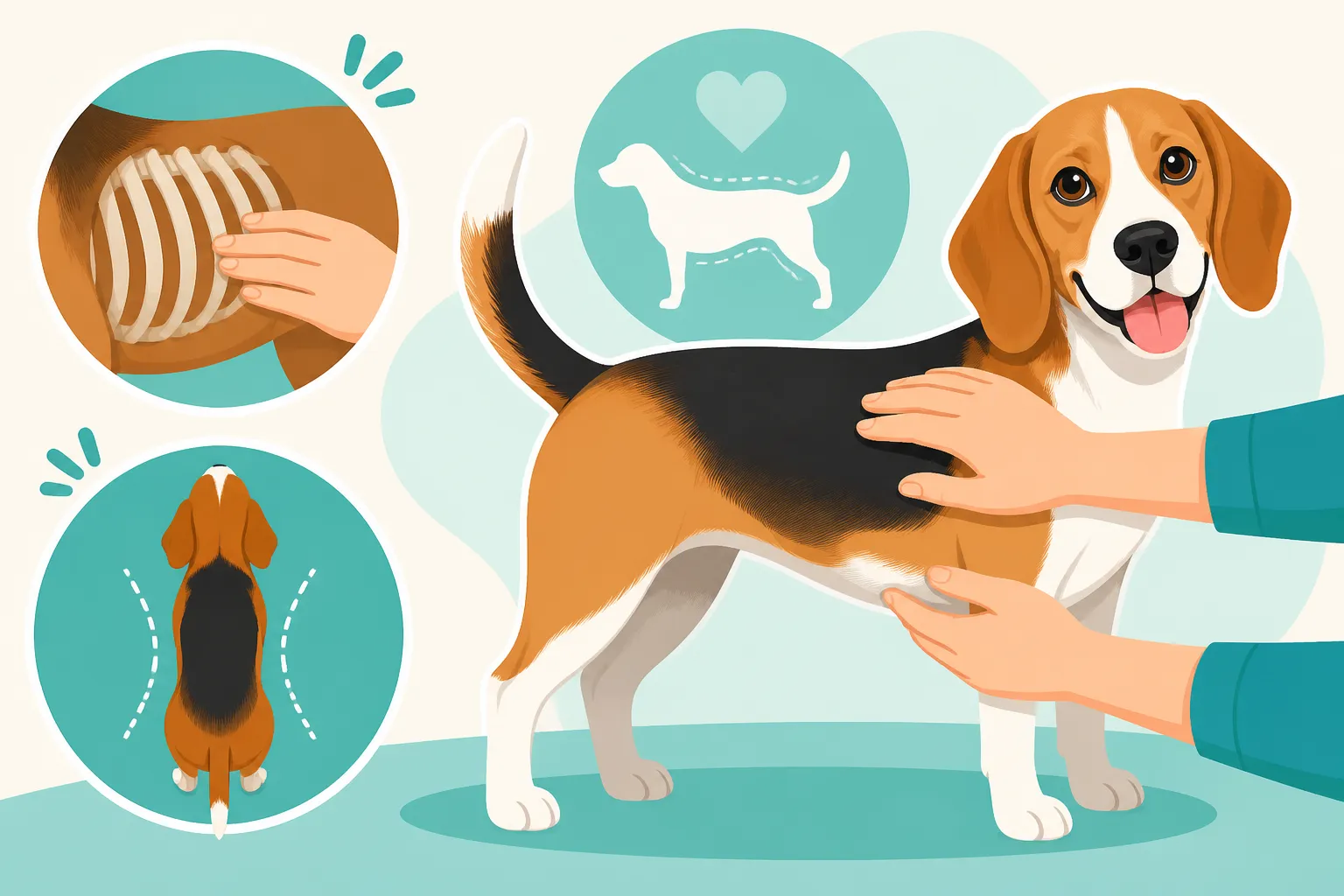
To perform the rib test, start by gently running the flats of your fingers over your Beagle’s side, just behind their shoulder blades. You want to feel for their ribs. Don't press too hard, just enough to feel what's underneath the skin and fur. Move your fingers back and forth, and try to count them if you can.
What you're looking for is a feeling similar to running your hand over your own knuckles when your hand is flat: you can feel the individual bones, but they're not sharply protruding. There should be a thin layer of fat and muscle covering them, making them palpable but not overly prominent. If you have to press firmly to feel them, or if you can't feel them at all, that's a red flag. On the other hand, if they feel sharp and distinct, with no padding, your Beagle might be underweight.
What Healthy Ribs Should Feel Like
When your Beagle is at a healthy weight, their ribs should be easily palpable without having to press. Imagine feeling the back of your hand: you can feel the bones, but they're not sticking out. There's a slight give, a thin cushion, that tells you they have adequate fat covering. It's a smooth, even feeling, not bumpy or ridged, and not like a thick, soft pillow.
This ideal sensation means your Beagle has enough energy reserves, but not so much that it's impacting their mobility or placing undue stress on their internal organs. It means they're lean, functional, and ready for whatever scent adventure comes their way. Getting a feel for this "just right" condition is key to maintaining your Beagle's health.
When Ribs Signal Overweight or Underweight
Here’s a simple breakdown of what different rib feelings can tell you:
- Overweight: If you have to press firmly to feel the ribs, or if you can't feel them at all, your Beagle is likely carrying too much weight. It feels more like running your hand over a well-padded sofa cushion. The layer of fat over the ribs is too thick, indicating an excess of body fat. This extra weight increases the risk of various health issues, including Beagle Obesity and Arthritis Arriving Together and other joint problems.
- Underweight: If the ribs feel very prominent, sharp, and easily visible without any pressing, almost like a washboard, your Beagle might be underweight. You might even see the individual ribs clearly through their coat, which is definitely not ideal. This could be due to insufficient food intake, a high metabolism, or an underlying health problem that needs veterinary attention.
It’s about finding that happy medium. Practicing this regularly will help you become attuned to your Beagle's ideal body condition, allowing you to quickly spot any subtle changes that might require an adjustment in their diet or exercise routine.
Checking the Waistline and Abdominal Tuck
Beyond the ribs, the second crucial area to assess is your Beagle’s waistline and abdominal tuck. These visual and tactile cues, when combined with the rib test, give you a comprehensive understanding of their body shape. Even with that thick Beagle coat, you can often pick up on significant changes here once you know what to look for.
Visual and Tactile Cues for the Waistline
First, let's talk about the visual. Stand directly above your Beagle while they are standing naturally on all fours. Look down at their back. A healthy Beagle should have a distinct waistline, meaning their body should narrow slightly behind the rib cage, before flaring out again at the hips. It shouldn't be a straight line from chest to tail, nor should it bulge outwards.
Now, for the tactile part. Place your hands on either side of their body, just behind the last rib, and gently move them inward towards their spine. You should feel that gentle curve, that "pinch" of the waist. If your hands meet little to no resistance, and there's a clear inward curve, that's a good sign. If it feels like a straight cylinder, or if there's a definite outward bulge, then your Beagle is likely overweight. This simple check can tell you a lot about Beagle Weight Management Across the Two Size Varieties.
What a Healthy Abdominal Tuck Looks Like
The "abdominal tuck" refers to the upward slope of their belly from their rib cage to their hind legs when viewed from the side. In a healthy Beagle, their abdomen should tuck up slightly, rather than hanging low or being perfectly parallel to the ground. It's not as pronounced as in some sighthounds, but it should still be evident.
Imagine your Beagle in profile. The lowest point of their chest should be lower than their belly line. If their belly line runs straight back, or even sags downwards, that indicates excess fat accumulation around their midsection. A good tuck means their abdominal muscles are toned, and they're not carrying unnecessary weight in their belly. This is another area where the thick coat can sometimes fool you, so running your hand along their belly can confirm what your eyes might miss.
Recognizing an Absent or Sagging Waistline
When a Beagle's waistline is absent or their abdomen sags, it’s a strong indicator of excess weight. Instead of a graceful curve from the ribs to the hips, you might see a straight, blocky shape from above, or even a noticeable outward bulge. From the side, the abdominal tuck disappears, and the belly might hang low, appearing round or pendulous. This is often referred to as a "potbelly" and is a clear sign that fat has accumulated in the abdominal area.
This isn't just a matter of aesthetics; abdominal fat can be metabolically active, increasing the risk of diseases like Beagle Diabetes and Blood Sugar Control and Beagle Heart Disease and Murmurs. Catching this early is crucial. If you notice these signs, it's time to consider adjusting their Daily Calories for a 13-Inch Against a 15-Inch Beagle and increasing their physical activity.
What to Do If Your Beagle Is Overweight
Discovering your Beagle is overweight can be a bit disheartening, but it's also an empowering moment because you now have the knowledge to help them get back on track! It’s a common issue, and with consistent effort, you can make a huge difference in their health and longevity. The goal is steady, healthy weight loss, not a crash diet.
Consulting Your Veterinarian First
The very first step you should take is to schedule a visit with your veterinarian. They can confirm your assessment, rule out any underlying medical conditions that might contribute to weight gain (like Beagle Hypothyroidism and Sudden Weight Gain), and help you set a realistic target weight. Your vet can also calculate an appropriate daily calorie intake for your Beagle based on their current weight, ideal weight, age, and activity level.
They might recommend a specific weight loss diet, such as a prescription food designed for satiety and calorie control. They can also offer advice on safe exercise routines and monitor your Beagle's progress during follow-up visits. This professional guidance is invaluable and ensures you're tackling the issue safely and effectively.
Adjusting Diet and Portion Sizes
Once you have your vet’s recommendations, it’s time to get serious about diet. Beagles are notoriously food-motivated, so this might be challenging, but it’s the most impactful change you can make.
- Measure Everything: Stop "eyeballing" portions. Invest in a digital kitchen scale to accurately weigh your Beagle's food. Even a small handful extra per meal adds up quickly. You can find reliable scales on platforms like Amazon or Chewy. Measuring Beagle Food by Weight Rather Than Cups provides much more precision.
- Reduce Calories: This might mean switching to a lower-calorie dog food, or simply feeding smaller portions of their current food (as advised by your vet). Many Beagles do well on a "light" formula or one specifically designed for weight management.
- Limit Treats: Treats contribute significantly to daily calorie intake. Switch to very low-calorie options, or use small pieces of steamed green beans or carrots. If using commercial treats, factor their calories into the daily total. Consider puzzle toys for their meals to slow down eating and provide mental stimulation.
- Avoid Table Scraps: This is often the biggest culprit. Beagles are masters of the "puppy dog eyes," but human food is often too rich and high in calories for them. Be firm with yourself and your family members. How Extra Weight Raises Beagle Disc Pressure is a key reason to be strict.
Brands like Ollie offer portioned fresh food meals tailored to your dog's specific calorie needs, which can be a great way to manage intake precisely.
Increasing Exercise Gradually
Diet is about 80% of weight loss, but exercise is still vital for burning calories, building muscle, and improving overall fitness.
- Start Slow: If your Beagle is significantly overweight, don’t suddenly launch into intense workouts. Begin with more frequent, shorter walks. Gradually increase the duration and intensity as their stamina improves. Aim for two to three brisk walks a day. Exercise That Actually Burns Beagle Calories will be more effective if it's consistent.
- Scent Walks: Beagles thrive on using their noses! Instead of just a brisk walk, incorporate "sniffari" walks where they can explore scents at their own pace. While not as high-impact for calorie burning, the mental stimulation is exhausting and satisfying for them. Why a Scent Walk Tires a Beagle Faster Than Running is something many owners underestimate.
- Playtime: Engage in interactive playtime like fetch (if their joints allow) or using a flirt pole in the yard. These can be great bursts of activity.
- Consistency is Key: Just like with diet, consistency in exercise is paramount. Make it a part of your daily routine, even on busy days.
- Protect Joints: If your Beagle has any joint issues or is very heavy, discuss joint-friendly exercises with your vet. Swimming, for example, can be a great low-impact option.
Remember, the goal is not just weight loss, but improved health and quality of life for your Beagle. Regular check-ins with your vet and consistent effort at home will set your beloved hound up for a longer, happier, and healthier life. Beagle Obesity Treated as a Health Problem can seem daunting, but it's entirely manageable with the right approach.
Disclaimer
This article is for general informational purposes only and does not constitute professional advice. Laws, prices and regulations vary by location and change over time. Consult a qualified professional for guidance on your specific situation.