Tick Checks After Every Beagle Outing
There's nothing quite like watching your Beagle follow a scent trail, nose to the ground, tail wagging like a happy pendulum. Their boundless energy and incredible sense of smell are what make them such endearing companions. But this very instinct, this love for sniffing out every intriguing smell in the great outdoors, puts them directly in harm's way when it comes to ticks. As a Beagle parent, you know the frustration and anxiety of finding one of those creepy crawlies latched onto your dog. This comprehensive guide is here to demystify the process, walking you through why Beagles are tick magnets, how to perform thorough post-outing checks, and essential prevention strategies to keep your beloved hound safe and healthy.
Why Every Beagle Owner Needs a Tick Strategy
Beagles are unique in their enthusiasm for exploration, and this very trait makes them particularly susceptible to ticks. It’s not just about spending time outdoors; it’s how they spend that time. Understanding this inherent predisposition is the first step in developing an effective tick management plan.
The Beagle's Instinct to Explore and Forage
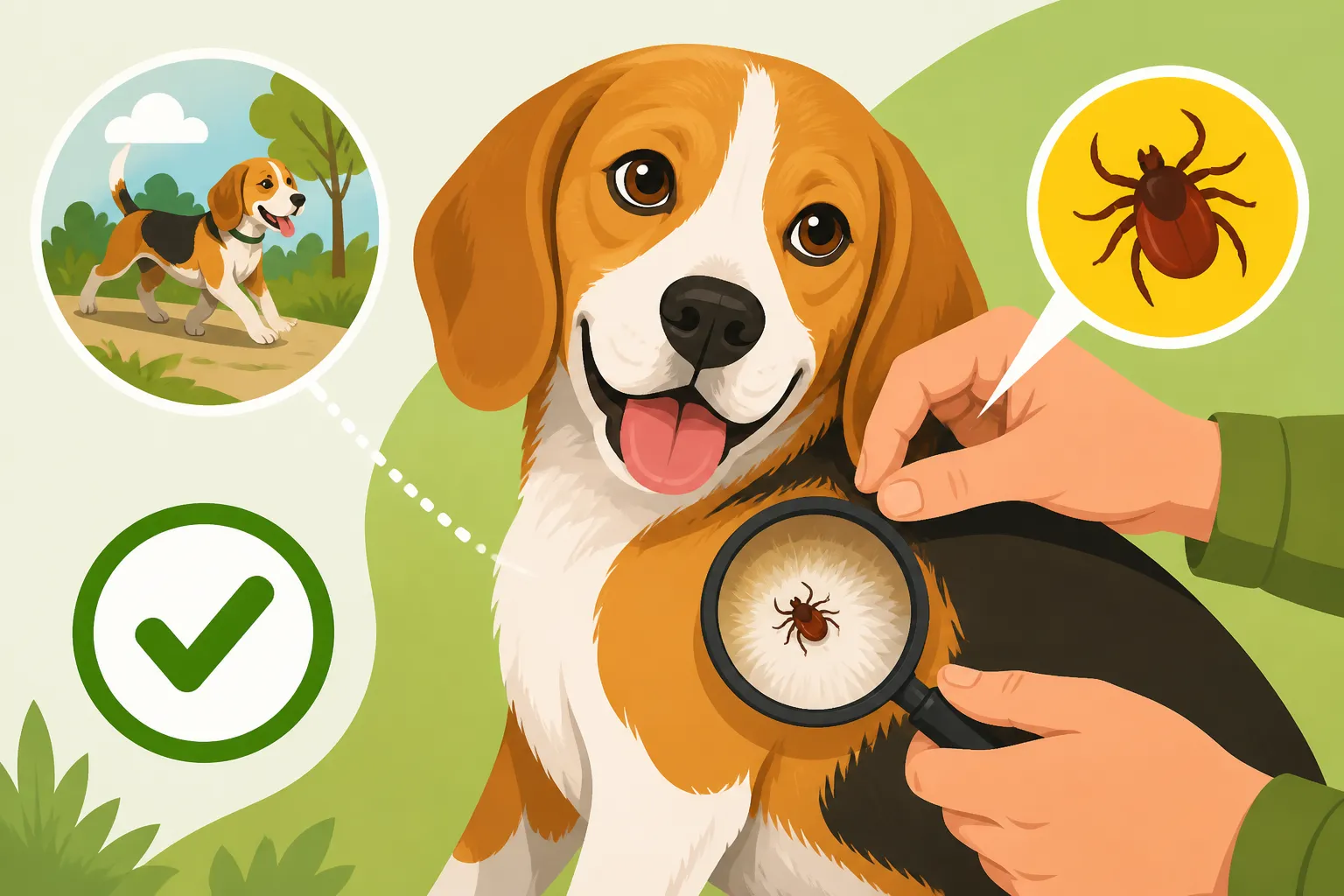
Beagles are, at their core, scent hounds, bred for centuries to follow a trail with unwavering focus. This means their natural inclination is to keep their noses glued to the ground, meticulously investigating every patch of grass, every fallen leaf, and every dense thicket. Think about your last walk: did your Beagle stick to the paved path, or did they dive headfirst into the tall weeds along the fence line, or perhaps disappear into a patch of overgrown bushes at the park? That's typical Beagle behavior, and it’s precisely where ticks lie in wait.
These tiny arachnids prefer habitats with dense vegetation, high humidity, and plenty of wildlife hosts. Tall grasses, wooded areas, leaf litter, and even unkempt backyard corners are prime tick territories. When your Beagle is pushing through these environments, their fur acts like a magnet, easily picking up any ticks that are questing (waiting on vegetation for a host to pass by). This isn't a behavior you can simply train out of a Beagle; it's part of their genetic makeup and what makes them such fascinating companions. Their happiness often comes from indulging this instinct, which means we, as their guardians, must be extra diligent about the consequences.
The Challenge of Their Dense, Double Coat
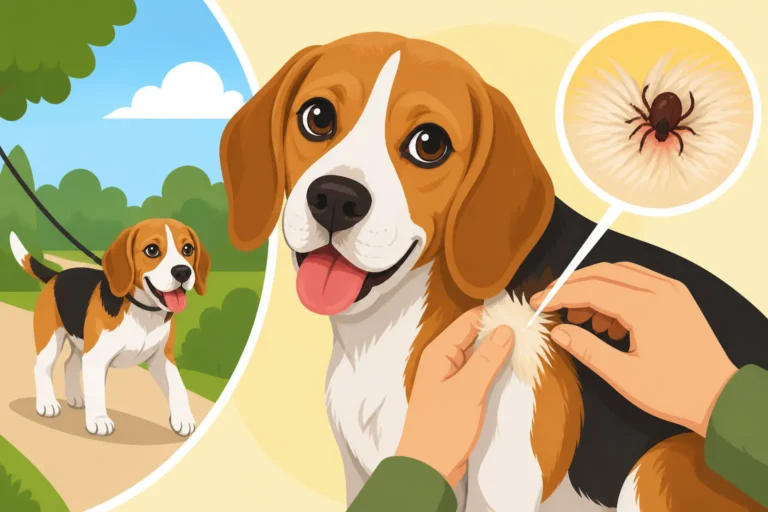
While a Beagle’s short, dense, weather-resistant double coat is perfect for protecting them from the elements during their outdoor adventures, it also serves as an excellent hiding spot for ticks. Imagine a small, dark tick trying to find purchase on a black-and-tan or tricolor Beagle – it can be nearly impossible to spot with a quick glance. The undercoat, in particular, can be quite thick, allowing a tick to burrow down and begin feeding, concealed from plain sight and even casual petting.
Many owners might give their Beagle a quick pat-down after a walk, feeling for anything unusual. However, a tick that has just latched on can be as small as a poppy seed, especially in its nymph stage. These tiny invaders can go undetected for days, slowly engorging themselves while potentially transmitting diseases. The density of the coat means that a truly thorough tick check requires more than just a visual scan; it demands a systematic, hands-on approach where you feel for bumps and carefully part the fur to expose the skin underneath. Without this meticulous effort, you run the risk of missing a tick until it’s fully engorged and much larger, at which point it may have already transmitted pathogens. This makes the task of Beagle Grooming and That Shedding Double Coat even more important, as regular brushing can sometimes dislodge loose ticks or make them more visible.
The Silent Threat: Tick-Borne Diseases in Beagles
A tick bite is more than just an irritating itch; it's a direct gateway for various serious diseases that can have profound and lasting impacts on your Beagle’s health. Understanding these risks is crucial for every responsible owner.
Understanding the Dangers Beyond a Bite
Ticks are vectors, meaning they can carry and transmit pathogens (bacteria, viruses, or parasites) from one host to another. When a tick attaches to your Beagle and begins to feed, it can transfer these pathogens directly into their bloodstream. The longer a tick remains attached and feeds, the higher the risk of disease transmission. For instance, the bacteria causing Lyme disease typically require about 24-48 hours of attachment before they can be transmitted. This is why prompt removal is so incredibly important.
Common tick-borne diseases in dogs include Lyme disease, Anaplasmosis, Ehrlichiosis, and Rocky Mountain Spotted Fever. Each of these can lead to a range of debilitating symptoms, some of which may not appear until weeks or even months after the initial bite. This delayed onset can make diagnosis challenging if you haven't been meticulously checking for and removing ticks. A single infected tick can carry multiple diseases, further complicating the clinical picture for your veterinarian. Knowing the types of ticks prevalent in your area and the diseases they carry can also help you understand the specific risks your Beagle faces, underscoring the importance of Year-Round Parasite Prevention for a Beagle.
Recognizing the Subtle Signs of Illness
One of the most insidious aspects of tick-borne diseases is that their early symptoms are often non-specific and easily mistaken for other minor ailments or just an "off day" for your Beagle. You might notice a slight decrease in energy, a reduced appetite, or a general reluctance to play. However, these seemingly innocuous signs can be the precursor to something far more serious.
As the disease progresses, more distinct symptoms can emerge. For Lyme disease, a classic sign is shifting leg lameness, where your Beagle might limp on one leg for a few days, then seemingly recover, only for the lameness to appear in another leg. Swollen joints, fever, and generalized pain are also common. With Anaplasmosis and Ehrlichiosis, you might observe similar symptoms, along with nosebleeds, swollen lymph nodes, or even neurological signs in severe cases. Rocky Mountain Spotted Fever can manifest with fever, joint pain, and swelling, but can quickly escalate to more severe issues affecting multiple organ systems. If you observe any of these symptoms, particularly if your Beagle has recently been active outdoors or you’ve found ticks on them, it’s imperative to contact your veterinarian immediately. Early diagnosis and treatment are critical to prevent these conditions from becoming chronic or leading to life-threatening complications. In some cases, persistent issues like Beagle Arthritis Arriving in Middle Age could be exacerbated or even initially triggered by an untreated tick-borne illness.
Your Step-by-Step Beagle Tick Check Routine
Performing a thorough tick check isn't just about scanning the surface; it's a systematic, hands-on process that requires a little preparation and patience. Think of it as a bonding experience that doubles as a vital health safeguard for your curious canine.
Essential Tools for a Successful Inspection
Before you even bring your Beagle in for their post-adventure inspection, it's a good idea to have your supplies ready. This makes the process smoother, quicker, and less stressful for both of you.
First, a good light source is non-negotiable. A bright flashlight or even a headlamp can illuminate the dense fur and help you spot tiny ticks that might otherwise go unnoticed. Next, you'll need a reliable tick removal tool. While fine-tipped tweezers can work in a pinch, specialized tick removers, such as tick twisters or tick keys, are designed to grasp the tick close to the skin and remove it with a twisting or leveraging motion, reducing the risk of leaving mouthparts embedded or squeezing the tick's body. You can find a wide variety of these effective tools easily on platforms like Chewy or Amazon, making them readily accessible. Having a pair of disposable gloves is also a good idea, not just for hygiene, but to provide a better grip on your Beagle's fur and the tick itself. Finally, keep a small, sealable container (like a pill bottle or a small jar) filled with rubbing alcohol nearby. This is for dispatching any ticks you find and preserving them for potential identification by your vet if your Beagle later develops symptoms. And, of course, don't forget some high-value treats to reward your cooperative Beagle throughout the process!
The Head-to-Tail, Nose-to-Tail Method
Consistency is key when checking for ticks. A systematic, head-to-tail approach ensures you don't miss any spots. Find a calm, well-lit area where your Beagle can be comfortable, perhaps on your lap or on a grooming table if they're accustomed to it.
Start at the head. Carefully examine around the muzzle, under the chin, and pay very close attention to and inside your Beagle's ears. Those long, floppy Beagle ears can hide a lot, and ticks love the warm, protected environment. Cleaning a Beagle Ear Before Infection Starts is a good routine to combine with this check. Gently lift each ear flap and inspect the inner surface, feeling for any small bumps. Don't forget the skin folds around the eyes and along the jawline. Move down the neck, meticulously parting the fur to check the skin, especially where the collar sits – ticks often gravitate to this area. Continue down the chest, front legs, and into the armpits, which are another prime hiding spot. Run your fingers against the grain of the fur, feeling for any small protrusions. Proceed along the back, flanks, and abdomen, making sure to check both sides thoroughly. Don't neglect the inner thighs and groin area. Finally, check the tail, gently lifting it to examine the skin underneath and around the anal area. The key is to not just look, but to feel for any irregularities on the skin surface, especially on a Beagle with a denser coat.
High-Risk Hiding Spots for Ticks
While a full-body inspection is essential, certain areas on a Beagle's body are practically five-star resorts for ticks. These are the spots where ticks are most likely to attach and where they can go undetected for the longest. Knowing these hotspots means you can give them extra scrutiny during your routine check.
The ears, both inside and behind, are perhaps the number one hiding place for ticks on a Beagle. Their long, floppy nature creates a warm, dark, and sheltered environment, making it an ideal spot for ticks to latch on without being disturbed. Always lift the ear flaps, gently fold them back, and thoroughly inspect the entire inner surface and the skin just behind the ear. Another favorite spot is between the toes and on the paw pads. Your Beagle’s paws are constantly in contact with the ground and vegetation, and the skin between the toes is soft and protected. Make sure to separate each toe and feel around the pads. Ticks also love the armpits and groin area, where the skin is thinner, warmer, and protected by the legs. Don't forget under the tail and around the anal region, as these are also moist, protected areas. Lastly, the area under your Beagle's collar or harness can be a common hiding spot; remove their collar during the check to inspect this skin carefully. By focusing extra attention on these high-risk areas, you significantly increase your chances of finding and removing ticks before they have a chance to transmit disease. If you notice any redness or irritation on the paw pads, it could be a tick bite or Beagle Paw Pad Cracks After Field Walks, both requiring attention.
Safe and Effective Tick Removal Techniques
Finding a tick can be alarming, but panicking isn't helpful. The goal is swift, complete, and safe removal to minimize the risk of disease transmission. Having the right tools and knowing the proper technique makes all the difference.
Choosing the Right Removal Tool
When it comes to tick removal, not all tools are created equal. Regular household tweezers, for example, can be problematic. Their broad tips often end up squeezing the tick's body, which can inadvertently inject harmful bacteria from the tick's salivary glands into your Beagle's bloodstream. They also increase the likelihood of leaving the tick's head or mouthparts embedded in the skin, which can lead to infection or an inflammatory reaction.
This is why investing in a specialized tick removal tool is highly recommended. These tools come in various designs, such as fine-tipped tweezers specifically designed for ticks, looped removers, or twisting tools (often called "tick twisters"). Fine-tipped tweezers allow you to grasp the tick as close to the skin as possible, at the point where its mouthparts enter, rather than grabbing the engorged body. Twisting tools are particularly effective as they are designed to rotate the tick out of the skin, detaching it completely without squeezing. Brands available on Chewy or Amazon often offer these specialized tools as part of pet first aid kits or individually. Using the correct tool drastically improves your chances of a clean removal, thereby protecting your Beagle from unnecessary exposure to potential pathogens.
A Step-by-Step Guide to Removal
Once you've located a tick and have your chosen tool ready, follow these steps for safe and effective removal:
- Prepare the Area: Gently part your Beagle's fur around the tick to expose the skin. If you're wearing gloves, put them on now.
- Position the Tool: If using fine-tipped tweezers, grasp the tick as close to your Beagle's skin as possible, aiming for the head or mouthparts, not the body. If using a tick twister or similar lever-style tool, slide the tool underneath the tick, ensuring it cups the tick's body near the skin.
- Remove the Tick:
- For tweezers: Pull straight upward with slow, steady, even pressure. Avoid twisting or jerking, as this can break off the mouthparts and leave them embedded.
- For twisting tools: Twist the tool in one continuous direction (usually counter-clockwise) until the tick detaches on its own. The tick should release its grip naturally.
- Inspect the Tick and Bite Site: Once the tick is removed, examine it to ensure it's intact, including its head and mouthparts. Also, check the bite site on your Beagle's skin for any remaining tick fragments. If mouthparts remain, don't fret too much; they usually fall out on their own, but keep an eye on the area for signs of infection.
- Dispose of the Tick: Place the removed tick in your sealed container with rubbing alcohol. The alcohol will kill the tick, and preserving it means you can show it to your vet if your Beagle becomes ill later. Never crush a tick with your bare fingers, as this can expose you to pathogens.
- Clean the Bite Site: Clean the area on your Beagle's skin with an antiseptic wipe, rubbing alcohol, or a mild soap and water solution.
Avoid common pitfalls like burning the tick with a match or applying petroleum jelly, nail polish, or other substances. These methods are ineffective and can cause the tick to regurgitate potentially infectious fluids into your Beagle before it eventually detaches.
Post-Removal Care and Monitoring
Removing the tick is a major hurdle, but your vigilance shouldn't stop there. Post-removal care and monitoring are crucial to ensure your Beagle's continued health and to catch any potential complications early.
After cleaning the bite site, keep a close eye on the area for the next few days to a week. Look for any signs of localized infection, such as increased redness, swelling, heat, or discharge (pus). A small bump or scab can be normal as the skin heals, but anything beyond that warrants a call to your vet. More importantly, you need to monitor your Beagle for systemic signs of illness for several weeks to months after the tick bite. Remember, tick-borne diseases often have incubation periods. Watch for changes in behavior, appetite, or energy levels. Look for any lameness, fever, swollen lymph nodes, or any other unusual symptoms like Beagle Skin Allergies and Constant Itching that could be linked to an underlying infection. If your Beagle exhibits any of these signs, contact your veterinarian immediately. Be sure to mention the tick bite and, if you saved it, bring the tick with you. This information, combined with diagnostic testing, can help your vet accurately diagnose and treat any emerging tick-borne illness. Early intervention can make a significant difference in your Beagle’s prognosis, so never hesitate to seek professional advice, especially if you see Beagle Emergency Signs That Cannot Wait Until Morning.
Comprehensive Tick Prevention Strategies
While diligent tick checks are a must, an even better approach is to prevent ticks from getting on your Beagle in the first place. A multi-pronged strategy combining year-round parasite control and environmental management offers the best protection.
Year-Round Parasite Protection is Key
The cornerstone of tick prevention for your Beagle should always be a high-quality, veterinarian-prescribed parasite preventative. The days of only worrying about ticks in summer are long gone; ticks can be active in many regions even in mild winter weather. Year-round prevention is no longer optional, it’s essential.
There are numerous options available, and your vet is the best resource to help you choose the right one for your Beagle's specific needs, lifestyle, and your local tick prevalence. These typically fall into a few categories:
- Oral Medications: These are chewable tablets given monthly or every few months. They work systemically, meaning when a tick bites your Beagle, it ingests the medication and dies. Many of these products also protect against fleas.
- Topical Treatments: Often called "spot-ons," these liquids are applied to a small area of skin, usually between the shoulder blades, and are absorbed into the skin's oils. They repel or kill ticks (and fleas) on contact or after a bite.
- Tick Collars: Some collars contain active ingredients that repel or kill ticks. These can be effective, but it’s crucial to ensure they fit properly and that your Beagle doesn't chew on them. They also need to be replaced periodically.
It's vital to use these products exactly as directed by your veterinarian and to understand what parasites each product protects against. Some target fleas and certain ticks, while others offer broader protection against heartworms and intestinal parasites too. Never use products designed for other species (like cats) or unapproved products, as they can be toxic to dogs. Discussing Year-Round Parasite Prevention for a Beagle with your vet will ensure your hound is adequately protected.
Environmental Management and Home Protection
Beyond protecting your Beagle directly, managing their environment can significantly reduce their exposure to ticks. Your own backyard, even a small one, can harbor ticks if not properly maintained.
Start with your lawn and garden. Ticks thrive in tall grass and dense undergrowth, so keep your grass mowed short and trim back shrubs and bushes, especially those along property lines or wooded edges. Clear away leaf litter, brush, and yard debris promptly, as these provide ideal hiding and breeding spots for ticks. If you have wooded areas bordering your yard, consider creating a barrier of wood chips or gravel a few feet wide between your lawn and the woods. Ticks are less likely to cross these dry, open spaces.
While there are some yard treatments available that can reduce tick populations, it's essential to research them carefully and consider their safety for pets and other wildlife. Always follow product instructions meticulously. Finally, remember that ticks don't just affect dogs; they can attach to humans too. After working in the yard or returning from an outdoor adventure with your Beagle, always perform a personal tick check on yourself and your family members. By taking these proactive steps, you create a safer environment for your Beagle, minimizing the chances of tick encounters and the worries they bring.
Common Tick-Borne Diseases in Beagles and Their Symptoms
Understanding the potential diseases your Beagle could contract from ticks is a key part of prevention and early detection. Here's a brief overview of some common tick-borne illnesses, their vectors, and typical symptoms.
| Disease | Common Tick Vector | General Symptoms (Days/Weeks Post-Bite) |
|---|---|---|
| Lyme Disease | Deer Tick (Blacklegged) | Lameness (shifting leg), fever, lethargy, swollen joints, loss of appetite |
| Anaplasmosis | Deer Tick, Western Blacklegged Tick | Fever, lethargy, joint pain, loss of appetite, occasional vomiting/diarrhea |
| Ehrlichiosis | Lone Star Tick, Brown Dog Tick | Fever, lethargy, weight loss, nosebleeds, swollen lymph nodes, neurological signs |
| Rocky Mountain Spotted Fever | American Dog Tick, Rocky Mountain Wood Tick, Brown Dog Tick | Fever, lethargy, joint pain, swelling in limbs/face, neurological signs, skin lesions |
Disclaimer
This article is for general informational purposes only and does not constitute professional advice. Laws, prices and regulations vary by location and change over time. Consult a qualified professional for guidance on your specific situation.