Ramps and Steps That Spare a Beagle’s Back
The sight of your bouncy Beagle launching itself off the couch or leaping out of the car might seem endearing, a hallmark of their energetic spirit. But what many of us don't realize until it's too late is that every single one of those joyful jumps puts significant strain on their delicate spines. This guide is all about understanding why those seemingly harmless actions can lead to serious back problems for our beloved hounds and how simple tools like ramps and steps can become absolute lifesavers, protecting their long-term health and mobility.
Why a Beagle's Back is So Vulnerable
Beagles might be small-to-medium sized dogs, but their conformation – that slightly elongated back and short legs – combined with their inherent athleticism and boundless enthusiasm for exploring the world, makes them uniquely susceptible to certain spinal issues. It's not just a matter of "bad luck"; it's often a combination of genetics and everyday wear and tear.
Understanding Intervertebral Disc Disease (IVDD) in Beagles
One of the most concerning conditions for a Beagle's back is Intervertebral Disc Disease, often shortened to IVDD. Think of the discs in your dog's spine like tiny, jelly-filled shock absorbers nestled between each vertebra. Their job is to cushion impact and allow for flexible movement. In breeds prone to IVDD, these discs can degenerate or harden over time, becoming less effective at their job. This hardening, known as chondrodystrophy, is a genetic trait common in Beagles and other breeds with similar body types.
When a disc hardens, it becomes brittle and can either bulge out or rupture completely, pressing on the spinal cord. This pressure can range from causing mild pain and discomfort to severe neurological deficits, including partial or complete paralysis. The sudden impact from a jump or a twist can be the "straw that breaks the camel's back," quite literally, causing a compromised disc to finally give way. The pain can be excruciating, and the recovery process can be long, expensive, and emotionally draining for both dog and owner. Understanding Beagle Disc Disease and That Slightly Long Back is crucial for any owner.
The Everyday Stresses of Jumping and Twisting
Even without an IVDD diagnosis, the cumulative effect of daily jumping and twisting can take a toll on a Beagle's spine. Imagine the force exerted on their back every time they launch themselves off a bed or a sofa. When they land, that impact travels directly up their legs and into their spine. Similarly, twisting motions – like scrambling off the bed, turning sharply to chase a squirrel, or even just wiggling around excitedly – can put rotational stress on the discs.
These repetitive micro-traumas might not cause an immediate injury, but they contribute to the gradual wear and tear of the spinal column. Over years, this can weaken the ligaments and muscles supporting the spine and accelerate disc degeneration. It's like bending a paperclip back and forth repeatedly; eventually, it's going to snap. Preventing these everyday stresses is a proactive step that can significantly contribute to your Beagle's long-term spinal health, making their senior years much more comfortable. Senior Beagle Care After the Age of Ten often includes managing mobility.
Assessing Your Home for Beagle Back Hazards
It's easy to overlook the potential hazards in our own homes when we see our Beagles navigating them with such apparent ease. However, a fresh look through the lens of spinal protection can reveal surprising areas where ramps or steps could make a world of difference.
Identifying High-Traffic Jump Zones
Start by observing your Beagle's daily routine. Where do they jump most frequently? The sofa is almost always a prime culprit. Do they leap onto your bed for morning cuddles or evening snuggles? What about going in and out of the car? These are your high-traffic jump zones, the places where repetitive stress is most likely to occur. Don't forget smaller jumps that might seem innocuous, like jumping off a porch step or onto a low window sill. Even these can add up.
Consider also the surface they're landing on. Hardwood floors or tiles offer no shock absorption, making landings more impactful than if they were landing on carpet or a rug. If your Beagle is prone to excitement, they might also be making uncontrolled jumps, twisting mid-air, or landing awkwardly. Paying attention to these habits will guide you in prioritizing where to place your new ramps and steps. It's often the small, daily actions that accumulate the most risk.
Furniture Heights and Beagle Habits
Not all furniture poses the same risk. A low armchair might be manageable for a Beagle to step on and off, but a tall bed or a deep sofa could be a major problem. For a standard Beagle, any jump where their front paws leave the ground and they exert significant upward force on their hindquarters is a risk. Measure the height of your most frequently used furniture.
Also, think about how your Beagle uses the furniture. Do they launch themselves off the very edge, or do they take a more controlled descent? Do they scramble up and down multiple times a day, or is it just an occasional leap? Some Beagles are also "bed hogs" and will jump up multiple times during the night. These habits, combined with furniture height, will help you determine not just if you need a ramp or steps, but what kind and where. For instance, if your Beagle loves looking out the window, a step could prevent repeated jumps on and off the sill. A sudden reluctance to jump on furniture is one of Early Beagle Disc Signs Long Before Paralysis.
Choosing the Right Ramps for Your Beagle
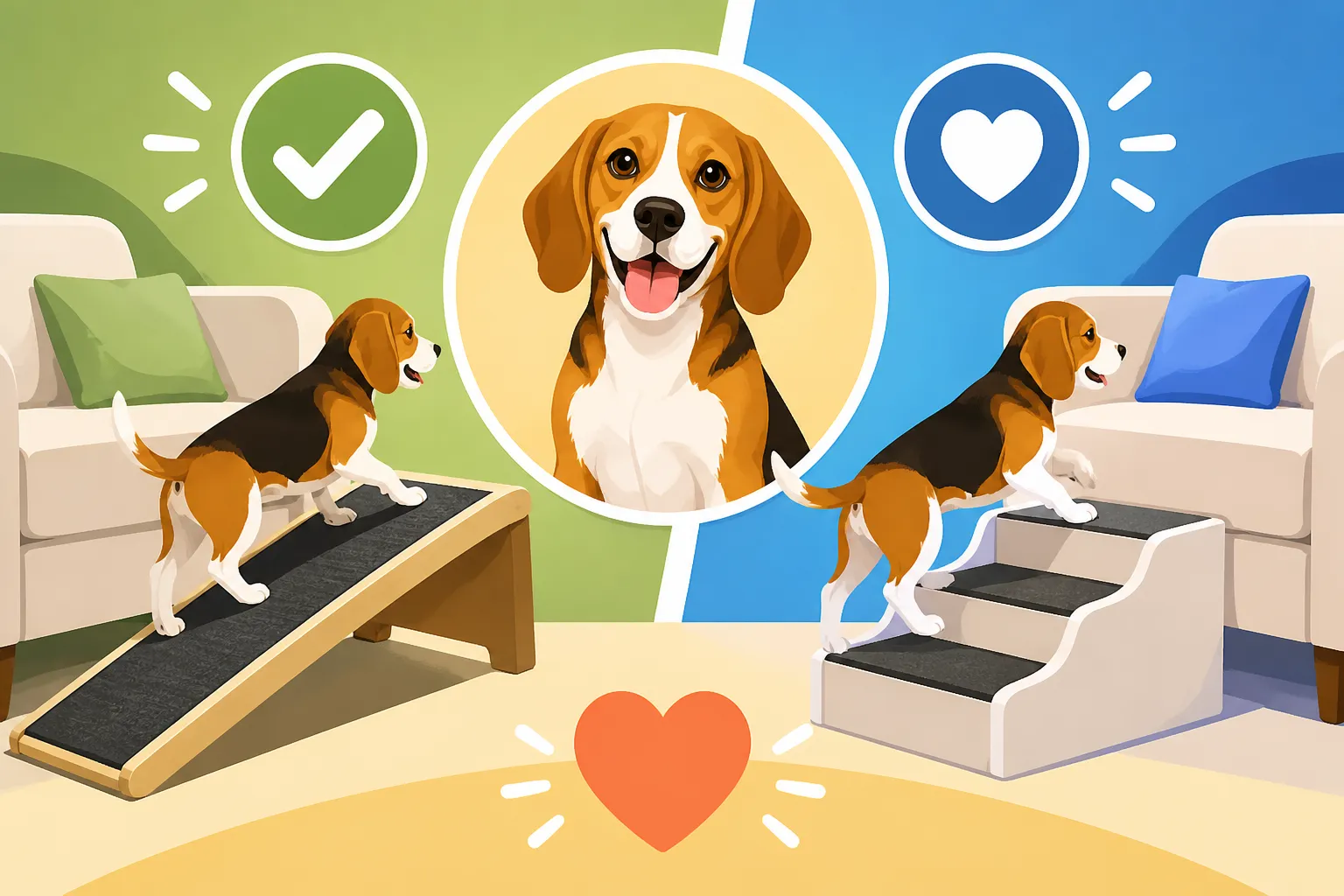
Ramps are often the preferred choice for preventing spinal stress, especially for larger drops or for dogs already showing signs of back discomfort. They provide a smooth, gradual incline that eliminates jumping entirely, allowing your Beagle to simply walk up and down.
Material, Incline, and Surface Considerations
When selecting a ramp, there are several key factors to consider. First, the material: you'll find ramps made from wood, plastic, or even lightweight aluminum. Wooden ramps can be sturdy and blend well with home decor, but might be heavier. Plastic ramps are often lighter and more portable, while aluminum options are great for car use due to their durability and low weight.
Next, the incline is critical. A gentle slope is always better for a dog's back, as it reduces the effort and strain. Avoid ramps that are too steep, as this can still put pressure on joints and the spine. Many pet ramps are designed with an optimal incline, but always check the specifications. Finally, the surface texture is paramount. It needs to provide good grip to prevent slips and falls, especially for an eager Beagle. Look for anti-slip treads, carpeted surfaces, or rubberized coatings. A slick surface can lead to disastrous slips, defeating the whole purpose of protecting their back. You can find many suitable options on platforms like Amazon or Chewy.
Car Ramps for Adventure-Loving Beagles
For Beagles who love to join you on every adventure, a car ramp is an absolute must. The repeated jumping in and out of a vehicle, especially an SUV or truck, is one of the most significant stressors for a dog's back and joints. A good car ramp will save their spine from jarring impacts and protect your back from lifting a potentially squirming 20-30 pound dog multiple times a day.
Look for a car ramp that is sturdy enough to support your Beagle's weight (and then some!) without wobbling, and one that extends to a length that provides a comfortable incline for your specific vehicle. Portability is also key; many car ramps fold or telescope for easy storage in your trunk. Make sure the surface is non-slip, even when wet, as outdoor adventures can be muddy. Introducing a car ramp early in your Beagle's life can help them form a lifelong habit and significantly reduce the risk of spinal injury from vehicle entry and exit. It's an investment that pays dividends in comfort and health, reducing Beagle Disc Disease and That Slightly Long Back.
Selecting Safe Steps for Indoor Use
While ramps are ideal for large drops, steps can be a practical solution for beds, sofas, or other furniture where space is limited or the height difference isn't extreme. They offer a more natural "stair-climbing" motion which, when properly designed, can be less stressful than jumping.
Stability and Tread for Tiny Paws
The most important considerations for pet steps are stability and the security of the tread. Wobbly steps are an immediate hazard. Your Beagle needs to feel confident and secure on each step. Look for steps with a wide base, non-slip feet, and a solid construction that won't tip or slide on your floor. Materials vary from dense foam to plastic to wood, all of which can be stable if designed correctly.
The tread surface should also be non-slip, just like with ramps. Carpeted steps are excellent, as they provide both grip and a bit of cushioning. If the steps are made of a hard material, ensure there are non-slip strips or textured surfaces. The depth and height of each step should be appropriate for a Beagle's shorter legs, allowing them to ascend and descend comfortably without straining or having to stretch too far. Steps that are too tall for their stride will still put undue stress on their back.
Different Styles for Different Furniture
Pet steps come in a variety of styles to suit different furniture and home aesthetics.
Types of Pet Steps & Ramps
| Feature/Type | Best Use Case | Pros | Cons |
|---|---|---|---|
| Traditional Steps | Sofas, low beds, window sills | Compact, familiar motion for dogs, range of styles | Can still exert some joint pressure if steps are too high |
| Gradual Incline Ramps | High beds, large couches, vehicle entry/exit | Eliminates jumping entirely, gentlest on joints/spine | Can be bulky, requires more floor space |
| Folding/Telescoping Ramps | Car, RV, portable use | Highly portable, easy storage | May be steeper than fixed ramps, check stability |
| Modular Steps/Ramps | Customizable for various heights, multi-level | Adaptable, can grow with dog's needs | More expensive, assembly required |
| Foam Steps | Low beds, older/smaller dogs, gentle support | Lightweight, soft, safe for accidental bumps | Less durable, not for heavy dogs, can be chewed |
Some steps are designed to look like mini staircases, often with two to four steps. These work well for typical sofa heights. For taller beds, you might need a taller set of steps or a combination of steps and a landing platform. Some designs even incorporate storage within the steps, which can be a clever way to keep toys or grooming supplies tidy. Consider the color and material to ensure they blend with your existing decor. You can find stylish and functional pet steps from brands sold on Chewy or Amazon, offering a wide range of choices to fit your home and your Beagle's needs. Remember that the goal is not just to prevent jumping, but to make the process of getting on and off furniture as comfortable and safe as possible for their back.
Training Your Beagle to Use Ramps and Steps
It's one thing to buy a beautiful ramp or set of steps, and another to get your enthusiastic, sometimes stubborn, Beagle to actually use it! Patience, positive reinforcement, and high-value rewards are going to be your best friends here. Don't expect them to immediately understand; this is a new behavior that needs to be taught.
Positive Reinforcement and High-Value Rewards
Beagles are incredibly food-motivated, which works entirely in your favor when teaching them new things. Arm yourself with their absolute favorite, high-value treats – think tiny pieces of cheese, cooked chicken, or training treats from brands like Ollie. The goal is to make using the ramp or steps the most rewarding activity ever.
Start by placing treats on the first step or at the very bottom of the ramp. As your Beagle approaches and takes the treat, praise them enthusiastically. Gradually place treats further up, encouraging them to put one paw, then two, then their whole body on the ramp or steps. Never force them; this should be a positive experience. If they hesitate, make the treats even more appealing, or go back to an easier step. The moment they successfully go up or down, throw a party with treats and praise! Consistency is key; make it a game every single day until it becomes second nature. High-Value Food and How Fast a Beagle Learns is something every Beagle owner knows!
Gradual Introduction and Patience
Introducing ramps and steps should be a slow, gradual process, especially if your Beagle is already wary or has associated previous attempts with negative experiences.
- Start Flat: For ramps, begin by laying the ramp flat on the ground. Let your Beagle sniff it, walk over it, and get treats for interacting with it without any incline.
- Small Incline: Once they are comfortable, prop one end up just a few inches. Repeat the treat and praise process.
- Full Height (Indoors): Move the ramp or steps to your furniture. Continue with treats leading them up and down. At first, you might need to manually place the treats to guide their paws.
- Car Training: For car ramps, start by using it at home, leading them up and down, then move it to the car. Again, make it a fun, rewarding experience.
- No Pressure: If your Beagle seems stressed, take a break and try again later. Never scold them for not using it. The association must remain positive.
- Consistency: Every single time they need to get on or off the furniture or in and out of the car, use the ramp or steps. Don't let them revert to jumping. You might even need to block access to the furniture temporarily until they are proficient.
It might take days, weeks, or even a couple of months, but with patience and high-value rewards, most Beagles can be successfully trained to use ramps and steps. This investment in training will pay off hugely in their long-term health and your peace of mind.
Beyond Ramps and Steps: Holistic Back Protection
While ramps and steps are fantastic tools for mitigating spinal strain, protecting your Beagle's back is part of a larger, holistic approach to their health and well-being. It involves considering their diet, exercise, and overall environment.
Weight Management and Its Impact
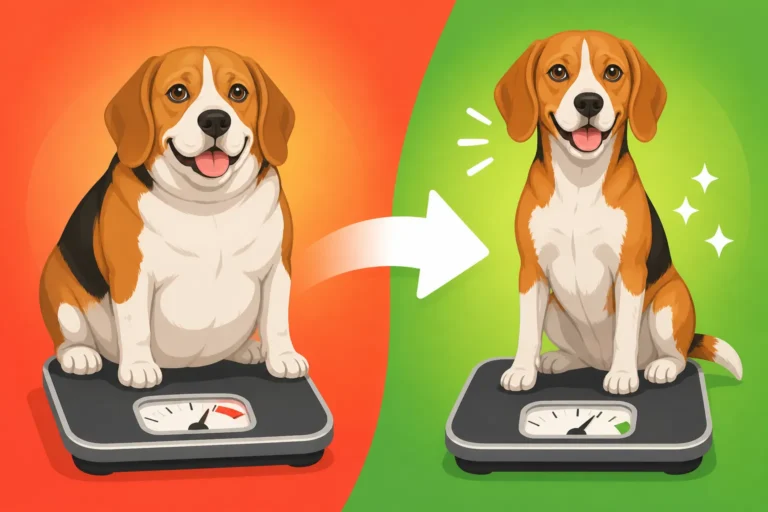
One of the most significant factors in canine spinal health, especially for breeds prone to IVDD, is maintaining a healthy weight. Extra pounds put enormous additional stress on a Beagle's spine, intervertebral discs, and joints. Every excess pound is like carrying a small backpack of bricks around all day, exacerbating any existing disc degeneration and increasing the likelihood of injury.
Regularly body condition scoring your Beagle and working with your vet to maintain an ideal weight is paramount. This means careful portion control, measuring their food precisely, and factoring in all treats to their daily caloric intake. How Extra Weight Raises Beagle Disc Pressure is a concept worth understanding deeply. If your Beagle is overweight, discuss a weight-loss plan with your veterinarian, which might include a prescription diet or a carefully managed exercise routine. A lean Beagle is a healthier, more agile Beagle, less prone to back issues and other health complications like Beagle Arthritis Arriving in Middle Age.
Supportive Bedding and Smart Play
Beyond diet and managing jumps, making smart choices about your Beagle's environment and activities can further safeguard their back. Supportive bedding is often overlooked but incredibly important. A soft, orthopedic bed that contours to their body can help distribute weight evenly and provide cushioning, reducing pressure points and supporting their spine during rest. Avoid flimsy beds that offer little support, especially as they get older.
When it comes to play, think "low impact" and "controlled movements." While Beagles love to run and play, avoid activities that involve excessive twisting, hard landings, or sudden, uncontrolled sprints. Fetch on slick surfaces is a definite no-no. Opt for games like sniffing walks where they can engage their incredible nose, or controlled play sessions in a soft, grassy area. Tug-of-war is fine in moderation, but be mindful of twisting motions. Using a harness instead of a collar for walks can also Why a Harness Protects a Beagle's Neck by distributing pressure more evenly across their chest and shoulders, rather than concentrating it on their neck and cervical spine, which is connected to their back. These seemingly small adjustments combine to create an environment that proactively nurtures and protects your Beagle's precious spine throughout their life.
Disclaimer
This article is for general informational purposes only and does not constitute professional advice. Laws, prices and regulations vary by location and change over time. Consult a qualified professional for guidance on your specific situation.