Beagle Howling at Sirens and at Music
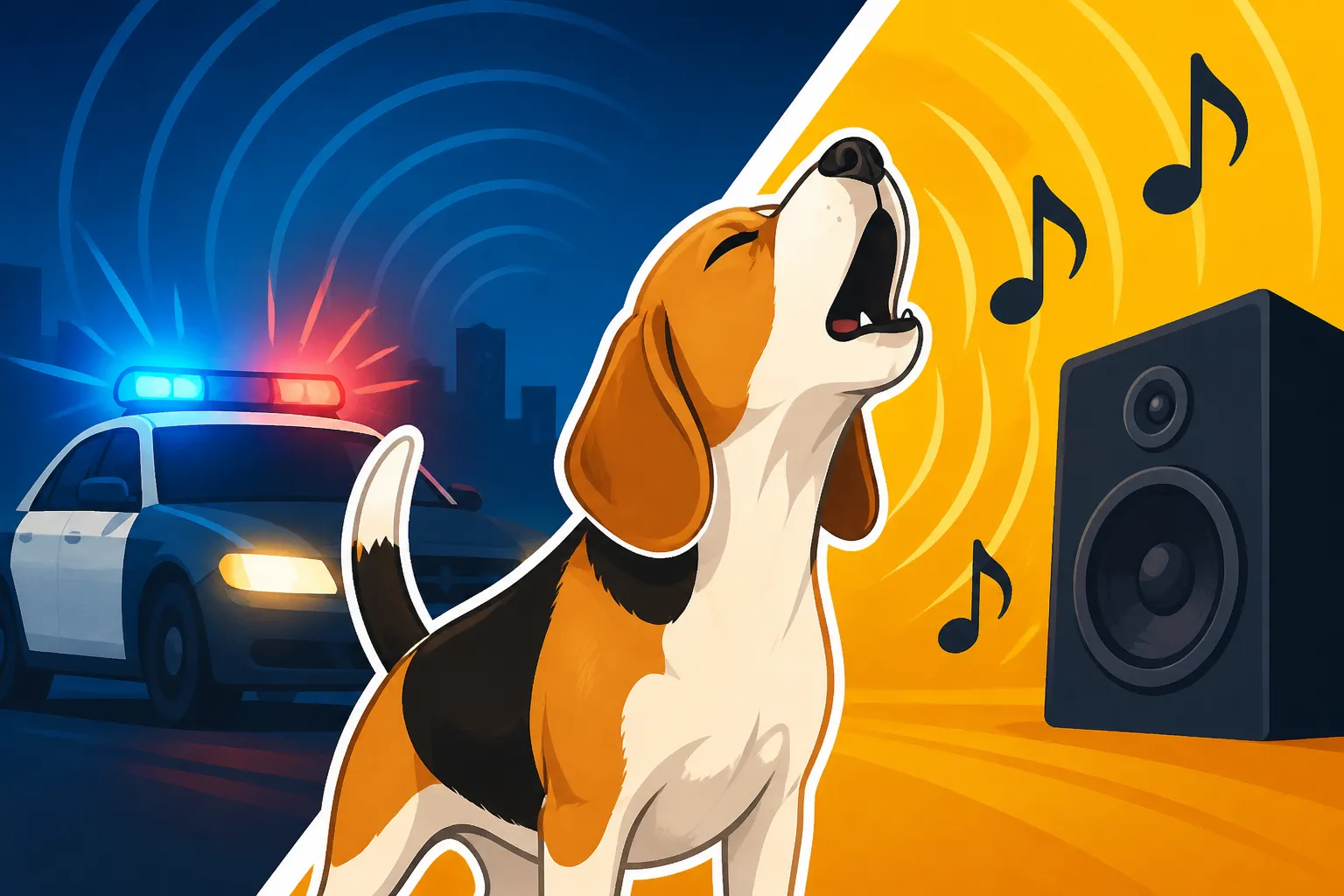
That distinct, soul-stirring howl of a Beagle can be incredibly charming, a true hallmark of the breed's ancestral heritage. But when that baying starts up every time a siren wails in the distance, or even when your favorite song comes on, it can quickly shift from endearing to downright frustrating, especially if you live in a busy area or have neighbors close by. It leaves you wondering, why do they do that? Are they in pain? Are they trying to sing along? This guide is here to unravel the mystery of why your Beagle might be howling at sirens and music, and more importantly, how you can gently guide them towards a calmer, quieter response.
Understanding the Beagle's Vocal Nature
Let's face it, Beagles are talkers. They're known for their wide repertoire of vocalizations, from a happy "roo-roo-roo" to a full-throated bay that can carry for impressive distances. Understanding why they're so vocal is the first step to managing those siren-induced symphonies or impromptu musical performances. It's not usually a sign of distress when they howl at these sounds; rather, it's often a deep-seated instinct coming to the surface.
The Ancestral Call of the Wild
Beagles were originally bred to hunt in packs, tracking game like rabbits and hares. Their loud, melodious bay wasn't just for fun; it served a crucial purpose. When a Beagle found a scent trail, its unique howl would alert the rest of the pack, and the hunters following on foot, to its location and progress. This ensured the pack stayed together and everyone knew where the action was. It was a communication system, a rallying cry, and a way to say, "Hey, I'm here! Come join me!"
Think about it from your Beagle's perspective. When they hear a siren or a certain musical note, it can mimic frequencies that resonate with this ancient call. It's like hearing a distant relative's voice and feeling compelled to answer. It's less about annoyance and more about an instinctive, almost involuntary response rooted deep in their genetics. They're not being "bad"; they're being a Beagle, responding to a sound that their ancestors would have immediately recognized as a fellow hound's call. This is why some owners feel that Why You Cannot Train the Bay Out of a Beagle entirely – it's a part of who they are.
More Than Just a Bark: The Spectrum of Beagle Sounds
While we often lump all dog sounds together as "barking," Beagles have a distinctive range. Their bay is typically a prolonged, mournful, yet often melodic sound, usually lower pitched than a bark, and it carries far. A howl is similar but often more sustained and can sound almost like singing, sometimes rising and falling in pitch. Then, of course, there's the standard bark, which is usually shorter and sharper.
When your Beagle hears a siren or certain music, they're often not just barking; they're howling or baying. This distinction is important because the motivation behind a bark (alerting, attention-seeking) can be different from a howl (instinctual response, communication with a perceived pack). If you've ever wondered about the difference, our article Telling a Beagle Bark From a Bay From a Howl goes into fascinating detail. The sheer volume can be impressive too; A Beagle Howl Measured in Decibels can really highlight how impactful these vocalizations can be in a quiet home.
Decoding the Triggers: Sirens, Music, and Other Peculiar Sounds
So, why these sounds in particular? It’s not arbitrary. Beagles possess incredibly sensitive hearing and an innate ability to process sounds in a way that’s profoundly different from how we humans do. Their environment is often a symphony of scents, but it's also a complex soundscape.
The High-Pitched Call: Why Sirens Get a Response
Sirens, whether from emergency vehicles like fire trucks, ambulances, or police cars, produce a very specific type of sound: high-pitched, often fluctuating in frequency, and designed to penetrate ambient noise. For a Beagle, these sounds can trigger their primal communication instincts in a couple of ways.
Firstly, the frequency of a siren often falls within a range that mimics the "call" of another canine. It's not that your Beagle thinks a fire truck is another dog, but rather that their auditory system interprets the sound as a distant, prolonged vocalization that demands a response. It’s an auditory illusion, a "ghost howl" that compels them to join in. They’re essentially saying, "I hear you, pack member! Where are you?" Secondly, the Doppler effect of a siren approaching and then fading away can be particularly stimulating. That changing pitch and volume can make the sound seem more alive, more like a moving, vocalizing entity that needs to be acknowledged. This isn't unique to Beagles; many dog breeds exhibit this siren response, but it's particularly pronounced in hounds with their deep vocal instincts.
Melodic Mayhem: When Music Strikes a Chord
Music is a fascinating trigger because it's so varied. Some Beagles might howl at a specific instrument, like a saxophone or clarinet, while others respond to certain vocal pitches or even entire genres of music. The key here often lies in the pitch and sustained notes. Sounds with prolonged tones, especially in the mid to high ranges, can again mimic the frequencies and durations of a canine howl or bay.
Consider classical music with long, soaring string notes, or even certain pop songs with sustained vocal performances. Your Beagle isn’t necessarily appreciating the artistry; they’re reacting to the acoustic properties of the sound. They might perceive it as another "voice" joining in, and their instinct is to contribute to the perceived chorus. It’s their way of joining the "pack song." It can also be a form of social facilitation; if you're singing or reacting to the music, your Beagle might pick up on your energy and feel compelled to participate.
Contagious Cries: Echoing Other Dogs and Environmental Noises
It's not just sirens and music that can set off your vocal hound. Beagles are highly attuned to the sounds of other dogs. If a neighbor's dog starts barking or howling, yours might quickly join in. This is classic pack behavior; one dog's vocalization can easily trigger another's, creating a chain reaction. It’s a form of auditory "contagion" that reinforces the behavior.
Beyond other dogs, environmental noises like a vacuum cleaner, certain doorbells, or even the beeping of a microwave might occasionally trigger a howl, especially if they have a unique pitch or sudden onset. These are often less about pack communication and more about startled reactions or a desire to communicate about a perceived anomaly in their environment. They're alerting you to something unusual, or perhaps just voicing their opinion about the noisy intruder.
Practical Strategies for Managing the Howl
While you can't erase a Beagle's instinct to howl, you can absolutely manage it and teach them alternative behaviors. The goal isn't to silence them completely, but to reduce excessive or inconvenient vocalization, making life more peaceful for everyone.
Environmental Management and Distraction Techniques
One of the most immediate ways to address howling is to manage your Beagle's environment to reduce their exposure to triggers or provide them with more constructive outlets. If sirens are a frequent issue, especially if you live in a city, consider playing white noise or calming music at a low volume during peak times. A sound machine or even a fan can help mask external sounds, making them less distinct and less likely to trigger a howl. Many good options are available on Amazon for white noise machines or durable calming dog beds that can provide a sense of security.
Distraction is also key. The moment you hear a siren approaching or see someone turning on music that usually sets your Beagle off, redirect their attention immediately. Grab a favorite high-value treat, a puzzle toy, or engage them in a quick game of "find it." The idea is to interrupt the onset of the howl and replace it with an activity that occupies their mind and mouth. For example, a KONG stuffed with peanut butter or a durable chew toy can keep them happily engaged until the trigger passes. This teaches them that these sounds, rather than requiring a vocal response, actually predict something positive happening.
Desensitization and Counter-Conditioning: Reshaping Reactions
This is a more proactive, long-term approach that aims to change your Beagle's emotional response to the trigger. It involves gradually exposing them to the trigger at a very low level while associating it with something highly positive.
Here’s how you might do it:
- Start Small: Find recordings of sirens or the specific music that triggers your Beagle. Start playing them at an extremely low volume—so low that your Beagle doesn't react at all.
- Positive Association: As the sound plays at this imperceptible level, immediately give your Beagle their absolute favorite treats or start a fun game they love. The goal is to create a positive emotional response: "That sound means yummy treats!"
- Gradual Increase: Over many sessions (perhaps days or weeks), slowly, incrementally increase the volume of the recording. The key is to never increase it to a point where your Beagle starts to howl or show signs of anxiety. If they react, you’ve gone too fast; go back to a lower volume.
- Consistency: This process requires patience and consistency. Always pair the sound with something positive. Over time, your Beagle learns that the sound is a predictor of good things, rather than something that demands an instinctual howl. Our article Quieting a Beagle Without Punishing the Bay offers more insights into gentle, effective methods.
Training for Quiet: Teaching an Alternative Response
Alongside desensitization, you can actively train your Beagle a "quiet" cue. This involves teaching them to stop vocalizing on command.
- Trigger the Vocalization: Deliberately create a situation where your Beagle is likely to howl (e.g., play a siren recording at a moderate volume, or have someone ring the doorbell).
- Wait for a Pause: Let them howl for a moment, then wait for even a tiny break in the noise. The instant they are quiet (even for a second), mark the behavior with a "yes!" or a clicker, and give them a high-value treat.
- Add the Cue: Once they understand that being quiet earns a reward, start adding your "Quiet" cue. Say "Quiet," wait for the pause, then mark and reward.
- Increase Duration: Gradually increase the amount of time they need to be quiet before earning the reward.
- Generalize: Practice this in different environments and with different triggers.
The online training programs offered by BAXTER & Bella often include modules on teaching impulse control and managing vocalizations, which can be incredibly helpful for Beagles. Remember, positive reinforcement is always the most effective method. Punishment-based tools like Beagle Bark Collars and What They Do Not Fix rarely address the root cause and can often worsen anxiety.
| Strategy | Description | Best For | Considerations |
|---|---|---|---|
| Environmental Mgmt. | Masking or redirecting attention from triggers using white noise, toys. | Immediate relief, preventing new habits. | Requires consistent intervention, doesn't address underlying response directly. |
| Desensitization | Gradual, controlled exposure to triggers paired with positive experiences. | Long-term change in emotional response. | Requires patience, consistency, and careful monitoring of your Beagle's reaction. |
| Counter-Conditioning | Replacing an unwanted reaction (howling) with a desired one (calm, focused). | Reshaping how your Beagle feels about a trigger. | Often used in conjunction with desensitization, requires high-value rewards. |
| "Quiet" Command | Teaching your Beagle to stop vocalizing on cue. | Direct behavioral control once a howl has started. | Needs to be taught proactively and reinforced regularly in various situations. |
| Enrichment | Providing mental and physical stimulation to reduce boredom/anxiety. | Overall well-being, reducing reactivity. | Essential for Beagles, often prevents many behavioral issues before they start. |
When to Seek Expert Help for Persistent Vocalization
While some howling is simply part of owning a Beagle, if the vocalizations become excessive, constant, or are accompanied by other concerning behaviors, it might be time to bring in the big guns: a professional.
Recognizing Underlying Anxiety or Frustration
Sometimes, howling at sirens or music isn't just an instinctual response; it can be an outward symptom of underlying anxiety or frustration. If your Beagle howls not only at these sounds but also when left alone, paces, drools excessively, chews destructively, or has accidents indoors when you're out, they might be experiencing Beagle Separation Anxiety in a Pack Breed. This is a serious issue that goes beyond simple noise reactivity and requires a more comprehensive approach.
Similarly, if your Beagle seems genuinely distressed by the sounds – hiding, trembling, or trying to escape – it could be noise phobia or general anxiety. In these cases, simply managing the environment or training a "quiet" cue might not be enough. The howling is a symptom, not the problem itself.
Consulting a Professional: Trainers and Veterinary Behaviorists
If you've tried the strategies above with consistent effort and aren't seeing improvement, or if you suspect an underlying anxiety disorder, don't hesitate to reach out to a professional. A certified professional dog trainer or a veterinary behaviorist can help you assess the specific triggers and motivations behind your Beagle's howling.
They can offer tailored training plans, potentially recommend calming aids, or even discuss medication options if anxiety is severe. These professionals have specialized knowledge and experience, particularly with breeds like Beagles that have strong innate drives. They can conduct an in-depth evaluation and provide you with a roadmap to address the issue effectively. For some, the cost of specialized help might be a concern, but understanding Beagle Training Class Fees or Group Obedience Class Prices for a Beagle can help you budget for the necessary expertise. Living in close quarters, such as Living With a Beagle in an Apartment Building, makes addressing excessive vocalization even more crucial, and a professional can offer strategies like Soundproofing One Room for a Vocal Beagle to help.
Ultimately, living with a vocal Beagle means understanding their unique nature and working with them, not against them. With patience, consistent training, and sometimes a little professional guidance, you can help your Beagle find a more peaceful balance between their natural instincts and the demands of living in a human world.
Disclaimer
This article is for general informational purposes only and does not constitute professional advice. Laws, prices and regulations vary by location and change over time. Consult a qualified professional for guidance on your specific situation.