A Beagle Howl Measured in Decibels
It’s a sound that can shake the windows and warm the heart of a devoted Beagle owner, yet simultaneously prompt frantic apologies to the neighbors: the Beagle howl. Many of us have experienced the sheer volume our furry friends can produce, leaving us to wonder just how loud it truly is and, more importantly, how we can live harmoniously with such a vocal breed. This guide dives deep into the unique vocalizations of Beagles, exploring their inherent sound, its measurable impact, and practical strategies for managing the decibel levels in your home.
The Unique Soundscape of a Beagle
Beagles are renowned for their powerful voices, a trait that’s as much a part of their charm as it is a challenge for their human companions. Understanding why they make these sounds is the first step toward living peacefully alongside them. It’s not just random noise; it’s communication, deeply ingrained in their very being.
Why Beagles Are So Vocal by Design
Picture a pack of Beagles, noses to the ground, tracking a scent through a dense forest. Their voices weren't just for fun; they were a critical tool for survival and coordination. Beagles were specifically bred for hunting hare and rabbit, a job that required them to work cooperatively in a pack, often out of sight of their human hunters. Their distinctive bay, a deep, resonant cry, served a vital purpose: it told the hunters, and each other, exactly where the prey was. It was an audible compass, a live tracking system long before GPS existed. This instinct for vocal communication is hardwired into their DNA.
When your Beagle bays at the mail carrier or howls at a distant siren, they're not being deliberately naughty; they're simply expressing a primal instinct. That strong scent drive, those 220 million scent receptors, mean they are constantly processing information through their nose, and often, that information needs to be broadcast. They are communicating what they perceive, just as their ancestors did on the hunt. For them, it’s a natural, essential part of being a Beagle, which is why it can be so difficult to train the sound out entirely. It's less about breaking a habit and more about redirecting a core instinct.
Differentiating Between Barks, Bays, and Howls
While we often lump all dog sounds into "barking," Beagles actually have a diverse vocabulary, each sound carrying its own nuance and intensity. Recognizing the difference can help you understand what your Beagle is trying to tell you and respond more effectively. It’s a bit like learning a new language, albeit a very loud one.
A bark is typically a sharper, shorter sound, often used for immediate alerts. Your Beagle might bark once or twice if someone knocks on the door, or if a squirrel suddenly appears on the fence. It's a quick warning or an attention-grabber. It’s usually less sustained and generally conveys a sense of "Hey, look!" or "Someone's here!" This is the most common form of vocalization across many breeds, and Beagles certainly do their share of barking.
The bay, however, is uniquely Beagle. It's a deep, prolonged, throaty sound, often described as a musical cry or a melodious yodel. It’s the sound of a hound on a trail, full of determination and focus. When a Beagle is truly caught up in a scent, or expressing excitement during play, you'll hear that unmistakable, rolling bay. It's designed to carry over long distances and through dense brush, which is why Why a Beagle Bay Carries Three Houses Down isn't an exaggeration—it truly can. This is often the sound that leads to neighbor complaints because of its sustained nature and unique timbre.
Then there's the howl, a more mournful, sustained vocalization, often triggered by sirens, other distant dog howls, or sometimes even loneliness. It's a long, drawn-out "oooooh-woooo," often directed at the sky. A howl can sometimes be a sign of separation anxiety, especially if it starts A Beagle That Howls the Second You Leave. It can also be a communal thing, a response to a sound that resonates with their ancestral urge to call to the pack. Understanding these different sounds, as discussed in Telling a Beagle Bark From a Bay From a Howl, is crucial for diagnosing the root cause of the noise and developing an appropriate response.
Understanding Decibel Levels and Noise Impact
So, you know your Beagle is loud, but how loud exactly? While I can't give you exact real-time decibel readings for your Beagle, we can explore the general range and what it means for human hearing and neighborly relations. The impact of their vocalizations goes beyond just sound; it affects everyone within earshot.
How Loud Is a Beagle's Howl, Really?
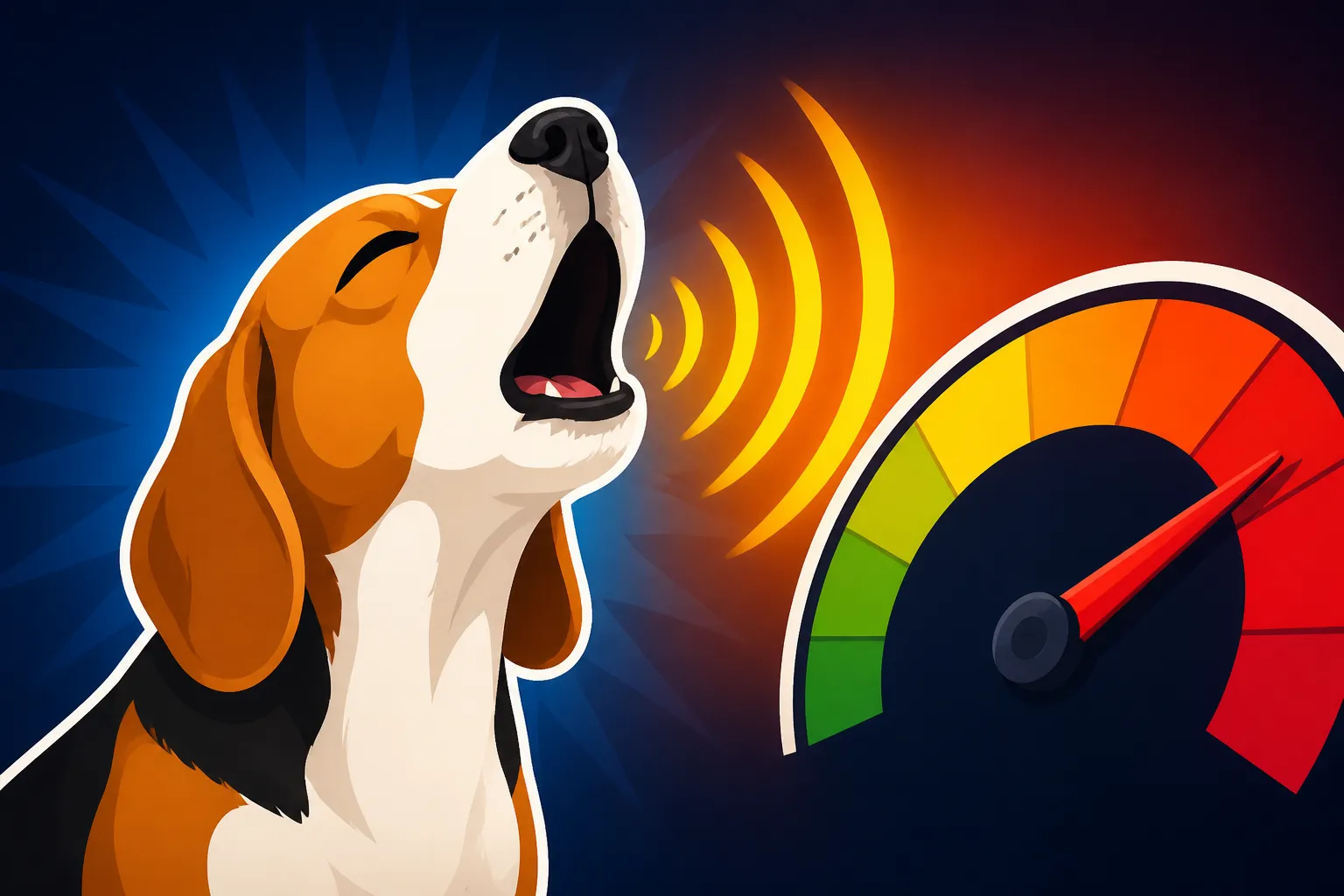
Let’s talk decibels. Decibels (dB) measure sound intensity, and the scale is logarithmic, meaning a small increase in decibels represents a huge increase in loudness. For context, a normal conversation is around 60 dB, while a busy street might be 70 dB. Anything above 85 dB can potentially cause hearing damage over prolonged exposure. When it comes to our canine companions, dogs can hit some impressive decibel levels.
While specific numbers vary greatly depending on the individual dog, their size, the environment, and even their emotional state, a Beagle's bay or howl can typically range anywhere from 90 dB to well over 100 dB. To put that in perspective, 90 dB is roughly equivalent to a lawnmower, a blender, or a motorcycle passing by. Hitting 100 dB is like standing next to a jackhammer or a loud rock concert. Imagine that coming from inside your house! This isn't a continuous sound, of course, but those bursts can be startling and disruptive. What a Beagle Bay Actually Sounds Like can give you a better audio image, but the sheer force of it is something many owners quickly learn firsthand.
This incredible volume is, as we've discussed, part of their hunting heritage. They needed to be heard over distances, through wind and weather. However, in a suburban backyard or a quiet apartment building, this ancestral trait can become a significant source of contention. It's loud enough to penetrate walls and closed windows, leading to understandable frustration for those living nearby.
The Effect of Beagle Noise on Your Home and Neighbors
The reverberations of a powerful Beagle howl don't just stay within your immediate vicinity; they travel, often much further and more clearly than you might expect. This is where the practical challenges of owning a vocal breed truly come into play, especially in residential settings.
In your own home, constant loud barking or howling can contribute to stress for both you and your dog. It can make relaxing difficult, interrupt sleep, and even make it challenging to hold conversations or enjoy quiet activities. For your Beagle, excessive vocalization often stems from underlying issues like boredom, anxiety, or unmet needs, which means the sound itself is a symptom of their discomfort, creating a vicious cycle.
Then there are the neighbors. Beagle Noise and the Neighbors Next Door is a common scenario for many Beagle owners. Noise complaints are a leading cause of friction between neighbors and can even lead to legal action, especially in areas with strict noise ordinances. What one person considers "dog sounds," another might perceive as relentless, piercing noise. Apartments and townhouses amplify this issue, as shared walls offer little respite. Even in detached homes, that powerful bay can carry surprising distances, disrupting gardening, outdoor meals, or simply a peaceful afternoon for those nearby. It's not just the volume, but the specific, penetrating quality of the bay that tends to annoy people more than a standard bark.
Strategies for Managing Beagle Vocalizations
While you can't, and shouldn't try to, completely silence a Beagle (it's part of who they are!), you absolutely can manage and reduce excessive vocalizations. It requires patience, consistency, and a deep understanding of your dog's needs.
Identifying the Triggers for Excessive Baying and Howling
The first step in managing noise is to become a detective. Why is your Beagle making all that racket? Keeping a "sound diary" can be incredibly helpful. Jot down when your Beagle vocalizes, what type of sound it is (bark, bay, howl), how long it lasts, and what was happening immediately before and during the outburst. Was it the mail truck? A person walking past the window? Did they just wake up? Were they alone?
Common triggers often include:
- Boredom and Lack of Stimulation: A Beagle with nothing to do will often create its own "job," which frequently involves vocalizing. These dogs are intelligent and energetic; they need mental and physical engagement.
- Separation Anxiety: This is a huge one for Beagles, a breed bred to live and work in packs. Being left alone can trigger profound distress, manifesting as persistent howling, as covered in Beagle Separation Anxiety in a Breed Bred for Packs. They aren't trying to be disruptive; they're genuinely panicked.
- Territoriality/Alerting: Scent hounds are excellent at detecting intruders, real or imagined. A squirrel in the yard, a new neighbor walking past, or a distant siren can all trigger an alert.
- Attention-Seeking: Sometimes, your Beagle learns that if they make noise, you come running. Even if it's to tell them to be quiet, they've gotten your attention, and that can be a powerful reinforcer.
- Response to Other Sounds/Scent: That distant siren or another dog’s howl can set off a chain reaction. A strong, irresistible scent can also lead to a deep, focused bay.
Once you identify the patterns, you can start to address the root causes rather than just reacting to the noise. For instance, if your Beagle howls every time you leave, the issue isn't the howl, but the underlying anxiety.
Training and Environmental Adjustments to Reduce Noise
Armed with knowledge of the triggers, you can implement a multi-pronged approach combining training and environmental modifications. Consistency is truly key here; everyone in the household needs to be on the same page.
For attention-seeking or territorial barking/baying, teaching a "quiet" cue is invaluable. This involves rewarding your Beagle when they stop vocalizing on command. Start in a low-distraction environment. When they bark, say "Quiet" once, and when they pause (even for a second), immediately reward them with a high-value treat. Gradually increase the duration of quietness required before the reward. Resources like BAXTER & Bella offer excellent online courses that walk you through these kinds of positive reinforcement techniques step-by-step, helping you apply them to your specific Beagle's needs. Remember, you're not punishing the noise; you're rewarding the silence. As noted in Teaching a Beagle a Quiet Cue That Holds, this positive approach yields much better results than scolding.
Environmental enrichment is critical for Beagles prone to boredom. Provide plenty of puzzle toys that dispense treats, like KONGs stuffed with frozen peanut butter. Engage them in regular scent work games, as this taps into their natural instincts and is incredibly tiring for them. Rotate toys regularly to keep things fresh. A daily routine that includes structured walks where they can sniff to their heart's content, along with playtime, can dramatically reduce boredom-driven vocalizations. Many great puzzle toys and durable chews can be found on Amazon, which can help keep their minds engaged and mouths busy with something other than howling.
Consider physical adjustments to your home. If your Beagle barks at everything passing by the window, limit their access to that window with frosted film or by simply closing the blinds during peak activity times. For Beagles prone to howling when left alone, soundproofing one room for your vocal Beagle can help contain the noise and reduce external triggers. Heavy curtains, area rugs, and even acoustic panels (available on Amazon) can make a surprising difference in dampening sound. If you live in an apartment, Living With a Beagle in an Apartment Building really underscores the importance of proactive management to maintain peace with your neighbors.
When to Seek Professional Help for Persistent Vocalization
Sometimes, despite your best efforts, the noise persists, or even worsens. It's important to know when to acknowledge that you might need a little extra help. This isn't a sign of failure; it's a responsible step towards ensuring both your and your Beagle's well-being.
Recognizing When Vocalization Becomes a Problem
If your Beagle's vocalizations are constant, disruptive to your daily life, and causing significant stress for you or your family, it's definitely time to reassess. This is especially true if the noise is leading to neighbor complaints or if you see other signs of distress in your dog, such as destructive chewing, house-soiling, or pacing when left alone. These could be indicators of more serious underlying behavioral issues, like severe separation anxiety or chronic stress.
Furthermore, a sudden onset of excessive vocalization in a previously quiet Beagle should always prompt a veterinary visit. Dogs can become more vocal due to pain, hearing loss, cognitive decline (especially in older Beagles), or other medical conditions. Don't assume it's "just behavior" without ruling out a physical cause first. Your vet can perform a thorough examination to ensure there isn't an easily treatable medical reason for the change in behavior.
Consulting a Vet or Professional Trainer
Once medical issues are ruled out, if you're still struggling, consulting a qualified professional is the next logical step. A certified professional dog trainer, especially one specializing in behavior modification, can provide tailored strategies and hands-on guidance. They can observe your Beagle in their environment, help identify subtle triggers you might have missed, and teach you advanced techniques for managing vocalization. They can also provide support and troubleshoot challenges as they arise. Many professional trainers offer virtual consultations, making it easier to access expertise no matter where you live.
For more severe cases, particularly those involving anxiety or aggression, a veterinary behaviorist might be recommended. These are veterinarians with advanced training in animal behavior, who can prescribe medication if necessary, in conjunction with a behavior modification plan. They look at the full picture of your dog's physical and mental health to develop the most comprehensive and effective treatment. Remember, addressing the root cause, whether it's anxiety or chronic boredom, is far more effective and humane than simply trying to suppress the sound through punishment. Finding the right professional can make all the difference in bringing peace back to your home.
| Vocalization Type | Typical Sound | Common Triggers | Potential Decibel Range | Management Strategy Focus |
|---|---|---|---|---|
| Bark | Sharp, short | Alerts, attention-seeking | 80-95 dB | "Quiet" command, manage visual stimuli |
| Bay | Deep, prolonged, musical | Scent, excitement, other dogs | 90-105 dB | Scent work, strong recall, consistent routine |
| Howl | Long, mournful, sustained | Sirens, loneliness, other howls | 95-110+ dB | Address anxiety, environmental enrichment, soundproofing |
Disclaimer
This article is for general informational purposes only and does not constitute professional advice. Laws, prices and regulations vary by location and change over time. Consult a qualified professional for guidance on your specific situation.