The Recall Word You Should Never Repeat to a Beagle
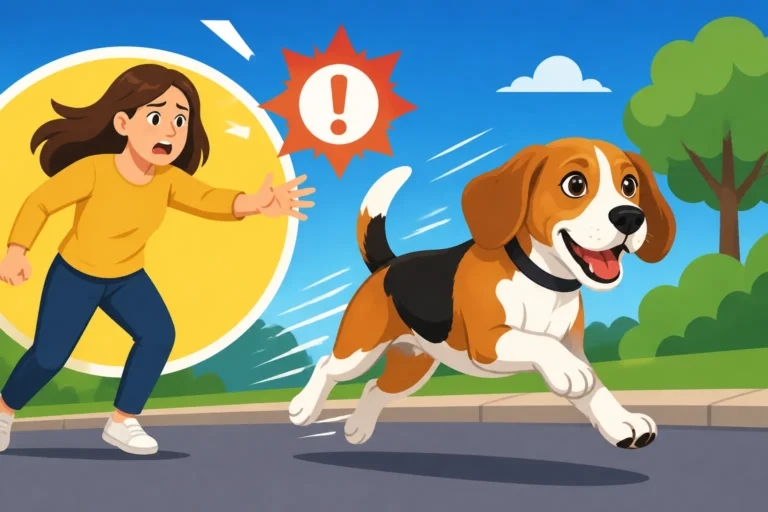
It's a scene most Beagle owners know all too well: you're out in a securely fenced area, or perhaps inside your home, and your furry friend is engrossed in a fascinating scent. You call their name, then "Come!" The head might lift, the long ears might twitch, but the nose? Oh, that nose is still glued to the ground, pulling them further away. What do you do next? For many of us, the instinct is to repeat the command, louder, more urgently. "Come, Fido! COME! FIDO, GET OVER HERE!" But what if I told you that repeating your recall word is actually doing more harm than good, slowly eroding the very command you desperately need to be reliable? This guide will dive deep into why this common habit sabotages your Beagle's recall and, more importantly, how to build a rock-solid, one-command response that truly works.
The Hidden Trap of a Repeated Recall Word
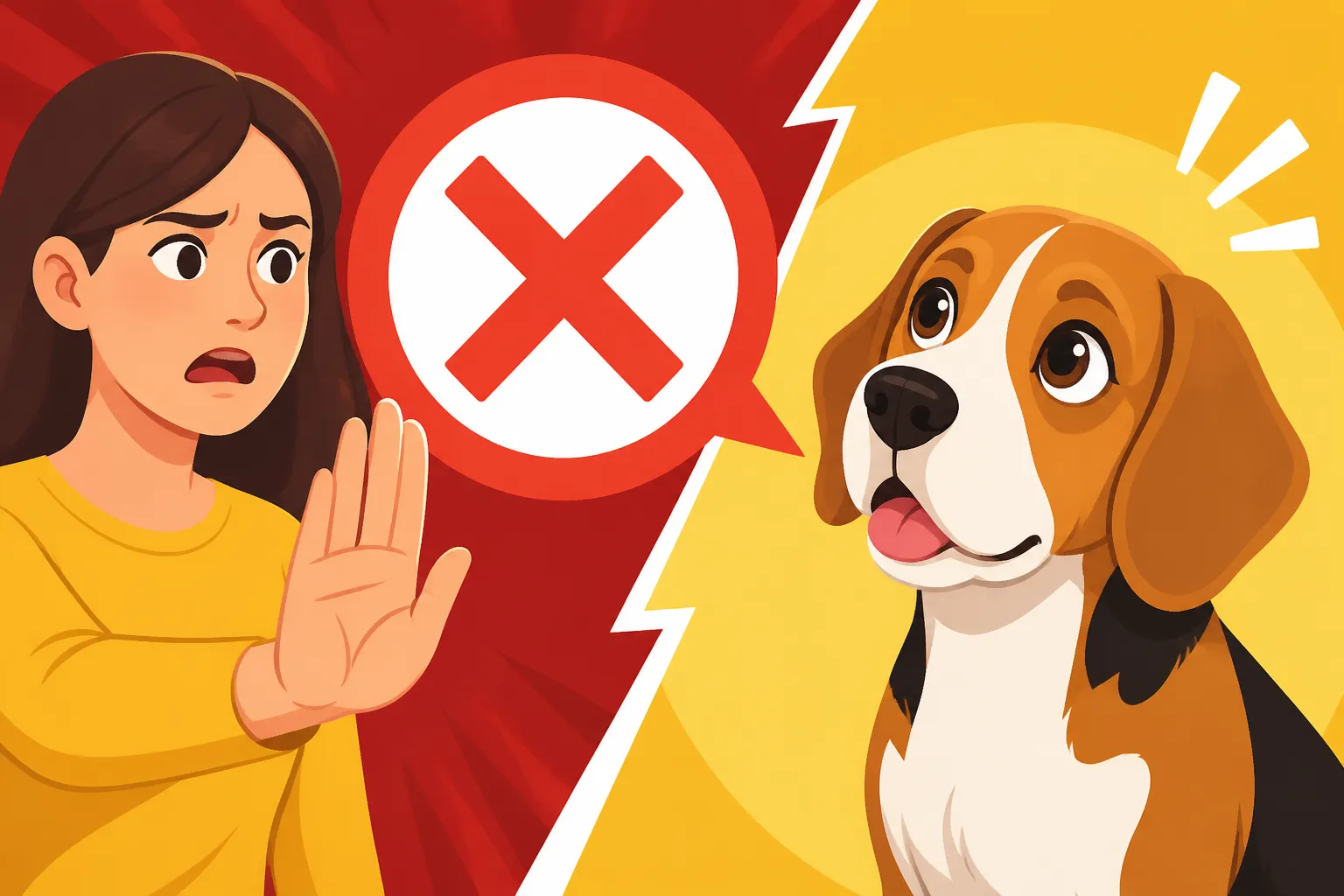
It's natural to feel a surge of panic or frustration when your Beagle seems to ignore you, especially when their safety might be at stake. Our first reaction is often to escalate: repeat the command, get louder, use a sterner tone. We think we're being clearer, but from a Beagle's perspective, we're actually teaching them something entirely different – and it's not what we intend.
Why "Come" Loses Its Punch With a Beagle
Think about how dogs learn. They are masters of association. If every time they eventually come to you, it's after hearing "come, come, come, COME!" spoken in varying tones of increasing desperation, what do you think they're really learning? They're learning that the first few "comes" are just background noise. They're waiting for that specific tone, that exasperated emphasis, that signals they really need to pay attention this time. The single, crisp "Come!" becomes diluted, losing its immediate power.
Beagles, with their incredible intelligence and infamous stubborn streak, are particularly adept at this kind of "negotiation." Their world is primarily driven by their nose, and when they're on a hot scent trail, it can be an almost overwhelming sensory experience. If they know they have a few "grace calls" before the command really means business, they'll often take advantage of it. It's not malicious defiance; it's simply a learned pattern of behavior. Much like how humans can tune out nagging, your Beagle quickly learns to filter out the initial, less urgent repetitions of your recall word. You can read more about this in Beagle Recall and Why Your Voice Stops Registering.
The Slippery Slope to Selective Hearing
The more you repeat your recall word, the more you teach your Beagle that it's okay to ignore it the first, second, or even third time. This creates what we often call "selective hearing." Your Beagle isn't deaf; they're simply waiting for the cues that indicate you're serious. This might be the change in your voice, a hand clap, or a more desperate tone. But by then, precious seconds might have passed, and your Beagle could be further away, closer to danger, or deeper into that tantalizing rabbit scent.
This habit undermines the very foundation of trust and responsiveness you're trying to build. When a command is clear and consistent, a dog learns that it means one thing and requires one immediate response. When it's repeated, it loses that clarity, becoming a suggestion rather than a command. Imagine trying to stop your Beagle from darting into a busy street – you don't have time for multiple attempts. The command needs to be instantaneous and reliable.
Crafting an Unbreakable Recall: One Word, One Response
Building a powerful recall, especially with a Beagle, isn't about volume or repetition. It's about consistency, high value, and a single, clear communication that always promises something wonderful. This approach helps your Beagle associate the recall word with an immediate, positive outcome, making them want to respond every single time.
Choosing Your Sacred Recall Word
The first step to building a truly reliable recall is to choose a "sacred" word – one that you will only use for this specific, critical command. Avoid common words like "Come" if you've already "poisoned" it with repetition in the past. Instead, consider something fresh and distinct that you won't use in casual conversation. Good options might be:
- "Here!"
- "Front!"
- "Zip!"
- "Hup!"
- "Touch!" (if paired with a hand target)
Whatever you choose, it needs to be easy for you to say with enthusiasm and must be used consistently by everyone who interacts with your Beagle. If one family member uses "Come" and another uses "Here," your Beagle will get confused and the command will lose its punch. This consistency is paramount from day one.
Here’s a quick overview of best practices:
| Aspect | Do This | Don't Do This |
|---|---|---|
| Command Use | Say the word once with enthusiasm and clarity. | Repeat the word endlessly, getting louder. |
| Reward Timing | Reward immediately for turning/moving towards you. | Wait until they are right at your feet before rewarding. |
| Reward Value | Use high-value, delicious treats (e.g., chicken, cheese). | Offer dry kibble for a big effort. |
| Environment | Start in quiet, low-distraction areas, then gradually increase. | Expect perfection in a dog park from day one. |
| Consistency | Everyone in the household uses the same word, same method. | Different family members use different commands. |
| Consequence | Always a positive, happy experience; never punishment. | Scold or grab them if they take too long. |
Building Association: Always Followed by Reward
Once you have your sacred recall word, the next step is to imbue it with immense positive meaning. This means every single time you say the word, something amazing happens to your Beagle.
Start this training in a completely distraction-free environment, like your quiet living room or a securely fenced backyard where nothing else is happening. Wait until your Beagle isn't looking directly at you, maybe sniffing around a corner. Then, say your chosen recall word once, clearly and with genuine excitement. The instant your Beagle so much as twitches an ear in your direction, turns their head, or takes a single step toward you, mark that moment (with a clicker if you use one, or a verbal marker like "Yes!") and then immediately reward them lavishly.
The reward needs to be incredibly high-value – think small pieces of cooked chicken, cheese, hot dogs, or whatever your Beagle goes absolutely bonkers for. Don't make them come all the way to you for the reward initially; the reward is for the decision to respond and orient toward you. As they start consistently turning towards you, you can then start rewarding them for taking a few steps, then coming all the way to you. Make it a party every single time they respond! Shower them with praise and happy energy. For foundational training tips that really click with a Beagle, online programs like BAXTER & Bella can offer structured guidance through these early stages. When practicing outdoors, even in a fenced area, using a Long Lines Instead of Off-Leash for a Beagle can be incredibly helpful to prevent them from practicing "blowing you off" if they get too distracted.
The "Jackpot" Reward System
To keep your recall exciting and truly motivate your Beagle to choose you over a tantalizing scent, introduce the "jackpot" reward system. A jackpot is an extra-special, super-high-value reward given for an outstanding recall, especially when your Beagle comes back from a highly distracting situation. For instance, if they come running when another dog barks or a squirrel darts across the yard, that deserves a jackpot – a handful of extra treats, a quick game of tug, or an extra-long ear scratch.
The idea is that your Beagle never knows when the jackpot might hit, keeping them hopeful and eager to respond to every recall. While every successful recall should get a good reward, the occasional jackpot elevates the experience. Remember, the reward isn't just for showing up; it's for making the choice to come to you when there were other interesting things around. You can find a huge variety of high-value treats suitable for jackpot rewards on Amazon, from freeze-dried meats to soft training morsels. And crucially, never punish your Beagle when they come back, even if it took them a while or you had to call multiple times (though with this new system, you should be aiming for only one call!). Coming to you must always be a positive experience.
Strengthening Recall Against the Call of the Wild
Once your Beagle understands the recall word in a low-distraction environment, the real work begins: generalizing that command to the chaotic, scent-rich world they inhabit. This requires patience, gradual progression, and absolute commitment to never compromising the sacredness of your recall word.
Gradually Introducing Distractions
This is where many owners go wrong, jumping too quickly from the quiet living room to the busy dog park. For a Beagle, the world is an overwhelming buffet of smells, and each one is a potent distraction. You must introduce distractions gradually and systematically.
Start with very mild distractions in a controlled environment. Maybe a family member walks by at a distance, or a favorite toy is placed a few feet away, but not actively played with. Call your Beagle, reward lavishly. If they fail, it means you've moved too fast. Go back a step to a lower level of distraction where they were successful. Always set your Beagle up for success!
When you move outdoors, continue this pattern. Begin in a quiet, securely fenced yard with no other animals or people around. Practice the recall there, always using your single command and huge rewards. Then, gradually introduce more distractions: a quiet park path on a long line, practice with one calm friend and their dog, or practicing from a distance while someone else is gently tossing treats away from you. The Starting Beagle Recall Inside a Fenced Yard article has more on this. A long line (15-30 feet) is your absolute best friend here. It allows your Beagle to explore, but gives you control to physically enforce the recall if they get too distracted, without having to chase them. If they ignore your single command, gently reel them in while still being positive when they reach you. You can find excellent durable long lines on Amazon.
Emergency Recall: A Different Level of Command
Even with the best training, Beagles can sometimes get themselves into a high-stakes situation where their normal recall might falter – like spotting a squirrel across a road, or catching the scent of something truly irresistible. For these moments, it's wise to have an "emergency recall" command.
This should be a completely different word or sound that you never use casually. A whistle (a specific tone or sequence), or a unique word like "NOW!" or "BINGO!" can work. This command is trained with the absolute highest, most mind-blowing rewards imaginable, and it's used only when you genuinely need it to save your Beagle from danger. The goal is that when they hear this, they drop everything and come charging back because it signifies an immediate, enormous payout.
Practice this very rarely, maybe once a month, in a semi-distracting but safe environment. Make the reward so huge that it's almost comical – a whole plate of chicken scraps, a full game of fetch with their favorite toy, followed by more treats. The idea is to make the experience so incredibly rewarding that it overrides any other distraction. Make sure everyone in your family knows this emergency recall and its sacred nature. Learn more about developing these critical cues in Emergency Recall Cues That Reach a Beagle.
Consistent Practice and Environmental Management
Recall training is not a "one and done" deal, especially with a breed like a Beagle. It needs to be an ongoing, lifelong practice. Randomly call your Beagle when they're not expecting it, reward them, and then release them to go back to what they were doing. This keeps the recall feeling fresh and unpredictable, reinforcing that responding is always worthwhile.
Ultimately, until your Beagle's recall is 100% reliable in every single environment (which, for a Beagle, can be a lifelong journey and may never truly be "100%"), they should always be on a leash or in a securely fenced area when outside. Why a Beagle Should Never Be Off Leash Unfenced emphasizes this crucial point. Their powerful nose makes them vulnerable to wandering off on a scent trail, and no recall is foolproof against a really strong distraction.
As a safety net, many Beagle owners find value in GPS collars. While they are never a substitute for training, a GPS tracking device (widely available on Amazon) can offer peace of mind if your Beagle were to slip their leash or find a way out of the yard. It's an excellent backup, but the primary focus should always be on solid training. For more on this, see GPS Collars as a Backup for Beagle Recall.
When Recall Becomes a Whisper: Troubleshooting Common Issues
Even with the best intentions and training, recall can sometimes falter. Life happens, and Beagles, like all dogs, go through phases and encounter new challenges. Understanding why recall might break down and how to fix it is key to maintaining a strong, reliable response.
The Adolescent Beagle's "Selective Hearing" Phase
Ah, adolescence! Just when you thought you had everything figured out, your sweet, responsive Beagle puppy hits their teenage months (roughly 6 to 18 months), and suddenly, it feels like they've forgotten every bit of training. What worked beautifully now elicits a blank stare or, worse, a complete disregard. This isn't defiance, though it often feels like it. It's a natural developmental stage where hormones surge, the world becomes infinitely more interesting, and their confidence in exploring independently grows.
During this phase, it's essential not to get frustrated or, even worse, punish your Beagle. Instead, you need to revisit their training as if they were a young puppy. Go back to basics: practice in low-distraction environments, use your highest value rewards, and keep training sessions short and fun. Focus on rebuilding that strong positive association with your recall word from the ground up. Use your long line diligently to prevent them from practicing ignoring you, which only reinforces the undesired behavior. Patience and persistence are your greatest allies here. Remember that Beagle Adolescence and Sudden Selective Hearing is a very real phenomenon, and it just means you need to be a consistent teacher through this phase.
Re-charging a "Poisoned" Recall Word
If you've spent months or years inadvertently "poisoning" your primary recall word by repeating it endlessly, getting frustrated, or even punishing your Beagle upon their return, it might be too far gone to reliably fix. The word has too many negative or diluted associations for your Beagle. In such cases, the most effective solution is often to retire the old word completely and choose a brand-new, fresh recall word.
Once you have your new word, commit absolutely to the "one word, one response" principle. Start from scratch in a low-distraction environment, showering your Beagle with praise and the highest value treats the instant they respond. Build up distractions gradually, always using your long line for safety and success. You can still use the old, "poisoned" word for casual "come here" situations around the house if you wish, but understand that it will likely never carry the life-saving urgency of your newly trained, sacred recall command.
Avoiding Punishment and Building Trust
This point is so critical it bears repeating: never, ever punish your Beagle for taking too long to come, or for not coming at all. Even if you've been calling for five minutes, and they finally mosey over, meet them with enthusiasm and a reward. If you punish them or even scold them when they eventually reach you, you are teaching them a very clear lesson: "Coming to you results in something unpleasant." This will make them less likely to come next time, creating a vicious cycle where their hesitation increases with each negative experience.
Your goal is to build an unbreakable bond of trust where your recall word always, without exception, means "come to me, and something amazing will happen." Your presence should always be a source of safety, comfort, and positive reinforcement. If they don't respond, it's not their fault; it's a sign that you need to go back in your training, reduce distractions, or increase the value of your reward. A reliable recall isn't just about obedience; it's about making your Beagle want to choose you above all else, no matter how enticing the sniff may be.
Disclaimer
This article is for general informational purposes only and does not constitute professional advice. Laws, prices and regulations vary by location and change over time. Consult a qualified professional for guidance on your specific situation.