Beagle Recall That Works Before the Nose Wins
It's a familiar scene for any Beagle owner: you're out for a walk, enjoying the fresh air, when suddenly your sweet, attentive companion catches a whiff of something utterly irresistible. One moment they're by your side, the next, their nose is glued to the ground, pulling like a freight train, or worse – they're completely gone, deaf to your frantic calls. This guide is here to help you understand why Beagles get so absorbed by scent, and more importantly, to arm you with practical strategies to build a recall that truly works, even when their incredible nose takes over.
Understanding the Beagle's Scent-Driven World
To effectively train a Beagle, especially when it comes to recall, you first have to grasp just how profoundly their world is dominated by scent. It’s not just a hobby for them; it’s their very purpose, etched into their DNA over centuries of selective breeding.
The Power of Their Nose
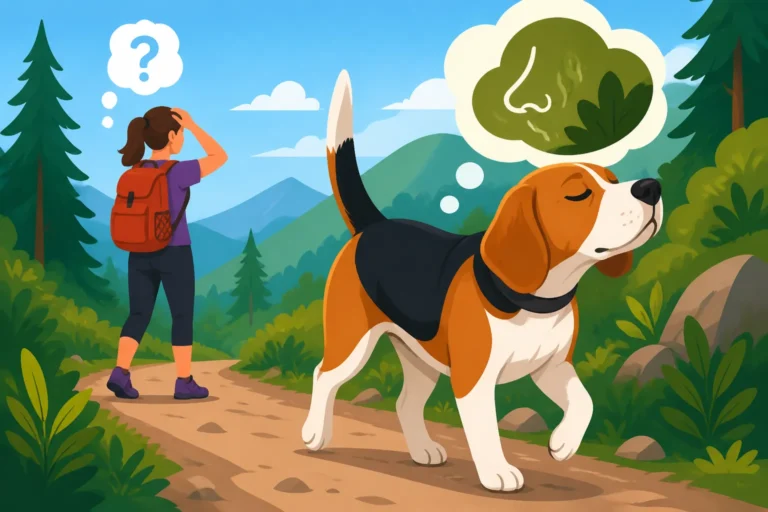
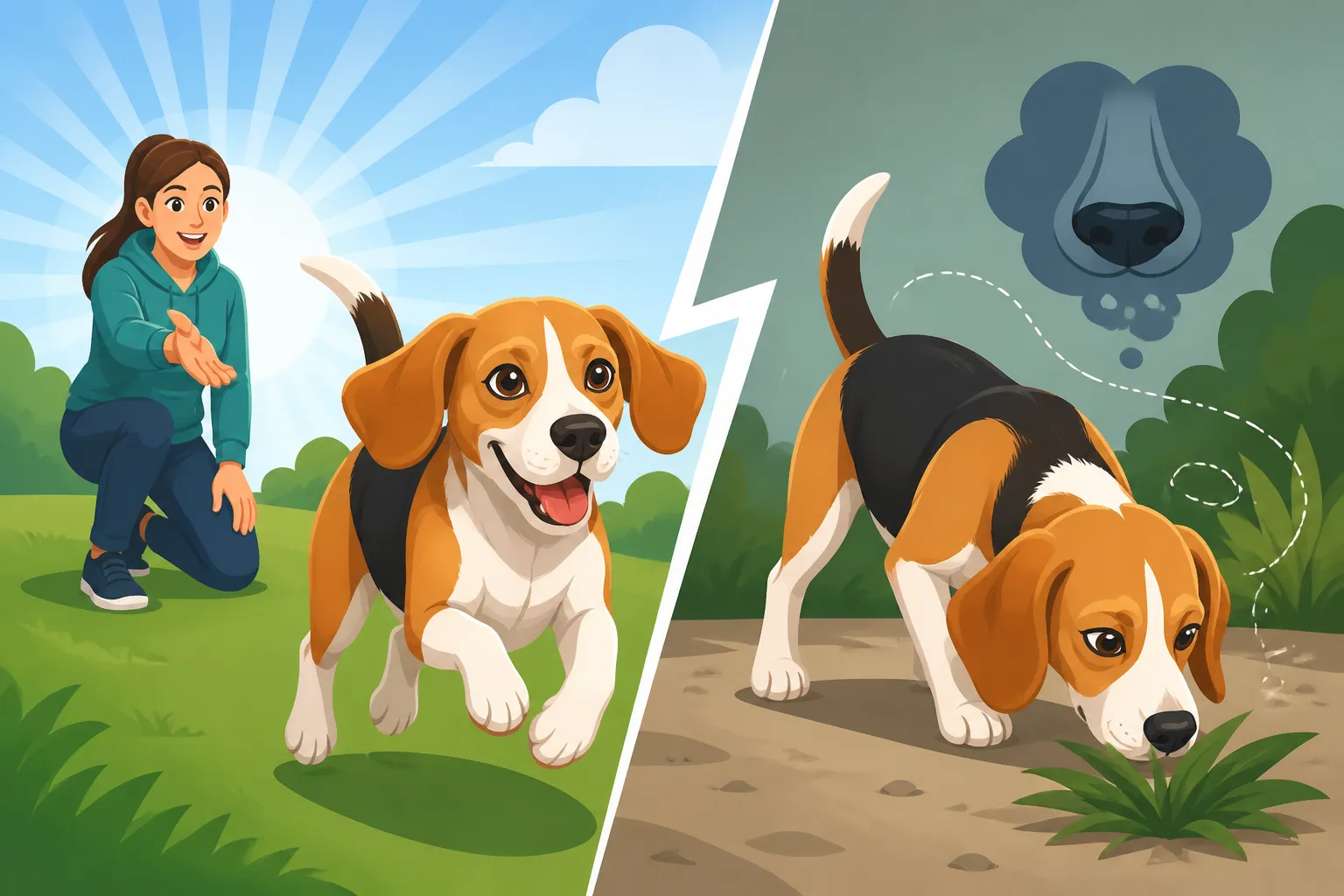
Imagine experiencing the world in a kaleidoscope of smells so vivid and complex that they tell entire stories. That's a Beagle's reality. They boast around 220 million olfactory receptors, a staggering number when you compare it to our mere 5 million. Their olfactory bulb, the part of the brain that processes smell, is also disproportionately large, making sense of these complex inputs. When a Beagle's nose hits a scent trail, it’s not just a casual sniff; it's an immersive experience, a highly detailed narrative unfolding before them. They aren't just detecting "rabbit"; they're deciphering the rabbit's age, direction of travel, how recently it passed, its diet, its stress levels – a rich tapestry of information. This intense focus isn't a choice; it's an instinctual, almost trance-like state where the rest of the world, including your voice, simply fades into the background. It truly highlights Why a Beagle Nose Beats Ours Ten Thousand Times Over.
Why Your Voice Fades Away
It’s easy to feel personally offended or frustrated when your Beagle, typically so responsive, suddenly seems to have forgotten their name and every command you've ever taught them. But it’s crucial to understand that this isn't defiance; it's absorption. When a Beagle locks onto a scent, their brain prioritizes that sensory input above almost all others. Their ears might still be working, but the information isn't reaching the part of the brain that processes your command as a priority. Think of it like a human being utterly engrossed in a thrilling novel or a complex puzzle; the world around them might as well not exist. They are, in essence, temporarily "deaf" to anything that isn't part of that scent trail. This is why you often find yourself yelling louder and louder, feeling increasingly desperate, while your Beagle remains blissfully unaware, lost in their olfactory adventure. Their world shrinks to that trail, and everything else becomes irrelevant. This profound focus explains Why a Beagle Ignores You Halfway Down a Trail.
Laying the Foundation: Indoor and Controlled Environment Training
Building a reliable recall for a Beagle is like constructing a house: you need a strong foundation before you can add the walls and roof. Starting in controlled, low-distraction environments is paramount, gradually increasing the challenge as your Beagle's understanding and motivation grow.
High-Value Rewards and Early Engagement
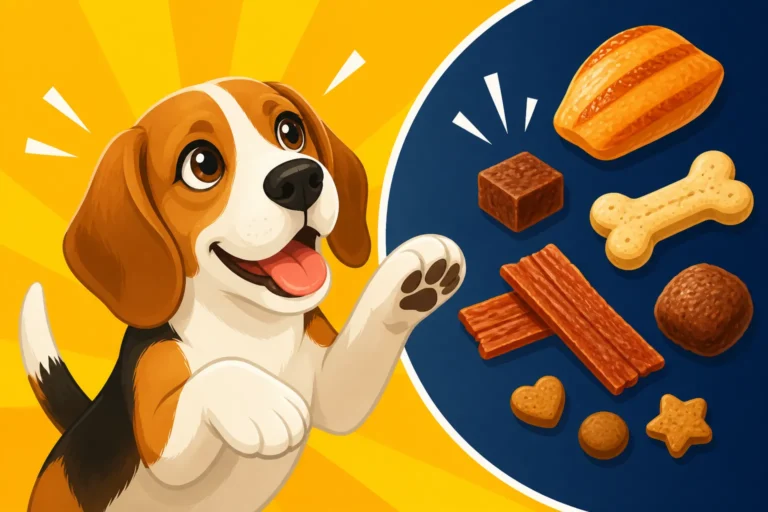
For a Beagle, motivation is almost always spelled F-O-O-D. To compete with the allure of a captivating scent, your recall reward needs to be nothing short of extraordinary. Dry kibble simply won't cut it when there's the lingering essence of a squirrel just a few feet away. Think about what your Beagle absolutely goes crazy for: tiny pieces of cooked chicken, cheese, hot dogs, or even commercial high-value training treats. These aren't just snacks; they're currency.
Start your recall training indoors, in a quiet room with no distractions. Say your Beagle's name and your chosen recall cue (e.g., "Come!" or "Here!"), and the moment they turn their head towards you, reward them instantly with that amazing treat. Make it a party! Lots of happy praise, a joyful tone, and a treat so good it makes their eyes light up. The goal is to make coming to you the most delightful, rewarding, and exciting experience possible. This early, positive association is critical. If coming to you isn't incredibly rewarding, they simply won't do it when something more interesting (like a phenomenal smell) presents itself. Understanding The Treats a Beagle Will Work Hardest For is key to this step.
Building a Solid Recall Cue
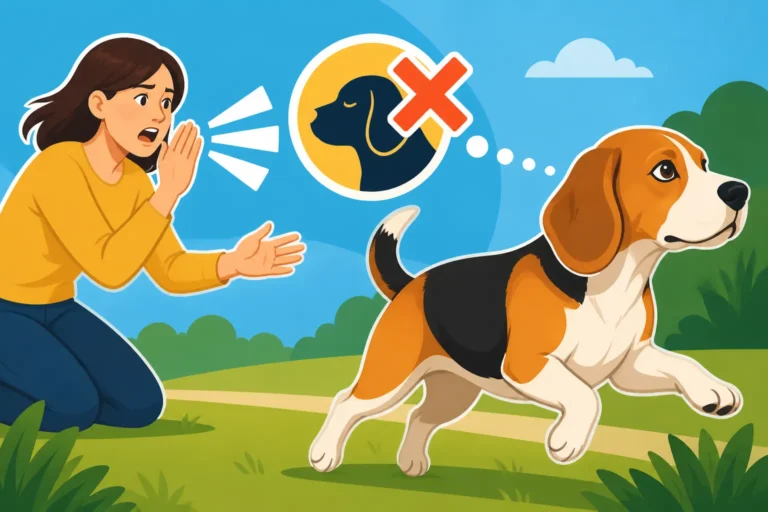
Consistency is queen when it comes to recall cues. Choose one word, and stick to it religiously. "Come!" is classic, but you could choose "Here!", "Touch!", or even a distinct whistle. The important thing is that everyone in the household uses the exact same cue, in the exact same joyful, upbeat tone, every single time. Avoid using your recall word for anything negative or when you're frustrated, as this will poison the cue.
Practice often, but keep sessions short – think 2-5 minutes, multiple times a day. Call your Beagle, and as they approach, reward them lavishly. Then, let them go back to whatever they were doing. This prevents them from associating "come" with the end of their fun. The goal is to build a rock-solid, automatic response: "I hear that word, I run to my human, I get something amazing!" Never repeat the recall word if your Beagle doesn't respond immediately. If they don't come, calmly go to them, gently guide them back to your starting point, and then try again. Repeating the cue only teaches them that they don't have to respond the first time, diluting its power. For more on this, check out The Recall Word You Should Never Repeat to a Beagle.
Introducing Distractions Gradually
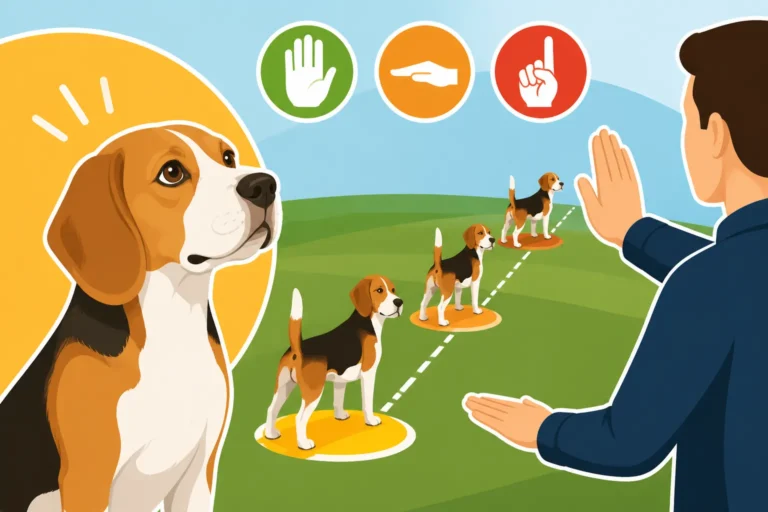
Once your Beagle reliably comes to you in a quiet indoor setting, it’s time to slowly dial up the distractions. This is a crucial step to bridge the gap between your living room and the scent-rich outdoors.
Start by practicing in a slightly busier part of your home, like a hallway, with another family member quietly present. Next, move to a securely fenced backyard, starting with no obvious distractions. Call your Beagle when they're a short distance away, reward heavily, then release them. Once they're consistent there, add minor, controlled distractions: a few toys scattered around, a family member gently tossing a ball, or you pretending to drop a treat a short distance away.
The key is to set your Beagle up for success. If they fail, you've likely introduced too much distraction too quickly. Always go back a step if they struggle. A long training line (which we’ll discuss more below) can be an invaluable tool at this stage, allowing you to practice in more stimulating environments while maintaining control and preventing them from practicing ignoring you. Gradually, you'll work towards practicing in public parks or open fields, but always remember to choose times and locations with manageable levels of distraction initially. This method of building up slowly is vital for Practicing Beagle Recall Indoors First.
Strategies for Outdoor Success: Beyond the Fenced Yard
Once your Beagle has a solid foundation indoors and in controlled, low-distraction environments, it's time to tackle the real challenge: the great outdoors, where every breeze carries a thousand enticing smells. This is where specialized tools and careful management become indispensable.
The Indispensable Long Line
For a Beagle, the long line isn't just an option; it's a non-negotiable piece of safety equipment and a powerful training tool. A long line, ranging from 15 to 50 feet in length, allows your Beagle to explore, sniff, and feel a sense of freedom while you maintain absolute control. It’s your safety net against their powerful nose. You can find excellent long lines made from various materials like biothane (easy to clean, durable) or nylon at retailers like Amazon.
When using a long line, attach it to a well-fitting harness, not a collar, to prevent neck injury if they hit the end of the line. Let your Beagle drag the line, periodically stepping on it to check their momentum. Practice your recall cues as you would in a fenced yard. If they ignore your call, you can gently reel them in, rather than chasing them, which often turns into a fun game for the Beagle and frustration for you. The long line allows you to practice recall in a natural, distracting environment without the risk of your Beagle disappearing over the horizon on a scent mission. It’s how you teach them that "come" means "come to me, and get something awesome," even when there's an intriguing scent nearby, all while preventing them from self-rewarding by running off. Knowing The Long Line Length a Beagle Actually Needs is important for effective training.
Emergency Recall
Beyond your everyday "come" command, every Beagle owner needs an "emergency recall." This is a distinct, high-stakes command reserved only for urgent situations where your Beagle's safety is on the line. This cue should be different from your regular recall—perhaps a special whistle, a distinct sequence of claps, or a unique word you rarely use, like "NOW!" or "BINGO!"
The emergency recall must be paired with the absolute highest-value rewards imaginable, something so irresistible your Beagle would drop everything for it. Think tiny pieces of steak, boiled chicken, or a dollop of peanut butter. Practice this cue sparingly, in very controlled environments, making it a monumental event each time. Call the emergency cue, lure them with the treat if needed, and give the reward with immense enthusiasm. The goal is that when you use this cue, your Beagle instinctively knows it means something truly incredible is about to happen, overriding even the most compelling scent. Because this cue is so powerful, you want to use it only when absolutely necessary, to maintain its potency. Training a Beagle to an Emergency Recall Whistle can be a great way to ensure this special command stands out.
Managing Expectations and Safety
Let’s be realistic: a Beagle's nose is a force of nature. While you can build a highly reliable recall, expecting a Beagle to be consistently 100% off-leash in an unfenced, stimulating environment is often setting yourself up for heartbreak. Their genetic wiring to follow a scent trail is incredibly strong.
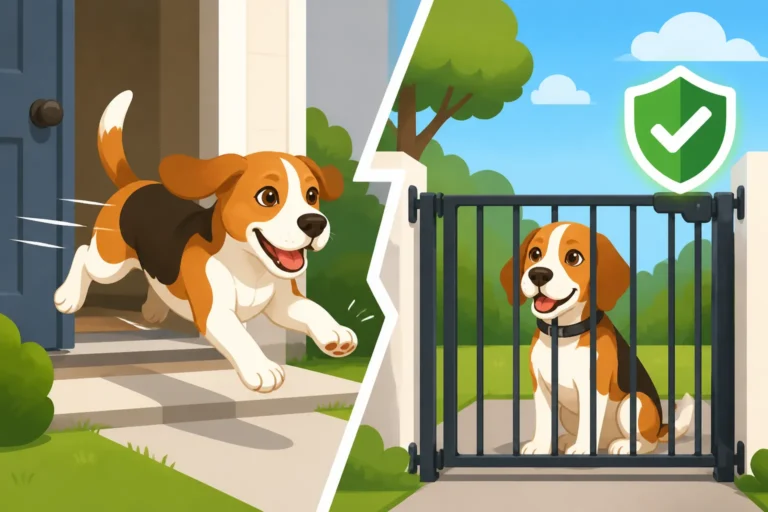
Therefore, responsible Beagle ownership involves proactive safety measures. Always ensure your yard is securely fenced, and regularly check for potential escape routes like loose boards or areas they could dig under. Many Beagle owners rely on a solid 6-foot fence with digging barriers along the bottom. Consider a GPS tracking collar as a backup, even for the most well-trained Beagle, for that peace of mind. Devices like an Apple AirTag with a durable holder or a dedicated pet GPS tracker can be invaluable if an escape artist manages to slip away.
Embrace the long line as your primary tool for safe outdoor exploration in unfenced areas. Recognize that dog parks, while fun for some breeds, can be risky for Beagles due to their tendency to follow a scent and potentially ignore your calls amidst the chaos. It’s about understanding and respecting their breed-specific instincts. This realistic approach is covered in Why Off-Leash Parks Are Risky for a Beagle.
Integrating Recall into Daily Life and Advanced Techniques
Building reliable recall isn't a one-and-done project; it's an ongoing journey that integrates into your daily interactions with your Beagle. By making yourself consistently interesting and rewarding, you reinforce the idea that coming to you is always a good choice.
Regular Check-Ins and Spontaneous Rewards
Beyond formal training sessions, cultivate an environment where your Beagle naturally wants to pay attention to you. Encourage voluntary "check-ins" – when your Beagle glances your way, makes eye contact, or trots over just to see what you're up to, reward them with a small, unexpected treat and some praise. This teaches them that good things happen when they focus on you, even without a direct command.
Carry treats on every walk. When your Beagle is sniffing contentedly but then looks up at you on their own accord, mark that moment with a "Good check-in!" and a treat. This builds a strong positive association with maintaining awareness of your presence. Make yourself a constant source of value, not just during dedicated training times, and you'll find their general attentiveness improves dramatically. This practice of reinforcing voluntary connection is key to Rewarding a Beagle Every Time It Checks In.
Recall Games and Fun
Training doesn't have to be rigid or boring! Turn recall into a series of fun games that strengthen the bond and make coming to you a joyful experience.
- Hide-and-Seek: In a securely fenced yard or inside your home, have a family member hold your Beagle while you hide. Call your Beagle's recall word, and when they find you, throw a party! This teaches them to actively seek you out.
- The "Run Away" Game: With your Beagle on a long line in a safe area, start walking away from them, playfully calling their name and recall cue. Most Beagles will instinctively chase after you, and when they catch up, reward them enthusiastically. This makes coming to you feel like an exciting game of chase, rather than an obligation.
- Recall Relay: If you have multiple people, stand at different points in a room or yard. One person calls the Beagle, rewards, and then another person calls. This keeps the energy high and ensures multiple people can call the Beagle effectively.
These games, especially Beagle Recall Games to Play in the Backyard, transform recall from a chore into something your Beagle anticipates with excitement.
Professional Help and Continued Learning
Sometimes, despite your best efforts, you might feel like you're hitting a wall with your Beagle's recall. That's perfectly normal, and it's a great time to seek professional guidance. A certified professional dog trainer, especially one with experience with scent hounds, can offer tailored advice and new techniques.
Look for trainers who use positive reinforcement methods and understand the unique challenges of training a Beagle. They can help identify specific triggers for your Beagle's scent-driven disappearances and provide personalized strategies. Many local obedience clubs or private trainers offer classes that can further refine your Beagle's recall in a structured, yet distracting, environment. Resources like BAXTER & Bella offer online programs that can guide you through various training stages, or you can find local trainers through organizations that vet their credentials. Investing in a few sessions with an expert can make a world of difference, providing fresh perspectives and tools to help you and your Beagle succeed. You can learn more about finding the right expert in Private Trainer Rates for a Beagle.
Recall Challenge and Solution Summary
Building a strong recall with a Beagle is a journey of patience, consistency, and understanding their innate drive. By using high-value rewards, consistent cues, and the right tools like long lines, you can teach your Beagle to choose you, even when the world smells overwhelmingly interesting.
| Challenge | Why it Happens (Beagle Perspective) | Solution |
|---|---|---|
| Ignoring calls when on a scent | Intense olfactory absorption; "selective deafness" | High-value treats, emergency recall cue, consistent practice |
| Running away when called | Sees it as a game of chase, or coming to you isn't rewarding enough | Never chase; use a long line; make coming to you the ultimate reward |
| Distracted in busy environments | Too many competing scents/sights, overwhelming focus | Start in low-distraction areas, gradually increase complexity, use long line |
| Only comes for certain family members | Inconsistent cues/rewards across household, unclear leadership | Everyone uses same cue, same tone, same high-value rewards, consistent expectations |
| Recall breaking down in adolescence | Normal teenage testing boundaries, increased interest in the world | Double down on training, revert to easier environments, reinforce heavily |
| Not finding you when playing hide-and-seek | Hasn't learned the "find me" game, low motivation to seek | Start with easy hides, use irresistible treats, build up excitement |
Disclaimer
This article is for general informational purposes only and does not constitute professional advice. Laws, prices and regulations vary by location and change over time. Consult a qualified professional for guidance on your specific situation.