Beagle Distance Cues and Hand Signals
One of the biggest heartaches for any Beagle owner is that moment your sweet hound, nose to the ground, becomes utterly deaf to your calls. You see them ranging farther and farther, an invisible leash of scent pulling them away, and your voice just seems to vanish into the wind. This guide is here to help you bridge that gap, showing you how to develop reliable distance cues and hand signals that can cut through the most intoxicating of smells and keep your Beagle safely connected to you.
Understanding Why Distance Cues Are Crucial for Beagles
If you've ever owned a Beagle, you know their nose is their superpower – and, let's be honest, sometimes their greatest weakness when it comes to training. Unlike many breeds that might rely more on visual cues or a strong desire to please their human above all else, a Beagle's world is fundamentally defined by scent. This isn't just a strong sense of smell; it's an all-consuming experience that can override everything else in their environment, including your voice.
The Beagle's Nose: A World Apart
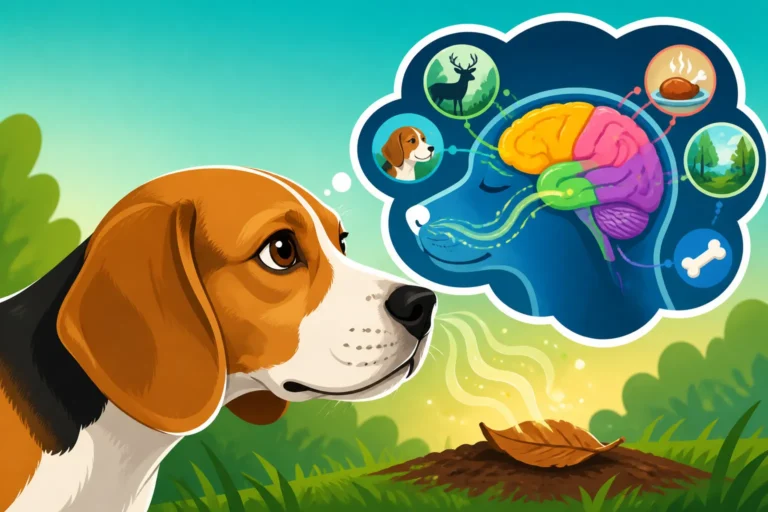
Imagine having 220 million scent receptors, constantly processing an intricate tapestry of odors that we can barely fathom. That's your Beagle's reality. When they get their nose down and pick up a fascinating trail, it's like falling down a rabbit hole for them. Their brain is working overtime, reconstructing the story of who was there, when, and where they went. In that moment, your vocal commands can easily become just background noise, a distant hum compared to the intoxicating symphony of scents. This isn't stubbornness; it's just how their incredible olfactory system is wired. This intense focus on scent is precisely Why a Beagle Nose Beats Ours Ten Thousand Times Over and why relying solely on verbal commands for recall or other vital cues at a distance is often a losing battle.
The Limitations of Verbal Commands at a Distance
Think about trying to shout across a busy park or a field with a brisk wind. Sound dissipates, gets muffled, and becomes hard to pinpoint. For a Beagle deeply engrossed in a scent, these environmental factors only compound the challenge. Your voice might not even register, or it might sound indistinguishable from other distant noises. Even if it does register, the sheer mental effort required for them to disengage from a scent trail and process your verbal cue can be immense. This is why many Beagle owners eventually discover that their reliable "come" command, which works perfectly in the living room, falls completely apart the second they hit the great outdoors. This frustration is real, and it’s not your fault or your Beagle’s; it’s just how their magnificent design interacts with our human communication methods. This is where hand signals become an indispensable tool.
Why Hand Signals Offer a Clearer Line of Communication
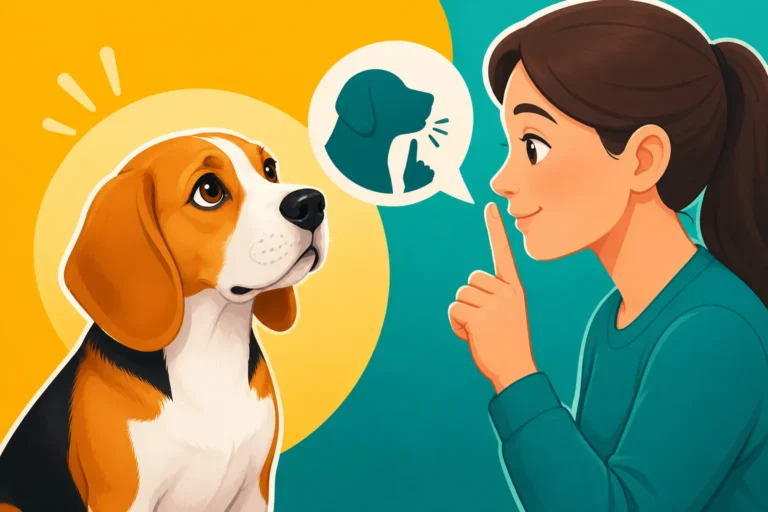
Hand signals provide a visual cue that doesn't rely on sound traveling through distracting environments. Your Beagle is constantly observing you, even when their nose is busy. A clear, consistent hand signal offers a direct visual command that can cut through the noise and the scent haze more effectively than your voice alone. It’s like switching from a crackly radio to a direct line of sight. Moreover, hand signals often register more quickly, allowing for a faster response time, which can be critical in situations where safety is paramount. By giving your Beagle a visual anchor, you're tapping into another powerful sensory input, creating a more robust communication channel that can be maintained even when they're a bit farther away.
Building a Foundation: Basic Hand Signals for Your Beagle
Introducing hand signals to your Beagle is an excellent way to strengthen your communication, especially for those moments when their nose takes over or distance is a factor. The key is consistency, clarity, and positive reinforcement. Start close, make it fun, and always pair the signal with the verbal command initially.
Starting with Simple, Clear Gestures
When introducing a new hand signal, choose a gesture that is distinct and easy for you to repeat consistently. For example, a flat hand held up like a stop sign for "stay," or tapping your leg for "come." It's best to keep these signals simple and exaggerated at first. Begin by working in a quiet, low-distraction environment, like your living room or a securely fenced backyard. Always say the verbal cue just before you show the hand signal, then immediately reward your Beagle when they respond correctly. This pairing helps them associate the visual cue with the action. Many trainers, including those from BAXTER & Bella, emphasize the importance of starting with clear, simple gestures and building from there, ensuring your dog understands the basic concept before adding complexity.
Pairing Verbal Cues with Hand Signals
This initial phase is all about creating a strong association. Let's take "sit" as an example. You'd say "Sit," then immediately bring your hand up in a specific gesture (perhaps an open palm moving upward) as you lure your Beagle into a sit with a treat. The moment their rear touches the ground, mark it with a verbal "yes!" or a clicker, and then reward them. Repeat this many, many times. The goal is for your Beagle to eventually respond to the hand signal even without the verbal cue preceding it. Gradually, you can start to phase out the verbal cue, giving only the hand signal and rewarding the response. This helps your Beagle understand that the visual signal alone is a command. Using high-value treats is crucial here, as The Treats a Beagle Will Work Hardest For can make all the difference in their motivation and learning speed.
Reinforcing Responses with High-Value Rewards
Beagles are incredibly food-motivated, which is a massive advantage in training. High-value treats, like small pieces of cooked chicken, cheese, or specialized training treats found on Amazon, will make your Beagle far more eager to learn and respond. Every single time your Beagle performs the desired action after a hand signal, they should receive a reward, especially in the early stages. This isn't spoiling; it's building a strong positive association that cements the behavior. As they become more proficient, you can transition to intermittent rewards, but always keep them guessing and make sure really good rewards still appear often enough to maintain their enthusiasm. Remember, the stronger the reward, the stronger the motivation for your Beagle to disengage from whatever fascinating scent they've found and re-engage with you.
Extending the Reach: Practicing Distance Cues in Real-World Scenarios
Once your Beagle reliably responds to hand signals at close range, the next step is to gradually increase the distance and introduce distractions. This is where the real magic of distance cues comes into play, making your communication more robust in varied environments.
Gradually Increasing Distance and Distraction
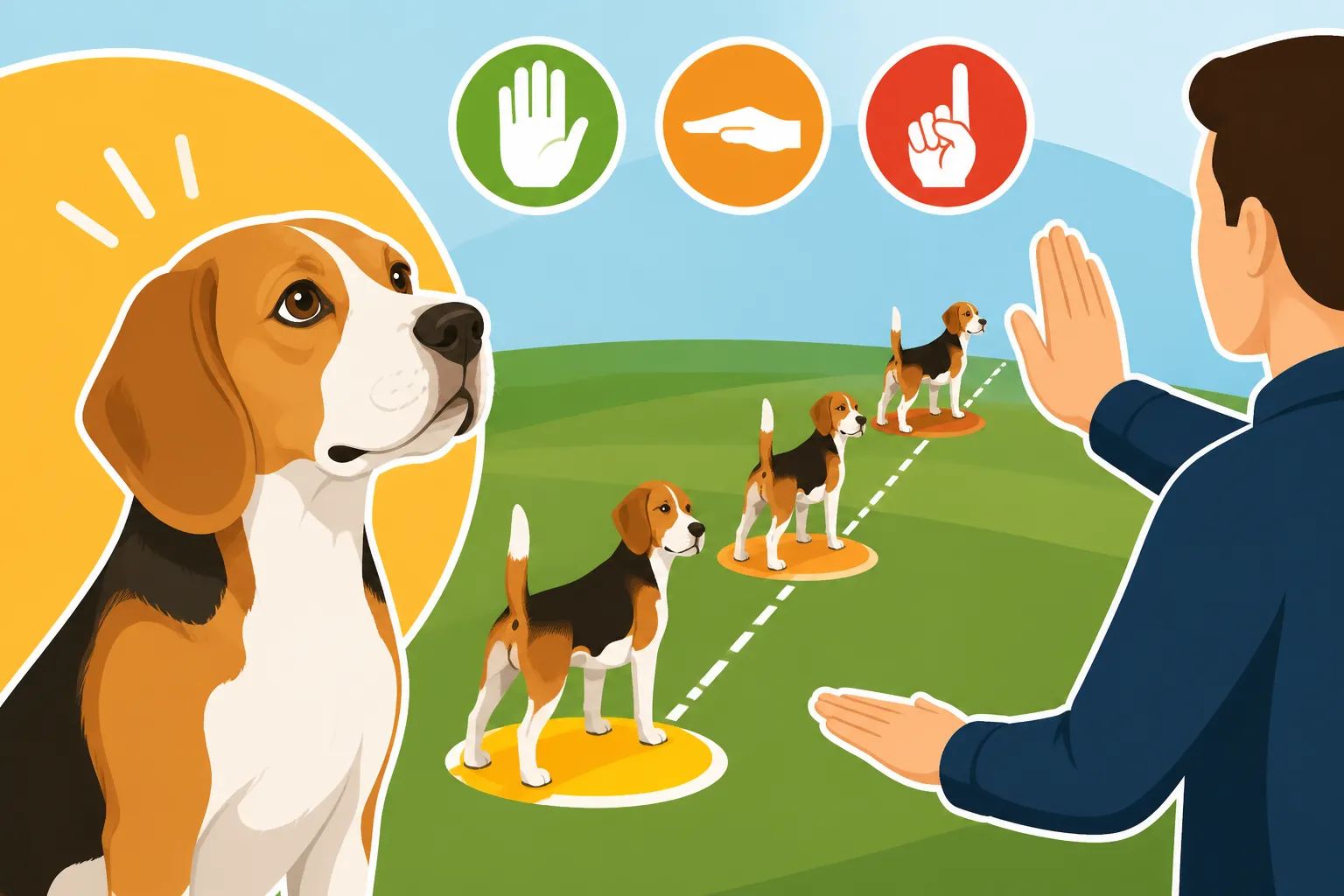
The trick to building reliable distance cues is slow, incremental progression. Start by having your Beagle just a few feet away from you and giving a hand signal like "sit" or "stay." Once they're consistent at that distance, take a step back, then two, then three, slowly increasing the gap. Only move to a greater distance once they are 100% successful at the current range. The same principle applies to distractions. Start with minimal distractions (e.g., in your quiet living room), then move to a slightly busier area of your home, then your backyard, then a quiet park on a long line. The Long Line Length a Beagle Actually Needs can be invaluable here, allowing you to practice distance cues while maintaining control and safety. Never put your Beagle in a situation where they are likely to fail, especially when proofing these vital skills.
Proofing Cues in Different Environments
Proofing means practicing a behavior in various locations, with different levels of distraction, and even with different people giving the cues. For a Beagle, this is paramount. A "stay" cue that works perfectly in your kitchen might utterly dissolve in a field full of squirrel smells. Take your training sessions to new places: a friend's yard, a quiet trail, a park during off-peak hours. Work on your hand signals during different times of day, and even in different weather conditions. The more varied the situations where your Beagle successfully responds to your hand signals, the more ingrained and reliable those cues will become. Remember to always start back at an easier level when introducing a new environment, gradually increasing difficulty. This consistent exposure to varied scenarios helps to solidify the understanding that the hand signal means the same thing, no matter where you are. Building Beagle Focus in a Distracting Place is an essential skill, and using hand signals can be a powerful component of that training.
Incorporating Movement and Body Language
Beyond static hand signals, your own body language can greatly enhance distance cues. When you give a "come" signal, for example, pair it with an excited posture, perhaps turning and taking a few steps backward to encourage their movement towards you. If you want them to "stay," stand tall and confident, projecting a clear boundary with your entire body. Beagles are incredibly observant, and they pick up on subtle cues. By making your body language consistent with your hand signals, you create a more powerful and unambiguous message. This isn't just about moving your hand; it's about using your whole self to communicate effectively with your Beagle, making it easier for them to understand your intentions even at a distance.
Troubleshooting Common Challenges and Maximizing Success
Even with the best intentions and consistent training, you'll encounter challenges when working on distance cues with a Beagle. Their instincts are strong, and distractions are plentiful. The key is patience, understanding, and adjusting your approach.
When Your Beagle Becomes "Nose-Blind" to Your Cues
We’ve all been there: your Beagle’s nose hits the ground, and suddenly, you’re invisible. When your Beagle ignores your distance cue, it's usually because the distraction (that amazing smell!) is currently more rewarding than responding to you. The first step is to avoid situations where they are overwhelmed. If you're struggling in a high-distraction environment, go back to a less distracting one. Re-establish success, then slowly reintroduce the challenging environment at a lower intensity. Increase the value of your reward dramatically – bring out those special, extra-tasty treats they rarely get. Consider using an Emergency Recall Cues That Reach a Beagle which might involve a unique sound or movement, paired with an incredible reward, reserved only for critical moments. This keeps its novelty and power.
Maintaining Consistency Across All Family Members
For distance cues to be truly effective, everyone in the household needs to be on the same page. If one person uses a different hand signal for "sit" or rewards inconsistently, it can confuse your Beagle and undermine the training. Hold a family meeting to decide on universal hand signals and verbal cues. Practice together, ensuring everyone is using the exact same gestures and rewarding in the same manner. This consistency creates a clear and predictable environment for your Beagle, reinforcing the signals and making them more reliable regardless of who is giving the command. Training apps or online courses, such as those offered by BAXTER & Bella, can provide a structured curriculum that all family members can follow, ensuring everyone uses the same methods and terminology.
Utilizing Training Aids and Resources
Beyond treats, there are several tools that can support your distance cue training. A long line (a lightweight leash often 15-30 feet long) is indispensable for practicing recall and distance signals in open, unfenced areas, giving you control while allowing your Beagle freedom to explore. You can find excellent options on Amazon. A clicker can be a fantastic tool for precise marking of correct behavior, especially when working at a distance where a verbal "good job" might not be heard clearly. A GPS tracking collar is also a smart backup, especially if you're working in new or open areas, as it provides peace of mind if your Beagle's nose does get the better of them. GPS Collars as a Backup for Beagle Recall can literally be a lifesaver. Consistent use of these aids, along with a structured training approach, can significantly improve your Beagle’s response to distance cues.
Here's a quick reference table for common hand signals and their applications:
| Command | Hand Signal Example | Purpose | Best Use Scenario |
|---|---|---|---|
| Come | Patting thigh, then arm sweep towards you | Recall, get attention | Off-leash areas (with long line), outdoor play |
| Sit | Hand raised palm-up, moving upwards | Stop action, prepare for next command | Before crossing street, at doorways |
| Stay | Open palm facing Beagle (like a stop sign) | Hold position, maintain distance | While you open the door, waiting for food |
| Down | Hand swept downwards to the floor | Relax, settle, reduce excitement | Calm a hyped Beagle, settle during quiet time |
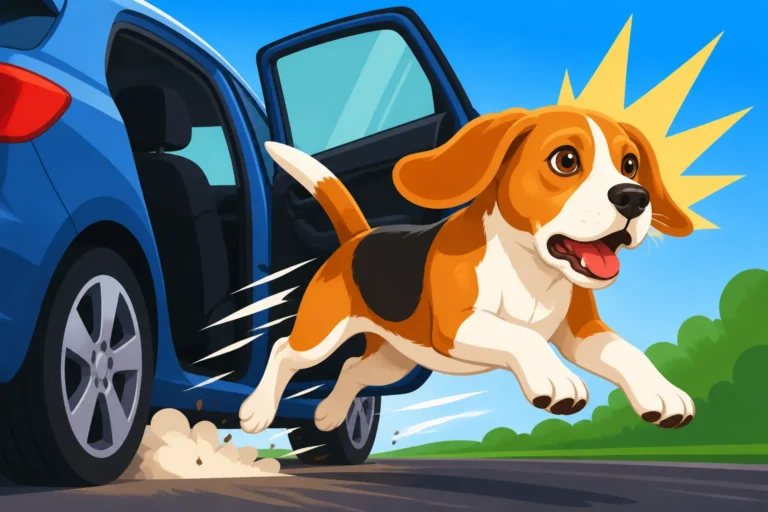
| Wait | Hand held flat, palm-down, parallel to ground | Pause briefly, hold at boundary | Before entering house, exiting car |
| Leave It | Hand flat, fingers spread, moved side to side | Disengage from tempting object/scent | Passing food on sidewalk, ignoring trash |
| Heel | Patting hip, then hand pointed at ground beside you | Walk close, maintain position at your side | Crowded areas, close-quarters walking |
Patience, Persistence, and Positive Reinforcement
Training a Beagle, especially for reliable distance cues, is a marathon, not a sprint. There will be days of incredible progress and days where it feels like you're starting from scratch. Beagles are sensitive, intelligent, and driven by ancient instincts. Never resort to harsh corrections or punishment, as this will only erode trust and make your Beagle less likely to engage with you. Keep sessions short, fun, and always end on a positive note. Celebrate every small success. Remember that your Beagle isn't trying to be disobedient; they're simply being a Beagle, and it's our job to understand their nature and find ways to communicate that resonate with them. By embracing their unique traits and using consistent, positive reinforcement, you can build a deeper bond and achieve incredible results. This dedication will ensure a happier, safer life for your adventurous companion.
Disclaimer
This article is for general informational purposes only and does not constitute professional advice. Laws, prices and regulations vary by location and change over time. Consult a qualified professional for guidance on your specific situation.