Beagle Noise and the Neighbors Next Door
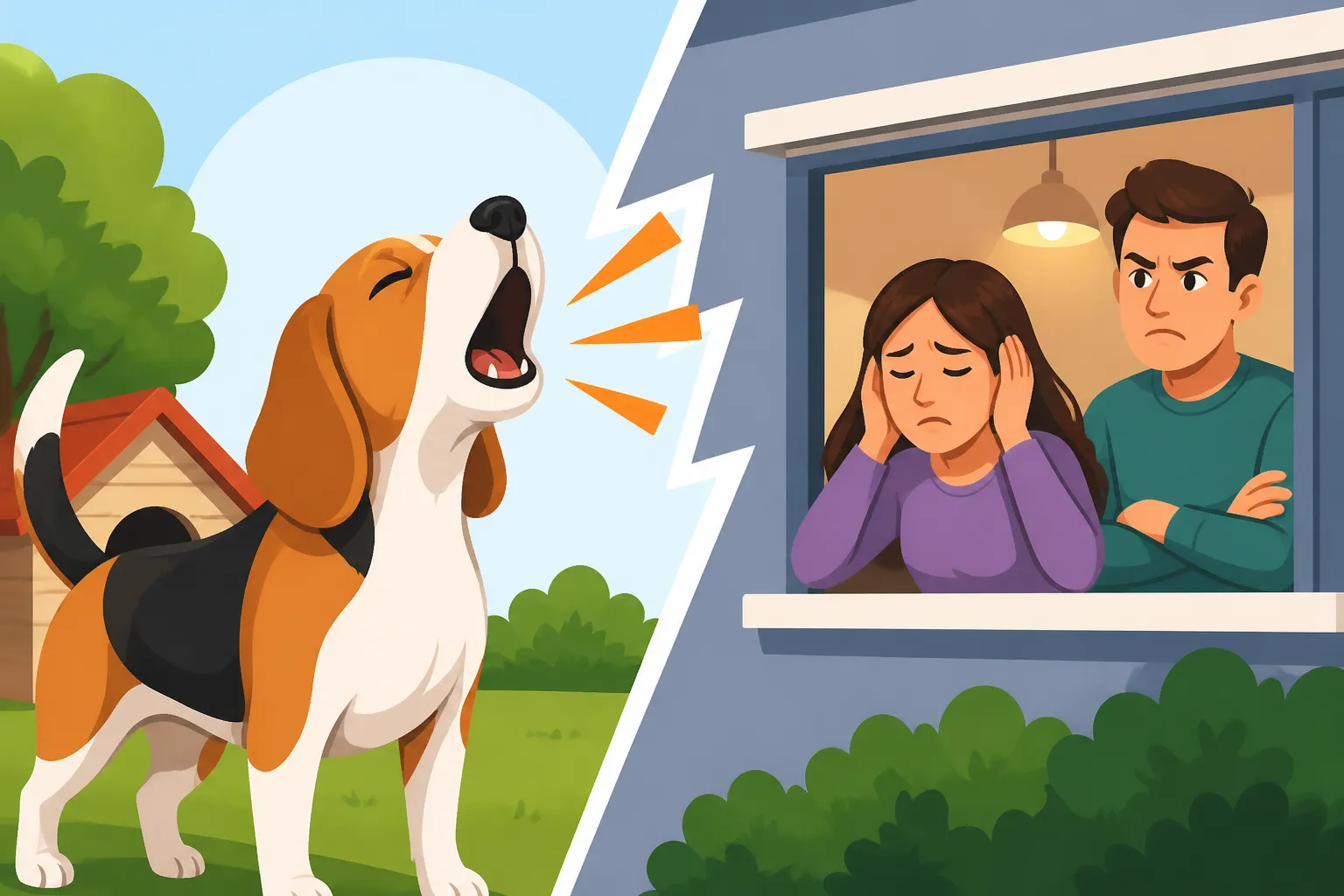
Oh, the Beagle bay! It's a sound that can absolutely fill your heart with joy when it's your own sweet hound expressing themselves. But let's be realistic: that same hearty bay, that excited howl, or even persistent barking can quickly become a serious point of contention with the people who share your fence line or live in the apartment next door. This guide is all about understanding why your Beagle feels the need to be so vocal and, more importantly, how to manage their noise effectively to maintain peace with your neighbors and keep your home a happy, harmonious place.
Decoding the Beagle's Vocal Range for Your Neighbors' Sanity
When you bring a Beagle into your life, you're not just getting a dog; you're adopting a symphony orchestra in fur. Their vocalizations are not just random noises; they're deeply ingrained behaviors, a direct link to their long history as scent hounds. Understanding this heritage is the first step toward managing the volume.
The Ancestral Roar: Why Beagles Bay
Beagles were bred, quite literally, to be heard. For centuries, these dogs were an integral part of hunting packs, primarily for rabbits and hare, across the English countryside and eventually in America. When a Beagle picked up a scent trail, it wasn't enough for them to know; the hunters, often on foot, needed to know exactly where the pack was and if they were "on scent." This communication was vital, and the bay was their primary tool. It's a distinct, drawn-out, melodious sound, almost like a mournful wail, designed to carry over long distances, through woods, and across fields.
This bay isn't just for alerting; it's also a way for the pack to coordinate. Imagine a whole group of Beagles, each with their nose to the ground, working a complex scent. Their bays create a cohesive soundscape, telling each other, "I'm here, I've got the scent, follow me!" This deep-seated instinct means that even if your Beagle has never seen a rabbit in its life, that primal urge to bay when a compelling scent crosses its path is still very much alive. It’s part of who they are. If you want to delve deeper into this, you might find Why Hunting Beagles Were Bred to Bay at All fascinating.
This isn't a behavior born of malice or disobedience; it's genetic programming. Many Beagles find immense satisfaction in using their voice, especially when they're engaging their incredible sense of smell. So, when your Beagle bays at a leaf blowing by, or the faint whiff of a squirrel that passed through your yard hours ago, they're simply doing what generations of their ancestors did – announcing a discovery. It’s a powerful urge, which is why it can feel impossible to "train out."
Barking, Howling, and Baying: A Glossary for Owners
It's easy to lump all Beagle sounds together as "noise," but there are distinct differences, and recognizing them can help you pinpoint the cause and potential solutions.
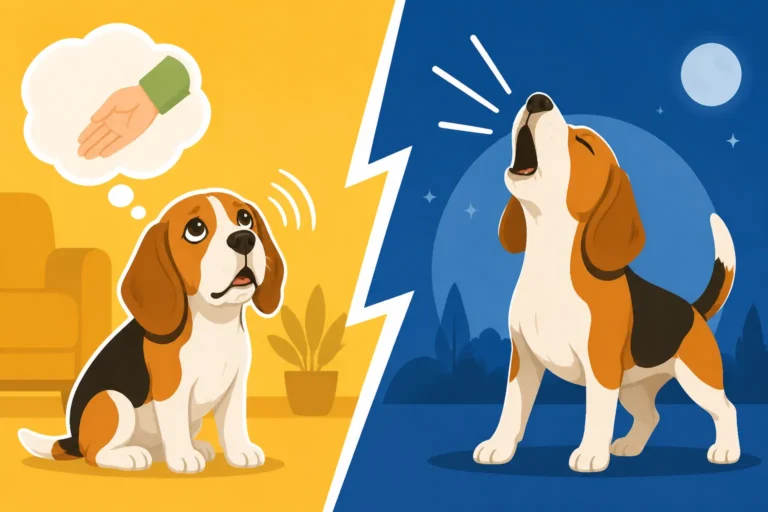
Barking: This is often shorter, sharper, and more repetitive than a bay. A Beagle barks when it’s startled, wants attention, or feels territorial. Think of the quick "Woof! Woof!" when the doorbell rings, or the mail carrier approaches the house. It's a general alert, a "Hey, something's happening!" or "Look at me!" kind of sound. This is probably the most common vocalization that can lead to Noise Complaints From a Beagle's Neighbors if not managed.
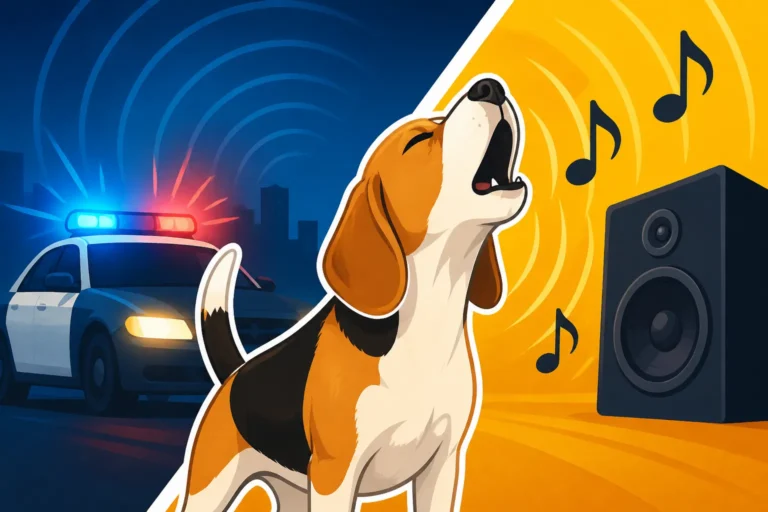
Howling: A Beagle howl is a long, sustained, mournful vocalization, often directed at high-pitched sounds like sirens or music, or when they're feeling particularly lonely or anxious. It's their way of joining a "pack chorus" or expressing distress. If you’ve ever heard a Beagle howl, you know it’s distinct from a bark or a bay, often carrying a profound emotional weight. Some Beagles will howl just for the sheer joy of it, as if singing along to a favorite tune. For a deeper listen, check out What a Beagle Bay Actually Sounds Like – it often encompasses the howler notes too.
Baying: As we discussed, the bay is the quintessential Beagle sound. It’s deeper, more melodic, and often sustained longer than a bark, but less mournful than a pure howl. It’s characterized by a break in the middle, a "bay-a-woo-woo" sound, often with a rising and falling cadence. This is the sound of the hunt, the "I've found something amazing with my nose!" declaration. It’s a sound that fills the air and, while charming to some, can be truly impactful in close quarters. Just how impactful? A Beagle bay can be surprisingly loud, with some reaching considerable decibel levels, easily carrying across suburban yards and through apartment walls. This is why managing it is so crucial. If you're wondering How Loud a Beagle Bay Actually Measures, you're not alone. The resonance and carrying power are significant factors in neighborly disputes.
Common Triggers Turning Peaceful Moments into Public Announcements
Understanding why your Beagle vocalizes is key to addressing the behavior. It’s rarely out of spite; it's almost always a response to an internal state or an external stimulus. For the sake of your neighbors, it's worth playing detective to figure out the root cause.
Separation Anxiety: The Loneliest Howl
One of the most heartbreaking reasons a Beagle might be excessively vocal is separation anxiety. Beagles are pack animals, bred to live and work in close companionship. Being left alone, especially for long periods, goes against their very nature. For a Beagle suffering from separation anxiety, being alone isn't just boring; it's a terrifying experience that can manifest as relentless barking, howling, or baying. They might also engage in destructive chewing, house-soiling, or frantic attempts to escape.
This isn't just a mild complaint; it's a full-blown panic attack for your dog. Your neighbors might report a constant chorus of sound the moment you leave, only stopping when you return. It's a genuine cry for help from your Beagle, and it impacts everyone within earshot. Addressing separation anxiety requires patience and a multi-pronged approach, often involving desensitization, counter-conditioning, and sometimes even medication if severe. For more comprehensive insights, you can read Beagle Separation Anxiety in a Pack Breed. This is a serious issue that demands attention, not just for your neighbors' sake, but for your Beagle's well-being.
Leaving a radio or TV on can sometimes help, but for true separation anxiety, more in-depth training and management are needed. Sometimes a pet sitter or dog daycare can be a lifesaver, providing companionship during the hours you're away. The goal is to make alone time a neutral or even positive experience, rather than one filled with dread and vocal protest.
Environmental Stimuli: The Scent That Ignites Sound
Beagles live in a world of scent that we can barely imagine. Their powerful noses, equipped with an astounding 220 million scent receptors, mean they are constantly processing an invisible landscape of smells. Every passing dog, every squirrel that ran across the lawn hours ago, every dropped crumb of food, and every shift in the wind brings a wealth of information to their highly sensitive olfactory system. This intense sensory input is a huge trigger for vocalization, especially the bay.
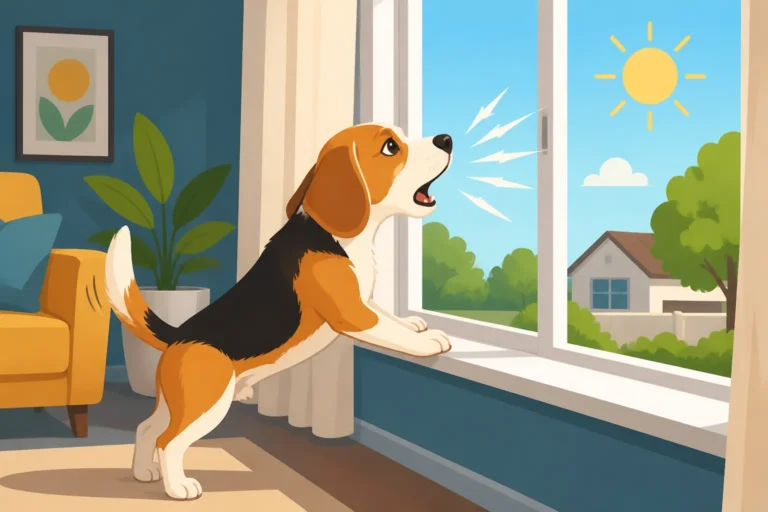
Imagine your Beagle in the backyard. A gust of wind carries the faint scent of a rabbit from three streets over. To your Beagle, this is a vivid, compelling trail, and their instinct is to announce it to the pack (you!). They might bay excitedly, nose to the ground, completely absorbed in the discovery. Other common outdoor triggers include the mail carrier, delivery drivers, neighbors walking their dogs, children playing, or even the sound of another dog barking down the street. Indoors, the sound of someone at the door, a sudden loud noise, or even seeing a cat through the window can trigger a flurry of barks or bays. For details on what happens specifically in an indoor setting, take a look at What Sets Off a Beagle Bay Indoors.
Because Beagles are so sensitive to their environment, managing these triggers often involves reducing exposure or changing their perception of the stimulus. This could mean using visual barriers in the yard, closing curtains during peak "trigger times," or redirecting their attention with high-value treats and training exercises when a stimulus appears. It's about helping them understand that not every new scent or sight requires a full-blown vocal announcement to the entire neighborhood.
Proactive Management: Quieting the Chorus Line
Once you understand why your Beagle is making noise, you can start to implement strategies to manage it. This isn't about silencing your Beagle entirely – that's often impossible and unfair to their nature – but about reducing excessive and bothersome vocalizations.
Indoor Strategies: Creating a Calm Sanctuary
Your home should be a haven, not a concert hall for your Beagle's vocal stylings. One of the most effective indoor strategies is providing ample mental and physical enrichment. A bored Beagle is a noisy Beagle. Puzzle toys, like those found on Amazon, that dispense kibble or treats can keep their minds engaged for extended periods, reducing the urge to bark out of boredom. Snuffle mats and chew toys also serve this purpose, tapping into their natural foraging and chewing instincts. A tired Beagle, both mentally and physically, is a quiet Beagle.
Consider creating a designated "quiet space" for your Beagle, such as a comfortable crate or a bed in a less-trafficked room. This can be particularly helpful if your Beagle is easily overstimulated by household activities or outside noises. Incorporating white noise machines or calm music can also help mask external sounds that might trigger barking or howling, providing a more peaceful environment for your dog. For more on how to create this type of space, Soundproofing One Room for a Vocal Beagle offers some fantastic ideas. This isn't about punishment, but about setting your Beagle up for success in a stimulating world.
Regular, structured exercise, especially scent-based activities, can make a huge difference. A long "sniff walk" where your Beagle gets to explore a rich olfactory environment will tire them out far more than a simple walk around the block. When their nose is satisfied, their need to vocalize out of frustration or pent-up energy often decreases significantly. Don't underestimate the power of brain games to quiet a busy Beagle mind.
Outdoor Strategies: Fortifying the Perimeter
The backyard can be a major source of vocalization, especially if your Beagle has a clear view of every passing person, dog, or squirrel. Visual barriers along your fence line, such as privacy screens or dense planting, can significantly reduce "fence fighting" or alert barking. If they can't see the trigger, they're less likely to react with a chorus of barks. Make sure your fencing is secure and high enough to prevent escapes, because a loose Beagle is not only in danger but can cause quite a commotion in the neighborhood.
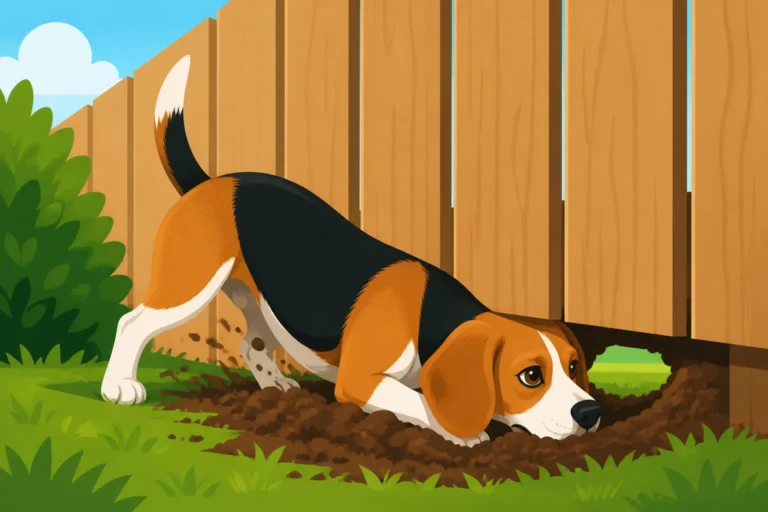
Regularly inspecting your fence for weak points is crucial, as Beagles are notorious for finding the one gap or digging under a section. Beagle Fence Height and Whether They Climb discusses just how important a secure perimeter is. For those particularly determined diggers, burying a wire skirt along the base of the fence can be a game-changer. Also, remember that a Beagle left unsupervised in the yard for extended periods is more likely to develop nuisance barking habits. Supervise their outdoor time and bring them inside when they start vocalizing excessively.
Finally, consider a GPS tracking collar, especially if your Beagle is an escape artist. While not a noise management tool itself, it offers peace of mind and can help you quickly retrieve your dog if they do manage to get out, preventing them from baying their way through the neighborhood unchecked. These trackers are readily available through retailers like Amazon and can be invaluable for a breed as scent-driven and prone to wandering as the Beagle.
Training Interventions for a More Muted Mutt
Training plays a crucial role in managing Beagle vocalizations. It’s not about suppressing their natural instincts, but about teaching them appropriate times and ways to use their voice, and when to be quiet.
Building a "Quiet" Cue: Practical Steps
Teaching a "Quiet" cue can be incredibly effective, but it requires patience and consistency. The basic premise is to reward your Beagle for being silent after they've vocalized, or even better, for pausing their vocalization. Start by finding a low-level trigger that causes your Beagle to bark or bay briefly – perhaps a knock at the door or a gentle jingle of keys. Let them vocalize once or twice, then hold a high-value treat near their nose. The moment they stop barking to sniff the treat, say "Quiet" and give them the treat.
Repeat this many times, gradually increasing the duration of silence required before the reward. The goal is for your Beagle to associate "Quiet" with stopping their vocalization and receiving a reward. You're not punishing the barking; you're rewarding the absence of it. This positive reinforcement approach is far more effective and less damaging to your relationship with your dog than punitive methods. Teaching a Beagle a Quiet Cue That Holds goes into more detail on how to perfect this.
Consistency is absolutely key. Every member of the household needs to use the same cue and follow the same steps. If one person allows the barking to go on and then gives attention, it undermines all the training efforts. Practice in different environments and with varying distractions to generalize the behavior. Online training platforms, like those offered by BAXTER & Bella, can provide structured lessons and support for teaching cues like "Quiet" and managing vocal behavior, offering valuable resources right at your fingertips.
Addressing Underlying Anxieties and Boredom
Often, excessive vocalization is a symptom of an underlying issue, like boredom, insufficient exercise, or anxiety. If your Beagle is consistently barking, howling, or baying, take a close look at their daily routine. Are they getting enough physical activity? For a Beagle, this means more than just a quick walk; it often requires vigorous play, long sniff walks, or even running companions. Remember, Exercise That Actually Burns Beagle Calories often involves their nose as much as their legs.
Mental stimulation is equally vital. Beagles are intelligent and thrive when given a "job" to do. Scent work, such as nose work classes or even simple hide-and-seek games with treats at home, can be incredibly fulfilling and tiring for them. Engaging their powerful sense of smell can significantly reduce frustration and boredom, which in turn can lead to a quieter dog. Learning about Scent Work as the Job a Beagle Was Built For can inspire new ways to enrich your Beagle’s life.
If you suspect separation anxiety is the root cause, professional help from a certified dog trainer or a veterinary behaviorist might be necessary. They can help you develop a tailored plan to address the anxiety, which in turn will reduce the vocalizations. Sometimes, anti-anxiety medications or supplements may be recommended in conjunction with behavior modification. Ignoring these underlying issues will only lead to continued noise and a stressed-out dog.
Navigating Neighborly Relations with a Vocal Hound
Managing your Beagle's noise is a multifaceted effort, and a big part of that effort involves maintaining good communication with your neighbors. After all, they’re the ones on the receiving end of your Beagle’s vocal talents.
Open Communication: The First Step to Harmony
The worst thing you can do is ignore the issue or pretend it doesn't exist. Proactive communication is crucial. If you know your Beagle can be vocal, especially when you're away, consider speaking to your neighbors before they come to you with a complaint. A simple, "Hey, I just wanted to let you know I'm aware that sometimes my Beagle can be a bit vocal, especially when I'm gone. I'm actively working on it, and please don't hesitate to let me know if it becomes too much," can go a long way. This shows you're responsible and considerate.
This initial conversation allows for a more open dialogue. Ask them when the noise is most problematic. Is it primarily in the mornings, afternoons, or evenings? Is it constant or intermittent? This information can help you identify specific triggers or times when your Beagle is most active vocally. Offering your phone number for them to text you if the barking starts can also show good faith, allowing you to intervene remotely if possible (e.g., calling a friend or dog walker). For more on this, Noise Complaints From a Beagle's Neighbors emphasizes the importance of early and honest discussion.
Remember to be empathetic. While you adore your Beagle, a neighbor might be trying to work from home, put a baby down for a nap, or simply enjoy their backyard in peace. Their frustration is valid, even if your Beagle's vocalization is instinctual. Acknowledging their perspective can diffuse tension and foster cooperation.
Practical Solutions for Shared Spaces
Beyond just talking, offering tangible solutions can solidify neighborly goodwill. If you live in an apartment or close-knit community, the impact of a noisy Beagle is amplified. Could you adjust your schedule to ensure your Beagle gets a vigorous walk or scent work session right before you leave for work, maximizing their tiredness? Could you arrange for a friend, family member, or professional dog walker to come mid-day to break up the long hours alone?
Consider offering peace offerings – a batch of cookies, a gift card, or even just a sincere apology and an update on the training progress can make a difference. If you know your Beagle barks at specific triggers (like the mail truck), try to be home during those times to interrupt and redirect the behavior. For those Living With a Beagle in an Apartment Building, managing noise is an even bigger challenge, requiring careful planning and creative solutions. Using sound-dampening curtains, closing windows, and ensuring your Beagle's crate or bed is in the quietest part of your home can help.
Ultimately, addressing Beagle noise is a journey, not a destination. It requires ongoing commitment, patience, and a willingness to adapt. By understanding your Beagle's nature, implementing effective management and training strategies, and maintaining open lines of communication with your neighbors, you can create a more harmonious environment for everyone.
Here’s a quick overview of Beagle vocalizations to help you identify what you're hearing:
| Vocalization Type | Description | Common Triggers | Management Tips |
|---|---|---|---|
| Bark | Short, sharp, repetitive "Woof! Woof!" | Doorbell, mail carrier, stranger, attention-seeking | "Quiet" cue training, redirect with toys, block visual stimuli, ensure sufficient attention and exercise. |
| Bay | Deeper, drawn-out, melodious "Bay-a-woo-woo," often with breaks | Scent of wildlife, other dogs, perceived "trail" | Scent work to redirect energy, visual barriers, supervise outdoor time, "Quiet" cue for response to specific stimuli. |
| Howl | Long, sustained, mournful sound | Sirens, music, loneliness, separation anxiety, pack instinct | White noise/music, increased companionship/daycare, addressing separation anxiety with professional help, desensitization to sound triggers, Beagle Howling at Sirens and at Music. |
Disclaimer
This article is for general informational purposes only and does not constitute professional advice. Laws, prices and regulations vary by location and change over time. Consult a qualified professional for guidance on your specific situation.