How Labradors Joined the Border Brigade in 2000
The challenge of safeguarding our nation's agriculture and natural resources from invasive pests and diseases is immense, with a constant flow of international travelers and cargo presenting countless potential threats. While the beloved Beagle Brigade dogs have long been at the forefront of this vital defense, the sheer scale of the task eventually necessitated an expansion of the canine force. This guide delves into how and why the U.S. Customs and Border Protection (CBP) agriculture inspection teams welcomed Labrador Retrievers into their ranks in the year 2000, significantly enhancing America's ability to detect smuggled agricultural contraband.
The Foundation: Beagles and Early Agricultural Detection
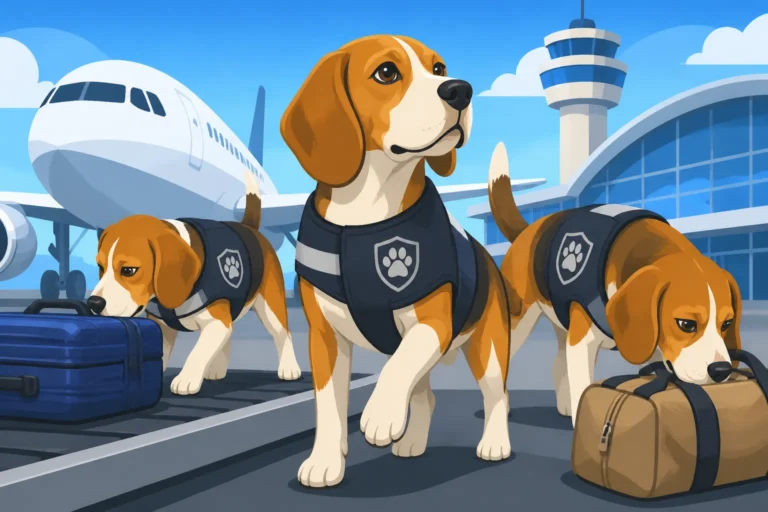
For decades, the image of a friendly Beagle, tail wagging, sniffing luggage at an airport has been synonymous with the USDA's (now CBP's) agricultural detector dog program. These remarkable hounds laid the groundwork for modern agricultural interdiction, proving that a specialized canine unit could effectively intercept dangerous items.
Why the USDA Initially Chose Beagles
The decision to choose Beagles for this specialized work was far from arbitrary; it was a carefully considered strategy based on their unique attributes. First and foremost, Beagles possess an extraordinary sense of smell, arguably one of the best in the canine world. Their noses are packed with an incredible number of olfactory receptors, allowing them to discern faint traces of prohibited food items, plants, and animal products even through layers of luggage or packaging. They are, after all, scent hounds bred for centuries to follow a scent trail with unwavering focus. This natural inclination to stick their nose to the ground and methodically search was perfect for identifying hidden contraband.
Beyond their superior scenting ability, Beagles offered a crucial advantage: their public perception. Their compact size and inherently friendly, non-intimidating demeanor make them ideal for working in busy public spaces like airports and seaports. Unlike larger, more imposing breeds that might cause anxiety among travelers, a Beagle is generally perceived as a cute, harmless dog. This allows them to work effectively without creating undue stress or fear, making the process smoother for everyone involved. The program, initially a USDA initiative, became known informally as the "Beagle Brigade" precisely because these dogs were so effective and approachable. Their success proved the concept that working dogs could play a pivotal, yet publicly acceptable, role in national security. Why the USDA Picked Beagles for Airport Work explores this in more detail.
The Growing Need for More Than Just Beagles
As international travel and trade exploded over the latter half of the 20th century, the volume of passengers, cargo, and mail entering the United States grew exponentially. This surge presented an overwhelming challenge to agricultural inspectors. While Beagles were incredibly efficient in their designated roles, typically working in baggage claim areas or sniffing individual parcels, the sheer scale of potential contraband started to outpace their capacity alone. Imagine the difference between checking a few suitcases and inspecting entire shipping containers or vast warehouses full of goods.
The threats themselves were also becoming more diverse and widespread. The program needed to adapt to encompass larger inspection areas and different types of environments, such as massive cargo facilities, international mail centers, and sea cargo ports, where a smaller dog might struggle to cover ground quickly or efficiently. The need for dogs that could work longer shifts, cover greater distances, and potentially handle more robust search patterns became evident. The effectiveness of the Beagle program wasn't in question, but its scope needed to expand, leading to the search for complementary breeds that could tackle different aspects of the agricultural inspection mission. This growing demand set the stage for a significant expansion of the canine unit, paving the way for other breeds to join the ranks.
Expanding the Canine Roster: Enter the Labrador Retrievers
By the turn of the millennium, it was clear that the challenges of agricultural enforcement required a multi-faceted approach. The established success of the Beagle program provided a strong foundation, but the sheer volume and diversity of inbound traffic demanded an expansion in capabilities.
The Strategic Decision to Bring in Labradors in 2000
The year 2000 marked a pivotal moment for the agricultural detector dog program as the U.S. Customs and Border Protection (then a part of the USDA) made the strategic decision to integrate Labrador Retrievers into their canine units. This wasn't about replacing the Beagles, but rather complementing their invaluable work. The reasons behind this expansion were pragmatic and rooted in operational needs.
Firstly, Labradors offered a combination of exceptional scenting abilities, high energy levels, and a larger physical presence, which made them incredibly versatile. While Beagles are experts at ground-scenting and meticulous searches in confined spaces, Labradors possess the stamina and speed to cover much larger areas more efficiently. Think of a vast warehouse filled with shipping crates versus a bustling baggage carousel – different environments demand different canine strengths. Their high drive and eagerness to please meant they could sustain long periods of work, particularly beneficial in high-volume cargo environments.
Furthermore, Labradors, like Beagles, generally boast a friendly and approachable temperament, which is crucial for public-facing roles. They are known for their intelligence and trainability, making them excellent candidates for the rigorous demands of detection work. While German Shepherds had been used in some law enforcement capacities, the more "user-friendly" image of the Labrador made them a natural fit for customs and border protection where public interaction is common. This move away from breeds sometimes perceived as more intimidating mirrored a broader trend in detection dog programs seeking breeds that were effective without causing public alarm. Why the Brigade Switched Away From German Shepherds provides more context on breed selection in detector work.
What Labradors Brought to the Table
Labrador Retrievers brought a distinct set of advantages to the agricultural detection mission, allowing the program to tackle challenges that were becoming increasingly complex. Their inherent nature as retrievers—driven to find and bring back items—translated perfectly into a detection role. This natural retrieve drive, often channeled into finding specific target odors, meant they were highly motivated to work.
Their physical attributes also played a significant role. Labradors are more robust and athletic than Beagles, allowing them to navigate varied terrain, climb over obstacles in cargo facilities, and withstand longer, more physically demanding search shifts. This was crucial for inspecting large trucks, shipping containers, and expansive storage areas where smaller dogs might be at a disadvantage. Their larger size also gives them a broader search pattern, covering more ground with each pass.
Temperamentally, Labradors are often described as intelligent, eager to please, and highly trainable. They thrive on having a "job" and excel in tasks that require focus and problem-solving. This made them excellent students for the intensive detection training programs. They also maintain a generally friendly and outgoing disposition, which, like Beagles, helps them integrate into diverse working environments, from busy airports to commercial ports, without intimidating the public. This blend of drive, physical capability, and amicable nature made them an invaluable addition to the ranks, enabling a more comprehensive approach to border security. You can find high-quality training treats and equipment for these working dogs on sites like Chewy.
Training and Deployment: A Multi-Breed Approach
The integration of Labradors alongside Beagles necessitated a cohesive training and deployment strategy, ensuring that each breed's strengths were maximized for the overall mission. This meant standardizing training protocols while also acknowledging breed-specific aptitudes.
The Detector Dog Training Center Outside Atlanta
The success of any canine detection program hinges on the quality of its training, and for the U.S. Customs and Border Protection, much of this specialized instruction happens at the Detector Dog Training Center outside Atlanta. This facility is a hub of canine excellence, where dogs, regardless of breed, undergo rigorous and highly specialized training to become expert detectors of illicit agricultural products.
At the center, both Beagles and Labradors learn to identify a wide array of target odors, including fruits, vegetables, meats, plants, and other prohibited items that could carry dangerous pests or diseases. The training utilizes positive reinforcement methods, where dogs are rewarded enthusiastically with toys or food for correctly identifying a target scent. The trainers understand that while both breeds are highly food-motivated, particularly Beagles, using their drive to sniff and their love for a reward is key. Imagine a Beagle sniffing intently, then sitting, indicating a scent, and immediately getting a high-value treat from Chewy – that's how the association is built.
The curriculum is intense, designed to hone their natural abilities into precise detection skills. Dogs are exposed to increasingly complex scent puzzles, learning to discriminate target odors amidst a myriad of distracting smells. They are trained in various environments, simulating the real-world conditions they will encounter at ports of entry—from bustling airport terminals to noisy cargo facilities. This comprehensive training ensures that every dog, whether a compact Beagle or a larger Labrador, is fully prepared to execute its duties with accuracy and confidence. The Detector Dog Training Center Outside Atlanta outlines the significant work done at this facility.
Complementary Roles of Beagles and Labradors
The beauty of incorporating both Beagles and Labradors into the Border Brigade lies in their complementary skill sets, allowing for a more thorough and adaptable approach to agricultural detection. Instead of one breed handling everything, they often specialize, maximizing efficiency and effectiveness.
Beagles, with their lower stature and incredible ground-scenting prowess, are often deployed in environments where their meticulous, nose-to-the-ground searching is most effective. This includes passenger baggage claim areas, individual parcel inspection points, and smaller, more confined spaces within terminals. Their methodical nature means they can thoroughly check every item, making them ideal for finding small pieces of fruit or meat tucked away in luggage. They are less intimidating to the public, which is a significant advantage in crowded airport settings. You can learn more about What a Beagle Brigade Dog Actually Sniffs For in our detailed guide.
Labrador Retrievers, on the other hand, are often tasked with covering larger areas, thanks to their greater speed, stamina, and ability to air-scent in addition to ground-scenting. They excel in vast cargo warehouses, inspecting large pallets of goods, screening international mail, or searching vehicles at border crossings. Their higher energy levels and more robust build allow them to navigate these more challenging physical environments with ease, quickly identifying potential contraband that might be spread across a large area. Together, these two breeds create a formidable team, with Beagles excelling in detail-oriented, close-quarters work and Labradors providing broader coverage and endurance. This strategic deployment ensures that no nook or cranny goes unchecked, from a traveler's carry-on to a massive shipping container.
The Impact and Evolution of the Border Brigade
The strategic decision to bring Labrador Retrievers into the Border Brigade in 2000 was a significant moment, marking an evolution in how the nation approached agricultural protection. This expansion has had a profound and lasting impact on border security and continues to shape the program's development.
Enhancing Border Security with Diverse Canine Talent
The integration of Labrador Retrievers into the agricultural detector dog program dramatically enhanced border security by diversifying the canine talent pool. This wasn't merely about having more dogs; it was about having dogs with different strengths that could be strategically deployed to address a wider range of threats and environments. By matching the right dog to the right job, the program became more efficient and effective.
For instance, at major international airports, Beagles continue to charm and effectively inspect passenger luggage, where their non-intimidating presence and focused ground-scenting are invaluable. Simultaneously, at bustling seaports and sprawling cargo facilities, Labradors leverage their stamina and ability to cover large areas quickly, sniffing out prohibited items in massive shipments. This dual approach means that whether it's a forgotten apple in a carry-on or a hidden shipment of exotic plants in a cargo container, the Border Brigade has a canine prepared for the task. Beagles Working Seaports and Cargo Facilities highlights these different operational contexts.
This multi-breed strategy significantly increased the overall interception rates of prohibited agricultural items. By having dogs capable of working in varied settings, from small parcels to vast warehouses, the program became a more robust defense against the introduction of foreign pests and diseases. This protection is vital for safeguarding the country's agricultural economy, preventing devastating crop losses, and protecting public health. The combined forces of Beagles and Labradors have undeniably made our borders safer and our agricultural industries more secure.
The Ongoing Need for Adaptability in Canine Detection
While the addition of Labradors in 2000 marked a significant step forward, the world of international trade and travel is constantly evolving, presenting new challenges for border security. This means that the agricultural detector dog program must remain adaptable, continuously evaluating its methods, training, and even the breeds it employs. New threats emerge, smuggling techniques become more sophisticated, and the volume of goods and people crossing borders only continues to grow.
The program's commitment to adaptability means ongoing research into canine olfaction, refining training methodologies, and exploring how technology can enhance the dogs' work. It also means periodically assessing which breeds are best suited for particular roles. While Beagles and Labradors remain pillars of the program, the potential for other breeds or even mixed breeds with specific aptitudes is always a consideration. The goal is to ensure that the Border Brigade remains at the cutting edge of agricultural protection, capable of meeting current threats and anticipating future ones. This includes looking at Where Beagle Brigade Dogs Are Recruited From to ensure a steady supply of high-quality working dogs. The success of the program is a testament to the powerful partnership between humans and highly trained canines, working tirelessly to protect our nation's health and economy.
Comparison: Beagle vs. Labrador in Agricultural Detection
Here's a quick look at how Beagles and Labradors often complement each other in the Border Brigade's vital work:
| Feature | Beagle | Labrador Retriever |
|---|---|---|
| Size & Build | Smaller, compact, sturdy | Medium to large, athletic, powerful |
| Primary Scenting | Primarily ground-scenting, meticulous | Ground-scenting and air-scenting, broader range |
| Ideal Environment | Passenger baggage, individual parcels, confined spaces | Cargo facilities, large vehicles, open warehouses |
| Pace | Methodical, thorough, focused | Faster, covers larger areas more quickly |
| Public Perception | Extremely friendly, non-intimidating | Friendly, approachable, generally well-received |
| Stamina | Good for focused bursts | Excellent for sustained, extensive searches |
| Focus | Intense concentration on small areas | Broad area coverage, highly driven |
This table illustrates that both breeds bring unique and valuable characteristics to the table, making their combined efforts far more effective than either breed working alone. They are both exceptional working dogs, driven by scent and a desire to please, making them truly invaluable assets.
Disclaimer
This article is for general informational purposes only and does not constitute professional advice. Laws, prices and regulations vary by location and change over time. Consult a qualified professional for guidance on your specific situation.