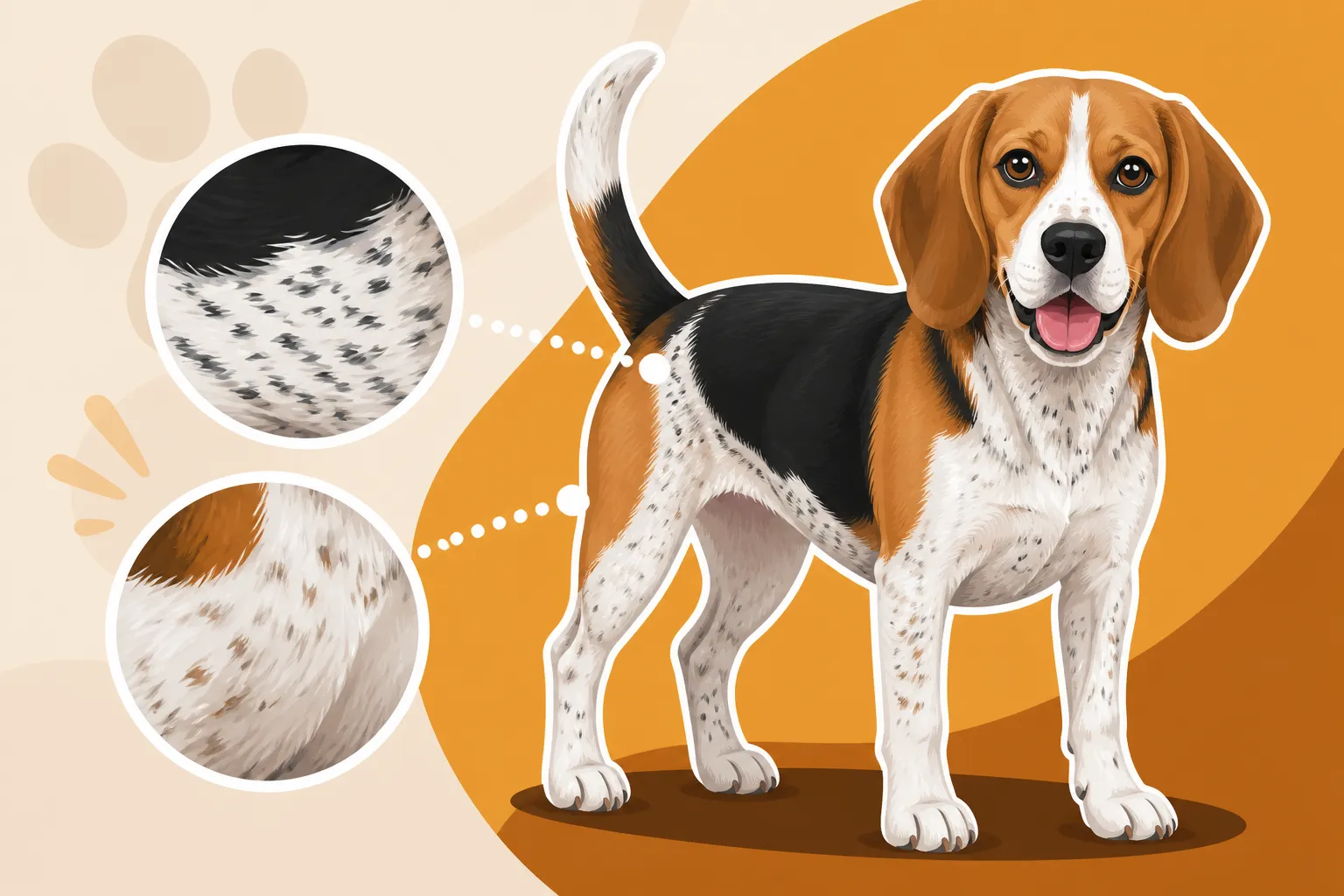
Beagle Markings and the Ticked Coat
One of the most charming things about Beagles is their incredible variety of coats and markings, but it can also be a bit confusing to understand what's "standard" and what's just a unique variation. Many new owners wonder if their seemingly solid-colored pup will develop spots, or if those tiny freckles will eventually cover their whole body. This guide will help you decipher the wonderful world of Beagle coat patterns, from the classic tricolor to the subtle beauty of a ticked coat.
Deciphering the Beagle Coat Standard
When you look at a Beagle, what do you see first? Often, it's their expressive eyes or their long, velvety ears. But right after that, your gaze probably falls on their coat. The Beagle coat, as described by breed standards, is typically short, dense, and close to the body, designed to be protective against the elements during long days in the field. But beyond its texture, the real fascination often lies in its myriad of colors and patterns. Understanding these can feel like learning a whole new language, especially when puppy coats can change so dramatically.
The American Kennel Club (AKC) standard for Beagles is quite generous when it comes to color, stating that any true hound color is acceptable. This means that while many people picture a classic tricolor Beagle, there's a whole spectrum of beautiful variations that are perfectly within the breed's accepted appearance. This flexibility is part of what makes Beagles so visually appealing and endlessly interesting. It's not just about a pretty face; it's about the patterns and hues that make each individual dog unique, yet undeniably a Beagle.
It's important for prospective owners to understand that reputable breeders will adhere to these standards, not just for aesthetics but also because coat genetics can sometimes be linked to other health traits. While most color variations are purely cosmetic, knowing what to expect and what is considered standard can help you appreciate your Beagle's unique look. You can learn more about what the breed standard truly emphasizes in The Beagle Coat as the Standard Describes It.
The Importance of "Hound Colors"
The phrase "any true hound color" might sound vague, but it actually encapsulates a long history of breeding working dogs. For centuries, Beagles and their ancestors were bred for hunting, and their coats needed to blend into natural environments or stand out enough for hunters to spot them. This utility-driven breeding led to a range of earthy, natural tones and patterns. You won't find neon pink or bright blue Beagles, for example, because those colors simply don't occur naturally in hound genetics.
These "hound colors" typically include various shades of black, white, and tan, often combined in distinct patterns. The rich palette allows for everything from solid colors (though rare) to complex combinations. It's less about a specific shade and more about the natural pigmentations that have been carried through generations of hunting dogs. This tradition ensures that a Beagle's coat is not just beautiful, but also functional and historically authentic.
The acceptance of "any true hound color" also means that there’s a wonderful diversity within the breed. A good breeder will be knowledgeable about the genetic lines that produce different colors and patterns, and they can often give you an idea of what to expect from a litter. This knowledge is crucial not just for showing, but for anyone who appreciates the rich heritage of the breed.
Recognizing Non-Standard Markings
While the standard is quite broad, there are certain patterns or colors that would be considered non-standard or highly unusual, usually indicating a mixed breed lineage rather than a purebred Beagle. These might include merle patterns, for instance, which are typically associated with breeds like Australian Shepherds or Border Collies. While a merle coat can be striking, it's not a pattern you'd see in a purebred Beagle.
Another example would be excessively long or wiry hair. The Beagle coat is defined by its smooth, short, and dense texture. If a dog presented as a Beagle had a fluffy or rough coat, it would certainly raise questions about its purebred status. These non-standard markings aren't inherently "bad," but they do mean the dog wouldn't meet the breed standard for showing and likely isn't a purebred Beagle.
For those simply looking for a beloved pet, these cosmetic variations often don't matter. However, if you are purchasing a puppy from a breeder, it's important to understand what is considered typical for the breed. A reputable breeder will always be transparent about the lineage and expected traits of their puppies.
The Iconic Tricolor Beagle
When most people close their eyes and picture a Beagle, they're likely imagining the classic tricolor pattern: a striking combination of black, white, and tan. This is arguably the most recognizable and widespread coat pattern in the breed, a true hallmark of the Beagle's traditional appearance. It's the standard look you'll see in illustrations, advertisements, and often, in the show ring.
The tricolor pattern isn't just a random splash of colors; it follows a fairly predictable layout. Typically, a tricolor Beagle will have a dominant black saddle or blanket across its back, extending down the sides. The legs, chest, belly, and muzzle are usually white, providing a crisp contrast. Then, you'll find tan or rich brown markings, often on the cheeks, over the eyes (giving them that characteristic "eyebrow" look), on the undersides of the ears, and sometimes blending into the white on the legs or chest. This combination creates a visually balanced and appealing coat.
Understanding Beagle Tricolor and Where It Comes From can give you an even deeper appreciation for this iconic look. It's a genetic marvel that has been carefully preserved and celebrated through generations of Beagles.
The Black Saddle or Blanket
The "black saddle" or "blanket" is the defining feature of a classic tricolor Beagle. This is the expansive patch of black fur that covers the dog's back, often stretching from just behind the head down towards the tail, and sometimes extending down the flanks. It’s what gives the tricolor its distinct, strong visual anchor. The size and shape of this black area can vary slightly from one tricolor Beagle to another, but it’s always present in some form.
Think of it like a perfectly fitted blanket draped over their body. Around this blanket, you’ll find the crisp white areas and the warm tan accents. This saddle isn't just black; it often has a deep, rich sheen that stands out against the lighter colors. It’s a very robust and durable coat, historically favored for its practicality in the field.
This black saddle is often what makes a young Beagle pup look so distinctive, even before their tan points fully develop. As puppies mature, this black area usually remains quite prominent, defining their tricolor appearance. It’s a bold statement that truly embodies the Beagle aesthetic. For more on this, check out Beagle Tricolor and the Black Saddle.
White Chest and Legs
The white areas on a tricolor Beagle are equally important in completing the look. These typically encompass the chest, belly, legs, and the tip of the tail. This white blaze on the chest and belly creates a clean, bright contrast against the black and tan. It's often pristine and adds to the "merry" and tidy appearance of the breed.
The white on the legs can extend quite high up, sometimes nearly reaching the shoulders or hips, before meeting the black or tan. This gives the Beagle a very "socked" appearance, almost as if they're wearing white boots. And, of course, the iconic white tip on a Beagle's tail is not just for show; it was traditionally bred into the hounds so that hunters could easily spot their dogs when they were running through tall grass or brush.
These white markings are usually quite clear and distinct, providing a clean separation between the other colors. They highlight the Beagle's athletic build and add a touch of elegance to their otherwise rugged appearance.
Tan Points and Facial Markings
The tan points are the warm, reddish-brown accents that complete the tricolor palette. These are strategically placed to highlight key features, such as the expressive "eyebrows" above the eyes, the cheeks, and the undersides of the ears. These tan markings are often what give a Beagle its soft, appealing facial expression, making them look intelligent and full of character.
Sometimes, you'll see tan blending into the white on the lower parts of the legs or around the chest. The depth of the tan can vary, from a pale cream to a deep, rich copper. This variation adds to the individuality of each tricolor Beagle. These tan points are usually the last to fully develop in puppies, sometimes appearing as a faint shade before darkening over the first few months.
It’s these tan points that really soften the stark contrast between the black and white, tying the whole color scheme together beautifully. They create depth and warmth, contributing significantly to the beloved tricolor look.
Beyond Tricolor: Other Recognized Beagle Colors
While tricolor often steals the spotlight, the Beagle breed standard allows for a rich tapestry of other "true hound colors," ensuring a wonderful diversity within the breed. These variations might not be as common, but they are just as beautiful and perfectly acceptable in the show ring and as cherished family pets. From the striking two-tone combinations to the more subtle solid hues, there's a Beagle coat to captivate every admirer.
It's fascinating to see how the same underlying genetics can express themselves in such different ways. Whether it's the playful cream of a lemon Beagle or the rich reddish-brown of a red and white, each color pattern tells a story of the breed's heritage. These less common colors often carry a unique charm and can be quite distinctive, making them beloved by those who appreciate their rarity.
You can delve deeper into the genetics and visual appeal of these rarer colors by exploring Lemon Beagles and the Rarer Colors. Understanding these variations helps highlight the true breadth of the Beagle's genetic possibilities.
Blue Tick, Red Tick, and Lemon Tick
Here's where the "ticked" part of our discussion really comes into play! Ticking refers to small, isolated spots or flecks of color on a white background, almost like freckles. Instead of large, solid patches, ticking creates a speckled effect. This is particularly common in Beagles that are genetically predisposed to certain colors.
- Blue Tick: A blue tick Beagle isn't actually blue. The "blue" refers to the black ticking that appears on white areas, giving a bluish-grey impression from a distance. These are essentially tricolor Beagles where the black areas are broken up into fine flecks rather than a solid saddle. You might see a black "mask" on the face, but the body will have that distinctive speckled appearance. This often includes patches of tan as well, making them a very striking variation on the tricolor theme. Blue Tick and Red Tick Beagle Coats gives more detail on this specific pattern.
- Red Tick: Similar to blue tick, a red tick Beagle has red or liver-colored flecks on a white background. Again, it’s not truly "red" in the fiery sense, but rather a reddish-brown or tan ticking. These dogs often have tan patches in the usual places (over the eyes, cheeks), and their white areas are covered with these fine, reddish spots.
- Lemon Tick: This is where the pale cream or yellowish "lemon" color appears as ticking on the white areas. Lemon Beagles often have very light pigmentation, and when combined with ticking, it creates a wonderfully subtle and unique look.
These ticked patterns develop over time. A puppy might appear mostly white with a few colored patches, and the ticking will "bloom" as they mature, sometimes becoming much more prominent.
Bicolor Combinations: Red & White, Tan & White
Beyond the tricolor and ticked varieties, Beagles also come in a range of attractive bicolor combinations, most commonly red and white or tan and white. These dogs completely lack the black pigment that defines a tricolor, resulting in a lighter overall appearance.
- Red and White: These Beagles feature distinct patches of a deep, rich red or reddish-brown against a clean white background. The red can vary in intensity from a deep mahogany to a lighter, almost chestnut hue. They often have the same pattern as a tricolor, but with red taking the place of the black. It's a very striking and vibrant combination, sometimes described as having a "red blanket" instead of a black one.
- Tan and White: Similar to red and white, but with a lighter, softer tan color replacing the red. This can range from a pale cream to a sandy beige. Tan and white Beagles often have a very gentle and warm appearance. Sometimes, these dogs can be mistaken for lemon Beagles, but a true tan and white will have more distinct, darker patches of tan compared to the very light, almost faded appearance of a lemon.
These bicolor Beagles are quite stunning and offer a different aesthetic from their tricolor cousins while still being undeniably Beagles. They embody the breed's versatility in appearance while staying true to the "hound color" standard.
The Myth of Solid-Colored Beagles
It’s often a surprise to many, but truly solid-colored Beagles (meaning one single color all over their body) are exceedingly rare and generally not preferred or even seen in purebred lines adhering to the standard. While the AKC standard does allow for "any true hound color," the expectation is for patterns, even if subtle. A completely solid black or solid white Beagle, for example, would be highly unusual and might raise questions about its lineage.
Even Beagles that appear mostly white or mostly black will almost always have some other subtle marking if you look closely enough. For instance, a "solid white" Beagle might actually be a very lightly marked lemon and white, where the lemon is so pale it's barely discernible. Or a dog that seems solid black might have hidden tan points that are only visible in certain light or as they mature.
So, if you encounter a truly solid-colored dog being represented as a purebred Beagle, it's worth a closer look and perhaps a conversation with the breeder. While they can be beautiful dogs, this particular presentation is not typical for the breed. For a deeper dive into this rarity, you might enjoy Whether a Solid Colored Beagle Is Recognized.
What is a Ticked Coat?
The term "ticked" can sometimes be confusing, as it describes a specific pattern of small spots rather than a solid patch of color. Imagine a canvas of white fur that has been lightly splattered with tiny dots or flecks of another color – that’s ticking! These small flecks are distinct from large patches and typically appear in areas that would otherwise be solid white. It's a charming detail that adds texture and depth to a Beagle's coat, giving each individual a unique "freckled" appearance.
Ticking is a genetic trait, and it doesn't just magically appear. It's carried in the Beagle's DNA and becomes visible as the puppy matures. Unlike the large, clearly defined patches of black, white, and tan, ticking creates a more diffused, speckled effect. It's often most noticeable on the legs, muzzle, and chest areas, where the white fur provides a perfect backdrop for the small colored flecks to emerge.
If you’re wondering if your puppy will develop ticking, it’s usually something you can start to see developing within the first few months. The flecks often appear faint at first, then darken and become more numerous as the dog gets older.
The Genetics Behind Ticking
Ticking is caused by a specific gene, often referred to as the "T locus" or "ticking gene." This gene essentially allows colored pigment to express itself in small, localized areas on what would otherwise be white fur. Without this gene, a dog with white markings would have crisp, unblemished white areas. With the ticking gene present, those white areas get sprinkled with color.
It's important to understand that ticking is different from roaning, which is a much finer, more evenly distributed mix of colored and white hairs that gives a salt-and-pepper appearance. Ticking tends to be more distinct, with individual spots visible. The color of the ticking will correspond to the dog's base colors – so a tricolor Beagle with ticking will have black or tan flecks, while a red and white Beagle with ticking would have red flecks.
Breeders who are familiar with their lines can often predict if a litter will produce ticked puppies based on the parents' genetics. It’s a fascinating example of how subtle genetic variations can lead to such beautiful and diverse appearances within a single breed.
Ticking vs. Patches: Spotting the Difference
Distinguishing between ticking and solid patches is quite straightforward once you know what to look for. Patches are large, well-defined areas of solid color, like the black saddle on a tricolor Beagle or the distinct red areas on a red and white. They have clear, sharp edges.
Ticking, on the other hand, consists of much smaller, irregular spots or flecks. Think of it like someone took a paintbrush and lightly dotted the white parts of the dog's coat. The size of these spots can vary from tiny pinpricks to slightly larger, pea-sized flecks, but they are never large, solid blocks of color. Ticking also tends to be more concentrated in certain areas, particularly on the legs and muzzle.
The difference is most evident on the white areas of a dog's coat. If those white areas are completely clean and unblemished, the dog doesn't have ticking. If they're speckled with little dots of color, then your Beagle has a lovely ticked coat! This distinction is crucial when describing your Beagle's specific markings and appreciating its unique genetic blueprint.
Common Ticked Beagle Patterns
While ticking can appear on any Beagle with white markings, some patterns are more commonly associated with it:
- Blue-Ticked Tricolor: This is one of the most popular ticked patterns. Imagine a tricolor Beagle, but instead of large, solid black areas, the black pigment is broken up into many small, distinct flecks on the white. These flecks often create a "blue" illusion, especially when dense. The tan points will still be present, making for a truly eye-catching combination. These are sometimes called "blue-tick Beagles" for short.
- Red-Ticked Bi-color: Here, the white areas of a red and white Beagle are adorned with small red or reddish-brown flecks. This creates a softer, more blended look than solid patches and can be quite beautiful. The red ticking can range from a vibrant rust to a lighter, almost strawberry blonde.
- Lemon-Ticked: For those who adore the light, creamy hues, a lemon-ticked Beagle is a treat. The white areas are speckled with faint, yellowish-cream flecks. Since lemon Beagles are already light, the ticking can be very subtle, sometimes only visible upon close inspection, adding to their delicate charm.
These patterns are all variations of the accepted Beagle colors, simply with the added genetic trait of ticking. Each one brings its own unique character to the breed's diverse appearance, making them truly special. You can often see these specific patterns mentioned when looking at puppies from breeders, and understanding them helps in communicating exactly what kind of coat you're looking for.
How Beagle Coat Colors Evolve
It’s truly amazing how much a Beagle puppy's coat can change from the day it's born until it reaches adulthood. Many new owners are surprised when their seemingly black-and-white pup starts developing tan spots, or when those cute little freckles appear out of nowhere. This color evolution is a perfectly normal part of a Beagle's development, largely due to how pigment genes express themselves over time. What you see on a tiny eight-week-old puppy might be vastly different from the rich, settled colors of a mature two-year-old Beagle.
This transformation is one of the joys of raising a Beagle; it’s like watching a painting slowly reveal its full details. The initial colors can be misleading, especially with tricolors, where the tan points often take time to deepen and spread. Understanding this process can help you manage your expectations and simply enjoy the journey of watching your Beagle's true colors emerge.
For more on these changes, especially how they impact early life, check out How Beagle Puppy Color Shifts With Age. It's a topic that fascinates many new Beagle parents!
Puppy to Adult Coat Changes
When a Beagle puppy is born, its coat colors are often not fully developed. For tricolor Beagles, the most noticeable change is the appearance and deepening of their tan points. A newborn tricolor might look almost entirely black and white, with only faint hints of tan around the muzzle or ears. Over the first few weeks and months, these tan areas will expand and become richer in color, eventually forming the distinctive "eyebrows" and cheek patches. The black areas might also shift slightly in intensity.
For ticked Beagles, the white areas of a very young puppy might be completely clear. The ticking gene doesn't fully express itself immediately. As the puppy grows, those tiny flecks of color will gradually "bloom" and become visible, starting as faint spots and darkening over several months. So, a puppy that appears pure white on its legs might eventually have a beautifully freckled appearance.
These changes are a natural part of canine development, much like how human hair can darken or change texture over time. It’s rarely a cause for concern unless the changes are extreme or unusual, like a complete loss of pigment.
The "Blackening" or "Fading" Effect
Some Beagle owners observe what they call a "blackening" or "fading" effect in their dog's coat over time.
The "blackening" can occur when tan areas, particularly on the saddle, appear darker or more blended with black as the dog matures. This isn't usually a true change in the black pigment, but rather the tan points becoming so rich and deep that they seem to merge with the black. Similarly, a very light lemon Beagle might appear almost white as a puppy, only for the lemon pigment to subtly deepen and become more apparent in adulthood.
Conversely, some Beagles might appear to "fade" over time, particularly the black portions of their coat, especially if they spend a lot of time in the sun. This isn't a genetic change, but more like sun-bleaching. The black might take on a reddish or brownish tint. This is common in many black-coated dogs and can be managed with good nutrition and proper coat care, though some degree of sun-fading is natural.
These shifts are generally minor and add to the individual character of each Beagle’s coat. It’s important to remember that the core genetic color pattern remains, even if the shades subtly evolve.
Markings That Are Purely Cosmetic
It's easy to get caught up in the specifics of Beagle markings, especially with all the talk about standards and varieties. But sometimes, it's important to remember that many of these unique spots and patterns are simply cosmetic. They add to your Beagle's charm and individuality, much like a mole or a birthmark on a human, without having any bearing on their health, temperament, or ability to be a wonderful companion. A tiny spot here, a smudge there – these are often just little quirks that make your dog uniquely theirs.
While some breeders aim for very specific patterns for the show ring, for the vast majority of Beagle owners, these nuances are just part of the fun of having a dog with such a diverse coat. They don't indicate any underlying issues and are simply part of the genetic lottery that makes each Beagle special.
For a broader understanding of what is considered simply part of their natural beauty, consider Beagle Markings That Are Purely Cosmetic. It helps to put these details into perspective.
"Thumbprints" and Other Unique Spots
Beyond the broad categories of tricolor and bicolor, many Beagles display unique, smaller markings that don't fit into standard descriptions. These often include:
- "Thumbprints": These are small, distinct black or tan spots that appear on the white areas, often on the chest or legs, that are not quite dense enough to be considered full ticking, but are too isolated to be patches. They can resemble a tiny thumbprint. These are purely aesthetic and add character.
- Facial Smudges: Sometimes, a Beagle might have a small smudge of color on its muzzle or forehead that is slightly off the typical pattern. These can make their face look even more endearing and unique.
- Asymmetrical Markings: While show standards often prefer symmetrical markings, many beloved pet Beagles have slightly asymmetrical patterns. Perhaps one "eyebrow" is larger than the other, or a patch on one side is different from the other. These deviations are charming and don't detract from the dog's overall beauty or health.
These unique spots and smudges are part of what makes each Beagle an individual. They are genetic variations that make your dog’s coat one-of-a-kind, celebrating the rich diversity within the breed. They are never a sign of ill health or poor breeding.
White Tail Tip: More Than Just Pretty
One of the most universally recognized Beagle markings is the white tip on their tail. This isn't just a pretty accessory; it's a historically significant trait that was purposefully bred into Beagles and other scent hounds for a very practical reason.
Imagine a pack of Beagles enthusiastically hot on a scent trail, noses to the ground, disappearing into tall grass or dense underbrush. How would a hunter keep track of them? The white flag at the tip of the tail served as a vital visual marker, allowing hunters to spot their dogs even when the rest of their body was obscured. It acted like a little beacon, waving above the foliage, signaling the dog's position.
Today, even for Beagles who are cherished family pets and never see a hunting field, this white tail tip remains a cherished breed characteristic. It’s a wonderful nod to their working heritage and a charming detail that many Beagle enthusiasts adore.
Why Appearance Should Not Be the Sole Factor
While the diverse and beautiful coats of Beagles are certainly appealing, it's crucial to remember that appearance should never be the sole factor when choosing a Beagle. A dog's health, temperament, and the ethics of the breeder are far more important considerations. A rare or uniquely marked Beagle might catch your eye, but it’s the healthy, well-socialized dog that will truly enrich your life.
Unfortunately, sometimes unscrupulous breeders will try to capitalize on interest in "rare" colors or patterns, sometimes even charging inflated prices for dogs that are either not purebred or come from questionable breeding practices. It's always best to prioritize finding a reputable breeder who focuses on the overall health and well-being of their dogs, irrespective of their coat color.
When bringing a new furry family member into your home, things like a puppy's health clearances, socialization, and the breeder’s commitment to the breed's future should come first. A stunning coat is a bonus, not the main event. Remember, a healthy, happy Beagle is a beautiful Beagle, regardless of its specific spots or shades. When buying supplies for your Beagle, brands like Chewy offer a wide range of options that cater to health and well-being, from quality food to enrichment toys.
Caring for Your Beagle's Coat
Regardless of whether your Beagle is a classic tricolor, a charming red and white, or boasts beautiful ticking, their short, dense coat is generally quite low-maintenance. However, "low-maintenance" doesn't mean "no-maintenance." A little regular care goes a long way in keeping their coat healthy, shiny, and reducing shedding around your home. Plus, these grooming sessions are a fantastic opportunity for bonding and for you to do a quick check for any skin issues or unwelcome passengers like ticks.
Beagles are double-coated, meaning they have a soft undercoat for insulation and a coarser outer coat for protection. This double layer is what makes them effective in various weather conditions, but it also means they will shed. Regular grooming helps manage this shedding and keeps their skin healthy underneath. Taking care of their coat is a simple way to contribute to their overall well-being and keep them looking their best.
For more details on keeping their coat in tip-top condition, you might be interested in Beagle Grooming and That Shedding Double Coat.
Brushing and Shedding Management
Beagles are moderate to heavy shedder, especially during seasonal changes. You'll definitely want a good brush in your grooming arsenal! A rubber curry brush, a bristle brush, or a deshedding tool like a Furminator work wonders on their short, dense coats. Aim for a quick brush-down a few times a week, and increase it to daily during peak shedding seasons (typically spring and fall).
Regular brushing helps remove loose hair, prevents matting (though rare in Beagles due to their short hair), and distributes natural oils, which keeps their coat healthy and shiny. It also stimulates circulation to the skin, which is good for them! Beyond keeping your furniture less furry, it's a calm, positive interaction that many Beagles enjoy. When you need to restock on brushes or other grooming tools, online retailers like Chewy often have great selections.
Remember, shedding is a natural process. While you can manage it, you won't eliminate it entirely. Embrace the Beagle glitter!
Bathing Your Beagle
Beagles generally don't need frequent baths unless they've rolled in something particularly smelly (a common Beagle pastime!) or developed a skin issue. Over-bathing can strip their skin of natural oils, leading to dryness or irritation. Every month or two, or as needed, is usually sufficient.
When you do bathe your Beagle, use a dog-specific shampoo that is gentle and moisturizing. Make sure to rinse thoroughly to avoid any residue that could irritate their skin. After bathing, towel-dry them well, paying extra attention to their long, floppy ears to prevent moisture buildup, which can lead to ear infections. For more on this, consider Bathing a Beagle and How Often It Needs One. Even if your Beagle gets wet and dirty on a hike, a quick spot clean can often suffice before a full bath is necessary.
The Role of Diet in Coat Health
What you feed your Beagle has a direct and significant impact on the health and appearance of their coat. Just like humans, dogs need proper nutrition to maintain healthy skin and a shiny, strong coat. A dull, dry, flaky, or excessively shedding coat can sometimes be a red flag, indicating that something might be amiss with their diet or overall health. This connection highlights why choosing a high-quality food is so important for your Beagle’s well-being.
Providing a balanced diet with essential nutrients, particularly healthy fats and proteins, is key to supporting that vibrant, healthy coat that all Beagle owners love. Think of their coat as an external reflection of their internal health.
Essential Nutrients for a Healthy Coat
To maintain a lustrous and healthy coat, Beagles need a diet rich in specific nutrients:
- Protein: High-quality animal protein is the foundation for healthy hair growth. Their coat is primarily made of protein, so a sufficient supply is essential. Look for dog foods where meat is the first ingredient.
- Omega-3 and Omega-6 Fatty Acids: These "good fats" are crucial for skin health and coat shine. Omega-3s (found in fish oil, flaxseed) help reduce inflammation, which can alleviate dry, itchy skin. Omega-6s (found in vegetable oils, poultry fat) support the skin's barrier function. Many quality dog foods contain a balanced ratio of these fatty acids. If your dog's coat is dull, sometimes a supplement like fish oil, readily available from retailers like Chewy, can make a noticeable difference.
- Vitamins and Minerals: Vitamins A, E, and B-complex vitamins, along with minerals like zinc and copper, play vital roles in skin and coat health. A complete and balanced dog food should provide these in adequate amounts.
If your Beagle's coat is looking lackluster, consulting with your vet is always a good first step to rule out any underlying health issues before making dietary changes or adding supplements.
Managing Coat Issues Through Diet
Sometimes, coat issues like excessive shedding, dryness, or itchiness can be linked to dietary sensitivities or allergies. If your Beagle is constantly scratching or has patchy hair loss despite regular grooming, it might be worth discussing an elimination diet with your veterinarian.
An elimination diet involves feeding your dog a novel protein source (one they haven't eaten before) and a single carbohydrate source for several weeks to see if symptoms improve. This can help pinpoint if a particular ingredient in their regular food is causing an allergic reaction that manifests on their skin and coat. Some Beagles, for example, might have sensitivities to common proteins like chicken or beef.
Always make dietary changes gradually to avoid upsetting your Beagle's stomach, and introduce new foods slowly. With a carefully chosen diet, you can often address coat-related issues, leading to a much happier and healthier Beagle with a beautifully vibrant coat.
Disclaimer
This article is for general informational purposes only and does not constitute professional advice. Laws, prices and regulations vary by location and change over time. Consult a qualified professional for guidance on your specific situation.