How American Farmers Saved the Rabbit Beagle
It's easy to look at our cheerful, baying Beagles today and assume they've always been the beloved household companions and scent-work stars we know. But there was a time, not so long ago, when the very existence of the practical rabbit-hunting Beagle was under threat, pushed to the fringes by changing trends and a shift in hunting priorities. This guide dives deep into the fascinating, gritty history of how resourceful American farmers, through sheer necessity and a dedication to utility, became the unlikely saviors of the working Beagle, preserving the traits that make them so unique and cherished today.
The British Beagle on the Brink: A Changing Landscape
Imagine a world where the very purpose of your beloved Beagle was slowly fading into obscurity. That's precisely the predicament the small, scent-driven Beagle faced in its native England. For centuries, these tenacious hounds had been the backbone of hare and rabbit hunting, their melodious bay echoing across the countryside as they meticulously unraveled a scent trail. But the tides of hunting culture and land use were shifting, leaving the traditional "rabbit Beagle" struggling to find its place.
The Decline of Traditional Hunting
In 18th and 19th century England, large-scale fox hunting was gaining immense popularity, becoming the sport of choice for the aristocracy and landed gentry. These hunts demanded larger, faster hounds like Foxhounds and Harriers, capable of keeping pace with galloping horses over vast estates. The small, foot-hunting Beagle, bred for following intricate rabbit trails at a slower pace, simply couldn't keep up. The grand estates preferred the spectacle and speed of the fox hunt, and the practical need for Beagles to put food on the table was diminishing as rural life evolved. It wasn't about the skill of the hound anymore; it was about the thrill of the chase on horseback, and the Beagle wasn't built for that particular race. This left many traditional Beagle lines with a shrinking purpose, and sadly, their numbers began to dwindle.
The "Pocket Beagle" and Fancier Trends
As the working Beagle faced obsolescence, another trend emerged that, while seemingly harmless, further threatened the breed's functional integrity. The rise of the "pocket Beagle" became a popular fancy among ladies and some breeders who prioritized extreme smallness and delicate features over robust working ability. These tiny Beagles, often small enough to be carried in a saddlebag or a coat pocket, were certainly charming. However, breeding for such extreme miniaturization often came at the expense of sound conformation, endurance, and the very scenting prowess that defined the breed. They became more of a novelty, a pet for display, rather than the hardy working dog they were meant to be. This diverted breeding efforts away from preserving the rugged, healthy, and highly capable hunting Beagles, pushing the true working strains closer to the edge. Breeders pursuing these aesthetic trends weren't typically focused on preserving the foundational traits, which meant the valuable genetic pool for strong working Beagles was shrinking fast in their homeland.
Across the Atlantic: A New World for the Beagle
While the Beagle's star was dimming in England, across the vast Atlantic, a new frontier was opening up. America, with its expansive, wild landscapes and a different set of societal needs, provided an unexpected sanctuary and a second chance for the plucky hound. The Beagles that made their way to American shores weren't arriving as pampered pets, but as working animals, ready to carve out a vital role in the burgeoning rural communities.
Early American Imports and Their Purpose
Beagles were likely brought to America as early as the colonial period, but it wasn't until the mid-19th century that their numbers and influence truly began to grow. American farmers and hunters, unlike their often aristocratic British counterparts, had a much more practical approach to their dogs. They needed efficient, effective small game hunters to help provide food, control pests, and offer a form of accessible recreation. The American landscape, teeming with rabbits and hares, was a perfect match for the Beagle's innate talents. These early imports weren't primarily show dogs; they were tools for survival and sustenance, selected for their ability to perform. Farmers looked for dogs that had What a Beagle Was Originally Bred to Hunt embedded in their very being – the relentless drive to follow a scent trail.
An Abundance of Small Game
The vast, untamed American wilderness, particularly in the Southern and Midwestern states, offered an almost endless supply of rabbits, hares, and other small game. Unlike the increasingly parceled and managed estates in England, American farmland and forests provided ample habitat for these creatures, creating a consistent need for capable hunting dogs. For farmers, a good Beagle wasn't a luxury; it was an integral part of their livelihood. They could send a pack of Beagles out to clear fields of rabbits that might otherwise decimate crops, or simply use them to put meat on the family table. This utilitarian demand meant that the traits of a superb working scent hound—an incredible nose, a tireless work ethic, and a clear, musical voice—were not just appreciated but actively sought out and reinforced in breeding. This environment was crucial for allowing the Beagle to thrive, free from the pressures of changing fads that had threatened it back home.
The American Farmer's Practical Vision: Work Over Show
The American farmers who embraced the Beagle weren't interested in delicate aesthetics or show ring ribbons. Their focus was purely on functionality. For them, a dog's value was measured by its ability to perform the job it was bred for – to hunt rabbits and hares with unparalleled skill and endurance. This practical approach was the bedrock upon which the modern American Beagle was built.
Utility Over Aesthetics
If a Beagle could consistently find a rabbit, follow its trail, and 'sing' about it with enthusiasm, that was a good Beagle. Coat color, ear length, or specific head shape were secondary, if they were considered at all. What mattered was the dog's drive, its health, and its ability to work from dawn till dusk. This pragmatic selection process inadvertently preserved the robust health and working characteristics that were sometimes overlooked in Europe. Farmers wanted dogs that were hardy, intelligent enough to navigate complex scent trails, and possessed the physical stamina to keep going, even on long days. They needed a partner in the field, not a decorative companion. This intense focus on utility ensured that the genetic lines were continuously reinforced for what truly made a Beagle a Beagle: its incredible nose and tireless spirit.
Local Packs and Community Hunts
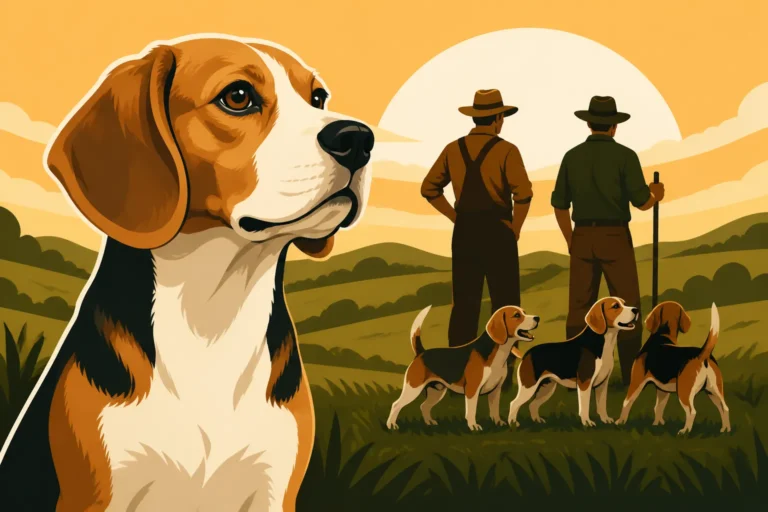
In many rural communities, farmers and neighbors would form informal hunting packs, pooling their Beagles and their knowledge. These weren't grand, formal hunts with large social gatherings; they were community events, often on foot, designed to manage game populations and provide food. It was in these local packs that the Beagle truly shone. Breeders shared their best working dogs, carefully choosing mates based on proven hunting prowess. This collaborative environment ensured that desirable traits were passed down, and any dog that couldn't pull its weight in the field was unlikely to be bred. These community hunts were an excellent crucible for forging the working temperament and abilities of the breed. Imagine a crisp autumn morning, a group of neighbors gathering, their Beagles eagerly milling about, ready for the chase – a scene where the value of a strong working hound was self-evident. Beagle Packs and How a Hunt Was Run was an experience that solidified the breed's purpose.
The Southern Farmers Who Kept Rabbit Beagles Going
The Southern United States, with its vast tracts of rural land and a strong tradition of small game hunting, became a particular stronghold for the working Beagle. While other regions might have seen different dog breeds gain popularity, The Southern Farmers Who Kept Rabbit Beagles Going understood and cherished the Beagle's unique talents for tracking rabbits through dense underbrush and fields. These farmers often maintained their Beagle lines for generations, with a deep understanding of their pedigrees and an unwavering commitment to preserving their working ability. They bred for characteristics like a powerful nose, a clear and resonant bay, and a resilient constitution that could withstand long hours in the field, sometimes in challenging weather. This regional dedication was absolutely vital in maintaining the breed's functional integrity during a period when it was struggling elsewhere.
Cultivating Key Traits: Nose, Voice, and Endurance
The American farmers weren't just passively preserving the Beagle; they were actively cultivating and refining the very traits that define the breed today. Their breeding choices, driven by practical necessity, honed the Beagle into the exceptional scent hound we recognize. They sought out dogs that could perform specific functions in the field, making the Beagle an even more specialized and effective hunter.
The Unrivaled Scenting Prowess
A Beagle's nose is legendary, boasting an astonishing 220 million scent receptors, far outstripping our own paltry 5 million. For the American farmer, this wasn't just a fascinating biological fact; it was a crucial tool. They needed a dog that could pick up the faintest rabbit trail, even hours old, and follow it relentlessly. Breeding selection heavily favored dogs with the keenest noses, the ones that rarely lost a trail and could differentiate between multiple scents. Farmers observed their dogs closely, and only the most proficient trackers were chosen for breeding, reinforcing generation after generation of exceptional scenting ability. This is why when you see a Beagle walking today, its nose is almost invariably glued to the ground, meticulously cataloging the world through scent – it’s a direct legacy of those farmers. Why a Beagle Walks With Its Nose to the Ground isn't just a habit, it's a deeply ingrained instinct that was actively selected for.
The Distinctive Beagle Bay
Beyond their noses, a Beagle's voice is another hallmark trait, a rich, musical "bay" that is unmistakable. Unlike a sharp bark, the bay carries far and provides a constant update on the hunt's progress. For hunters on foot, often navigating dense woods or tall grasses, hearing their Beagles baying was essential. It told them the dogs were still on the trail, headed in a certain direction, and indicated the intensity of the pursuit. Farmers specifically bred for Beagles with strong, clear bays, as a silent or muted dog was simply not as effective in the field. This selective breeding amplified the characteristic vocalizations that define the breed's "merry" disposition and makes them such expressive companions today. When you hear What a Beagle Bay Actually Sounds Like, you're hearing a sound that was vital to the success of generations of rabbit hunters.
Stamina for the Long Chase
Hunting rabbits isn't always a quick sprint. Sometimes, a rabbit will lead a pack on a circuitous route, requiring hours of persistent tracking. American farmers needed Beagles that possessed incredible stamina and endurance, dogs that wouldn't tire easily and could maintain their focus and pace throughout a long day in the field. Breeding programs, even informal ones, prioritized sound structure, good health, and a resilient constitution. Only the fittest, most tireless dogs were kept for breeding, ensuring that each successive generation was robust and capable of sustained effort. This focus on physical hardiness is why Beagles, despite their relatively small size, are known for their remarkable endurance and seemingly boundless energy – a testament to their working heritage.
From Farm Dog to Foundation: Establishing the American Standard
As the American Beagle solidified its reputation as an indispensable working dog, its popularity grew beyond just the rural homesteads. The increasing interest led to a desire for formal recognition and standardization, transitioning the breed from purely functional farm dogs to a formally acknowledged and celebrated breed. This was a crucial step in cementing the legacy of the farmers' work.
The Emergence of Formal Breeding and Clubs
With the Beagle's proven success in the field across America, enthusiasts and professional breeders began to take notice. There was a growing movement to organize and create formal breed standards, ensuring that the unique characteristics that made the American Beagle so exceptional would be preserved for future generations. This led to the formation of clubs dedicated to the breed. Indeed, The National Beagle Club and Its 1887 Founding marked a pivotal moment. These clubs provided a framework for organized breeding, promoting responsible practices and establishing what a "true" Beagle should look and behave like. They facilitated the exchange of breeding stock and knowledge, further solidifying the breed's position and ensuring its continued development.
Balancing Work and Conformation
The transition from a purely working farm dog to a recognized breed brought a new challenge: how to balance the essential working traits with the emerging standards for physical appearance, or "conformation." Early formal breeders, many of whom were still deeply involved in hunting, understood that sacrificing the Beagle's nose or endurance for a perfectly set ear would be a disservice to the breed's heritage. They strived to create standards that reflected both the functional beauty of a working hound and the aesthetic qualities that made them so appealing. It was a delicate dance, ensuring that the dogs could still perform their original job while also fitting the visual criteria for the show ring. The Beagle type that ultimately settled in America in the 1840s, and later became the basis for the formal standard, reflected this careful balance.
The Beagle Type That Settled in the 1840s
By the 1840s, thanks to the dedicated efforts of American farmers and early breeders, a distinct "American Beagle" type had truly emerged. This wasn't a pocket pet, nor was it a giant harrier; it was a medium-sized, sturdy hound, packed with scenting power and boundless energy. The Beagle Type That Settled in the 1840s was characterized by its robust build, capable of navigating varied terrain, its strong, tireless legs, and most importantly, an unparalleled nose and a clear, melodious bay. This foundational type, honed by generations of practical selection, became the blueprint for the modern Beagle. It was a testament to the farmers' vision, proving that a dog bred for honest work could also embody the enduring charm and character that would eventually make the Beagle one of America's most beloved breeds. Finding the right food to sustain these active dogs became paramount, and brands like Chewy would later offer a convenient way to access high-quality nutrition for these energetic hounds.
The Enduring Legacy of the American Farmer
The story of the Beagle's rescue by American farmers isn't just a historical footnote; it's a testament to the power of practicality, necessity, and a deep appreciation for a dog's true purpose. Their efforts ensured that the Beagle's incredible working instincts and robust health were preserved, forming the very foundation of the breed we adore today.
A Breed Forged in Function
Without the pragmatic breeding choices made by American farmers, it's entirely possible that the working Beagle as we know it might have vanished, replaced by either oversized hounds or delicate show specimens. The farmers kept the focus squarely on the Beagle's job: scenting, tracking, and flushing small game. Every breeding decision, every puppy kept or sold, was filtered through the lens of performance. This rigorous, natural selection process strengthened the breed's genetic pool, ensuring that traits like a strong prey drive, keen intelligence, and unwavering determination were deeply embedded. This emphasis on functionality means that even today, your average pet Beagle, perhaps enjoying a soft Chewy bed, retains those powerful instincts, often displaying its heritage through its love of sniffing every blade of grass.
The Modern Beagle's Connection to Its Roots
Look at a modern Beagle, whether it's a family companion or a champion in the show ring, and you're seeing the direct result of those farming days. The energetic bounce, the expressive bay, the nose that never quits – these are not accidental traits. They are the carefully selected and lovingly preserved characteristics that farmers valued above all else. Today's Beagles still carry that spark of the hunt, that relentless drive to follow a scent, making them excellent candidates for scent work and tracking sports. Their merry, tenacious personalities are a direct echo of the dogs that tirelessly worked the American fields. Even now, when choosing food, many owners look for options that support their Beagle’s high energy and strong build, easily found on platforms like Chewy.
What We Owe to the Farmers
We owe a significant debt to those American farmers. They didn't just save a breed; they preserved a piece of living history, a blueprint for a perfect small game hound. Their dedication ensured that the Beagle retained its working heart, preventing it from becoming a mere fancy or fading into obscurity. Because of their practical vision and unwavering commitment, we have the privilege of sharing our lives with these incredible dogs, whose heritage is literally under their noses and in every baying bark. It's a powerful reminder that sometimes, the most profound preservation comes not from grand designs, but from the everyday needs and honest work of dedicated individuals. From finding the right collar and leash to daily kibble and special treats for training, the tools to support these amazing dogs are readily available, perhaps even from Chewy, allowing us to continue to appreciate and nurture their incredible lineage.
| Feature | British Beagle (Post-Traditional Hunting) | American Farmer's Beagle | Modern Beagle (Descendant) |
|---|---|---|---|
| Primary Purpose | Nobility's pet, novelty (pocket Beagles) | Rabbit/hare hunting | Companion, show, scent work, hunting |
| Breeding Focus | Aesthetics, small size | Utility, working ability | Balance of conformation & working traits |
| Key Traits Valued | Delicacy, visual appeal | Nose, voice, endurance, health | Merry temperament, scent drive, sound structure |
| Health Emphasis | Variable, sometimes compromised | Robustness, stamina | Genetic health testing, longevity |
| Environment | Declining traditional hunting grounds | Abundant small game, rural farms | Diverse, often family homes or competitive arenas |
Disclaimer
This article is for general informational purposes only and does not constitute professional advice. Laws, prices and regulations vary by location and change over time. Consult a qualified professional for guidance on your specific situation.