Thomas Johnson and the Beagle That Could Also Win
When you look at a modern Beagle today, with its familiar compact build, expressive eyes, and that distinctive white-tipped tail held high, it’s easy to assume they’ve always looked and behaved pretty much the same. But the truth is, the Beagle, like many beloved breeds, has a fascinating history of evolution, shaped by human hands and intentions. One pivotal figure in refining this merry hound was Thomas Johnson, a breeder who looked beyond mere utility and envisioned a Beagle that could not only excel in the field but also charm the judges in the nascent show ring. This guide will explore Johnson's unique vision and how his efforts helped shape the Beagle we know and adore.
The Beagle Before Johnson's Influence
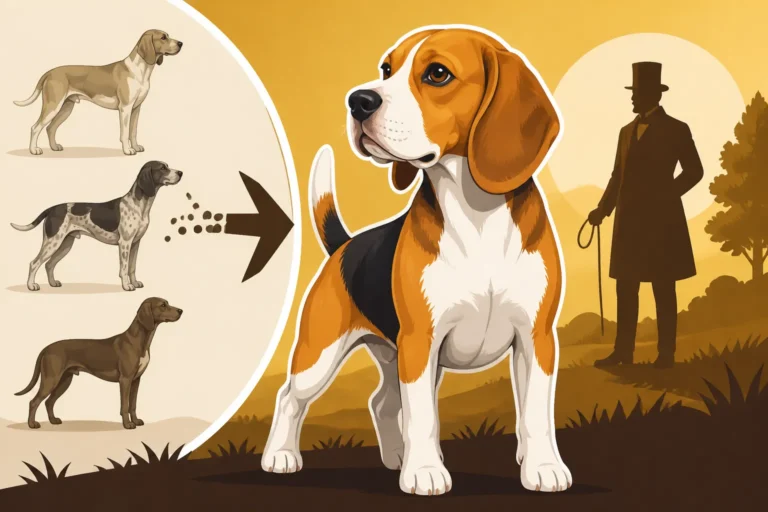
Before individuals like Thomas Johnson began to apply a more formalized approach to breeding, Beagles were primarily working dogs, bred for one purpose: hunting small game, particularly hare and rabbit. Their appearance was far less standardized than it is today, varying significantly from one local pack to another. Function dictated form, and if a dog could track a scent with relentless determination and bay melodiously, its specific ear length or leg angulation was secondary.
A Patchwork of Local Types
Imagine a time when "Beagle" wasn't a rigid blueprint but a loose description for a small, scent-driven hound. Different regions, sometimes even different estates, would have their own lines, selected for traits that best suited their local terrain and hunting styles. Some might have been stockier, others leggier; some with heavier bone, others more refined. What united them was their incredible nose and their unwavering focus on a scent trail, traits that still define the breed. This diverse genetic pool meant that while the spirit of the Beagle was present, its physical manifestation was a wide-ranging tapestry of forms.
These early Beagles were often known simply by their locale, like the North Country Beagle, which eventually disappeared into the wider breeding pool. Breeders weren't necessarily striving for uniformity; they were breeding for performance. A sturdy constitution, incredible stamina, and a powerful voice to alert hunters to the chase were paramount. The aesthetic appeal, while perhaps appreciated by individual owners, wasn't a collective goal that drove breeding decisions in the same way it would later.
Prioritizing Utility Over Uniformity
For centuries, the Beagle's ancestors, much like The Talbot Hound and the Southern Hound, were prized solely for their ability to follow a scent. The goal was simple: provide efficient, reliable hunting companions. This meant that the fastest, most tenacious, or most vocal dogs were chosen for breeding, regardless of how neatly they conformed to a consistent visual standard. There was no "breed standard" in the modern sense that dictated head shape, tail set, or coat patterns.
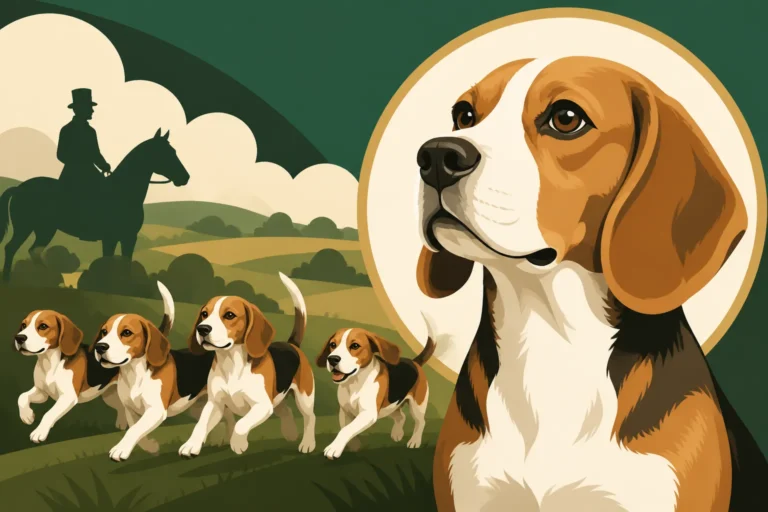
This emphasis on utility meant that a breeder might have a pack of Beagles that were all fantastic hunters but looked quite different from each other. They were living tools, valued for their skills, not for winning ribbons at a conformation show that didn't yet exist in a meaningful way. Their lives revolved around the hunt, often living in kennels as part of a larger pack, a far cry from the pampered pets many enjoy today. This historical context is vital for understanding just how revolutionary Johnson's approach was.
Thomas Johnson's Groundbreaking Vision for the Beagle
Into this landscape of working hounds, Thomas Johnson emerged in the mid-19th century with a vision that would fundamentally alter the trajectory of the Beagle breed. His ambition was to create a Beagle that could achieve what was, at the time, a dual feat: excelling not just as an indefatigable hunter in the field but also as a dog possessing the refined good looks and consistent conformation to win in the newly established dog shows. This was a significant departure from the prevailing breeding philosophies of his era.
Bridging the Gap Between Field and Show
For many breeders, a dog was either a working dog or a show dog; rarely both. The traits valued for hunting — sheer drive, resilience, and an almost obsessive focus on scent — didn't always align with the aesthetic ideals of the show ring, which emphasized symmetry, elegance, and adherence to an emerging written standard. Johnson, however, saw no reason why a Beagle couldn't embody both. He believed that a well-structured dog, one with proper conformation, would inherently be a better working dog, possessing the stamina and physical integrity to endure long hunts without breaking down.
His goal was to prove that a Beagle could be beautiful and brilliant, a concept that would later become known as "form and function." He wanted to demonstrate that a dog bred with an eye for desirable physical traits, such as a sturdy build, a neat head, and correct proportions, would also retain or even enhance its natural hunting abilities. This holistic approach was relatively pioneering for its time and laid the groundwork for how many breeds are developed and maintained today.
The Desire for a Consistently Excellent Beagle
Johnson wasn't just aiming for a few pretty dogs; he wanted to produce consistently excellent Beagles. This meant careful selection and a dedication to establishing a strong, predictable line that reliably produced offspring meeting both his working and aesthetic ideals. He was likely one of the early proponents of meticulous record-keeping, tracking pedigrees, and observing how specific pairings influenced the traits of their progeny.
This systematic approach contrasted sharply with the more informal breeding practices common among many hunting enthusiasts. Johnson's desire for consistency foreshadowed the importance of breed clubs and written standards, aiming for a recognizable type that could be replicated across generations. It was about creating a signature Beagle, one that bore the unmistakable mark of thoughtful, intentional breeding.
How Johnson Achieved His "Dual-Purpose" Beagle
Achieving a Beagle that was equally adept at tracking a scent through rough terrain and standing proudly in a show ring required a strategic and dedicated approach to breeding. Thomas Johnson's methods were likely rooted in careful observation, selective pairing, and a keen understanding of both desired physical attributes and intrinsic working drive. He wasn't just crossing dogs; he was thoughtfully crafting a lineage.
Meticulous Selection and Pairing
Johnson's success stemmed from his rigorous selection process. He would have evaluated potential breeding dogs not just on their performance in the field — their scenting ability, stamina, and voice — but also on their physical characteristics. This meant looking for dogs that exhibited the emerging ideals of Beagle conformation, such as a strong back, well-angulated legs, a proportionate head, and that distinctively carried tail with its white tip. He likely studied the lineage of his breeding stock to understand which traits were consistently passed down.
By carefully pairing dogs that possessed strengths in both areas, he aimed to consolidate these desirable traits within his lines. For instance, he might have paired an exceptional field dog with a slightly less proven hunter but one with impeccable structure, hoping to combine the best of both worlds in their offspring. This was a long-term commitment, requiring patience and a discerning eye for subtle nuances in both behavior and build.
Focusing on Desirable Physical Traits
While maintaining the Beagle's inherent hunting prowess was non-negotiable, Johnson gave considerable attention to enhancing and standardizing the breed's physical appearance. He was looking for what would become the quintessential Beagle look – the sturdy yet agile body, the characteristic long, low-set ears that frame the face, and the intelligent, pleading expression in their eyes. He understood that for a dog to "win" in the show ring, it needed to project an image of robust health, balanced proportions, and a certain breed-specific charm.
His efforts contributed to setting the foundation for what the breed standard would eventually articulate. When you see a Beagle today, perhaps browsing for a new harness or treats on Chewy, you're seeing the result of generations of breeders, many influenced by Johnson's early work, who focused on ensuring the breed maintained a recognizable and appealing physical form without losing its functional essence. The specific skull shape and slanted eyes, for instance, are now defining characteristics.
The Lasting Impact of Johnson's Work on the Modern Beagle
Thomas Johnson's commitment to creating a Beagle that was both a capable hunter and a show-worthy specimen left an indelible mark on the breed. His vision helped steer the Beagle away from being merely a diverse collection of hunting hounds toward a recognized and standardized breed, influencing everything from physical appearance to the establishment of formal breed clubs.
Contributing to the Beagle Breed Standard
One of the most significant contributions of Johnson and breeders like him was the informal, and then formal, establishment of the Beagle breed standard. By consistently breeding for specific physical and temperamental traits, they essentially created a blueprint for what a "correct" Beagle should look like. This blueprint later became formalized by organizations such as the National Beagle Club, founded in 1887, which drew heavily on the ideals fostered by breeders like Johnson. The National Beagle Club Founded in 1887 played a crucial role in codifying these standards.
The standard doesn't just describe an ideal appearance; it also touches upon temperament and gait, ensuring that the Beagle remains a "merry hound" with the physical capacity for endurance. Johnson's work provided much of the practical basis for these descriptions, showing that specific traits could be consistently reproduced and defined. This standardization was critical for the breed's recognition and popularity, moving it from regional obscurity to national prominence.
Influencing Future Generations of Breeders
Johnson's "dual-purpose" ideal resonated deeply with subsequent generations of Beagle breeders. It challenged them to not only maintain the breed's incredible scenting ability but also to strive for conformational excellence. This philosophy ensured that the Beagle remained a versatile dog, capable of excelling in various arenas. Even today, many dedicated Beagle breeders proudly emphasize producing dogs that are "typey" (meaning they conform well to the breed standard) while still possessing strong working instincts.
This legacy means that breeders often look at both parentage for field titles and show wins when making breeding decisions. It's a constant balancing act to preserve both sides of the Beagle's heritage. Whether you're interested in showing your Beagle, participating in scent work, or simply enjoying a loyal family pet, the genetic foundation laid by figures like Johnson contributes to the consistent quality and characteristics we see across the breed.
Shaping the Beagle's Popularity
By standardizing the Beagle's appearance and demonstrating its inherent charm beyond the hunting field, Johnson inadvertently contributed to its rise in popularity as a companion animal. A dog with a predictable look and a generally amiable temperament was more appealing to families and individuals not involved in hunting. The image of the cheerful, sturdy, and handsome Beagle started to solidify, making it a desirable choice for a wider audience.
His work, alongside that of other early breed enthusiasts, helped pave the way for the Beagle to eventually become one of the most beloved and recognizable breeds globally. The foundation he laid meant that the breed could transition from purely a working hound to a versatile companion, capable of thriving in various roles, from the competitive show ring to a cozy spot on the couch, always ready for adventure (or a nap after a big meal, of course!).
The "Form and Function" Debate in Beagle Breeding
While Thomas Johnson championed the idea of a "dual-purpose" Beagle – one that could excel in both the field and the show ring – his efforts inadvertently sparked a long-running discussion within the dog breeding community: the balance between "form" (conformation, appearance) and "function" (working ability, natural instincts). This debate continues to shape breeding practices for many breeds, including the Beagle.
The Rise of Specialized Lines
As dog shows gained popularity in the late 19th and early 20th centuries, some breeders began to prioritize winning ribbons above all else. This led to the emergence of "show lines," where dogs were bred primarily for their adherence to the written standard and their ability to impress judges. Conversely, others remained steadfastly committed to the Beagle's original purpose, breeding "field lines" for maximum hunting prowess, often with less emphasis on the precise aesthetic details of the show ring. Field-Bred Versus Show-Bred Beagle Prices often reflect these different priorities.
This specialization meant that the "dual-purpose" ideal, while still admirable, became increasingly challenging to achieve in a single dog. A show Beagle might have impeccable structure and gait but perhaps less raw drive for the hunt, while a field Beagle might be an unstoppable tracker but not quite meet the finer points of show ring conformation. Johnson's vision, however, ensured that breeders recognized the importance of both aspects, even if they chose to focus more heavily on one.
Challenges in Maintaining Both Traits
It's a delicate balance to maintain a dog's natural working instincts while simultaneously refining its physical appearance. Over-emphasizing one trait can sometimes lead to the dilution of the other. For instance, breeding exclusively for a specific coat color or eye shape might inadvertently select against a subtle trait that contributes to scenting ability or stamina. Similarly, breeding only for raw drive might neglect structural soundness, leading to a dog prone to injury.
This is why reputable breeders today still strive for a harmonious blend, understanding that a sound body contributes to a sound working dog. They recognize that things like correct bone structure, joint health, and muscle tone are crucial whether the Beagle is trailing a rabbit or trotting around a show ring. This ongoing challenge speaks to the enduring legacy of Johnson's ambition – to produce a Beagle that is truly excellent in every sense.
Evaluating Johnson's Legacy in Today's Beagle World
Thomas Johnson's contributions to the Beagle breed are undeniable, shaping not just its physical characteristics but also the very philosophy of breeding that guides dedicated fanciers today. His legacy is evident in the breed's enduring popularity and its remarkable versatility, allowing Beagles to thrive in a myriad of roles.
A Foundation for Breed Consistency
Walk into any dog show or visit a local dog park, and you'll likely recognize a Beagle instantly. That consistency in appearance, the distinct "Beagle look" – from the length of their droopy ears to the merry flag of their white-tipped tail – is a direct result of the early standardization efforts that breeders like Johnson championed. He helped solidify the idea that a breed should have a recognizable form, a set of characteristics that distinguish it from all others. This visual consistency helps maintain breed identity and allows people to appreciate the specific traits that make a Beagle, well, a Beagle. Even when you're simply comparing different brands of dog food on Chewy, you're doing so for a dog whose appearance was meticulously crafted over generations.
Consider the general temperament described in The Beagle Temperament Written Into the Standard. The "merry" and even-tempered nature, combined with their eager-to-please (though sometimes selectively deaf!) personality, has also been fostered through generations of thoughtful breeding. This consistency means that when someone chooses a Beagle, they generally know what to expect in terms of both looks and disposition, contributing significantly to the breed's widespread appeal as a family companion.
The Enduring Dual-Purpose Ideal
While the "form and function" debate still leads to specialized show and field lines, Johnson's dual-purpose ideal remains an aspirational goal for many. The best breeders strive for dogs that can still do both, proving that beauty and brains aren't mutually exclusive. This commitment to both aspects means that Beagles continue to excel in diverse activities, from competitive tracking and obedience to agility and, of course, their original calling as scent hounds.
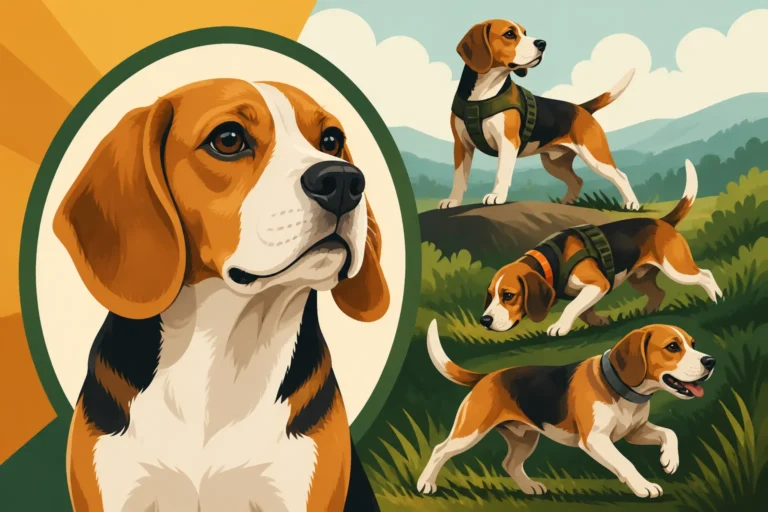
This aspiration ensures that the Beagle doesn't become merely a decorative breed. The focus on preserving their working abilities means that their keen nose and boundless energy are still celebrated. Whether a Beagle is employed by the USDA Beagle Brigade, sniffing out illicit goods at airports, or simply enjoying a long Sniffing Walks and Why They Tire a Beagle Out in the local park, its innate talents are a testament to the comprehensive breeding vision that took hold centuries ago.
| Aspect of Beagle Breeding | Pre-Johnson Focus | Thomas Johnson's Vision | Modern Beagle Breeding (Ideal) |
|---|---|---|---|
| Primary Goal | Hunting Utility | Field Performance & Show Conformation | Balance of Form & Function |
| Appearance | Highly Varied | Standardized & Refined | Consistent with Breed Standard |
| Temperament | Tenacity, Drive | Merry, Even-tempered, Drive | Merry, Adaptable, Energetic |
| Selection Criteria | Field Prowess | Field Prowess, Physical Conformation | Pedigree, Health, Temperament, Conformation, Drive |
| Record Keeping | Informal | Meticulous | Detailed Pedigrees & Health Testing |
| Impact on Breed | Regional Types | Foundation for Formal Standard | Global Recognition, Versatility |
Johnson's Influence on Health and Longevity
Beyond aesthetics and working ability, Johnson's emphasis on breeding robust, sound dogs also indirectly contributed to the overall health and longevity of the breed. By selecting for dogs with good structure and vitality, he inadvertently helped to reduce the prevalence of certain physical weaknesses. While we now have advanced tools like The MLS DNA Test Required for Beagle CHIC and specific Beagle Health Testing Under CHIC protocols, the underlying principle of breeding healthy, well-constructed dogs has been a constant thread through Beagle history.
His work reminds us that responsible breeding is a multifaceted endeavor, aiming for excellence in every aspect of a dog's being. The Beagle Lifespan and the Twelve to Fifteen Year Range that many Beagles enjoy today is a testament not only to modern veterinary care and nutrition but also to the centuries of thoughtful breeding that sought to produce hardy, healthy hounds.
Conclusion
Thomas Johnson's work was a critical turning point for the Beagle breed. He looked at a collection of effective, but disparate, hunting dogs and saw the potential for something more: a consistently excellent hound that could not only chase a rabbit all day but also stand as a paragon of breed type in the burgeoning world of dog shows. His ambition to create a "dual-purpose" Beagle set a powerful precedent, influencing generations of breeders and ultimately shaping the cheerful, tenacious, and instantly recognizable Beagle we know and love today. His legacy is a constant reminder that truly great breeds are not accidental; they are the result of dedicated vision, careful selection, and an unwavering commitment to improvement.
Disclaimer
This article is for general informational purposes only and does not constitute professional advice. Laws, prices and regulations vary by location and change over time. Consult a qualified professional for guidance on your specific situation.