Reverend Honeywood’s Essex Pack
If you've ever delved into the rich history of the Beagle breed, you've likely come across the name Reverend Phillip Honeywood. His Essex Pack, famous in the early to mid-19th century, represents a pivotal moment in the development of the modern Beagle. For many, understanding his contributions clarifies why our beloved Beagles look and behave the way they do today, shedding light on a fascinating chapter in canine history that often feels a bit lost to time.
The Man Behind the Pack: Reverend Phillip Honeywood
Reverend Phillip Honeywood was more than just a clergyman; he was a passionate and influential figure in the world of English hounds during the 19th century. Living at Marks Hall in Essex, his deep love for Beagles led him to dedicate considerable time and effort to their breeding and refinement, leaving an indelible mark on the breed's lineage. This era was a golden age for country sports, with foxhunting and beagling being prominent pastimes among the gentry and rural communities alike.
A Clergyman with a Passion for Hounds
It might seem unusual for a clergyman to be so deeply involved in dog breeding, but in 19th-century England, it wasn't uncommon for individuals from various walks of life, including the clergy, to pursue interests like hunting and dog breeding. Reverend Honeywood, known for his erudition and gentle nature, channeled his intellectual curiosity into the meticulous selection and breeding of Beagles. His dedication went beyond mere sport; it was a serious endeavor to preserve and improve a specific type of hound that he admired. He saw the potential for a small, agile, and keen-nosed hound that could excel in hunting hare on foot, an activity known as 'beagling.'
Imagine the scene: a respected local figure, not just delivering sermons but also out in the fields, observing his hounds, carefully planning pairings, and meticulously recording the traits of each litter. This hands-on approach, combined with a scholarly eye for detail, allowed him to develop a pack that stood out for its consistency and quality. He wasn't just breeding dogs; he was curating a living piece of sporting history, driven by a deep appreciation for the Beagle's unique abilities.
The Era of English Foxhunting and Beagling
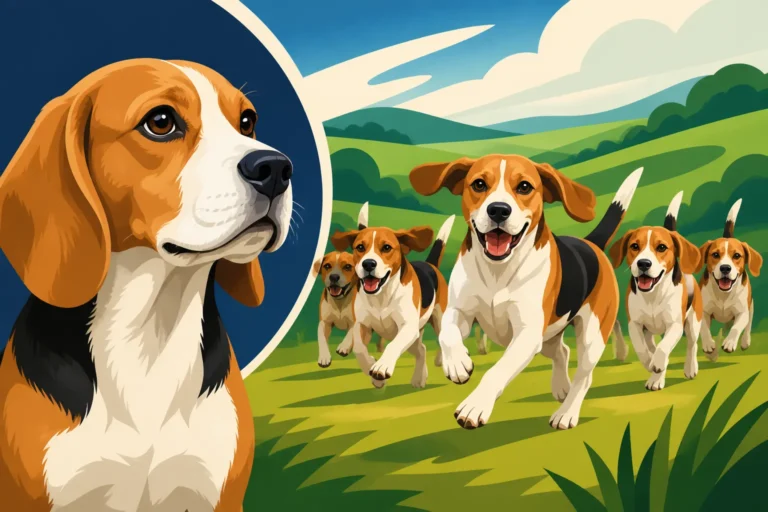
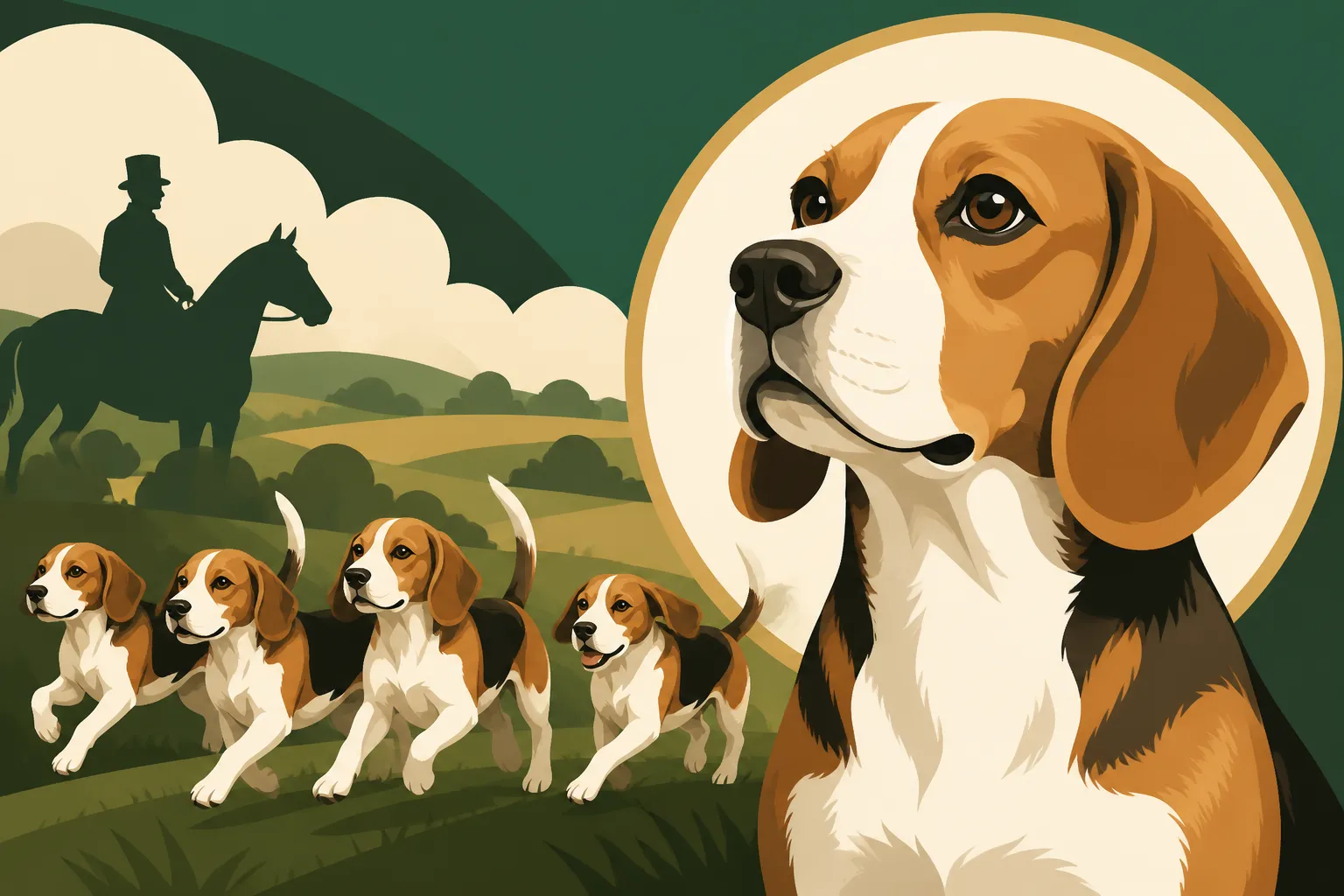
The 19th century was a time when hunting with hounds was deeply ingrained in the fabric of rural English society. While foxhunting often stole the limelight with its grand horses and sweeping landscapes, beagling offered a more accessible, foot-based alternative. Beagles, with their incredible scenting ability and characteristic bay, were perfect for trailing hare through varied terrain, allowing hunters to follow on foot. This provided excellent exercise and camaraderie, attracting a slightly different demographic than the more aristocratic equestrian pursuits. The Beagle From English Rabbit Packs to American Homes outlines this historical shift.
This context is crucial to understanding Honeywood's work. He wasn't just breeding for aesthetics; he was breeding for function. His Beagles needed to possess the stamina, nose, and biddability to work cooperatively in a pack, following a scent trail with unwavering focus. The dogs had to be tough enough for long days in the field, yet small enough for foot followers to keep up. This practical demand shaped his breeding choices, prioritizing traits that would make his Essex Pack exceptional in the field. The societal appreciation for such working dogs provided a strong impetus for dedicated breeders like Honeywood.
Honeywood's Unique Breeding Philosophy
What truly set Reverend Honeywood apart was his commitment to developing a very specific type of Beagle. Unlike some contemporary breeders who might have mixed various hound types, Honeywood focused on creating a uniform pack with consistent characteristics. He believed in breeding "true to type," ensuring that his Beagles not only performed well but also looked a certain way. His philosophy emphasized smaller stature, typically around ten inches, and a striking pure white coat. This was a deliberate choice, aiming for both practicality and distinctiveness.
His meticulous records, though not always fully preserved, suggest a systematic approach to line breeding and careful selection. He would observe puppies from birth, noting their physical attributes, health, and burgeoning hunting instincts. Only the best would be kept for breeding, ensuring that the desired traits were passed down through generations. This kind of thoughtful, focused breeding was rare at the time and contributed significantly to the pack's fame. It was this dedication that allowed him to refine the Reverend Phillip Honeywood and His Essex Pack into such a celebrated entity, a testament to his vision and perseverance.
Characteristics of the Celebrated Essex Pack
The Reverend Honeywood's Essex Pack became renowned for several distinguishing features, which set it apart from other contemporary hound packs. These characteristics were not accidental but the direct result of Honeywood's specific breeding goals and keen eye for detail. When people spoke of the Essex Pack, they often highlighted its size, its distinctive coloration, and its exceptional working ability in the field.
The Iconic Ten-Inch White Beagles
Perhaps the most iconic characteristic of Honeywood's Essex Pack was the size of his Beagles. He deliberately bred for a diminutive stature, typically around ten inches at the shoulder. These were often referred to as "Pocket Beagles" or "Glove Beagles," a nod to the even smaller hounds that were said to be carried in saddlebags or gloves during earlier centuries. While Honeywood's dogs weren't that tiny, they were certainly on the smaller end of the Beagle spectrum, especially when compared to the larger hounds often used for hunting. Why Honeywood's Beagles Stood Only Ten Inches is a direct testament to this specific breeding focus.
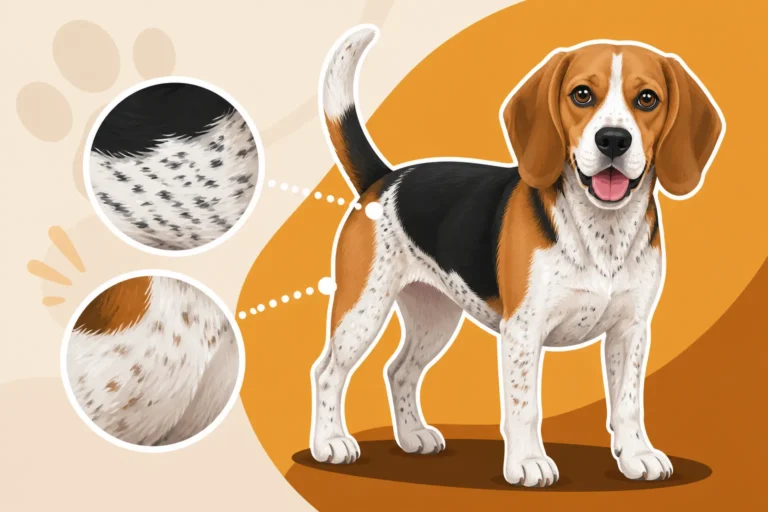
Beyond size, the pure white coat was another defining feature of the Essex Pack. In a time when many Beagles were tricolor or lemon and white, Honeywood specifically selected for all-white dogs. This created a visually stunning and incredibly uniform pack, easy to spot in the field. This aesthetic choice, combined with their small size, made them instantly recognizable and highly desirable. It wasn't just about how they worked, but also about their striking appearance. This uniformity in both size and color showcased Honeywood's success in achieving a consistent "type" within his lines, a significant feat for any breeder of the era.
Temperament and Working Style in the Field
While their appearance was notable, the Essex Pack's working temperament and style in the field were equally, if not more, important to Honeywood. These Beagles were bred to be exceptional hare hunters. This meant possessing an incredibly keen nose, unwavering determination on a scent trail, and the stamina to work for hours. They were known for their melodious baying, a sound that communicated to the hunters where the pack was and how close they were to the quarry. This vocalization was a crucial part of the hunt, guiding foot followers through dense cover and over varied terrain.
The pack worked cohesively, a hallmark of well-bred hounds. They were not individual hunters but a unified team, relying on each other to drive the scent. This cooperation, combined with their strong prey drive and focus, made them highly effective. Honeywood's Beagles were also noted for their biddability, meaning they were responsive to their master's commands even amidst the excitement of the chase. This balance of independence and cooperativeness is a trait that many modern Beagle owners still grapple with today, making Honeywood's achievement all the more impressive. It speaks to the deep understanding he had of hound behavior and the dedication he put into selecting for these critical traits.
Breeding for Function and Uniformity
Honeywood's breeding program was a masterclass in selecting for both function and aesthetic uniformity. His goal was not just to produce good hunting dogs, but to create a distinctive line that exemplified the ideal Beagle for foot-based hare hunting. This meant rigorously evaluating each dog for traits like scenting ability, conformation (how well their bodies were put together for sustained activity), stamina, and pack drive. Dogs that deviated too much from his ideal, either in size, color, or working ability, would not be used for breeding.
This commitment to uniformity extended to their overall health and soundness. While formal health testing as we know it today didn't exist, Honeywood would undoubtedly have selected against dogs showing obvious signs of lameness, poor constitution, or behavioral issues. The long days in the field demanded robust, healthy animals. By maintaining such strict criteria, he established a line of Beagles that were not only effective hunters but also consistently represented a specific, recognizable type. This foresight in breeding for both purpose and a distinct look contributed significantly to the emerging concept of a "breed standard" that would later define the Beagle.
Honeywood's Enduring Influence on the Beagle Breed
Reverend Honeywood's contributions extended far beyond his own lifetime, leaving an indelible mark on the Beagle breed as we know it today. His meticulous breeding practices and the fame of his Essex Pack played a crucial role in shaping the breed's development, influencing breeders for generations to come and solidifying certain characteristics as desirable traits.
Setting the Standard for Size and Type
Before Honeywood, there was considerable variation in "Beagle-type" hounds. Different regions and individual breeders had their own ideas of what a Beagle should look like and how it should perform. Honeywood's consistent production of a distinctive type – small, compact, and predominantly white – helped to solidify an image in people's minds. His success in achieving uniformity in his pack became a benchmark for others. How the Modern Beagle Was Built in the 1830s can be directly traced back to these early influences.
While the modern Beagle standard now includes both 13-inch and 15-inch varieties, and a wider range of colors, Honeywood's emphasis on a well-proportioned, hardy, and scent-driven hound laid critical groundwork. He showed that a specific type could be consistently bred, and that consistency was highly valued. His work provided a tangible example of what a refined Beagle could be, offering a clearer target for other breeders to aim for, even if they were pursuing slightly different variations. This establishment of a recognizable "type" was crucial for the breed's eventual formalization.
Documenting and Popularizing the Breed
The fame of Reverend Honeywood's Essex Pack was widespread in its day. Sporting journals and publications often referenced his Beagles, praising their quality and performance. This publicity was invaluable in raising the profile of the Beagle breed as a whole. When respected figures like Honeywood championed a specific type of dog, it lent credibility and desirability to that breed. His success made Beagles more fashionable and sought after, drawing attention from a wider audience of potential breeders and owners.
Furthermore, the very act of maintaining a dedicated, high-quality pack for so long served as a form of documentation. While formal breed clubs and registries were still developing, Honeywood's reputation ensured that his breeding lines were well-known and discussed. This oral and written tradition, alongside what records he kept, helped to preserve the characteristics of his Beagles for posterity. This kind of grassroots popularity and informal documentation often precedes the official recognition of a breed, making his role as a public advocate for the Beagle quite significant.
The Genetic Legacy of His Lines
Although direct genealogical records from that far back can be patchy, it is widely accepted that the bloodlines of Reverend Honeywood's Essex Pack contributed significantly to the genetic pool of Beagles in England and, by extension, globally. Reputable breeders would often seek out stock from well-known and successful kennels, and the Essex Pack certainly fit that description. Dogs descended from Honeywood's lines would have carried forward the traits he so carefully cultivated.
This legacy meant that his emphasis on a strong nose, durable conformation, and pack mentality continued to be woven into the fabric of the breed. Even if specific ancestors aren't always named, the characteristics we associate with Beagles today — their incredible scenting ability, their sturdy build, and their often merry but determined disposition — owe a debt to breeders like Honeywood. His efforts helped to set certain genetic foundations that would be built upon by subsequent generations of Beagle enthusiasts. You can almost see the echoes of his white, ten-inch wonders in some of the smaller, lighter-boned Beagles even now, especially when looking at images or descriptions from the early days.
The Essex Pack in Historical Context
Placing Reverend Honeywood's Essex Pack within the broader historical context of hound breeding helps us appreciate its true significance. It wasn't the only pack of Beagles around, but it was one that stood out, offering a distinct vision for the breed at a time of considerable flux and development for many dog types. Understanding the landscape of the time clarifies why his work was so impactful.
Comparison with Other Early Beagle Strains
In the 19th century, before standardized breed clubs and registries, there were numerous regional "strains" or types of Beagles. Some were larger, closer to a Harrier or even a small Foxhound in build, reflecting their use in different hunting contexts. Others might have been coarser in coat or less uniform in appearance. The Beagle Type That Settled in the 1840s discusses how many of these divergent types eventually converged. Honeywood's Essex Pack stood in contrast to this variety due to its remarkable consistency in size and color.
For example, while other breeders might have focused solely on speed or an exceptionally loud bay, Honeywood's emphasis on a specific compact size and a distinct pure white coat made his Beagles visually unique and easily identifiable. This allowed his pack to carve out its own niche and attract specific admirers who valued these traits. This intentional differentiation played a key role in shaping discussions about what an "ideal" Beagle should be, influencing those who would later go on to formalize the breed standard. It's like comparing a craftsman's bespoke item to a range of similar, but less refined, products.
Challenges of Preservation and Record Keeping
One of the biggest challenges when looking back at early breed history is the scarcity of complete and accurate records. Unlike today, where organizations like the AKC maintain extensive pedigrees and health certifications, 19th-century breeding records were often personal notes, diaries, or word-of-mouth accounts. While Honeywood was known for his meticulousness, not all of his records have survived intact, leaving some gaps in our precise understanding of his breeding program.
This makes the impact of his visible legacy – a renowned, successful, and uniform pack – even more important. The fact that contemporaries consistently referenced his Beagles as exemplary speaks volumes, even without every detail of his breeding book. Without the benefit of modern genetic testing, breeders relied on observation and careful lineage tracking as best they could. The stories and anecdotes passed down about the Essex Pack often filled in where written records were sparse, ensuring that the influence of Reverend Honeywood lived on. This is where organizations like Chewy, with their vast resources, can connect us to historical insights through articles and educational content.
How Honeywood's Work Informed Later Standards
The work of early breeders like Reverend Honeywood provided the foundation upon which formal breed standards were eventually built. When the National Beagle Club was founded in 1887, and the breed began to be officially recognized and judged, the characteristics observed in successful packs like Honeywood's undoubtedly informed the initial descriptions of the ideal Beagle. The National Beagle Club Founded in 1887 marked a significant turning point, and the earlier work of individuals like Honeywood provided the raw material.
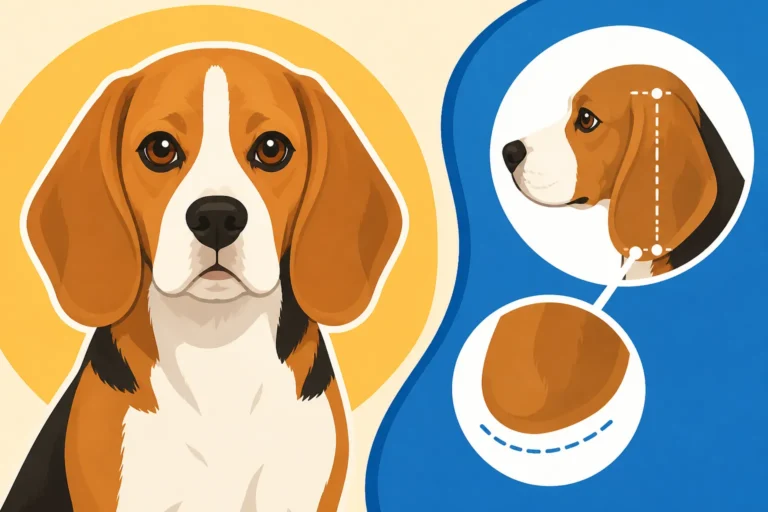
While the specific ten-inch white Beagle championed by Honeywood didn't become the sole standard, his contributions to defining what constituted a "Beagle type" – a compact, sturdy, scent-driven hound with a merry disposition – were invaluable. The concept of a uniform pack, carefully bred for specific traits, was a powerful influence. Even today, discussions around What the Standard Says About a Beagle Head or the ideal Beagle conformation can trace their roots back to the foundational work of these dedicated individuals who, through their passion and perseverance, gave us the blueprint for the breed we cherish today. His dedication demonstrated the importance of consistency in breeding, a principle that remains central to purebred dog development.
Legacy and Modern Relevance
While Reverend Phillip Honeywood's Essex Pack existed nearly two centuries ago, its legacy continues to resonate in the world of Beagles. Understanding his contributions isn't just a historical exercise; it helps us appreciate the depth of character and function embedded within the breed today. From subtle genetic influences to the very idea of what a Beagle should be, Honeywood's impact is still felt.
Why Honeywood's Beagles Remain Significant
Honeywood's Beagles remain significant because they represent a pivotal point in the breed's journey from a generic "hound type" to a distinct and recognized breed. His unwavering commitment to a specific size, coloration, and working ability helped to define an ideal that other breeders could emulate or build upon. Without such focused efforts, the Beagle might have remained a much more diverse and less recognizable type of hound. He demonstrated the power of selective breeding to achieve consistency and excellence.
Furthermore, his pack’s fame contributed to the popularization of the Beagle as a hunting companion, solidifying its place in British sporting culture. This visibility was crucial for the breed's survival and subsequent growth. His work showcased the Beagle's capabilities and endearing qualities, ensuring that future generations would continue to appreciate and develop this remarkable little hound. The stories of his white, ten-inch Beagles resonate as a classic example of dedicated dog breeding.
Echoes in Today's Breed Standard
While today's American Kennel Club standard for Beagles allows for two size varieties (under 13 inches and 13 to 15 inches) and "any true hound color," the underlying principles of Honeywood's breeding still echo. The emphasis on a sturdy, compact body built for endurance, a merry and even temperament, and that unmistakable nose for scent are all traits that Honeywood sought to perfect. Why a Beagle Over Fifteen Inches Is Disqualified hints at the importance of maintaining a compact size, a tradition influenced by breeders like Honeywood.
Modern breeders, even those focused on show lines or companion animals, still aim for a dog that embodies the "Beagle essence" – an alert, intelligent, and determined hound. This core character, forged in the hunting fields of England, owes much to the early breeders who, through careful selection, honed these traits. The enduring appeal of the Beagle as a family pet, known for its friendly demeanor and robust nature, also speaks to the sound foundations laid by historical figures like Reverend Honeywood.
The Importance of Early Breed Preservationists
Reverend Phillip Honeywood serves as an excellent example of an early breed preservationist. In an era without formal breed clubs or genetic databases, it was individuals like him, driven by passion and a clear vision, who ensured that specific types of dogs were not lost to time or random breeding. They were the architects of canine diversity, shaping what would become our purebred dogs. Their dedication to observing, selecting, and perpetuating desirable traits was critical for the creation and refinement of distinct breeds.
Their work reminds us of the long and fascinating journey that every breed has undertaken to reach its current form. It underscores the responsibility that modern breeders and owners have to continue to care for and understand the unique heritage of their dogs. When we see a Beagle today, whether chasing a squirrel in the backyard or competing in a scent work trial, we can, in a small way, acknowledge the enduring legacy of Reverend Honeywood and his beloved Essex Pack. Their historical role is a reminder that proper care, good training, and an understanding of breed history remain vital for the health and happiness of our canine companions, and resources like Chewy can help provide many of the daily necessities.
Reverend Honeywood's Essex Pack: A Summary of Influence
To recap the profound impact of Reverend Phillip Honeywood's Essex Pack, consider the following table. It illustrates how his specific breeding choices aligned with the needs of his time and contributed to the enduring characteristics of the Beagle breed.
| Aspect of Essex Pack | Honeywood's Focus | Impact on Modern Beagles (Direct & Indirect) |
|---|---|---|
| Size | Small (approx. 10 inches) | Influenced the creation of smaller varieties; emphasis on compact build. |
| Color | Predominantly pure white | Established the idea of a uniform, striking appearance in a pack. |
| Temperament | Keen nose, determined, biddable, merry | Core Beagle temperament of scent-driven, friendly, and persistent hound. |
| Working Style | Cohesive pack hunting, vocal trail | Reinforced the importance of pack drive and characteristic bay in the breed. |
| Breeding Philosophy | Uniformity, function, specific "type" | Laid groundwork for breed standards and systematic selective breeding. |
| Popularization | Widespread renown in sporting circles | Increased visibility and desirability of the Beagle breed. |
This table concisely highlights how Honeywood's singular vision, executed with meticulous care, created a lasting blueprint that continues to inform and define the Beagle breed.
Disclaimer
This article is for general informational purposes only and does not constitute professional advice. Laws, prices and regulations vary by location and change over time. Consult a qualified professional for guidance on your specific situation.