Beagle Hearing Loss and Hand Signals
It's truly heartbreaking and disorienting when you first realize your lively, boisterous Beagle might not be hearing you like they used to. That feeling of confusion, and then the pang of worry, is completely natural. This guide is here to walk you through how to recognize those subtle (and not-so-subtle) signs of hearing loss, understand what might be causing it, and most importantly, how to adapt your communication with simple, effective hand signals and other strategies to keep your beloved Beagle feeling safe, loved, and engaged in your shared life.
Recognizing the Subtle Signs of Hearing Loss in Your Beagle
Discovering that your Beagle is losing its hearing can be a gradual process, often starting with tiny cues that are easy to dismiss or misinterpret. Their incredibly powerful nose and keen eyesight can often compensate for a while, making the early stages particularly tricky to pinpoint. But with a bit of careful observation, you can start to notice when their world of sound is fading.
Early Indicators You Might Miss
Beagles are masters of using their other senses, especially their unparalleled sense of smell, to navigate the world. This means they might not appear profoundly deaf right away, as they're still picking up so much information through their nose. You might find yourself chalking up their lack of response to being "stubborn" or "selectively deaf," a common misconception with this independent breed. Perhaps you call their name from another room, and they simply don't appear, even though you know they heard you before. Or maybe the mail carrier rings the doorbell, and your Beagle, who used to alert you with a flurry of barks, now just sleeps through it soundly.
Other subtle signs can include deeper sleeping patterns, where they don't rouse from a nap even when there's normal household chatter or dishes clanking nearby. They might also stop reacting to sounds that previously excited them, like the crinkle of a treat bag, the jingle of car keys, or even the sound of your car pulling into the driveway. If you notice your Beagle startling more easily when you approach them from behind or while they're sleeping, it could be because they didn't hear your footsteps coming, relying instead on sight or touch, which can be a jarring experience if unexpected. Pay attention to how they react to everyday noises that used to get their attention; a lack of ear twitching, head tilts, or orienting towards the sound can be telling.
When Hearing Loss Becomes Obvious
As hearing loss progresses, the signs become much more difficult to ignore. What started as occasional non-responsiveness can become a consistent pattern. You might find yourself having to clap loudly, stomp your foot to create vibrations, or even gently touch your Beagle to get their attention. Their typical vocalizations might also change; some deaf Beagles become quieter, while others might start howling or barking more frequently, possibly because they can't hear their own volume or are expressing a different kind of frustration or confusion. They might also struggle to locate the source of a sound, appearing disoriented if a loud noise occurs, unable to pinpoint where it came from.
It’s crucial to understand that hearing loss is rarely an instantaneous event unless caused by acute trauma. More often, it's a slow, progressive decline, which gives both you and your Beagle time to adapt, albeit with some bumps in the road. This transition can be frustrating for both of you – you might feel ignored or unheard, and your Beagle might feel increasingly isolated or confused by the lack of auditory cues. If you're observing these clearer signs, it's definitely time for a visit to your veterinarian. A professional evaluation can help differentiate between age-related deafness and other treatable medical conditions like Beagle Ear Infections Under Those Long Ears.
Understanding the Causes of Beagle Hearing Loss
Hearing loss in Beagles, just like in humans, can stem from a variety of factors, ranging from easily treatable conditions to irreversible age-related changes. Knowing the potential causes can help you take preventative measures or understand the prognosis better.
Common Medical Reasons and Prevention
For a breed like the Beagle, with those long, floppy ears, ear health is paramount. Their ear canals are perfect breeding grounds for moisture and debris, making them susceptible to various issues that can impede hearing. Impacted earwax is a very common culprit, physically blocking sound waves from reaching the eardrum. Foreign objects, like grass seeds or dirt, can also become lodged in the canal, causing irritation, infection, and hearing impairment. Then there are the dreaded ear infections, both bacterial and yeast, which can cause inflammation, pain, and a build-up of fluid or pus, significantly affecting hearing. Chronic, untreated ear infections can even lead to permanent damage to the delicate structures of the inner ear.
Regular, consistent ear cleaning is your first line of defense against many of these problems. Cleaning a Beagle Ear Before Infection Starts should be a weekly ritual, using a vet-approved cleaning solution. This helps remove wax and debris and creates a less hospitable environment for pathogens. Beyond infections, other medical issues can impact hearing. Tumors or polyps in the ear canal, though less common, can also cause blockages. Trauma to the head or ear, or even certain ototoxic medications (drugs that can damage hearing), might lead to temporary or permanent deafness. If you suspect any of these, especially if the onset is sudden, an immediate veterinary visit is essential. Your vet can perform an otoscopic examination, take ear swabs for analysis, and discuss further diagnostics like a BAER (Brainstem Auditory Evoked Response) test, which is the gold standard for assessing hearing.
Age-Related Deafness in Senior Beagles
Perhaps the most common cause of hearing loss in Beagles, especially as they enter their golden years, is presbycusis – the gradual, irreversible degeneration of the auditory system that occurs with aging. It's a natural process, much like vision decline or joint stiffness, and it's something many senior dogs experience. Just like us, their inner ear structures can simply wear out over time. This kind of deafness is typically progressive, meaning it doesn't happen overnight but slowly worsens over months or even years.
For a senior Beagle, hearing loss is often just one aspect of their aging journey, which might also include changes in vision, metabolism, and activity levels. This is why a comprehensive approach to Senior Beagle Care After the Age of Ten is so important. While age-related deafness cannot be cured, it's important to remember that it's generally not painful. It simply means adapting your lifestyle and communication methods to ensure your senior companion still feels connected and secure. Regular vet check-ups, even if just for monitoring, become even more crucial as they age. They can help rule out any other concurrent health issues that might be contributing to their symptoms and ensure their overall quality of life remains high. This proactive care can also help you budget for potential needs; many owners find that a robust pet insurance policy, like those offered by Healthy Paws, can provide peace of mind when managing the accumulating health concerns of an aging dog.
Adapting Communication with Hand Signals for Your Beagle
The good news is that Beagles are incredibly intelligent and food-motivated, which makes them excellent candidates for learning hand signals! Even if your Beagle still has some hearing, introducing visual cues now can make the transition much smoother if their hearing declines further in the future. It’s all about creating a new language together.
Getting Started with Visual Cues
The key to successfully teaching hand signals is consistency, patience, and making it an incredibly positive experience for your Beagle. Start in a quiet, distraction-free environment, like your living room or a familiar, securely fenced backyard. Use high-value treats – Beagles are notorious for their love of food, and The Treats a Beagle Will Work Hardest For will be your secret weapon here. Keep training sessions short, perhaps 3-5 minutes at a time, several times a day, to prevent boredom and maximize focus. Remember, a Beagle's attention span can be fleeting, especially if there's an interesting smell nearby.
When you first introduce a hand signal, pair it simultaneously with its verbal cue. For example, if you're teaching "sit," give the verbal command "Sit!" while immediately performing the hand signal. As your Beagle starts to understand the connection, gradually fade the verbal cue, relying more and more on the visual signal. Reward immediately and enthusiastically with a treat and positive body language the moment your Beagle responds correctly. This instantaneous reinforcement helps them associate the signal with the desired action and the reward. The goal is for them to eventually perform the action based purely on the hand signal.
Essential Hand Signals to Teach
Building a core vocabulary of hand signals will significantly improve your daily interactions and ensure your Beagle’s safety. Here are some fundamental commands to get started:
| Hand Signal | Purpose | Description |
|---|---|---|
| Come | Essential for recall and safety | A large, sweeping arm motion towards your body, often followed by patting your thigh. This is perhaps the most critical signal for a deaf dog's safety. |
| Sit | Basic obedience, attention, and waiting | Hold your hand flat, palm up, and move it smoothly upwards from your Beagle's nose level to just above their head. |
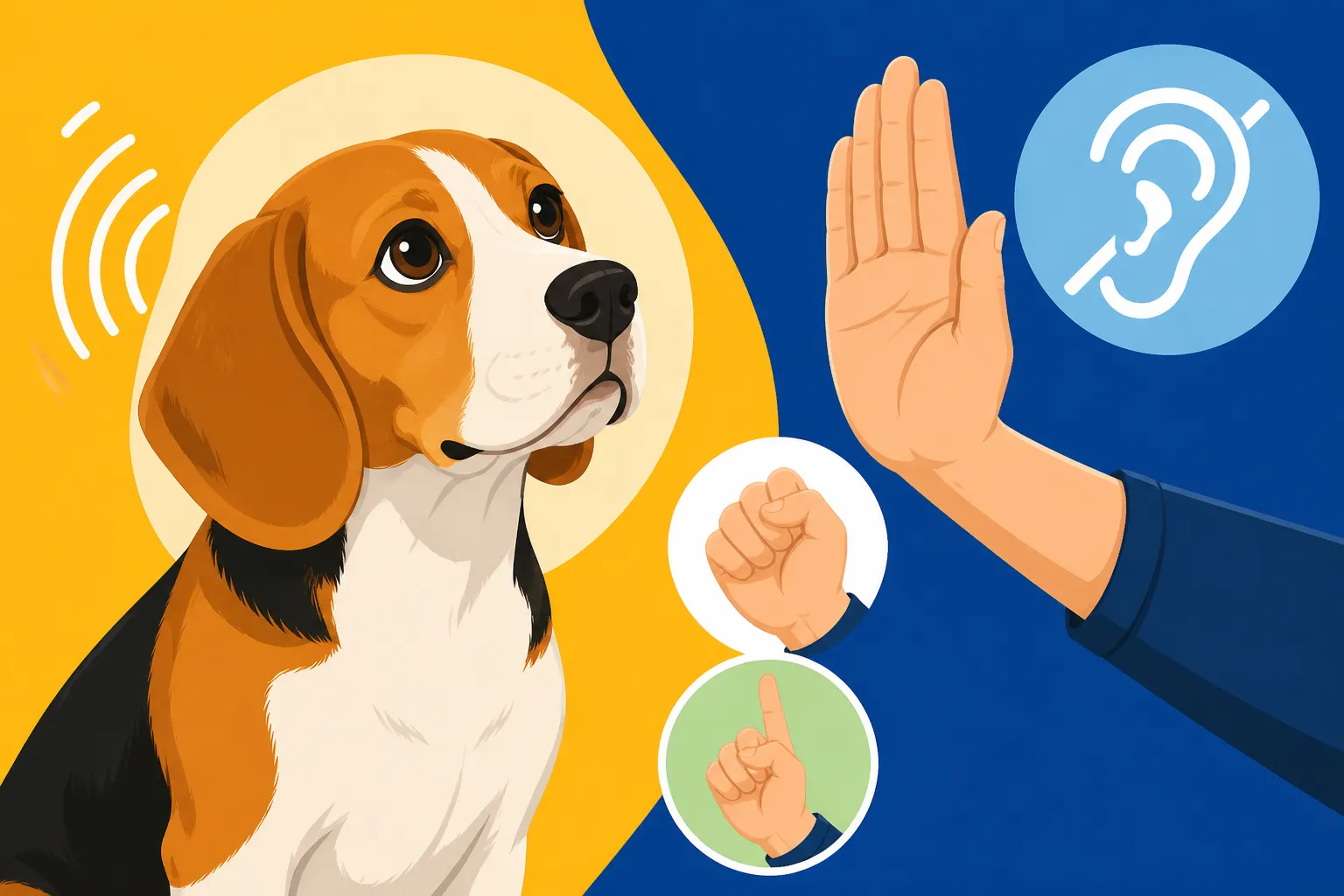
| Stay | Holding position, preventing dashes | Extend your open palm towards your Beagle, fingers pointing upwards, like a classic "stop" sign. Hold it steadily. |
| Down | Relaxation, calm, and distance control | Move your hand flat, palm down, from your chest height slowly down towards the floor. |
| Look/Watch Me | Gaining attention, focus on you | Point to your eye or gently tap your chest to direct their gaze to your face. This is vital for initiating any other visual communication. |
| Good Dog/Yes | Positive reinforcement, encouragement | A clear thumbs-up gesture or an exaggerated, cheerful nod. This tells your Beagle they've done something right, even without hearing your verbal praise. |
| No/Wrong | Redirecting unwanted behavior | A sharp, downward chop of the hand, often paired with a stern facial expression. Use sparingly and follow with a redirection to a desired behavior. |
| Wait | Holding at doorways, before food | Hold your hand flat, palm facing the dog, horizontally in front of you. Useful for teaching them to pause before going through doors or eating. |
| Walk | Signifying an outing | A back-and-forth walking motion with your fingers (like someone walking) or holding the leash up. |
Remember, consistency is truly paramount. Everyone in the household needs to use the same signals for the same commands. This prevents confusion and accelerates your Beagle's learning. Practice these signals in various locations, gradually adding distractions as your Beagle gains proficiency.
Enhancing Safety for a Deaf Beagle
One of the biggest concerns for owners of deaf Beagles is their safety, especially outdoors. The most important rule to embrace is that a deaf Beagle should never be off-leash in an unfenced area. Without the ability to hear traffic, warnings, or your calls, they are incredibly vulnerable. Why a Beagle Should Never Be Off Leash Unfenced is a principle that applies even more strictly to a hearing-impaired hound.
For walks where you want to give them a bit more freedom, invest in a quality long line (a 15-30 foot leash) that allows them to explore safely while remaining tethered to you. Always ensure they wear a collar with an ID tag clearly stating "DEAF DOG" and your contact information. This is critical if they ever manage to slip away. A microchip is also non-negotiable for any dog, and particularly for a deaf one; a quick scan can reunite you if they become lost. Consider having them microchipped if they aren't already, as it's a permanent form of identification that significantly increases the chances of being returned if they wander off, as detailed in Beagle Microchips and Getting a Lost Dog Back.
A vibration collar can be a fantastic tool for getting a deaf Beagle's attention. These collars deliver a silent, harmless vibration (NOT a shock!) that can be used as a "tap" on the shoulder. You can pair this vibration with your "look" or "come" hand signal. Teach them that a vibration means to immediately look at you, and if they do, they get a reward. This can be invaluable for recall in a large, fenced yard or for getting their attention when they're engrossed in a scent trail. At night or in low-light conditions, a flashlight or even a laser pointer (used carefully and not directly in their eyes) can be used to flash a signal for attention. Always approach a deaf Beagle from the front or side so they can see you coming, preventing startling them, which can lead to fear or defensive reactions.
Living a Full Life with a Hearing-Impaired Beagle
Having a deaf Beagle doesn't mean their quality of life has to diminish. In fact, by understanding their unique needs and adapting your approach, you can create an even stronger bond and ensure they live a rich, happy, and fulfilling life. It's about shifting your perspective and leaning into their other incredible senses.
Creating a Safe and Enriched Environment
Remember, a Beagle's nose is legendary – roughly 220 million scent receptors! While their ears might not be working, their nose certainly is. This means you have a powerful tool for enrichment and enjoyment. Incorporate plenty of scent work into their daily routine, such as hiding treats around the house, using puzzle feeders, or engaging in formal nose work classes. Scent Work as the Job a Beagle Was Built For not only provides fantastic mental stimulation but also tires them out in a way that traditional walks often can't. These activities tap into their natural instincts and build their confidence, showing them that they can still "hunt" and succeed.
Maintain a consistent daily routine as much as possible. Predictability can be incredibly comforting for a deaf dog who can't hear the cues that signal upcoming events (like the sound of their food bowl or your car keys). Knowing when to expect meals, walks, and playtime helps them feel secure and reduces anxiety. When you need to wake a sleeping Beagle, do so gently. Don't startle them. A light touch on their shoulder or back, or even placing a treat near their nose, is far better than a sudden jolt. Ensure your home environment is safe and predictable. Check your fences regularly for any weak spots or digging opportunities, as a deaf Beagle might not hear dangers approaching if they escape. Companies like Healthy Paws are often mentioned by owners for helping manage unexpected health issues, ensuring you can provide the best care without financial stress.
Maintaining the Bond and Preventing Frustration
It's natural for owners to feel a pang of frustration when their Beagle doesn't respond to their voice. However, it's crucial to remember that your Beagle isn't ignoring you out of defiance; they simply cannot hear you. Your patience, empathy, and unwavering love are more important than ever. Keep interactions positive and rewarding. If you find yourself getting frustrated, take a deep breath, step away for a moment, and remember that this is a challenge for your dog too. They rely on you for guidance and reassurance.
The human-animal bond can actually deepen as you navigate this new communication journey together. You'll become more attuned to their body language, and they'll become more attuned to yours. Continue with training, even if it feels different. Mental exercise is just as important as physical exercise for a Beagle's overall well-being. Keeping their minds active can even help mitigate Cognitive Decline in a Senior Beagle, helping them stay engaged with the world around them. Don't hesitate to seek advice from a professional dog trainer who specializes in working with deaf dogs. They can offer personalized strategies and support, helping you and your Beagle thrive. Remember, your Beagle is still the same loving companion, just experiencing the world a little differently, and with your help, they can continue to lead a vibrant, happy life.
Disclaimer
This guide is intended for informational purposes only and is not a substitute for professional veterinary advice. If you suspect your Beagle is experiencing hearing loss or any other health issue, please consult with your veterinarian for an accurate diagnosis and appropriate treatment plan.