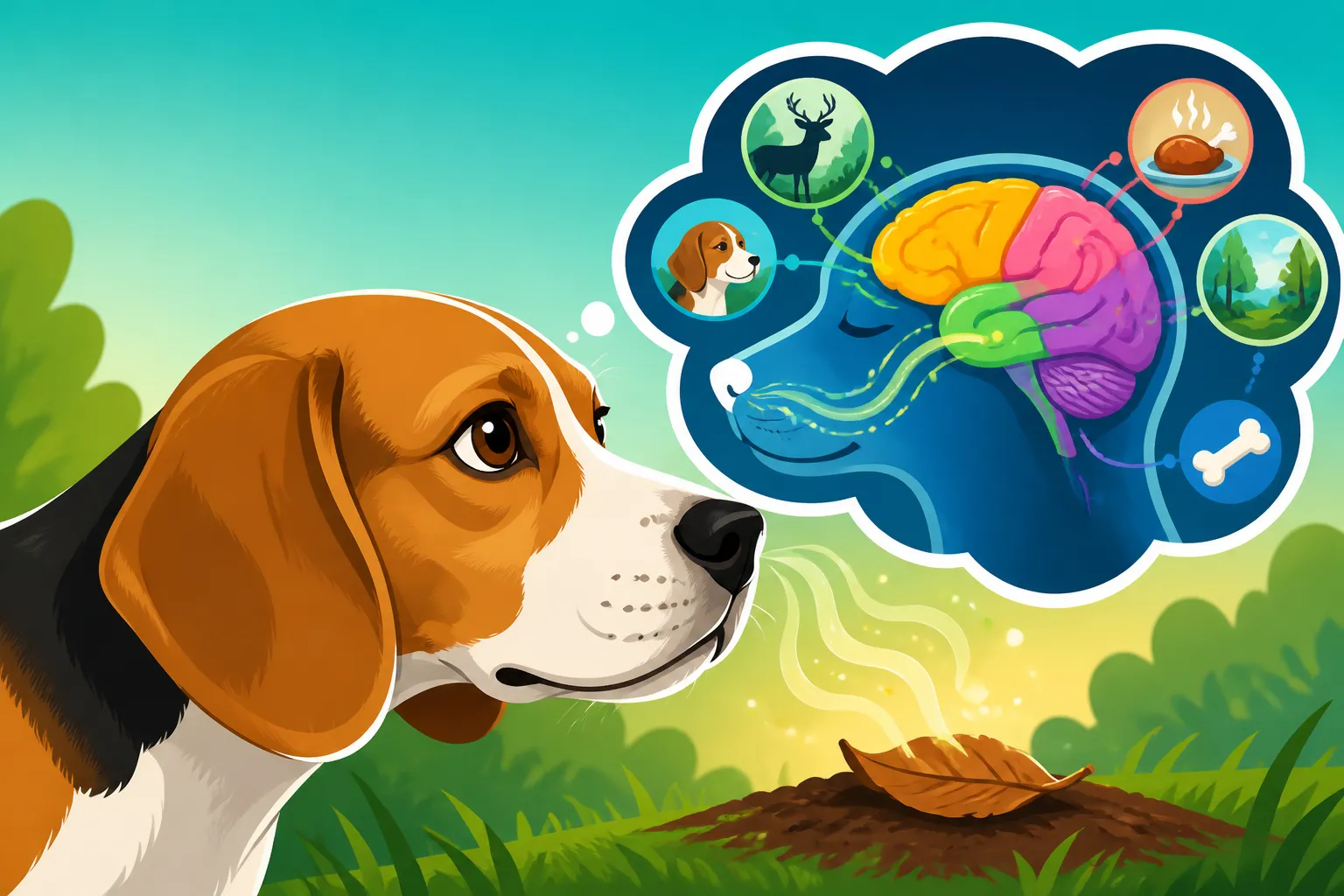
What Happens in a Beagle’s Head on a Scent
Have you ever been walking your beloved Beagle, only for them to suddenly lock onto an invisible trail, ears apparently turning off, and your calls fading into the background? It’s a common, often frustrating, experience for Beagle owners. This guide is here to pull back the curtain on that incredible scenting ability, helping you understand precisely what happens inside your Beagle's head when they hit that "scent zone," and how to work with, rather than against, their natural instincts.
The Unparalleled Anatomy of a Beagle's Nose
To truly grasp what's going on, we need to start with the instrument itself: that magnificent Beagle nose. It's not just a cute, wet button at the end of their face; it's a finely tuned biological marvel, leagues ahead of our own human capabilities. When your Beagle puts their nose to the ground, they're not just vaguely smelling; they're receiving an entire symphony of information.
Olfactory Receptors and Surface Area
Let's talk numbers, because they're truly astounding. Humans have about 6 million olfactory receptors in their noses, covering a surface area roughly the size of a postage stamp. Impressive, right? Well, your Beagle laughs in postage stamps. They boast an astonishing 220 million olfactory receptors, sometimes even more, packed into a nasal cavity that’s proportionally much larger than ours. Imagine a sprawling, intricate landscape compared to our tiny garden patch. This massive surface area, coupled with the sheer number of specialized cells, allows them to detect odors at concentrations we can't even begin to fathom. It's like having a super-sensitive radar dish constantly scanning the environment. When you read about The 220 Million Receptors Behind a Beagle's Nose, you start to truly appreciate the sheer biological power at play.
This vast receptor landscape isn't just about detecting more scents; it's about detecting fainter scents and discerning individual scents within a complex mixture. Think of it this way: you might smell a general aroma of "dinner," but your Beagle can pick out the individual notes of chicken, carrots, thyme, and even the faint scent of the cook's hand soap from two hours ago. They are built for detail, for nuance, for the infinitesimal particles floating in the air and clinging to surfaces. This is why a simple walk around the block is an information superhighway for them – every blade of grass, every sidewalk crack, every lamppost is a story waiting to be read.
The Separate Airflow System
One of the most fascinating aspects of a Beagle's nose isn't just what they can smell, but how they manage to keep smelling so efficiently. Unlike us, who inhale and exhale through the same pathways, a Beagle's nasal architecture is designed for continuous scent sampling. When a human exhales, it pushes air out through the nostrils, which can disrupt incoming scents. A Beagle, however, has a clever trick. When they exhale, air exits through slits on the sides of their nostrils, not directly forward. This ingenious design allows a stream of fresh, scent-laden air to be drawn into the nose while old air is being expelled, creating a constant, uninterrupted flow of olfactory information.
This separate airflow system means your Beagle can maintain a continuous "read" on a scent trail without blowing away the very particles they're trying to follow. It’s like having a dual-lane highway for air, ensuring that fresh data is always coming in. This is a critical adaptation for a trailing hound, enabling them to stay locked onto a scent for miles, dissecting its nuances, and following its twists and turns with relentless precision. It's a key reason Why a Beagle Walks With Its Nose to the Ground; they're not just looking for something, they're actively processing an ongoing stream of information.
The Vomeronasal Organ and Pheromones
Beyond the general olfactory system, Beagles, like many mammals, possess a specialized chemosensory organ called the vomeronasal organ, or Jacobson's organ. Located in the roof of their mouth, behind the incisors, it's connected to the nasal cavity and plays a crucial role in detecting pheromones and other non-volatile chemical compounds. While these don't register as "smells" in the traditional sense, they provide vital information about other animals – their reproductive status, their emotional state, their identity.
When you see your Beagle sniffing intensely at a patch of urine, or performing what's known as the "flehmen response" (curling back their lips slightly), they might be engaging their vomeronasal organ. This organ is less about tracking a rabbit and more about understanding the social landscape of their environment. It adds another layer to their incredible sensory world, giving them insights into the invisible communication happening all around them. It's a silent language that informs their social interactions and understanding of their surroundings, reinforcing why they are so attuned to every detail.
Processing the Scent: The Brain's Masterpiece
Having gathered all this raw data, the Beagle's brain then goes to work, turning chemical particles into a detailed map of the world. It’s not just smelling; it’s analyzing, categorizing, and prioritizing. This is where their "stubbornness" often comes from – they're not ignoring you; they're deeply engrossed in a complex cognitive task.
The Olfactory Bulb: Size and Complexity
The initial processing center for scent information in the brain is the olfactory bulb. In Beagles, this structure is disproportionately large and incredibly complex compared to ours. Why a Beagle Olfactory Bulb Runs So Much Larger explains that it accounts for a significant portion of their brain, indicating the sheer importance of scent in their existence. Think of it as a supercomputer dedicated almost entirely to interpreting odors. Where our brains might allocate more processing power to visual cues or complex language, a Beagle's brain is heavily invested in its sense of smell.
This large olfactory bulb allows for incredibly sophisticated analysis. It's not just detecting a scent; it's pinpointing its direction, estimating its age, and even differentiating between a fresh trail and one that's several hours old. This enables them to reconstruct events in their environment – who was here, when were they here, and where did they go? It’s a time-traveling detective agency happening right inside their head, providing a rich, layered understanding of their surroundings that we can only imagine.
Layered Scent Information
When a Beagle encounters a scent, they're not just getting a single, flat impression. Their brain processes scent in layers, like a digital imaging program building up a complex picture from multiple inputs. They can distinguish between the scent of a fox that walked by five minutes ago, the deer that passed an hour before that, and the faint, underlying scent of the damp earth itself, all from the same patch of ground. They can literally sort one scent out of fifty.
This ability to differentiate and layer information is what makes them such effective trackers. They can follow a specific individual’s scent even if it crosses dozens of other animal trails, or a human track through a busy street. It's an incredible feat of sensory processing, allowing them to focus on their target while filtering out what we would perceive as overwhelming olfactory "noise." This is a crucial part of What a Beagle Experiences on a Scent Trail, as they build a multi-dimensional picture of the world.
Memory and Association
Beyond immediate detection and processing, a Beagle's brain is constantly building a vast library of scent memories and associations. Every smell they encounter is cataloged and linked to experiences, emotions, and locations. The scent of rabbit might be linked to the thrill of the chase, while the smell of a specific cleaning product might be associated with a trip to the vet. These memories are incredibly powerful and long-lasting.
This means that a particular scent can trigger a cascade of memories and learned behaviors. Encountering the scent of a squirrel might immediately bring to mind the joy of chasing one up a tree, or the specific technique they used last time. This deep cognitive connection between scent and memory fuels their drive and makes them so persistent. When they are on a trail, they are not just passively following; they are actively engaging with a rich tapestry of learned information and instinctual responses, all guiding their every move.
The "Scent Zone" Phenomenon: When the World Narrows
This incredible anatomical and neurological setup culminates in a very specific behavioral state we call the "scent zone." This is that moment when your Beagle’s entire being seems to converge on the single task of following a trail, and everything else – including your voice – fades into irrelevance.
Sensory Overload and Focus
When a Beagle hits a potent scent trail, their brain becomes utterly consumed. All those millions of receptors are firing, the large olfactory bulb is working overtime, and the ancient instinct to track is fully engaged. For them, it’s not just a smell; it's a living, breathing narrative unfolding before them. In this state, other sensory inputs, like sound or even visual cues, simply don't register with the same urgency. Your calls might reach their ears, but the message struggles to penetrate the intense focus that their brain has allocated to scent.
This isn't malicious disobedience; it’s an absolute sensory and cognitive takeover. Their world shrinks to the immediate vicinity of that trail. Their body language shifts: head down, tail up and wagging in a distinctive, purposeful arc, nostrils flaring, and often an intense, almost trance-like expression. They are doing exactly what they were bred to do for centuries – follow a scent. This is why Why a Beagle Ignores You Halfway Down a Trail isn't about being stubborn, but about being absorbed.
The Instinctive Drive to Follow
Beagles were purpose-bred for hunting, specifically to follow scent trails of small game like rabbits and hares over long distances. This isn't a learned trick; it's deeply ingrained instinct, honed over generations. When they pick up a strong trail, they are simply fulfilling their genetic destiny. This drive is incredibly powerful, often overriding any amount of training or desire to please you in that moment.
The sheer joy and satisfaction a Beagle derives from following a scent cannot be overstated. It's their "job," their passion, their reason for being. Denying them this outlet entirely can lead to frustration and behavioral issues. Understanding this innate drive helps us empathize with their single-mindedness. They are not trying to be naughty; they are being a Beagle, living out the very essence of their breed.
Baying and Tracking
Often, when a Beagle is deep in the scent zone, you’ll hear that iconic, melodious bay. This isn't just random noise; it's a communication tool. In a hunting pack, the bay signals to other hounds and to the hunters that a trail has been found and is being actively pursued. For a solo pet Beagle, it's an expression of excitement, focus, and often a way to confirm for themselves that they're on the right track. It's an audible manifestation of their intense concentration.
The quality and tone of the bay can even communicate information. A sharp, excited bark might mean they’ve just hit a fresh trail, while a sustained, rhythmic bay suggests they are deep in pursuit. It's another layer of their ancient hunting behavior, an internal and external confirmation of their purpose. While charming to some, this vocalization, especially if prolonged, is also a reason Beagle Howling the Moment You Leave is common, as they use their voice to express their feelings, even separation anxiety.
Working With the Scent-Driven Brain: Practical Strategies
Knowing all this helps us shift from frustration to understanding. Instead of trying to eliminate the scent drive, which is impossible and unkind, our goal as Beagle owners should be to manage it, channel it, and provide safe, enriching outlets.
Embracing the Sniff: Structured Scent Walks
The most straightforward way to cater to your Beagle's scent drive is to embrace it. Dedicate certain walks, or portions of walks, specifically for sniffing. Let your Beagle lead, giving them ample time to investigate every intriguing smell. These aren’t just "walks" to them; they are investigative expeditions, mental workouts that can be far more tiring than a brisk jog. Letting a Beagle Sniff on Every Single Walk is not just good for their mental health, it’s essential.
You'll notice that after a good "sniffari," your Beagle is often more tired and content than after a purely physical exercise session. This is because their brain has been actively engaged, processing complex information. These Sniffing Walks and Why They Tire a Beagle Out are vital for their mental well-being and can reduce unwanted behaviors that stem from boredom or unfulfilled instincts.
High-Value Rewards and Emergency Recall
Since scent can easily override other commands, especially recall, you need to use strategies that are equally powerful. This means implementing high-value rewards for recall practice. Forget dry kibble; think cooked chicken, cheese, or specialized training treats that are irresistible to your Beagle. The reward needs to be so good that it can, at least sometimes, compete with the allure of a fresh rabbit trail.
Practicing Beagle Recall That Works Before the Nose Wins is critical, starting in low-distraction environments and gradually increasing the challenge. Never rely solely on your voice when a strong scent is present. An emergency recall word, used only in critical situations and always paired with the highest value reward, can be a lifesaver. Ensure you never repeat The Recall Word You Should Never Repeat to a Beagle more than once; its power comes from its uniqueness and the immediate, incredible payoff. Many owners find BAXTER & Bella’s online training programs helpful for structured recall training, often emphasizing high-value rewards.
Consider using a long line for walks in unfenced areas. This allows your Beagle to explore scents safely, with you maintaining control. Long Lines Instead of Off-Leash for a Beagle is a compromise that honors their instinct while keeping them out of harm's way. And as a final layer of safety, a good quality GPS collar can offer peace of mind, allowing you to track your scent-driven explorer if they do manage to slip away. You can find many reliable options on Amazon.
Structured Scent Work as a Job
Beyond casual sniffing, consider enrolling your Beagle in structured scent work or nose work classes. These activities give them a dedicated "job" that harnesses their natural abilities in a constructive way. Starting a Beagle in Scent Work Classes provides an excellent outlet for their instincts, building their confidence and strengthening your bond. These classes teach them to systematically search for specific odors, turning their passion into a focused, rewarding sport.
Activities like K9 Nose Work, tracking, or even barn hunt allow your Beagle to use their nose to its fullest potential in a safe, controlled environment. They get to engage that super-sniffer brain, solving puzzles and experiencing the deep satisfaction of finding a "target scent." It's an incredible mental and physical workout that often leaves them happily exhausted. These structured activities respect their innate abilities and provide an avenue for them to truly thrive.
Scenting Capabilities: Beagle vs. Human
To really put things into perspective, let's look at a simple comparison of how different our olfactory worlds truly are.
| Feature | Human (Average) | Beagle (Average) | Implications for the Beagle |
|---|---|---|---|
| Olfactory Receptors | ~6 million | ~220 million | Detects fainter and more scents. |
| Olfactory Bulb Size | Proportionally smaller | Proportionally much larger | Superior processing and analysis of scent data. |
| Nasal Architecture | Single airflow path | Separate inhale/exhale paths | Continuous scent sampling without disruption. |
| Scent Memory | Often contextual | Highly detailed and long-lasting | Builds a rich "scent map" of their world. |
| Vomeronasal Organ | Vestigial/less functional | Highly functional | Detects pheromones, social and reproductive cues. |
| Primary Sense | Vision | Scent | World understood primarily through smell. |
As you can see, your Beagle lives in a world of scent that is almost incomprehensible to us. Their entire perception of reality is dominated by what their nose tells them, making it the lens through which they interpret their environment, track friends and foes, and derive immense satisfaction.
Understanding what happens in a Beagle's head when they're on a scent trail is truly transformative for owners. It shifts our perspective from "my dog is ignoring me" to "my dog is performing a complex, instinctual task." By recognizing and respecting this incredible gift, we can provide our Beagles with the enrichment they crave, ensuring they lead happy, fulfilled lives, full of wonderful smells to explore.
Disclaimer
This article is for general informational purposes only and does not constitute professional advice. Laws, prices and regulations vary by location and change over time. Consult a qualified professional for guidance on your specific situation.